
REVIEW · KATHMANDU
12 Days Manaslu Circuit Trek
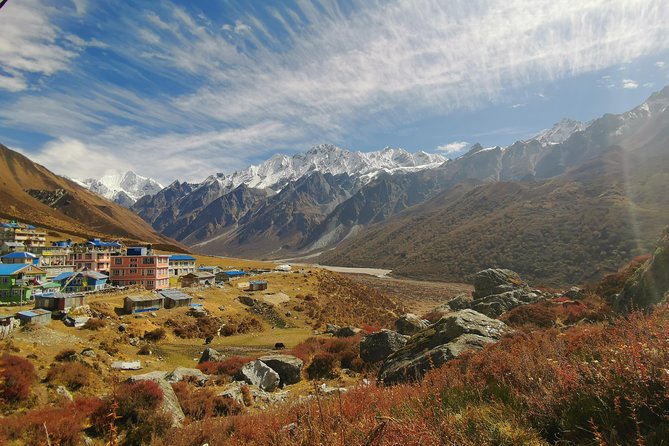
The great prize here is Larkya La Pass at 5,160 meters, reached after days of walking through Buddhist villages, suspension bridges, forests, and high valleys. You also get a real look at Manaslu, the world’s eighth-highest mountain, rather than a quick viewpoint and a hurried photo.
I like the mix of Kathmandu culture and serious mountain walking, and I like that the price includes private transport, meals, a guide, first aid, sleeping bags, and down jackets. The main caution is important: the program is advertised as both 12 days and about 14 days, and one day contains clear Everest-region wording that does not fit a Manaslu trek. Ask the operator to confirm the final schedule before paying.
Key points at a glance
- Larkya La is the main test: The pass crossing is the hardest day, with a steep high-altitude climb and a long descent to Bimthang.
- Manaslu Base Camp works as an acclimatization day: From Samagaun, the out-and-back walk takes about five hours and can include Birendra Lake.
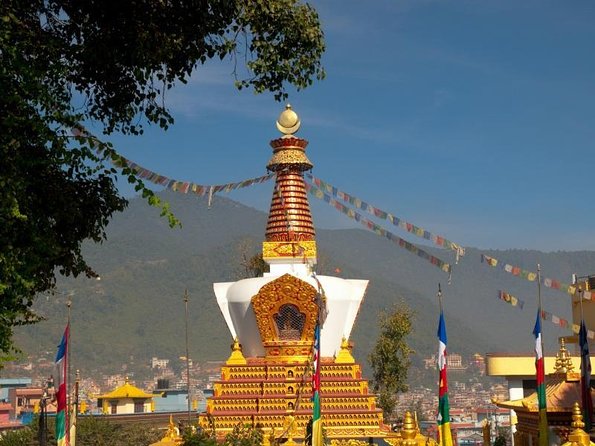
- Kathmandu sightseeing is built in: You visit Kathmandu Durbar Square, Swayambhunath, Boudhanath, and Pashupatinath while permits are prepared.
- The trail changes character daily: Expect hot springs, bamboo forest, millet fields, mani walls, monasteries, glaciers, and high mountain villages.
- The private format gives you flexibility: Only your group takes part, with an English-speaking guide and private transportation.
- The itinerary needs checking: Day 12 refers to Lukla, Namche, and Sagarmatha National Park, which belong to the Everest region, not this route.
What the Manaslu Circuit gives you for $799
At $799 per person, this is priced as a budget-minded private trek. The value is strongest if the listed inclusions are delivered as stated: airport pickup, private transportation, an English-speaking guide and the guide’s expenses, breakfast for 14 days, ten lunches, ten dinners, taxes, a first aid kit, a sleeping bag, and a down jacket.
That package takes care of several costs that can add up in Nepal. You do not need to arrange every road transfer yourself, and the sleeping bag and down jacket are useful on a trek that moves from warm river valleys to cold high country.
Still, read the meal count closely. Fourteen breakfasts are included, but only ten lunches and ten dinners. The trip is also described in three different ways: a 12-day trek, a 14-day experience, and approximately 14 days. Those details matter because extra nights, meals, transport, or guide services can affect the final price.
The fee does not cover your Nepal visa, travel insurance, or tips for guides, porters, and drivers. You should also confirm exactly how many trekking days are included and whether any porter service is part of your booking. Past trips have involved porters, but the listed inclusions do not clearly promise one.
More Manaslu Treks in Kathmandu
- Manaslu Circuit Trek
★ 5.0 · 292 reviews - Manaslu Circuit Trek:
★ 5.0 · 106 reviews - Manaslu Circuit Trek (15 Days)
★ 5.0 · 50 reviews
Kathmandu begins with temples and permits
Your first day starts at Tribhuvan International Airport, where a representative meets you and takes you to your hotel in Thamel. After check-in, you meet the guide, discuss the trip, and attend a welcome dinner. The airport transfer is a small but useful touch after a long flight, especially if this is your first visit to Kathmandu.
The next day combines sightseeing with practical preparation. While the company works on permits for the Manaslu Conservation Area and Annapurna Conservation Area, you visit four major sites: Kathmandu Durbar Square, Swayambhunath, Boudhanath, and Pashupatinath.
This is a good use of time. You see old royal courtyards, Buddhist shrines, and one of the city’s most important Hindu temples before the walking begins. You can also buy or arrange any missing trekking equipment.
The schedule gives you around six hours for sightseeing. Entrance fees are included on this day, but the experience is not simply a temple tour. It is also your chance to ask the guide about the route, check your gear, and make sure you understand the high-altitude days ahead.
The road to Arughat and the first village trails
Day three begins with an early breakfast and a long road journey northwest from Kathmandu. The route follows the Trishuli Highway and passes through gorges before reaching Arughat in Gorkha district.
The itinerary says the trek officially begins at Arughat, followed by a walk to Soti Khola. This is a useful point to clarify with the operator because the listed timing combines a road journey and trekking, while the stated duration is about seven hours. Road conditions in the region can affect the day more than the mileage suggests.
From here, the trail follows the Budhi Gandaki River. You pass through small settlements and begin to see why this circuit feels different from Nepal’s busier routes. The early stages are not all dramatic mountain views. They are about river valleys, rough paths, bridges, fields, and daily life in villages along the route.
Hot springs, bridges, and the route to Jagat
The next stage passes through Machha Khola, Khorlabesi, Tatopani, Dobhan, Tharo Bharyang, and Jagat. The itinerary describes a narrow trail beside Tharo Khola, a stop at Tatopani’s natural hot spring, and several crossings of the Budhi Gandaki and Yaru Khola.
This is one of the more varied walking days. You get river scenery, suspension bridges, rocky sections, and the chance to pause at a hot spring. The route then reaches Jagat, a village that marks a more formal entry into the trekking area.
Expect about six hours of walking, but do not judge the day only by the clock. River crossings and uneven paths can slow you down, and the description includes several distinct sections. A private guide can help set a sensible pace, which matters more than rushing to reach the next lodge.
More Trekking Tours in Kathmandu
- Everest Base Camp Trek – 14 Days
★ 5.0 · 1,499 reviews - Everest Base Camp Trek
★ 5.0 · 842 reviews - Everest Base Camp Trekking
★ 5.0 · 485 reviews - Annapurna Circuit Trek with Tilicho Lake
★ 5.0 · 368 reviews
Bamboo forest and Buddhist villages near Deng
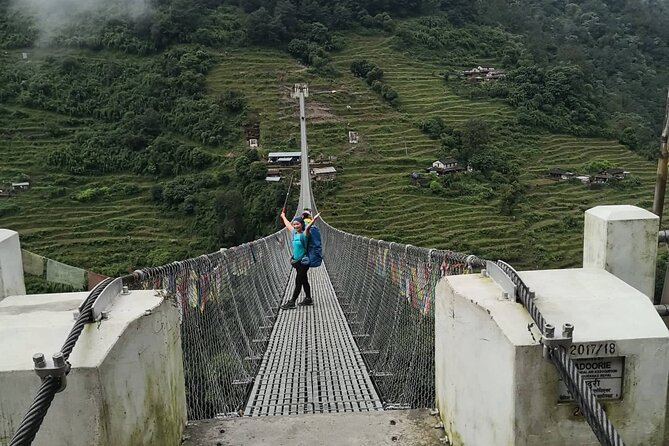
From Jagat, the trail climbs over a rocky ridge to Salleri before dropping toward Sirdibas. You then follow the river toward Philim, cross a long suspension bridge, and walk through millet fields to Ekle Bhatti.
The route continues across the Budhi Gandaki and through thick bamboo forest before reaching Deng. This section is appealing because the setting changes gradually. You are no longer simply following a broad road corridor. The trail becomes more enclosed, greener, and more foot-focused.
The day is listed at about seven hours. You should have a strong level of fitness, as the trip description advises. This is not a gentle sightseeing walk with mountain scenery added on. It is a sustained trek with repeated climbs, descents, bridges, and uneven ground.
Namrung and the first big Himalayan views
From Deng, the trail crosses the Budhi Gandaki several times and climbs toward Rana. You then continue west and stop at Prok, where the route offers views of Shringi Himal at 7,161 meters.
Monasteries appear along the way, adding a cultural layer to the mountain setting. The trail eventually reaches Namrung after about seven hours. This is where the scenery begins to feel more openly alpine, with larger peaks and wider views replacing the tighter river valley.
I would pay attention to the guide here. One guide named in the supplied information is Kumar, praised for pointing out local plants and features of the route. Another is Lal Mitra, described as a local guide with strong knowledge of the trekking area. You cannot assume either person will lead your group, so ask for the assigned guide’s name before departure.
Sama Gaon and the first clear view of Manaslu
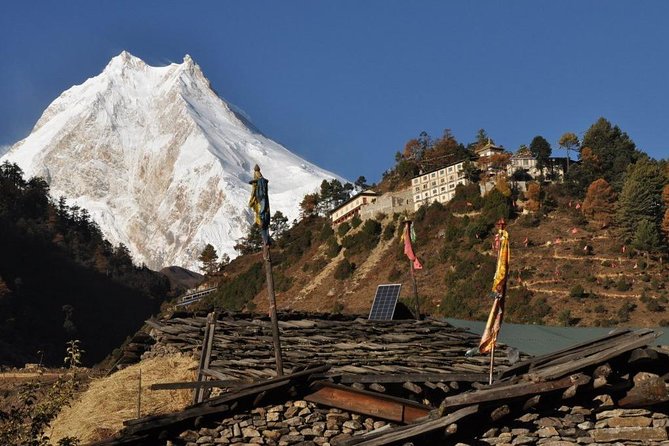
The walk from Namrung to Sama Gaon passes through Lihi, Sho, Lho, and Shyala. Lihi is a Buddhist village with chortens and barley terraces, while the route also crosses the side valley of Simnang Himal.
The mountain views build throughout the day. You may see Ganesh Himal, Shringi Himal, and Himal Chuli before reaching Sama Gaon, where Manaslu at 8,163 meters comes into view.
This is one of the strongest sections of the circuit because the villages and peaks arrive together. You are not just walking toward a mountain. You are moving through a series of settlements shaped by Buddhist practice, farming, and the high valley climate.
The day is listed at about seven hours, so you should not treat Sama Gaon as a quick stop. It is an important point in the route, and the following day is designed to help your body adjust before the pass section.
Manaslu Base Camp and Birendra Lake
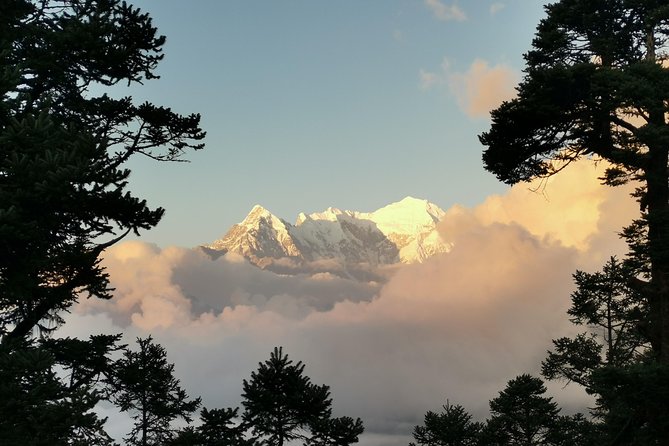
The out-and-back walk from Samagaun to Manaslu Base Camp takes around five hours. It is described as an easier day, but the altitude still makes it useful for acclimatization.
The route may include Birendra Lake, and the base camp provides views across the Manaslu range and toward Himal Chuli. This is a smart part of the plan. A rest or acclimatization day does not mean doing nothing. A controlled walk gives you time at altitude without the pressure of changing villages.
The itinerary lists this as a seven-hour day, although the stated walk to base camp and back is closer to five hours. Confirm how much time the group actually spends walking and resting. You should also tell your guide immediately if you feel unwell. The information provided does not describe a formal altitude protocol, so communication with your guide is especially important.
Samdo and Dharmasala before the pass
From Samagaun, you walk toward Samdo beside the Budhi Gandaki River and the Larkya La trail. Mani walls line parts of the route, and you pass Kermo Kharka before crossing the river toward Samdo and Kyonggma Kharka.
The following day continues from Samdo toward Syacha Khola and Dharmasala, also called Larkya Phedi. Views include Naike Peak at 6,211 meters and Larkya Glacier.
These days are listed at about six hours each, but their importance is greater than the time suggests. Dharmasala is the staging point for the pass crossing, and the high setting means you need to conserve energy. The trail is no longer a warm valley walk. Cold, altitude, and the early start for Larkya La can all shape how the day feels.
Larkya La at 5,160 meters
The pass day is the hardest part of the trip. From Dharmasala, you climb along the north side of the Larkya Glaciers, with views toward Cho Danda and Larkya Peak at 6,249 meters.
The final section is steep. At the top, the route opens to views of Himlung, Cheo, Manaslu, and the Annapurna ranges. You then descend toward Bimthang.
This is a serious mountain day, not just a scenic walk. The itinerary gives it about seven hours, but the pace will depend on altitude, weather, trail conditions, and how the group handles the climb. I would ask what happens if weather or health prevents a pass crossing, and I would confirm the expected start time.
The reward is a major one: the pass connects the Manaslu side of the route with the Bimthang side, and the descent gives the trek a real sense of crossing a mountain region rather than simply retracing a valley.
Bimthang, Tilije, and the itinerary problem
After reaching Bimthang, the route should continue down toward Tilije, Tal, Thonje, Dharapani, and Karte. The description says you leave Tilije for Tal, cross the Dudh Khola, enter the Annapurna Conservation Area, and have permits checked at Dharapani before continuing to Karte.
That section is a natural ending for a Manaslu Circuit itinerary. It also adds a second conservation area and a change in scenery after the high pass.
However, the supplied schedule has a major error on its listed Day 12. It says the final day goes from Namche to Lukla through Sagarmatha National Park, passing Monjo, Jorsalle, Bengkar, Phakding, and Chhuthawa. Those places belong to the Everest trekking route and do not fit the Manaslu Circuit described on the other days.
Day 13 then returns to Manaslu and mentions Tilije, Tal, Thonje, Dharapani, and Karte. This strongly suggests the day labels or text were mixed up. Get a corrected day-by-day plan in writing before you book, including the villages where you sleep and the transport route back to Kathmandu.
Guides, service, and private travel
The private format is useful for a trek with changing altitude and long walking days. Only your group takes part, so the guide can work with your pace rather than a large fixed group.
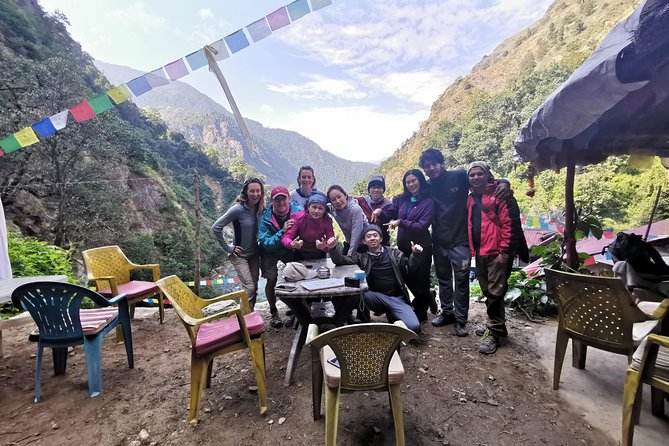
The company has arranged trips with guides including Samikshya, Kumar, and Lal Mitra, while Saran or Shoron has handled communication and Kathmandu planning on past bookings. The strongest service pattern is clear: quick replies before arrival, airport pickup, help with the first-day arrangements, and steady support through the trek.
That does not remove the need to ask practical questions. Confirm the guide’s name, the porter arrangement, the number of nights, meal coverage, and the return transport. The package includes a first aid kit, but it does not state the contents or describe evacuation coverage. Travel insurance is your responsibility.
Free cancellation is available if you cancel at least 24 hours before the local start time. Changes or cancellations inside that window are not accepted for a refund.
Who should book this Manaslu trek?
You should consider it if you want a demanding Himalayan route with village life, Buddhist sites, high passes, and a private guide. It suits a fit walker who is happy with roughly six to seven hours of trekking on many days and who understands that the pass day will be tougher.
It is less suitable if you want a short, easy Nepal holiday, dislike long road transfers, or need a fully polished itinerary with no unclear sections. The route itself is compelling, but the Day 12 error is too large to ignore.
Should you book it?
I would consider booking this trek for the route, the Manaslu views, the Manaslu Base Camp acclimatization day, and the useful equipment included in the $799 price. The private format and airport pickup also make the first few days easier.
I would book only after the operator corrects the itinerary in writing. Ask for the exact duration, lodging villages, porter terms, meal count, and return transport. If those details are confirmed and the guide is a good fit, this can be a strong-value way to tackle one of Nepal’s most rewarding high-altitude circuits.
FAQ
How long is the Manaslu Circuit Trek?
The experience is described as both a 12-day trek and a 14-day trip of approximately 14 days. Confirm the exact duration with Nepal Treks and Tour before booking.
Where does the experience begin?
Pickup begins at Tribhuvan International Airport in Kathmandu, Nepal. The listed start time is 7:45 am.
What mountain pass does the trek cross?
The route crosses Larkya La Pass at 5,160 meters. The pass day is described as the toughest part of the trek.
Is Kathmandu sightseeing included?
Yes. The Kathmandu portion includes Kathmandu Durbar Square, Swayambhunath, Boudhanath, and Pashupatinath. Admission tickets are included for this sightseeing day.
Is food included?
Breakfast is included for 14 days. The package also lists ten lunches and ten dinners. Ask the operator to confirm which days are not covered.
Is trekking equipment provided?
A sleeping bag and down jacket are provided on a complimentary basis. A first aid kit is also included.
What is not included in the price?
The Nepal visa fee, travel insurance, and tips for guides, porters, and drivers are not included.
Latest treks added in Kathmandu
- Private Manaslu Circuit Trek at Himalayas★ 5.0 · 3 reviews
- Ghorepani Poonhill Trek★ 5.0 · 5 reviews
- Ghorepani Poon Hill Trek★ 5.0 · 16 reviews
- Upper Mustang Trekking★ 3.0 · 2 reviews
- Amazing 1 Day Trekking Experience in Kathmandu Nepal★ 5.0 · 24 reviews
- Upper Mustang Trekking★ 5.0 · 2 reviews
- Upper Mustang Trek★ 5.0 · 5 reviews
- Upper Mustang Trekking★ 5.0 · 4 reviews
Manaslu Circuit Treks, compared.
16 Day Private Manaslu Circuit Trek from Kathmandu
Read our review →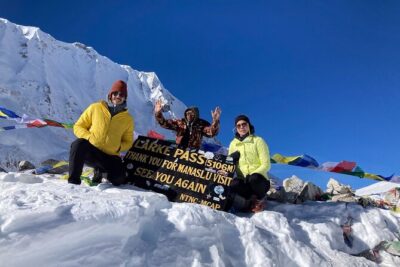
10 Days Manaslu Circuit Trek in Larke La Pass
Read our review →Browse the lists this tour appears in