
REVIEW · KATHMANDU
Experience the Thrill of a Lifetime:12-Days Manaslu Circuit trek
The Manaslu Circuit earns its reputation the hard way: you walk from river valleys and rice fields into cold, high country, then cross Larkya La Pass at roughly 5,100 meters before descending toward Dharapani. The scenery changes almost every day, and the trail feels far less crowded than Nepal’s best-known routes.
I like the strong cultural shift from Gurung villages to Tibetan-style settlements, and I like that the price covers permits, tea-house lodging, meals, transport, and a registered guide. The catch is simple: this is a demanding trek with long days, basic accommodation, thin air, and a final pass crossing that deserves respect.
Key points to know before you book
- Larkya La is the big test: The pass day can take about 10 hours and includes a rocky ascent, icy lakes, mountain views, and a long descent.
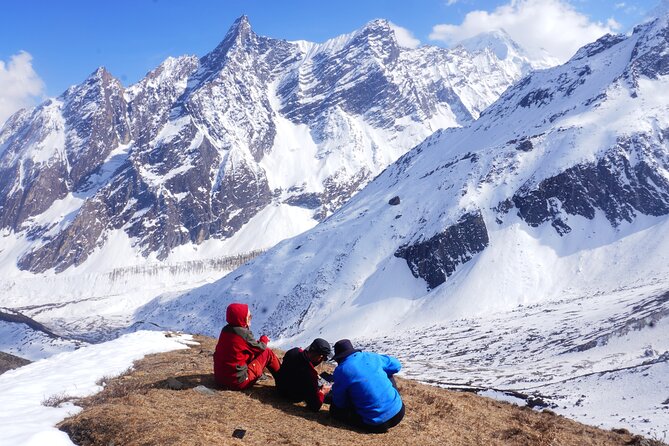
- The scenery keeps changing: Expect farmland, forest, rhododendrons, pasture, dry high-altitude country, and snow-covered peaks.
- Samagaun is your essential rest stop: The two-hour hike to Pungyen Gompa helps with acclimatization before you climb higher.
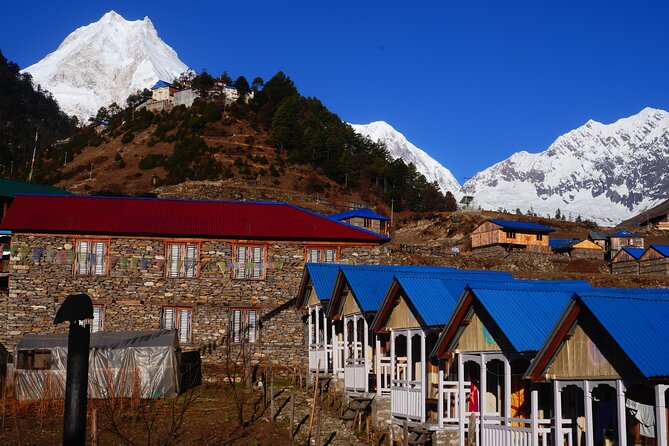
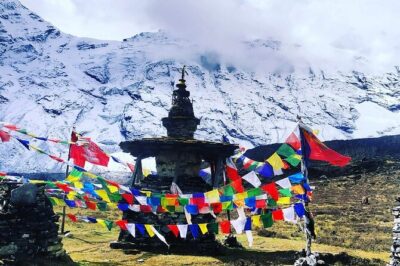
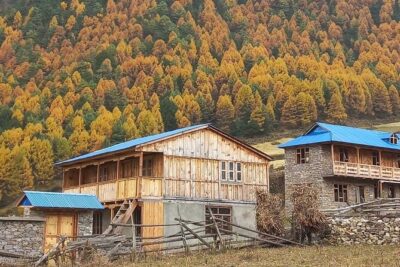
- The trek is culturally varied: Gurung villages, monasteries, chortens, prayer flags, Tibetan-style homes, and a Tibetan refugee camp are all part of the route.
- The $1,500 price covers the basics that matter: Permits, tea houses, meals, guide costs, and key transport are included, but insurance, bottled or boiled water, showers, Wi-Fi, tips, and personal purchases are extra.
- This is a private trip: Only your group takes part, so the pace and daily rhythm can be more personal than on a large group departure.
Why the Manaslu Circuit feels different from Nepal’s busier treks
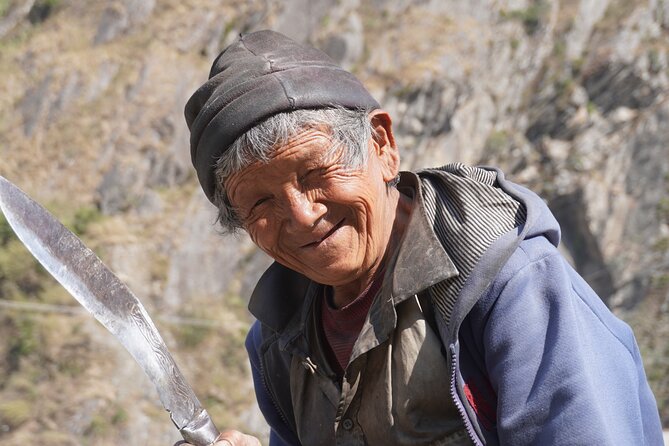
The Manaslu Circuit is a route of gradual change. You start beside the Budhi Gandaki River, with villages, farmland, and forest close at hand. By the time you reach Samdo and Dharmashala, the trees have largely given way to open, dry country and a much colder climate.
That progression is the main reason I recommend this trek to strong walkers who want more than a mountain postcard. You do not simply arrive at a viewpoint and leave. You watch the villages, vegetation, architecture, and weather change as your altitude increases.
The cultural side is just as important. Gurung communities live in several early villages, while higher settlements show clear Tibetan influence. You pass monasteries, chortens, prayer flags, and traditional houses. At Samdo, the village sits only about four kilometers from the Tibetan border and includes a Tibetan refugee camp.
The route also passes through an area known for wildlife. Himalayan thar, snow leopards, and many bird species are possible sightings, though no wildlife encounter is guaranteed. I would treat the animals as a bonus rather than a reason to book.
More Manaslu Treks in Kathmandu
- Manaslu Circuit Trek
★ 5.0 · 292 reviews - Manaslu Circuit Trek:
★ 5.0 · 106 reviews - Manaslu Circuit Trek (15 Days)
★ 5.0 · 50 reviews
What the $1,500 price really includes
At $1,500 per person, the trek offers solid practical value if you want a guided Manaslu experience with the main arrangements handled. The fee includes Manaslu Special, Manaslu Conservation Area, and Annapurna Conservation Area permits. Those permits are not optional, so having them included keeps an important piece of planning out of your hands.
Tea-house accommodation is included throughout the trek. These lodges are practical mountain shelters rather than comfortable hotels. Expect basic rooms and shared facilities, with conditions becoming simpler as you climb higher.
The package also includes 12 lunches, 12 dinners, and 11 breakfasts. Your registered guide’s food, lodging, salary, and insurance are covered as well. Transport is included at both ends of the trek: public transport to Soti Khola, followed by transport from Dharapani toward Kathmandu or Pokhara.
You still need to budget for personal costs. Bottled or boiled water, showers, Wi-Fi, laundry, bar bills, extra porters, and other purchases are excluded. Tips for guides and porters are also separate, and travel and rescue insurance is your responsibility.
That last item matters. This is a high-altitude trek with long walking days, so you should arrange suitable insurance before setting out. The price is good for the services listed, but it is not an all-in cost for every expense you might face in Nepal.
Days 1 and 2: Soti Khola and Machhakhola
Day one begins with a long drive from Kathmandu. You follow the Prithivi Highway, turn near Malekhu, and continue through villages and farmland before reaching Soti Khola after about eight to nine hours.
The walking on this first day is described as mostly flat along the Budhi Gandaki River, but the drive is the real feature. It is a full travel day, so do not expect an early arrival with time for a relaxed sightseeing stop. Soti Khola is your starting point for the trail, not a major attraction in itself.
On day two, you walk for about six hours through forest and villages toward Machhakhola. Lapu Besi is a notable stop, with a Gurung community and a more settled village feel than the trailhead area.
The path becomes more twisting as you follow the river and reach Machhakhola. This is a good early indication of how the trek works: bridges, forest, river noise, and steady changes in elevation rather than one dramatic climb.
Days 3 and 4: Hot springs, Jagat, and Philim
Day three takes you upstream through Khola Besi to Tatopani, known for its hot springs. It is a welcome feature on a route where your legs are beginning to feel the daily effort.
After Tatopani, you cross a suspension bridge and continue through forest. The route passes Doban and Lauri, with another bridge and an uphill section before reaching Jagat after about seven hours.
The bridges are not decoration. They are working parts of the route, and crossing them gives the early days a sense of adventure without requiring technical climbing. Jagat is also an important point in the route, with a more established village setting.
On day four, you cross another suspension bridge and continue toward Philim. Gurung communities, traditional houses, monasteries, and chortens give the village a strong cultural character. Philim is one of the better places to slow down and look around rather than treating the route as a race.
The walk continues across more bridges toward Deng, known for its agriculture. This six-hour day mixes village life and cultivated land with the first stronger sense that you are moving farther into the mountains.
More Trekking Tours in Kathmandu
- Everest Base Camp Trek – 14 Days
★ 5.0 · 1,499 reviews - Everest Base Camp Trek
★ 5.0 · 842 reviews - Everest Base Camp Trekking
★ 5.0 · 485 reviews - Annapurna Circuit Trek with Tilicho Lake
★ 5.0 · 368 reviews
Days 5 and 6: Namrung and the approach to Samagaun
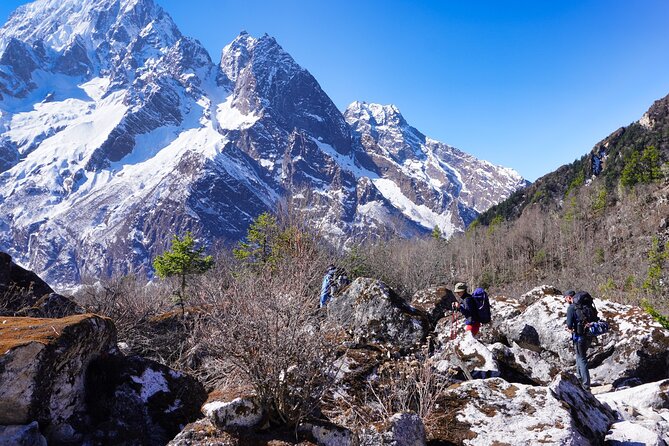
Day five begins on a relatively flat trail before climbing through forest toward Namrung. The reward is a broader view of Manaslu, along with ridges and valleys that make the route feel increasingly alpine.
Namrung is a Buddhist village with monasteries, chortens, and prayer flags. You will notice a clearer Tibetan influence here, both in the religious details and in the character of the settlement.
The walk takes about six hours, but the altitude is beginning to matter. You should keep a steady pace and drink regularly. There is no prize for reaching the tea house first, and moving too quickly can make the next few days harder.
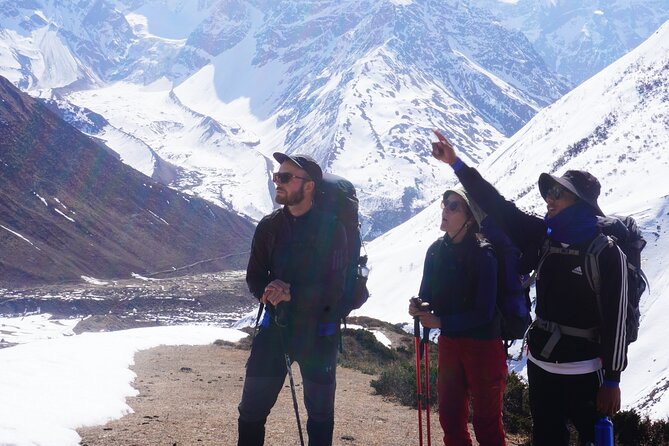
Day six is a seven-hour trek to Samagaun. You pass views toward Gorkha Himal, Lajing Himal, Saula Himal, and Manaslu. As you climb, the air grows colder and thinner, and the vegetation changes from rhododendron forest to pasture.
You also pass through Lhogaun, a Tibetan-style village, before reaching Samagaun. This is one of the route’s most rewarding transitions. The forest begins to thin, the buildings take on a different character, and the mountains feel much closer.
Day 7: Why the Samagaun acclimatization walk matters
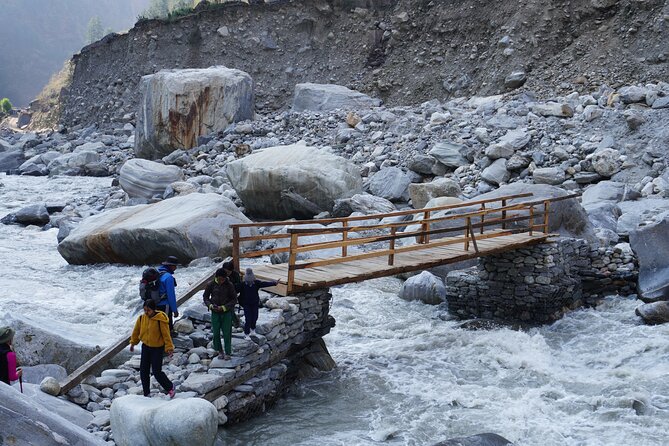
The extra day in Samagaun is not wasted time. It is built into the trek to help your body adjust before you climb higher toward Samdo and the pass.
The planned walk goes to Pungyen Gompa on the eastern side of the Nubri Valley and takes about two hours. The trail includes river crossings and views of forest and surrounding mountains. You can carry lunch and eat at a rest stop.
I like this day because it gives you a chance to see more of the area without changing tea houses. It also breaks up the steady upward push. At this altitude, the best strategy is often a shorter walk followed by rest, rather than trying to squeeze in another major destination.
Days 8 and 9: Samdo and Dharmashala
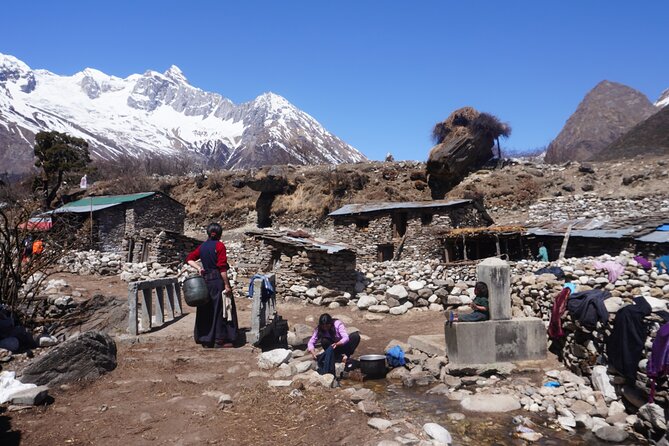
Day eight takes you from Samagaun to Samdo in about five hours. The route becomes drier and more open, with a mostly desert-like feel. Samdo sits close to the Tibetan border and has a Tibetan refugee camp, adding another layer to the cultural story of the trek.
The distance is only about four kilometers from the border, but the setting feels remote. This is high country, and you should expect colder air, less vegetation, and simpler facilities.
On day nine, you walk from Samdo to Dharmashala, also known as Larkya Phedi or Larkya base camp. The route covers about 11.7 kilometers and takes roughly three to four hours, passing the seasonal Larke Bazar, a Tibetan market.
Dharmashala sits at about 4,470 meters. The day itself is shorter than some earlier stages, but the altitude makes it significant. You are positioning yourself for the pass, and rest at this point is more useful than sightseeing.
Day 10: Crossing Larkya La Pass
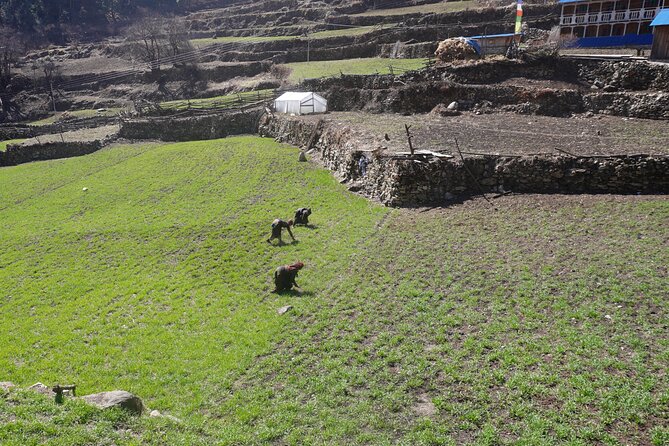
This is the day that defines the Manaslu Circuit. You start early from Dharmashala and climb along a winding, rocky trail toward Larkya La.
The ascent is described as moderately difficult, but the full day takes about 10 hours because the route includes both the climb and the long descent to Bimthang. At the pass, you may see Ratna Chuli, Cheo Himal, and Manaslu, along with a wide high-mountain panorama.
The descent brings icy lakes and a different kind of strain. Going downhill for hours can be just as tiring as climbing, especially after you have already spent the morning at high altitude.
You should approach this day with patience. Warm layers, water, snacks, and a slow pace are practical essentials. This is not the place to prove how fast you can walk. It is the place to manage your energy and follow your guide’s advice.
Days 11 and 12: Bimthang, Dharapani, and the road out
After the pass, day 11 continues across pasture toward the Budhi Khola Valley. You cross the river and enter rhododendron forest, a welcome return to lower, greener country.
The route passes Tije, an area with an apple orchard that is also known for wine. After another hour, you reach Dharapani. This six-hour day gives you a clear sense of descent, with warmer surroundings and more vegetation returning as you lose altitude.
Day 12 is mainly transport. After breakfast, you take a five-hour 4WD Jeep drive from Dharapani to Besisahar, then transfer toward Kathmandu or Pokhara. The total day is listed at about eight hours.
Road travel in the mountains can be tiring, and this final stretch is not a sightseeing day. Still, having the transport arranged is useful after nearly two weeks of walking.
Guides, group size, and the personal feel
This is a private activity, so only your group takes part. That can make a real difference on a demanding route. You are not tied to the speed of a large group, and the daily rhythm can be more personal.
The package includes a registered, experienced guide with food, accommodation, salary, and insurance covered. The company has worked with guides including Raj Rai, Jeewan, Lalu, and Zeewan on Manaslu and other Nepal treks. If a particular guide matters to you, ask who is assigned before booking rather than assuming a named guide is guaranteed.
The strongest practical praise associated with the company centers on communication, organization, guide care, and flexibility. One guide, Raj Rai, is specifically noted for strong English, while Jeewan, Lalu, and Zeewan are associated with attentive support and mountain experience.
That does not remove the need to ask sensible questions. Confirm the guide’s name, the transport arrangements, the expected group size, and what happens if the pace needs to change. Good communication before departure is especially useful on a route with long days and changing conditions.
Who should book this trek?
You should consider this trek if you have a moderate level of physical fitness and genuinely want a demanding Himalayan route. You need to be comfortable walking for six to ten hours on rough, steep, and sometimes rocky trails.
It suits you if cultural encounters matter as much as mountain views. Gurung villages, Buddhist sites, Tibetan-style settlements, and the Samdo refugee camp give the route more depth than a simple peak-viewing trip.
It is less suitable if you want hotel comfort, short walking days, or a flexible sightseeing holiday. Tea-house accommodation is basic, the drive to Soti Khola is long, and the Larkya La crossing is a serious day in the mountains.
Free cancellation is available up to 24 hours before the start time for a full refund. Within 24 hours, the payment is not refunded. Poor weather or failure to reach the minimum number of participants can lead to a different date, a different experience, or a full refund.
Should you book the 12-day Manaslu Circuit?
I would book this trek if you want a quieter alternative with big mountain views, strong cultural variety, and a clear high point at Larkya La. The $1,500 price is reasonable because it covers permits, lodging, meals, guide costs, and key transport.
Before paying, make sure you are prepared for basic tea houses, extra personal costs, a long road journey at both ends, and the 10-hour pass day. Ask about your guide assignment and buy travel and rescue insurance.
If you accept the effort, this route offers a rare mix: river valleys at the start, Tibetan-style villages in the high country, and a full mountain crossing rather than a quick viewpoint visit. For a fit and prepared walker, it is a strong choice.
FAQ
How long is the Manaslu Circuit trek?
The experience lasts approximately 12 days, including the approach drive from Kathmandu and the return transport from Dharapani toward Kathmandu or Pokhara.
What is included in the $1,500 price?
The price includes required trekking permits, tea-house accommodation, a registered guide and the guide’s food, lodging, salary, and insurance, transport to Soti Khola, transport from Dharapani, 12 lunches, 12 dinners, and 11 breakfasts.
Is this a private trek?
Yes. Only your group participates in this private tour or activity.
What fitness level is required?
The experience requires a moderate level of physical fitness. Walking days range from about two hours to ten hours, with steep and rocky sections and a high-altitude pass crossing.
Is travel insurance included?
No. Travel and rescue insurance are not included and must be arranged separately.
Are bottled water, showers, and Wi-Fi included?
No. Bottled or boiled water, showers, Wi-Fi, laundry, bar bills, and other personal expenses are excluded.
What happens on the highest and most difficult day?
You climb from Dharmashala to Larkya La Pass, then descend toward Bimthang. The day takes about 10 hours and includes a rocky trail, snow-covered mountain views, icy lakes, and a long descent.
Can I cancel for a full refund?
You can receive a full refund if you cancel at least 24 hours before the experience starts. Cancellations or changes made within 24 hours are not refunded or accepted. If poor weather or insufficient participation causes cancellation, you will be offered another date, another experience, or a full refund.
Latest treks added in Kathmandu
- Private Manaslu Circuit Trek at Himalayas★ 5.0 · 3 reviews
- Ghorepani Poonhill Trek★ 5.0 · 5 reviews
- Ghorepani Poon Hill Trek★ 5.0 · 16 reviews
- Upper Mustang Trekking★ 3.0 · 2 reviews
- Amazing 1 Day Trekking Experience in Kathmandu Nepal★ 5.0 · 24 reviews
- Upper Mustang Trekking★ 5.0 · 2 reviews
- Upper Mustang Trek★ 5.0 · 5 reviews
- Upper Mustang Trekking★ 5.0 · 4 reviews
Manaslu Circuit Treks, compared.
16 Day Private Manaslu Circuit Trek from Kathmandu
Read our review →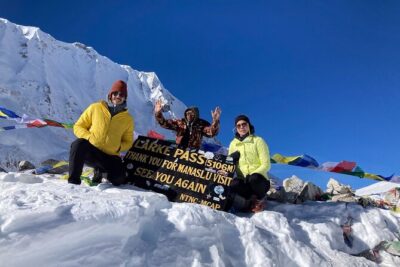
10 Days Manaslu Circuit Trek in Larke La Pass
Read our review →Browse the lists this tour appears in