
REVIEW · KATHMANDU
Annapurna Base Camp Trek – 10 Days
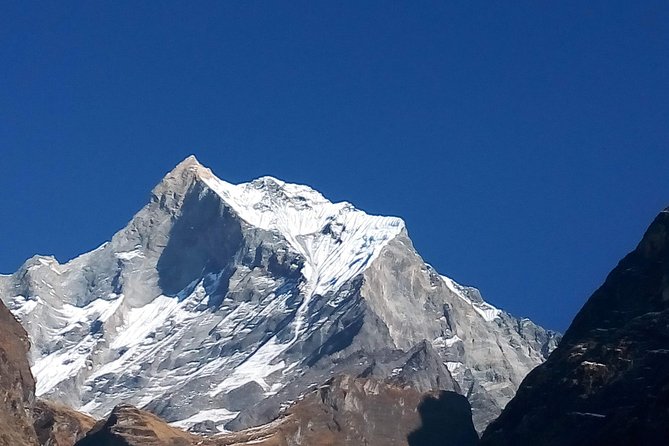
Annapurna Base Camp is the star here: a high mountain bowl at 4,130 meters surrounded by some of Nepal’s finest Himalayan peaks. Over 10 days, you move from Kathmandu’s temples and traffic to Pokhara’s lakefront, then into rhododendron woods, stone stairways, traditional villages, and the Annapurna Sanctuary.
I like two things right away. First, the package includes the costly practical pieces: airport transfers, Kathmandu and Pokhara hotels, tourist buses, tea houses, permits, guide expenses, and breakfast. Second, the route gives you more than a mountain photo. You pass through communities such as Ghandruk, Chhomrong, Sinuwa, and Jhinu Danda, where the trail itself is part of the story.
The main caution is the altitude and the pace. Reaching base camp means walking at a demanding elevation, with possible altitude-related illness and fast weather changes. The published schedule also contains a few timing inconsistencies, so I would ask the operator to confirm the exact day-by-day plan before paying.
Key points to know before booking
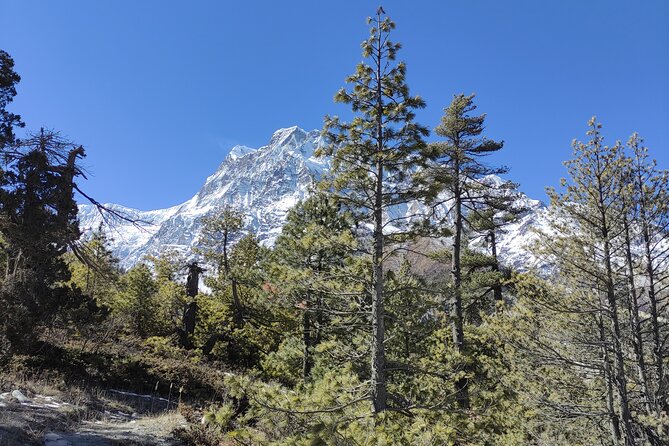
- Base camp reaches 4,130 meters: This is a serious high-altitude trek, not a gentle village walk.
- Six nights are in tea houses: Expect basic mountain lodging rather than hotel comfort during the main trek.
- Pokhara transport is arranged: Private car transfers connect Pokhara with Nayapul, while Kathmandu and Pokhara are linked by a tourist bus.
- The group can be private: Your booking is limited to your own group, with a maximum of 12 people.
- Guide support is a major part of the package: Licensed guides handle trekking support, permits, transport, insurance, equipment, food, and first aid arrangements.
- The realistic cost is above $699: Add about $150 for food not covered in Kathmandu and Pokhara, plus the suggested $50 gratuity.
From Kathmandu temples to Pokhara’s lake
Your first day begins with an airport pickup at Tribhuvan International Airport. A staff member takes you to your Kathmandu hotel, where you meet the guide and settle in. The plan also places you in Thamel, a useful base for last-minute gear, meals, and permit preparations.
Kathmandu’s suggested sights include Kathmandu Durbar Square and Pashupatinath Temple. Swayambhunath, Chandragiri Hills, the Garden of Dreams, and the Narayanhiti Palace Museum also appear in the broader schedule. These stops are not presented as separately ticketed guided visits, so confirm which ones are actually included and when you will see them.
The move to Pokhara is by luxury tourist bus. This is not a quick hop. It is a full travel day, but the route follows rivers and opens to broad views along the way. I prefer this kind of overland transfer to treating Pokhara as a mere airport stop, since it gives you a better sense of Nepal’s changing scenery and road travel.
You receive two nights in Pokhara at a three-star hotel with breakfast. Pokhara is a sensible place to pause before the trek. Phewa Tal, Sarangkot, and the lakeside area provide a gentler contrast to the stone steps ahead. The itinerary also lists private-car transport between Pokhara and Nayapul, the usual trail access point for this route.
More Annapurna Treks in Kathmandu
- Annapurna Circuit Trek with Tilicho Lake
★ 5.0 · 368 reviews - Annapurna base camp trek 5 Days
★ 5.0 · 252 reviews - 14-Day Private Annapurna Base Camp Trek
★ 5.0 · 180 reviews
Ghandruk and the first serious walking days
The schedule refers to Ghandruk before the Chhomrong section, although the day-by-day listing is not perfectly aligned. Ask the company to clarify where your first trekking night falls and how the road transfer is handled.
Ghandruk is one of the most appealing village stops on the route. From there, the trail heads through woodland and rhododendron country toward Chhomrong. The walking includes steady climbs and descents over uneven ground, so this is where the trip begins to feel like a real trek rather than a scenic outing.
Chhomrong is an important staging point for the Annapurna Sanctuary. The village sits among steep hills, and the route from here is shaped by steps, slopes, and changing views. The itinerary specifically warns that this can be a tough day. Take that seriously, especially if your normal exercise is on flat ground.
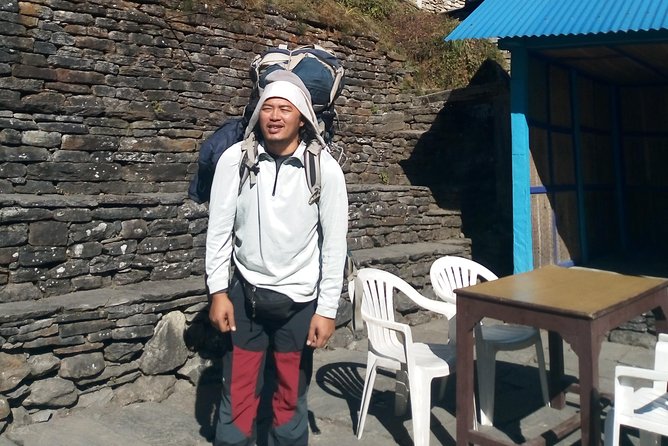
A useful detail is the support structure. The guide’s package includes food, drinks, accommodation, insurance, salary, equipment, transportation, and local taxes for the guide. Porters are also part of the local trekking system, though you should confirm exactly how your luggage allowance and porter arrangements work before departure.
Stone steps, Sinuwa, and the Annapurna Sanctuary
The route continues toward the Chhomrong Khola, then climbs about 2,500 stone steps to Sinuwa. This is one of the trek’s defining physical tests. The number sounds intimidating because it is, but the reward is a steady transition from settled hillsides into a more enclosed mountain environment.
Sinuwa is listed on both the outward and return portions of the trek. From here, the trail follows the river and passes through the Annapurna Conservation Area. Small bridges, wet forest sections, and steep paths make footing important. Trekking poles would be useful, and the company says gear can be bought or rented in Kathmandu with help from the guide.
The approach to base camp passes Bagar and then Machhapuchhre Base Camp. The trail climbs gradually alongside the river before turning toward the high sanctuary. This section can feel strenuous because the air is thinner and the route continues to gain height.
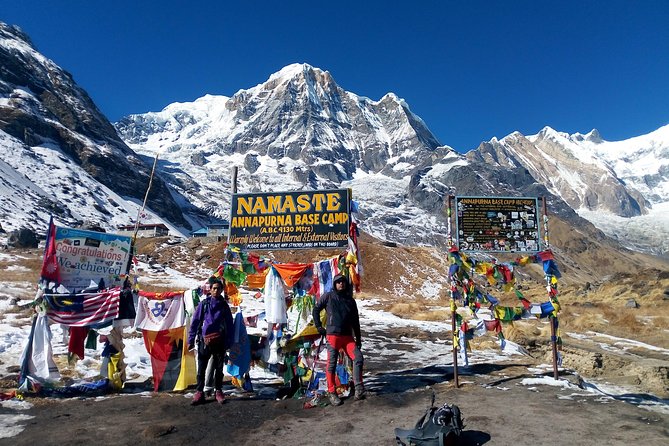
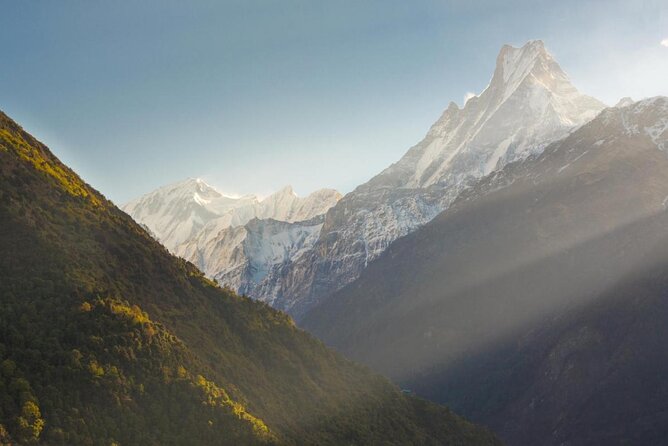
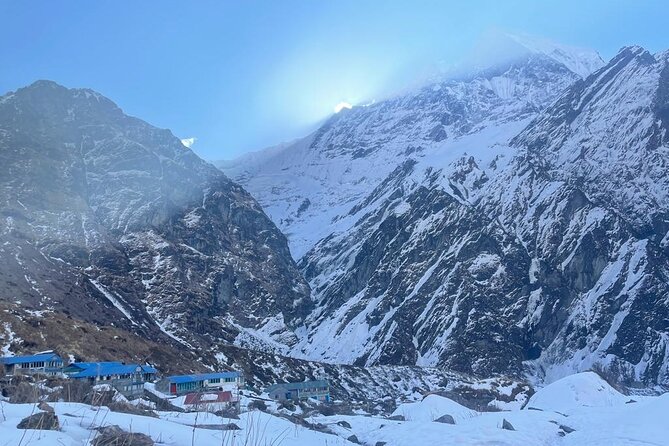
The reward is the setting at Annapurna Base Camp. At 4,130 meters, you are surrounded by Himalayan peaks rather than simply looking at them from a distant viewpoint. The Annapurna range and Machhapuchhre are the visual focus, with the mountain bowl giving the stop its special character.
Do not treat the base camp arrival as a guaranteed victory over the mountain. The altitude can affect you regardless of age, fitness, or gender. Headache, nausea, unusual tiredness, or other symptoms should be reported to the guide. The company requires travel insurance covering medical expenses and emergency repatriation, and you should carry proof of that insurance on the first day.
The return through bamboo and Jhinu Danda
The return route retraces much of the approach, first moving back toward Bamboo and Sinuwa. The sanctuary has a moist, enclosed feel, with the trail crossing small bridges and following the river corridor. Going downhill is not always easy. Your knees may find the stone steps more tiring on the way down than they did on the way up.
The route then continues toward Jhinu Danda. The path climbs from Bamboo toward Kuldighar, descends to the Chhomrong Khola, and climbs again toward Chhomrong before continuing onward. This repeated up-and-down pattern is a good reason to keep your daily pack light.
Jhinu Danda is a welcome late-stage stop in the schedule. The itinerary highlights the surrounding countryside and the route toward Nayapul, with distant Annapurna views and farms planted with rice. It is a quieter finish to the mountain section, far removed from Kathmandu’s urban noise.
The final trekking day takes you to Nayapul, followed by private transport to Pokhara. You get another night in Pokhara, with Phewa Tal and Sarangkot listed as nearby points of interest. This pause matters. After several days on foot, the lakefront gives you time to rest, eat a proper meal, and sort your gear before the return to Kathmandu.
Another trail to compare in Kathmandu:
- Everest Base Camp Trek – 14 Days
★ 5.0 · 1,499 reviews - Everest Base Camp Trek
★ 5.0 · 842 reviews - Everest Base Camp Trekking
★ 5.0 · 485 reviews - Everest Base Camp Trekking – 13 Day
★ 5.0 · 365 reviews
Tea houses, hotels, and what the package really covers
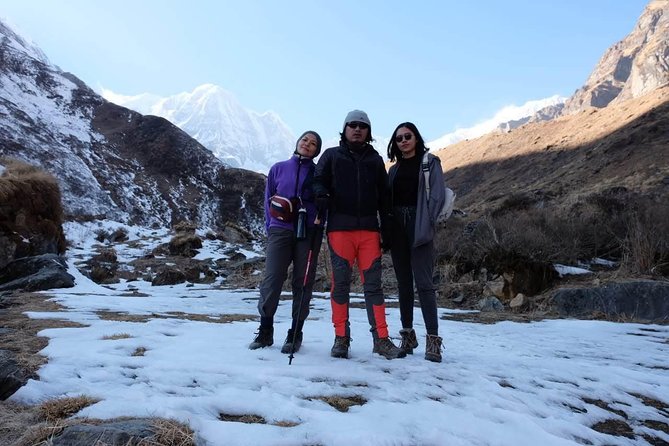
The accommodation arrangement is practical rather than luxurious. Two nights in Kathmandu and two nights in Pokhara are in three-star hotels with breakfast. The six trekking nights are in tea houses, the standard form of mountain lodging on this route.
Tea houses are valuable because they keep you close to the trail and local communities. They are also basic. The supplied information does not promise private rooms, attached bathrooms, heating, or internet, so ask about those details if comfort matters to you.
The listed price is $699 per person. That is a competitive starting figure for a private 10-day package containing airport transfers, hotels, tea houses, transport, a licensed guide, government taxes, breakfast, a first-aid kit, and a company T-shirt.
Still, budget honestly. Lunch and dinner in Kathmandu and Pokhara are excluded, with an estimated additional cost of $150 per person. A $50 gratuity is also listed. That brings the practical total to about $899 before personal purchases, gear rental, drinks outside the included meals, insurance, and any other extras.
There is some ambiguity around meals. Dinner is listed among the inclusions, while lunch and dinner in Kathmandu and Pokhara are excluded. Breakfast is specified as nine meals, and a farewell dinner with cultural show is included. Ask for a written meal breakdown so you know which dinners are covered on which nights.
Guides, group size, and personal support
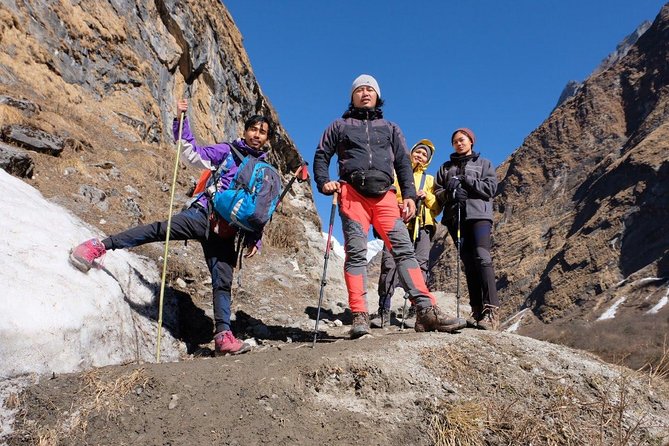
The trip is described as a private activity for your own group, with a maximum of 12 people. That is a useful middle ground. You avoid being added to a large public group, but you still have the social energy of a small team if you book with family or friends.
The guide is not just a walking companion. The company says its government-licensed trekking guides receive food, drinks, accommodation, insurance, salary, equipment, transportation, and local tax support. Guides also have basic first-aid training and know the location of nearby medical facilities.
Several guides have been praised by name in past bookings, including Santosh, Raju Simkhada, Dibo, Varat, and Asok. Their roles and availability can change, so do not assume one of those people will lead your group. Ask who is assigned and how many porters will support your booking.
The personal stories attached to this trip place unusual emphasis on friendly guide relationships, patient support, shared meals, jokes, singing, and dancing during the trek. That matters on a route with long walking days. A good guide can help you adjust the pace, notice early signs of trouble, and keep morale up when the stairs seem endless.
The company also offers a $200 per group supplement for a guide speaking a language other than English. If that matters to you, arrange it in advance rather than hoping for a last-minute match.
Preparation, permits, and the small print
You need a passport valid for at least six months, a clear color passport copy, two passport-size photographs, your occupation, and your home address for permits. Send your Nepal arrival details ahead of time so the airport pickup can be organized correctly.
Extra luggage can be left at the company office or hotel and collected after the trek. This is useful because you do not need to carry city clothes and nonessential items over the mountain section.
The minimum age is seven, but the altitude warning matters more than the age rule. A child may be allowed to join and still be poorly suited to the elevation or long stairways. The company asks for moderate physical fitness, and I would treat that as a minimum rather than a target.
You should speak with your doctor before departure, particularly if you have any medical condition or past altitude problems. Travel insurance with emergency repatriation is required. Free cancellation is available up to 24 hours before the experience begins, while cancellations or changes inside that window are not refunded or accepted.
Who should book this Annapurna trek?
I would choose this trip if you want a structured first Himalayan trek without arranging every transfer, hotel, permit, and guide separately. It suits couples, friends, and solo participants who want a private group arrangement and a clear support system.
It is also a good match if you value cultural stops and villages as much as mountain views. The route gives you Kathmandu temples, Pokhara’s lake, Ghandruk, Chhomrong, Sinuwa, rice farms, tea houses, and the high sanctuary in one package.
I would hesitate if you want a soft adventure, hotel comfort throughout, or a generous acclimatization schedule. Ten days includes city travel, the trek itself, and the return to Kathmandu. The itinerary also contains confusing references to the timing of Pokhara and Kathmandu days, so confirm the final schedule, trekking distances, sleeping points, and contingency plan before booking.
Should you book it?
Book it if the $699 starting price fits your budget after adding food, gratuity, insurance, and personal costs, and if you are ready for 4,130-meter walking days. The package offers strong practical value, local guide support, and a route that reaches one of Nepal’s most dramatic mountain destinations.
Before committing, get three things in writing: the exact day-by-day schedule, the meal inclusions, and the name of your guide. With those details settled, this is a sensible way to reach Annapurna Base Camp while leaving the transport and mountain logistics to a local team.
FAQ
How high is Annapurna Base Camp?
Annapurna Base Camp is at approximately 4,130 meters, or 13,550 feet, above sea level. The altitude can cause adverse health effects regardless of age, gender, or fitness.
What accommodation is included?
The package includes two nights in Kathmandu and two nights in Pokhara at three-star hotels with breakfast. It also includes six nights in tea houses during the trek.
Are meals included?
Nine breakfasts are included, along with a listed dinner and a farewell dinner with cultural show. Lunch and dinner in Kathmandu and Pokhara are excluded, with an estimated additional cost of $150 per person. Ask the operator for a night-by-night meal breakdown.
Is airport transportation included?
Yes. Transfers to and from Tribhuvan International Airport are included. You need to send your Nepal arrival details in advance so the pickup can be arranged.
What fitness level is required?
A moderate level of physical fitness is required. The route includes uneven trails, repeated climbs and descents, and about 2,500 stone steps on the approach to Sinuwa.
What is the cancellation policy?
You can receive a full refund if you cancel at least 24 hours before the experience start time. Cancellations and changes made less than 24 hours before the start are not accepted or refunded.
Latest treks added in Kathmandu
- Ghorepani Poon Hill Trek★ 5.0 · 16 reviews
- Private Manaslu Circuit Trek at Himalayas★ 5.0 · 3 reviews
- Ghorepani Poonhill Trek★ 5.0 · 5 reviews
- Upper Mustang Trekking★ 3.0 · 2 reviews
- Amazing 1 Day Trekking Experience in Kathmandu Nepal★ 5.0 · 24 reviews
- Upper Mustang Trekking★ 5.0 · 2 reviews
- Upper Mustang Trek★ 5.0 · 5 reviews
- Upper Mustang Trekking★ 5.0 · 4 reviews
Annapurna Base Camp Treks, compared.




Trekking in Annapurna/Langtang/Everest/Upper Mustang regions
Read our review →


Kathmandu to Annapurna Base Camp (ABC) 5-Day Trek
Read our review →Browse the lists this tour appears in