
REVIEW · HANOI
2-Day SAPA Trekking – Villages-Homestay-Ethnic-Local Food-Market
The best part of this trip is the walk through Sapa’s rice terraces and mountain villages, followed by a night in a local family’s cottage. You get more than a quick photo stop: the route links Y Linh Ho, Lao Chai, Ta Van, and Giang Ta Chai on foot.
I like the small taste of village life, especially the home-cooked meals and chance to learn about Hmong, Dzao, Tay, and Giay communities. I also like the price: $85 includes transport from Hanoi, meals, a guide, entrance fees, water, and the homestay. The drawback is the long first day, with an early Hanoi pickup, a long bus ride, and several hours of trekking.
Key points at a glance
- Y Linh Ho to Ta Van on foot: Follow rice terraces and the Muong Hoa Stream rather than seeing Sapa only from a road.
- A local cottage stay: Spend the night in Ta Van with a private room or shared bathroom arrangement.
- Four ethnic communities in one trip: The route introduces you to Hmong, Dzao, Tay, and Giay culture.
- A second morning in the hills: Walk about 4 kilometers through rice paddies and bamboo forest toward Giang Ta Chai.
- Meals included: You receive two lunches, dinner, and breakfast, with local food forming an important part of the stay.
- A group of up to 22 people: The tour offers social energy and a lower price, but it will not feel like a private mountain walk.
Why this two-day Sapa trip works
Sapa is easy to reach from Hanoi, but the best parts are away from the town center. This tour takes you from the city to village paths, terraced fields, streams, bridges, and family homes in a single busy visit.
You begin with a 6:00 to 6:30 am pickup in Hanoi’s Old Quarter. The bus follows the highway toward Lao Cai, with rest stops at about 9:30 and 11:00 before climbing toward Sapa. You arrive around 1:30 pm, eat lunch at a local restaurant, and begin trekking at about 2:30 pm.
That timing matters. You are not getting a full day of hiking after leaving Hanoi. You are getting a travel day with an afternoon trek, followed by a full morning on foot the next day. I see this as a sensible compromise for anyone with only two days, though serious hikers may wish for more time in the hills.
The tour is priced at $85 per person. For that amount, you receive transport, an English-speaking guide, the homestay, meals, entrance fees, and mineral water. A separate transfer charge of $15 per person for the two-way transfer is listed, so check the final price carefully before booking. A solo visitor also pays a $20 supplement for a private room.
More Homestay Treks in Hanoi
- Hanoi – Sapa 2 Days 1 Night Overnight At Homestay
★ 5.0 · 899 reviews - From Hanoi: 2-Day Sapa Trekking Trip with Homestay & Meals
★ 4.8 · 704 reviews - 2-Day Sa Pa Ethnic Homestay Tour & Trek with Limousine Bus
★ 4.8 · 440 reviews
From Hanoi to the high country
The first hours are mainly about getting to Sapa. The early pickup is useful if you are staying in Hanoi’s Old Quarter, but it is an early start. You will spend much of the morning on the bus, with two scheduled breaks before reaching Lao Cai and then Sapa.
When you arrive, the town gives you a quick introduction to the region’s ethnic identity. Hmong, Dzao, and Tay people are associated with colorful traditional clothing, and the guide takes you to a local restaurant for lunch before the walking begins.
I would not book this trip expecting a leisurely morning in Sapa Town. The town is your starting point, not the main event. The reward comes after lunch, when the route leaves the streets and reaches the valley.
Y Linh Ho and the first rice terraces
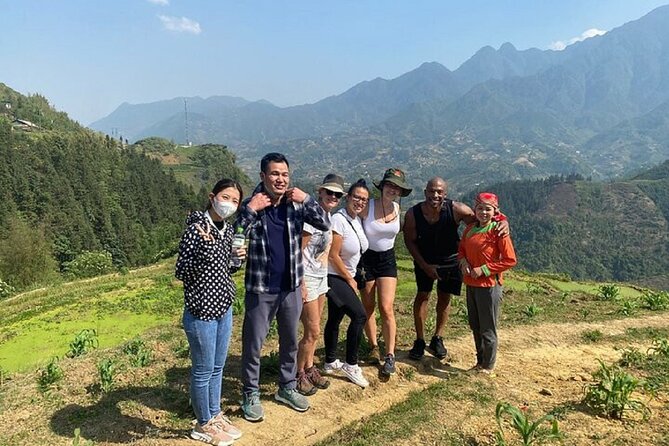
The afternoon trek begins at Y Linh Ho. Local tradition connects the village’s name with Ly Linh Ho, described as the first person to establish the settlement. Dao people lived in the area before moving elsewhere, and Hmong people later arrived while the original name remained.
That story gives the village a human scale. You are not simply passing through a scenic viewpoint. You are walking through a place shaped by families, farming, and movement between communities.
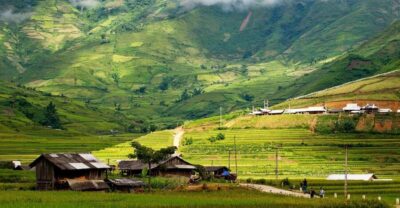
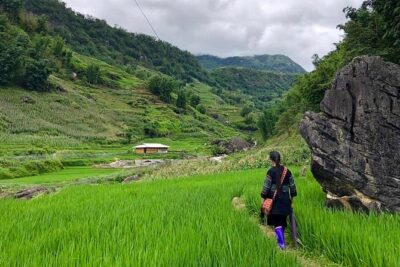
From Y Linh Ho, the path leads through rice terraces and follows the Muong Hoa Stream. This is where the trip begins to feel properly rural. You will need to pay attention to your footing, since a route across narrow paths and fields is more demanding than a paved village walk.
The scenery changes with the farming season. The information for the tour points to September through April as a particularly good period for Lao Chai, when the terraces are especially attractive. Conditions can vary, so I would still treat this as a seasonal suggestion rather than a guarantee of perfect views.
Lao Chai and the Muong Hoa valley
Lao Chai sits among rice and corn terraces, with mountain slopes rising around the settlement. The route gives you a chance to trace narrow paths across the fields and look back toward the village, the river, and the Hoang Lien Son range.
This is one of the strongest parts of the experience for anyone who prefers walking to sightseeing from a vehicle. The views unfold as you move, and the setting changes from terrace to stream to village path.
The walk also requires a reasonable level of fitness. The first day lasts about 12 hours from Hanoi departure to the end of the day’s activities, even though only part of that time is spent hiking. Add the bus ride, uneven paths, and changing weather, and you should arrive ready for a full day.
One useful detail comes from the practical experience of the trip: the walking is described as good exercise. Pack light, wear shoes with a firm grip, and keep water accessible. Mineral water is included, but you should still bring anything else you normally need during a long walk.
More Homestay Treks in Vietnam
- Hanoi – Sapa 3 Day 2 Night Trekking With Hotel & Homestay
★ 5.0 · 389 reviews - Hanoi – Sapa 2 Days 1 Night Overnight At Local Homestay
★ 5.0 · 233 reviews - From Hanoi: 2-Day Luxury Sapa Trekking Tour with Homestay
★ 4.4 · 49 reviews - 3-Night Sapa Trek and Homestay with Round Trip Transfer from Hanoi
★ 4.5 · 37 reviews
Ta Van and the family homestay
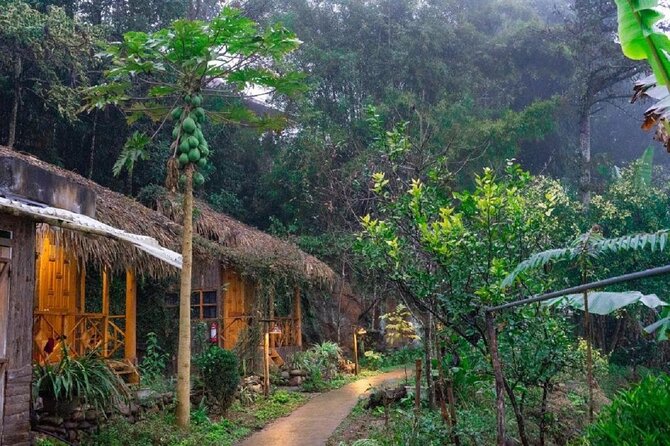
The route approaches Ta Van Village, where you stay overnight. The village is associated with Black Hmong families, along with Giay and Dao communities. A wooden bridge crosses the Muong Hoa water stream, and the Giay community lies near that approach, while the Dao community is farther up the hill.
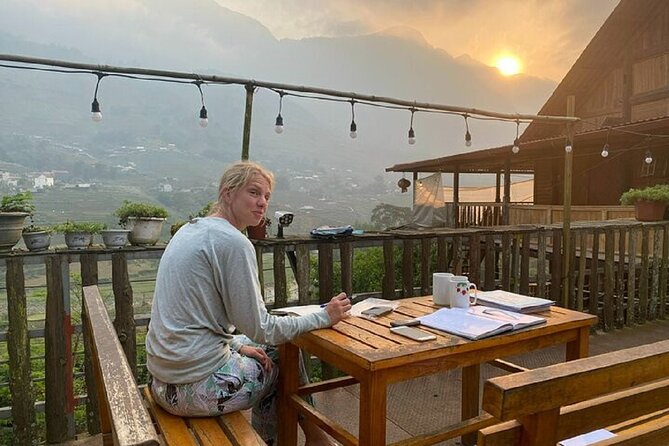
Ta Van is not just a bed for the night. It is the point where the trip shifts from looking at mountain scenery to spending time in a local setting. You stay in a cottage or local house, with a private room option and shared bathroom arrangements. If you are traveling alone and want a private room, the listed supplement is $20.
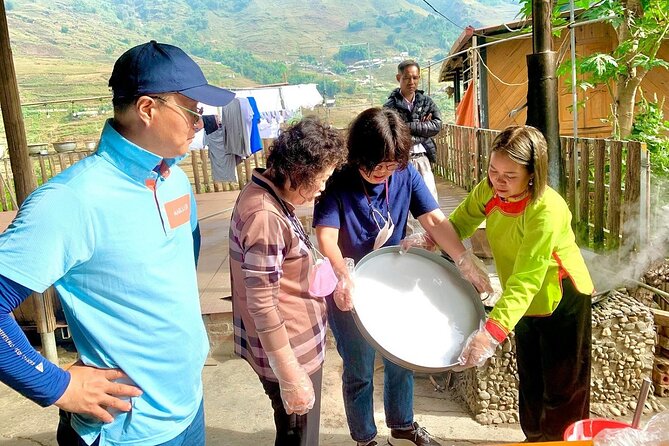
The included dinner is an important part of the visit. The food is prepared locally, and breakfast comes from the host family the next morning. The exact dishes are not specified, so you should think of this as a home-style meal experience rather than a restaurant menu with fixed choices.
The homestay is also where you need realistic expectations. This is not a resort stay. A local house, shared facilities, and a rural setting suit people who value contact with village life over polished comfort. If you require hotel-style amenities, the arrangement may feel basic.
The village has a connection with farming and tourism services. If you visit in mid-November or December, the Giay community’s wedding season may add a special cultural detail, though the tour does not promise that a ceremony will take place during your visit.
The second morning near Giang Ta Chai
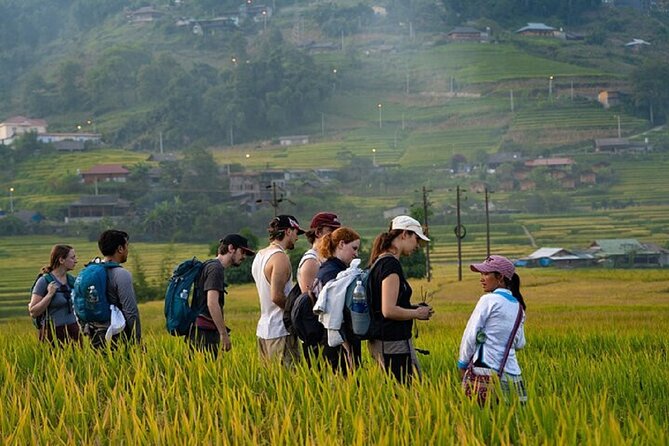
Day two begins with breakfast at the family home around 8:00 am. At 8:45, you set out again across rice paddies, stopping for views of the surrounding hills before entering a bamboo forest.
The trek covers about 4 kilometers and takes roughly two hours. That is shorter than the first afternoon’s route, but it still involves uneven ground and a steady walk. The bamboo forest and the panorama toward Giang Ta Chai give the morning a different feel from the open terraces around Lao Chai.
Giang Ta Chai is linked with the Red Dzao community. The route reaches the Giang Ta Chai Bridge and then continues to the main road around 11:00 am. This second walk is valuable because it lets you see another village area rather than simply retracing the previous day’s route.
After the morning trek, you return to the bungalow to shower and prepare for lunch. Lunch is served from 12:30 to 1:30 pm, followed by pickup by bus or car to return to the bus station. The return transfer then begins the journey back toward Hanoi.
The schedule is fairly tight. You have time to wash, eat, and prepare, but not a long afternoon to linger in the village. If you want extended time for photography or quiet wandering, this tour may feel rushed.
What the guide adds to the walk
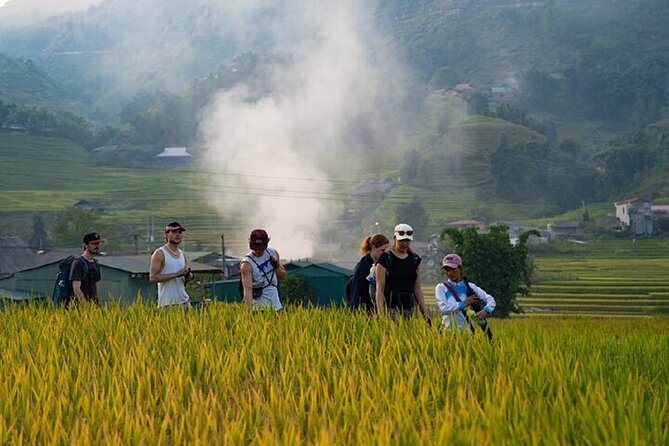
An English-speaking guide leads the group through the villages and along the mountain paths. That matters because the experience depends on context. Without a guide, you could still see terraces and houses, but you would have fewer chances to understand the communities connected to the route.
The available information does not provide a guide’s name, so I cannot point you to a particular individual. It does indicate that the guide handles the village trek, explains the route, and helps connect the scenery with local culture.
One useful point is that the guide’s strength appears to be the route and local experience more than detailed natural history. If you want to know the names of plants, birds, or other wildlife, ask directly, but do not book this primarily as a flora and fauna walk.
The group can include up to 22 people. That keeps the cost down and can make the journey more social, but it also means the pace may be shaped by the whole group. Private guiding is not part of the listed arrangement.
Meals, comfort, and what to pack
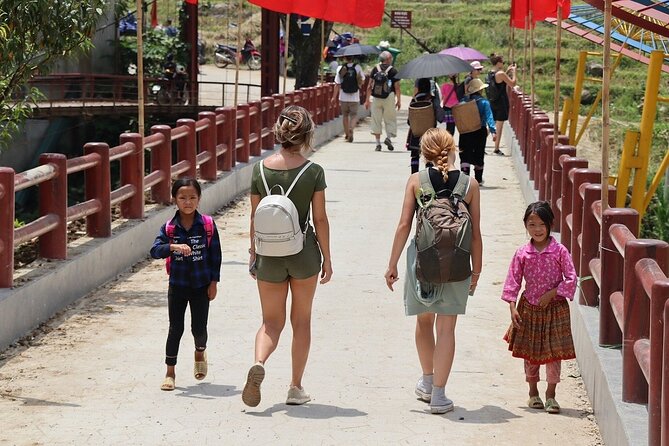
The package includes two lunches, dinner, and breakfast. Lunch on the first day is at a local restaurant in Sapa, while the homestay provides dinner and breakfast. The second day includes another lunch before the return transfer.
You also receive mineral water and entrance fees for the listed stops. Drinks and personal extras are not included, so keep some money available for anything beyond the planned meals and water.
For clothing, focus on practical items:
- Shoes with good grip for terrace paths and village trails
- Light clothing that can handle a warm walk
- A warmer layer for Sapa’s mountain weather
- A small overnight bag rather than a large suitcase
- Rain protection, especially because the trip requires suitable weather
- Cash for drinks and personal purchases
The tour requires good weather. If poor weather cancels the experience, you are offered another date or a full refund. You can also cancel for a full refund up to 24 hours before the start time. Changes or cancellations made later are not accepted.
Is $85 good value?
At $85, the trip offers solid value if you want transport from Hanoi and a guided village stay without arranging each piece yourself. The cost covers the long-distance bus, local transfers described in the schedule, guide, homestay, meals, water, and entrance fees.
The value is strongest for first-time visitors who want a short introduction to Sapa’s countryside. You avoid the work of comparing buses, finding a village guide, arranging a homestay, and planning meals.
The price is less attractive if you already have transport to Sapa or want a private trek. The group may reach 22 people, and the separate $15 two-way transfer charge should be confirmed before you pay. Solo visitors who want their own room also need to add $20.
I see this as a practical package, not a luxury escape. You are paying for access, organization, and a cultural route rather than high-end accommodation.
Who should book this Sapa trek?
I would choose this tour if you have only two days, want to walk through rice terraces, and prefer a family homestay to a standard hotel. It also suits you if local food, ethnic villages, and a guided route matter more than free time.
You should be comfortable with an early start, a long first day, basic homestay facilities, and several hours of walking. The trip is listed as suitable for most people, but that does not remove the need for reasonable walking fitness.
I would look elsewhere if you want a slow schedule, a private guide, a guaranteed room with a private bathroom, or detailed wildlife interpretation. You may also prefer a longer Sapa stay if you want more time in the villages and less time on the Hanoi to Sapa bus.
Should you book it?
Book this two-day Sapa trip if you want a compact introduction to northern Vietnam’s mountain communities, with the main rewards being the Y Linh Ho to Ta Van walk, the family homestay, and the second morning near Giang Ta Chai.
Before paying, confirm the $15 transfer fee, room arrangement, pickup details, and group size. If those terms suit you, $85 buys a useful mix of transport, food, walking, and local contact. Just bring sturdy shoes and a willingness to trade hotel polish for a more direct village experience.
FAQ
Where does the tour begin?
The tour begins with pickup from hotels in Hanoi’s Old Quarter between 6:00 and 6:30 am.
How long is the experience?
The experience lasts approximately two days, with the first day running from the early Hanoi pickup through the trek and homestay, and the second day covering the morning trek and return journey.
Which villages are visited?
The route includes Y Linh Ho, Lao Chai, Ta Van, and Giang Ta Chai. Giang Ta Chai is visited on the second morning.
Which ethnic communities are connected with the route?
The tour introduces you to Hmong, Dzao, Tay, and Giay communities. Ta Van is associated with Black Hmong, Giay, and Dao families, while Giang Ta Chai is associated with Red Dzao people.
Is accommodation included?
Yes. You stay in a local house, cottage, or homestay in Ta Van. The accommodation may have a private room with a shared bathroom. A $20 supplement applies to a solo traveler who wants a private room.
What meals are included?
The package includes two lunches, dinner, and breakfast. Mineral water is also included.
How large can the group be?
The group can include a maximum of 22 people.
Can I cancel for a refund?
You can cancel at least 24 hours before the start time for a full refund. Cancellations or changes made less than 24 hours before the start time are not accepted. If poor weather causes the tour to be canceled, you are offered another date or a full refund.
More food tours in Hanoi
- From Siracusa: Etna Tour – Trek, Wine and Food
★ 4.8 · 50 reviews - Ancona: Urban Trek Tour with Wine and Food Tasting
★ 4.5 · 4 reviews - Arequipa: Colca Canyon Trekking 2 days and 1 night + food
★ 4.8 · 3 reviews
More food and drink stops in Hanoi
- Etna Sunset Tour: Volcano trek, Cave & tasting from Catania
★ 4.8 · 1,290 reviews - From Catania: trek on Mount Etna, Lava Cave & tasting Tour
★ 4.8 · 563 reviews - Catania: Mount Etna Sunset Trekking with Wine Tasting
★ 5.0 · 140 reviews - Vernazza: Panoramic Vineyard Trekking Tour w/ Wine Tasting
★ 4.9 · 126 reviews
Latest treks added in Hanoi
- From Hanoi : Sapa Moutain Trek – Halong bay Heritage★ 4.5 · 25 reviews
- Trekking In Ha Giang 5 Days★ 5.0 · 4 reviews
- Trekking around Ha Giang 5 days 4 nights★ 3.0 · 2 reviews
- 8-Days Hanoi, Sapa Trekking And Halong Bay Cruise★ 5.0 · 8 reviews
- 2-Day Trekking in Sa Pa from Ha Noi by sleeping bus★ 5.0 · 4 reviews
- Hanoi: 3D2N Mu Cang Chai Visit All Attractions, Trek, Ethnic Life★ 5.0 · 3 reviews
- Mai Chau – Pu Luong trekking 3 days 2 nights★ 4.5 · 7 reviews
- Sapa trekking 2days by bus from Hanoi ( over night in homestay)★ 5.0 · 21 reviews
Homestay & Village Treks, compared.
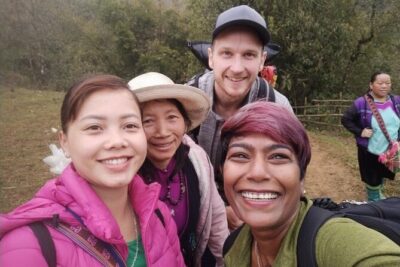
Number one top rated ethical cultural trekking and homestay by ETHOS
Read our review →
2-Day Sa Pa Ethnic Homestay Tour & Trek with Limousine Bus
Read our review →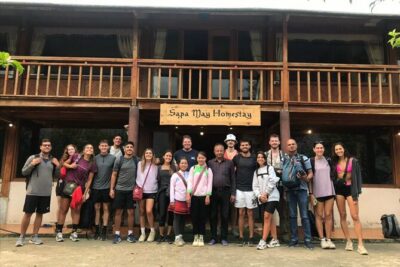
Sapa 3 Day 2 Night Trekking With Hotel & Homestay
Read our review →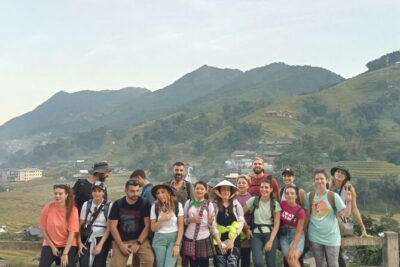
Sapa 2 Days 1 Night Overnight At Local Homestay
Read our review →
2-Day Trekking Trip with Ethnic Minority Homestay
Read our review →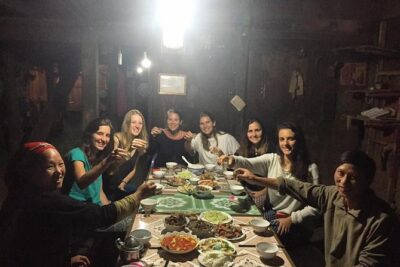
2-Day Trek & Heartwarming Homestay with an Ethnic Family
Read our review →Browse the lists this tour appears in