
REVIEW · HANOI
Mai Chau – Pu Luong trekking 3 days 2 nights
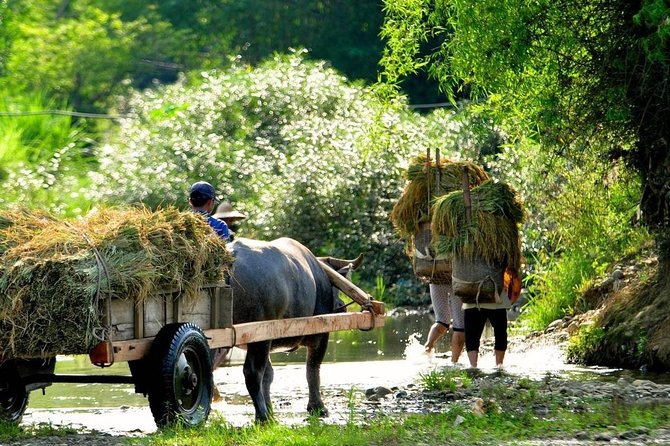
Pu Luong is at its best on foot, where rice terraces, forest paths, small villages, and Thai stilt houses replace the usual bus-window view. I like the small-scale village contact and the chance to sleep in local homes, not a standard hotel. I also like that private Hanoi pickup, transport, permits, a guide, and six meals are bundled into the price.
The catch is the physical effort. Day two brings five to six hours of trekking, with steep climbs and river crossings, while the homestay is deliberately simple. At $514 per person, this makes sense for travelers who value private service and local access more than polished lodging.
Key points at a glance
- Thai stilt-house stays: Spend two nights with local families and eat included dinners and breakfasts.
- A real trekking route: Expect three days of walking, including steep climbs, rice fields, forest paths, and river crossings.
- Private from Hanoi: Door-to-door pickup and return transport are included, with an 8:30 am start.
- Mai Chau and Pu Luong together: Begin in Pom Coong Village, then move into the reserve for a quieter rural setting.
- Guides with strong guest rapport: The company has used guides including Sun, Hoa, Loi, Long, and others, with Bao frequently handling driving.
- Pack for weather and mud: Comfortable walking shoes, insect repellent, sun protection, a raincoat, and a small day pack matter here.
Why this route is special
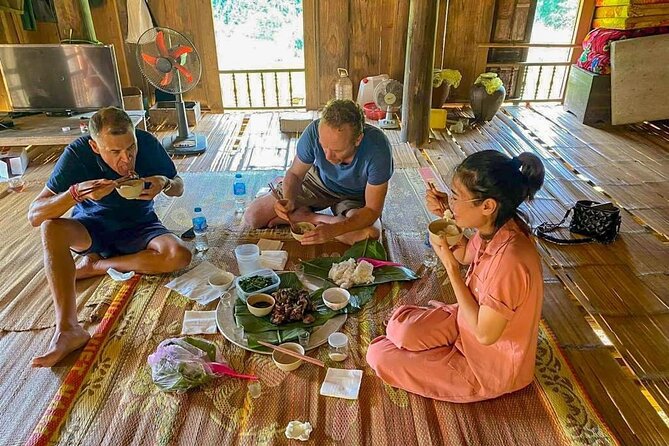
Mai Chau and Pu Luong give you two related but different views of northern Vietnam. Mai Chau is the easier introduction, with its valley setting and Thai villages. Pu Luong feels more remote, with narrow paths through rice fields, forested hills, and small communities spread across the reserve.
The appeal is not a checklist of monuments. It is the steady change in scenery as you walk. One hour you may be beside rice paddies, then crossing a stream, then passing a stilt house where daily work carries on around you. The route also gives you time with Thai and Muong communities, whose homes, farming routines, and food are part of the experience.
I especially like the homestay format. It gives the trip a human center. You are not simply taking photographs of village life and leaving before dinner. You eat with local hosts, sleep under their roof, and begin the next day from the same community.
That authenticity has a tradeoff. The accommodation is not presented as a luxury stay, and one past guest found the homestay and bungalow poor value for the price. The company openly favors local character over polish. If you need hotel-style rooms, private facilities, or predictable comfort, this may not be your best three-day escape.
More three-day treks in Hanoi
- Sapa 3 Days 2 Nights Trekking Tour (1 Night In Ta Van Village, 1 Night In Hotel)
★ 5.0 · 699 reviews - 3-Day Trekking Adventure of Sapa from Hanoi – Stay Ta Van Village
★ 5.0 · 611 reviews - Hanoi – Sapa 3 Day 2 Night Trekking With Hotel & Homestay
★ 5.0 · 389 reviews
Day one: Hanoi to Pom Coong and Pu Luong
Your guide collects you from your Hanoi hotel after breakfast, with departure set for about 8:30 am. The drive heads west toward Hoa Binh Province, roughly 80 kilometers from Hanoi, though road time can take much of the morning. Private door-to-door transport means you avoid arranging separate buses and transfers, a useful advantage when carrying trekking gear.
The first stop is a local market. The information supplied does not promise a fixed market name or a large market visit, so think of this as a short cultural stop rather than a major attraction. It gives you a look at local produce and ordinary buying and selling before the route turns toward Mai Chau Valley.
Lunch comes in Pom Coong Village, also written as Ban Poom Coọng, inside a traditional Thai stilt house. This is a good early marker for the trip. You are not just passing through Mai Chau for a viewpoint. You sit down for a local meal in the kind of home that gives the area its character.
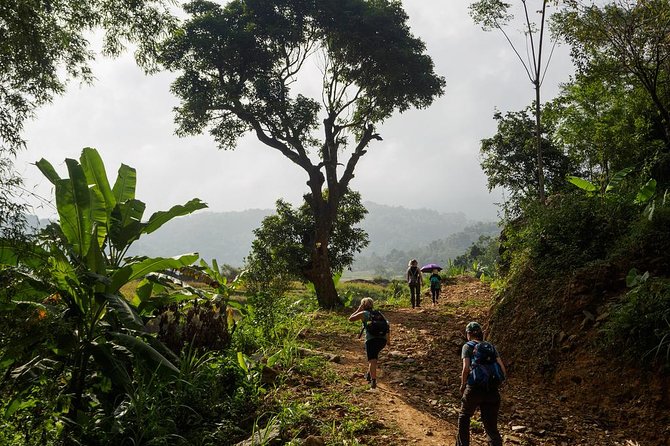
After lunch, the walking begins. The first Pu Luong section lasts about three hours and runs through rice fields, mountain scenery, and small villages. The pace is likely to feel more like a countryside walk than a race, but you still need proper shoes. Paths can be uneven, and rain can change an easy trail into a slippery one.
As you move between villages, the guide helps connect the scenery to daily life. Several guides associated with this company, including Sun and Hoa, have been praised for keeping the pace manageable and sharing details about plants and local customs. Guide assignments can change, so do not book on the assumption that one named person is guaranteed. Still, the team’s strength appears to be its personal approach rather than a scripted commentary.
Dinner and the first night take place with a local Thai family in a stilt house. Two dinners, two breakfasts, and three lunches are included across the trip. Drinks are not included, so carry some cash for beverages and personal purchases.
The first homestay: simple, social, and practical
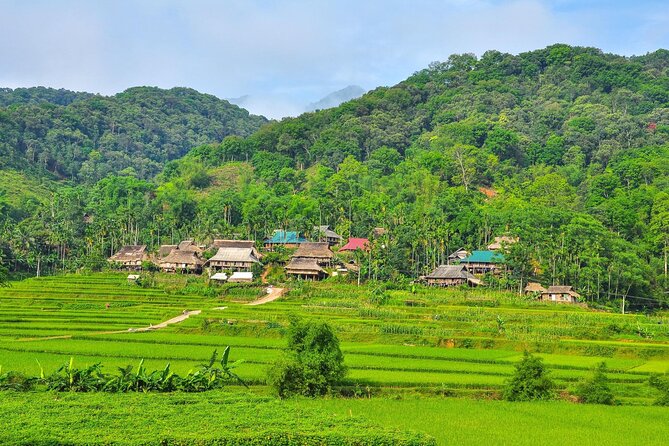
A homestay changes the rhythm of the journey. Instead of returning to a city hotel, you finish the day in the same rural setting where you have been walking. That makes the meal and evening feel connected to the village rather than added on for show.
You should also set your comfort expectations correctly. The supplied details describe homestay accommodation, not a named resort or a set room standard. One guest specifically felt the accommodation did not match the price, particularly in poor weather. That is a fair warning for anyone comparing this with a higher-end Pu Luong lodge.
On the other hand, the basic setting is part of the reason to choose this trip. The company’s approach favors direct contact with local families, even when the facilities are a little worn. I would choose this over a polished property if your priority is village life, but I would not recommend it to someone who sees accommodation quality as the main measure of value.
Day two: sunrise, farmers, and the hardest walking
Day two begins with an optional early start. If you rise before sunrise, you can watch light come over the mountain tops while local farmers begin their morning work. The tour also says you may join in for a short time, giving you a closer look at rural routines.
This is one of the most appealing parts of the trip, but it is optional for a reason. You have a long day ahead, and staying in bed may be the sensible choice if you want to conserve energy. Breakfast is prepared by the Thai hosts before the main trek begins.
Plan on five to six hours of walking. The opening stretch is the toughest, with steep climbs and river crossings. That description matters more than the total number of hours. Five hours on a rolling trail is one thing. Five hours with climbs, wet footing, and water crossings asks more of your legs and attention.
The route then becomes easier, allowing you to settle into a steadier rhythm. The supplied details do not give a precise kilometer count or promise one fixed village sequence for this day, so your guide’s route and weather conditions may shape the experience. You should be ready for a full outdoor day rather than a short sightseeing stroll.
The guides are a major part of how manageable this feels. Sun has been singled out for setting a comfortable pace and explaining local plants. That is useful on a route where the best experience comes from noticing small details, not simply reaching the finish. Bao is often named as the driver, and several guests have appreciated the calm support from both guide and driver.
Weather deserves attention. The area can be cloudy, chilly, or rainy, and poor weather does not cancel the physical demands of the route. A raincoat, sun hat, insect repellent, and sun cream all belong in your bag. Pack clothing that dries reasonably quickly, and keep one change of clothes protected from rain.
More Trekking Tours in Hanoi
- From Hanoi: 2-Day Sapa Trekking Trip with Homestay & Meals
★ 4.8 · 704 reviews - 2-Day Sa Pa Ethnic Homestay Tour & Trek with Limousine Bus
★ 4.8 · 440 reviews - From Hanoi: 2-Day Sapa Trek Tour – Luxury Limousine Transfer
★ 4.1 · 249 reviews - From Hanoi: Trek and Stay: 3-Day Sapa Highlands Adventure
★ 4.6 · 152 reviews
What river crossings and steep paths really mean
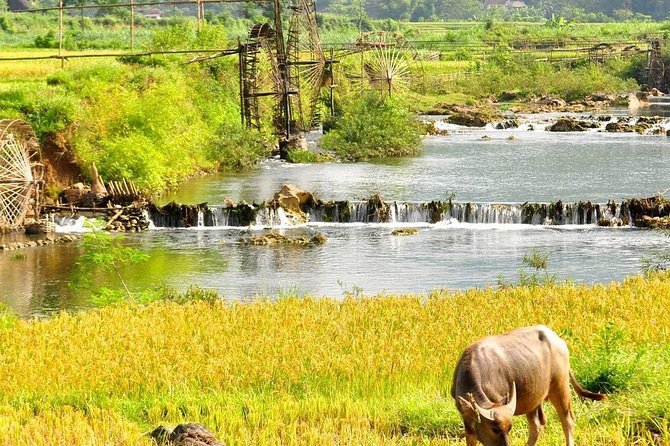
The phrase river crossing can sound adventurous in a brochure and vague in practice. Here, it means you may need to cross small waterways during the trek, with footing that can be wet or uneven. The exact conditions depend on recent weather, so shoes with reliable grip are more useful than fashionable walking trainers.
Steep climbs also affect the day more than the distance does. Take short steps, let the guide set the pace, and do not treat the first hour as a test of speed. A moderate fitness level is required, and you should be comfortable walking outdoors for several hours.
This private format helps. Your group does not have to match the pace of a large busload, and the guide can respond more easily if you need a rest. Private does not mean effortless, though. You still need to decide honestly if a three-day route with climbs and crossings suits your current fitness.
Day three: Ban Hieu, Pho Doan, and the ride home
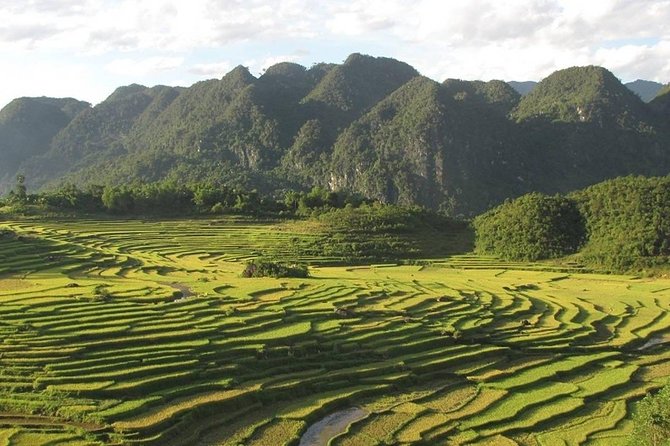
The final walking section covers about three hours, or approximately five to seven kilometers. It begins gently, which gives you time to wake up, settle your legs, and enjoy the surrounding countryside before the more demanding section begins.
After a rest in Ban Hieu Village, the route includes steep climbs and additional river crossings. The reward is a higher viewpoint, where the valley opens below you. This is the kind of finish that makes the physical work worthwhile, although you should not mistake the opening easy section for a completely gentle day.
The walking continues toward Pho Doan Village. There is another break there before you reach the main road, where your driver meets you. Lunch is included, and the vehicle then takes you back toward Hanoi.
The return transfer is a practical benefit. You do not need to find your own way out of Pu Luong after the trek, and the private vehicle keeps the final logistics simple. Still, this is a three-day trip from Hanoi, not a short local excursion. You should expect the final day to combine walking, a meal, and a long drive back to the city.
What the $514 price buys you
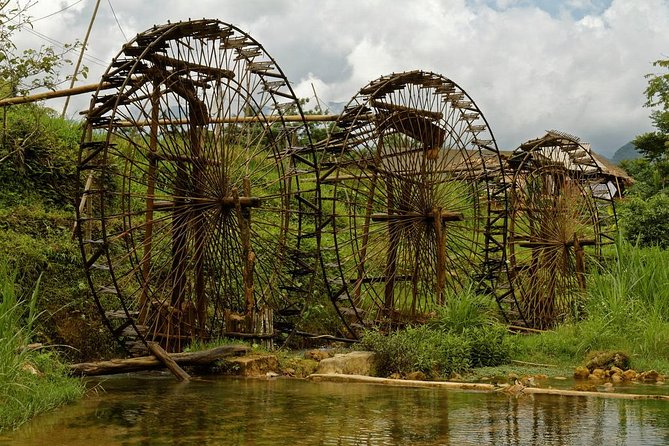
At $514 per person, this is not a budget group trek. The price includes private door-to-door pickup and return, all private transport, an English-speaking guide, homestay accommodation, sightseeing tickets, travel permits, two dinners, two breakfasts, and three lunches.
That bundle has real value if you are traveling as a small private party and want the arrangements handled in one booking. You are paying for transport from Hanoi, local guiding, meals, and access to a route that is not as simple to arrange independently.
The value is less clear if you are mainly comparing bed quality or looking for the lowest possible price. Drinks, tips, personal expenses, travel insurance, flights, and taxes are not included. Group discounts are offered, but the exact reduction is not stated, so ask for the total price before booking.
A published rating of 4.7 from seven ratings points to a strong overall record, with particular praise for the guides, drivers, views, food, and peaceful village setting. The less favorable experience focused on accommodation value, especially in wet weather. That split tells you exactly how to judge the price: pay it for the private service and rural access, not for luxury.
Who should book this trek
I would recommend this experience to you if you want:
- Several days away from Hanoi rather than a quick day trip
- Rice terraces, mountain paths, villages, and forest scenery
- Direct contact with Thai and Muong communities
- A private guide and vehicle
- A moderate but genuine physical challenge
- Simple homestays and local meals
- A route that gives you time to walk instead of rushing between stops
I would hesitate if you need guaranteed hotel comfort, easy paths, private luxury facilities, or a tightly fixed schedule. The route includes steep sections and river crossings, and weather can make the walking harder.
The tour is also a good fit for people who want support without joining a large group. Your party travels privately, but the experience remains rooted in local homes and villages rather than a resort bubble.
Practical preparation for three days on foot
Bring a small day pack rather than carrying all your luggage on the trail. Comfortable walking shoes are essential, and a raincoat is not optional planning in this part of Vietnam.
Also pack:
- Light, comfortable clothing
- Insect repellent
- Sun cream
- A sun hat
- Your passport
- Money for drinks, tips, souvenirs, and other personal costs
The passport requirement is easy to overlook, but it is specifically essential for this trip. Keep it protected from rain.
Do not assume every useful item is included just because meals are covered. Beverages are excluded, and travel insurance is not provided. The tour is private, but you remain responsible for your own personal spending and insurance arrangements.
The booking is non-refundable and cannot be changed after confirmation. Read the terms carefully before paying, especially if your travel dates or health could change.
Should you book Mai Chau and Pu Luong in three days?
Book it if you want a well-supported walk through northern Vietnam with real village contact, local food, and two nights in Thai homestays. The strongest parts are the scenery, the private transport, the guides, and the chance to see daily life at a slower pace.
Think twice if you are choosing mainly on accommodation or price. At $514, the trip asks you to value access and service over polished rooms. With a moderate fitness level, sensible gear, and realistic expectations about comfort, this is a rewarding choice for an active visit to Mai Chau and Pu Luong.
FAQ
Where does the tour start?
The tour starts in Hanoi, with hotel pickup after breakfast at approximately 8:30 am.
How long is the experience?
The trip lasts three days and two nights, with trekking on all three days.
Where do I sleep?
Accommodation is provided in local homestays, including Thai stilt houses.
How much walking is involved?
Day one includes about three hours of hiking. Day two includes approximately five to six hours of trekking. Day three includes about three hours, or roughly five to seven kilometers.
Are meals included?
Yes. The package includes two dinners, two breakfasts, and three lunches. Beverages are not included.
Is the tour private?
Yes. Only your group participates in the private activity, and private transfers are included.
What should I bring?
Bring your passport, light outdoor clothing, comfortable walking shoes, a small day pack, insect repellent, sun cream, a raincoat, and a sun hat.
Latest treks added in Hanoi
- From Hanoi : Sapa Moutain Trek – Halong bay Heritage★ 4.5 · 25 reviews
- Trekking In Ha Giang 5 Days★ 5.0 · 4 reviews
- Trekking around Ha Giang 5 days 4 nights★ 3.0 · 2 reviews
- 8-Days Hanoi, Sapa Trekking And Halong Bay Cruise★ 5.0 · 8 reviews
- Hanoi: 3D2N Mu Cang Chai Visit All Attractions, Trek, Ethnic Life★ 5.0 · 3 reviews
- 2-Day Trekking in Sa Pa from Ha Noi by sleeping bus★ 5.0 · 4 reviews
- Sapa trekking 2days by bus from Hanoi ( over night in homestay)★ 5.0 · 21 reviews
- 2-Day SAPA Trekking – Villages-Homestay-Ethnic-Local Food-Market★ 5.0 · 2 reviews
Hanoi Trekking Tours, compared.
Sapa 3 Days 2 Nights Trekking Tour (1 Night In Ta Van Village, 1 Night In Hotel)
Read our review →
3-Day Trekking Adventure of Sapa from Hanoi – Stay Ta Van Village
Read our review →
2-Day Sa Pa Ethnic Homestay Tour & Trek with Limousine Bus
Read our review →
Sapa 3 Day 2 Night Trekking With Hotel & Homestay
Read our review →
2-Day Sapa Trek Tour – Luxury Limousine Transfer
Read our review →
Sapa 2 Days 1 Night Overnight At Local Homestay
Read our review →Browse the lists this tour appears in