
REVIEW · ARUSHA
5 Days Marangu Route – Mount Kilimanjaro Trek
Kilimanjaro’s Marangu Route gives you the mountain’s classic hut-to-hut path, ending with a demanding midnight climb to Uhuru Peak at 5,895 meters. Rupia Adventure adds airport pickup, a hotel night, an equipment check, and a small group capped at 15 people, which makes the trip easier to organize before the real work begins.
I like the clear five-day mountain schedule and the chance to use huts instead of tents. I also like the practical support: guides check your equipment before departure, missing gear can be rented, and recent departures were led by guides such as Meshack, Maziku, Franky, John, and Julius. The main concern is altitude. Five days is a short schedule for Kilimanjaro, and summit day is long, cold, and physically serious.
Key points to know before booking
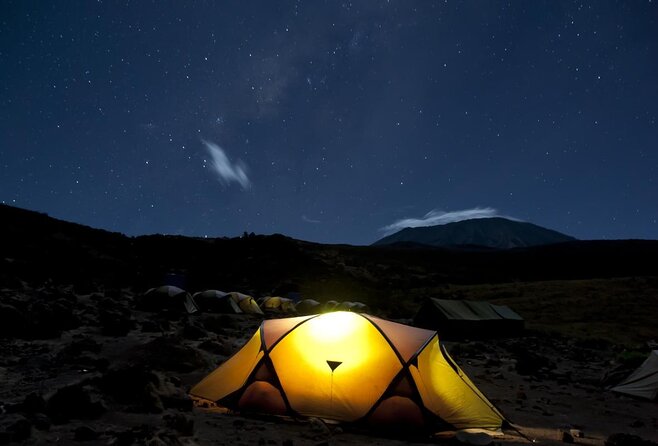
- Five mountain days, seven days in Tanzania: You trek from Marangu Gate to Uhuru Peak and back, with arrival and departure days included.
- A hut-based route: Nights are spent at Mandara, Horombo, and Kibo huts rather than in a tent camp.
- Midnight summit attempt: You leave Kibo Hut around midnight, reach Gillman’s Point at sunrise, and continue toward Uhuru Peak.
- Altitude rises quickly: The route goes from rainforest to 5,895 meters in only a few days, so pacing matters.
- Equipment check before hiking: Rupia Adventure allows you to rent missing mountain gear on arrival.
- Small maximum group: The stated limit is 15 people, giving the guide team a workable group size on the trail.
Why the Marangu Route appeals to first-time climbers
The Marangu Route is often chosen because it is direct and comparatively simple to follow. You begin at Marangu Gate, pass through rainforest, cross open moorland, reach the high saddle between Mawenzi and Kibo, and then climb the summit trail in darkness.
The route has a useful rhythm. Each day brings a clear hut destination, and the huts give you a fixed place to rest at night. That can feel reassuring when you are carrying the strain of altitude and several days of walking.
The tradeoff is that you use the same general route up and down. You do not get the changing ascent and descent scenery found on some other Kilimanjaro routes. The short five-day schedule also gives your body less time to adjust to the height.
I would look closely at your own hiking background before booking. You do not need to be an elite athlete, but you should be comfortable with long uphill days, slow walking, cold temperatures, and a very early summit start.
More Kilimanjaro Climbs in Arusha
- 8-Day Small-group Lemosho Kilimanjaro Summit Trekking
★ 5.0 · 186 reviews - 7 Days Kilimanjaro trek via Machame route
★ 5.0 · 13 reviews - Mount Kilimanjaro day trip trekking
★ 5.0 · 12 reviews
Day 1: Airport pickup, Moshi hotel, and the equipment check
Your arrival day begins with pickup at Kilimanjaro International Airport and a transfer to a hotel in Moshi town. The accommodation named in the plan is Panama Hotel or Mvuli Hotel in Arusha, or an alternative, so confirm the exact overnight town and hotel before you travel. Moshi and Arusha are different bases, and knowing where you sleep helps you plan your arrival.
This first meeting with the guide is more important than it may sound. You receive a briefing about the trek, then check your mountain equipment. If something is missing, the company says you can rent it that day.
Use this time honestly. A summit attempt is not the place to discover that your warm clothing, rain gear, footwear, or headlamp is unsuitable. The material does not list every item supplied or rented, so ask for a full gear checklist before departure.
Day 2: Marangu Gate to Mandara Hut through the rainforest
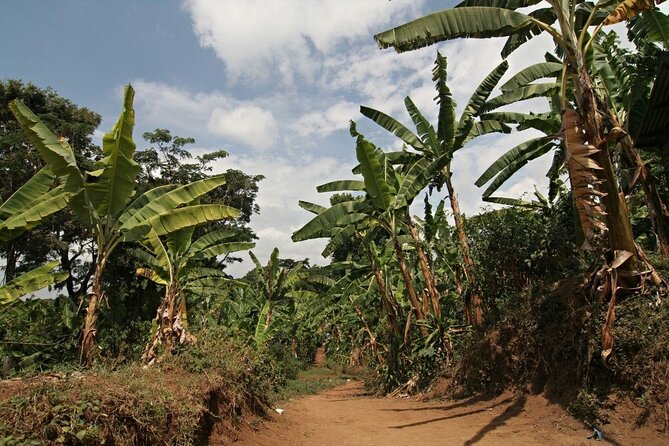
After breakfast, you are collected from your lodge and driven to Marangu Gate. Park paperwork comes first. Once it is complete, you begin in dense tropical rainforest.
This is a pleasant opening day because the forest gives you shade and a strong sense of entering a wild mountain area. You may catch sight of primates, and the vegetation changes as the path climbs. The walk to Mandara Hut is your first test of pace, but it is not the hardest day of the trip.
After reaching Mandara, you can rest before walking to Maundi Crater. This side trip is worthwhile because it provides a view toward Kenya and gives you a first broad look beyond the forest.
Do not treat the easier first day as a race. You are setting the pace for the climb ahead. Walking slowly and steadily is more useful than arriving at the hut far ahead of the rest of your group.
Day 3: Mandara Hut to Horombo Hut at 3,700 meters
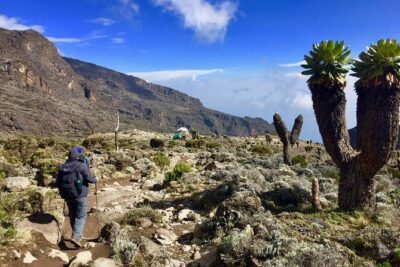
The day begins with an early breakfast. Soon after leaving Mandara, you reach the timberline and move into the heath and moor zone. The forest gives way to more open ground, and the views become wider.
The walk to Horombo Hut takes about four to six hours. Horombo sits at roughly 3,700 meters, so this is the day when altitude may begin to affect you. Headache, tiredness, or a slower pace can all change how the day feels.
From the hut, you have views toward Mawenzi, Kibo, and the Masai steppe. These broad views help you understand the mountain’s unusual shape, with the Mawenzi and Kibo peaks connected by the high saddle you cross on the next day.
Recent departures have included guides such as Meshack and Maziku, who were praised for keeping the mood light while staying active on the trail. That matters here. A friendly guide can make a long uphill day feel less grim, but you still need to tell the guide quickly if you feel unwell.
More five-day treks in Arusha
- 5 Days Marangu Route Kilimanjaro Trekking
★ 5.0 · 4 reviews - 5 Days Marangu Route Kilimanjaro Trekking
★ 5.0 · 2 reviews - Annapurna base camp trek 5 Days
★ 5.0 · 252 reviews - Kathmandu to Annapurna Base Camp (ABC) 5-Day Trek
★ 5.0 · 102 reviews
Day 4: Horombo to Kibo Hut across the high saddle
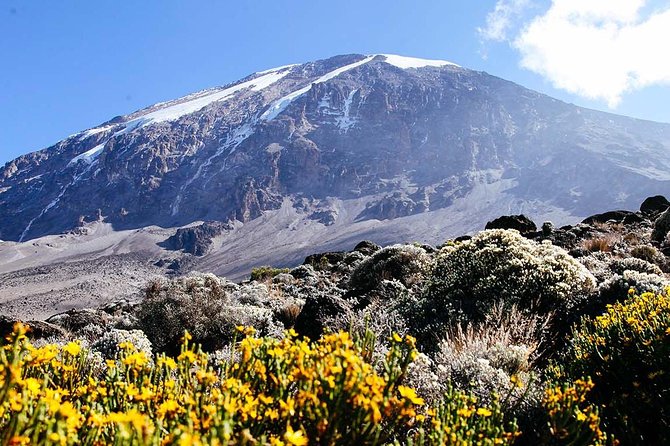
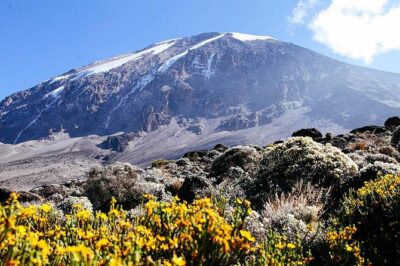
This is the long preparation day before the summit. The trail passes the last water point, then crosses the nearly vegetation-free saddle between Mawenzi and Kibo.
The walk to Kibo Hut usually takes five to six hours. The scenery becomes stark, and the lack of vegetation makes the height feel more obvious. You are now approaching the point where the mountain is no longer simply a long hike. It becomes a test of endurance and altitude tolerance.
At Kibo Hut, you eat an early evening meal and go to bed early. Your sleep will be short because the summit start is planned for around midnight. That schedule can be difficult. You may not sleep well, and you may feel as if you have only just arrived when it is time to put on your layers and begin walking.
This is also the day to organize everything for the summit. Keep the clothing, water, and other essentials you need close at hand. A calm evening saves time when the group starts in the dark.
Day 5: The midnight climb to Gillman’s Point and Uhuru Peak
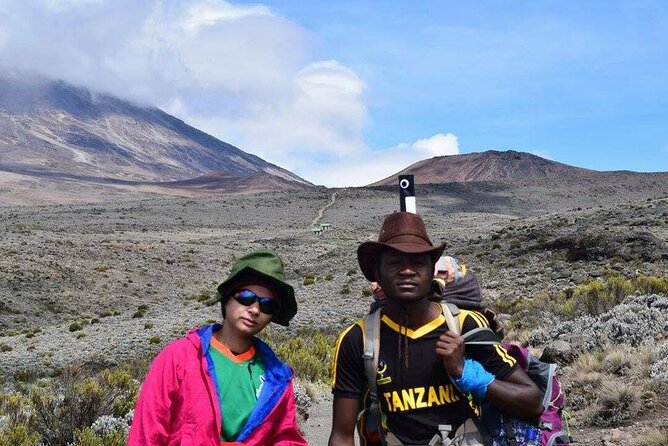
Summit day is the hardest part of the route. You leave Kibo Hut around midnight and climb slowly toward the crater rim. The route passes Hans Meyer Cave at about 5,220 meters before continuing upward.
The pace is deliberately slow, but the climb remains strenuous. You walk through the coldest part of the night, often with little sense of progress until the sky begins to lighten. At about 5,681 meters, you reach Gillman’s Point on the crater rim around sunrise.
From there, the plan allows another one to two hours to reach Uhuru Peak at 5,895 meters. That final section can feel long after the effort required to reach Gillman’s Point. If you make it, you have reached the highest point in Africa.
After the summit, you return to Kibo Hut for a warm meal and a one to two-hour rest. The day is not finished. You then continue down to Horombo Hut, making this an exceptionally long day of walking.
One earlier departure reached Uhuru Peak at about 6 a.m. after starting around midnight. That gives you a realistic sense of the timing, though conditions and group pace can change the result.
The key advice is simple: go slowly, follow your guide’s pace, and do not hide symptoms. The itinerary is fixed, but your response to altitude must remain practical. Reaching the summit is important, but returning safely matters more.
Day 6: Horombo to the park gate and a hot shower
The final mountain day retraces the route through the heath and moor zone toward Mandara Hut. A warm lunch is planned there before you continue through the rainforest.
The full descent to Kilimanjaro National Park Gate takes about six hours of trekking. After signing out and saying goodbye to the mountain team, you transfer back to your hotel in Moshi.
This day may look easy on paper because you are going downhill, but tired legs can make the descent uncomfortable. Your reward is a hot shower and the chance to celebrate the summit attempt without another high-altitude night ahead.
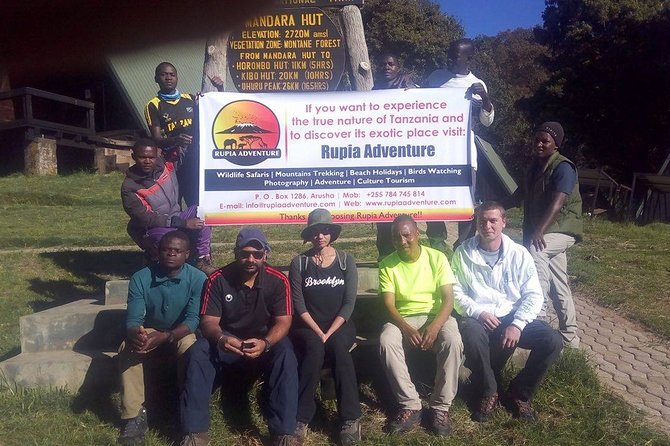
The itinerary specifically mentions saying goodbye to the guides and porters at the gate. That moment is worth noticing. On a mountain trip, the staff handling route decisions, food, equipment, and group rhythm are a large part of the experience.
Day 7: A quiet final day in Tanzania
The last day is free before your flight home. If your flight leaves later, you can explore Moshi town and shop for souvenirs.
The schedule also allows you to continue with a safari or Zanzibar add-on. No detailed add-on itinerary or price is provided, so ask for those details separately. Keeping this day open is sensible after the trek. You may prefer a slow breakfast and rest rather than trying to fit in a packed sightseeing program.
What the $1,500 price means
At $1,500 per person, this is not a bare trail transfer. The stated plan includes airport pickup, hotel arrangements, a pre-trek briefing, equipment checking, transport to and from the mountain, guides, porters, hut-based accommodation on the route, and meals mentioned in the daily schedule.
The value depends on exactly what is included in your booking. The supplied information does not spell out every meal, park fee, tip, rental charge, airport transfer detail, or optional hotel cost. Ask for an itemized list before paying.
The price is attractive if you want a guided Kilimanjaro attempt with the main logistics arranged in one package. It is less attractive if you expect a longer acclimatization schedule or luxury accommodation. The five-day route is efficient, but it leaves less spare time for your body to adjust.
Rupia Adventure states that it has more than 12 years of personal experience and focuses on tailored travel in Tanzania and beyond. The practical evidence that matters most to you is the guide team, the equipment process, the group limit, and the clarity of the final booking documents.
Guide support and group size
The maximum group size is 15 people. That is small enough for a guide to keep track of the group, though the feel of your trek will still depend on the number of people actually booked and the guide-to-climber ratio.
The named guides connected with recent climbs include Meshack, Maziku, Franky, John, and Julius. Franky was praised for knowing the mountain well and sharing useful tips. John and Julius were described as professional and strong, while Meshack and Maziku helped keep the atmosphere cheerful.
You cannot assume that every named guide will lead your departure. Ask who is assigned to your group and how the team handles different walking speeds or altitude concerns.
Who should book this trek?
This trip suits you if you want a classic Kilimanjaro route, prefer huts to camping, and value having airport transfers and pre-climb arrangements handled for you. It is also a good fit if you want to combine the mountain with a later safari or Zanzibar stay.
I would be more cautious if this is your first serious multi-day hike or if you know you need extra acclimatization time. The schedule reaches 5,895 meters in five trekking days, and the summit day combines a midnight start with a return to Horombo.
Most people can participate according to the supplied information, but that does not remove the physical demands. You should arrive prepared for long walking days and ask the operator for any health or fitness guidance that is not included in the booking details.
The cancellation policy is strict: the experience is non-refundable and cannot be changed for any reason. If poor weather cancels the trip, you are offered another date or a full refund. The same applies if the minimum number of people is not reached.
Should you book the Marangu Route with Rupia Adventure?
Book it if you want a well-organized, hut-based Kilimanjaro climb with a clear route, airport pickup, gear checking, and a stated group limit. The named guide team and repeated praise for practical service add confidence.
Before paying, confirm the hotel location, what the $1,500 includes, the exact equipment available for rent, the guide assignment, and the minimum group requirement. If you want the best possible acclimatization margin, ask if a longer version is available.
For a determined climber who understands the strain of a short summit schedule, this is a sensible way to tackle the Marangu Route. Just do not mistake a straightforward itinerary for an easy mountain.
FAQ
How long is the full experience?
The full schedule is approximately seven days. The mountain trek runs from Day 2 through Day 6, making five trekking days, with arrival and departure days included.
Where does the tour begin?
You are picked up at Kilimanjaro International Airport and transferred to a hotel in Moshi town. The accommodation information also names Panama Hotel or Mvuli Hotel in Arusha, or an alternative, so confirm the exact overnight location before departure.
Does the tour include airport pickup?
Yes. Airport pickup at Kilimanjaro International Airport is included in the stated plan.
Where do you sleep during the mountain trek?
The route uses mountain huts, including Mandara Hut, Horombo Hut, and Kibo Hut. The supplied details do not specify every overnight arrangement beyond the named huts.
How many people can join the group?
The maximum group size is 15 people.
What happens if I am missing mountain equipment?
An equipment check takes place before the trek. The company states that missing gear can be rented on that day.
What happens if bad weather cancels the trek?
If poor weather causes a cancellation, you are offered a different date or a full refund. If the minimum number of people is not reached, you are offered a different date or experience, or a full refund.
Latest treks added in Arusha
- Mount Kilimanjaro day trip trekking★ 5.0 · 12 reviews
- 5 Days Marangu Route Kilimanjaro Trekking★ 5.0 · 4 reviews
- 3 Days Mount Meru trekking★ 4.5 · 7 reviews
- 8 Days Lemosho Route Kilimanjaro Trekking★ 5.0 · 5 reviews
- 7 Days Machame Route Kilimanjaro Trekking★ 5.0 · 9 reviews
- 7 Days Machame Route Trek Mount Kilimanjaro★ 5.0 · 12 reviews
- Lemosho Route 7 Days Trekking at Mount Kilimanjaro★ 5.0 · 7 reviews
- Private One-Day Trek to Mount Kilimanjaro★ 4.5 · 2 reviews
Kilimanjaro Climbs, compared.
8-Day Small-group Lemosho Kilimanjaro Summit Trekking
Read our review →
Best Kilimanjaro Adventure 7 days Machame route Trekking
Read our review →
Kilimanjaro 7 Day Private Trekking Experience
Read our review →
6 Days Machame Route Kilimanjaro Climbing Trekking Tour
Read our review →
Kilimanjaro Trekking 7Days 6Night Lemosho Route
Read our review →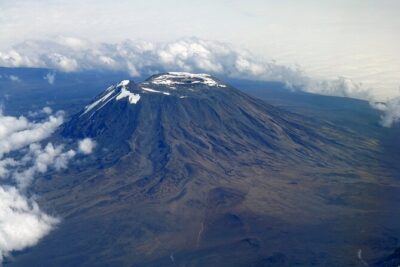
Browse the lists this tour appears in