
REVIEW · ARUSHA
Lemosho Route 7 Days Trekking at Mount Kilimanjaro
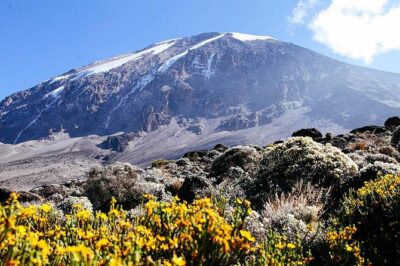
Kilimanjaro’s Lemosho Route gives you a quieter start, a gradual climb through several climate zones, and a serious shot at Uhuru Peak. You begin in Arusha, walk from rainforest into high moorland, cross the alpine desert, and finish at 5,895 meters above sea level.
I like the route’s built-in acclimatization stop at Lava Tower and the short fourth day, which gives your body a useful break before the summit push. I also like the small stated group size of up to 8 people, backed by guides such as Freddy, Mike, Modest, and Teacher.
The main caution is simple: seven days is not a holiday walk. Summit day starts around midnight, includes roughly 1,295 meters of climbing, and can be difficult even if you are fit. The listed price is $2,800 per person, before insurance and international flights.
Key points before you book
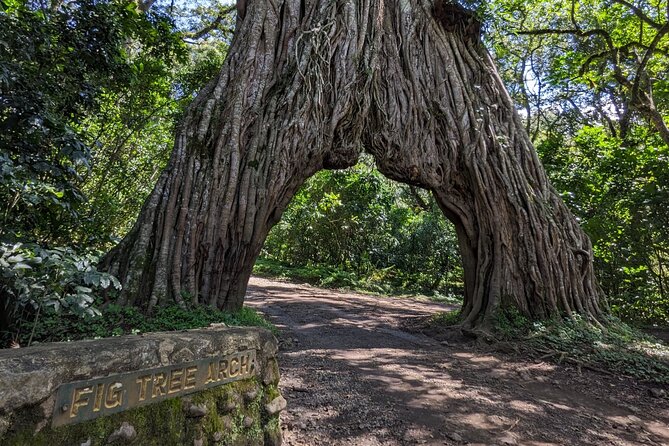
- Lemosho begins quietly: You enter through Londorossi Gate, then walk from the forest edge toward Big Tree Camp.
- Lava Tower helps with acclimatization: Day three takes you up to 4,600 meters before dropping to Barranco Camp.
- The summit day is the real test: Expect a midnight wake-up, 6 to 7 hours to Uhuru Peak, then a long descent.
- The route changes scenery every day: Rainforest, heath, moorland, alpine desert, and rocky high-altitude terrain all feature.
- The guide team is a major part of the value: Freddy, Mike, Modest, and Teacher are among the named guides associated with the trek.
- The package covers meals and guiding: Breakfast, lunch, dinner, and a certified guide are included, but insurance is not.
Why the Lemosho Route is worth seven days
Kilimanjaro is not a technical climbing trip in the usual sense. You do not need ropes or advanced mountaineering skills for this route, but you do need stamina, patience, and a sensible attitude toward altitude.
The Lemosho Route earns its seven-day schedule by spreading the climb over several stages. You gain height, then get a chance to adjust before going higher. That matters more than speed on a mountain where altitude, not leg strength alone, decides how the day goes.
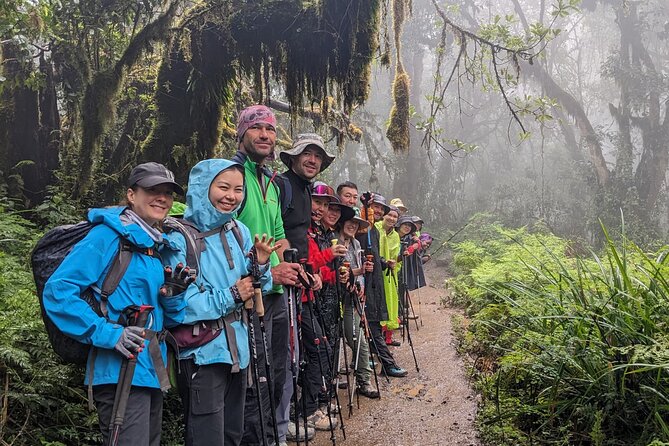
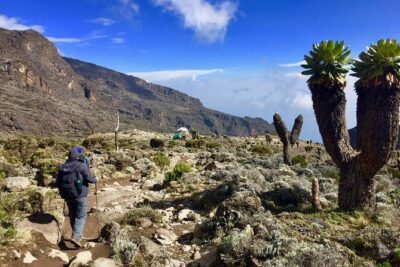
I like the way the route moves through distinct plant zones. The first day feels forested and shaded. By Shira One, you are in open heath and moorland. Near Barafu, vegetation gives way to a stark alpine desert. The changing scenery helps make the long walking days feel like a real journey rather than repeated miles on the same path.
You should also know that seven days is a relatively compact schedule for Kilimanjaro. It offers useful acclimatization, but you will not get the extra margin provided by a longer itinerary. Your pace, health, and response to altitude matter greatly.
More Kilimanjaro Climbs in Arusha
- 8-Day Small-group Lemosho Kilimanjaro Summit Trekking
★ 5.0 · 186 reviews - 7 Days Kilimanjaro trek via Machame route
★ 5.0 · 13 reviews - Mount Kilimanjaro day trip trekking
★ 5.0 · 12 reviews
Day 1: Arusha to Big Tree Camp at 2,750 meters
Your day begins with transport from Arusha in a 4×4 Land Cruiser or Land Rover. The drive to Londorossi Gate takes about an hour, followed by registration and permit arrangements. From there, you continue to the Lemosho starting point at approximately 2,100 meters.
The opening walk covers about 6 kilometers and takes roughly three hours. You climb 650 meters through rainforest to Mti Mkubwa Camp, also called Big Tree Camp, at 2,750 meters.
This is a sensible first day. It is long enough to begin the climb, but not so long that you burn through your energy immediately. The forest also gives you a gentle introduction to the route, with a marked change from the roads and buildings of Arusha.
Dinner and camping are arranged at the camp. Breakfast, lunch, and dinner are included across the trek, though the supplied details do not specify the exact campsite facilities or tent arrangements. Ask about those points before departure if they affect your planning.
Day 2: Shira One and the first serious altitude gain
After breakfast, you leave the rainforest behind and enter the heath and moorland zone. The walk to Shira One Camp covers about 13 kilometers and gains 1,100 meters, putting camp at roughly 3,500 meters.
This is one of the harder regular walking days because the distance and height gain arrive together. The practical advice is to keep your pace slow from the start. You may feel strong at lower altitude, but using that early energy too freely can make the final hours unpleasant.
Shira One is valuable because it places you high enough to begin adjusting before the more exposed sections ahead. The open terrain also gives you broader views than the forest, though the weather can change quickly at altitude. Dinner and the night are at camp.
Day 3: Lava Tower to Barranco Camp
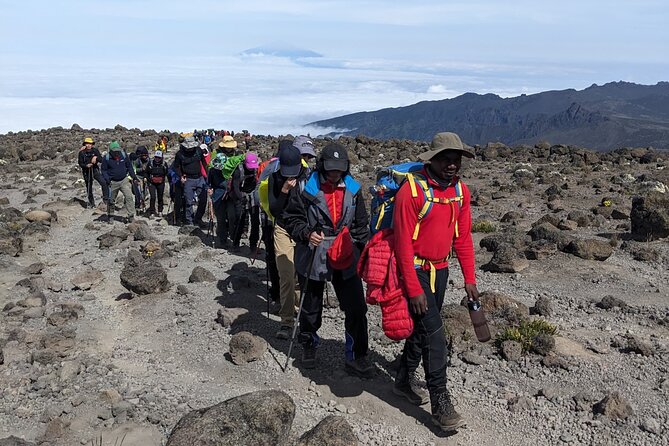
Day three is the route’s most obvious acclimatization day. You climb from the Shira area toward Lava Tower at 4,600 meters, then descend to Barranco Camp at 3,940 meters.
The total walk takes about six to seven hours, covers 10.75 kilometers, and includes a picnic lunch. The stated height gain is 750 meters to Lava Tower, followed by another 660 meters on the way to Barranco, although the route ultimately finishes lower than Lava Tower.
That temporary climb high, then sleep lower approach is one of the strongest features of this itinerary. It gives you time at a higher elevation without making you camp at the day’s highest point. You may notice headache, shortness of breath, or fatigue here. Tell your guide promptly if you feel unwell.
Barranco Camp is not just a place to stop. It sets up the next morning’s route toward the Barranco Wall, one of the memorable sections of the climb. You have a picnic lunch during the day and dinner at camp.
More week-long treks in Arusha
- 7 Days Machame Route Trek Mount Kilimanjaro
★ 5.0 · 12 reviews - 7 Days Machame Route Kilimanjaro Trekking
★ 5.0 · 9 reviews - 7 Days Kilimanjaro Trekking Machame Route with Professional Guide
★ 5.0 · 5 reviews - Best Kilimanjaro Adventure 7 days Machame route Trekking
★ 5.0 · 42 reviews
Day 4: Barranco Wall and Karanga Camp
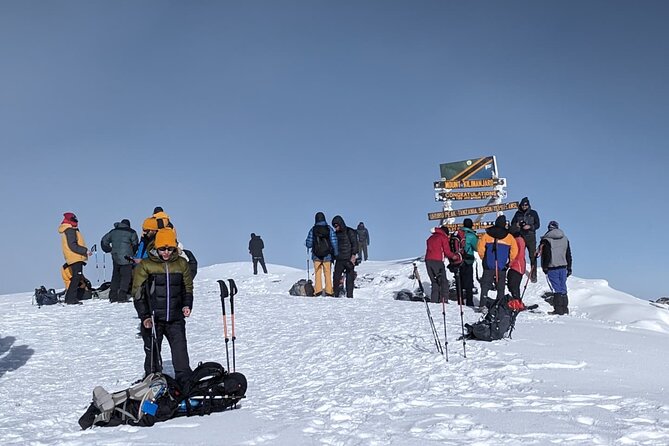
The walk from Barranco to Karanga is short by Kilimanjaro standards, about 4.25 kilometers and three to four hours. You climb the Barranco Wall to around 4,250 meters before reaching Karanga Camp at approximately 4,000 meters.
The wall sounds intimidating, but the supplied plan treats it as a trekking section rather than a technical climbing pitch. You should still expect a slower, more physical morning, with uneven ground and a need to follow the guide’s route carefully.
This is my favorite scheduling choice in the seven-day plan. After the wall, you arrive early enough for a hot lunch, rest, and an acclimatization walk. That extra breathing room matters because your body is already working harder at this altitude.
The short day is also a reminder that distance alone does not tell you how hard a mountain day will feel. A few kilometers at altitude can take more effort than a much longer walk at sea level.
Day 5: Barafu Camp and an early night
From Karanga, you continue through heath and moorland to Barafu Camp at 4,600 meters. The distance is again about 4.25 kilometers, with 600 meters of climbing, and the walk takes approximately three to four hours.
Barafu is the launch point for the summit attempt. You receive a hot lunch, rest, and eat dinner early before sleeping for a few hours. The schedule is designed around a midnight wake-up, so this is not a normal evening in camp.
Rest here is not optional in practical terms. You may not sleep well at 4,600 meters, but lying down and conserving energy still helps. Pack only what you need for the summit push, since carrying excess weight in the dark will make the climb harder.
The campsite itself is high and exposed by the nature of the route. You should be prepared for cold conditions and for the possibility that rest feels less comfortable than it does at lower elevations.
Day 6: Uhuru Peak and the long descent
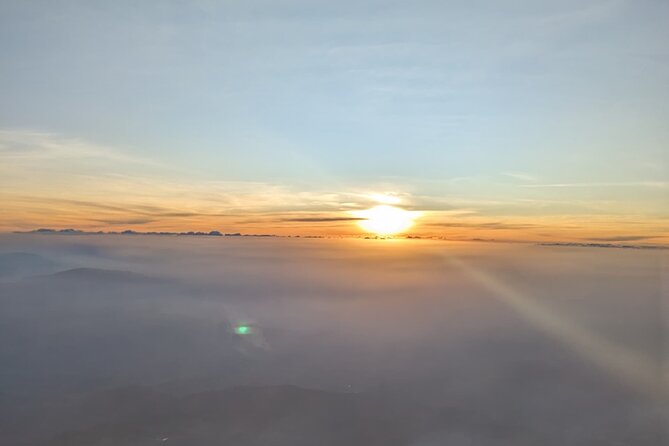
Summit day begins around midnight. You pack essential items, have hot drinks and snacks, and start the climb toward Uhuru Peak at 5,895 meters, the highest point in Africa.
The ascent takes about six to seven hours. You cover 4.86 kilometers and gain 1,295 meters. Those numbers look modest on paper, but this is the toughest part of the trek. You will be walking in darkness, at high altitude, after a short rest, and on steep ground.
The sensible approach is to follow the guide’s pace and focus on small sections rather than the entire climb. The named guides connected with this operation include Freddy, Mike, Modest, and Teacher. Strong leadership matters most on this day, when encouragement, pacing, and attention to how you are feeling become central to the experience.
After reaching Uhuru Peak, you descend to Barafu for breakfast. The descent takes about three hours. You then rest for a few hours, eat a hot lunch, and continue downward through alpine desert, heath, and moorland to Mweka Camp at 3,100 meters.
The full descent from Uhuru Peak through Barafu to Mweka covers about 11.5 kilometers and drops 2,795 meters. This is a very long day, even after you have achieved the summit. Your knees and feet may feel the descent more than the climb.
Day 7: Mweka Gate and the return to Arusha
The final walk leads from Mweka Camp through rainforest to Mweka Gate at 1,800 meters. It covers approximately 9.1 kilometers, drops 1,400 meters, and takes three to four hours, though the day is listed as roughly six hours when the full schedule is considered.
At the gate, successful climbers receive a certificate. You then meet the vehicle and transfer to Jevas Hotel in Arusha for drop-off.
This final walk can feel easy compared with summit day, but a steep descent on tired legs is still work. Take your time, especially if your knees or feet are sore. Reaching the gate is the end of the climb, but it is also the point when the scale of the week may finally sink in.
Guides, group size, and the human side of the trek
The stated maximum is eight paying participants, which is a useful size for a mountain trip. A small group makes it easier to maintain a common pace and gives you more direct contact with the guide.
Several guide names are connected with the operation: Freddy, Mike, Modest, and Teacher. The strongest praise centers on the team’s care, experience, and support during hard weather and the summit attempt. One account described a group with two guides, a cook, and nine porters. Another described a total working team of 25 people.
Those numbers do not necessarily conflict with the stated maximum of eight customers. A small customer group can still require a large support crew on Kilimanjaro. Before paying, ask for the exact guide-to-climber ratio and the porter arrangements for your departure.
The human support system is part of what you are paying for. This is not simply a permit and a trail. Meals, camp work, guiding, and transport all need coordination over seven days in remote conditions.
What the $2,800 price includes
At $2,800 per person, this is a major trip expense. The value depends on what you want from a Kilimanjaro operator, not just on the number of walking days.
The package includes a certified guide, six breakfasts, seven lunches, and six dinners. It also includes the mountain access described in the itinerary, transport from Arusha at the beginning, and transfer back to Arusha after the climb.
The price does not include international flights, departure taxes, medical insurance, travel insurance, or luggage insurance. Those are not minor details on a high-altitude trip. You should arrange suitable coverage before departure and confirm that it includes trekking at Kilimanjaro’s altitude.
Pickup is offered, and the experience has a mobile ticket. Confirmation is provided when you book. The stated operating dates run from November 12, 2024, through June 18, 2026, with availability shown every day around the clock.
The free cancellation rule is straightforward: cancel at least 24 hours before the local start time for a full refund. Cancellations or changes inside that window are not refunded or accepted.
Who should book this trek
I would choose this route if you want a scenic, less crowded approach and prefer a structured plan with acclimatization built into the schedule. It suits people with moderate physical fitness who are ready for several long walking days and one exceptionally demanding summit day.
You do not need to be an elite athlete, but you should be honest about your stamina. The second day covers 13 kilometers with substantial climbing. Summit day combines a midnight start, high altitude, steep ascent, and a long descent. The supplied experiences repeatedly describe the seven days as hard, with the summit being the clear challenge even for fit people.
This is not the best choice if you want a relaxed mountain holiday or if you dislike camping, cold conditions, early starts, and uncertain weather. One departure faced rain on almost every day, so waterproof clothing and a flexible attitude are essential practical considerations.
Should you book the Suricata Lemosho trek?
I would book it if the seven-day schedule, small stated group size, and named guide team fit what you want. The route has a strong shape: gentle forest entry, steady altitude gain, a useful Lava Tower acclimatization day, a short recovery day, and a concentrated summit attempt.
The main decision is not the scenery. It is your readiness for altitude and the long summit day. If you can train for sustained uphill walking, arrive with proper insurance, and accept that the mountain may be wet and tiring, the $2,800 package offers a well-organized way to tackle Kilimanjaro from Arusha.
If you need more time to adjust to altitude, ask whether a longer version is available before booking. If you are set on seven days, go in prepared, follow the guide’s pace, and treat any altitude symptoms seriously.
FAQ
Where does the seven-day Kilimanjaro trek start and finish?
The trek starts with pickup in Arusha and transport to Londorossi Gate. After the descent from Mweka Gate, you are transferred to Jevas Hotel in Arusha for drop-off.
How high is Uhuru Peak?
Uhuru Peak is 5,895 meters above sea level. It is reached on day six after a midnight start from Barafu Camp.
How many people can join the tour?
The maximum stated group size is 8 travelers.
What meals are included?
The package includes 6 breakfasts, 7 lunches, and 6 dinners.
Is a guide included?
Yes. A certified guide is included. Named guides associated with the trek include Freddy, Mike, Modest, and Teacher.
What happens if I cancel?
You receive a full refund if you cancel at least 24 hours before the local start time. Cancellations or changes made less than 24 hours before the start are not accepted, and the amount paid is not refunded.
Latest treks added in Arusha
- Mount Kilimanjaro day trip trekking★ 5.0 · 12 reviews
- 5 Days Marangu Route Kilimanjaro Trekking★ 5.0 · 4 reviews
- 3 Days Mount Meru trekking★ 4.5 · 7 reviews
- 8 Days Lemosho Route Kilimanjaro Trekking★ 5.0 · 5 reviews
- 7 Days Machame Route Kilimanjaro Trekking★ 5.0 · 9 reviews
- 7 Days Machame Route Trek Mount Kilimanjaro★ 5.0 · 12 reviews
- Private One-Day Trek to Mount Kilimanjaro★ 4.5 · 2 reviews
- 5 Days Marangu Route – Mount Kilimanjaro Trek★ 5.0 · 5 reviews
Kilimanjaro Climbs, compared.
8-Day Small-group Lemosho Kilimanjaro Summit Trekking
Read our review →
Best Kilimanjaro Adventure 7 days Machame route Trekking
Read our review →
Kilimanjaro 7 Day Private Trekking Experience
Read our review →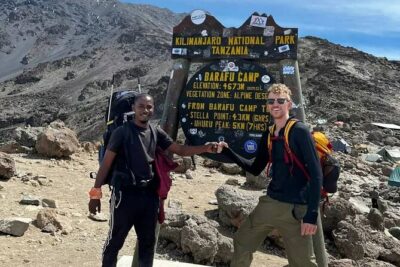
6 Days Machame Route Kilimanjaro Climbing Trekking Tour
Read our review →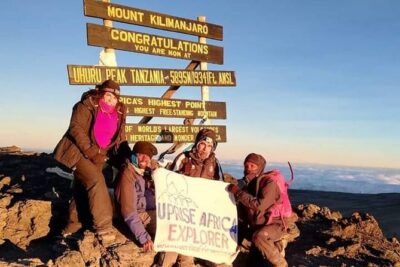
Kilimanjaro Trekking 7Days 6Night Lemosho Route
Read our review →
Browse the lists this tour appears in