
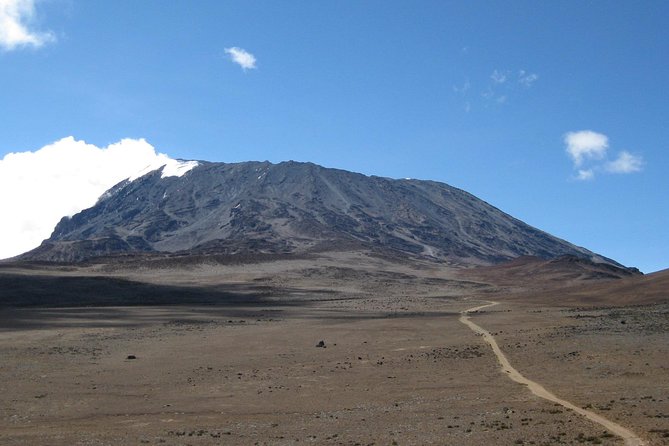
REVIEW · ARUSHA
5 Days Marangu Route Kilimanjaro Trekking
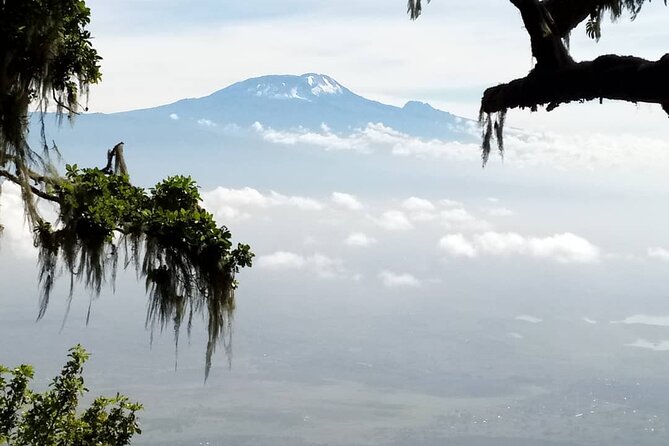
The Marangu Route gives you a bed every night on Africa’s highest mountain. That makes it the most comfortable Kilimanjaro route on paper, though the summit day is still a cold, exhausting test of patience and fitness. You’ll climb through rainforest, open moorland, giant lobelias, and a stark volcanic moonscape before reaching Uhuru Peak.
I like two things right away: the communal huts spare you from sleeping in a tent, and the route offers big scenery without technical climbing. Guides William and Tuliza are named as part of the guiding team, with slow pacing and good summit advice forming an important part of the plan. The main concern is the five-day schedule. It is short for proper acclimatization, so the six-day version is worth considering if you can spare the extra night.
Key points to know before booking
- Huts instead of tents: Sleep in communal mountain huts with bunks, sponge mattresses, pillows, and solar lights.
- A direct summit route: Reach Uhuru Peak after a midnight to 2 am start from Kibo.
- Five demanding walking days: Daily hikes are listed at about eight hours, with the summit day including the descent.
- Acclimatization is the weak spot: The five-day plan is faster than the six-day option, which adds rest at Horombo or a Mawenzi climb.
- Two climates in one trip: Expect warm, wet forest on the way down and severe cold during the summit push.
- Private group format: Only your group takes part, with pickup and return transport offered.
Why Marangu feels different from other Kilimanjaro routes
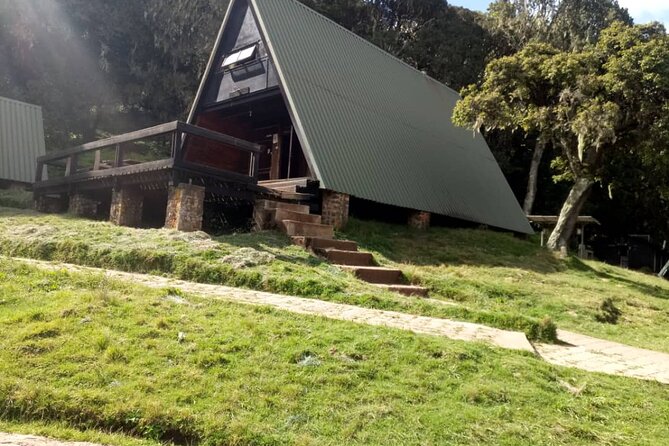
Marangu is often called the Coca-Cola Route, a nickname that points to its popularity and straightforward trail design. It is also the only route in this package with sleeping huts at each campsite. You are not pitching a tent after a long day. Instead, you sleep in shared bunk rooms with mattresses, pillows, and solar lighting.
That comfort matters, but it does not turn the climb into a stroll. Kilimanjaro rises to 5,895 meters, and altitude affects people in unpredictable ways. The second day reaches 3,700 meters, the third climbs to 4,700 meters, and summit night begins after dinner, rest, and a short sleep at Kibo.
You also need to understand the word easiest. Marangu has a relatively direct route and hut accommodation, but the final ascent remains steep, cold, dark, and physically draining. The itinerary lists roughly eight hours of walking each day. Summit day includes the ascent to Gilman’s Point, the onward climb to Uhuru Peak, descent to Kibo, lunch and rest, then the walk to Horombo.
More Kilimanjaro Climbs in Arusha
- 8-Day Small-group Lemosho Kilimanjaro Summit Trekking
★ 5.0 · 186 reviews - 7 Days Kilimanjaro trek via Machame route
★ 5.0 · 13 reviews - Mount Kilimanjaro day trip trekking
★ 5.0 · 12 reviews
Day 1: Rainforest, Maundi Crater, and Mandara
The day begins with breakfast, a briefing, and a drive of about one hour to Kilimanjaro National Park Gate. After registration, you start at approximately 1,860 meters and climb to Mandara Hut at 2,700 meters.
The first hours pass through rainforest. Look for tall eucalyptus trees, birdlife, and colobus monkeys. The forest is not simply an easy warm-up. It can feel damp, and the path may be muddy, especially on the return route. Your legs are fresh, but the steady uphill walking begins at once.
If energy and weather allow, the side trip to Maundi Crater is a fine addition. It gives you wider views toward northern Tanzania and Kenya, and it helps you see how quickly the forest gives way to higher vegetation. The route description allows about eight hours for the day, so you should not treat the side trip as an automatic extra.
Mandara is your first hut stop. Sleeping indoors is a real benefit here, especially if wet weather has followed you up from the gate. The shared rooms mean less privacy than a private tent, but you gain a bed and a mattress rather than a night on the ground.
Day 2: Moorland views from Mandara to Horombo
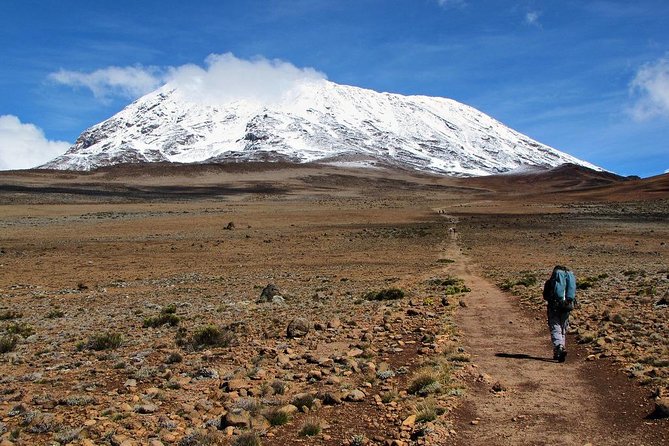
From Mandara, the path leaves the forest and crosses open moorland toward Horombo Hut at about 3,700 meters. This change in scenery is one of the pleasures of Marangu. Tall trees fall away, and Mawenzi and Kibo begin to dominate the view.
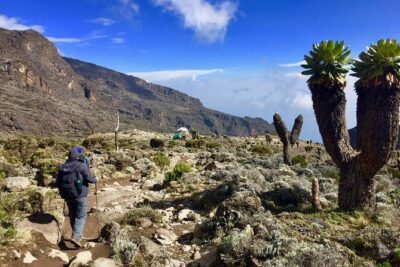
You may see giant lobelias and groundsels, plants that make the high slopes feel unlike an ordinary mountain walk. The route is more exposed than the first day, and the gain in elevation is substantial. The day again takes about eight hours.
This is also when altitude may begin to make itself known. A headache, poor sleep, tiredness, or reduced appetite can appear. The practical response is to walk slowly, drink the purified water supplied by the company, and tell your guide how you feel. Do not hide symptoms to appear tough. On Kilimanjaro, early communication is sensible mountain craft.
Horombo is an important overnight stop because it is both a campsite and, on the six-day version, the place for an extra acclimatization night. If your schedule allows, that extra day can be spent resting or walking toward the smaller peak of Mawenzi. Five days keeps the trip shorter and usually less expensive in time, but six days gives your body more room to adjust.
Day 3: The saddle between Mawenzi and Kibo
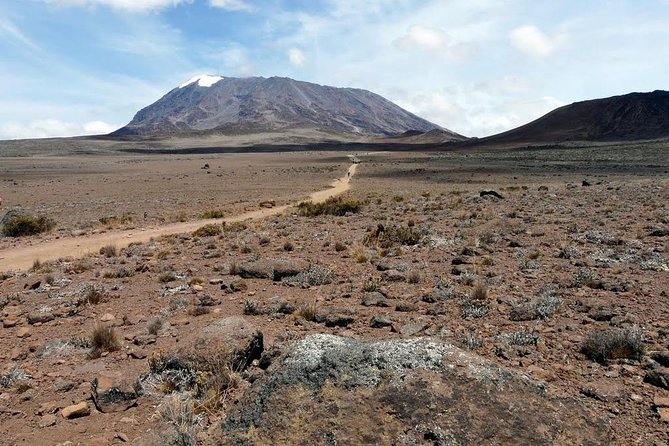
Day three takes you from Horombo at 3,700 meters to Kibo at around 4,700 meters. You pass the last watering point and cross the broad saddle between Mawenzi and Kibo.
The vegetation thins as you climb. Upper heathland gives way to a bare volcanic zone described as moonscape. There are fewer visual distractions here, which can be useful. You can focus on your pace, breathing, water, and the next section of trail.
The day is listed at about eight hours, and the altitude makes those hours feel longer. Kibo is not a place to rush through. Dinner, rest, and preparation for the summit climb are the main tasks. Pack your warm layers, headlamp, gloves, and any other items you will need before leaving in the middle of the night.
The hut system is especially useful at this point. You can organize your equipment indoors and get some shelter from the cold. The huts are communal, so quiet and personal space may be limited. Still, a mattress and solar light are practical comforts before the hardest part of the trek.
More five-day treks in Arusha
- 5 Days Marangu Route – Mount Kilimanjaro Trek
★ 5.0 · 5 reviews - 5 Days Marangu Route Kilimanjaro Trekking
★ 5.0 · 4 reviews - Annapurna base camp trek 5 Days
★ 5.0 · 252 reviews - Kathmandu to Annapurna Base Camp (ABC) 5-Day Trek
★ 5.0 · 102 reviews
Day 4: The midnight climb to Uhuru Peak
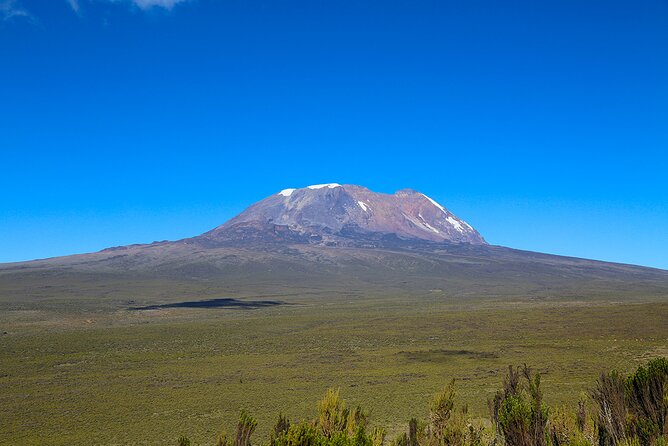
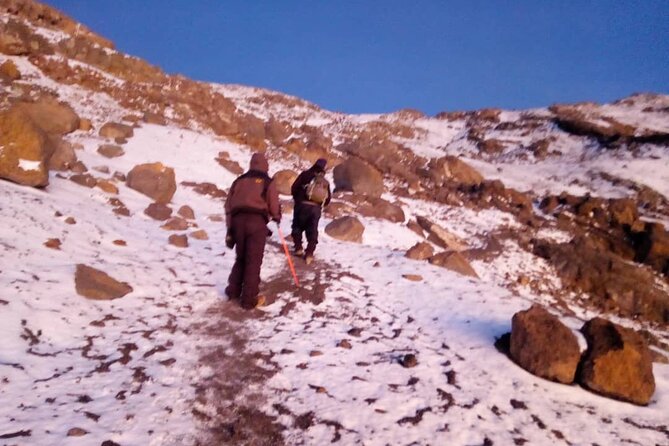
Summit day starts very early, sometime between midnight and 2 am. The first section is steep and covered with loose scree or snow, depending on conditions. You need a headlamp or flashlight because much of the ascent happens in darkness.
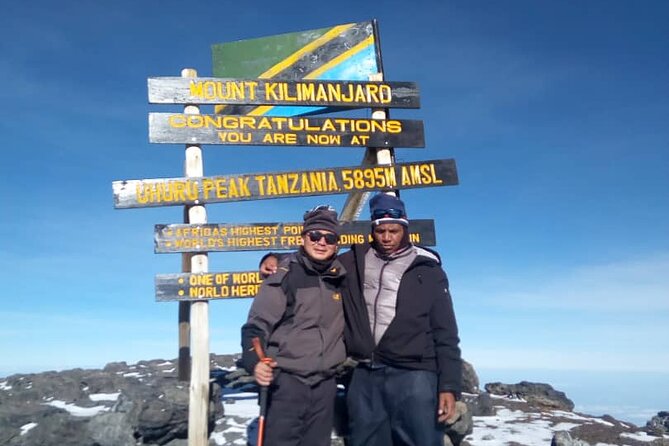
The first major goal is Gilman’s Point on the crater rim. From there, you continue toward Uhuru Peak, the highest point in Africa. The route description promises wide views, but visibility will depend on weather and timing. Reaching the summit is the reward, yet the actual experience is often more about steady effort than dramatic speed.
This is where the advice pole pole, meaning slowly, becomes practical rather than decorative. Short steps help conserve energy. Your guide’s job includes setting a manageable pace and encouraging you when the climb feels endless. The supplied guide names are William and Tuliza, and good communication with the guiding team will matter most on this day.
Cold is a serious factor. You should have all your warm layers ready before leaving Kibo. The summit section is exposed, and the temperature can remain very low until you begin descending. Once you reach higher ground and the sun rises, the conditions may feel very different, but do not count on warmth during the ascent.
After Uhuru Peak, you descend to Kibo for lunch and a rest, then continue to Horombo. This is a long day even though the schedule lists about eight hours. The descent can be hard on tired knees, and the combination of little sleep, altitude, and earlier effort is not minor.
Your picture at the summit is part of the experience, but do not let the photo become the whole point. Take a moment to look around, check your condition, and follow your guide’s instructions. The safest summit is one reached with a controlled pace and a sensible descent.
Day 5: From Horombo through forest to Marangu Gate
After breakfast, you descend from Horombo through the moorland to Mandara Hut, then continue down the forest path to Marangu Gate. The elevation drops from about 3,700 meters to 1,700 meters, so the air becomes easier even as the trail can become wetter.
Lower sections may be muddy. Gaiters and trekking poles are useful here, especially after rain. You may find shorts and a T-shirt comfortable at the lower elevation, but keep rainwear and a warmer layer close by. Packing your clothing where you can reach it saves time during the changing conditions.
At the national park gate, a vehicle is scheduled to take you back to your hotel in Moshi. The drive is about one hour. Arrival and departure transfers are included, which simplifies the start and finish of the trip. The meeting time is listed as 8 am, so confirm the exact pickup point and timing when you book.
What the $1,700 price covers
At $1,700 per person, this is not a bargain mountain walk, but Kilimanjaro costs reflect permits, staff, transport, food, water, and several days of support. The listed inclusions cover professional mountain guides, park fees and taxes, arrival and departure transfers, purified drinking water, and a sleeping mattress.
Breakfast, lunch, and dinner appear in the inclusions, with the meal entries marked optional in the supplied details. I would ask for a clear written explanation of the food arrangement before paying. You should know exactly which meals are included, where they are served, and whether any meal cost is extra.
Tips are not included. A Tanzania visa is also your responsibility. Those are easy costs to overlook when comparing tours, so add them to your total budget.
The private format adds value if you want the trek limited to your own group. It can make communication easier and may give the guide more room to respond to your pace. The tradeoff is that a private trip does not automatically make the five-day schedule easier on your body. The route still climbs quickly.
The guide team and the human side of the climb
Mountain scenery gets the attention, but guides often determine how a summit attempt feels. William and Tuliza are identified as guide and assistant guide, and their role includes giving practical advice for reaching the summit, managing pace, and helping you handle the hardest hours.
You should expect the climb to require cooperation. Tell the guides when you feel unwell, ask when you are unsure about clothing or pace, and follow their advice during the summit push. The experience is described as friendly and professional, but it is still important to establish expectations before leaving the gate.
The communal huts also create a more social setting than private tents. You sleep in shared rooms, use a bunk with a sponge mattress and pillow, and have solar light rather than full hotel comforts. If you value a proper bed over privacy, Marangu makes good sense. If you need quiet and personal space, the hut arrangement may feel basic.
Who should choose this five-day trek
I would recommend it to a fit hiker who wants the shortest Marangu schedule and values hut accommodation. It suits someone who can handle long uphill days, a midnight start, cold weather, and a fast change in elevation.
It is less suitable if you are looking for a relaxed mountain holiday. The five-day version leaves little spare time, and the itinerary itself notes that six days gives better acclimatization. If your budget and calendar allow one extra night at Horombo, that is the option I would examine first.
The route also suits first-time high-altitude hikers who prefer a clear path and indoor sleeping. Still, strong physical fitness is required. No route name can remove the effects of altitude, and no comfortable hut can make summit night easy.
Booking, cancellation, and practical details
Pickup is offered, the activity has a mobile ticket, and confirmation is provided at booking. The experience is private, and only your group takes part. It is near public transportation, though the important transport detail is the company vehicle taking you between the park gate and your hotel.
Free cancellation applies when you cancel at least 24 hours before the start time. Changes made less than 24 hours before the start are not accepted, and late cancellations are not refunded. The local time at the destination controls the cutoff.
The climb requires good weather. If poor weather cancels the experience, you are offered another date or a full refund. Since conditions can affect the summit attempt, keep your schedule flexible if possible.
Should you book the Marangu Route?
Book this trek if you want Kilimanjaro with hut beds, a private group, direct access to Uhuru Peak, and a route that moves from rainforest to volcanic high country in five days. The included guides, transfers, park costs, water, and sleeping mattress make the $1,700 price easier to assess, though you should clarify the meal entries and budget for tips and a visa.
My main caution is the schedule. Five days is efficient, but six days gives you better acclimatization and an extra night at Horombo. If reaching the summit matters more than saving one day, choose the longer version if it is available.
FAQ
How long is the Marangu Route trek?
The trek lasts approximately five days. Each day is listed at about eight hours of walking.
Where does the trek start?
The experience starts after breakfast and a briefing, followed by a drive of about one hour to Kilimanjaro National Park Gate.
Do I sleep in tents?
No. Marangu provides communal sleeping huts at each campsite, with bunk beds, sponge mattresses, pillows, and solar lights.
Is this a private tour?
Yes. Only your group participates in the activity.
What time does the summit climb begin?
The summit climb starts very early, between midnight and 2 am on day four.
Is purified drinking water included?
Yes. Clean, purified drinking water is listed as included.
What happens if bad weather cancels the trek?
You are offered a different date or a full refund if poor weather causes the experience to be canceled.
Latest treks added in Arusha
- Mount Kilimanjaro day trip trekking★ 5.0 · 12 reviews
- 5 Days Marangu Route Kilimanjaro Trekking★ 5.0 · 4 reviews
- 3 Days Mount Meru trekking★ 4.5 · 7 reviews
- 8 Days Lemosho Route Kilimanjaro Trekking★ 5.0 · 5 reviews
- 7 Days Machame Route Kilimanjaro Trekking★ 5.0 · 9 reviews
- 7 Days Machame Route Trek Mount Kilimanjaro★ 5.0 · 12 reviews
- Lemosho Route 7 Days Trekking at Mount Kilimanjaro★ 5.0 · 7 reviews
- Private One-Day Trek to Mount Kilimanjaro★ 4.5 · 2 reviews
Kilimanjaro Climbs, compared.
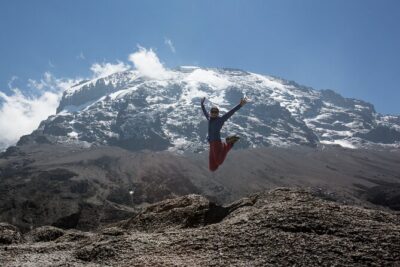
8-Day Small-group Lemosho Kilimanjaro Summit Trekking
Read our review →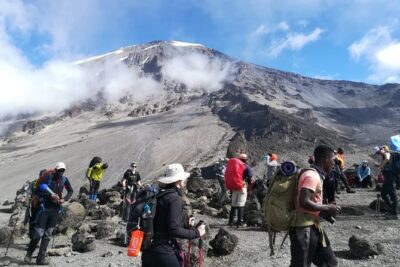
Best Kilimanjaro Adventure 7 days Machame route Trekking
Read our review →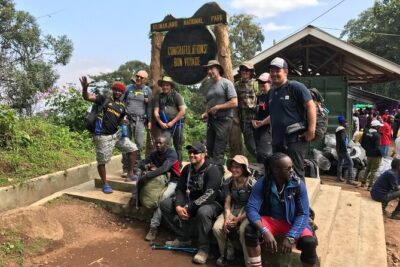
Kilimanjaro 7 Day Private Trekking Experience
Read our review →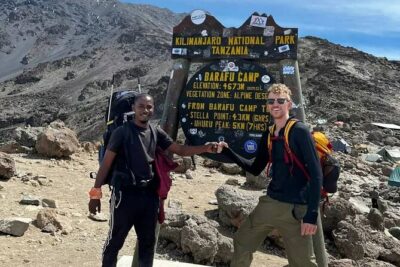
6 Days Machame Route Kilimanjaro Climbing Trekking Tour
Read our review →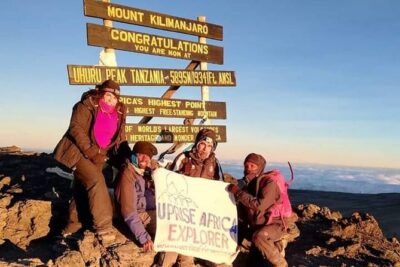
Kilimanjaro Trekking 7Days 6Night Lemosho Route
Read our review →
Browse the lists this tour appears in