REVIEW · KATHMANDU
20 Days Private Kanchenjunga Circuit Trek
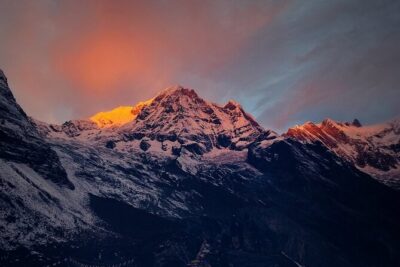
The great prize here is access to both Kanchenjunga Base Camps on one demanding circuit. You move from warm, lower hill country into high alpine valleys, cross several serious passes, and reach Pangpema at about 5,140 meters, with the north face of the world’s third-highest mountain ahead.
I like the careful acclimatization built into the plan, especially the two nights around Ghunsa and Kambachen. I also like the private format. Guides such as Narayan and Dil can adjust the pace and route for weather and health, a useful advantage in a region where conditions can change quickly.
The tradeoff is the approach. You spend long hours on buses and rough mountain roads before the walking really begins, and the trek demands strong fitness. Tea houses are basic, drinks cost extra, and the schedule leaves little room for a weak day.
Key points to know before booking
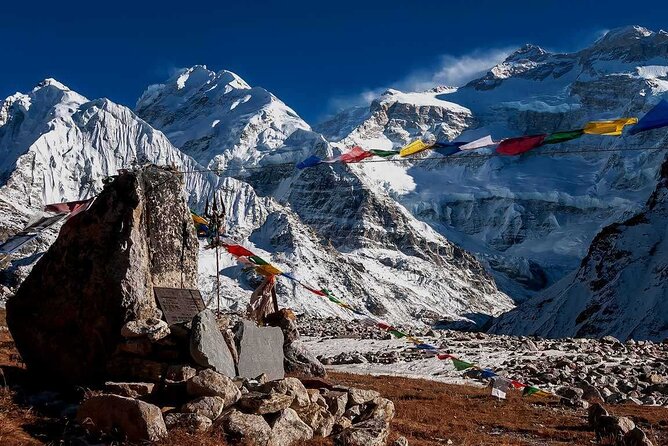
- Both base camps: Reach North Base Camp, also called Pangpema, and take a day trip to South Base Camp, also called Oktang.
- High-pass crossing: The route uses Sele Le, Sinion La, Mirgin La, and Sinelapche La.
- Two acclimatization stops: Spend extra nights at Ghunsa and Kambachen before moving higher.
- Private guiding: Your group travels alone, with a guide for 19 days. Narayan and Dil are named in past trip feedback.
- Long approach and exit: Flights connect Kathmandu with Bhadrapur, but buses and drives take much of the first and last days.
- Remote tea-house trekking: Lodging and meals are included, but hot and cold drinks are not.
Why Kanchenjunga feels different from Nepal’s busier treks
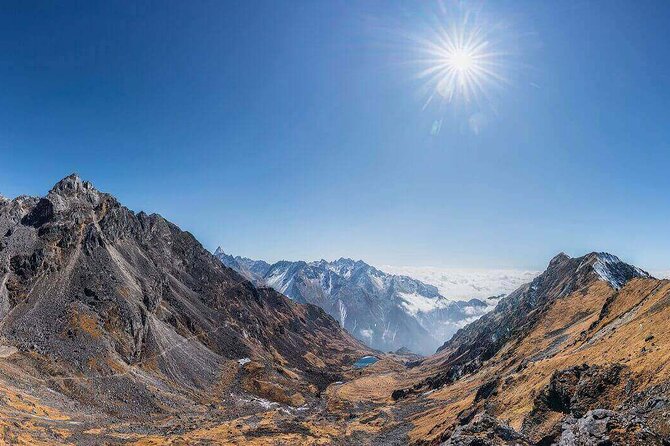
Kanchenjunga sits in eastern Nepal, far from the better-known routes around Everest and Annapurna. The Kanchenjunga Conservation Area protects a large stretch of mountain country, and the route passes through villages connected with Limbu, Sherpa, Rai, and Gurung communities.
You should choose this trek for distance, quiet, and variety rather than comfort. The path moves through forest, river valleys, alpine meadows, moraines, glaciers, and bare high-altitude ground. The reward is not one single viewpoint. It is the steady change in scenery as you climb deeper into the area.
The route also has a strong sense of progression. Chirwa and Lelep feel like village stops. Ghunsa becomes a place to slow down and prepare for altitude. Kambachen, Lhonak, and Pangpema bring you into a much harsher setting. Then the route turns south, crosses high passes, reaches Cheram, and drops toward Yamphudin and the road.
That variety makes the trek special, but it also makes it tiring. This is not a gentle walking holiday with a few mountain views. You need to be ready for long days, high altitude, basic lodging, and a plan that can change because of weather.
More Trekking Tours in Kathmandu
- Everest Base Camp Trek – 14 Days
★ 5.0 · 1,499 reviews - Everest Base Camp Trek
★ 5.0 · 842 reviews - Everest Base Camp Trekking
★ 5.0 · 485 reviews
The first two days: Kathmandu to Ilam and Taplejung
The trip begins at Tribhuvan Airport in Kathmandu, with a stated start time of 10:15 am. You fly for about 45 minutes to Bhadrapur in the afternoon, then continue by public bus for roughly five hours to Ilam.
Ilam is a useful first overnight stop. It breaks up the long journey east and gives you a night in Nepal’s hill country before the rougher road to Taplejung. The day can last around 12 hours, so do not treat the flight as the main event. The road transfer is the real test of patience.
On Day 2, the bus covers about 240 kilometers between Ilam and Taplejung. The stated travel time is nine to 12 hours, depending on traffic and road conditions. That distance can take much longer than a road map suggests, and this is one of the least glamorous parts of the trip.
Still, the overland approach has value. You see how quickly Nepal changes from the Kathmandu Valley to tea-growing hills and remote eastern settlements. If you want a short, polished transfer to the trailhead, this is the wrong trek. If you accept the slow approach as part of reaching a remote mountain area, it makes sense.
Chirwa, Lelep, and Amjilosa: entering the conservation area
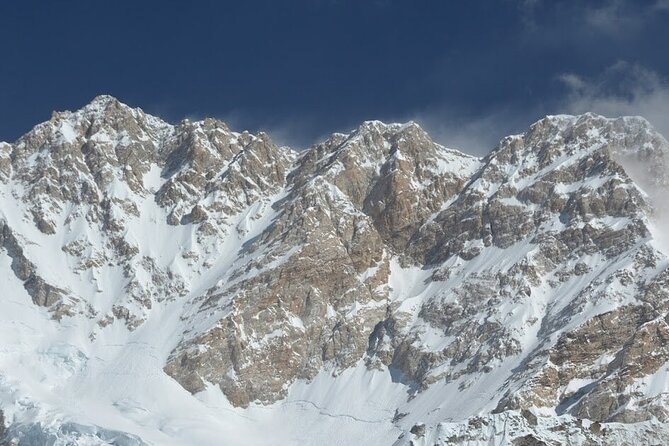
The early walking days begin around Chirwa. It is a small village with tea houses and lodges, and it gives you a first taste of the simple accommodation used throughout the route. The details provided for this day describe a full 12-hour activity window, so expect a substantial day even though exact walking distance is not given.
From Chirwa, you continue to Lelep. The village is about 20 kilometers away and usually takes six to seven hours. Lelep serves as the headquarters of the Kanchenjunga Conservation Area, so it has practical importance as well as a village feel.
I like this part of the route because the trek is already more than a march toward a summit. You are passing through lived-in places and seeing how the protected area connects local communities with the high mountains. The route also becomes more remote as you move on.
The next stage reaches Amjilosa, at about 2,310 meters. The distance from Lelep is around 13 kilometers, with six to seven hours of walking. Amjilosa is small, and the tea-house selection is limited. That is not a problem if you expect simple rooms and shared facilities, but it is worth understanding before you commit.
Gyabla and Ghunsa: the first real altitude pause
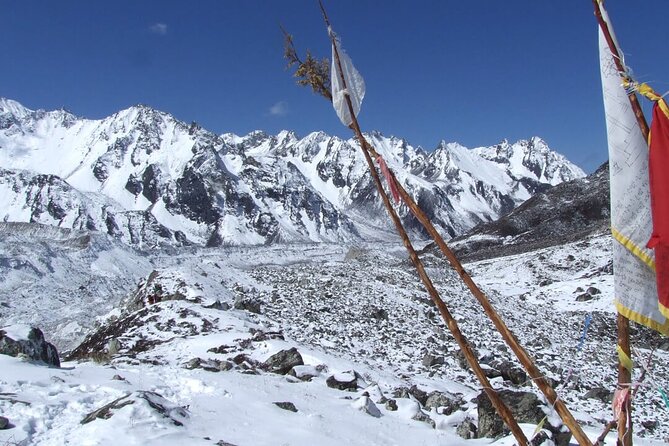
The walk from Amjilosa to Gyabla continues through the conservation area and brings more changes in scenery and local culture. The supplied plan gives no precise distance or altitude for this day, so you should rely on your guide for the exact pace and stopping details.
Day 7 reaches Ghunsa, one of the most important villages on the route. At about 3,475 meters, it is surrounded by mountain scenery and greenery, with traditional wooden houses and basic tea houses. You spend the next day acclimatizing here.
That extra night is one of the strongest features of the plan. At this height, pushing onward too quickly can turn a fine trek into a bad one. The schedule gives your body time to adjust before the route rises toward 4,000 meters and beyond.
Your guide matters here. Narayan is described as highly capable on the route, with a strong grasp of local culture, while Dil is described as able to adjust plans around weather and the health of individual group members. Those are practical skills, not decorative extras. In a private trek, you want a guide who can make sensible decisions when the timetable stops matching reality.
Another trail to compare in Kathmandu:
- Annapurna Circuit Trek with Tilicho Lake
★ 5.0 · 368 reviews - Everest Base Camp Trekking – 13 Day
★ 5.0 · 365 reviews - Everest Base Camp Trek
★ 5.0 · 350 reviews - Everest Base Camp Trek -14 Days
★ 5.0 · 321 reviews
Kambachen and Lhonak: the route gets serious
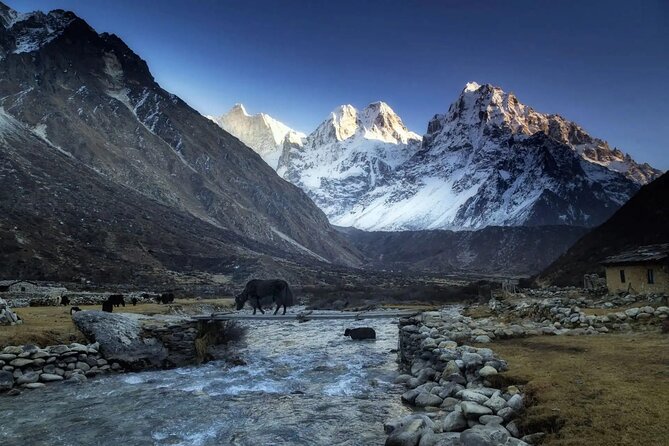
From Ghunsa, the path to Kambachen follows the Ghunsa River through alpine meadows and moraine country. Kambachen sits at about 4,050 meters, or 13,287 feet, and you spend a second night there for acclimatization.
This is another smart pause. The jump from Ghunsa to Kambachen changes more than the number on an altitude chart. The air is thinner, the ground is rougher, and the surroundings become more stark. A rest day here is not wasted time. It gives you a better chance of reaching Pangpema safely and enjoying it when you arrive.
The plan then continues toward Lhonak, a high stopover surrounded by glaciers, mountains, and bare high-altitude ground. This section is likely to feel remote and exposed, with fewer signs of ordinary village life. The route description does not give a precise distance for this day, so your guide will set the rhythm based on conditions.
You should also keep the trip’s meal arrangements in mind. Breakfast, lunch, and dinner are included for the stated trek days, but all hot and cold drinks are extra. At high altitude, warm drinks can become a regular expense, so carry some spending money rather than assuming every meal-related cost is covered.
Pangpema at 5,140 meters: the northern goal
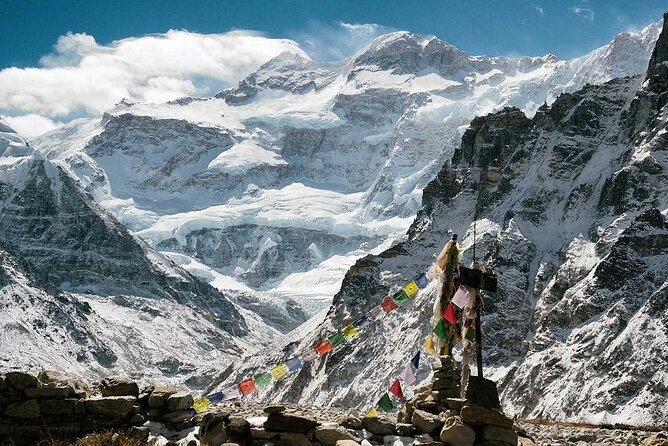
Kanchenjunga North Base Camp, known as Pangpema, is the highest and most dramatic point of the northern valley. At about 5,140 meters, it provides views toward the north face of Kanchenjunga, which rises to 8,586 meters.
This is not a casual sightseeing stop. The altitude alone makes the day demanding, and conditions can affect how long you stay and how far you can safely go. The value of having a private guide is clear here. You can receive direct advice about pace, symptoms, weather, and when it is sensible to turn around.
After the base camp visit, the route descends to Ghunsa for an overnight stay. That descent gives your body some relief and returns you to a more comfortable village setting before the trek turns toward the southern valley.
The plan’s wording places Lhonak around Day 11, Pangpema on Day 12, and Ghunsa on Day 13. Exact walking times may shift, so treat the 20-day schedule as an organized framework rather than a rigid promise.
Sele Le and the high passes to Cheram
From Ghunsa, the route climbs toward Sele Le. This high camp is used when crossing between the northern and southern sides of the Kanchenjunga circuit. The next section includes Sinion La, Mirgin La, and Sinelapche La.
This is one of the hardest parts of the trek. You are not simply walking uphill to a village. You are crossing high passes, where weather and footing can make the day much more demanding than the distance suggests.
The reward is a change in direction and scenery. Instead of retracing the whole approach, you link the two major valleys and continue toward the southern base camp. The route feels like a true circuit rather than an out-and-back walk.
After the pass crossing, you reach Cheram, at about 3,870 meters. The journey from Sele Le is around 10 kilometers and usually takes seven to eight hours. Cheram is a useful base for the following day’s trip to South Base Camp.
Oktang South Base Camp and the return to lower country
Day 16 is a day trip from Cheram to Kanchenjunga South Base Camp, also known as Oktang, followed by another night at Cheram. Reaching both Pangpema and Oktang is the defining feature of this itinerary.
The two base camps offer different views and different approaches to the mountain. Pangpema presents the north face at a very high altitude. Oktang gives you the southern side after the pass crossing and a stay at the more manageable elevation of Cheram. Seeing both makes the long circuit worthwhile for serious walkers who want a fuller view of Kanchenjunga.
After Cheram, the route descends through forests, along rivers, and past small settlements to Torongding. The setting should feel less severe after the high passes, though long descents can be hard on your knees.
The next stop is Yamphudin, a culturally mixed village with Limbu, Sherpa, Rai, and Gurung residents. I like this ending because it brings you back into village life instead of dropping you straight from glacier country into a vehicle.
Yamphudin to Kathmandu: a long final travel day
From Yamphudin, you take public transport to Fikal, also spelled Fikkle in the schedule. This is a road transfer, not another major walking stage. The final day includes about two hours by road from Fikkle to Bhadrapur, followed by an afternoon flight to Kathmandu.
Your trip ends at Tribhuvan International Airport, where a representative drops you at the departure terminal. The plan covers the Kathmandu to Bhadrapur and Bhadrapur to Kathmandu flights, as well as the listed public bus connections.
The last two days can feel tiring because you are still moving for many hours after the main walking is over. Build in patience. Road timing in the hills is not as predictable as a city transfer, and the flight is part of a linked schedule.
What the $2,560 price really covers
At $2,560, this is not a budget walk, but the price includes several costly and useful pieces:
- Flights between Kathmandu and Bhadrapur
- Public bus transport between Bhadrapur, Ilam, Taplejung, Yamphudin, and Fikal as listed
- A guide for 19 days
- Required trekking permits
- Tea-house accommodation for 19 nights in the mountains
- 19 breakfasts, 19 lunches, and 19 dinners
For a private trek lasting about 20 days, the value comes from the length, permits, guide support, food, lodging, and internal transport. You are also paying for access to a remote route that requires more planning than a short valley trek.
The main extra expense is drinks. Hot and cold drinks are not included, and you should also clarify any personal costs before departure. The stated package is generous in its core coverage, but it is not an all-inclusive trip.
Who should book this trek
You should consider it if you want:
- A private group rather than a shared departure
- Both Kanchenjunga Base Camps
- A long, remote trek with high passes
- Basic tea-house lodging instead of luxury hotels
- A guide who can adjust the plan for weather and health
- A demanding route with strong cultural and environmental variety
You should think twice if you dislike long bus rides, simple accommodation, or uncertain mountain conditions. The activity specifically requires a strong level of physical fitness, and the high points reach more than 5,000 meters.
Vegetarian, vegan, and gluten-free food can be requested. Service animals are allowed according to the trip information, though anyone considering that option should confirm the practical details for a remote high-altitude trek before booking.
The tour is private, so only your group participates. That gives you more control than a large fixed group, but it also means the trek is built around your own ability and preparation.
Should you book the 20-day Kanchenjunga Circuit Trek?
Book this if both base camps and the high-pass circuit are your main goals. The route gives you a rare combination of remote valleys, local villages, glacier country, and views of Kanchenjunga from two sides.
I would book it with realistic expectations. The first and last days involve long road transfers, tea houses are basic, drinks cost extra, and the altitude is serious. The strongest reason to choose this particular arrangement is the private guiding, especially if you value a flexible plan and direct support from a guide such as Narayan or Dil.
Free cancellation is available up to 24 hours before the stated start time. After that point, the payment is not refunded, and late changes are not accepted. For a trek of this length, confirm your fitness, dates, transport details, and food requests before that deadline.
FAQ
How long is the Kanchenjunga Circuit Trek?
The advertised duration is approximately 20 days. The wider route description notes that the Kanchenjunga Circuit can take 20 to 25 days, so the schedule may need adjustment for weather, health, or trail conditions.
Does the trek visit both Kanchenjunga Base Camps?
Yes. The itinerary includes North Base Camp, also called Pangpema, and a day trip to South Base Camp, also called Oktang.
How high is Pangpema?
Pangpema is at approximately 5,140 meters, or 16,863 feet.
Are flights included?
Yes. The package includes flights from Kathmandu to Bhadrapur and from Bhadrapur back to Kathmandu.
Is transport from Bhadrapur to the trek area included?
Yes. The package includes public bus travel from Bhadrapur to Ilam, Ilam to Taplejung, and Yamphudin to Fikal as listed.
Is accommodation included?
Yes. Tea-house accommodation is included for 19 days in the mountains.
Are meals included?
Breakfast, lunch, and dinner are included for the stated trek days. The package lists 20 breakfasts, 19 lunches, and 19 dinners.
Are drinks included?
No. Hot and cold drinks on the trek are not included.
Is this a private tour?
Yes. Only your group participates, and a guide is provided for 19 days.
What level of fitness is required?
The tour requires a strong level of physical fitness. The route includes long walking days, high-altitude stops, and passes such as Sele Le, Sinion La, Mirgin La, and Sinelapche La.
Latest treks added in Kathmandu
- Ghorepani Poonhill Trek★ 5.0 · 5 reviews
- Ghorepani Poon Hill Trek★ 5.0 · 16 reviews
- Private Manaslu Circuit Trek at Himalayas★ 5.0 · 3 reviews
- Upper Mustang Trekking★ 3.0 · 2 reviews
- Amazing 1 Day Trekking Experience in Kathmandu Nepal★ 5.0 · 24 reviews
- Upper Mustang Trekking★ 5.0 · 2 reviews
- Upper Mustang Trek★ 5.0 · 5 reviews
- Upper Mustang Trekking★ 5.0 · 4 reviews
Kathmandu Trekking Tours, compared.