
REVIEW · KATHMANDU
14 Days Annapurna Base Camp Trekking | Best trek for visit Nepal 2020
Annapurna Base Camp is the star here, but the best part is the way this trip builds toward it. You begin with Kathmandu temples and Pokhara, then walk from Nayapul through Magar and Gurung villages, forests, stone stairways, and high alpine country before reaching the great mountain bowl at Annapurna Base Camp.
I like the built-in sunrise at Poon Hill, which gives you a major Himalayan view before the hardest days. I also like the finish at Jhinu, where natural hot springs offer a welcome soak after several days on your feet. The main caution is that this is a real mountain trek, with long uphill and downhill sections, basic lodge accommodation, and no dedicated acclimatization day.
Key points at a glance
- Poon Hill sunrise: An early climb from Ghorepani brings wide views of Annapurna and Dhaulagiri.
- Village life: You pass through Magar and Gurung settlements, including Ulleri, Tadapani, and Chhomrong.
- The main goal: The route reaches Machhapuchhre Base Camp and Annapurna Base Camp at high elevation.
- Jhinu hot springs: The natural pools make a useful, relaxing stop after the descent.
- Good trip value: At $871 per person, the package includes transport, guide costs, taxes, a first aid kit, sleeping bags, down jackets, breakfast, and lunch.
- Private format: Only your own group participates, which gives you more room to adjust the pace than a large shared departure.
What the 14 days actually involve
This is not 14 straight days of walking. The first three days cover arrival, Kathmandu sightseeing, and the road to Pokhara. Trekking begins on Day 4 and continues through Day 12, followed by a return to Kathmandu and airport transfer.
That structure suits you if you want more than a quick mountain hike. You get time for temples, city sights, road travel, village life, and the trek itself. It also means some days involve long drives, especially the seven hour journey from Kathmandu to Pokhara and the six hour return.
The route is often described as a moderate trek, but that label needs some care. The daily walking times range from roughly four to seven hours, and the trail includes steep stone staircases, repeated climbs, long descents, suspension bridges, and rugged sections near Base Camp. You should arrive with a moderate level of fitness, as the operator advises.
More Annapurna Treks in Kathmandu
- Annapurna Circuit Trek with Tilicho Lake
★ 5.0 · 368 reviews - Annapurna base camp trek 5 Days
★ 5.0 · 252 reviews - 14-Day Private Annapurna Base Camp Trek
★ 5.0 · 180 reviews
Kathmandu begins the trip with temples and paperwork
Your arrival starts at Tribhuvan International Airport, where a company representative meets you and takes you to your hotel. The first day stays fairly light, with time for a short walk around Thamel and a welcome dinner with the company team.
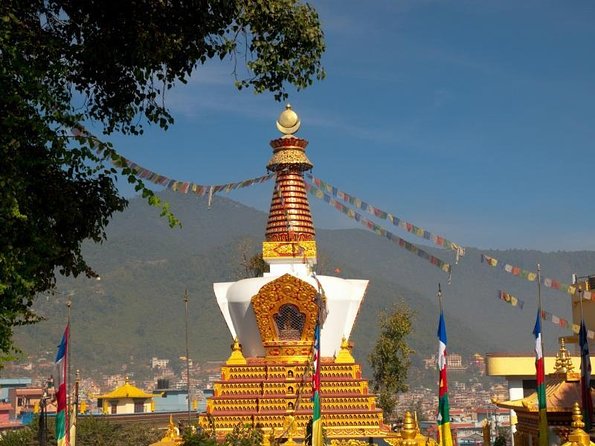
Day 2 is devoted to Kathmandu Valley sights. A private vehicle takes you to Pashupatinath, Swayambhunath, and Boudhanath, three major religious sites with very different moods. Pashupatinath is a major Hindu temple complex, Swayambhunath is the hilltop site often associated with its white stupa and city views, and Boudhanath is known for its large Buddhist stupa.
The trip highlights also refer to Kathmandu Durbar Square, so you should confirm the exact sightseeing schedule before departure if that square matters to you. The stated Day 2 program specifically names Pashupatinath, Swayambhunath, and Boudhanath.
Lunch is planned at a Nepali restaurant, which gives the city portion a useful local food stop rather than making it only a series of monuments. The company also handles trek permits and required documents on this day. That is a practical advantage, since you do not have to spend your first hours in Nepal sorting out paperwork on your own.
The road to Pokhara takes seven hours
On Day 3, a tourist bus collects you from your hotel for the drive along the Prithvi Highway. The distance is about 200 kilometers, but the trip takes around seven hours. Mountain roads do not follow the clockwork rhythm of a motorway, so you should treat this as a full travel day.
The route follows green hills, rushing rivers, and mountain views. It is scenic, though sitting on a bus for most of the day can be tiring. If you prefer flying between Kathmandu and Pokhara, that is not part of the stated package, so ask the operator before booking if you want to change this section.
Pokhara gives you a softer transition into the mountains. The program points to Phewa Lake, Mahendra Cave, Davis Falls, and Bat Cave as possible sights. Day 13 includes Phewa Lake and the World Peace Pagoda after the trek, so the exact timing of the Pokhara sightseeing may vary.
Nayapul to Ulleri introduces the walking rhythm
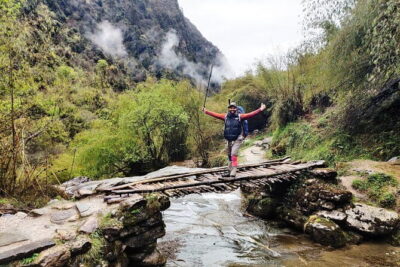
On Day 4, a private vehicle takes you to Nayapul, the starting point for many Annapurna treks. From there, you walk through Birethanti and Tikhedhunga before crossing a suspension bridge and climbing the famous stone stairway to Ulleri.
This is only about four hours of walking, but do not mistake the shorter day for an easy one. The stair climb can feel demanding at the start of a trek, especially if you are still adjusting to your boots, backpack, and the heat lower in the valley.
Ulleri is associated with the Magar community. That matters because the route is not only a mountain viewpoint tour. You pass through working villages and agricultural communities, with the chance to see how people live along the trail. Overnight stays in these settlements give the trek a human scale that a quick drive to a high viewpoint cannot provide.
Another trail to compare in Kathmandu:
- Everest Base Camp Trek – 14 Days
★ 5.0 · 1,499 reviews - Everest Base Camp Trek
★ 5.0 · 842 reviews - Everest Base Camp Trekking
★ 5.0 · 485 reviews - Everest Base Camp Trekking – 13 Day
★ 5.0 · 365 reviews
Ghorepani and Poon Hill deliver the first big mountain views
Day 5 leads from Ulleri through Banthanti to Ghorepani, with about six hours of walking. Banthanti is planned as a lunch stop, and Ghorepani is another important Magar village on the route.
The views become more rewarding here. From Ghorepani, you can see the Annapurna and Dhaulagiri ranges, subject to weather. Mountain visibility is never guaranteed, so the best approach is to enjoy the changing forest and village scenery as well as the peaks.
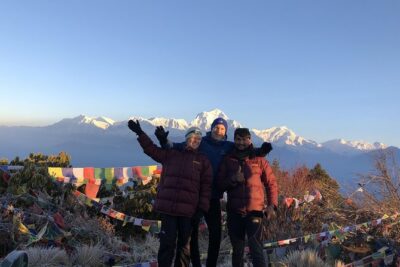
Day 6 begins before sunrise with the climb to Poon Hill. This early start is one of the strongest parts of the trip. From the viewpoint, you can watch the first light reach the Himalayan peaks and take in a broad view of the Annapurna range.
You return to Ghorepani for breakfast, then continue to Tadapani. The day combines an early uphill climb, a descent, and several more hours on the trail. Tadapani is a Gurung village with views toward Annapurna South and Hiunchuli. The program also mentions homestay opportunities for learning about Gurung culture, but you should confirm whether that is part of your scheduled overnight stay or simply an option.
Tadapani to Chhomrong brings more forest and stairs
Day 7 drops toward Kimrong Khola, then climbs through the forested Modi Valley. The route passes Chulie and Gurjung before reaching Talung, where lunch is planned, and then climbs a staircase to Chhomrong.
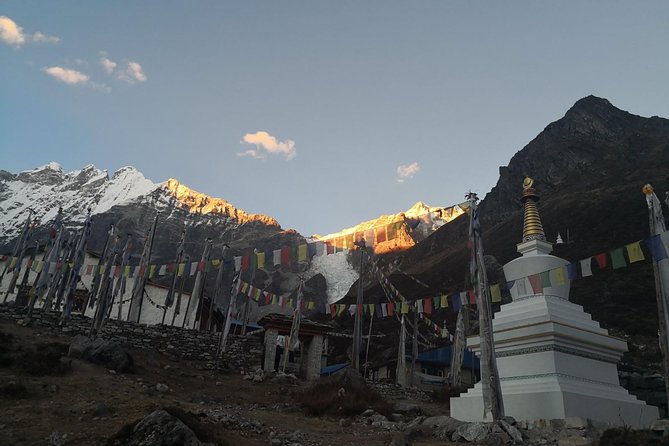
Chhomrong is one of the larger settlements in the valley and a key point on the Annapurna Base Camp route. It is a good place to notice the shift from lower valley villages toward the more remote mountain corridor ahead.
The repeated stairways are the story of this trek. You may descend for an hour only to climb again later. That pattern is tiring, but it also creates changing views and keeps the route varied. Pace matters more than speed. A private trip can help here, since your group may be able to walk at a comfortable rhythm instead of matching a large party.
Bamboo and Himalaya mark the approach to Base Camp
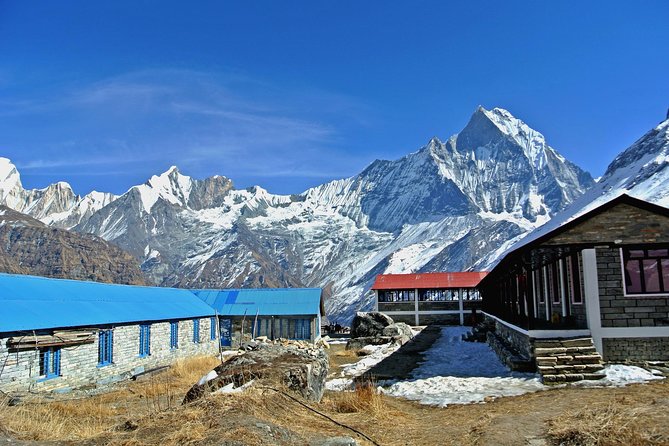
On Day 8, you cross the Chhomrong Khola and climb to Sinuwa. The trail then passes through rhododendron and oak forest before dropping to Bamboo. After lunch, you climb again toward Himalaya, a small collection of teahouses and lodges.
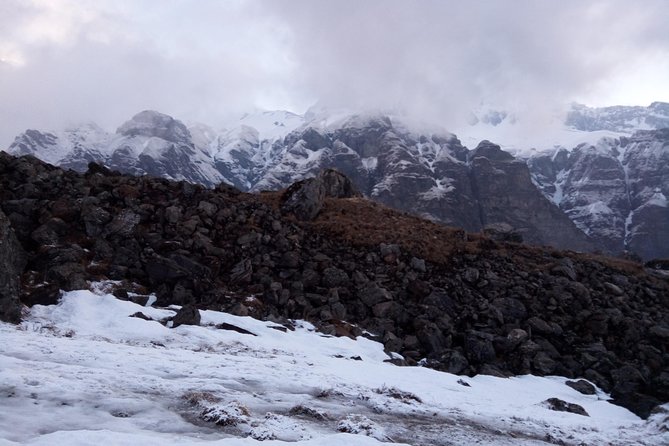
The vegetation changes as you gain height. Forest still surrounds much of the route, but the trail becomes more rugged and you may see snow in places, depending on the season. Himalaya is the last major stopping point before Base Camp, so the atmosphere becomes more focused and remote.
The simple lodging is part of the deal. This is not a luxury mountain holiday, and sleeping conditions become more basic as you go higher. The operator provides sleeping bags and down jackets, which is useful, especially if you do not want to buy or carry those items yourself. Pack personal layers, warm socks, and a reliable rain layer.
Annapurna Base Camp is the big payoff
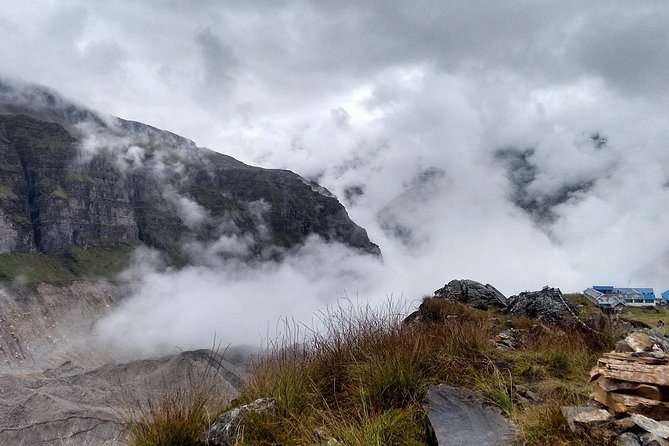
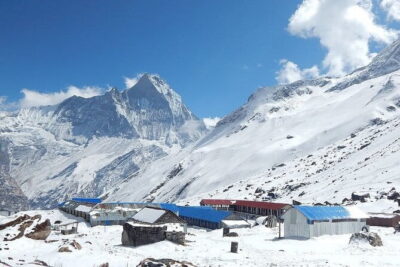
Day 9 is the high point of the trip. You continue upward through thinner vegetation, with trees giving way to alpine scrub and open mountain terrain. Along the way, you pass Hinku Cave and continue toward Machhapuchhre Base Camp.
Machhapuchhre, also known as Fishtail, rises dramatically above the route at 6,993 meters. From its Base Camp, Annapurna Base Camp is only a few hours away. The approach feels special because the mountains surround the trail rather than sitting far off on the horizon.
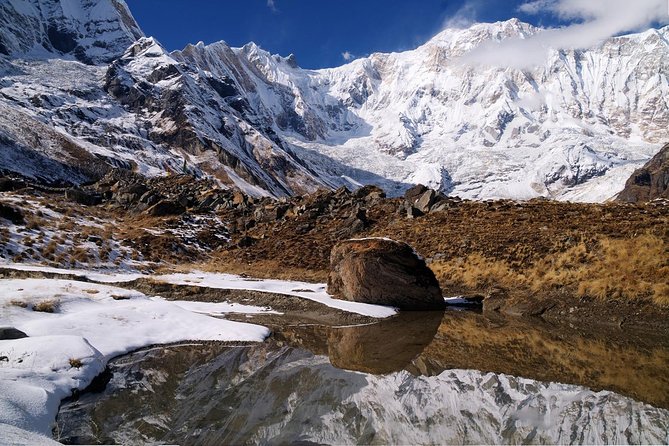
At Annapurna Base Camp, the setting opens into a huge mountain amphitheater. The program identifies views toward Annapurna, Dhaulagiri, and Manaslu. Weather and cloud cover control how much you see, but the location itself is the reward: you have walked from subtropical valleys into a high mountain basin on foot.
The listed timing shows only seven minutes for the Base Camp stop, which is almost certainly a scheduling entry rather than a realistic visit duration. In practice, expect time to arrive, settle in, take photographs, and rest at the lodge. Confirm the planned walking hours and overnight arrangements before you go.
The descent is easier on the lungs, harder on the knees
Day 10 descends from Annapurna Base Camp to Bamboo. The trail is mostly downhill, but that does not make it effortless. Down-climbing over uneven ground can be hard on knees and ankles, especially after the previous day’s high-altitude walk.
The scenery changes quickly as you lose elevation. Alpine scrub gives way to greener vegetation, and Bamboo takes its name from the bamboo growing in the area. This is a day to use trekking poles if you have them, keep your pace controlled, and avoid racing downhill.
Day 11 continues through Khuldighar, past the area associated with an experimental sheep farm, and down through rhododendron country toward Sinuwa. The route then climbs steeply to Jhinu Danda. That final climb can surprise you after a long descent.
Jhinu is worth the effort because of its natural hot springs. A soak here gives your tired legs a practical break, not just a pleasant photo stop. The springs are one of the smartest features of the route, since they arrive when your body needs recovery.
Birethanti and Pokhara close the mountain section
Day 12 is the final trekking day. You descend from Jhinu, cross the river, and return toward Birethanti. Lunch is planned there, followed by the walk to Nayapul.
At Nayapul, a company representative meets you and drives you back to your Pokhara hotel. The walking time is listed at about seven hours, so you should not plan a packed evening in the city.
Day 13 offers a slower morning in Pokhara before the six hour drive back to Kathmandu. Phewa Lake and the World Peace Pagoda are the named sights. The drive again follows a hilly highway, with river and mountain views but also the possibility of a tiring road journey.
Back in Kathmandu, you can rest or shop in Thamel. This final city night is useful because it gives you a buffer before your flight rather than sending you straight from the mountains to the airport.
What the $871 price buys you
At $871 per person, the package offers reasonable value if you want transport and guiding arranged in one booking. Private transportation, taxes and fees, a first aid kit, sleeping bags, down jackets, an English-speaking guide, and the guide’s expenses are included.
Breakfast is listed three times and lunch 11 times. That wording matters. Do not assume every meal is covered, and ask specifically about dinners, additional breakfasts, and food during the city stays. Nepal trekking lodges commonly charge separately for some meals and drinks, but the exact allowance here should be confirmed before payment.
Travel insurance, the Nepal visa fee, and tips for guides, porters, and drivers are not included. A porter is mentioned in the company’s trekking arrangements and feedback, but the included section does not clearly state porter costs, so ask who carries your main bag and what that costs.
The trip is private, which is a real benefit for pacing and communication. Company staff named in past arrangements include Saran, Lal, Nilan, Tika, Sam, and Niran. Bheem is also identified as a porter in one account. Your assigned team may differ, so treat these names as examples rather than a promise of a particular guide.
Who should book this trek
I would suggest this trip to someone who wants a first Himalayan trek with a clear route and city transport already arranged. It suits you if you value local village stops, mountain scenery, a sunrise viewpoint, and the chance to finish with hot springs.
It is less suitable if you want a soft adventure with short walks and comfortable hotels every night. The trek involves long days, steep steps, basic high-altitude lodging, and several hours of road travel.
The company has received strong praise for caring guides, flexible planning, and personal attention. That fits the private format, and named staff such as Saran are associated with adjusting schedules when plans change. Still, ask for the current guide, porter arrangement, meal coverage, room setup, and exact elevation schedule before you pay.
FAQ
How long is the Annapurna Base Camp experience?
The trip lasts approximately 14 days, including Kathmandu, Pokhara, the trek, the return to Kathmandu, and airport transfer.
Where does the trip start?
It starts at Tribhuvan International Airport in Kathmandu, Nepal. The stated start time is 7:45 am.
Is transportation included?
Yes. Private transportation is included, along with the tourist bus journey from Kathmandu to Pokhara and transport between the trekking trailhead, Pokhara, and Kathmandu as described in the program.
What fitness level is needed?
A moderate level of physical fitness is required. Walking days range from about four to seven hours and include steep stairs, climbs, descents, and rugged trail sections.
Are sleeping bags and down jackets provided?
Yes. Complimentary sleeping bags and down jackets are included.
Are meals included?
Breakfast is listed three times and lunch 11 times. The included information does not list all breakfasts, dinners, or drinks, so confirm the exact meal plan with Nepal Treks and Tour.
Can I cancel for a full refund?
Yes, if you cancel at least 24 hours before the experience start time. Cancellations or changes made less than 24 hours before the start time are not accepted for a refund.
Should you book it?
Book this trek if you want the full Annapurna Base Camp story rather than a short mountain excursion: Kathmandu temples, Pokhara, Magar and Gurung villages, Poon Hill at sunrise, Machhapuchhre, Base Camp, and Jhinu hot springs.
The price is attractive for a private, guided package with gear and transport included, but clarify the porter, meal, and lodging details first. If you are fit enough for repeated stair climbs and can accept simple mountain accommodation, this is a well-rounded way to reach Annapurna Base Camp without arranging every moving part yourself.
Latest treks added in Kathmandu
- Private Manaslu Circuit Trek at Himalayas★ 5.0 · 3 reviews
- Ghorepani Poonhill Trek★ 5.0 · 5 reviews
- Ghorepani Poon Hill Trek★ 5.0 · 16 reviews
- Upper Mustang Trekking★ 3.0 · 2 reviews
- Amazing 1 Day Trekking Experience in Kathmandu Nepal★ 5.0 · 24 reviews
- Upper Mustang Trekking★ 5.0 · 2 reviews
- Upper Mustang Trek★ 5.0 · 5 reviews
- Upper Mustang Trekking★ 5.0 · 4 reviews
Annapurna Base Camp Treks, compared.

Trekking in Annapurna/Langtang/Everest/Upper Mustang regions
Read our review →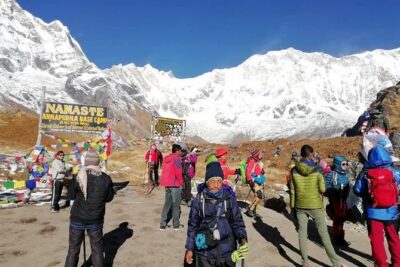
Kathmandu to Annapurna Base Camp (ABC) 5-Day Trek
Read our review →Browse the lists this tour appears in