
REVIEW · KATHMANDU
14-Day Private Annapurna Base Camp Trekking and Multi Activity
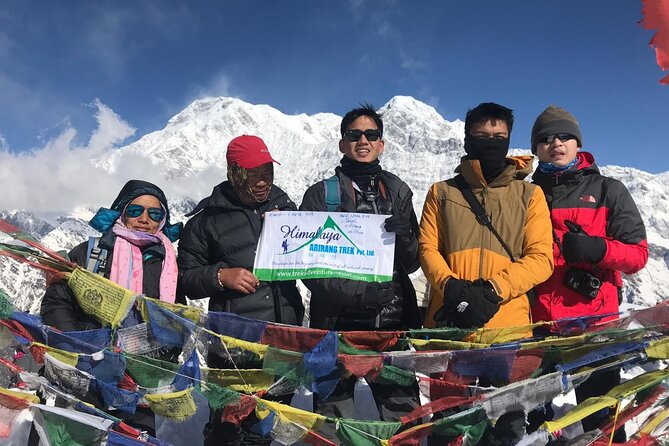
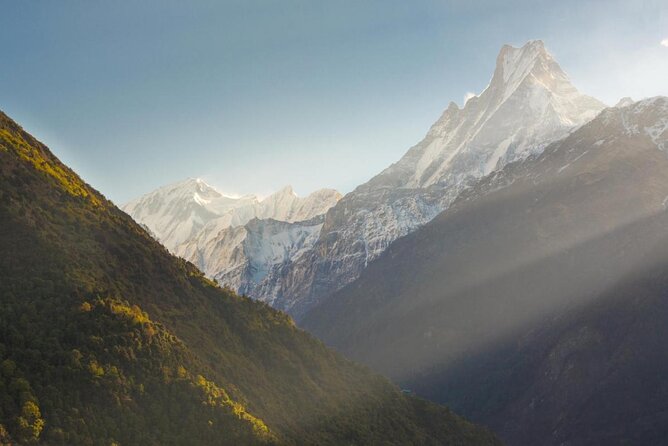
Annapurna Base Camp gives you a rare mountain payoff: after days of walking through villages, forests, waterfalls, and changing terrain, you reach a high bowl surrounded by Annapurna, Machhapuchhre, and Hiunchuli. The route also includes Poon Hill, one of the most memorable viewpoints in the region.
I like the private format, since your group can walk at its own pace and ask the guide to adjust to your fitness. I also like the practical price: at $925 per person, the package covers meals, permits, hotels, porters, transport, and teahouse lodging.
The main catch is effort. This is a serious multi-day mountain trek, not a sightseeing trip with a few walks added. You need moderate fitness, patience for basic lodging, and suitable travel insurance.
Key points at a glance
- Poon Hill and Annapurna Base Camp in one route: You get both a famous sunrise viewpoint and the close mountain setting of the base camp.
- Private trekking support: Only your group participates, with guides and porters arranged for the route.
- Meals are included during the trek: Breakfast, lunch, and dinner are covered from the Ulleri section through the return to Nayapul.
- Ramesh and GP are names to note: The company’s guides have been praised for warmth, help, route knowledge, and adapting to the group’s needs.
- Hotels and teahouses are part of the plan: Expect more comfort in Kathmandu and Pokhara, with simpler mountain lodging along the trail.
- A full 14-day journey: Transfers, acclimatization time, walking days, and the return to Kathmandu are all built into one package.
Why the Annapurna Base Camp route works so well
This trek packs several sides of Nepal into one journey. You begin with city time in Kathmandu, move to lakeside Pokhara, then trade roads for stone steps, forest paths, mountain villages, and high valleys.
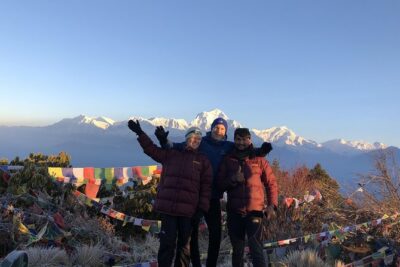
The route is especially appealing because it does not rely on one viewpoint alone. Poon Hill gives you a broad mountain panorama, while Annapurna Base Camp places you among enormous peaks. Along the way, rhododendron forest, waterfalls, local homes, and changing weather keep the walking varied.
I also like the private setup. A fixed group tour can force everyone into the same pace. Here, your guide can pay closer attention to how you are managing the trail. The company has used guides named Ramesh and GP, both singled out for being helpful, friendly, and attentive to individual needs. Ask at booking which guide will lead your departure.
The route is not soft. The itinerary includes repeated uphill and downhill walking, and the simple teahouse stays may feel basic after a long day. You should arrive ready for physical work rather than treat this as a casual mountain holiday.
More Annapurna Treks in Kathmandu
- Annapurna Circuit Trek with Tilicho Lake
★ 5.0 · 368 reviews - Annapurna base camp trek 5 Days
★ 5.0 · 252 reviews - 14-Day Private Annapurna Base Camp Trek
★ 5.0 · 180 reviews
Days 1 and 2: Kathmandu orientation, then the road to Pokhara
Your first day is a light arrival day, with pickup and transfer to a Kathmandu hotel. That is useful after an international flight, since you do not need to find your own way through the city before meeting the trekking team.
The second day takes you by air-conditioned vehicle to Pokhara, with breakfast included. Pokhara is the practical gateway for the trek and gives you a change from Kathmandu’s urban setting before the walking begins.
The drive is included, but road travel in Nepal can take patience. The program does not state a fixed driving time, so keep your schedule flexible and avoid booking a tight onward connection on the same day.
Day 3: Nayapul to Ulleri begins the real work
From Pokhara, you drive to Nayapul and begin walking toward Ulleri. This is where the trip changes character. You leave the vehicle behind and start moving through the lower Annapurna foothills on foot.
Breakfast, lunch, and dinner are included from this point. A porter carries your luggage, which is a major help on a route with many steps and uneven sections. You still need a daypack for personal items, water, and anything you want during the walk.
Ulleri is your first guesthouse stop. Do not expect hotel service here. The value is in having a bed, meals, and a local base at the end of the day, not in private luxury.
Day 4: Ulleri to Ghorepani through changing forest
The walk to Ghorepani takes you higher into forested country. Rhododendrons are one of the visual signatures of the Annapurna region, and the trail can feel pleasantly enclosed before opening to wider mountain views.
Ghorepani matters because it sets up the next morning’s Poon Hill visit. Your accommodation remains a guesthouse, and all three meals are included.
This is also a good point to judge your own pace. If the first two walking days feel demanding, tell your guide early. A private trip offers more room for conversation than a large group, but it does not remove the hills.
Another trail to compare in Kathmandu:
- Everest Base Camp Trek – 14 Days
★ 5.0 · 1,499 reviews - Everest Base Camp Trek
★ 5.0 · 842 reviews - Everest Base Camp Trekking
★ 5.0 · 485 reviews - Everest Base Camp Trekking – 13 Day
★ 5.0 · 365 reviews
Day 5: Poon Hill, then on to Tadapani
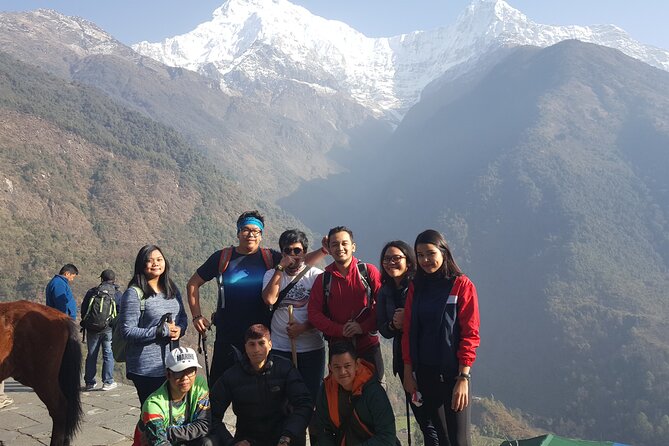
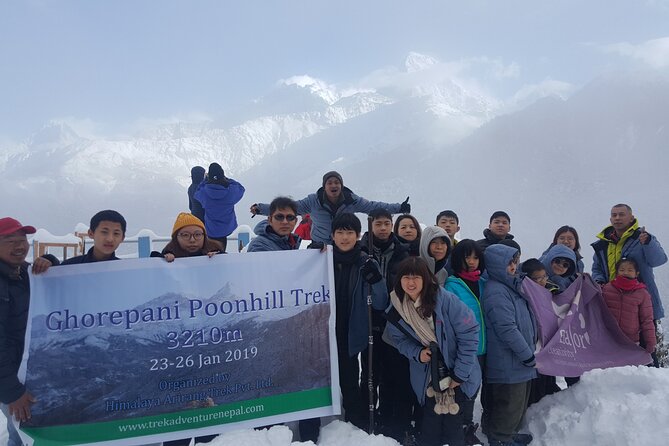
The day begins with an excursion to Poon Hill, the route’s famous viewpoint. The supplied itinerary does not give a fixed departure time, but the stop is commonly treated as a sunrise outing, so confirm the plan with your guide before turning in.
Poon Hill is a fine reward because it offers a broad view rather than a single close peak. Afterward, you continue to Tadapani, where the setting shifts again as the trail passes through forest and mountain terrain.
You stay in a hotel or lodge, with breakfast, lunch, and dinner provided. This is one of the strongest days of the trip for variety: viewpoint, forest walking, and a new mountain settlement in one stretch.
Day 6: Tadapani to Sinuwa
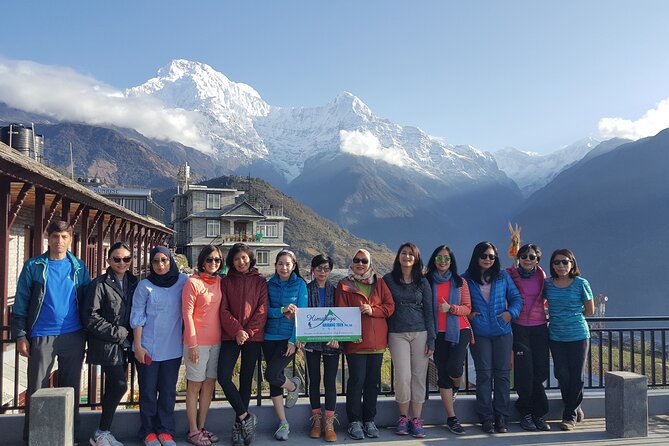
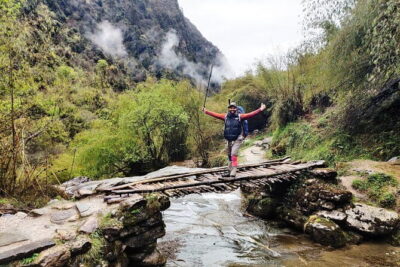
The trail from Tadapani to Sinuwa continues through the Annapurna foothills. The route includes forest, village sections, and the kind of steady changes in footing that make a guide useful.
Sinuwa is an important point on the approach to base camp. From here, the route becomes more focused on the sanctuary and the high mountain setting. You stay in a hotel or lodge, and the three daily meals remain included.
Do not judge the day by distance alone. Downhill sections can work your legs just as much as climbs, especially after several days in a row.
Day 7: Sinuwa to Deurali
The walk from Sinuwa to Deurali brings you farther into the mountain corridor. Waterfalls and forest are part of the route’s appeal, but the terrain becomes more rugged as you progress.
Deurali is a lodge stop before the push to Annapurna Base Camp. The itinerary lists breakfast, lunch, and dinner, but only lodge accommodation here. That is a reminder that comfort becomes simpler as the route moves away from road access.
This is a day for disciplined pacing. Keep your walking steady, listen to your guide, and avoid using all your energy early in the day. The next stage is one of the trip’s main goals.
Day 8: Deurali to Annapurna Base Camp
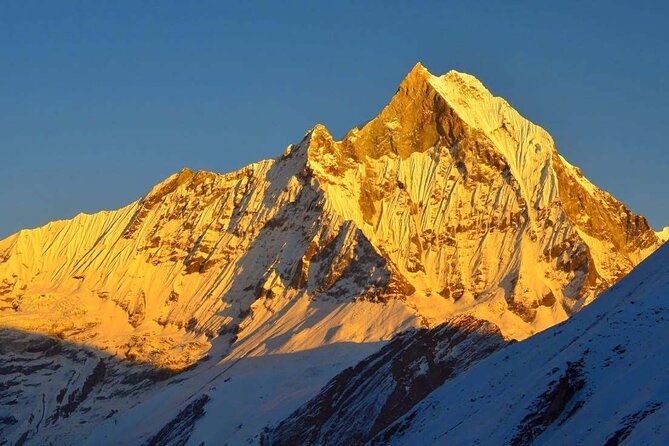
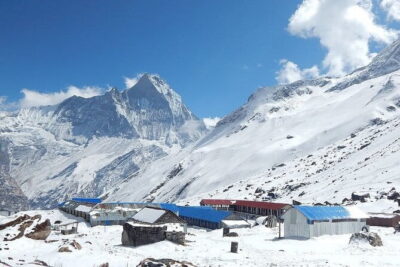
The walk from Deurali to Annapurna Base Camp is the emotional center of the trek. You reach the high mountain basin with Annapurna peaks, Machhapuchhre, and Hiunchuli forming the dramatic backdrop.
The attraction is not just the final sign or destination. The approach gradually changes from forest and village scenery to a more open, exposed mountain setting. You feel the scale of the peaks more directly here.
Overnight accommodation is in a lodge or teahouse, with all meals included. Facilities are basic, and weather can affect the experience. Bring realistic expectations: the base camp is a remote mountain stop, not a resort.
Day 9: Time at base camp, then down to Dovan
You have time to explore Annapurna Base Camp before walking back toward Dovan. This extra time matters. Reaching the base camp late and leaving immediately would make the destination feel rushed, while this plan gives you room to look around and take in the surrounding peaks.
The descent to Dovan changes the mood of the day. You trade the high mountain bowl for lower terrain and another lodge or teahouse stop. Breakfast, lunch, and dinner are included.
Walking downhill is not automatically easy. It can be hard on knees and ankles, especially after the effort of the ascent, so trekking poles may be useful even though they are not listed as supplied.
Day 10: Dovan to Chhomrong
The route continues from Dovan to Chhomrong, bringing you back through the wooded hills and settlements of the lower approach. Chhomrong is one of the better-known stops on this side of the Annapurna route and serves as a useful return-stage village.
You stay in a lodge or teahouse, with all meals included. By this point, your private guide should have a good sense of your rhythm, which is one of the practical benefits of not sharing the trip with strangers.
The return journey is not just filler. It lets you see familiar sections from a different direction and gives your legs a gradual transition back toward the road.
Day 11: Chhomrong to Ghandruk
The walk to Ghandruk brings more village and cultural interest into the trip. Ghandruk is a well-known mountain settlement, and this stop includes lodge or homestay accommodation.
A homestay can offer a more personal feel than a standard lodge, though the exact arrangement is not guaranteed. You should regard it as a possible change in style rather than promise of a particular room or household.
This is a good place to pay attention to local life, not just the peaks. The route is designed around both scenery and contact with communities in the foothills, and your guide can add context as you walk.
Day 12: Ghandruk to Nayapul, then back to Pokhara
Your final walking section leads from Ghandruk to Nayapul. From there, a vehicle takes you back to Pokhara, where you return to hotel accommodation.
Breakfast and lunch are included, while the itinerary does not list dinner. Check with the operator if you want to know exactly when the road transfer will arrive and how much free time you will have in Pokhara.
This day is a useful comfort reset after the teahouses. You can shower, sleep in a proper hotel, and enjoy a less demanding evening before the road trip to Kathmandu.
Days 13 and 14: Return to Kathmandu and departure
Day 13 is the drive from Pokhara back to Kathmandu, with breakfast included. As with the first road transfer, the schedule does not give a fixed duration, so leave breathing room around flights or other plans.
Day 14 is departure. Pickup is offered, and the listed meeting and redemption point is Himalaya Arirang Trek Pvt Ltd at A1 Business Complex, Thamel Marg, Kathmandu 44601. The stated operating hours are 7:15 AM to 9:45 PM daily during the published travel period.
What the $925 price covers
At $925 per person, the package offers solid value if you want one company to arrange the main parts of a two-week trek. It includes:
- Breakfast throughout the listed hotel and trekking schedule
- Lunch and dinner during the trekking portion
- Kathmandu and Pokhara hotel accommodation
- Teahouse accommodation on the trail
- Porters for luggage
- Annapurna Conservation Area Permit
- Trekkers’ Information Management System fee
- Air-conditioned vehicle transport
- All stated fees and taxes
The price does not include a Nepal visa, travel insurance, or tips for the guide, porter, and driver. Those exclusions are normal enough, but you need to budget for them rather than assume the advertised price is the final cost.
The biggest value comes from coordination. Permits, transfers, lodging, meals, and luggage support are handled together. You pay more than arranging every part yourself, but you gain a private guide team and a simpler plan.
Food, lodging, and porter support
The food plan is practical rather than fancy. Breakfast, lunch, and dinner are included during the trek, and the experience has received strong praise for its meals. The exact menus are not specified, so you should expect local trekking fare rather than choose from a fixed restaurant menu.
Hotels in Kathmandu and Pokhara provide the most conventional comfort. Guesthouses, lodges, and teahouses make up the mountain portion. Some nights may feel comfortable, while others may feel plainly functional.
The porter service is one of the package’s most useful features. You can walk with a lighter daypack, but you remain responsible for your personal essentials and valuables. Ask the operator about luggage limits before departure, since no weight allowance is stated.
Guides, group size, and the personal touch
This is a private activity, so only your group participates. That makes it a good fit for friends, couples, and families who want their own rhythm.
The names Ramesh and GP are associated with particularly warm and helpful guiding on this route. Ramesh has been praised for energy, care, cultural explanations, and making people feel safe. GP has also been singled out as an excellent guide. These qualities matter more on a trek than a polished sales pitch, but confirm who is assigned to your departure.
The company’s guide approach also appears flexible. The route can be adjusted to the group’s condition and preferences, though the fixed 14-day structure still sets the broad boundaries.
Fitness, weather, and what to pack
The official requirement is moderate physical fitness. In practice, you should be ready for repeated walking days, uneven trails, uphill and downhill sections, and basic mountain lodging.
Good weather is required for the experience. If poor conditions force cancellation, you are offered another date or a full refund. You should still buy travel insurance, since insurance is not included and mountain conditions can affect wider travel plans.
Pack for changing conditions, sturdy walking shoes, warm layers, rain protection, sun protection, personal medicine, and a small daypack. The supplied information does not specify equipment rental, so do not assume specialist gear is provided.
The cancellation rule is straightforward: cancel at least 24 hours before the start for a full refund. Changes or cancellations inside that window are not accepted for a refund.
Who should book this trek
I would recommend it to you if you want a structured Nepal trek with a private guide, porter help, included meals, and both Poon Hill and Annapurna Base Camp.
It suits people who value mountain scenery but also want villages, forests, waterfalls, and cultural contact along the way. It is also a sensible option if you do not want to arrange permits, road transfers, lodging, and luggage support separately.
I would hesitate if you dislike long walking days, simple teahouses, uncertain road timing, or changing mountain weather. The word private does not mean easy. It means the support is organized around your group.
Should you book the 14-day Annapurna Base Camp trek?
Book it if your priority is a well-supported route with strong scenery and a clear beginning-to-end plan. The combination of Poon Hill, Annapurna Base Camp, private guiding, porters, permits, meals, and transport gives the $925 price real weight.
Before paying, confirm the assigned guide, luggage allowance, exact pickup plan, and the standard of each lodge. If you are comfortable with moderate exertion and basic mountain accommodation, this is a practical way to experience the Annapurna region without managing every detail yourself.
FAQ
Is this a private trekking experience?
Yes. Only your group participates in the tour.
How long does the experience last?
The planned duration is 14 days, including arrival in Kathmandu, the trek, transfers between Kathmandu and Pokhara, and departure.
What accommodation is included?
You receive hotel accommodation in Kathmandu and Pokhara, plus guesthouse, lodge, homestay, or teahouse accommodation during the trekking section.
Are meals included?
Breakfast is included throughout the listed itinerary. Lunch and dinner are included during the trekking days, from Ulleri through the return to Nayapul, as specified in the schedule.
Are permits included in the price?
Yes. The Annapurna Conservation Area Permit and Trekkers’ Information Management System fee are included.
Is porter support included?
Yes. Porters are included to carry luggage during the trek.
What happens if bad weather cancels the experience?
You can choose a different date or receive a full refund if the experience is canceled because of poor weather. For your own cancellation, you must cancel at least 24 hours before the start time for a full refund.
Latest treks added in Kathmandu
- Private Manaslu Circuit Trek at Himalayas★ 5.0 · 3 reviews
- Ghorepani Poonhill Trek★ 5.0 · 5 reviews
- Ghorepani Poon Hill Trek★ 5.0 · 16 reviews
- Upper Mustang Trekking★ 3.0 · 2 reviews
- Amazing 1 Day Trekking Experience in Kathmandu Nepal★ 5.0 · 24 reviews
- Upper Mustang Trekking★ 5.0 · 2 reviews
- Upper Mustang Trek★ 5.0 · 5 reviews
- Upper Mustang Trekking★ 5.0 · 4 reviews
Annapurna Base Camp Treks, compared.

Trekking in Annapurna/Langtang/Everest/Upper Mustang regions
Read our review →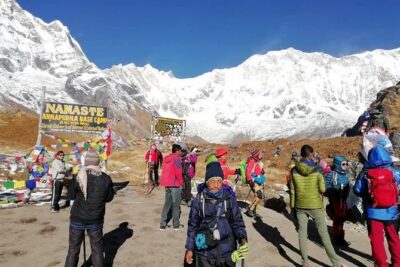
Kathmandu to Annapurna Base Camp (ABC) 5-Day Trek
Read our review →Browse the lists this tour appears in