
REVIEW · DUBLIN
Trek the Tombs and Trails in the Dublin Mountains
The most unusual part of this Dublin outing is its mix of ancient tombs and open mountain views. You leave the city by local bus, reach a quiet mountain village, and follow old paths to burial sites that are thousands of years old. One tomb is a Bronze Age wedge tomb. Another is a stone circle and burial place high on Tibradden Mountain.
I like two things right away. First, the route gives you a real sense of the Dublin foothills rather than keeping you on a standard city tour. Second, the group is limited to eight people, so guide Ben can give the walk a more personal touch. The main consideration is simple: this is a seven-hour hike, not a gentle sightseeing ride, and you need a moderate level of fitness.
Key points at a glance
- Two very different ancient tombs: See a wedge tomb from the second millennium B.C., then a stone circle and burial site on Tibradden.
- A bus ride into rural Dublin: The local bus takes you through backroads and foothills to Glencullen, far from the city center.
- Big views for your walking effort: Look north toward Dublin and the bay, and south toward Wicklow, from a mountain ridge and high rock.
- Seasonal wild berries: When conditions are right, you may pick berries for a snack or save them for jam or a tart.
- A small group of eight or fewer: The size suits people who want more contact with the guide and room for questions.
- A flexible finish: End with local food at a rustic cafe or a pint at a country pub, at your own expense.
Why these Dublin Mountains tombs are worth your time
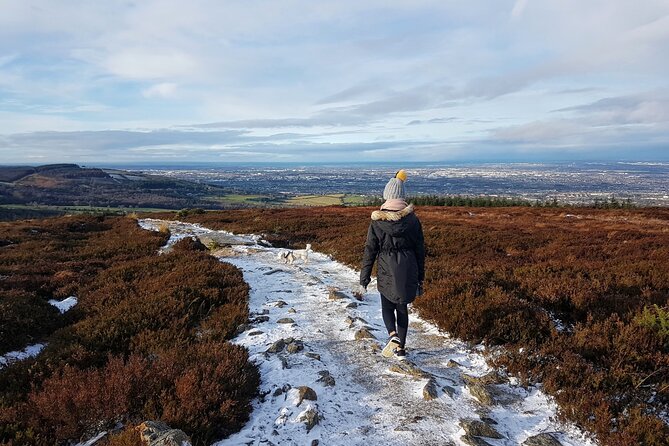
Dublin is easy to associate with Georgian streets, literary pubs, and busy central neighborhoods. This walk shows another side of the county. Within the same outing, you travel by public bus through the foothills, walk along the Dublin Mountains Way, and reach ancient sites in open country.
The tombs give the day its purpose. These are not reconstructed displays or objects behind glass. They sit along the route as part of the hills. Their settings help you understand why the walk matters. You see the stones, the ridge, and the views together, rather than treating prehistory as a short stop in a museum.
The experience also has a pleasant local rhythm. You begin with public transport, walk at a steady pace, stop to look around, and finish with the choice of food or a drink. I like that the ending does not force a meal into the price. You can decide if you want local produce at the cafe or simply a well-earned pint in a country pub.
More Trekking Tours in the world
- Mount Etna: Trek to 3000m with cable car and 4×4
★ 4.6 · 3,823 reviews - Bali: Mount Batur Sunrise Trek With Guide and Breakfast
★ 4.8 · 3,461 reviews - From Chania: Full-Day Samaria Gorge Trek Excursion & Guide
★ 4.6 · 3,191 reviews
From Dundrum to the quiet village of Glencullen
You meet outside Dundrum Luas Station in Dublin. The tour includes bus transport to the start of the walk and a bus ride back to the meeting point at the end. That matters because you do not need to arrange a taxi into the hills or work out two separate rural bus routes yourself.
The outward journey uses a local bus and follows the backroads through the Dublin foothills. The change is gradual. Urban Dublin gives way to a more rural setting, and the bus carries you toward Glencullen, a remote mountain village used as the starting point.
Glencullen is a useful place to begin because the walk starts away from the city’s usual tourist circuit. You are not spending the first hour crossing busy streets before reaching a trail. Instead, the transport gets you into the foothills, where the walking can begin with a sense of space.
The bus ride is part of the character of the day, though it also means you should be ready for a full schedule. This is not a private vehicle waiting at every stop. The experience uses local transport, which is practical and more connected to ordinary Dublin life, but less controlled than a private transfer.
The first tomb, a wedge from the second millennium B.C.
From Glencullen, you follow a meandering mountain path toward an ancient burial wedge tomb. It dates from the second millennium B.C., placing it in the Bronze Age. The tomb is one of the clearest reasons to choose this walk over a standard hill outing.
The name wedge tomb refers to its shape. The burial structure narrows toward one end, giving it a distinct form among Ireland’s prehistoric monuments. You will learn about its past from the guide, rather than simply reaching a stone site, taking a quick photo, and moving on.
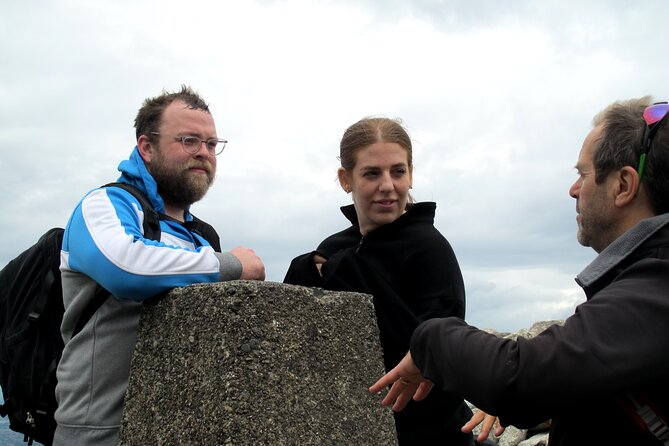
This is where the small group can make a real difference. With no more than eight people, you have a better chance to hear the explanation and ask about the tomb’s purpose, age, and setting. Ben is the guide named for this experience, and one especially useful detail is his strong command of Irish history. If you enjoy asking questions, this is likely to be one of the best parts of the walk.
You should not expect a polished visitor center or a large interpretation area at the tomb. Its appeal comes from the setting and the guide’s explanation. If you prefer formal exhibits, labels, and indoor shelter, this stop may feel spare. If you like seeing old sites in place, it has much more impact.
High ground, Dublin Bay, and an untouched cairn
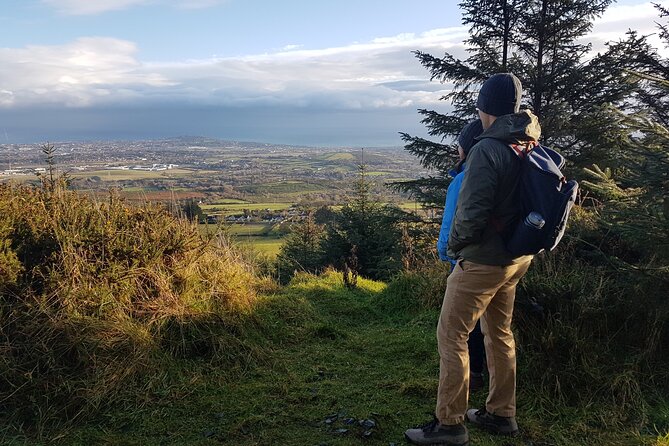
The route then continues along the Dublin Mountains Way to a popular viewpoint. The view opens across Dublin and the bay, with the mountain top rock providing a natural perch. This is the point where the walking effort pays you back.
The outlook gives you a useful sense of the region. Dublin lies to the north, while Wicklow reaches away to the south. You are not only looking at a pretty scene. You are seeing how close the city is to its surrounding hills, and how quickly the built-up area gives way to open ground.
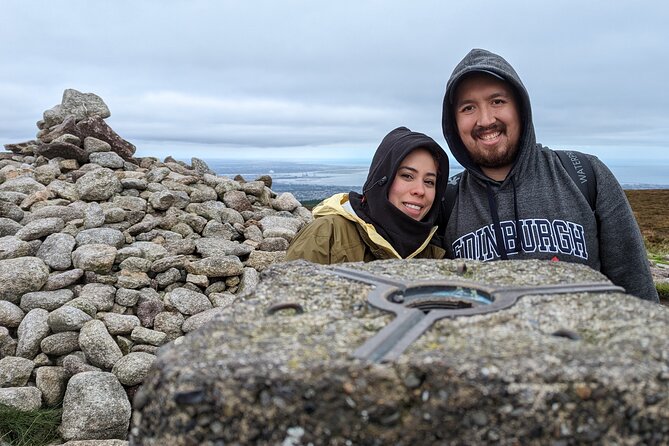
At the viewpoint, you also see a cairn tomb that has never been excavated. Nearby is a triangulation pillar, a practical surveying marker that adds a more modern detail to the ancient setting. The contrast is striking: a prehistoric burial monument and a later tool used to measure and map high ground.
Because the tomb has not been excavated, you should not expect a dramatic display of objects or a confirmed story about every person buried there. That uncertainty is part of the site’s interest. The guide can explain what is known, while the stones leave room for questions.
The view is also weather-dependent. On a clear day, Dublin and the bay should be the main reward. In poor weather, cloud or rain could reduce what you see, which explains why the outing requires suitable conditions. Wear clothing that can handle changing mountain weather, even if the city looks mild when you leave Dundrum.
Another trail to compare in the world:
- Mount Etna: Summit Crater Trek with Cable Car
★ 4.8 · 1,875 reviews - La Palma: Tajogaite Volcano Guided Trek
★ 4.8 · 1,810 reviews - Etna: summit craters trekking with volcano guide 3350mt
★ 4.7 · 1,712 reviews - From Rethymno: Samaria Gorge Full-Day Trek, Pickup & Guide
★ 4.5 · 1,610 reviews
Picking wild berries when the season allows
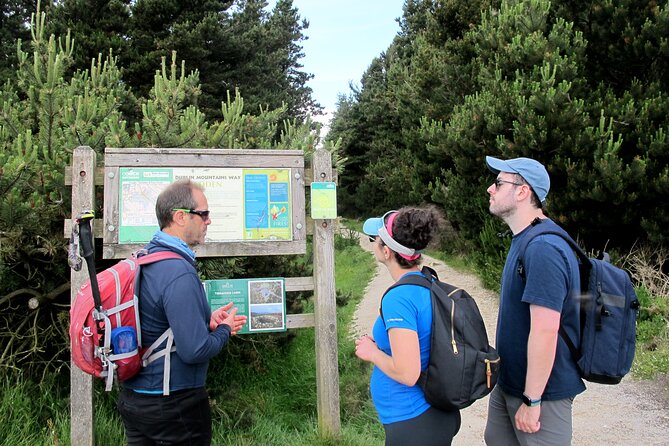
One of the more personal details of this walk is the chance to pick wild berries. This depends on the season, so it is not a guaranteed part of every departure. When berries are available, you can eat them as they are or take them home to use in jam or a tart later.
I like this small feature because it connects the walk to the land in a simple way. It is not a staged tasting or a formal food stop. You pause along the route, notice what is growing, and make something of it if the timing is right.
Keep your expectations sensible. The berry picking is seasonal and secondary to the tombs and hiking. You should not book the tour solely for this part. Treat it as a bonus that can make the walk feel less programmed and more like time spent outdoors with a local guide.
Tibradden and the second burial place
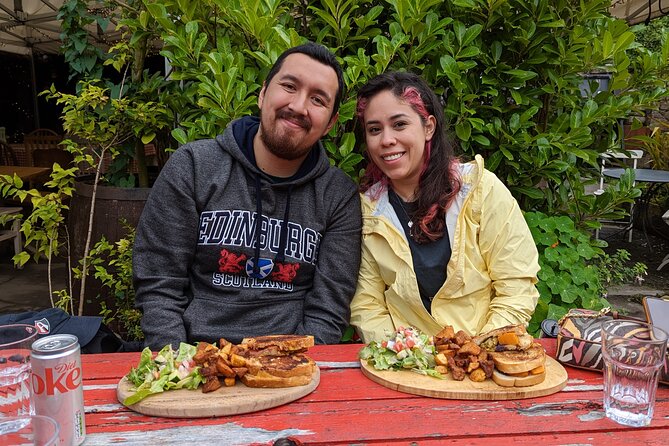
The trail continues along a ridge, with Dublin to the north and Wicklow to the south. Ridge walking gives you a changing view rather than one fixed lookout, and it also makes clear how the route links different parts of the mountains.
The second major burial site comes at Tibradden. Here you see an ancient stone circle and burial place connected with the man for whom the mountain top is named. It differs from the first wedge tomb, so the two stops do not feel like repetitions of the same stone structure.
This contrast is one of the strongest features of the outing. You see one form of ancient tomb earlier in the walk, then reach a stone circle in a high setting later. The guide can help place both sites in their Irish context, while you get to compare their shapes and locations for yourself.
The ridge is also likely to be the most exposed portion of the outing. The information provided does not give a distance or exact walking time between stops, so you should not assume a short, easy stroll. A moderate fitness level is required, and the day lasts about seven hours from start to finish.
Forest paths and the finish at The Hazel House
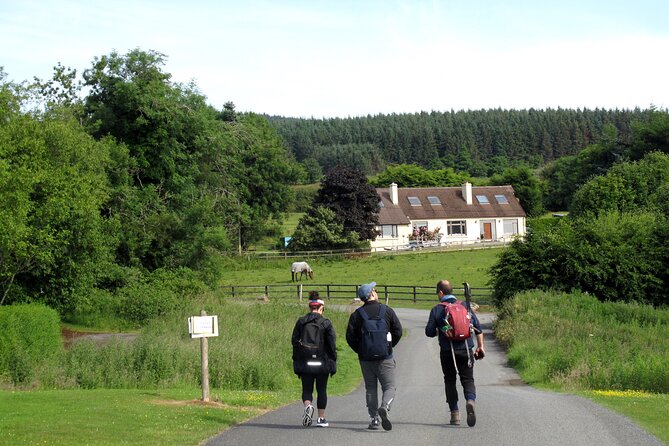
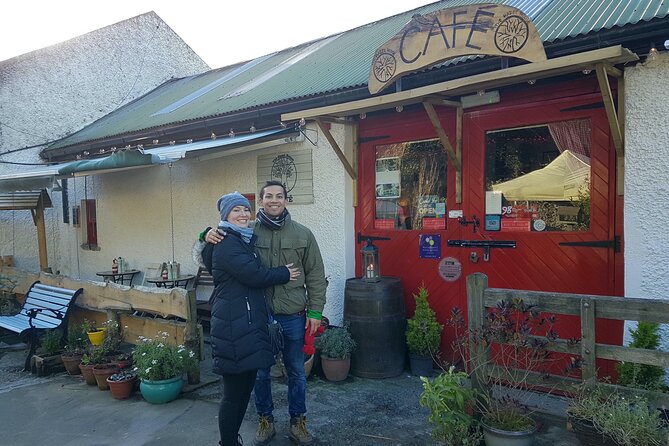
After Tibradden, the route heads down a winding path through evergreen forest. The trees change the feel of the walk after the open ridge and mountain views. You then continue along a rural back road toward The Hazel House, a quaint cafe and restaurant.
The combination of forest and back road gives the day a calmer final stretch. You have already visited the two burial sites and reached the main viewpoints, so the descent lets you ease out of the mountain setting rather than ending abruptly at a road.
At The Hazel House, you can buy a lunch made with local produce and cuisine. Lunch is not included in the tour price, so you should budget separately if you want to eat. You also have the option of visiting a country pub for a pint instead. Alcoholic drinks are not included either.
This flexible finish suits different budgets and appetites. I like the choice because a seven-hour outing does not end with everyone being pushed into the same meal. You decide if you want a proper lunch, a drink, or simply to finish the stop without ordering either.
The return bus takes a different route back to the original meeting point. It is described as another scenic route, so the transport is not merely a repeat of the morning journey. The activity ends back at Dundrum, outside the Luas station.
What the $180.44 price includes
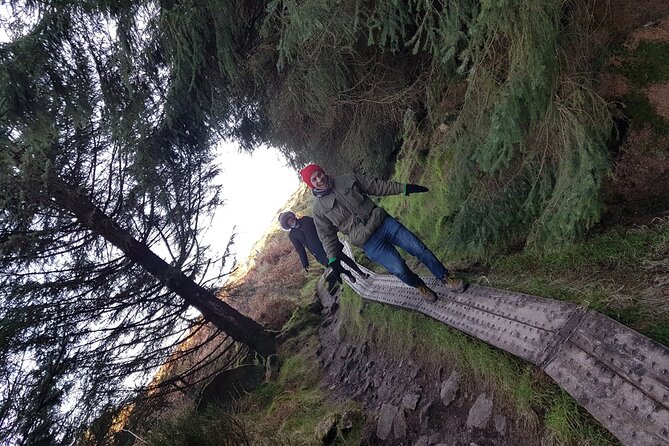
At $180.44 per person, this is not a low-cost way to spend a day in Dublin. The value depends on what you want from a guided outing. You are paying for about seven hours, a guide, the bus pass to and from the walking route, interpretation at two ancient sites, and a group capped at eight people.
The small group is important to the price. A larger coach tour could spread the guide’s attention thinly and make the ancient sites feel like quick photo stops. Here, you have a better chance to hear the history clearly and ask questions along the path.
The bus pass also removes a practical problem. You do not have to find your own way from central Dublin to Glencullen, then arrange a separate return from the mountains. That convenience has real value, especially if you do not know the foothill bus network.
Still, lunch and drinks cost extra. You should also remember that the experience is primarily a guided hike, not a broad package of meals, admissions, or indoor attractions. The price makes the most sense if you want the guide’s local knowledge and the small-group format.
Who should book this hike
I would recommend this outing to you if you enjoy walking, ancient sites, and views that require some effort. It suits someone who wants to see a quieter side of Dublin and does not mind trading city comforts for mountain paths, a forest descent, and a rural cafe or pub.
It is also a good match for history-minded visitors. The two tombs are different, and the route gives them context. You are not just collecting photos of old stones. You are walking between them and hearing about their place in Ireland’s past.
The experience may not suit you if you want a short excursion, a fixed meal, or a highly polished attraction with restrooms and displays at every stop. The information provided does not give an exact mileage, so anyone worried about the physical demand should ask for current route details before booking.
The tour is offered in English. Service animals are allowed, and the meeting point is near public transportation. You should have moderate physical fitness, and you should plan around the weather because poor conditions can lead to a new date or a full refund.
Should you book Trek the Tombs and Trails?
Book it if you want a full day outdoors with a clear sense of place. The combination of a local bus, two different prehistoric burial sites, high views over Dublin Bay, seasonal berries, and a choice of rural food or pub time gives the day more character than a standard sightseeing loop.
I especially like it for visitors who have already seen central Dublin and want a change of pace. The best reasons to go are the small group, Ben’s history-focused guiding, and the chance to experience the Dublin Mountains as living countryside rather than a backdrop.
Skip it if your priority is comfort, a short timetable, or guaranteed clear views. At $180.44, it is a serious spend, but it can be fair value for a guided seven-hour hike with transport and a maximum of eight people. Free cancellation is available up to 24 hours before the start, while weather cancellations offer a different date or a full refund.
FAQ
Where does the tour start?
It starts outside the Luas Station in Dundrum, Dublin.
Where does the tour end?
The activity ends back at the meeting point in Dundrum.
How long does the experience last?
The experience lasts approximately seven hours.
How many people can join the group?
The group has a maximum of eight travelers.
What transport is included?
A bus pass is included for transport to the start of the hike and for the return journey after the walk.
Is lunch included?
No. You can choose to have lunch at a rustic cafe or restaurant, but the meal is not included in the price.
Are alcoholic drinks included?
No. You may choose to visit a local pub at the end, but alcoholic beverages are not included.
What happens if the weather is poor?
The experience requires good weather. If it is canceled because of poor conditions, you will be offered a different date or a full refund.
Latest treks added in the world
- 5 Days Desert Trekking from Marrakech★ 5.0 · 16 reviews
- 3 days Toubkal Trek from Marrakech★ 5.0 · 4 reviews
- Elite Experience Atlas Mountains Day Trekking★ 5.0 · 7 reviews
- 3 Days Berber Villages Trek – Authentic Atlas Mountain Experience★ 5.0 · 4 reviews
- Morocco Desert Trek 4 Days: 2 days on foot in Morocco★ 5.0 · 2 reviews
- Atlas Mauntains and 3 Valleys Trek★ 5.0 · 6 reviews
- Atlas Mountains Valley Trek – 3 Days★ 5.0 · 29 reviews
- 5-day Jebel M’goun trek★ 5.0 · 2 reviews
Trekking Tours, compared.
Mount Etna: Trek to 3000m with cable car and 4×4
Read our review →
Mount Batur Sunrise Trek With Guide and Breakfast
Read our review →
From Chania: Full-Day Samaria Gorge Trek Excursion & Guide
Read our review →
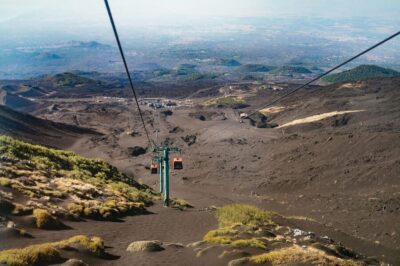
Etna: summit craters trekking with volcano guide 3350mt
Read our review →
From Rethymno: Samaria Gorge Full-Day Trek, Pickup & Guide
Read our review →
Mount Etna Trekking Tour Beyond the Tourist Trails
Read our review →