
REVIEW · ITALY
Etna: summit craters trekking with volcano guide 3350mt
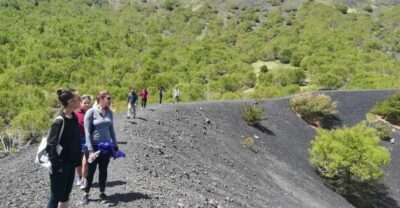
Etna’s summit is not a sightseeing stop with a paved path and a railing. After the cable car and 4×4 ride, you hike across black lava, loose volcanic sand, sulfur-stained ground, and steep, open slopes toward the crater rim. The reward is a huge view over Sicily and the Ionian coast, plus a close look at one of Europe’s most active volcanoes.
I like the expert guiding and the way the route is adjusted for safety. I also like that you walk through several volcanic settings, including the Central Crater, Barbagallo craters, a lava channel, and Valle del Bove. The main drawback is cost: the advertised $77 price does not include the €65 cable car and 4×4 charge, paid in cash on site. Strong wind, eruptions, or poor weather can also shorten the route.
Key points to know before you book
- The summit walk begins at about 2,800 meters: You ride the cable car and 4×4 before starting the roughly two-hour uphill trek.
- The full route reaches about 3,350 meters: The exact height depends on volcanic activity, weather, and official safety limits.
- You pay an extra €65 in cash: This covers the cable car and 4×4 when the full upper route operates.
- The hike is medium to high difficulty: Loose sand, uneven lava, cold, wind, and thinner air make it harder than a normal mountain walk.
- Guides set the pace and route: Antonio, Massimo, Giovanni, Giacomo, and others are trained to explain the volcano while watching the group.
- Equipment is available: Hiking boots, helmets, walking sticks, and RCT insurance are included.
Why the Etna summit feels different from a normal mountain hike
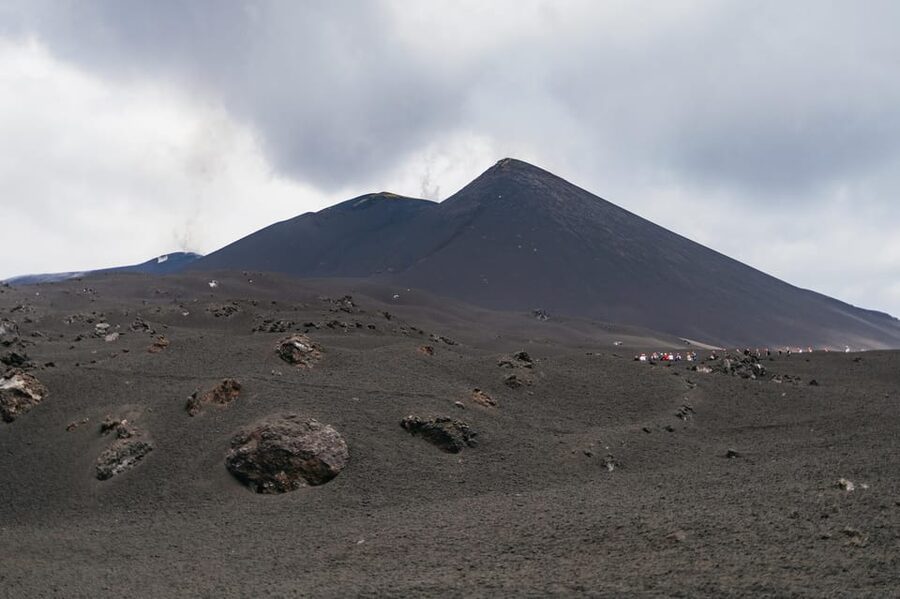
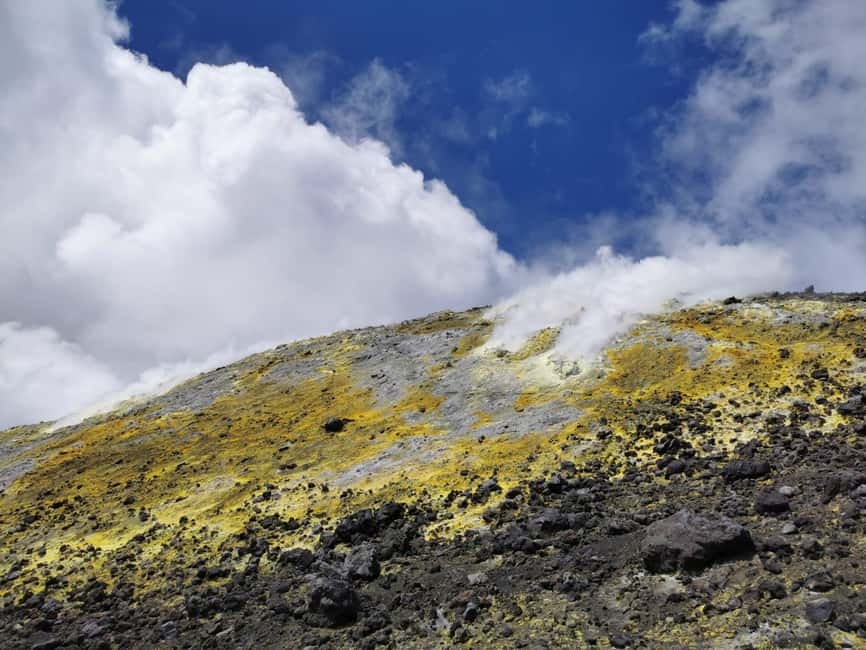
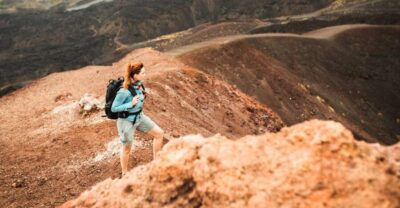
Mount Etna is not simply a high point with a good view. It is an active volcano, and the ground under your boots tells the story. You may pass fresh-looking lava, old eruption fields, volcanic bombs, steaming or sulfur-colored areas, and deep crater edges shaped by eruptions.
The experience begins at Rifugio Sapienza on Etna’s south side. Look for the Ashàra information point near the Terrazza dell’Etna restaurant. This meeting point is useful, but it can be a little confusing at first, so allow time to find the office and get fitted with any equipment you need.
The full outing lasts about six hours. That includes the cable car, 4×4 transfer, hiking, explanations, photo stops, breaks, and the return journey. It is not six hours of nonstop uphill walking, but you still need reasonable fitness and a comfortable attitude toward rough ground.
I would not treat this as a casual family excursion. Children under 11 are not accepted, and the activity is not suitable for people with heart, back, respiratory, or blood-pressure problems. It is also not recommended if you have vertigo or are pregnant.
More Volcano Treks in Italy
- Mount Etna: Trek to 3000m with cable car and 4×4
★ 4.6 · 3,823 reviews - Mount Etna: Summit Crater Trek with Cable Car
★ 4.8 · 1,875 reviews - Catania: Mount Etna Trekking Tour Beyond the Tourist Trails
★ 4.9 · 1,596 reviews
The cable car ride from 2,500 meters
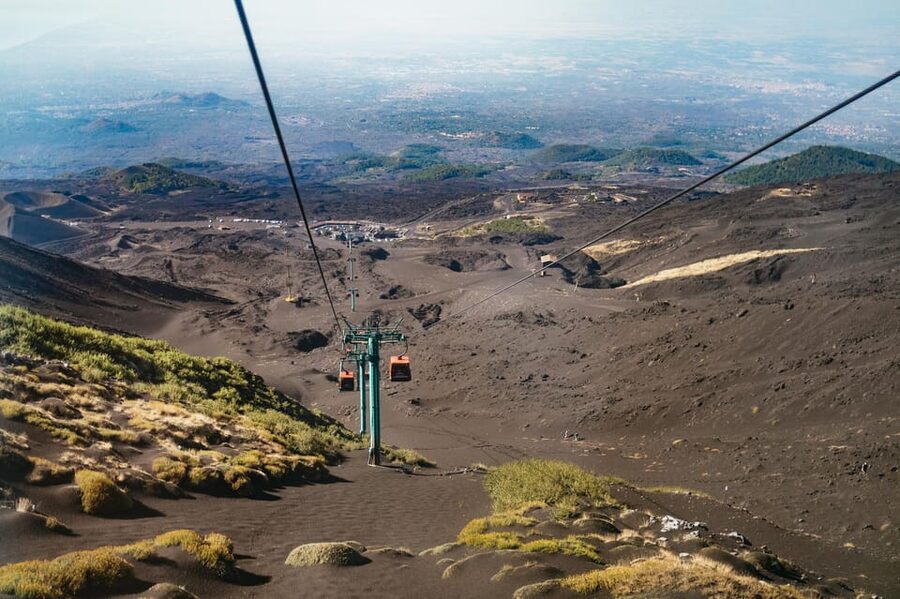
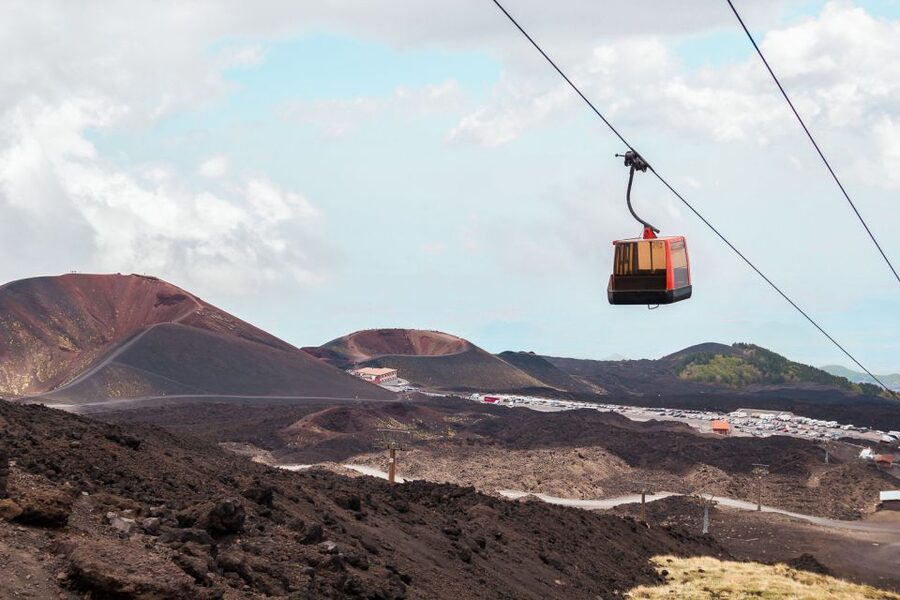
The first major change in scenery comes with the cable car. From the upper station area at about 2,500 meters, the mountain looks increasingly bare and severe. The lower slopes of Etna give way to dark volcanic ridges, broad eruption fields, and open views toward the coast.
The ride lasts about 25 minutes. It is a practical way to gain height, but it is also part of the experience. You see the mountain unfold below you rather than simply arriving at the upper trailhead by road.
The cable car can be busy, especially during popular periods. One large group reported a long wait while people were fitted with boots and helmets, followed by another delay as tickets were handled at the cable car station. That is worth knowing if you dislike waiting or have a tight schedule later in the day.
The weather can change quickly at this altitude. You may leave Catania in warm sunshine and reach a cold, windy upper mountain. Bring a jacket even in summer. Several people found gloves, warm layers, and wind protection useful, and one particularly practical tip is to carry an extra T-shirt because you can sweat during the climb and cool down quickly during stops.
The 4×4 transfer to about 2,800 meters
After the cable car, a 4×4 jeep or SUV takes you higher. This section lasts about 30 minutes and avoids a long, less interesting walk on broad upper slopes. It leaves you with more energy for the volcanic terrain that makes this excursion worth doing.
The road is not the attraction, but the changing views are. You begin to see the upper craters more clearly, along with the wide volcanic slopes falling toward the coast. The guide uses this time to explain Etna’s eruptions, crater structure, lava flows, and the way volcanic activity can change the route.
The cable car and 4×4 tickets are not included in the booking price. The additional charge is €65 per person and must be paid in cash on site. If the summit is closed and the group stops at 3,000 meters, the information states that the cable car charge is €52 per person instead. Carry euros in cash and treat this extra cost as part of the real price.
Hiking across black lava and loose volcanic sand
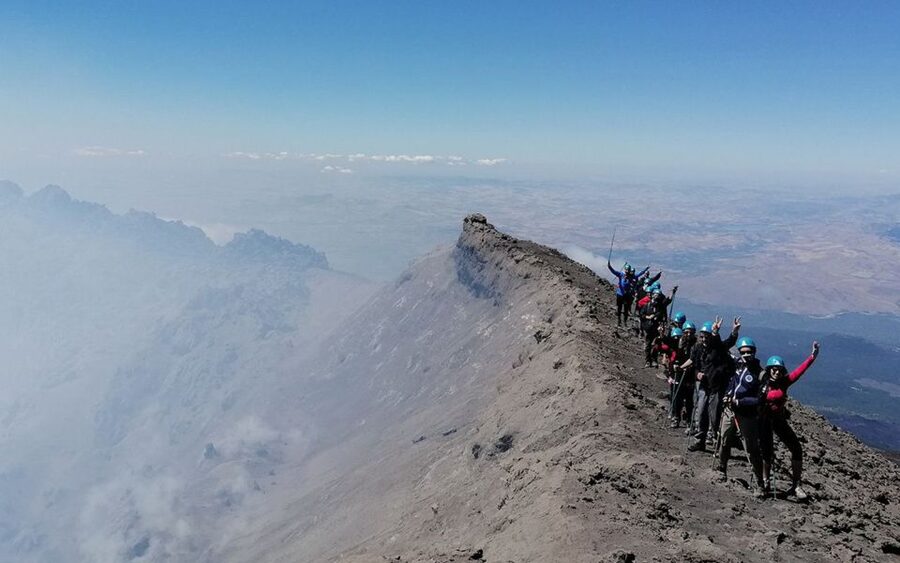
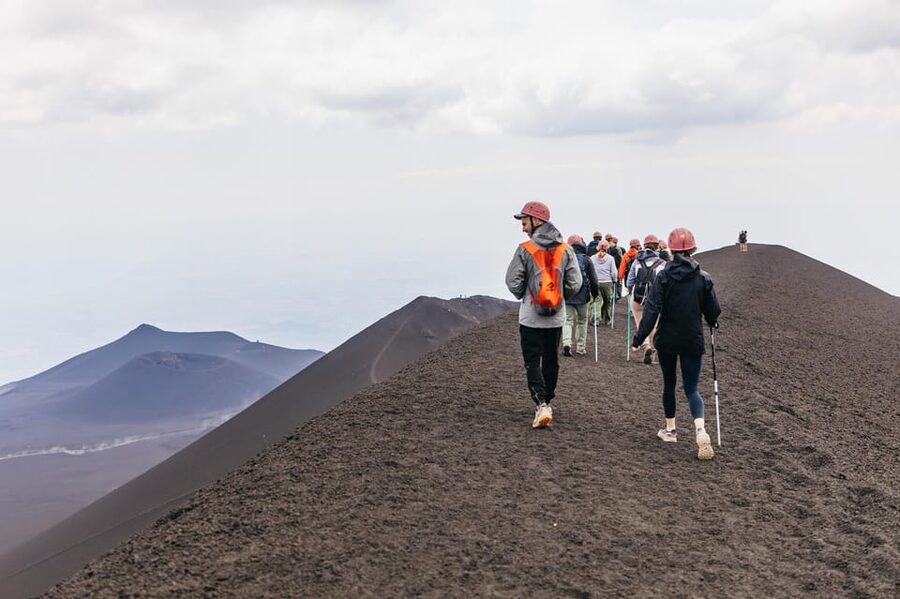
The serious walking starts after the 4×4 transfer. The first section includes a hike of roughly 40 minutes toward the summit area, followed by the longer approach to the Central Crater. The surface is uneven, and volcanic sand can make every uphill step slide slightly backward.
Walking sticks help here. They are included, along with hiking boots and a rock helmet, though you should still bring sturdy clothing suited to the weather. Long trousers are required, and shorts are not allowed.
The guides are not simply leading a line up the mountain. They stop to point out volcanic bombs, lava textures, crater formations, and bright mineral colors created by the sublimation of elements such as sulfur. This is where the trip becomes more than a strenuous walk. You begin to understand how the mountain has been built, broken, and rebuilt by repeated eruptions.
The group normally moves at a controlled pace. Guides such as Antonio, Massimo, Giovanni, and Giacomo have received especially strong praise for taking regular breaks, helping less confident hikers, and keeping people together. You do not need to be an expert mountaineer, but you should be comfortable walking for several hours on steep, sandy, uneven ground.
Another trail to compare in Italy:
- Mount Etna: Guided Trek 3,000 Meters to the Summit
★ 4.8 · 1,407 reviews - Stromboli: Sunset Trekking at Sciara del Fuoco
★ 4.6 · 1,372 reviews - Etna Sunset Tour: Volcano trek, Cave & tasting from Catania
★ 4.8 · 1,290 reviews - From Catania: trek on Mount Etna, Lava Cave & tasting Tour
★ 4.8 · 563 reviews
The Central Crater and Etna’s summit views
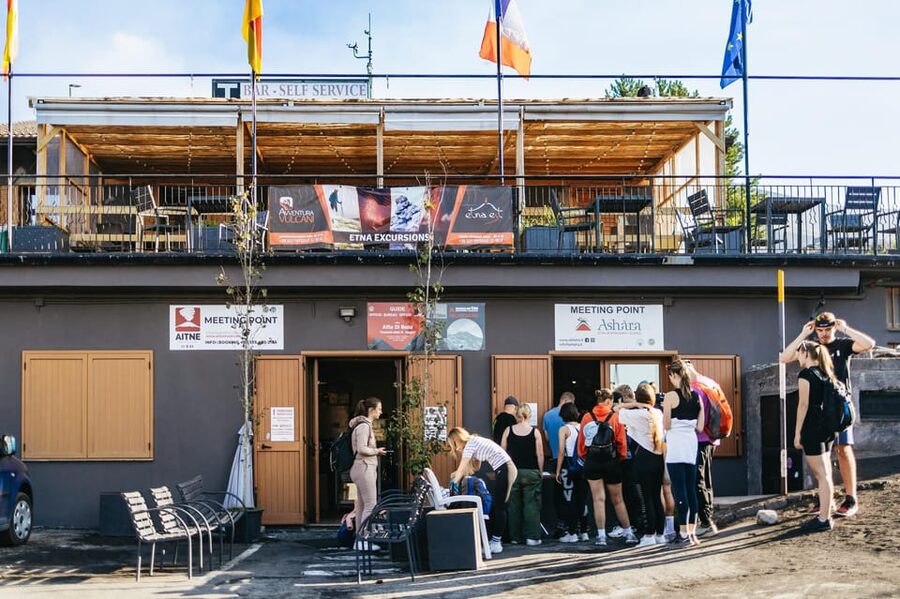
The main goal is the rim of the Central Crater. The approach and crater visit together take about one and a half hours, followed by roughly an hour around Mount Etna for explanations, photos, and a rest.
Standing near the crater rim is the most dramatic part of the route. You look into a huge volcanic bowl, with the Northeast Crater and the Southeast Crater visible nearby. The Southeast Crater has produced some of Etna’s most recent and striking eruptions, so the view is not just scenic. It shows you the active parts of the mountain’s present life.
The summit area can feel exposed. Strong winds are common in the experiences described, and cold air can make the final ascent tiring even when the valley below is warm. At around 3,350 meters, breathing may feel harder, especially while climbing loose slopes. The guide sets the pace, but you should tell the guide early if you are struggling.
You may have clear views over the Ionian coast, or cloud may move across the summit and hide much of the panorama. That uncertainty is part of hiking an active volcano. The trip is worthwhile even when the final view is limited because the crater walls, sulfur colors, lava formations, and open volcanic ground remain close at hand.
Barbagallo craters and the descent through Valle del Bove
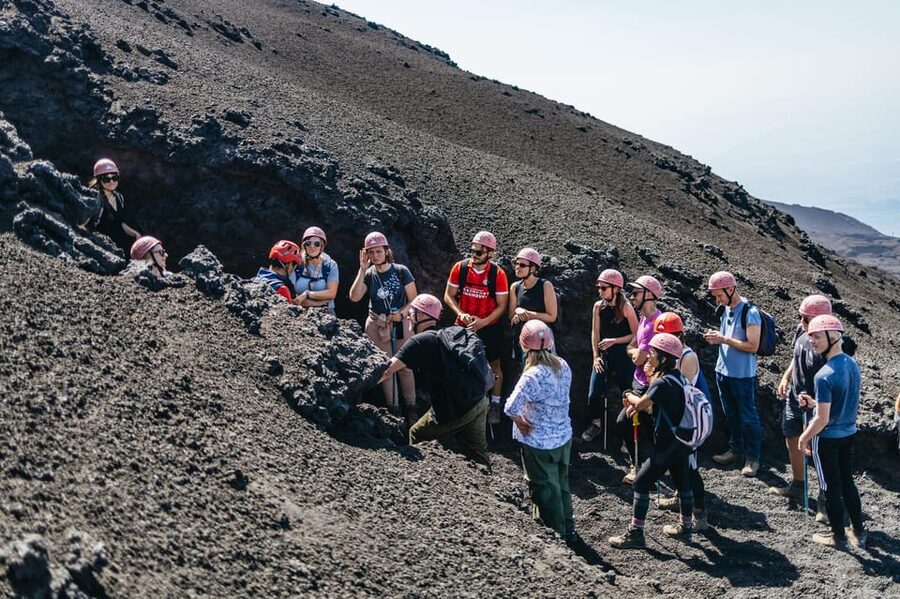
The descent is not a simple return along the same track. The route visits the Barbagallo craters, then crosses a lava flow channel before reaching views toward Valle del Bove. This variety helps break up the six-hour outing and gives you several different ways to see Etna’s volcanic activity.
Going down loose ash can be surprisingly difficult. You may slide a little with each step, and knees can feel the strain after the summit climb. Walking sticks are useful, and good boots matter. One person who found the descent difficult received quick help from the guide, so do not feel embarrassed about asking for a slower pace or assistance.
Valle del Bove is one of the striking views on the mountain. From above, you can see a vast volcanic depression cut into Etna’s side. The guide’s explanation adds meaning to the view, showing how eruptions and collapses shaped the mountain rather than leaving you to see it as simply a wide valley.
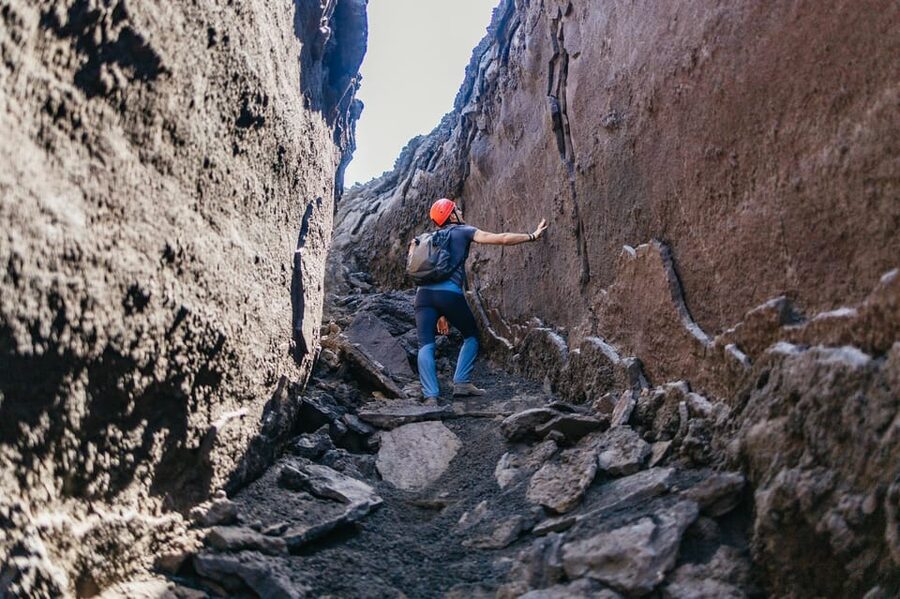
Crossing a lava channel is another memorable detail. It gives you a closer sense of the paths molten rock has taken. You are not walking through active lava, but you are moving through the hardened remains of earlier flows.
How volcanic activity changes the plan
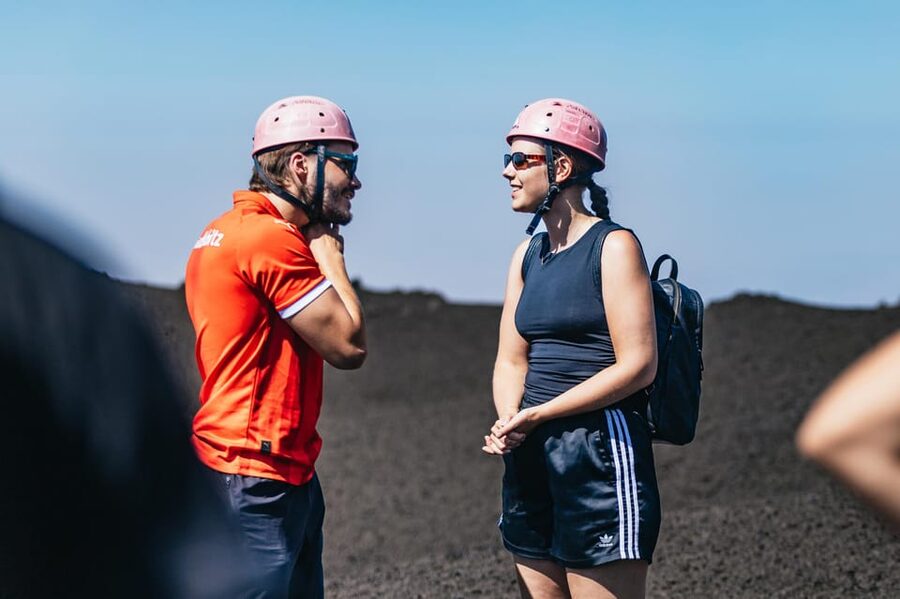
This is the most important point to understand before booking: the summit is never guaranteed. Etna is active, and the guide may change the itinerary because of eruptions, seismic activity, wind, weather, or environmental conditions.
If the summit craters are closed, the group may stop at the highest permitted point, sometimes around 3,000 meters. On other days, the guide may use a different route or even begin from Etna’s north side. That can mean missing the cable car, but it may still lead to a strong day of volcanic scenery and explanations.
Several excursions were adjusted because of powerful winds or eruption warnings. Some groups reached about 3,100 meters instead of 3,350, while others visited a volcanic grotto or explored different eruption sites. The guides continued to provide a worthwhile route rather than forcing the original plan.
This flexibility is a strength, not a failure. A guide who refuses the summit when conditions are unsafe is doing the job properly. The guide may stop the outing if any part of the route threatens the safety or physical well-being of an individual or the group.
What the guides add to the experience
A summit visit without context would still be impressive, but the guide makes the volcano easier to read. The best guides explain eruption history, crater formation, sulfur deposits, lava channels, flora, fauna, and the forces shaping Etna today.
The strongest guide names associated with this activity include Antonio, Massimo, Giovanni, Giacomo, Marco, Nello, and Luca. You cannot choose a specific guide with certainty, but the service is offered in English, French, and Italian.
The pace is one of the most important parts of the guiding. Groups can include people with different levels of fitness, and the route is demanding enough that a rushed walk would spoil it. Guides are expected to build in rests, set a manageable speed, and keep an eye on everyone rather than racing the strongest hikers to the top.
Group size can vary. Some outings have been small, around 10 people, while another had about 25 and took longer to organize. A smaller group usually means less waiting and easier access to the guide’s explanations. If you have a choice of date or departure, ask about expected group size.
Price, equipment, and what to carry
The listed price is $77 per person, but you should calculate the outing at $77 plus the €65 cash payment for the cable car and 4×4. That makes it a fairly substantial half-day expense, especially if the route is changed by weather or volcanic restrictions.
The value comes from the guide, safety planning, transport into the high zone, and supplied equipment. Hiking boots, walking sticks, a helmet, the guided hike, and RCT insurance are included. In colder months, extra jackets, gloves, crampons, and hard-shell layers may be available or supplied as conditions require, but you should not rely on that. Bring your own warm clothing.
Pack:
- Water and food
- Snacks or a packed lunch
- Sunglasses and sunscreen
- A sun hat
- Long trousers
- A T-shirt and an extra T-shirt
- A warm jacket
- Socks and a 10 to 20-liter daypack
Large luggage, pets, baby strollers, and shorts are not allowed. The mountain may be cold, bright, dusty, and windy in the same hour, so layers are more useful than one heavy item.
Free cancellation is available up to 24 hours before the activity, and you can reserve while paying later. Starting times vary, so check availability for your date.
Who should book the Etna summit trek
I would choose this outing if you want to understand Etna as a living volcano, not just ride up for a quick photograph. It suits adults and older teenagers in good health who can manage a medium to high difficulty hike and accept that the route may change.
You do not need advanced hiking experience. You do need steady footing, patience on loose ground, and enough fitness for several hours at altitude. If you dislike cold, wind, uneven terrain, or uncertain plans, this may feel like hard work rather than an easy excursion.
The experience is especially good for people who enjoy geology, dramatic scenery, and a guide who explains what you are seeing. It is less suitable for anyone expecting a guaranteed summit, a gentle walk, or a low-cost cable car visit.
Should you book this Etna tour?
I would book it if reaching Etna’s upper craters is a major goal of your Sicily trip and you are prepared to pay the extra €65 in cash. The combination of cable car, 4×4 transfer, guided hiking, crater views, and volcanic detail offers much more than a quick stop at Rifugio Sapienza.
Go with realistic expectations. You may reach 3,350 meters, or you may stop lower because the mountain is active. You may get clear views, or clouds and wind may take over. The best reason to book is not a guaranteed summit photo. It is the chance to explore a dangerous, changing volcano with trained guides who can make sensible decisions when conditions shift.
FAQ
Where does the Etna summit trek meet?
Meet at the Ashàra information point at Rifugio Sapienza on Etna’s south side, close to the Terrazza dell’Etna restaurant.
How long does the experience last?
The activity lasts about six hours, including transport, hiking, breaks, guided explanations, and the return cable car.
How high does the tour go?
The full route can reach Etna’s summit area at about 3,350 meters. If volcanic activity or conditions restrict access, the group may stop at a lower permitted altitude, sometimes around 3,000 meters.
Is the cable car and 4×4 ride included in the price?
No. The cable car and 4×4 tickets cost €65 per person for the full route and must be paid in cash on site. If the tour stops at 3,000 meters because of volcanic activity, the cable car cost is stated as €52 per person.
What equipment is included?
The experience includes hiking boots, a rock helmet, walking sticks, RCT insurance, and a multilingual volcano or Alpine guide.
What should I bring?
Bring water, food or snacks, sunscreen, sunglasses, a sun hat, a jacket, long trousers, socks, an extra T-shirt, and a 10 to 20-liter daypack. Gloves are also a sensible addition because the summit can be cold.
Can the route change on the day?
Yes. The guide may change or stop the route because of volcanic activity, wind, weather, environmental conditions, or other safety concerns. The summit craters are not guaranteed.
Latest treks added in Italy
- Trekking on the roof of Tuscany★ 5.0 · 6 reviews
- Otranto Trekking Adventure: The Path of the Hermit and the Bay of the Turks★ 3.5 · 8 reviews
- Lecce: Hike to Otranto with town visit – Half Day Trekking +Taxi★ 5.0 · 2 reviews
- Wild Walk – Discovering the hidden paths★ 5.0 · 31 reviews
- Wine Hiking Sip & Trek★ 5.0 · 3 reviews
- Dolomites Trekking Experience★ 4.5 · 3 reviews
- Trekking an Island of Palmaria★ 4.5 · 6 reviews
- Trekking in the morning on Mount Etna★ 5.0 · 2 reviews
Volcano Treks, compared.
Mount Etna: Trek to 3000m with cable car and 4×4
Read our review →
Mount Etna Trekking Tour Beyond the Tourist Trails
Read our review →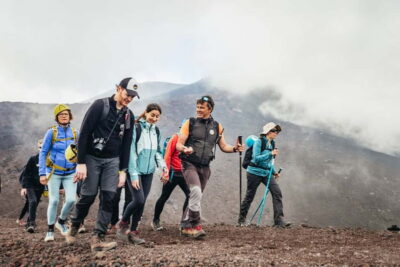
Mount Etna: Guided Trek 3,000 Meters to the Summit
Read our review →
Etna Sunset Tour: Volcano trek, Cave & tasting from Catania
Read our review →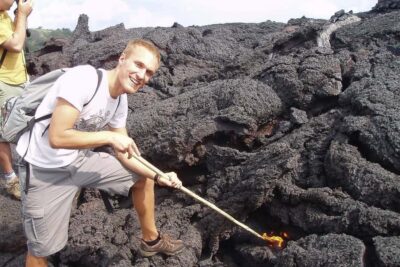
Browse the lists this tour appears in