
REVIEW · PRAIA
Santiago: Calabaceira Valley Trek & Visit to Cidade Velha
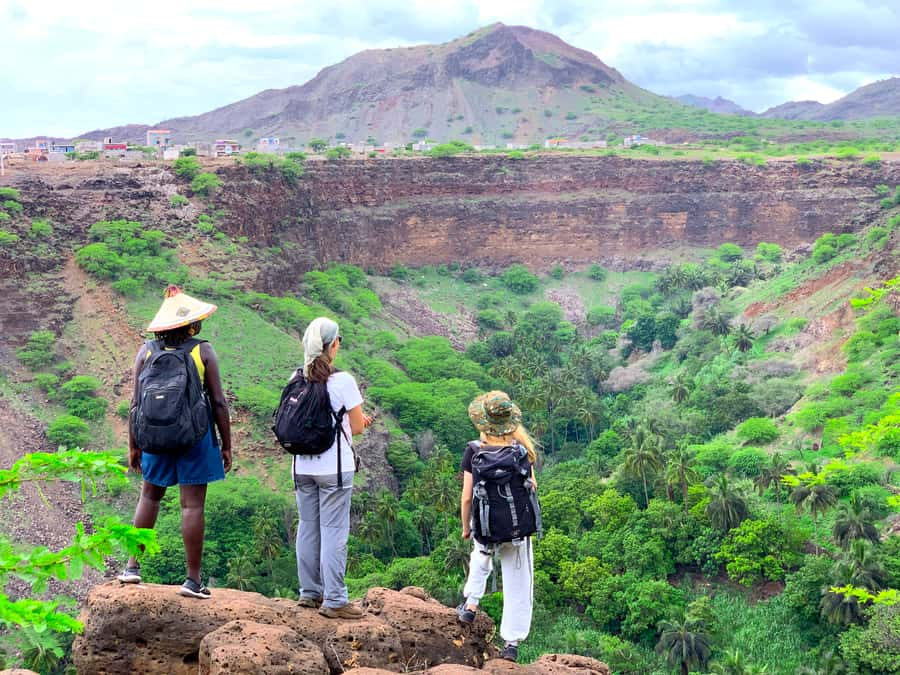
Calabaceira Valley is the real surprise here: a dry-looking island opens into a green ravine filled with baobabs, sugar cane, banana plants, and birds. I like the mix of quiet countryside and Cidade Velha’s major sights, especially the local rum stop and the view from São Filipe Fortress.
I also like that pickup, transport, a guide, and insurance are included for $82. The main caution is the word easy. The trail is rated easy, but it drops through a narrow section with a moderate tilt and loose or uneven ground. If steep descents bother you, this may not feel easy at all.
Key points to know before booking

- Calabaceira’s 186-meter descent: The one-way trail drops from about 200 meters to 14 meters, so the walk is mostly downhill.
- A useful mix of nature and history: You get a valley walk, a local rum-making visit, and a full Cidade Velha tour in one outing.
- The rum stop is tied to local farming: Sugar cane, mango, cassava, and banana fields help explain how rural life works on Santiago.
- São Filipe Fortress costs extra: Bring €5 for entry, since the fortress ticket is not included.
- The guide can shape the day: English, French, Portuguese, and Spanish are available, and guides such as Mario, Ivana, Katia, Soraya, and Riccardo have led recent departures.
- Allow more than four hours if your schedule is tight: The planned duration is four hours, but the walk and historic visits can run long.
Why this Santiago excursion works so well
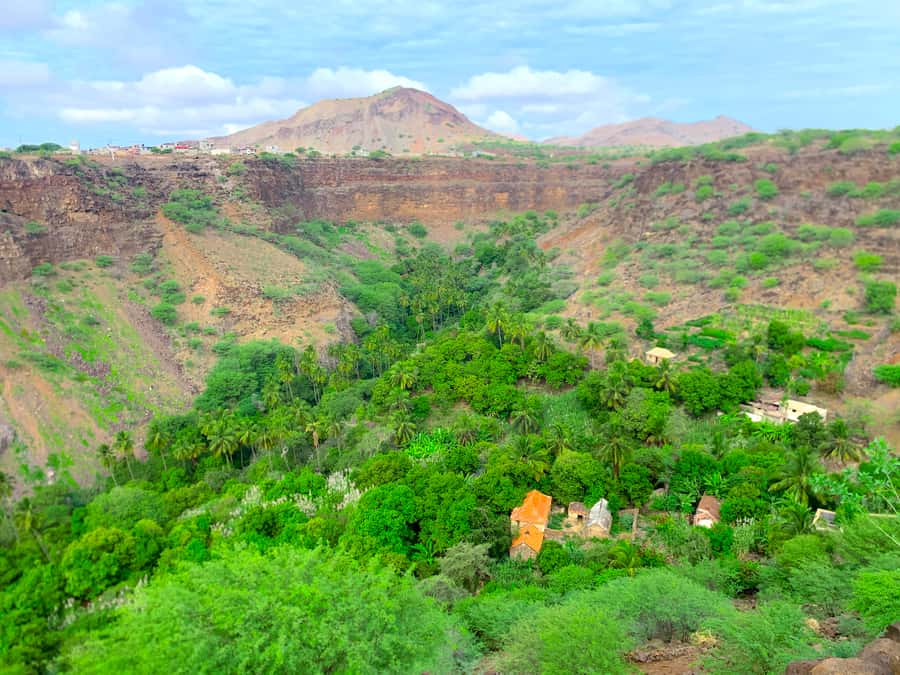
This is a smart choice if you want more from Santiago Island than a quick city tour. Praia gives you a useful base, but Cidade Velha and the interior valleys show a different side of the island. In a single half-day, you move from farmland and forest to colonial ruins and Atlantic views.
The day has a good rhythm. You start with physical activity while the valley is the main attraction. Then you shift to local production and rural life before spending the later part of the tour among churches, fortress walls, and the old port town.
I especially like that this is not just a drive to a viewpoint followed by a few photographs. The Calabaceira route gives you time to notice the plants, trees, fields, and small changes in the terrain. Cidade Velha then gives those rural scenes a wider historical setting.
At $82 per person, the price is fair if you value convenience and guiding. You get hotel pickup and drop-off in Praia, transportation, a live guide, and liability insurance. Lunch and the €5 fortress entry are extra, so your actual spending will be slightly higher.
More Trekking Tours in the world
- Mount Etna: Trek to 3000m with cable car and 4×4
★ 4.6 · 3,823 reviews - Bali: Mount Batur Sunrise Trek With Guide and Breakfast
★ 4.8 · 3,461 reviews - From Chania: Full-Day Samaria Gorge Trek Excursion & Guide
★ 4.6 · 3,191 reviews
Leaving Praia for Calabaceira Valley
Pickup is provided at your Praia hotel. You should wait in the lobby about 10 minutes before the set time, with the driver expected to hold a sign showing your last name. The stated pickup window is strict, since the driver waits no longer than five minutes after the scheduled time.
The drive takes you away from Praia toward the small village of Calabaceira. The valley walk begins near the upper part of the ravine, where the change in vegetation is the first big surprise. Instead of the dry, open feel found in parts of Santiago, you enter an area with much thicker plant growth.
The route is one way, not a loop. Its reported distance is about 5 kilometers, with a maximum height near 200 meters and a low point around 14 meters. The total descent is about 186 meters, while the elevation gain is only about 3 meters.
That information matters. You are not climbing up and down all day, but a downhill walk still puts pressure on knees and ankles. The first part is narrow, and the path quality is described as medium tilt. Some sections can include boulders or uneven footing, so good shoes are more important than the easy rating might suggest.
Walking through the Green Valley

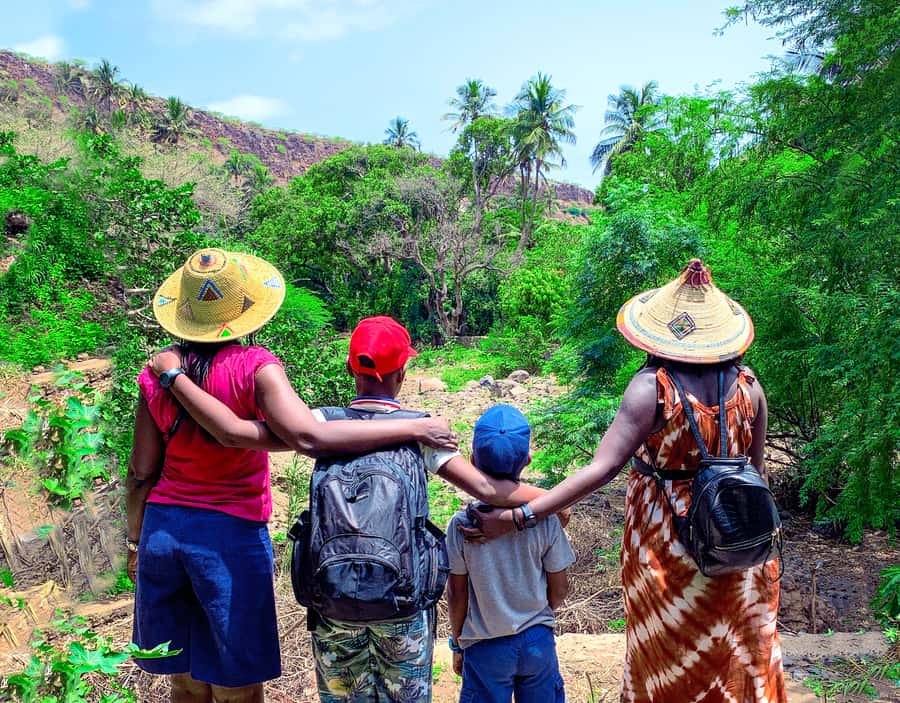
The valley is the scenic heart of the experience. You walk among tropical plants and agricultural plots, with the guide explaining the local flora and fauna as you go. The exact wildlife you see will vary, but kingfishers and monkeys have been spotted on recent outings.
The baobab trees add a strong sense of place. These unusual trees are linked with Charles Darwin in the tour’s historical story, and they give the route a clear visual marker. They are not just background decoration. Their presence helps explain why this valley has drawn attention from naturalists and visitors for so long.
You will also pass crops including sugar cane, mango, cassava, and bananas. This is one of the better parts of the walk because it connects the scenery to daily life. The valley is not a staged garden. It is working farmland, and the route gives you a look at how local agriculture fits into the narrow strip of fertile ground.
The trail is described as accessible for hikers, but I would interpret that carefully. It is not presented as a technical mountain route, and you do not need advanced hiking skills. Still, the narrow opening, downhill grade, and uneven sections mean you should be comfortable walking for about two hours on natural ground.
The tour information gives both a three-hour trek description and a total walking estimate of about two hours. Pace, stops, and group size can account for part of that difference. Plan for a substantial walk rather than treating it as a short stroll.
A local rum distillery among the fields
The stop at the rum-making distillery adds a welcome human element. Instead of seeing sugar cane only as a crop, you get a chance to connect it with a finished local product.
You can learn about the production process and meet local farmers working among their fields. The setting matters as much as the tasting or demonstration aspect. The distillery sits in an area surrounded by plants and farmland, so the visit feels tied to the valley rather than added as a separate commercial stop.
This is also a useful moment to slow down. The walk has a downhill focus, while the distillery visit gives you time to ask questions and look more closely at local work. Guides can explain the connection between sugar cane farming and rum production, while farmers provide a more direct link to the land.
The supplied details do not promise a specific tasting menu or amount of rum, so you should not book this expecting a full food-and-drink session. Think of it as a cultural stop that explains an important local product.
Another trail to compare in the world:
- Mount Etna: Summit Crater Trek with Cable Car
★ 4.8 · 1,875 reviews - La Palma: Tajogaite Volcano Guided Trek
★ 4.8 · 1,810 reviews - Etna: summit craters trekking with volcano guide 3350mt
★ 4.7 · 1,712 reviews - From Rethymno: Samaria Gorge Full-Day Trek, Pickup & Guide
★ 4.5 · 1,610 reviews
Arriving in UNESCO-listed Cidade Velha
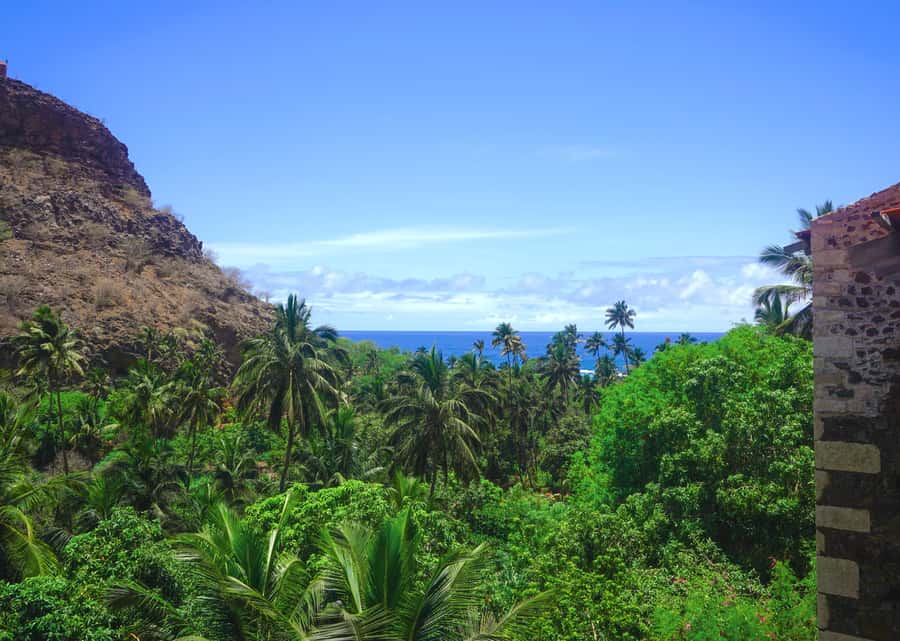
Cidade Velha was the first city built by Europeans in sub-Saharan Africa, and its position in Cape Verde’s story is impossible to miss. The town’s ruins, churches, fortress, and former trading sites reflect its importance during the early Atlantic period.
The historic center is a UNESCO World Heritage Site. That label is useful, but the place makes more sense when you see how compact the main sights are. The tour takes you through several key points instead of leaving you to piece them together on your own.
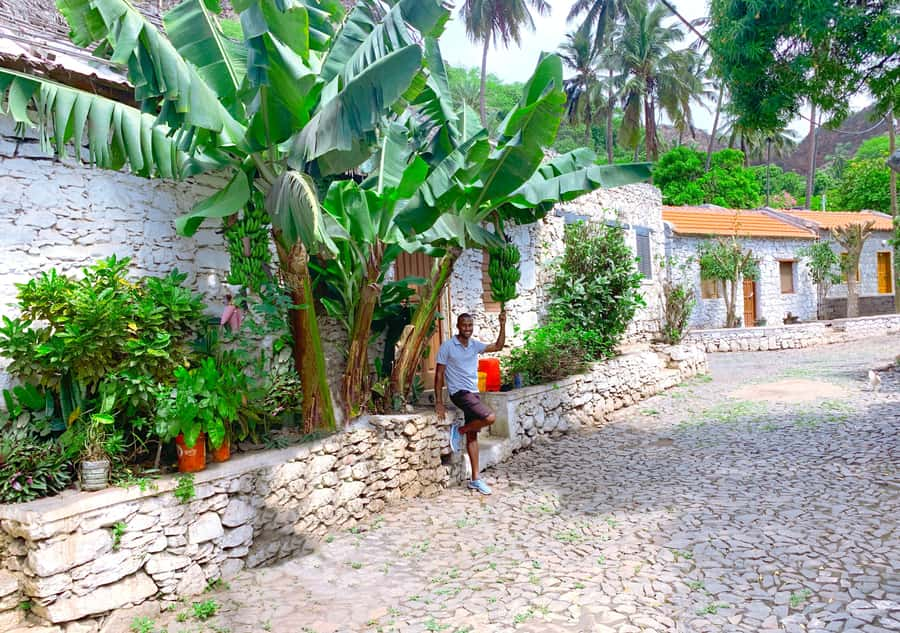
Banana Street is one of the first stops. The old street leads toward the town’s religious buildings and gives you a feel for the settlement’s early layout. You then visit the São Francisco Convent, an important surviving religious site with a quieter character than the larger fortress.
Nossa Senhora do Rosário church is another major stop. It is one of the important historic buildings in Cidade Velha, and your guide can help explain its place in the town’s religious and colonial past. A guided visit is valuable here because the surviving walls do not always explain themselves.
The ruins of the Sé Catedral show how much of the old settlement has been lost. You see fragments rather than a complete building, but that is part of the point. Cidade Velha is not a polished historic park. It is a living town with remains from several periods mixed into its streets.
The former slave market and the difficult history of the town
The former slave market is one of the most important and difficult stops. Cidade Velha was connected to the Atlantic slave trade, and the site forces you to look beyond the town’s churches and scenic setting.
This part of the tour gives the valley walk a deeper context. The route through Calabaceira is associated with enslaved people using it as an escape path during slavery. Later, in Cidade Velha, you confront the systems that made such escape necessary.
I appreciate that the itinerary does not treat history as a string of pretty buildings. It includes religious sites, defensive works, commercial streets, and the slave market. Together, they show how power, trade, faith, and forced labor shaped the town.
The subject can be heavy, and the quality of the explanation depends on your guide. Guides who know the local story well can make this section clear without turning it into a rushed list of dates. Recent guide names connected with especially strong outings include Mario, Ivana, Katia, Soraya, and Riccardo, though you should confirm which guide is assigned to your departure.
Lunch by the sea, then São Filipe Fortress
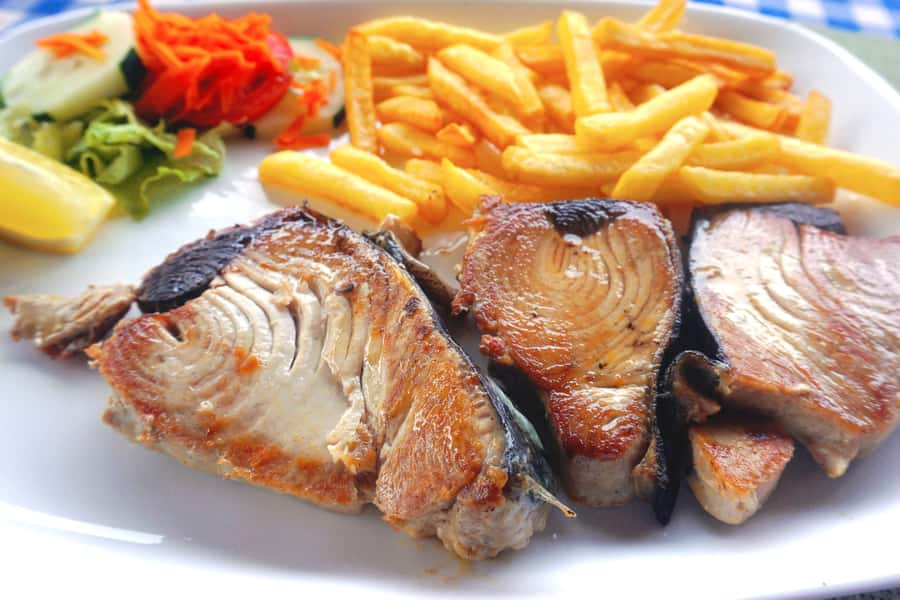
Lunch comes after the first group of Cidade Velha visits, at a typical restaurant on the seafront. Lunch is not included in the $82 price, so budget separately for your meal.
A seaside lunch is well placed in the schedule. It gives you a chance to rest after the valley walk before tackling the remaining historic sites. I would use this break to drink water and eat properly, especially if the heat is strong.
The final major stop is the Royal Fortress of São Filipe. Entry costs €5 and is paid separately. Bring cash in euros so you do not have to sort this out at the last minute.
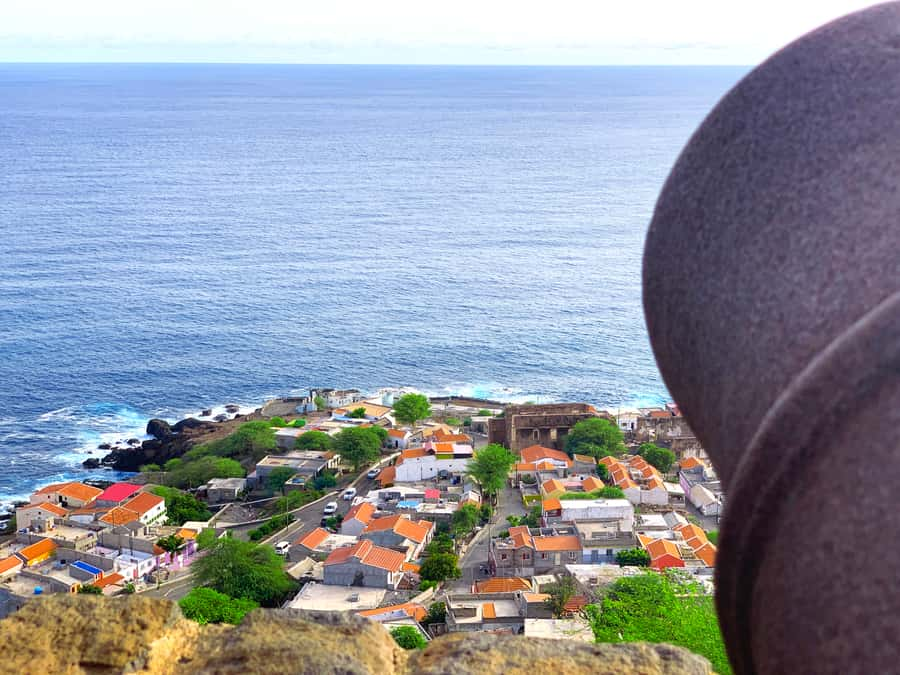
The fortress sits above the old town and provides the broadest view of the day. From the walls, you can look over Cidade Velha and see why defense mattered here. The guide explains how the fortress helped protect the settlement from pirate attacks and how its height gave defenders control over the town and coast.
This is also the best place for photographs, but the view is not the only reason to visit. After walking through streets and ruins at ground level, the fortress lets you understand the town’s position as a whole. You can see the relationship between the valley, the old settlement, and the sea.
Is the trail really easy?
The official difficulty is easy, and the route has only a small amount of climbing. That makes it suitable for a reasonably active person who is comfortable on a 5-kilometer path.
Still, I would not recommend it to anyone with mobility impairments. The path is one way, narrow at the beginning, and includes a significant downhill drop. A person who can walk on pavement but struggles with uneven ground may find this outing tiring.
The practical packing list is simple:
- Hiking pants, especially from August through November
- Decent walking shoes
- A hat
- Sunscreen
- Water
- €5 for São Filipe Fortress
- Extra money for lunch
The advice about hiking pants is worth following. The tour specifically recommends them during the August to November period, when trail conditions may make shorts less comfortable.
Most of the route is downhill, but that does not make it effortless. Trekking poles are not listed as provided, so bring your own if you use them. Give yourself permission to walk slowly. The point is to notice the valley, not race to the old town.
Shared group or private tour?
You can choose a shared group or private format. A shared departure requires at least two participants. If that minimum is not reached, the operator may suggest another date, offer a private departure for an added fee, or cancel with a full refund.
A small shared group is likely the better value if you enjoy meeting other people and want the standard experience at the listed price. A private tour makes more sense if you want a slower pace, have specific historical questions, or need more flexibility during the walk.
The guide language options are English, French, Portuguese, and Spanish. Confirm your preferred language when booking, particularly if the history of Cidade Velha is a main reason for choosing this excursion.
The guide is an important part of the value. Strong guiding can turn the baobabs, crops, escape route, slave market, and fortress into one connected story. Several recent departures have featured guides praised for warmth and strong local knowledge, including Mario, Ivana, Katia, Soraya, and Riccardo.
Timing, value, and the risk of a long day
The advertised duration is four hours, which is a tight schedule for a valley walk, lunch, and several historic stops. The route data gives about two hours of walking, while the main description calls the trek three hours. You should expect the exact pace to depend on the group, the guide, and the length of each visit.
One recorded outing lasted almost eight hours, so I would not book this on a day when you have a hard airport, ferry, or dinner deadline. That is an unusual warning for a tour sold as four hours, but it is useful practical information.
At $82, the package is strongest for people staying in Praia who want transportation handled for them. Hiring separate transport, finding the valley trail, arranging a local guide, visiting the distillery, and organizing Cidade Velha would take more effort and could cost more.
The price is less attractive if you want only a short Cidade Velha visit or if you plan to explore at your own pace. In that case, the combined format may feel rushed. It is best for someone who wants a guided overview with a real walk at the center.
Should you book the Calabaceira and Cidade Velha tour?
Book this tour if you want to combine Santiago’s natural scenery with its most important historic town. I particularly recommend it to active visitors who like local agriculture, wildlife sightings, small production visits, and serious history in the same day.
You should skip it if you need flat paths, dislike downhill walking, or have a schedule that cannot absorb delays. The route is described as easy, but the narrow descent and uneven sections deserve respect.
For most fit walkers, the combination is worthwhile. The valley gives you a side of Santiago that a city tour misses, while Cidade Velha supplies the context and major monuments. Bring water, proper shoes, €5 for the fortress, and enough time to let the day breathe.
FAQ
How long does the tour last?
The stated duration is four hours, including pickup, the valley walk, the Cidade Velha visits, and return to your Praia accommodation. The walking portion is listed as about two hours, while the trek description refers to three hours. Allow extra time because one recorded outing lasted nearly eight hours.
How far is the Calabaceira trail?
The trail distance is approximately 5 kilometers. It is a one-way route with about 3 meters of elevation gain and roughly 186 meters of elevation loss.
Is the hike suitable for beginners?
The route is rated easy and does not require advanced hiking skills. However, the trail is narrow at the beginning, has a moderate tilt, and includes uneven sections. It is not suitable for people with mobility impairments.
What does the $82 price include?
The price includes pickup and drop-off at your hotel in Praia, transportation, a tour guide, and liability insurance. Lunch and the €5 entrance fee for São Filipe Fortress are not included.
Which languages are available?
Live guiding is available in English, French, Portuguese, and Spanish. Shared group and private tour formats are offered.
What should I bring?
Bring decent footwear, water, a hat, sunscreen, hiking pants, and €5 for São Filipe Fortress. Hiking pants are especially recommended from August through November.
Latest treks added in the world
- 5 Days Desert Trekking from Marrakech★ 5.0 · 16 reviews
- 3 days Toubkal Trek from Marrakech★ 5.0 · 4 reviews
- Elite Experience Atlas Mountains Day Trekking★ 5.0 · 7 reviews
- 3 Days Berber Villages Trek – Authentic Atlas Mountain Experience★ 5.0 · 4 reviews
- Morocco Desert Trek 4 Days: 2 days on foot in Morocco★ 5.0 · 2 reviews
- Atlas Mauntains and 3 Valleys Trek★ 5.0 · 6 reviews
- Atlas Mountains Valley Trek – 3 Days★ 5.0 · 29 reviews
- 5-day Jebel M’goun trek★ 5.0 · 2 reviews
Trekking Tours, compared.

Mount Etna: Trek to 3000m with cable car and 4×4
Read our review →
Mount Batur Sunrise Trek With Guide and Breakfast
Read our review →
From Chania: Full-Day Samaria Gorge Trek Excursion & Guide
Read our review →
Etna: summit craters trekking with volcano guide 3350mt
Read our review →
From Rethymno: Samaria Gorge Full-Day Trek, Pickup & Guide
Read our review →
Mount Etna Trekking Tour Beyond the Tourist Trails
Read our review →