
REVIEW · KATHMANDU
Langtang Valley Trek
Langtang Valley gives you a close look at the Himalayas without the long approach needed for some of Nepal’s better-known routes. In ten days, you travel from Kathmandu to Syabrubesi, walk beside the Langtang River, pass bamboo and rhododendron forest, and reach Kyanjin Gompa at 3,870 meters, the last settlement in the valley.
I like two things in particular: the trek packs a lot of scenery into a manageable schedule, and the private format lets your guide adjust the pace and daily plan. Guides such as Prakash, Buddhi, Keshab, Zagat, Ram, and Bishal have led this route for the company. The main consideration is altitude. The optional climb toward Tserko Ri reaches about 5,000 meters, and even the regular route calls for steady walking and sensible acclimatization.
Key points to know before you book
- Kyanjin Gompa is the main reward: Reach the valley’s final settlement, visit an old monastery, and stop at the local cheese factory.
- The scenery changes each day: Follow the Trisuli River by road, then walk beside the Langtang River through forest, pasture, and high mountain country.
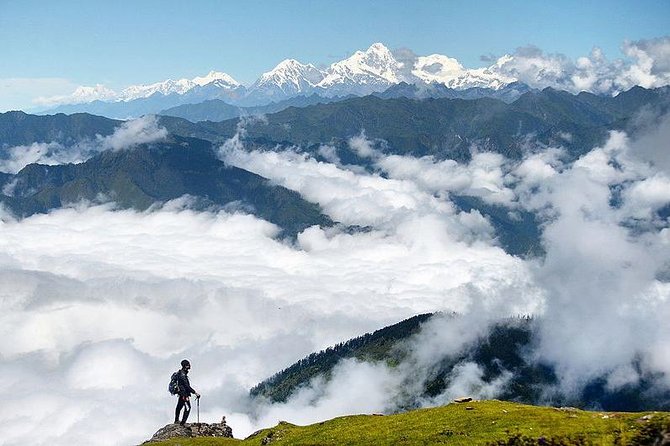
- Tserko Ri adds a serious challenge: The optional viewpoint reaches about 5,000 meters and offers wide views of glaciers, Langtang peaks, and Langshisha Kharka.
- The trek begins and ends with long transport days: The jeep journey between Kathmandu and Syabrubesi takes about seven hours each way.
- Most costs are bundled: Lodging, permits, guide, transport, meals, airport transfers, and some equipment are included in the $850 price.
- You need moderate fitness: Daily walks run from about three to seven hours, with steep sections and altitude to manage.
Why Langtang works well for a shorter Himalayan trip
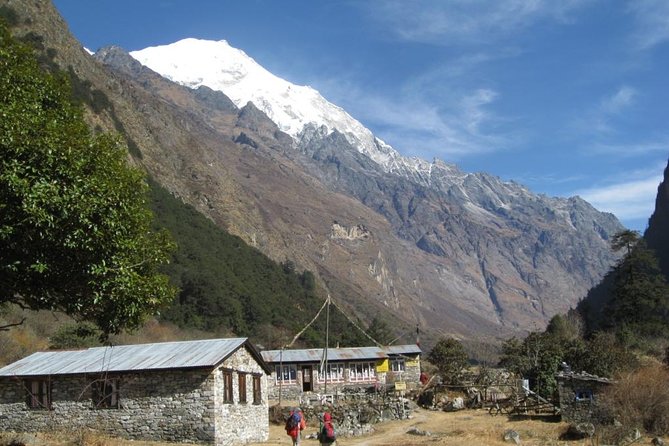
Langtang Valley sits close to Kathmandu, but the change in scenery is quick. After the city, the road follows the Trisuli River through green hills, terraces, and mountain foothills. By the time you reach Syabrubesi, you are at roughly 1,500 meters and ready to trade traffic for footpaths.
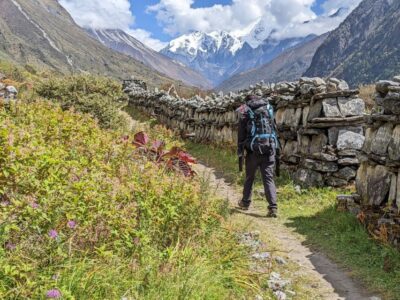
The route has a nice sense of progression. Lower down, you walk among dense forest and rushing water. Higher up, the trees thin and the mountains feel much closer. Langtang Lirung, Langtang Ri, Dorje Lakpa, Langshisa Ri, and Langtang Himal form the main cast.
I also like the human side of this route. You pass Tamang settlements and see pastureland used by yaks, cows, sheep, goats, and horses. Buddhist monasteries and prayer-filled village spaces add meaning to the walk without turning the trip into a sightseeing circuit.
At $850 per person, the package offers solid value if you use the included services. You receive airport and hotel transfers, two Kathmandu hotel nights with breakfast, local transport, permits, a guide, lodge stays, and three daily meals during the trek. A welcome dinner with a cultural dance show is also included.
The price does not cover Nepal’s visa, international flights, porter service, WiFi, hot showers, charging, or tips. Those extras matter. You can trek with a daypack, but a porter costs more and may be worth arranging if you prefer to walk lightly.
More Langtang Treks in Kathmandu
- Langtang Valley Trek
★ 5.0 · 140 reviews - Langtang Valley Trek
★ 5.0 · 61 reviews - 8 Days Tour in Langtang Valley Trek
★ 5.0 · 45 reviews
Day 1: A simple arrival in Kathmandu
Your airport representative meets you outside Tribhuvan International Airport and takes you to your hotel by private vehicle. This is a useful start after a long flight because you do not need to negotiate a taxi or figure out the city immediately.
The schedule lists a 12:15 am start time, which likely reflects an arrival or meeting system rather than a normal sightseeing departure. Confirm your actual pickup time before flying. You have two nights in Kathmandu included, along with breakfast, so there is some room to rest and prepare.
The welcome dinner takes place at a local restaurant and includes a cultural dance show. It is a pleasant introduction to Nepal, though the real character of the trip begins once the road heads north.
Day 2: Seven hours from Kathmandu to Syabrubesi
The drive to Syabrubesi takes about seven hours by local jeep. This is not a polished tourist transfer. Roads in the hills can be slow, and the journey is part of the practical reality of reaching Langtang.
Look out for the Trisuli River, terraced fields, green hills, Ganesh Himal, and distant peaks toward Tibet. The views begin before the walking does, but you should expect a full travel day rather than a relaxed scenic drive.
Your accommodation is listed as Hotel Garden Inn Shyfru Bensi, or a similar local property. The name in the itinerary appears to use both Syabrubesi and Shyfru Bensi, so confirm the exact lodging with the operator.
Day 3: Walking beside the Langtang River to Lama Hotel
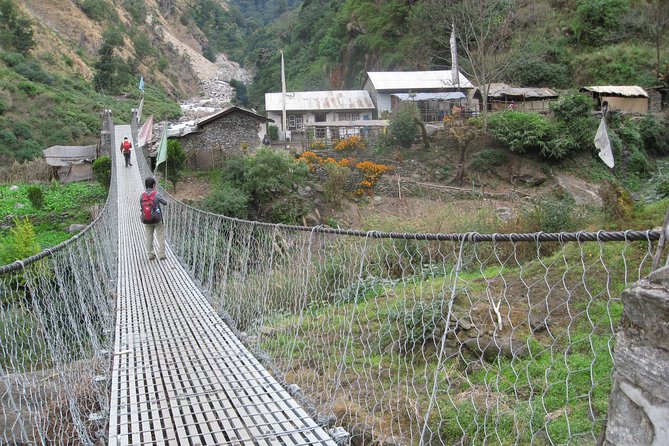
Your first trek day covers about seven hours. The trail follows the Langtang River and moves through dense forest, with suspension bridges and frequent uphill and downhill sections.
This is a good introduction to the rhythm of the route. You are not simply climbing all day. The path rises, drops, crosses water, and then climbs again. That variety keeps the walk interesting, but it can also make the day feel longer than the distance suggests.
You sleep at a lodge in Lama Hotel. Facilities are basic, as you should expect on a mountain route. WiFi, hot showers, and charging are not included, and may cost extra when available. Carry some cash for these small services and for personal purchases.
More Trekking Tours in Kathmandu
- Everest Base Camp Trek – 14 Days
★ 5.0 · 1,499 reviews - Everest Base Camp Trek
★ 5.0 · 842 reviews - Everest Base Camp Trekking
★ 5.0 · 485 reviews - Annapurna Circuit Trek with Tilicho Lake
★ 5.0 · 368 reviews
Day 4: Forest, pasture, and the old Langtang village
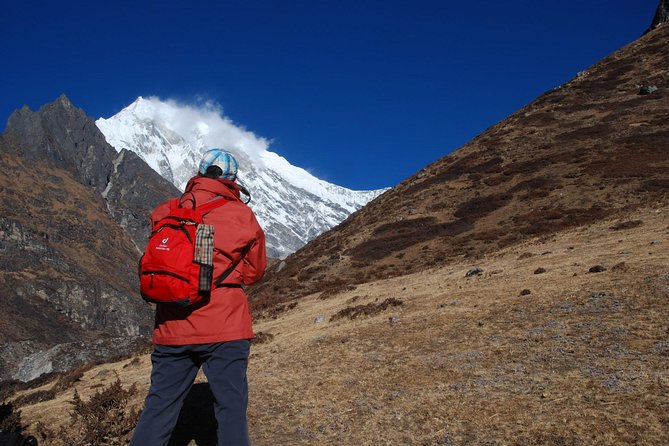
The fourth day takes about six hours through rhododendron, oak, and pine forest. In spring, rhododendrons add color to the trail, but the forest itself is the main pleasure at any time of year.
As you gain height, the first clear views of Langtang’s snowy peaks begin to open. You also pass pasture where yaks, cows, sheep, goats, and horses graze. This is one of the best days for seeing how local life connects with the mountain environment.
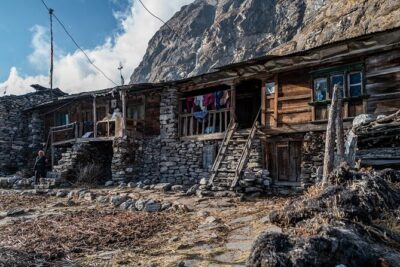
Langtang village is described as one of the oldest settlements on the trail. The views from here are impressive, but the stop also gives the route a human center. You are not walking through empty wilderness. You are moving through communities shaped by altitude, herding, trade, and Buddhist tradition.
The itinerary names Village View Hotel and Lodge for the night. As with any trek using local lodges, room standards may vary. Go in expecting a clean, practical place to sleep rather than hotel-style comfort.
Day 5: The short walk to Kyanjin Gompa
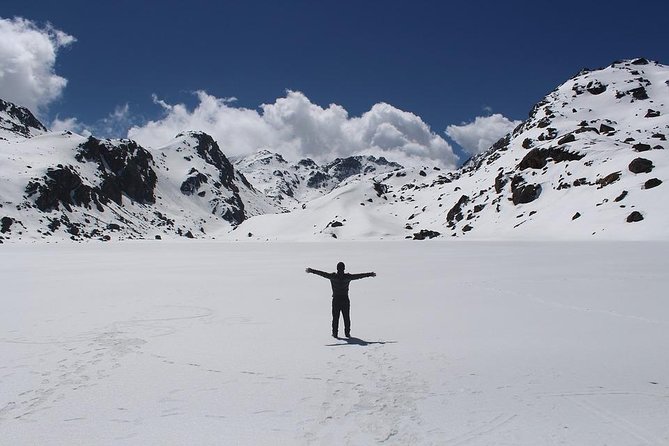
Today is only about three hours, which gives your legs a break before the high point of the trip. The trail leads to Kyanjin Gompa, the last permanent settlement in Langtang Valley, at about 3,870 meters.
Kyanjin is more than a place to sleep. You can visit the local cheese factory and buy cheese produced in the area. You can also visit Buddhist monasteries that remain important to the people living in this high valley.
The short walking time is useful, but do not treat the day as effortless. Altitude can affect you even when the trail is easy. Walk slowly, drink regularly, and tell your guide if you feel unwell. A shorter day is valuable here because it lets you adjust before the next outing.
Day 6: Glaciers, monasteries, and the Tserko Ri option
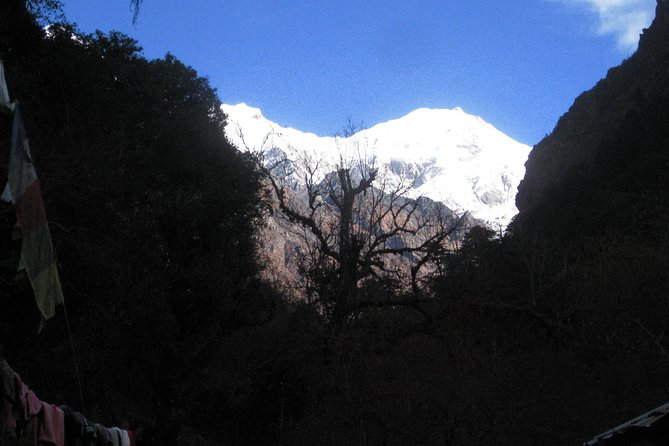
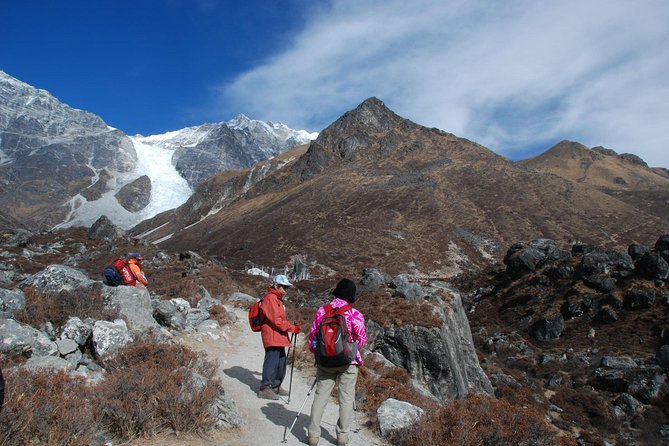
This is the most flexible day of the trek. You explore around Kyanjin Gompa, visit old Buddhist monasteries, and walk toward views of the icy peaks and glaciers that surround the valley.
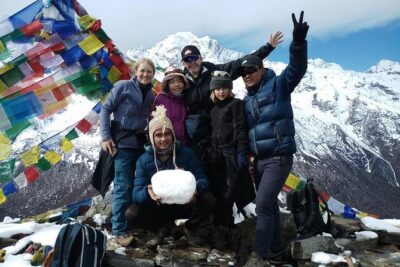
The easier choice is a local sightseeing walk with time to enjoy the mountain views. The harder option is Tserko Ri, listed at about 5,000 meters. From there, you can see Langtang glaciers and Langshisha Kharka, a high pasture used for yaks.
Tserko Ri is not a casual add-on. The altitude and climb make this the toughest part of the program. One account describes a final climbing day as challenging but worthwhile, and that is a fair way to approach it. You should decide with your guide based on weather, health, pace, and how your body is handling the height.
Some itineraries also include Kyanjin Ri, and the guide may adjust the day to suit your group. Ask before setting out which summit or viewpoint is planned, how long it should take, and what happens if conditions turn poor.
You return to the lodge at Kyanjin Gompa for the night. This out-and-back arrangement is one of the route’s strengths because you can explore high country without carrying your main luggage farther into the valley.
Day 7: Six hours downhill to Lama Hotel
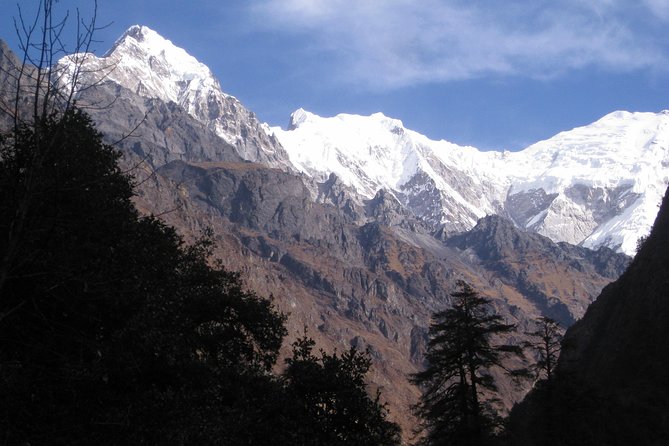
After breakfast, you retrace the trail to Lama Hotel in about six hours. The route passes through forest and Tamang settlements, giving you a different view of places that looked unfamiliar on the way up.
Downhill walking is often called easy, but it can be hard on knees and ankles. Trekking poles are useful, especially on uneven sections and near suspension bridges. Keep your pace controlled rather than racing toward the lodge.
The return route also makes the trek feel less rushed. You have already seen the high peaks, so you can pay more attention to the river, trees, village details, and small changes in the trail.
Day 8: Returning to Syabrubesi
The walk from Lama Hotel to Syabrubesi takes about six hours downhill through lush vegetation. It is a straightforward end to the walking portion, but you still need energy for the final transport day.
This is a good time to settle any guide or porter tips and check your belongings. The provider supplies a trip achievement certificate, and a company duffel bag and sleeping bag may be available if needed.
The night is listed at Hotel Garden Inn Shyfru Bensi. Having a proper lodge night before the long road trip gives you a chance to wash, repack, and rest.
Day 9: The long road back to Kathmandu
The local jeep or bus from Syabrubesi to Kathmandu takes about seven hours. Like the outward journey, this is a full travel day. Road conditions and traffic can affect the timing, so do not plan a tight international departure for the same evening.
Once back in Kathmandu, you are taken to your hotel. The plan leaves time to freshen up, shop, or eat in Thamel. After several days of simple mountain food, this is a welcome chance to choose your own meal.
The included Kathmandu hotel nights help the package make sense financially. You are not paying for a separate arrival and departure hotel, though you should confirm the exact hotel and room arrangements before booking.
Day 10: Airport transfer and departure
A private vehicle takes you to Tribhuvan International Airport for your onward flight. Keep your departure plans realistic. The trip includes the transfer, but it does not include international airfare or Nepal’s entry visa.
The free cancellation policy allows a full refund if you cancel at least 24 hours before the start time. Changes made inside that window are not accepted. Poor weather may lead to a different date or a full refund, which is useful for a mountain trip where conditions can change quickly.
Meals, lodges, and what the $850 covers
Three meals are provided each trekking day: breakfast, lunch, and dinner. The package lists eight lunches, eight dinners, and nine breakfasts, along with two Kathmandu hotel breakfasts. The exact count reflects the travel and hotel nights, so confirm the meal schedule if your flights differ from the standard plan.
Food on this kind of trek is functional and filling rather than fancy. The value is in having meals arranged at each lodge, not in expecting a wide restaurant menu. You also avoid carrying all your food from Kathmandu.
The package includes an experienced Nepal government-authorized guide and a first-aid medical kit. Guides named in connection with this route include Prakash, Buddhi, Keshab, Zagat, Ram, and Bishal. Your assigned guide may differ, so ask for the name and experience of your actual guide before departure.
Group discounts are available, but this is described as a private trip, meaning only your group participates. That gives you more control over breaks and pace than a large fixed group. Solo trekking is also possible with guide support, but the price per person may be less attractive than traveling with companions.
Who should book this Langtang trek?
I would choose this trip if you want a genuine Himalayan walking route but have only about ten days. It suits people with moderate fitness who can handle repeated six to seven-hour days and a high-altitude excursion.
It also works well for first-time trekkers who want practical support. Transport, lodges, meals, permits, airport pickup, and a guide are organized in advance. You still need to accept basic facilities, long road journeys, and changing weather.
You should think twice if you dislike shared local transport, simple mountain accommodation, or steep walking. The word easy appears in parts of the schedule, but the whole trip is not effortless. The Tserko Ri option is especially demanding, and the elevation at Kyanjin Gompa deserves respect.
Should you book the Langtang Valley Trek?
Book it if you want a compact Nepal trek with strong mountain scenery, Tamang culture, forest trails, glaciers, and a clear high point at Kyanjin Gompa. The package is particularly good value for a private trip because so many major costs are included.
Before paying, confirm the actual hotel names, pickup time, guide assignment, porter price, summit plan for Day 6, and what happens if weather changes the schedule. If you are comfortable with moderate fitness demands and basic lodges, this route offers a lot in ten days without sending you far from Kathmandu.
FAQ
How long is the Langtang Valley Trek?
The scheduled trip lasts approximately 10 days, including arrival and departure from Kathmandu.
What is the price?
The listed price is $850 per person. Group discounts are available.
Is airport pickup included?
Yes. Airport and hotel transfers by private car or jeep are included.
Is this a private tour?
Yes. Only your group participates in the activity.
How high is Kyanjin Gompa?
Kyanjin Gompa is listed at about 3,870 meters above sea level.
How high is Tserko Ri?
The optional walk to Tserko Ri reaches approximately 5,000 meters.
What meals are included?
Breakfast, lunch, and dinner are included during the trek. Breakfast is also included for the two Kathmandu hotel nights.
Is a porter included?
No. Porter service is available at an additional cost.
Are WiFi, hot showers, and charging included?
No. These services are not included during the trek and may involve extra charges when available.
What fitness level is required?
A moderate level of physical fitness is recommended. Trekking days range from about three to seven hours, with altitude and uphill sections.
What happens if bad weather cancels the trip?
If poor weather causes cancellation, you will be offered a different date or a full refund.
Can I cancel for a full refund?
Yes, if you cancel at least 24 hours before the experience start time. Cancellations or changes made less than 24 hours before the start time are not accepted for a refund.
Latest treks added in Kathmandu
- Ghorepani Poonhill Trek★ 5.0 · 5 reviews
- Ghorepani Poon Hill Trek★ 5.0 · 16 reviews
- Private Manaslu Circuit Trek at Himalayas★ 5.0 · 3 reviews
- Upper Mustang Trekking★ 3.0 · 2 reviews
- Amazing 1 Day Trekking Experience in Kathmandu Nepal★ 5.0 · 24 reviews
- Upper Mustang Trekking★ 5.0 · 2 reviews
- Upper Mustang Trek★ 5.0 · 5 reviews
- Upper Mustang Trekking★ 5.0 · 4 reviews
Langtang Valley Treks, compared.

Trekking in Annapurna/Langtang/Everest/Upper Mustang regions
Read our review →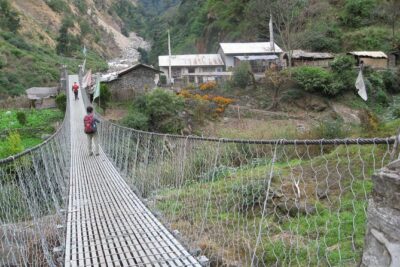
Browse the lists this tour appears in