
REVIEW · KATHMANDU
Langtang valley trek
The best part of this trek is the steady change from forest trail to high Himalayan valley. You begin among rivers, birds, rhododendron, and pine, then reach Kyanjin Gompa at 3,740 meters, where glaciers, yak pastures, and snowy peaks fill the view. I like the strong mountain finish and the fact that the route includes a full day around Kyanjin for Tserko Ri rather than rushing straight back.
I also like the practical package: guides, porters, permits, meals, a down jacket, sleeping bag, and bus transport are included. The main consideration is altitude. The itinerary climbs quickly from Kathmandu to Kyanjin, with no separate acclimatization day before the high point, so you need moderate fitness and a sensible pace.
Key points
- Tserko Ri sunrise climb: An early start leads to broad views over Langtang, glaciers, and the Himalayan range.
- Kyanjin Gompa base: You spend time at the monastery and explore the valley instead of treating it as a quick overnight stop.
- Eight-day return route: The same trail carries you back through Lama Hotel and Syabrubesi, with mostly downhill walking near the end.
- All main trekking costs covered: National Park permits, TIMS, guide, porters, meals, accommodation, and equipment are included.
- Small group size: The maximum group size is 14, which allows a more manageable pace than a large coach-style tour.
- Strong guide reports: Bikram and Bikrai received especially warm praise for their guiding, while Gokul and Asmita handled trip planning and logistics.
Why Langtang works as an eight-day Himalayan trek
Langtang Valley gives you a satisfying mountain journey without packing every day with long transfers and extra side trips. The route starts in Kathmandu, reaches the trailhead at Syabrubesi, then follows the valley inland toward Kyanjin Gompa.
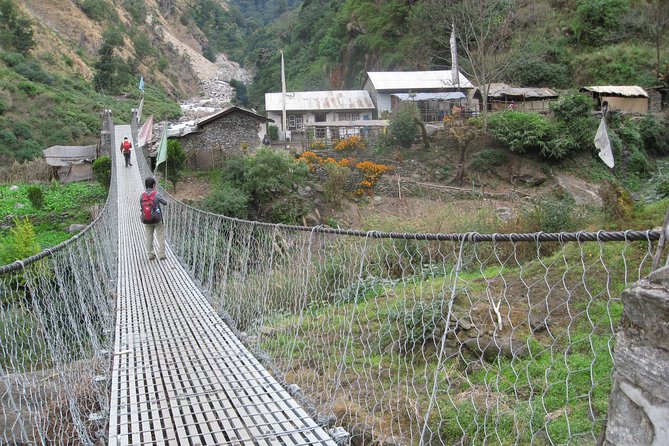
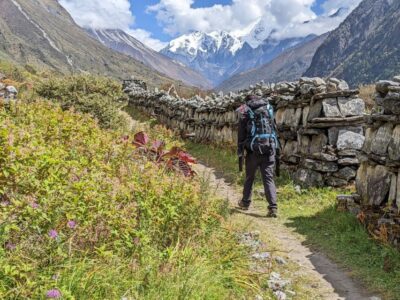
The scenery changes in clear stages. At first, the path runs through forest and beside the river. Higher up, the trees thin out and the valley opens around Langtang village. By Kyanjin, you are walking among high pastures, glaciers, mountain views, and Buddhist landmarks.
I like this sense of progress. You can feel the altitude increase under your feet, but the route remains focused. You are not constantly changing vehicles or adding unrelated attractions. The tradeoff is that the trip follows a return route, so you walk much of the same trail in reverse during the final two days.
The package costs $995 per person. That is not a bare walking tour. It includes guesthouse accommodation, a licensed English-speaking guide, porters, Langtang National Park permits, a TIMS card, meals, a down jacket, a sleeping bag, and surface transport from Kathmandu to Syabrubesi and back.
You still pay for insurance, drinks, laundry, and tips. Alcoholic drinks and both hot and cold drinks are also outside the package. Tipping is expected, so include it in your budget before you book. Given the number of inclusions, the price is reasonable for someone who wants one organized payment rather than arranging every part independently.
More Langtang Treks in Kathmandu
- Langtang Valley Trek
★ 5.0 · 140 reviews - Langtang Valley Trek
★ 5.0 · 61 reviews - 8 Days Tour in Langtang Valley Trek
★ 5.0 · 45 reviews
Day 1: The seven-hour road to Syabrubesi
Your first day is mainly a road journey. You leave Kathmandu in the morning and drive for about seven hours to Syabrubesi, the village where the trek begins.
The road trip is useful for more than getting from one point to another. On a clear day, you may see Manaslu, Annapurna, and Ganesh Himal along the way. The quality of mountain views depends on weather and road conditions, so treat them as a welcome bonus rather than a promise.
Syabrubesi is also the practical starting point for the Langtang Valley route. You arrive with the walking still ahead of you, which makes this first day less tiring than beginning the trek immediately after a long transfer.
The package includes the tourist bus transfer. Pickup is offered, and the maximum group size is 14. That keeps the transport arrangement fairly simple, though you should expect a full road day rather than a short shuttle.
Day 2: Bamboo forest and Lama Hotel
The first walking day takes about six hours. The trail climbs through forest for roughly two hours before continuing toward Bamboo village, at about 1,850 meters.
Bamboo is the planned lunch stop. From there, the path climbs more sharply through bamboo forest to Lama Hotel at approximately 2,560 meters, where you spend the night in a local teahouse.
This is a good introduction to the trek because the trail has a clear rhythm: walk, climb, stop for food, then climb again. The route follows the upstream valley, and you may notice birdlife around the bushes. Bee hives hanging from a cliff are another unusual feature along the way.
Do not treat this day as easy simply because the altitude is still moderate. The forest hides some of the climbing, and the second section toward Lama Hotel is steep. Walk at a pace you can maintain, drink regularly, and avoid burning all your energy early in the trip.
Day 3: Rhododendron forest to Langtang village
Day three takes about five hours and brings you into the higher part of the valley. You walk through rhododendron and pine forest for around three hours before reaching Ghoda Tabela, where you stop for lunch.
The area around Ghoda Tabela is described as a dense wild habitat with small babblers and herbal plants. You should keep your eyes open, but do not expect a formal wildlife tour. The value here is the quiet woodland and the gradual change in vegetation as you gain height.
After lunch, the trail continues for another three hours to Langtang village, at about 3,455 meters. This is a substantial rise from the night before, and it is the first point where altitude deserves serious attention.
The evening in Langtang is important. Eat well, rest, and tell your guide if you develop a headache or feel unusually unwell. The itinerary does not include a separate acclimatization day here, so your body has less time to adjust before the next climb.
More Trekking Tours in Kathmandu
- Everest Base Camp Trek – 14 Days
★ 5.0 · 1,499 reviews - Everest Base Camp Trek
★ 5.0 · 842 reviews - Everest Base Camp Trekking
★ 5.0 · 485 reviews - Annapurna Circuit Trek with Tilicho Lake
★ 5.0 · 368 reviews
Day 4: Reaching Kyanjin Gompa at 3,740 meters
The walk to Kyanjin Gompa takes about four hours. This is shorter than the previous trekking days, which gives you more time to enjoy the valley and manage the altitude.
The route passes through striking mountain surroundings and areas with strong Buddhist and Tamang cultural connections. Kyanjin Gompa is both a settlement and a spiritual center, with a Buddhist monastery that you can visit.
This is the point where the trip begins to feel properly high-altitude. You are not yet at the highest point of the optional climb, but the air is thinner and the mountains feel much closer. Keep your pace slow. A shorter walking day does not mean you should race to the finish.
The supplied route also highlights the Yala Cheese Factory and small lakes near Kyanjin. The factory is described as reachable within half a day, but the daily schedule does not specifically list a factory visit. If this matters to you, ask the operator before departure whether it is included in your guide’s plan or requires a separate arrangement.
Day 5: Tserko Ri sunrise and the Kyanjin valley
This is the physical centerpiece of the trek. You begin early and walk across yak pastures before ascending Tserko Ri. The climb takes about six hours in total, including the return to Kyanjin Gompa.
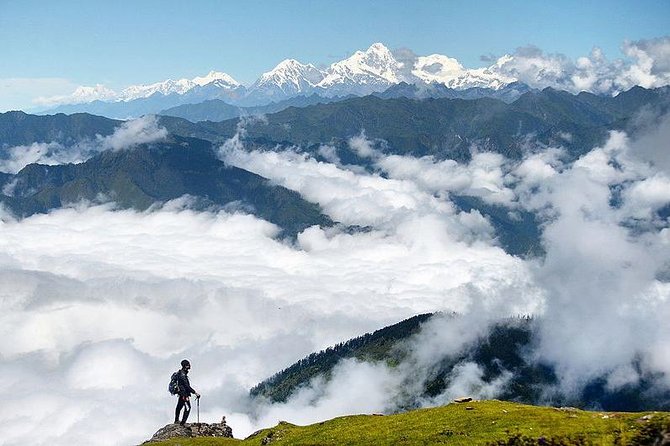
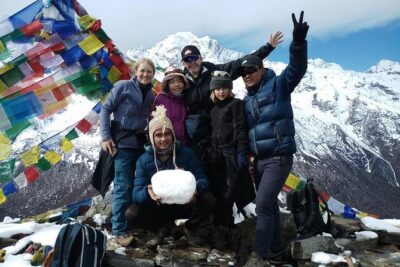
The sunrise view from the top is the major reward. From Tserko Ri, you can look across Langtang and the surrounding Himalayan range, with glaciers and high peaks forming the backdrop. The route description also refers to views of birds, yaks, and the valley around the monastery.
This day requires more than ordinary hill-walking fitness. The exact difficulty depends on weather, trail conditions, and how your body handles the altitude. A moderate fitness level is required, but you should still expect a demanding morning and a tiring return.
Back at Kyanjin Gompa, you have time to visit the monastery and explore the valley. This extra time is valuable because the area offers more than one viewpoint. The nearby Langsisa pastures lead toward glaciers, and local huts can be reached on foot, although the schedule does not promise a Langsisa excursion.
The trip information also mentions a STOL airstrip at Chhaldang, a short distance east of Kyanjin. That is an interesting local detail, but it is not presented as a scheduled stop. Think of it as part of the wider geography rather than a guaranteed attraction.
Days 6 and 7: A downhill return through the forest
Day six retraces the route from Kyanjin Gompa to Lama Hotel and takes about seven hours. Much of the walking is downhill, passing again through forests and Tamang villages.
Going down is easier on your breathing, but not always easier on your legs. Long descents can be hard on knees, especially after the Tserko Ri climb. Trekking poles may help, though the provided equipment list does not mention them.
The return walk also gives you a different view of familiar ground. When you climb, your attention often goes toward the next uphill section. Descending lets you notice the valley, river, forest, and settlements in a more relaxed way.
Day seven continues back to Syabrubesi and takes about six hours. The route is mostly downhill, and the plan refers to Syabrubesi hot spring. The schedule does not explain how long you spend there or whether bathing arrangements are included, so ask your guide about the timing and any local fees.
You stay overnight in Syabrubesi. This is useful because it avoids combining the final trekking day with the long drive to Kathmandu.
Day 8: Returning to Kathmandu
The final day is another road journey of about seven hours from Syabrubesi to Kathmandu. After arrival, you are taken to your hotel and have time to rest.
This transfer is included, but road travel in the mountains can be tiring. Keep water and a few snacks close by, and do not plan an important evening commitment unless you have plenty of flexibility.
The eight-day format gives the return journey its own day. I prefer that arrangement to finishing a long walk and immediately facing a full road transfer, though it means the trip contains two substantial travel days.
What the $995 package covers
The inclusions make this a fairly complete guided trek. You receive:
- Best available guesthouse accommodation during the trek
- A local government licensed English-speaking guide
- The required porters and staff
- Langtang National Park permits
- A TIMS card
- A down jacket and sleeping bag from Outshine Adventure
- Tourist bus transport between Kathmandu and Syabrubesi
- Government taxes
- Eight breakfasts, eight lunches, and seven dinners
The meal count matches the schedule: breakfast is provided on all eight days, lunch on all eight days, and dinner on each trekking night. Drinks are not included, so budget separately for tea, bottled drinks, or other purchases.
Accommodation is described as the best available guesthouses, with a local teahouse specifically noted at Lama Hotel. You should choose this trip for its organized mountain access, not for hotel comfort. Conditions in the valley are practical and basic.
The porter support matters. Carrying only a day pack makes the long climbs and descents more manageable. Still, pack thoughtfully and keep important personal items with you.
Guides, group size, and the human side of the trek
The group maximum is 14 people. That is small enough for a guide to keep track of the pace and for the group to move through teahouse stops without the feel of a large tour.
Past guests gave especially strong praise to guides named Bikram and Bikrai, describing them as excellent and helpful on the Langtang route. Because guide assignments can change, ask who will lead your departure before booking if this is important to you.
Gokul and Asmita have also been praised for organizing logistics and preparing people for the trip. Gokul speaks Spanish, which may be useful for Spanish-speaking participants.
The experience is not only about scenery. You pass Tamang villages, visit a Buddhist monastery, see yak pastures, and stay in local teahouses. Those details give the walk a human setting rather than making it a simple mountain-view exercise.
Preparation, insurance, and cancellation terms
You need a moderate level of physical fitness. The route includes several six and seven-hour walking days, steep sections through forest, high-altitude walking, and the Tserko Ri ascent.
Bring suitable walking clothing, personal toiletries, and money for drinks, laundry, and tips. The operator supplies a down jacket and sleeping bag, but you should confirm the sizes and collection arrangements before departure.
Travel insurance is not included. Arrange your own policy before the trek and check that it covers the activities and altitude involved.
A passport copy is required for every participant. Booking confirmation is provided at the time of booking. You can cancel for a full refund up to 24 hours before the experience starts. Cancellations or changes made less than 24 hours before the start time are not accepted for a refund.
Is the Langtang Valley trek right for you?
I would choose this trek if you want a guided Himalayan route with a clear eight-day structure, included permits and meals, porter support, and a strong high-altitude finish at Tserko Ri.
It suits you best if you are comfortable with long walking days, basic guesthouses, mountain road transfers, and a steady climb to 3,740 meters and above. It is also a good fit if you value a smaller group and cultural stops such as Kyanjin Gompa and Tamang villages.
I would hesitate if you want a leisurely itinerary with several acclimatization days, private rooms, or a more flexible schedule around Yala Cheese Factory and Langsisa. Those attractions are highlighted, but the listed day-by-day plan focuses mainly on Kyanjin Gompa and Tserko Ri.
For most fit hikers seeking a well-organized Langtang introduction, the package offers solid value. Confirm the guide assignment, Tserko Ri conditions, and any optional Kyanjin excursions before paying, then book with realistic expectations about altitude and teahouse comfort.
FAQ
How long is the Langtang Valley trek?
The trek lasts approximately eight days, including the road journeys between Kathmandu and Syabrubesi.
What is the highest point on the itinerary?
The itinerary includes an ascent to Tserko Ri, with the sunrise climb described as the main high point. Kyanjin Gompa is at about 3,740 meters.
Are meals included?
Yes. The package includes eight breakfasts, eight lunches, and seven dinners. Alcoholic drinks, hot drinks, and cold drinks are not included.
Is transportation from Kathmandu included?
Yes. Tourist bus transport from Kathmandu to Syabrubesi and back to Kathmandu is included.
Are a guide and porters included?
Yes. A local government licensed English-speaking guide, the required staff, and porters to carry luggage are included. The maximum group size is 14 people.
What happens if I cancel?
You can receive a full refund if you cancel at least 24 hours before the experience starts. Cancellations or changes made less than 24 hours before the start time are not accepted for a refund.
Latest treks added in Kathmandu
- Private Manaslu Circuit Trek at Himalayas★ 5.0 · 3 reviews
- Ghorepani Poonhill Trek★ 5.0 · 5 reviews
- Ghorepani Poon Hill Trek★ 5.0 · 16 reviews
- Upper Mustang Trekking★ 3.0 · 2 reviews
- Amazing 1 Day Trekking Experience in Kathmandu Nepal★ 5.0 · 24 reviews
- Upper Mustang Trekking★ 5.0 · 2 reviews
- Upper Mustang Trek★ 5.0 · 5 reviews
- Upper Mustang Trekking★ 5.0 · 4 reviews
Langtang Valley Treks, compared.

Trekking in Annapurna/Langtang/Everest/Upper Mustang regions
Read our review →
Browse the lists this tour appears in