
REVIEW · KATHMANDU
Langtang Panorama Trek
Langtang Panorama Trek combines two of Nepal’s best-known nearby mountain routes: the forested Langtang Valley and the high, stark basin around Gosaikunda Lake. I like the variety here, from bamboo groves and rhododendron woods to a 5,050-meter climb at Chorkari Ri. I also like the practical package, which covers permits, meals, guesthouses, transport, a guide, a sleeping bag, and a down jacket if needed.
The main caution is altitude. This is called a moderate trek, but the route reaches more than 5,000 meters and includes long days, including a 7.5-hour outing to Chorkari Ri and a 7.5-hour day at Gosaikunda and Lauribina Pass. You’ll need a good fitness level, sensible pacing, and suitable insurance.
Key points at a glance
- Two famous highland areas in one trek: Combine Langtang Valley with Gosaikunda Lake instead of choosing only one.
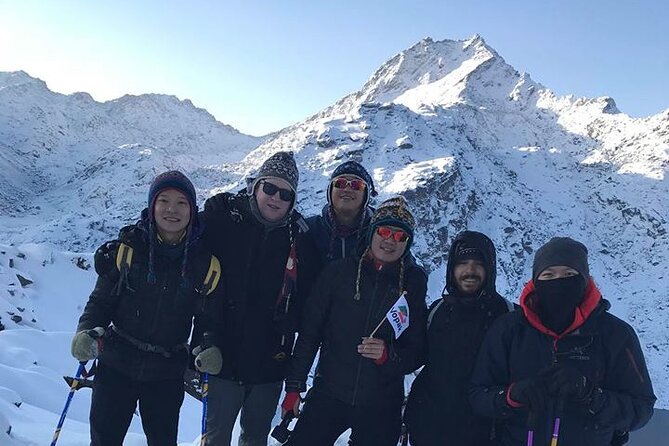
- A serious high point: Chorkari Ri reaches 5,050 meters, while Lauribina Pass reaches 4,600 meters.
- Forests with a wild edge: The route passes rhododendron, oak, magnolia, pine, fir, and bamboo areas where red pandas are found.
- A useful all-in price: The $755 fee includes transport, food, lodging during the trek, permits, TIMS, a guide, taxes, and selected cold-weather equipment.
- Company support matters: Babu is praised for careful planning, while Suresh and Dambar are named as capable guides connected with past Langtang trips.
- Plan for basic mountain living: Guesthouses, twin-share rooms, no included porter, and extra charges for drinks, showers, laundry, and personal costs are part of the deal.
Why this route makes sense from Kathmandu
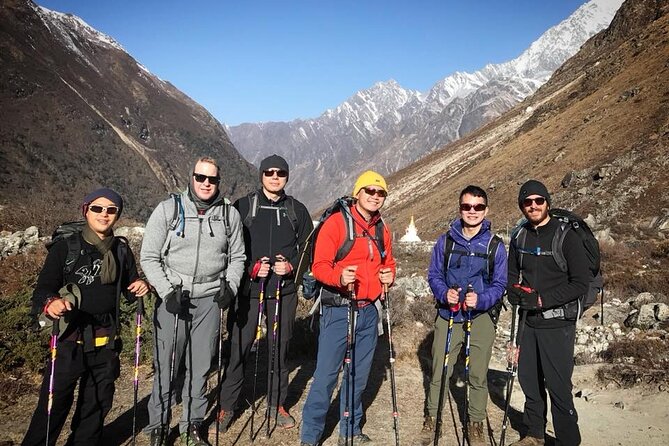
Langtang is a strong choice if you want a Himalayan trek without committing to the longer Everest or Annapurna circuits. The trail begins north of Kathmandu and reaches the Langtang Valley before turning toward Gosaikunda. That gives you two distinct moods in one trip: wooded river valleys at lower elevations and open, cold mountain country higher up.
I like the route because it does not rely on one viewpoint or one famous stop. You get village life, forest walking, a high mountain day, a sacred lake area, and a pass. The scenery changes often enough to keep the walking interesting, even on the return sections.
The $755 price is also easier to judge once you look at what it covers. You are not paying only for a guide and a room. The package includes ground transport from Kathmandu and back, three meals a day during the trek, twin-share guesthouses, Langtang National Park permits, TIMS, a trip map, guide costs, local taxes, and selected equipment. A first-aid kit and an oximeter for checking oxygen saturation are included as part of the support system.
Still, do not treat the fee as all-inclusive in the city-to-city sense. Kathmandu accommodation and meals are extra. Drinks in the mountains, personal equipment, insurance, tips, porter service, laundry, showers, phone calls, bar bills, and excess baggage also come out of your pocket.
More Langtang Treks in Kathmandu
- Langtang Valley Trek
★ 5.0 · 140 reviews - Langtang Valley Trek
★ 5.0 · 61 reviews - 8 Days Tour in Langtang Valley Trek
★ 5.0 · 45 reviews
Day 1: Kathmandu to Syabrubesi by bus
The first day is a long road transfer, about seven hours, to Syabrubesi at 1,610 meters. Pickup is offered, and the route uses a bus according to the planned schedule.
This is not a sightseeing day. It is the necessary link between Kathmandu and the trailhead, so you should expect a full travel day rather than an early walk. You spend the night in a guesthouse and receive breakfast, lunch, and dinner under the trekking meal plan.
Syabrubesi is an important starting point because it places you at the lower end of the Langtang route. Starting here gives the following days a steady climb rather than an immediate jump into thin air.
Day 2: Syabrubesi to Lama Hotel
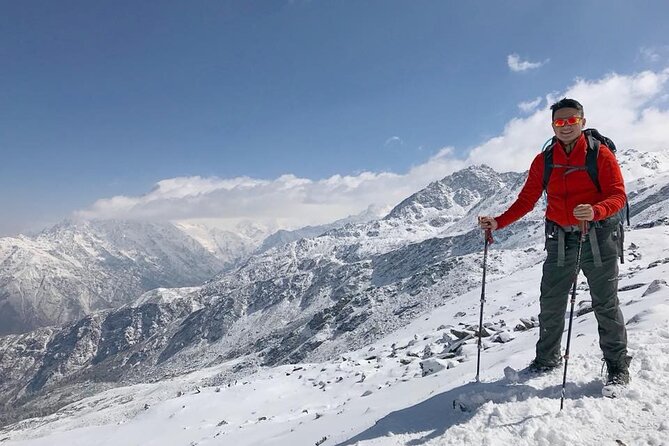
The trek begins with about 5.5 hours of walking to Lama Hotel at 2,480 meters. You’ll spend the night in a guesthouse and continue with the included three-meal plan.
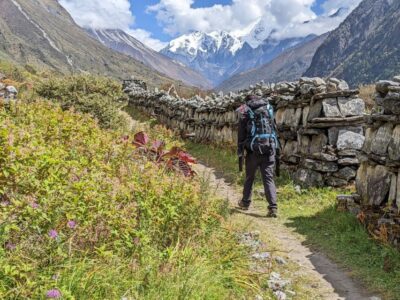
This section introduces the wooded character of the trek. Rhododendron, oak, magnolia, pine, fir, and bamboo are all part of the plant life associated with the route. The forest is more than decoration. It provides shade at lower elevations and gives the first days a sheltered feel before the valley opens farther ahead.
Lama Hotel is still relatively low compared with the highest points of the trip, but you are already gaining altitude. Walk at a steady pace and use this day to notice how your body responds. The goal is not to race ahead. You have several higher nights still to come.
Day 3: Lama Hotel to Langtang Village
The route continues upward for about five hours to Langtang Village at 3,541 meters. This is a major change in elevation, and it is one of the days when a slow rhythm pays off.
Langtang Village is special because it places you deeper into the valley and closer to the mountain environment that gives this trek its name. The forest begins to give way to more open views, and the surrounding Langtang, Ganesh Himal, and Jugal ranges become more important to the experience.
You stay in a guesthouse again. Twin-share rooms are part of the package, so this is not a private-lodge holiday. The accommodation is designed for practical rest after walking, not luxury. You should bring personal items for comfort, since showers, laundry, drinks, and other extras are not included.
More Trekking Tours in Kathmandu
- Everest Base Camp Trek – 14 Days
★ 5.0 · 1,499 reviews - Everest Base Camp Trek
★ 5.0 · 842 reviews - Everest Base Camp Trekking
★ 5.0 · 485 reviews - Annapurna Circuit Trek with Tilicho Lake
★ 5.0 · 368 reviews
Day 4: Chorkari Ri at 5,050 meters and Kyangjin Gompa
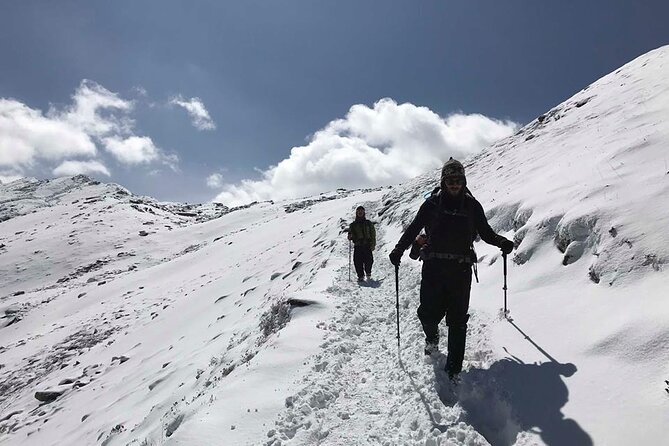
This is the hardest and most ambitious day of the route. You walk from Langtang Village toward Chorkari Ri, reaching 5,050 meters, then return toward Kyangjin Gompa. The stated walking time is about 7.5 hours.
The altitude is the key issue. At 5,050 meters, this is not a casual hill walk. Even if you are fit at home, thin air can slow you down sharply. Your guide’s role is especially important here, and the included oximeter gives the group a way to check oxygen saturation and heart rate at higher elevations.
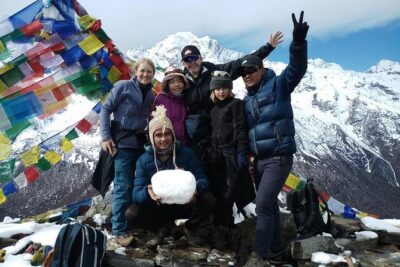
Kyangjin Gompa is the overnight base after this demanding outing. The day offers the trek’s most dramatic change in scale, with the valley opening toward high Himalayan peaks and the route reaching its maximum elevation.
There is a practical weakness in the schedule: the day is long, and the itinerary combines a major ascent with a return walk. The plan may suit strong hikers who are already comfortable at altitude, but you should not assume the label moderate means easy. If conditions or health require a change, the company has shown flexibility on past trips, including arranging a worthwhile partial route after weather and an ankle injury affected one journey.
Day 5: Return to Lama Hotel
After the high point, you retrace your route down to Lama Hotel, with about six hours of walking. Descending usually feels easier on the lungs, but tired legs can make a long downhill day uncomfortable.
This is a useful chance to appreciate the forest from a different direction. Paths that felt like a climb earlier now become a steady descent. The night at Lama Hotel also brings you back to a lower altitude before the route turns toward the Gosaikunda section.
A down jacket and four-season sleeping bag are available to use if necessary. That is valuable because mountain nights can be cold, but you should confirm the arrangement and condition of any borrowed equipment before setting out.
Day 6: Lama Hotel to Thulo Syabru
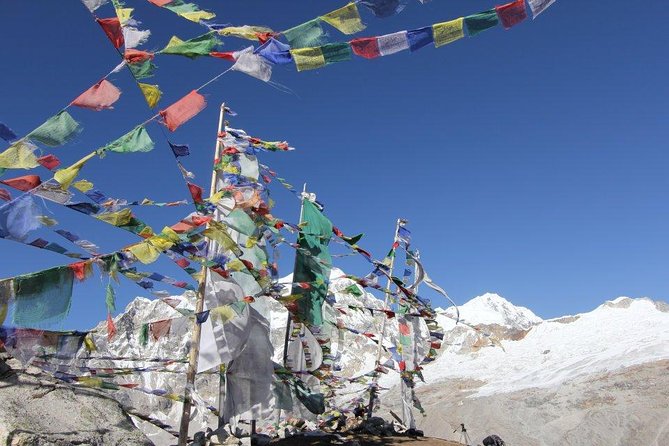
The route continues for about 5.5 hours to Thulo Syabru at 2,200 meters. This village is lower than Lama Hotel, so the day helps your body recover after the high outing at Chorkari Ri.
Thulo Syabru also marks the transition toward the Gosaikunda route. You are no longer simply returning down the Langtang Valley. The trail now turns toward a different high country route, with the next days climbing again toward Cholangpati and the lake region.
This is one reason I like the structure of the trek. You gain altitude, reach a very high viewpoint, descend, then climb again by a separate route. It is physically demanding, but it gives you more variety than an out-and-back trip focused only on Langtang Village.
Day 7: Thulo Syabru to Cholangpati
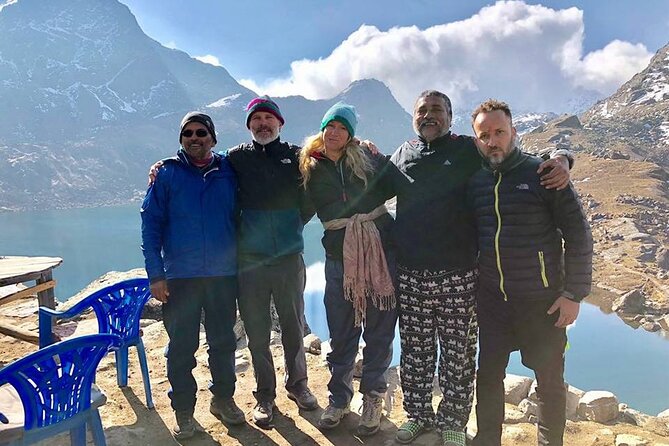
The seventh day involves about six hours of walking to Cholangpati at 3,680 meters. This is another substantial climb, so the easier elevation of the previous night should not be mistaken for the end of the altitude work.
The surroundings shift again as the route approaches the high Gosaikunda area. Forest remains part of the journey, but the higher you go, the more exposed and open the trail becomes. Cholangpati is a practical overnight stop before the long day to the lake and pass.
You continue to receive breakfast, lunch, and dinner, and you sleep in a twin-share guesthouse. Food and lodging are simple but important inclusions here. Buying every meal separately in a remote mountain area could make budgeting less predictable.
Day 8: Gosaikunda Lake and Lauribina Pass
This is the second major challenge of the trek. You visit Gosaikunda Lake, reach Lauribina Pass at 4,600 meters, and return to Cholangpati. The total walking time is about 7.5 hours.
Gosaikunda is the emotional center of the second half of the route. The lake sits in a high, stark setting that feels very different from the wooded lower valley. The pass adds another serious climb and gives the day a clear goal beyond simply reaching the lake.
The return to Cholangpati makes this a demanding out-and-back day. You should start with enough time, carry water and personal essentials, and follow your guide’s advice about pace. The route includes high elevation and can be affected by poor weather. The company states that the experience requires good weather, with a different date or full refund offered if conditions force cancellation.
Day 9: Descend to Dhunche
You walk downhill to Dhunche in about 4.5 hours. After two high-altitude days, this shorter schedule should feel welcome.
Dhunche is the road connection for the return to Kathmandu. It gives you a final night in the trekking area before the bus journey, rather than combining a long descent with the full drive back to the capital.
The descent also gives you time to think about the contrast between the two sections. Langtang offers forest, valley villages, and the high Chorkari Ri outing. Gosaikunda adds open mountain terrain, a lake, and Lauribina Pass. That combination is the main reason to choose this route over a shorter Langtang-only plan.
Day 10: Dhunche to Kathmandu
The final bus journey takes about 5.5 hours, followed by transfer to your hotel. Meals include breakfast and lunch, while Kathmandu accommodation remains outside the package.
The return road can be tiring after nine active days, so do not schedule an important flight or fixed appointment too tightly around the stated arrival time. The itinerary includes a transfer to your hotel, which is useful after the long ride.
At the end, you receive a trekking cap and a trip achievement certificate. Those are small extras, but they make a pleasant memento of a route that includes two significant high points.
What the $755 price really covers
For a 10-day guided trek, $755 offers solid value if you need the basic infrastructure arranged for you. The biggest savings come from having transport, permits, food, lodging, guide costs, taxes, and selected cold-weather equipment bundled together.
The package includes:
- Ground transportation listed in the itinerary
- Breakfast, lunch, and dinner during the trek
- Twin-share guesthouse accommodation
- An English-speaking guide
- Langtang National Park permits and TIMS
- Guide salary, insurance, food, equipment, transportation, and local taxes
- Trip map
- First-aid kit and oximeter
- Sleeping bag and down jacket for use if necessary
- Trekking cap and achievement certificate
The exclusions matter just as much. You need your own travel and rescue insurance, personal trekking gear, drinks, and money for tips. Porter service is not included, so pack with that in mind. Kathmandu meals and accommodation are also separate.
The advertised maximum group size is 25 people. That is not a small private departure, although the company has also organized smaller groups. If you want a particular group size or named guide, ask before booking.
Guide support and the human side of the trek
The company places strong emphasis on English-speaking guide support. Babu is associated with organizing Langtang trips and is praised for being responsive, flexible, and careful with arrangements. Suresh and Dambar, also written as Damber, are named guides connected with Langtang and Gosaikunda journeys.
That matters most on the high days. A guide is not simply there to point out the trail. You need help with pacing, route choices, weather changes, and decisions about continuing toward Chorkari Ri or Lauribina Pass.
Past trips have also included changes when weather or an injury affected the original plan. That suggests the right attitude for this trek is flexibility. The mountains do not care about a perfect schedule, and a sensible guide should value a safe, enjoyable route over ticking every item on paper.
Who should book this trek?
I would recommend it to someone with a moderate to strong fitness base who wants a varied Himalayan route and is prepared for high altitude. It suits people who like walking through forests but also want serious mountain days, rather than a gentle village stroll.
It can work for families, school groups, college groups, and corporate groups, but the 5,050-meter high point deserves careful thought for every participant. Group organizers should pay close attention to fitness, insurance, equipment, and the possibility that someone may need a changed plan.
You should think twice if you dislike long bus transfers, basic guesthouses, shared rooms, or repeated uphill and downhill walking. You should also avoid booking it without proper rescue insurance. The package arranges travel and rescue support, but the cost should be covered by your own insurance company.
Cancellation is flexible up to 24 hours before the start time for a full refund. After that point, refunds are not offered for late cancellations or changes. Weather-related cancellation allows a different date or a full refund.
Should you book the Langtang Panorama Trek?
Book it if you want two classic Nepal trekking areas in one 10-day plan and value having the major logistics handled for you. The route is especially appealing for its variety: rhododendron and bamboo forests, Langtang Valley, Chorkari Ri at 5,050 meters, Gosaikunda Lake, and Lauribina Pass at 4,600 meters.
Do not book it expecting an easy moderate walk. The high points and long days are serious, and the included porter service does not exist. Ask about guide assignment, group size, borrowed equipment, and the exact transport arrangement before paying.
For a prepared hiker who wants a well-supported route close to Kathmandu, the $755 package is a sensible value. The strongest reason to choose it is not one single viewpoint. It is the range of experiences packed into ten days, with practical support from a company associated with Babu, Suresh, and Dambar.
FAQ
How long is the Langtang Panorama Trek?
The trek lasts approximately 10 days, including bus transfers between Kathmandu, Syabrubesi, Dhunche, and Kathmandu.
What is the highest point on the route?
Chorkari Ri is listed at 5,050 meters. Lauribina Pass reaches 4,600 meters.
Are meals included?
Yes. Breakfast, lunch, and dinner are included during the trekking portion. Meals in Kathmandu are not included.
Is accommodation included?
Yes. Twin-share accommodation in trekking guesthouses is included. Accommodation in Kathmandu is not included.
Is a porter included?
No. Porter service is not included in the price.
What happens if bad weather cancels the experience?
If poor weather causes cancellation, you are offered a different date or a full refund. You can also cancel at least 24 hours before the start time for a full refund.
Latest treks added in Kathmandu
- Private Manaslu Circuit Trek at Himalayas★ 5.0 · 3 reviews
- Ghorepani Poonhill Trek★ 5.0 · 5 reviews
- Ghorepani Poon Hill Trek★ 5.0 · 16 reviews
- Amazing 1 Day Trekking Experience in Kathmandu Nepal★ 5.0 · 24 reviews
- Upper Mustang Trekking★ 5.0 · 2 reviews
- Upper Mustang Trekking★ 3.0 · 2 reviews
- Upper Mustang Trek★ 5.0 · 5 reviews
- Upper Mustang Trekking★ 5.0 · 4 reviews
Langtang Valley Treks, compared.

Trekking in Annapurna/Langtang/Everest/Upper Mustang regions
Read our review →
Browse the lists this tour appears in