
REVIEW · ISLAMABAD
K2 Base Camp & GONDOGORO LA TREK
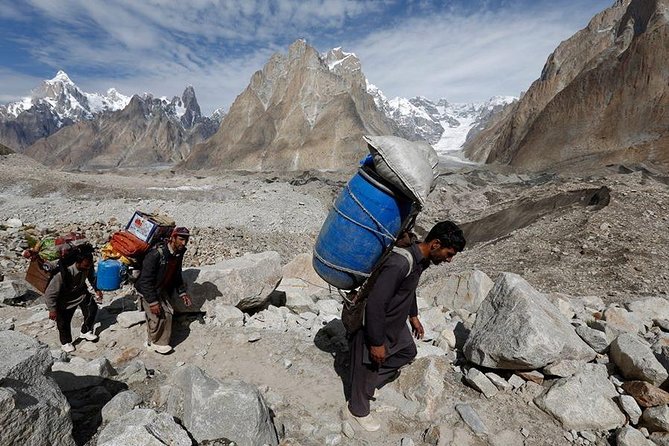
K2 Base Camp is the headline, but the real prize is the long approach through the Karakoram. You follow the Braldu Valley, cross the rough edge of the Baltoro Glacier, sleep beneath the Trango Towers, and reach Concordia, where K2, Broad Peak, and the Gasherbrum peaks fill the horizon. The final crossing of Gondogoro Pass at 5,585 meters adds a serious mountaineering feel to an already remarkable trek.
I like the way this trip combines the famous mountain views with genuine time in remote Baltistan. I also like the practical setup: road transport between Skardu, Askole, Hushe, and Skardu, a guide, and three meals each trekking day. The main caution is that 18 days is a tight schedule for a high-altitude route with long drives, glacier walking, and a demanding pass crossing. Confirm the exact route, permits, safety plan, and contingency days before paying.
Key points to know before booking
- Concordia is the visual high point: The meeting point of K2, Broad Peak, and the Gasherbrum peaks gives you one of the finest mountain viewpoints on the planet.
- Gondogoro La changes the trip: This is not simply a walk to a famous viewpoint. The 5,585-meter pass requires strong fitness, careful pacing, and good mountain support.
- The journey starts with long road days: Islamabad to Chilas, Chilas to Skardu, and later Skardu back toward Islamabad take time and can feel as demanding as the trek.
- Camping is basic but well placed: Jhola, Paiyu, Urdukas, Goro II, and Concordia put you close to the glacier and peaks, but do not expect lodge comfort.
- The cost is $2,600: That offers fair value if transport, guiding, meals, and camp logistics work as described, but permits, insurance, rescue, flights, and tips are extra.
- The group limit is 16: That is small enough for personal attention, though a full group is still sizable on a high-altitude trail.
Why K2 Base Camp is only half the story
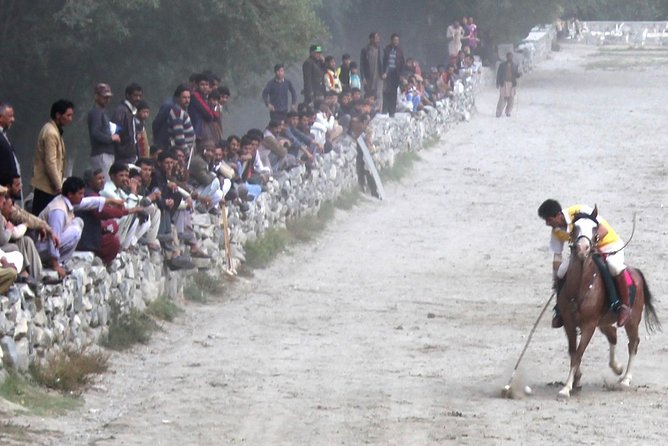
Many mountain trips promise a great view and then deliver a short walk to it. This one takes you through several days of approach travel before K2 appears in full. That slow arrival matters. You first meet the dry valleys around Chilas, the Indus River, and the high road to Skardu. Then the road gives way to a jeep track and finally to foot travel.
The route feels earned because the scenery changes gradually. Lower valleys give way to bare rock, ice, and huge granite walls. By the time you reach Concordia, the scale of the Karakoram is easier to understand. K2 is not simply a mountain in the distance. It becomes part of a wide circle of peaks, glaciers, and rough moraine.
The final goal at K2 Base Camp sits around 5,050 to 5,135 meters in the supplied itinerary. That variation is worth clarifying with the operator, but the practical point is the same: you will be walking at serious altitude. This is a physically demanding trek even though the published fitness requirement says moderate.
More Trekking Tours in the world
- Mount Etna: Trek to 3000m with cable car and 4×4
★ 4.6 · 3,823 reviews - Bali: Mount Batur Sunrise Trek With Guide and Breakfast
★ 4.8 · 3,461 reviews - From Chania: Full-Day Samaria Gorge Trek Excursion & Guide
★ 4.6 · 3,191 reviews
Islamabad to Skardu, two days of mountain roads
Day 1 is deliberately gentle. You receive an airport pickup in Islamabad, transfer to a hotel, and have time to rest. The Pakistan Monument Museum offers a short introduction to the country and its regional cultures, though admission is not included.
Day 2 takes you along the Karakoram Highway toward Chilas. The route includes Babusar Top at about 4,173 meters, assuming road and seasonal conditions allow that crossing. You will see high peaks, steep valleys, and wide changes in vegetation. Chilas is more than an overnight stop. It is a gateway to the upper mountains, with local markets and ancient rock carvings in the area.
The drive is scenic, but do not underestimate it. Road travel in this region takes much longer than a map suggests. You spend hours in vehicles, and the road conditions may make the day tiring. That is part of the price of reaching a remote trailhead.
On Day 3, the road continues toward Skardu beside the Indus River. The confluence of the Karakoram, Himalaya, and Hindu Kush mountain systems is a memorable geographic stop. The Nanga Parbat viewpoint gives you a look at the 8,126-meter peak, often called the Killer Mountain.
Skardu is the last useful place for final checks. You receive a pre-trek briefing, inspect your gear, and may have time for the bazaar or nearby attractions if the schedule permits. Treat this day as preparation rather than a sightseeing day. If you need missing equipment, this is your best chance to deal with it.
Askole and the first camps at Jhola and Paiyu
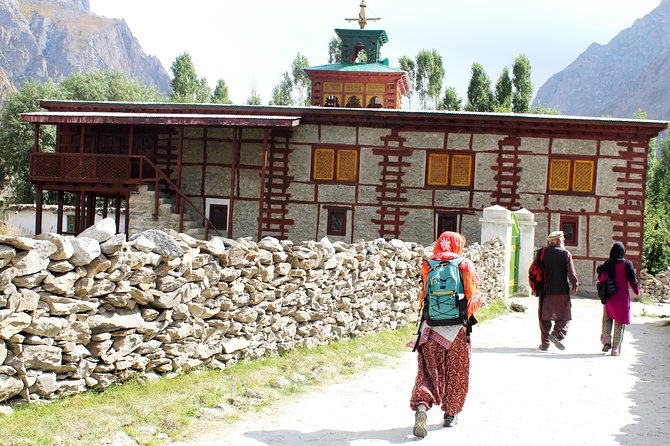
Day 4 uses a jeep to reach Askole, at roughly 3,050 meters. The road becomes rougher as you leave Skardu, passing remote settlements and steep valleys. Askole is the last village before the walking route, so the change in mood is immediate. From here, the trip is about feet, pack animals, camp kitchens, and weather.
The first trekking day leads from Askole to Jhola, around 3,200 meters. Allow five to six hours. The trail follows the Braldu Valley, with rocky paths, grassy sections, river views, and mountain slopes. The Biafo Glacier appears in the wider setting, though this is not yet the full glacier experience.
Day 6 continues to Paiyu at about 3,450 meters. You again walk for five to six hours, gaining height through a rough valley of streams, rocks, and alpine meadows. Paiyu is important because Day 7 is set aside for rest and acclimatization.
Use that rest day well. Walk only enough to loosen your legs, drink regularly, and let your body adjust. The schedule gives you one fixed acclimatization day before the route becomes more exposed and demanding. If you arrive tired from the road journey, Paiyu is not a day to waste on unnecessary wandering.
Baltoro Glacier and the Trango Towers
Day 8 is when the scenery becomes unmistakably Karakoram. From Paiyu, you walk toward Khoburtse at about 3,800 meters. The five to six-hour route brings you onto the rough moraine beside the Baltoro Glacier.
A glacier here is not a smooth river of blue ice. Expect rock debris, broken ice, glacial streams, and uneven ground. You need sturdy footwear and a steady pace. The trail can feel slow because every step requires attention.
The Trango Towers provide the great visual reward. Their steep granite faces rise sharply above the glacier, giving the day a dramatic focus. You do not need technical climbing experience to appreciate them, but the setting reminds you that this is serious climbing country.
Day 9 takes you to Urdukas at around 4,050 meters. The walking time remains five to six hours, with more moraine, streams, and glacial features. Urdukas is prized for its sunrise and sunset views over the Trango Cathedrals. If the weather is clear, this may be one of the most beautiful camp locations of the entire route.
The itinerary then moves to Goro II on Day 10, at approximately 4,300 meters. You spend another five to six hours beside the Baltoro Glacier. The terrain is stark and open, with ice, rock, and high peaks in every direction. At this point, the route may feel repetitive underfoot, but the scale keeps changing as different peaks come into view.
Another trail to compare in the world:
- Mount Etna: Summit Crater Trek with Cable Car
★ 4.8 · 1,875 reviews - La Palma: Tajogaite Volcano Guided Trek
★ 4.8 · 1,810 reviews - Etna: summit craters trekking with volcano guide 3350mt
★ 4.7 · 1,712 reviews - From Rethymno: Samaria Gorge Full-Day Trek, Pickup & Guide
★ 4.5 · 1,610 reviews
Concordia and the walk to K2 Base Camp
Day 11 leads from Goro II to Concordia at about 4,600 meters. This is another five to six-hour glacier approach, but the reward is enormous. Concordia offers wide views of K2, Broad Peak, and the Gasherbrum group. It is often described as a throne room of the mountain gods, and the phrase fits the setting better than most mountain slogans.
Give yourself time to look around rather than treating Concordia as just another camp. The value is not only the summit count. It is the way the peaks surround you, with the Baltoro and Godwin-Austen glaciers forming the route through the middle of them.
Day 12 is the out-and-back journey to K2 Base Camp. The walk from Concordia takes about five to six hours, followed by a return to camp. The route follows the Godwin-Austen Glacier, with K2 becoming the main focus.
This is a long day at high altitude. The return walk matters just as much as the approach, so save energy early. The itinerary gives you time at the base camp, but not an overnight stay there. You return to Concordia, which makes the day more manageable from a camp and logistics point of view.
Gondogoro La, the hardest and most rewarding section
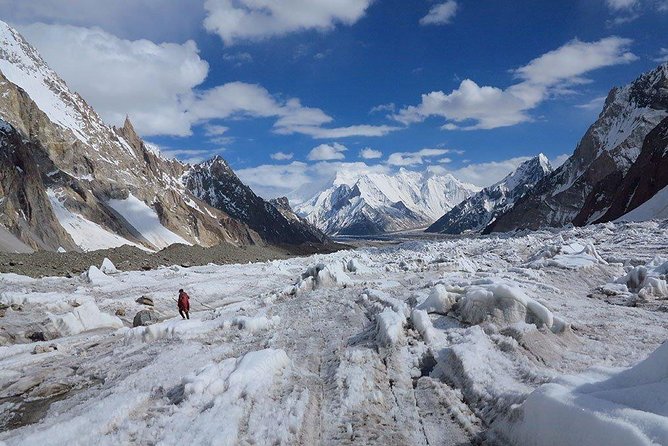
The supplied schedule contains a detail you should clarify. Day 13 refers to leaving Ali Camp for Gondogoro La High Camp, although the previous day ends at Concordia. Ask the operator to explain the exact connection, camp names, and walking hours before departure. A clear briefing is especially important for this section.
The route toward the high camp reaches roughly 4,900 meters and involves five to six hours of rocky, glacial ground. The high camp is a staging point for the pass rather than a comfortable destination. You sleep high, rest as much as possible, and prepare for an early start.
Day 14 is the defining day: Gondogoro Pass at 5,585 meters. From the top, the stated views include K2, Broad Peak, Gasherbrum I, II, and IV, and Masherbrum. The descent leads toward Khespang, with four to five more hours on rocky and alpine terrain.
The operator describes the trip as suitable for people with moderate fitness, but I would judge this pass more strictly. You should be comfortable with long uphill days, high altitude, uneven ground, and a demanding descent. Ask what safety equipment, staff support, weather rules, and alternate plans are used for the crossing. The supplied details do not specify those points, and you should not leave them vague.
From Khespang to Hushe and back to Skardu
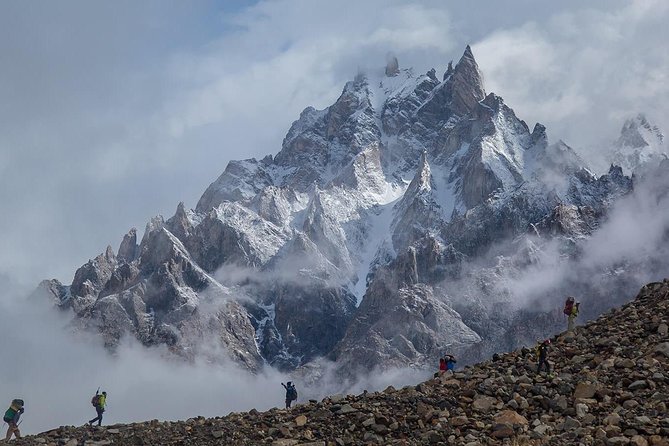
After the pass, the scenery changes quickly. Day 15 goes from Khespang to Saicho in six to seven hours, with a stop near Laila Peak Base Camp. Laila Peak rises to about 6,096 meters and has a distinctive pyramid shape.
You descend through alpine meadows, streams, and greener valleys. This change is welcome after several days of bare rock and ice. Saicho, at about 3,200 meters, provides a lower and calmer camp before the final walk out.
Day 16 takes four to five hours to reach Hushe. The route passes fields, villages, and mountain views, including Masherbrum and K6. After the walk, a four to five-hour vehicle journey returns you to Skardu.
This is a satisfying finish because you see how quickly the Karakoram changes with altitude. The trip begins in settled valleys, moves into glacier country, then returns through cultivated ground and villages. You gain more than a summit view. You see how people live around these high valleys and how sharply the environment changes from one day to the next.
What $2,600 covers and what it does not
At $2,600, the tour offers a useful package for a remote trek. Transport between Skardu, Askole, Hushe, and Skardu is included, along with an English or Spanish-speaking guide and three meals per trekking day. The group limit is 16, which helps keep the operation manageable without promising a private trip.
The price does not include domestic or international flights. You also pay separately for personal insurance, heli rescue if needed, Gilgit-Baltistan and Central Karakoram National Park trekking permits, and staff gratuities.
Those exclusions can change the real budget. Insurance should specifically address high-altitude trekking and emergency evacuation. Helicopter rescue can be arranged for a fee, but that is not the same as having rescue included. Ask for current permit charges and a full list of extra costs.
The value is strongest if you want one company handling the long road transfers, camps, food, and guiding. It is weaker if you expect hotels, flexible rest days, or a fully inclusive price. The meals and camp logistics matter here because buying supplies and organizing transport in such a remote region would be difficult on your own.
Guides, group size, and the practical feel
The operator supplies live English and Spanish-speaking guides. Past feedback specifically names a guide called Mr Nabi, but you should ask who will lead your departure and whether the same guide stays with you throughout.
The maximum group size is 16. That is not tiny, but it is still small enough for the guide to keep track of pace, meals, and camp routines. If your group fills, expect a shared experience rather than a private one.
The strongest practical praise attached to this company concerns guidance, transport, food, and staff care. That matches the areas that matter most on this route. Still, ask direct questions about porter support, luggage limits, sleeping arrangements, toilets, showers, communication, weather delays, and the Gondogoro crossing. These details are not supplied, and they can shape your experience as much as the mountain views.
The trip has free cancellation up to 24 hours before the start time. Inside that window, the payment is not refunded, and last-minute changes are not accepted. Since international flights and permits are separate, check each booking’s cancellation rules before making final arrangements.
Who should book this trek
You should consider this trip if you want a long, remote mountain journey rather than a simple sightseeing tour. It suits fit walkers who are comfortable with basic camps, long drives, glacier moraine, and altitude. The combination of K2 Base Camp and Gondogoro La gives you both a famous destination and a demanding route through less settled country.
It is less suitable if you want soft beds, short walking days, or a relaxed holiday. It may also be the wrong choice if you have not prepared for altitude or if you need a large margin for bad weather. The itinerary is full, and there is little obvious spare time.
Should you book K2 Base Camp and Gondogoro La?
I would book this trek if your priority is the full Karakoram experience: K2, Concordia, the Baltoro Glacier, Trango Towers, and a high pass crossing in one carefully arranged journey. The 4.9 rating from 10 recorded reviews and a 100 percent recommendation figure support confidence in the operator’s guiding, transport, food, and organization.
Before booking, get written answers about the Day 13 camp sequence, trekking permits, rescue cover, staff tips, equipment for Gondogoro La, and the precise total cost. If those answers are clear, $2,600 can be a sensible price for a remote and logistically complex trek. If you want an easier K2 experience, choose a Concordia and K2 Base Camp route without Gondogoro La.
FAQ
How long is the K2 Base Camp and Gondogoro La trek?
The experience lasts approximately 18 days, including arrival in Islamabad, road travel to Skardu, the trek to K2 Base Camp, the Gondogoro La crossing, the return to Skardu, and the drive back to Islamabad.
What is included in the $2,600 price?
The price includes transport between Skardu, Askole, Hushe, and Skardu, an English or Spanish-speaking guide, and three meals per trekking day.
Are flights and trekking permits included?
No. Domestic and international flights are not included. Gilgit-Baltistan and Central Karakoram National Park trekking permits are also listed as extra costs.
What level of fitness is required?
The activity states that participants should have a moderate level of physical fitness. In practical terms, you should be ready for five to seven-hour walking days, high altitude, rocky and glacial ground, and the 5,585-meter Gondogoro Pass.
How many people can join the group?
The maximum group size is 16 people.
Can I cancel for a full refund?
Yes, if you cancel at least 24 hours before the experience start time. Cancellations or changes made within 24 hours are not refunded or accepted.
Latest treks added in the world
- 5 Days Desert Trekking from Marrakech★ 5.0 · 16 reviews
- 3 days Toubkal Trek from Marrakech★ 5.0 · 4 reviews
- Elite Experience Atlas Mountains Day Trekking★ 5.0 · 7 reviews
- 3 Days Berber Villages Trek – Authentic Atlas Mountain Experience★ 5.0 · 4 reviews
- Morocco Desert Trek 4 Days: 2 days on foot in Morocco★ 5.0 · 2 reviews
- Atlas Mauntains and 3 Valleys Trek★ 5.0 · 6 reviews
- Atlas Mountains Valley Trek – 3 Days★ 5.0 · 29 reviews
- 5-day Jebel M’goun trek★ 5.0 · 2 reviews
Trekking Tours, compared.
Mount Etna: Trek to 3000m with cable car and 4×4
Read our review →
Mount Batur Sunrise Trek With Guide and Breakfast
Read our review →
From Chania: Full-Day Samaria Gorge Trek Excursion & Guide
Read our review →
Etna: summit craters trekking with volcano guide 3350mt
Read our review →
From Rethymno: Samaria Gorge Full-Day Trek, Pickup & Guide
Read our review →
Mount Etna Trekking Tour Beyond the Tourist Trails
Read our review →