
REVIEW · KATHMANDU
Explore The Beauty Of Langtang Valley In 8-Days Trek
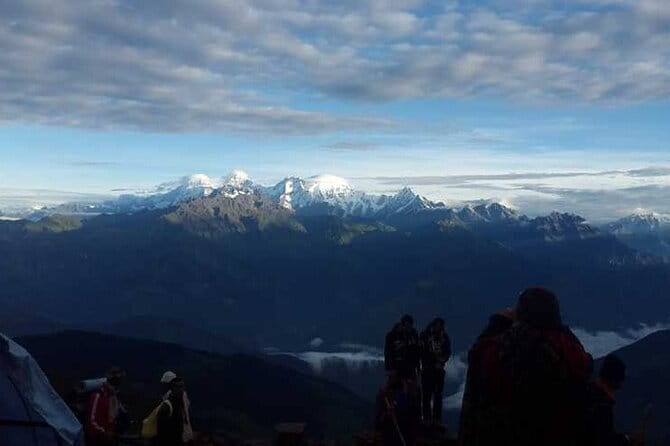
Langtang Valley gives you a proper Himalayan trek without the long flight connections or extended time away from Kathmandu. In eight days, you travel by road to Syabrubesi, walk through forest and mountain villages, reach Kyanjin Gompa at 3,870 meters, and have the option to climb Tserko Ri at 4,984 meters. The route is scenic from the first day, with rivers, waterfalls, suspension bridges, glaciers, and big views of Langtang Lirung.
I like the small guide-to-trekker ratio, with one licensed guide assigned for up to five people, and I like the flexible pace. That matters on a high-altitude route, where stopping for breakfast, photos, or a breather is not wasted time. The main drawback is the road journey: six hours each way in a shared jeep can be tiring, and the trek still includes several long walking days.
Key details before you book
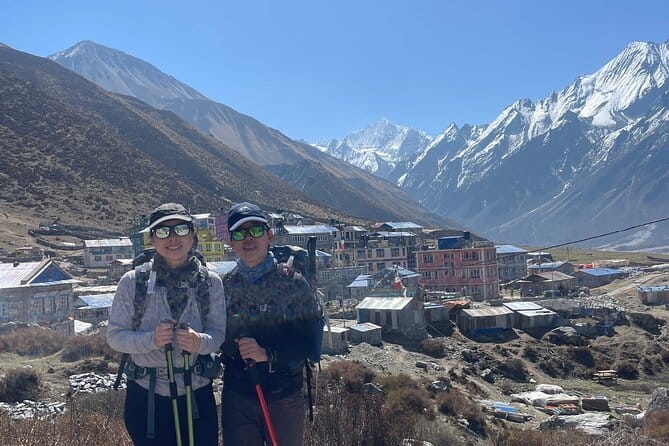
- Kyanjin Gompa is the high point of the main route: You reach 3,870 meters on Day 4 and spend the next day exploring from there.
- Tserko Ri is optional: The summit reaches 4,984 meters and requires a demanding seven-hour day, so you can choose based on energy and conditions.
- Meals and teahouse lodging are included: Breakfast, lunch, dinner, and some seasonal fruit are provided during the trek.
- The guide team is built for small groups: One licensed English-speaking guide is included for up to five trekkers.
- The route works for first-time high-altitude trekkers: You are encouraged to walk at your own pace, with regular breaks and a flexible itinerary.
- Kathmandu hotel stays cost extra: Airport pickup and drop-off are included, but three-star to five-star Kathmandu accommodation is an added option.
Why Langtang works well in eight days
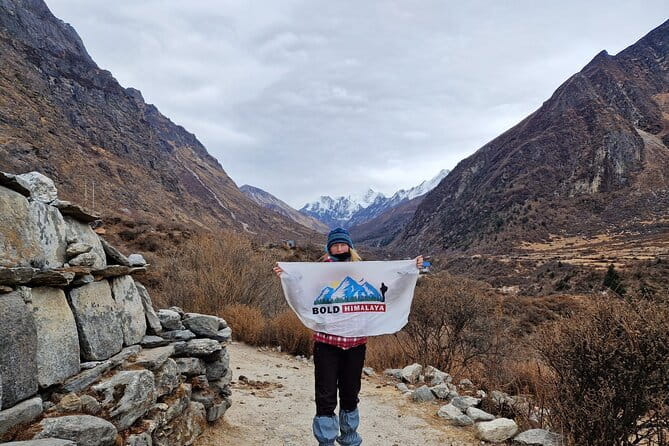
This trek packs a lot into a short schedule. You spend two days reaching the upper valley, one day exploring around Kyanjin Gompa, then retrace your route to Syabrubesi before returning to Kathmandu.
That out-and-back design has a practical benefit. You see the valley from two directions, and you do not need to arrange a complicated crossing or internal flight. The tradeoff is that Days 6 and 7 repeat much of the trail from the way up.
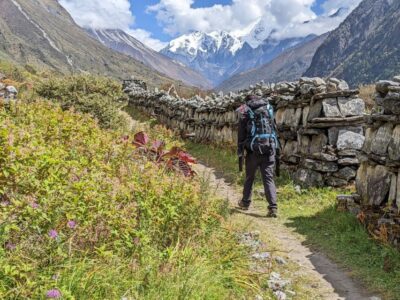
The route also gives you a good mix of walking conditions. Lower sections pass through forest and beside rushing rivers. Higher up, the valley opens into broad mountain views, meadows, glaciers, and settlements shaped by Himalayan culture. Your guide is there to explain the natural and cultural details rather than simply point the way.
The trip is described as suitable for beginners and experienced trekkers. That does not mean it is effortless. You still climb to nearly 4,000 meters, and Tserko Ri goes close to 5,000 meters. The useful point is that you are not forced to take the optional summit, and the walking schedule can be adjusted with extra pauses.
More Langtang Treks in Kathmandu
- Langtang Valley Trek
★ 5.0 · 140 reviews - Langtang Valley Trek
★ 5.0 · 61 reviews - 8 Days Tour in Langtang Valley Trek
★ 5.0 · 45 reviews
Day 1: Six hours by jeep to Syabrubesi
Your first day is mostly a road journey. After meeting the Bold Himalaya team, you travel from Kathmandu to Syabrubesi in a shared jeep, a trip of about six hours.
The road gives you early views of mountain valleys, villages, rivers, and waterfalls. It also gives you a clear taste of Nepal’s mountain transport. A shared jeep is useful because it reaches the trailhead without adding another flight or transfer, but it is not the most restful part of the trip.
Syabrubesi is your starting point for the walking days. Since no trekking is scheduled on Day 1, you have time to settle in and prepare for the morning. Keep a small day bag accessible during the drive, with water, snacks, a jacket, and anything you may need before arriving.
Pickup and drop-off in Kathmandu are included. The stated meeting point is Tribhuvan International Airport, and the operator asks you to send a passport copy after booking so the necessary documents can be prepared.
Day 2: Forest trails and rivers on the way to Lama Hotel
After breakfast, you begin walking from Syabrubesi to Lama Hotel at 2,380 meters. The trek takes about five and a half to six hours.
The day brings suspension bridges over the Bhote Koshi and Langtang rivers, plus long stretches through forest. This is a good introduction to the route because you get moving gradually rather than facing the highest altitude at once.
The climb is steady, so beginners should resist the urge to race early in the day. The operator specifically recommends walking at your own pace to help your body adjust to high mountain conditions. Your guide can arrange breaks, and regular refreshments are part of the support offered.
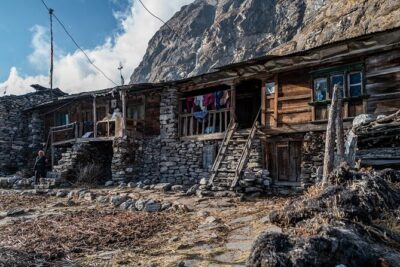
Accommodation is in teahouses along the route. These are practical mountain lodgings rather than city hotels. They give you a place to eat, sleep, and rest near the trail, while keeping the trek focused on the valley itself.
Day 3: Six hours through the Langtang Valley to Langtang Village
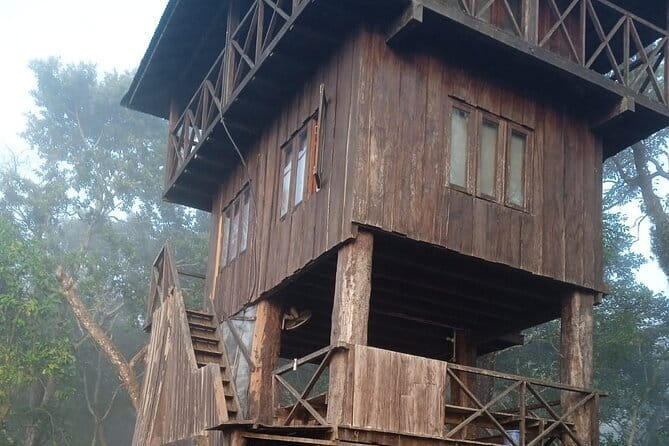
The trail from Lama Hotel to Langtang Village rises to 3,430 meters and takes about six hours. Forest and meadows gradually give way to more open mountain scenery.
This is one of the more important days for pacing. You gain a significant amount of height, and the route may feel harder than the distance suggests. Take the extra photo stops offered by the flexible schedule, drink regularly, and tell your guide if you need to slow down.
Langtang Village is an important overnight stop because it places you well inside the upper valley before the final approach to Kyanjin Gompa. The setting becomes more dramatic as the mountains close in around the trail.
Your guide adds value here by explaining Himalayan nature and culture along the route. The trip is not just a march from one lodge to the next. You have someone with local experience who can help you understand what you are seeing and adjust the day when needed.
More Trekking Tours in Kathmandu
- Everest Base Camp Trek – 14 Days
★ 5.0 · 1,499 reviews - Everest Base Camp Trek
★ 5.0 · 842 reviews - Everest Base Camp Trekking
★ 5.0 · 485 reviews - Annapurna Circuit Trek with Tilicho Lake
★ 5.0 · 368 reviews
Day 4: A shorter climb to Kyanjin Gompa
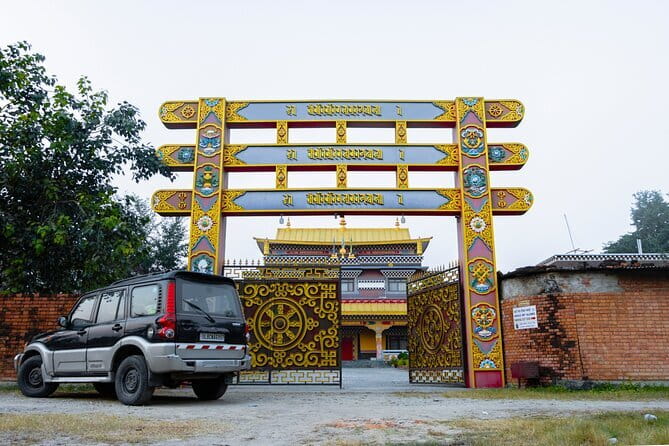
The walk from Langtang Village to Kyanjin Gompa takes about four and a half hours and reaches 3,870 meters. Compared with the previous day, it is shorter, which gives you more time to look around after arrival.
The route is described as especially scenic, with wide views of Langtang Lirung and Gangchenpo. At this height, the valley feels more open and exposed, with mountain walls and glacier scenery replacing much of the lower forest.
Kyanjin Gompa is the base for the trip’s best day. You do not have to leave immediately after arriving, so use the shorter walking schedule to rest and get ready for the next morning.
The main caution is altitude. You are now close to 4,000 meters, and even a short walk can feel demanding. The flexible schedule is useful here, but you should still follow your guide’s advice and avoid treating Day 4 as a race.
Day 5: Choose your challenge at Tserko Ri
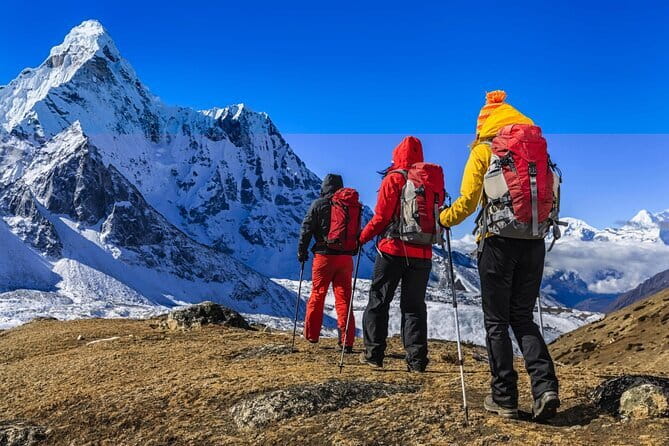
Day 5 is the most flexible and potentially the hardest part of the trek. You explore around Kyanjin Gompa, with an optional climb to Tserko Ri at 4,984 meters.
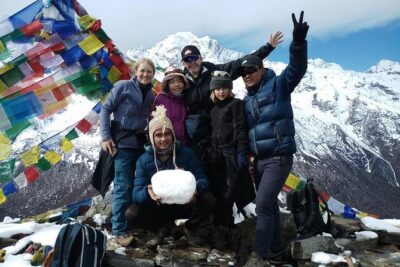
The summit offers a 360-degree Himalayan view, making it the natural goal for stronger trekkers who want a serious high-altitude day. The full outing is listed at about seven hours, so it is not a quick viewpoint walk.
You do not need to climb Tserko Ri to enjoy the day. The itinerary allows you to remain around Kyanjin Gompa and take in the mountain views at a gentler pace. That option makes the trip more suitable for people with different fitness levels traveling together.
I see this choice as one of the trip’s strongest features. You can aim high without making the summit a requirement. If you are new to altitude, had a difficult Day 4, or simply prefer a slower morning, staying lower is the sensible call.
The tour information does not provide a separate acclimatization day beyond this exploration day, so your own response to altitude matters. Keep the decision flexible. A summit is worthwhile only if you feel well enough to make the climb safely.
Day 6: Retracing the trail to Lama Hotel
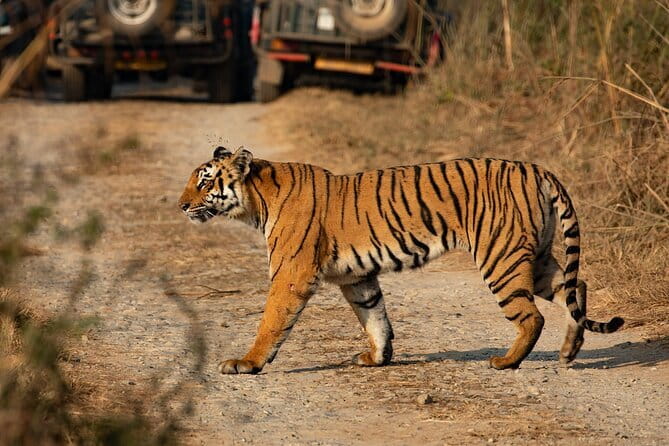
You return from the upper valley to Lama Hotel in about six hours. The route follows the trail back through the valley, bringing familiar views from a different angle.
Downhill walking is not always easy. It can be kinder to your breathing, but it can still test your knees and feet after several days on the trail. Use your walking pace and breaks wisely, especially if you completed the Tserko Ri option the day before.
This is also a good day to notice details missed on the ascent. The rivers, glaciers, forests, and villages look different when you are no longer concentrating on the climb. Your guide can continue sharing information about the area and help manage the group’s pace.
Day 7: Five hours back to Syabrubesi
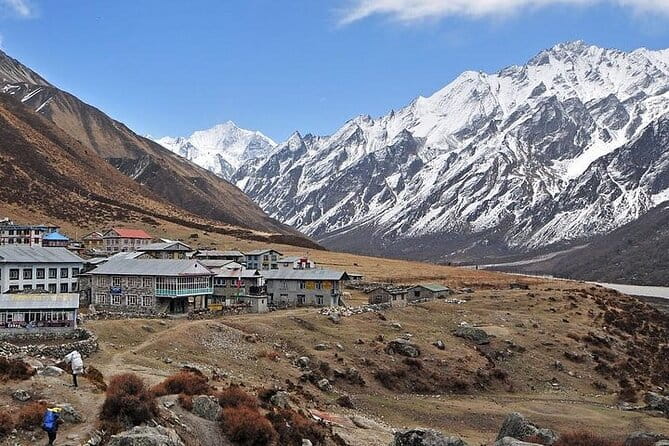
The final walking day takes roughly five hours from Lama Hotel to Syabrubesi. You pass through forest and rolling hills, with rivers providing a steady soundtrack along the way.
After the higher sections, this lower route may feel warmer and more familiar. It is still a proper walking day, so do not assume the trek is finished until you reach the road head.
Syabrubesi is where you return to road transport. The night also gives you a natural point to look back at the route, from the first suspension bridges to Kyanjin Gompa and, for some trekkers, Tserko Ri.
Day 8: Six hours back to Kathmandu
The final day is another road journey of about six hours. You return to Kathmandu through mountain towns and valleys, with time to reflect on the trek.
The trip includes Kathmandu pickup and drop-off, but city accommodation is not part of the basic trek package. You can arrange three-star, four-star, or five-star hotel and resort accommodation at an extra cost.
A cultural show and farewell dinner are included, adding a social finish to the mountain portion of the trip. This is a small touch, but it gives you a chance to end the trek with the guide team rather than simply being dropped at a hotel.
What the $270 price really covers
At $270 per person, this trek offers solid value if you want the main practical costs handled in one package. The price includes teahouse accommodation during the trek, a licensed guide, guide salary and insurance, meals, seasonal fruit, and transportation pickup and drop-off.
You also receive breakfast, lunch, and dinner during the mountain portion. The stated inclusions list seven breakfasts, seven dinners, and eight lunches. That suggests meals are covered across the trek and return travel day, though you should confirm the exact meal schedule before booking if you have a special diet.
Personal expenses and bar bills are not included. You should also expect to pay for extras you choose along the way, though the supplied information does not list specific charges.
The strongest value is the guide support. One English-speaking guide is included for up to five trekkers, along with the guide’s food, lodging, salary, and insurance. That small setup is more useful than a large group when you are adjusting to altitude or need a slower pace.
Kathmandu hotel accommodation is extra, so the headline price is not the full cost of an entire Nepal holiday. Still, for an eight-day trek with meals, teahouses, guide support, and road transfers included, the package is priced for people who want a straightforward route without arranging each piece alone.
The personal service that matters on a first trek
The strongest personal touch comes from the operator’s willingness to help with practical problems. Sobit is identified as a warm point of contact, and one booking included help after luggage failed to arrive in Kathmandu. He even accompanied the customer while shopping in Thamel for needed items.
That kind of support matters more than polished promises. Lost luggage can turn the first day in Nepal into a mess, especially before an eight-day trek. Having a local contact who helps you solve the problem is a real advantage.
Garap is also named as a guide who supported a first solo high-altitude trek. The useful takeaway is not simply the name. It is that the guiding style is intended to be patient and supportive for someone new to high altitude.
You should still ask who your specific guide will be before departure. The information confirms English-language guiding, but it does not guarantee that Sobit or Garap will lead every departure.
Who should book this Langtang trek
I would consider this trip a good fit for:
- First-time high-altitude trekkers who want a guide and a clear route
- Solo trekkers who prefer private group arrangements and local support
- Friends or couples who want a flexible pace
- Stronger hikers who want the option of a 4,984-meter summit
- People who value included meals and teahouse lodging
- Trekkers who have eight days available and do not want a longer Himalayan route
It may be less suitable if you dislike long shared-vehicle journeys, need private luxury accommodation throughout, or want a trek with no repeated trail. It is also not a good idea to assume that beginner-friendly means low effort. The altitude and six-hour walking days still demand preparation.
Because the trip is private, only your group participates. Group discounts are available, and the itinerary can be customized to suit your interests and experience level. The exact limits of that customization are not specified, so ask before booking if you want major changes.
Practical tips for making the trip easier
Get a local SIM card when you arrive, as the operator recommends. You should also check your phone before leaving Kathmandu, since contact with your guide and team is more useful when your device works properly.
Pack for changing conditions and keep important items with you during the road transfer. If your main luggage is delayed, the experience with Sobit shows that local help may be available, but you will be better off with essential clothing and personal items in your carry-on.
Use the breaks. The flexible schedule is not only for photos. It lets you eat breakfast at a sensible pace, catch your breath, and adjust to the height without feeling pushed.
The experience offers free cancellation with a full refund if you cancel at least 24 hours before the start time. Cancellations or changes made within 24 hours are not refunded or accepted, based on local time.
Should you book it?
I would choose this trek if you want a compact Langtang route with real guide support, included mountain meals, and the freedom to decide about Tserko Ri once you see how you feel at altitude.
The best reasons to book are the small guide setup, the flexible pace, the included practical costs, and the personal help available from contacts such as Sobit. The main cautions are the six-hour jeep rides, repeated trail on the return, extra Kathmandu hotel costs, and the physical demands of walking near 4,000 meters.
If you are new to Himalayan trekking, walk steadily and treat the summit as optional. If you do that, this eight-day plan gives you a sensible first taste of Langtang Valley without forcing you into a more demanding itinerary than your body can handle.
FAQ
How long is the Langtang Valley trek?
The experience lasts approximately eight days, including road travel between Kathmandu and Syabrubesi.
Where does the trip start?
The stated meeting point is Tribhuvan International Airport in Kathmandu, Nepal.
Is pickup and drop-off included?
Yes. Pickup and drop-off are included for the Kathmandu portion of the trip.
What accommodation is provided?
Accommodation in teahouses along the trekking route is included. Three-star to five-star hotels and resorts in Kathmandu are available at an extra cost.
Are meals included?
Yes. Breakfast, lunch, and dinner are included during the trek, along with some seasonal fruit. The inclusions list seven breakfasts, seven dinners, and eight lunches.
Is Tserko Ri required?
No. The climb to Tserko Ri at 4,984 meters is optional. You can explore around Kyanjin Gompa instead.
How many people can one guide support?
One licensed trekking guide is included for up to five trekkers. The activity is private, so only your group participates.
Is this trek suitable for beginners?
Yes, the itinerary is designed for beginners as well as experienced trekkers. Beginners are advised to walk at their own pace to adjust to high mountain conditions.
What is not included in the price?
Bar bills and personal expenses are not included. Kathmandu hotel accommodation is also an extra-cost option.
Latest treks added in Kathmandu
- Private Manaslu Circuit Trek at Himalayas★ 5.0 · 3 reviews
- Ghorepani Poonhill Trek★ 5.0 · 5 reviews
- Ghorepani Poon Hill Trek★ 5.0 · 16 reviews
- Upper Mustang Trekking★ 3.0 · 2 reviews
- Amazing 1 Day Trekking Experience in Kathmandu Nepal★ 5.0 · 24 reviews
- Upper Mustang Trekking★ 5.0 · 2 reviews
- Upper Mustang Trek★ 5.0 · 5 reviews
- Upper Mustang Trekking★ 5.0 · 4 reviews
Langtang Valley Treks, compared.

Trekking in Annapurna/Langtang/Everest/Upper Mustang regions
Read our review →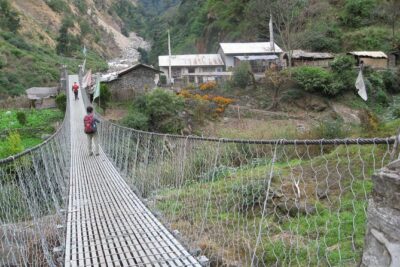
Browse the lists this tour appears in