
REVIEW · SAPA
Mountain views and villages trek – 1 Day
The best part of this Sapa trek is the quick change from town streets to Hmong mountain paths. After a 1-kilometer uphill walk, you reach views of Fansipan, Sapa, and the rice terraces of Muong Hoa Valley, then continue down toward Ham Da village and other rural communities.
I like the small private group, limited to two people, and the useful all-in price: lunch, village fees, a bottle of water, and transport back to Sapa are covered. The main caution is fitness. The route uses local mountain trails, and one previous guest called it suitable only for people accustomed to hiking.
Key points to know before booking
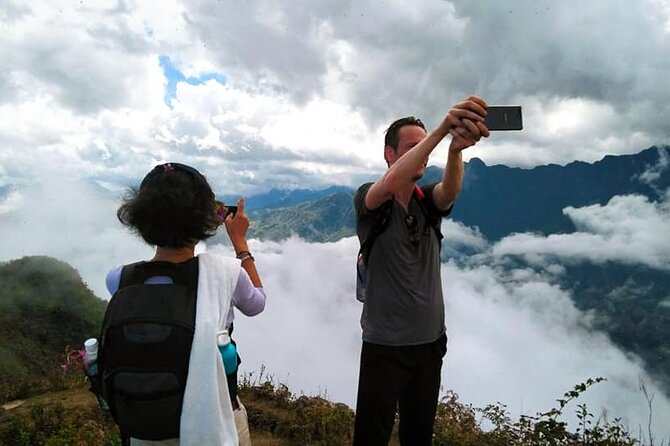
- Fansipan viewpoint: Walk about 1 kilometer uphill for views toward Vietnam’s highest mountain and Muong Hoa Valley.
- Hmong village life: Ham Da gives you a close look at farming, animals, houses, and local marriage customs.
- Private format: The group is capped at two people, so the pace and conversation can feel personal.
- Lunch included: A restaurant meal is provided, with vegetarian food available.
- Five-and-a-half-hour outing: The tour begins at 9 am and returns to the Sapa meeting point.
- Weather matters: Poor conditions can lead to a different date or a full refund.
From Sapa Church to the first mountain view
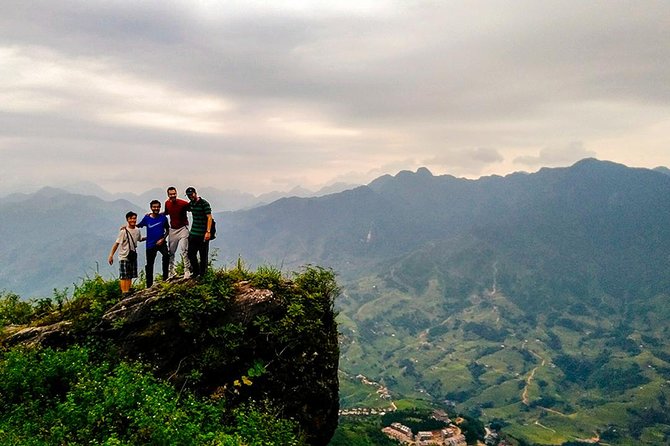
You meet your guide at 9 am at Sapa Church, officially listed at P. Hàm Rồng in central Sapa. Pickup is also offered from a Sapa hotel, which saves you a short walk and keeps the morning simple.
After a brief introduction, the route begins with an uphill walk of about 1 kilometer on a small mountain trail. This is not a flat stroll for taking a few photos before lunch. It is the part that sets the tone for the day, and you should expect a steady climb underfoot.
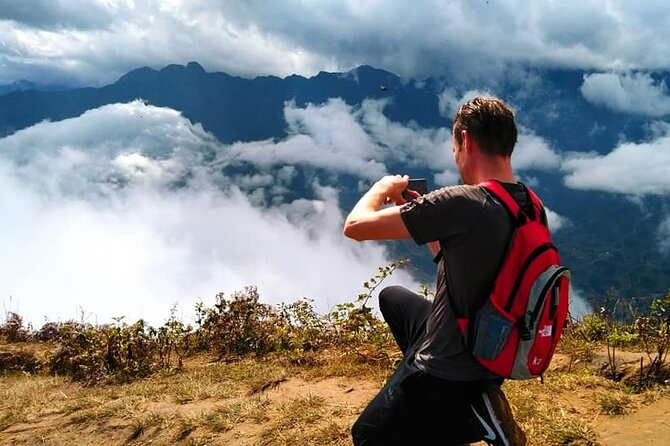
The reward is a viewpoint with wide views toward Fansipan, the town of Sapa, and Muong Hoa Valley. At 3,143 meters, Fansipan is the highest mountain in Vietnam and one of the highest peaks in Asia. The view is not guaranteed to be clear, since this outing depends on good weather, but the route gives you a strong chance to see the main natural sights around Sapa in a short amount of time.
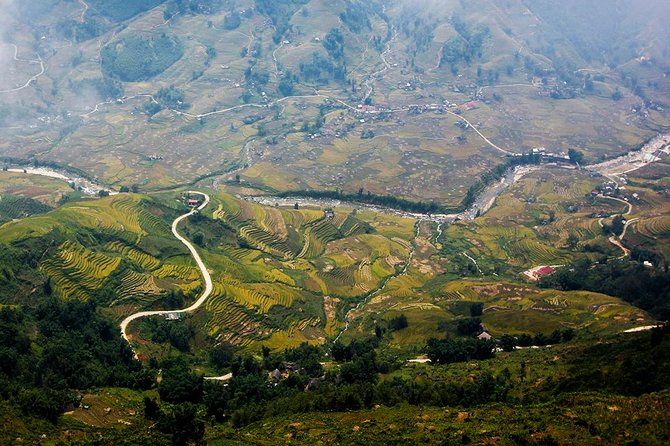
I like the way this opening section makes the geography easy to understand. From above, you can connect the town, the valley, the river, and the stepped rice fields instead of seeing them as separate stops on a map.
More one-day treks in Sapa
- From Sapa: 1-Day Guided Trek to Lao Chai & Ta Van with Lunch
★ 4.9 · 416 reviews - Sapa 1 Day Long Trek: Trek to Hau Thao and Sa Seng Villages
★ 4.6 · 344 reviews - 1-day Authentik trek & Panorama valley views
★ 5.0 · 189 reviews
Muong Hoa Valley from above
Muong Hoa Valley is one of the visual highlights of the Sapa area. Its rice terraces spread across the mountain slopes, shaped over time for farming in difficult terrain. The viewpoint gives you a broad look at these fields, as well as the largest river and valley in Sapa according to the route description.
The scenery changes with the season and the weather. The information provided for this tour does not promise a particular crop stage or color, so you should not book expecting one fixed postcard view. Clear skies will help with Fansipan and the valley, while mist may soften or partly hide the mountains.
That uncertainty is normal in Sapa. The practical point is to bring shoes with a reliable grip and clothes that can handle changing mountain conditions. The tour includes one small bottle of water, but extra drinks are your responsibility.
This is also where the trip earns much of its $45 price. You are not paying only for a walk. You get a local guide, village entry fees, lunch, and return transport, while also reaching a viewpoint that would be harder to connect with several rural villages on your own in half a day.
Walking down toward Ham Da village
After the viewpoint, the route continues down the mountainside toward Ham Da, a village of the Black Hmong minority. The descent may feel easier than the first climb, but downhill trails can still put strain on knees and ankles. The route uses local mountain paths rather than a clearly described paved walking track, so I would not choose this outing if you want a gentle, fully accessible walk.
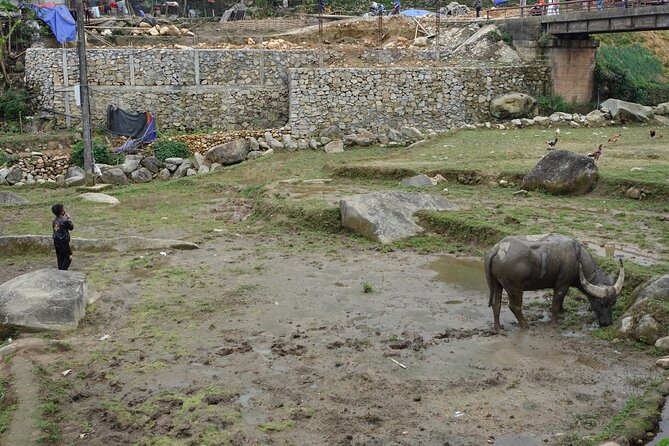
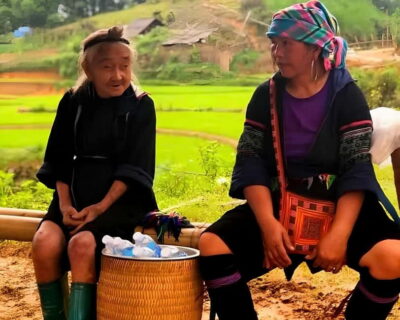
Ham Da is important because the visit focuses on daily life, not only scenery. You can learn about farm animals, farming methods, house-building techniques, and Hmong marriage traditions. These details give the valley a human context. You see how people use the land and build homes, rather than simply passing through a beautiful rural setting.
The tour data does not promise a formal workshop or a staged cultural performance. Expect explanation and observation as you walk through the village. That can be a better fit if you prefer a small-scale encounter and direct conversation, but it also means the quality of the visit depends heavily on the guide and the questions you bring.
One previous guest singled out the local routes used by Hmong people and stressed the need for solid fitness. Take that seriously. You should be comfortable walking on uneven mountain ground for several hours, with both uphill and downhill sections.
Hau Thao and Giang Ta Chai on the rural route
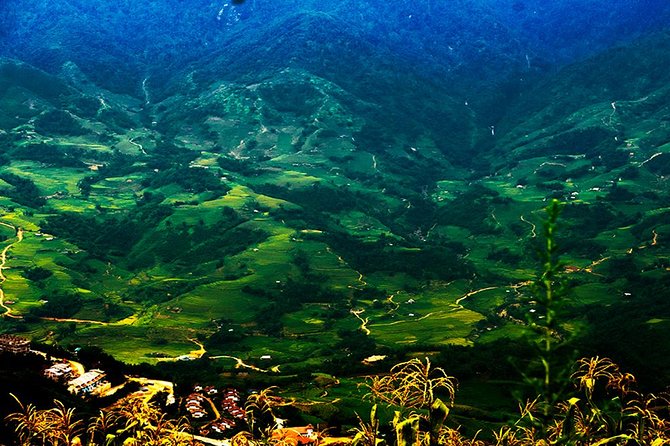
The listed route runs from Sapa to Ham Da, then Hau Thao and Giang Ta Chai before returning to Sapa. These names matter because the outing is not simply a viewpoint walk with one village stop. It links several rural communities in the Muong Hoa area, giving you more variety in a short time.
The available details do not assign a precise time to every village. Hau Thao appears as the named stop in the itinerary, with about one hour noted for that section, while the complete outing lasts approximately 5 hours and 30 minutes. You should allow for the pace of the walk, village visits, lunch, and the return journey rather than expecting a strict minute-by-minute schedule.
The route’s appeal is its movement through the countryside. You walk along mountain slopes, look back toward the valley, and pass through communities connected by farming and local roads. You also get the chance to compare the views from above with the more grounded details of village life below.
Giang Ta Chai is listed as part of the return route, but the supplied details do not specify a separate attraction or activity there. I would treat it as part of the wider rural walk rather than book this tour for one particular sight in that village.
More Trekking Tours in Sapa
- Sa Pa: Muong Hoa Valley Trek and Local Ethnic Villages
★ 4.6 · 864 reviews - Sapa: Eco Adventure Terrace Fields and Local Villages Trek
★ 4.9 · 636 reviews - Number one top rated ethical cultural trekking and homestay by ETHOS
★ 5.0 · 456 reviews - Sa Pa Full Day Trekking Tour
★ 5.0 · 414 reviews
What the Hmong culture section adds
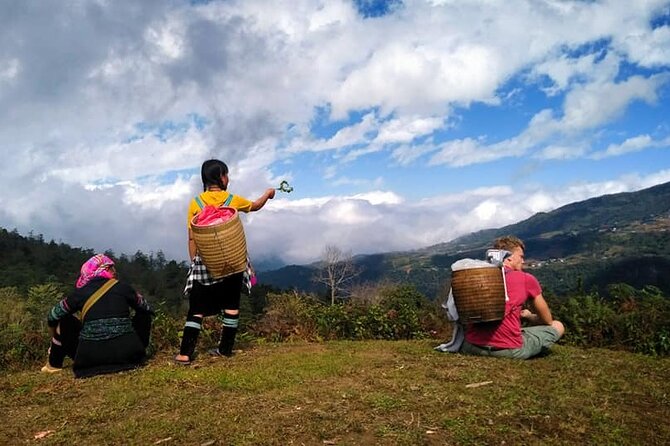
The cultural information is one of the strongest reasons to choose this outing over a simple Sapa viewpoint transfer. You hear about Hmong marriage customs, farming, and house construction, all connected to places you are seeing along the route.
That connection makes the explanations more useful. A discussion of farming has meaning when you are looking across terraces. House-building methods make more sense when you are walking through a village. Marriage traditions add social context that scenery alone cannot provide.
The guide is central here. A previous guest specifically praised Zhu for speaking English well and for being sympathetic, while also describing the views and discoveries as memorable. Zhu is the only guide named in the available information, so you should not assume she will lead every departure. Still, the comment points to the kind of guide interaction this small format can offer: direct conversation, room for questions, and a less crowded setting.
The provider is Trekking Tour Sapa, described as a small local Hmong group. That local connection is a meaningful feature, though it does not remove the need to be respectful. Ask before photographing people, homes, or animals, and listen carefully when customs are explained.
Lunch, vegetarian food, and what costs extra
Lunch at a restaurant is included, and vegetarian food can be provided. This is helpful on a walking day, since you do not need to organize a meal in advance or carry a full packed lunch.
Drinks at the restaurant and homestay are not included. Extra bottled water or beer will cost more, and the one small bottle supplied may not be enough for everyone on a warm day. Bring additional water if you know you drink often while hiking.
Tips are also excluded. The tour price does not include personal travel insurance. These are ordinary extras, but knowing about them keeps the advertised $45 from becoming an unexpected final cost.
At this price, I see good value for a person who wants both scenery and cultural explanation. You receive a private guide for a maximum of two people, lunch, entry fees, water, and transport back to Sapa. A larger group might offer a lower per-person rate, but this setup gives you more control over the pace and questions.
A private group of two changes the pace
The maximum group size is two people. That is a real advantage if you are a couple, friends, or a solo visitor willing to pay the listed per-person rate. You can ask about Hmong traditions, stop for views, and discuss the walking pace without managing a large group.
The small format can also make the village visit feel quieter and more personal. It does not guarantee a private conversation with every resident, and the tour remains a guided visit, but you avoid the feel of moving in a large line.
There is one point to clarify before booking: the information says this is a private tour, but it does not explain how solo bookings are handled beyond the maximum of two people. If you are alone, confirm the arrangement when booking.
The scheduled start is 9 am, and the activity ends back at the Sapa meeting point. Hotel pickup in Sapa is offered, while the formal meeting point is Sapa Church. The return transport is included, so you do not need to arrange your own ride back after the village route.
Who should book this Sapa trek
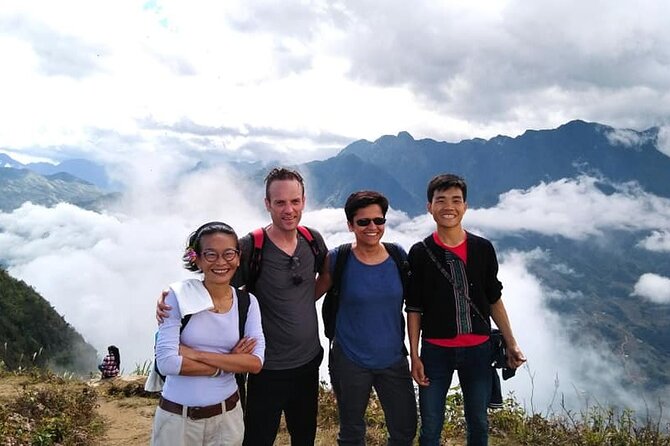
I would recommend it to you if you want a compact introduction to Sapa’s mountain scenery and Hmong communities, especially when your time in town is limited. It packs Fansipan views, Muong Hoa Valley, village visits, a cultural explanation, lunch, and return transport into roughly five and a half hours.
It also suits you if you prefer a small group. The two-person limit is unusually intimate for a paid sightseeing outing, and the local guide format should give you more chance to ask questions than a large coach trip.
You should think twice if you have limited mobility, dislike uneven ground, or rarely hike. The route includes a 1-kilometer uphill section and continues on mountain trails. The strongest warning in the available feedback is clear: this is for people with solid fitness and some experience walking in the mountains.
The outing may also disappoint if your only goal is a long Fansipan summit visit. You see the mountain from a viewpoint, but this is not a climb of Fansipan itself. The main focus is the combined view, village walk, and cultural context.
Booking, weather, and cancellation details
The experience is usually booked about 20 days ahead, which suggests you should reserve early if your Sapa dates are fixed. Confirmation is provided when you book, and the activity is near public transportation.
You can cancel for a full refund up to 24 hours before the 9 am start time. Changes or cancellations made inside that 24-hour window are not refunded. The tour also requires suitable weather and a minimum number of bookings. If poor weather or an unmet minimum causes cancellation, you are offered another date or experience, or a full refund.
These terms are fair for a mountain walk, but check the forecast before the deadline if possible. A misty day may still be atmospheric, yet poor conditions can affect both safety and the views.
Should you book Mountain Views and Villages Trek?
Book this tour if you want the most useful Sapa highlights in a short, small-group format. The combination of a Fansipan viewpoint, Muong Hoa rice terraces, Black Hmong village life, local customs, lunch, and transport is strong value at $45 per person.
Skip it if you want a very easy walk, a long summit climb, or a guaranteed clear view. For fit walkers who care as much about farming, homes, and local traditions as they do about mountain photos, this is a practical and well-focused day near Sapa.
FAQ
Where does the tour start?
The tour starts at 9 am at Sapa Church, at P. Hàm Rồng, TT. Sa Pa, Sa Pa, Lào Cai 333100, Vietnam. Pickup from a hotel in Sapa is also offered.
Where does the tour end?
The activity ends back at the meeting point in Sapa. Transport back to Sapa is included.
How long does the experience last?
The outing lasts approximately 5 hours and 30 minutes.
How difficult is the walk?
You need a moderate level of physical fitness. The route includes about 1 kilometer uphill on a small mountain trail and continues along local mountain routes.
How many people can join?
The activity has a maximum of two people.
Will I see Fansipan?
Yes. The route includes a viewpoint with views toward Fansipan, which is listed at 3,143 meters and described as the highest mountain in Asia.
Is lunch included?
Yes. Restaurant lunch is included, and vegetarian food is available. Drinks are not included.
What else is included in the price?
The price includes lunch, village entry fees, one small bottle of water, a local guide, and transport back to Sapa.
Can I cancel for a full refund?
Yes. You can cancel at least 24 hours before the experience start time for a full refund. Poor weather or an unmet minimum number of bookings may also result in an alternative date or a full refund.
Latest treks added in Sapa
- Soob Sapa Trekking Tour★ 4.3 · 3 reviews
- Sapa: Y Linh Ho – Lao Chai, and Ta Van Trekking Day Tour★ 5.0 · 25 reviews
- Sapa Trekking Private Tour With Ethnic Female Tour Guide★ 4.9 · 24 reviews
- Sapa Trekking – Waterfalls And H’mong Villages★ 5.0 · 2 reviews
- Sapa: Ta Phin Village Trek with Lunch and Bathing Experience★ 4.7 · 13 reviews
- Sapa Trekking Guide Francophone 2 days – 1 night★ 5.0 · 2 reviews
- Sapa: Trekking Through Terraced Rice Fields & Valley 1 Day★ 4.8 · 4 reviews
- Sapa: Ta Phin Village Trek & Red Dao Herbal Bath★ 5.0 · 22 reviews
Sapa Trekking Tours, compared.
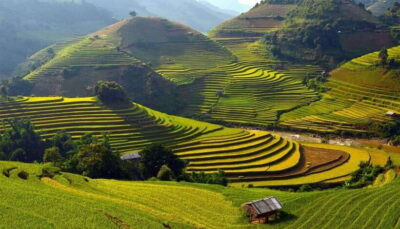
Muong Hoa Valley Trek and Local Ethnic Villages
Read our review →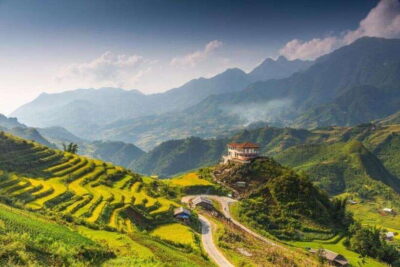
Eco Adventure Terrace Fields and Local Villages Trek
Read our review →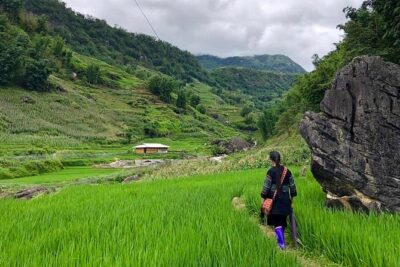
Number one top rated ethical cultural trekking and homestay by ETHOS
Read our review →
1-Day Guided Trek to Lao Chai & Ta Van with Lunch
Read our review →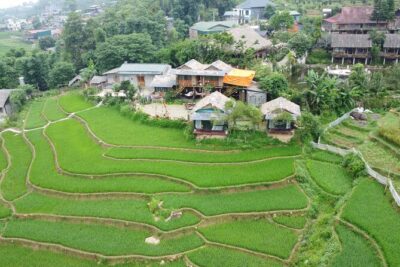
Sapa 1 Day Long Trek: Trek to Hau Thao and Sa Seng Villages
Read our review →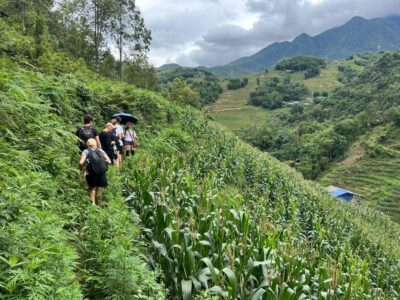
Explore Sapa by TrekkingAdventures, Mountain,Rice fields
Read our review →
EXPLORE SAPA: 2D1N TREKKING & HMONG CULTURE WITH DINH
Read our review →Browse the lists this tour appears in