
REVIEW · MOROCCO
4 Days Trekking To The Heart Of Desert
The best part of this experience is the slow journey into the Sahara on foot, with camels carrying your bags and the day governed by sun, shade, tea, and rest. You move from M’Hamid into the dunes, far from the quick camel rides and busy camp routines found near larger desert bases.
I like two things here: the chance to share the trail with a nomadic guide and camel drivers, and the simple rhythm of walking, eating, and sleeping outdoors. The main drawback is the unclear schedule. The title says four days, the summary says two days, and the written plan covers only two days while promising three nights of lodging. Confirm the exact route and nights before paying.
Key points to know before booking
- A long overland first day: You leave Marrakech early and cross the High Atlas through the 2,260-meter Tichka Pass.
- Ait Benhaddou and Tamnougalte: The route adds major southern Morocco sights before the desert trek begins.
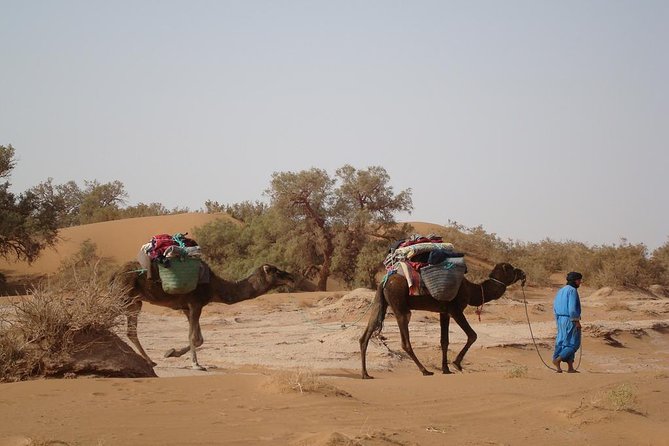
- Camels carry the luggage: You walk with a lighter day load while the caravan moves with you.
- Sidi Naji is the cultural highlight: This desert sanctuary is linked to local oral tradition and customs.
- A private group format: Only your own group takes part, rather than joining a large mixed party.
- Confirm the duration: The supplied details conflict on whether the experience lasts two or four days.
From Marrakech to the desert road
This trip begins at 8:00 a.m. in Marrakech, with pickup from your riad or hotel. The first day is not a gentle transfer. It is a full road journey through southern Morocco, followed by the approach to M’Hamid and the Sahara.
You cross the High Atlas via the Tichka Pass, which reaches 2,260 meters. The road is described as winding, with wide views over mountains, valleys, changing colors, and Berber villages. I would treat this section as part of the experience, not merely transport. It gives you a strong sense of how quickly Morocco changes once you leave Marrakech.
The pass also means a long day in a vehicle. If you are hoping to start walking in the dunes soon after breakfast, adjust your expectations. The desert portion comes after the mountain crossing and the road through the south.
More four-day treks in Morocco
- 4 days trekking in the Rif mountains
★ 5.0 · 9 reviews - 4 days trek – The legs of camels
★ 5.0 · 4 reviews - 4 days tour and trek from Fez to Marrakech via Sahara Desert
★ 5.0 · 3 reviews
Kasbahs, Ait Benhaddou, and the Draa Valley
The route includes visits to Tamnougalte and Ait Benhaddou. These stops add architecture and village life to what could otherwise be a transfer day.
Ait Benhaddou is a 16th-century fortified settlement and a UNESCO site. Its earthen walls and towers have also appeared in Hollywood films. The setting is one of Morocco’s most recognizable, but the value here is not only the photo stop. It helps explain the old caravan routes and the role of fortified settlements in the southern part of the country.
Tamnougalte brings another kasbah to the route. The supplied plan does not give a detailed visiting schedule for either site, so you should ask how much time is planned at each stop. A quick look and a proper walk through the old settlement are very different experiences.
After the kasbahs, the road continues through the palm-lined Draa River Valley toward Zagora, often called the capital of dates. This is a useful transition between the High Atlas and the Sahara. You see a greener agricultural corridor before the surroundings become more open and dry.
Reaching M’Hamid and meeting the camel caravan
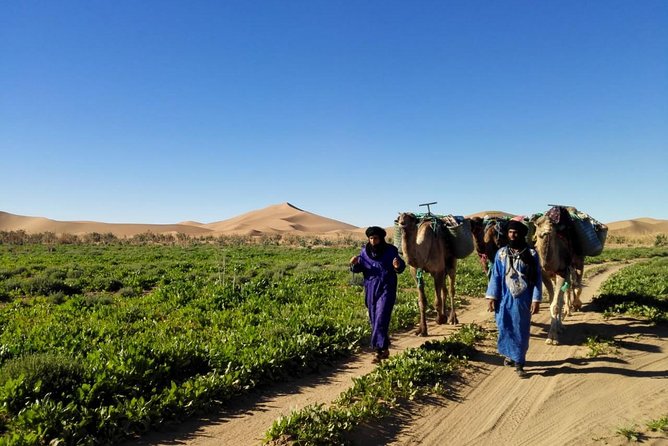
M’Hamid is the gateway for the walking portion. From here, the pace changes. Instead of moving between sights by vehicle, you set out on foot with a guide and camel drivers.
The caravan carries luggage, food, and supplies. That matters. You still need a personal day bag with essentials, but you are not expected to carry everything needed for several nights in the desert. The camels also give the group a clear rhythm. People walk, the caravan follows, and the camp equipment moves with it.
The experience is built around the desert rather than a short ride through it. You have time to notice small changes in the sand, plant life, animal tracks, and the way light shifts during the day. The description specifically points to observing desert animals and plants, although it does not promise particular species or wildlife sightings.
A professional nomadic guide leads the route. Names connected with past trips include Khalil, Mohamed, Abidin, and Alwali Bohjr. Since the booking details do not state which guide will lead your departure, ask for the assigned guide before you go.
Walking toward the palm grove
The second written day begins after breakfast at camp. You leave M’Hamid on foot and head toward a palm grove. Tea and lunch are served in the shade of tamarisk trees, followed by a rest.
This is exactly the sort of detail that makes a desert trek work. The shade is not decoration. It shapes the day. Walking under strong sun requires a slower pace, regular drinks, and a proper pause at the hottest part of the day.
Lunch is included, as are mineral water and the other listed meals. The materials mention breakfast, lunch, dinner, and four lunches, which again suggests a trip longer than the two-day outline. Ask the provider to explain the meal count and the number of nights covered.
The palm grove also breaks up the expected image of endless sand. Southern Morocco’s desert has palms, tamarisk, dry river channels, low vegetation, and changing ground underfoot. You get more variety than a simple dune outing.
More Trekking Tours in Morocco
- Mt Toubkal Ascent Express Trek 2 Days 1 Nights
★ 4.7 · 962 reviews - Marrakesh: 2-Day Mt. Toubkal Trek with 1-Night Stay & Meals
★ 4.7 · 795 reviews - Marrakech: 2-Day Atlas Mountains Trek with Village Stay
★ 4.8 · 717 reviews - From Marrakech: 3-Day Mount Toubkal Climbing Trek
★ 4.7 · 597 reviews
Sidi Naji and the night camp
After the rest, the group continues to Sidi Naji. Local oral tradition says that a marabout, or holy man, lived there for 18 grandfathers. The wording is unusual, but the important point is that Sidi Naji is tied to local memory, custom, and religious tradition.
This stop gives the walk a human story. You are not only crossing empty ground. You are moving through a place with names, beliefs, and inherited traditions. The supplied details do not explain exactly what remains at the site, so your guide will be important in explaining what you are seeing.
The bivouac is set at the foot of the dunes at night. That location should give you the central desert experience: open sky, quiet surroundings, and dunes close at hand. The emphasis is on silence and separation from modern life, not entertainment.
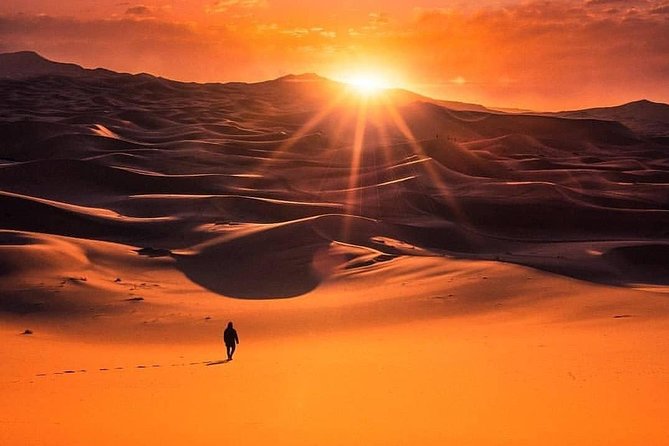
Sunrise and sunset are major features of the trip. In a desert, the light changes quickly across the sand, and the absence of city noise makes those moments feel larger. You should expect simple camp living rather than a hotel-style stay. The exact sleeping arrangements are not stated, so confirm whether bedding and tents are supplied.
Food, water, and camp life
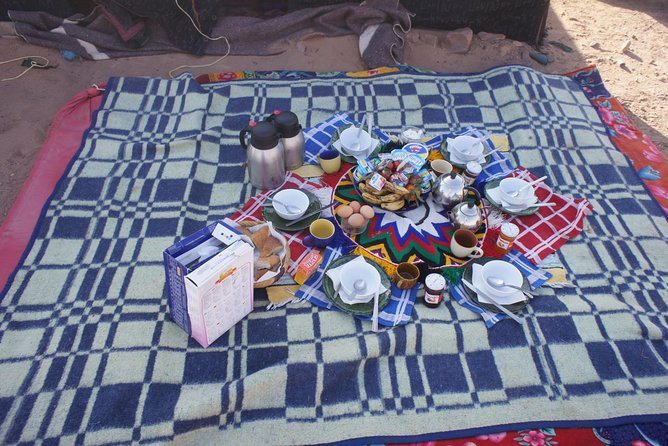
Meals are included, with breakfast, lunch, and dinner listed, along with four lunches. Mineral water is also included. This is a useful saving because food and drinking water are not easy extras to arrange once you are walking away from M’Hamid.
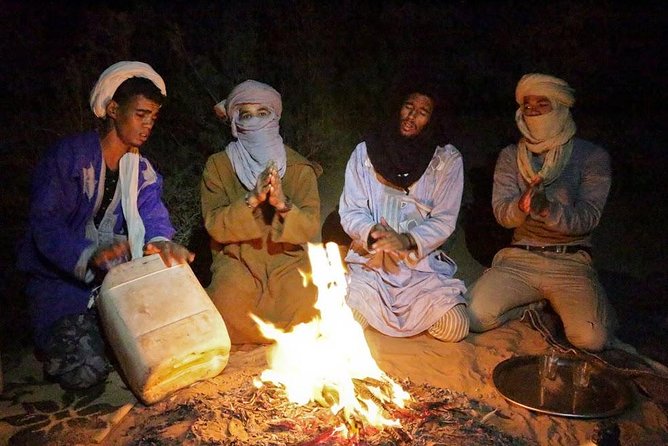
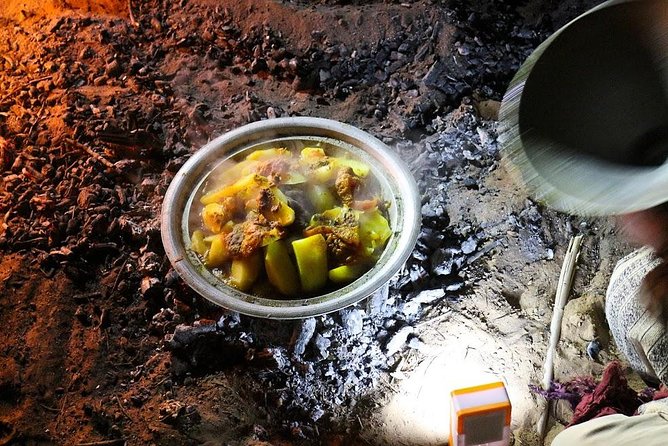
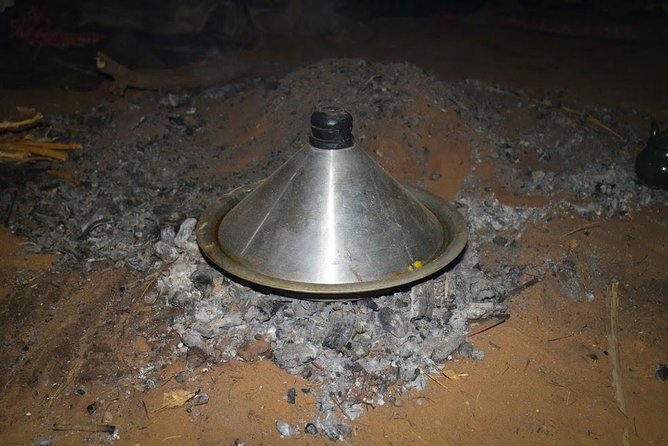
The strongest food detail comes from the account of a chef preparing tajines over a wood fire and baking bread at camp. That kind of cooking is one of the pleasures of a desert trek. It is also slower than restaurant service, so meal times may follow the movement of the group and the heat of the day.
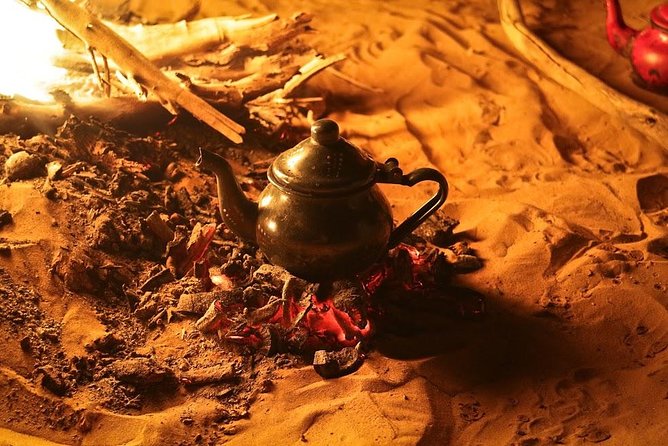
Tea, shade, and rest are part of the practical routine. You should bring sun protection and comfortable walking clothing, though the supplied information does not provide a formal packing list. Sturdy footwear, a hat, and a refillable personal bottle would be sensible choices, but the provider should confirm what is already supplied.
Tips are not included. Budget separately for gratuities for the guide, camel drivers, cook, or other staff who accompany your group.
What the private format really means
This is a private activity, so only your own group participates. That is a strong advantage if you want to set a pace that suits your party. It may also make the experience more comfortable for families or friends who prefer not to be matched with strangers.
A past family trip is described as having a camel driver named Mohamed and a guide named Abidin. Abidin adjusted the route for a sick child and helped keep him comfortable and amused along the way. That suggests some flexibility may be possible, but you should never assume that every medical or mobility need can be accommodated.
Most people can participate, and the activity is near public transportation, but this is still a walking trip in a demanding climate. The stated information does not give daily walking distances, terrain grades, or a minimum fitness level. Ask those questions directly, especially if your group includes children, older adults, or anyone with health concerns.
Is the $341.63 price good value?
At $341.63 per person, the value depends heavily on what duration you actually receive. The package includes transport from Marrakech, the mountain crossing, sightseeing stops, a guide, camels, meals, mineral water, and three nights of accommodation according to the inclusion list.
That is a substantial bundle, particularly because the camel caravan carries luggage and the trip uses local desert staff. If the experience truly lasts four days with three nights, the price looks reasonable for a private desert journey with transport from Marrakech.
If it is only two days, the value is harder to judge. The supplied itinerary does not match the title, the duration field, or the accommodation details. This is the single most important issue to settle before booking. Ask for the exact number of walking days, nights in camp, nights in a hotel or riad, and the return timing to Marrakech.
Free cancellation is available if you cancel at least 24 hours before the local start time. Changes or cancellations made inside that window are not accepted for a refund.
Who will enjoy this desert trek?
I would choose this for someone who wants a quiet, small-scale Sahara experience rather than a quick photo stop. It suits you if you enjoy walking, simple camp routines, local food, long stretches without city noise, and a guide-led journey with cultural context.
It also fits families and private groups who want a flexible setting. The account of a route being adjusted for a sick child is encouraging, though you still need to discuss any condition in advance.
I would be cautious if you want a tightly timed holiday or a luxury desert camp. The details describe a working caravan, outdoor bivouac, heat, walking, and life shaped by the sun. That is the attraction, but it may not suit someone looking for polished accommodation and frequent facilities.
Should you book it?
Book this experience if the appeal is walking into the Sahara with a camel caravan, eating traditional food at camp, and spending quiet time near the dunes. The strongest features are the private format, local guiding, included meals and water, and the chance to reach places such as the palm grove and Sidi Naji at a human pace.
Before booking, get the schedule in writing. The four-day title, two-day duration, two-day itinerary, three nights of accommodation, and four lunches do not line up. Once the provider confirms the exact route, sleeping arrangements, walking distance, guide, and return plan, you will know whether the $341.63 price matches the trip you want.
FAQ
Where does the experience begin?
It begins in Marrakech, Marrakech-Safi, with an 8:00 a.m. start and pickup from your riad or hotel.
Where does the activity end?
The activity ends back at the meeting point.
How long does the experience last?
The supplied information is inconsistent. It calls the experience four days, gives an approximate duration of two days, and provides a written plan covering two days. The inclusion list says three nights of accommodation and four lunches, so confirm the exact length before booking.
What is included in the price?
The listed inclusions are breakfast, lunch, dinner, three nights of accommodation, a guide, four lunches, camels, and mineral water.
Is this a private activity?
Yes. Only your own group participates.
Can I cancel for a full refund?
Yes, if you cancel at least 24 hours before the experience start time. Cancellations or changes made less than 24 hours before the local start time are not accepted for a refund.
Latest treks added in Morocco
- 5 Days Desert Trekking from Marrakech★ 5.0 · 16 reviews
- 3 days Toubkal Trek from Marrakech★ 5.0 · 4 reviews
- Elite Experience Atlas Mountains Day Trekking★ 5.0 · 7 reviews
- 3 Days Berber Villages Trek – Authentic Atlas Mountain Experience★ 5.0 · 4 reviews
- Morocco Desert Trek 4 Days: 2 days on foot in Morocco★ 5.0 · 2 reviews
- Atlas Mauntains and 3 Valleys Trek★ 5.0 · 6 reviews
- Atlas Mountains Valley Trek – 3 Days★ 5.0 · 29 reviews
- 5-day Jebel M’goun trek★ 5.0 · 2 reviews
4-Day Experiences, compared.
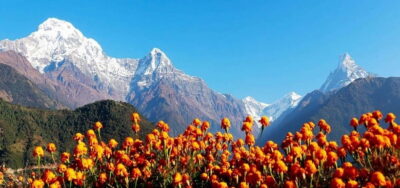
4-Day Ghorepani, Poonhill & Ghandruk Mountain Trek
Read our review →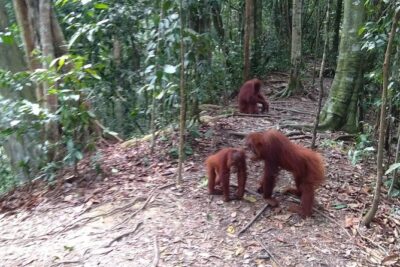
TOUR PACKAGE (jungle trekking, taxi, Room) 4 DAYS 3 NIGHTS in BUKIT LAWANG
Read our review →
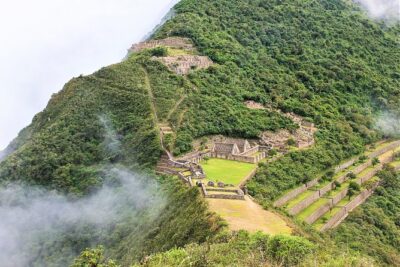
Ancascocha Trek To Machu Picchu 4 Days And 3 Nights
Read our review →
4 Day Inca Trail Trek to Machu Picchu Multi day tour
Read our review →
Salkantay Trek 4 Days to Machu Picchu by Glamping Sky Lodge Dome
Read our review →Browse the lists this tour appears in