
REVIEW · NEPAL
From Pokhara: 10-Day Poon Hill and Annapurna Base Camp Trek
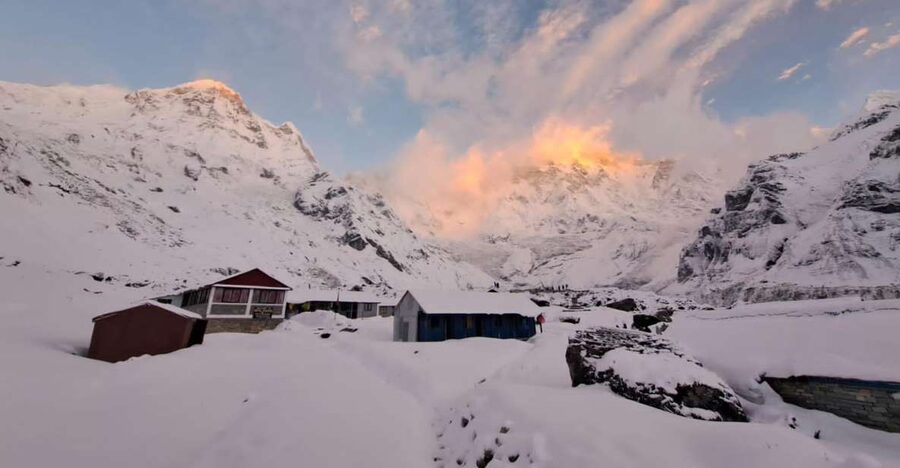
The finest part of this 10-day Annapurna trek is the way it builds from village paths and terraced fields to the huge mountain amphitheater at Annapurna Base Camp. You begin near Pokhara, climb through rhododendron forest, catch sunrise from Poon Hill, then follow the Modi Khola valley toward Annapurna I, Machhapuchhre, and the sanctuary.
I like the generous pace, with most days taking roughly three to six hours of walking, and I like the human scale of the route: Gurung villages, simple guesthouses, suspension bridges, and a hot spring at Jhinu Danda. The main caution is altitude and weather. Cloud can hide the peaks, rain can last for days, and the highest overnight at 4,130 meters is no small walk.
Key points to know before you book
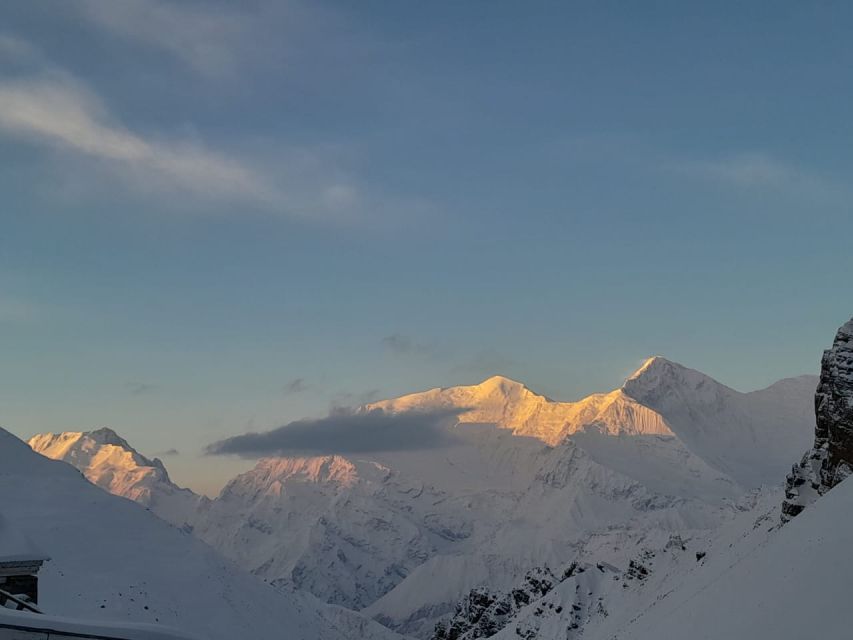
- Poon Hill and Annapurna Base Camp in one trip: You get both the famous sunrise viewpoint and the high mountain sanctuary.
- A private trek with flexible pacing: Guides have adjusted the route and speed for slower walkers and altitude concerns.
- The steep Ulleri steps test your legs early: Day two is one of the hardest sections before the trail settles into a steadier rhythm.
- Mountain views depend on the season: Spring and autumn offer the best odds of clear skies, but mountain weather can change quickly.
- Jhinu Danda adds a welcome recovery stop: Natural hot springs give you a chance to ease tired muscles near the end.
- Budget for mountain extras: Food is not included, and charging, Wi-Fi, heaters, and hot showers can cost about $30 to $40 per day at high altitude.
Why this route works so well
At $310 per person, this trek offers solid value if you want a private, arranged route rather than planning every village stop yourself. The price includes pickup and drop-off within Pokhara’s Lakeside area, private transport between Pokhara and Nayapul, a trekking guide, permits and official documents, guesthouse accommodation, Poon Hill entry, and a first-aid kit.
Food and drinks are extra, as are travel insurance and emergency rescue. That matters more here than it might on a short city tour. Carry enough money for meals and mountain services, and take out cash before heading higher, since the cost of Wi-Fi, charging, hot showers, and heating rises in the upper villages.
The arrangement is private, but not luxurious. You sleep in guesthouses, not high-end lodges. That is part of the appeal, since you stay close to the mountain communities, but you should expect basic rooms and changing comfort from night to night.
The strongest feature is the pace. This is not a race to Annapurna Base Camp. Several walkers had enough time to move at a comfortable speed, and one trek was adjusted after altitude problems. Guides named Biru, Arjun, and Bikram received especially warm praise for patience, route management, local knowledge, and attention to safety. Your assigned guide may be someone else, but the experience is designed around a private guide rather than a large fixed group.
More Annapurna Treks in Nepal
- Annapurna Circuit Trek with Tilicho Lake
★ 5.0 · 368 reviews - Annapurna base camp trek 5 Days
★ 5.0 · 252 reviews - 14-Day Private Annapurna Base Camp Trek
★ 5.0 · 180 reviews
Day one: Pokhara to Nayapul and Tikhedhunga
Your morning begins with a private drive from Pokhara to Nayapul, taking about 1.5 hours. From there, you start walking through small villages and terraced fields, following the route beside the Modi Khola.
Tikhedhunga sits at 1,577 meters and makes a gentle opening night. You get a first taste of village life without beginning at a punishing altitude. The day also gives you time to settle into the rhythm of walking, eating, resting, and preparing for the next morning.
Do not judge the whole trek by this first section. The scenery is pleasant, but the most dramatic peaks are still ahead. The advantage is that you gain height in stages, which is kinder to your body than rushing upward from Pokhara.
Day two: Ulleri’s stone steps and Ghorepani
The climb from Tikhedhunga to Ghorepani is one of the route’s big physical tests. You ascend the steep stone steps through Ulleri, then continue into forests filled with rhododendron and marigold.
Ghorepani is at 2,874 meters, and the setting opens to views of the Annapurna and Dhaulagiri ranges. This is a satisfying arrival, but do not expect a relaxed afternoon if the climb has taken a lot from you. The Ulleri steps are steady and direct, with little mystery about what your legs are being asked to do.
Good walking shoes matter here. So does a slow pace. The private format helps because you can ask your guide to adjust the speed instead of trying to keep up with a fixed group.
Day three: Poon Hill sunrise and Tadapani forest
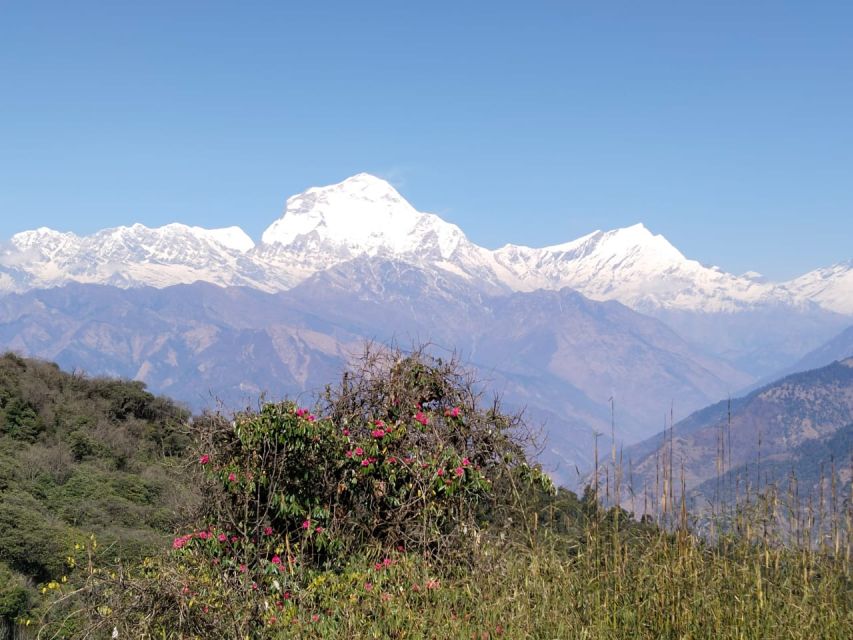
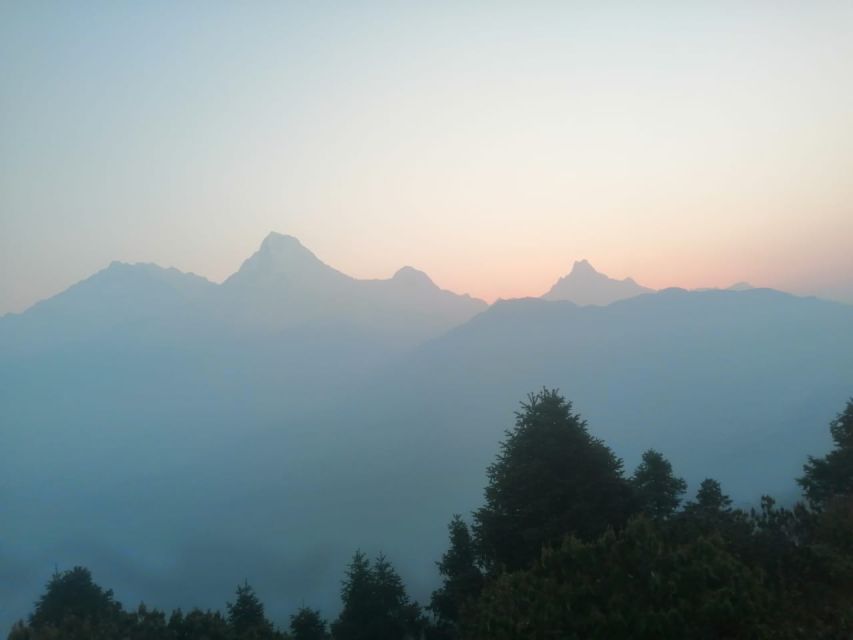
You rise early for the climb to Poon Hill at 3,210 meters. The aim is sunrise over the Himalayas, with views toward Annapurna, Dhaulagiri, and other snow-covered peaks.
The weather decides how much you see. In clear conditions, the viewpoint is a superb reward for the early start. In cloud or rain, the outing can be misty and subdued. That uncertainty is part of mountain travel, so bring warm layers and keep your expectations flexible.
After returning to Ghorepani for breakfast, you continue toward Tadapani at 2,630 meters. The trail passes through rhododendron forest and wooded valleys. I like this transition because the day gives you both a high viewpoint and a quieter walk beneath the trees.
Tadapani feels less like a destination you tick off and more like a useful overnight stop. You have already gained altitude, but you are not yet at the demanding upper section of the sanctuary route.
More Poon Hill Treks in Nepal
- Poon hill Trek 3 days
★ 5.0 · 176 reviews - Pokhara: 4-Day Ghorepani, Poonhill & Ghandruk Mountain Trek
★ 5.0 · 132 reviews - Ghorepani – Poon Hill Trek 3N-4D
★ 5.0 · 125 reviews - 4 Days Poon Hill Trek
★ 5.0 · 94 reviews
Day four: Gurung villages and Chhomrong
From Tadapani, the trail descends through thick forest toward Gurjung village. You then continue downhill to the Kimrong Khola before climbing again to Chhomrong at 2,170 meters.
The repeated descents and climbs are typical of the Annapurna route. Distance alone does not tell you how hard a day will feel. A trail that drops for an hour may simply ask you to climb the same amount again later.
Chhomrong is a large Gurung village with views toward Annapurna South and Machhapuchhre, also called Fishtail. It is an important stop before the trail enters the narrower upper valley. Take advantage of the village setting to organize your pack, check your water, and ask your guide about the next day’s steps.
Day five: Chhomrong to Bamboo
You descend to the Chhomrong Khola, cross a suspension bridge, and climb toward Sinuwa. From there, the route continues through bamboo and rhododendron forest to Bamboo at 2,310 meters.
This day is a good example of why the trek feels varied. You move from a high village to a river crossing, then into shaded woodland. The forest can provide welcome relief from open sun, but the trail still has plenty of steps.
Bamboo is a practical overnight stop rather than a grand viewpoint. The goal is to position yourself for the upper Modi Khola valley while keeping the ascent gradual. Your guide can help set a pace that protects your energy for the higher days.
Day six: The Modi Khola valley and Deurali
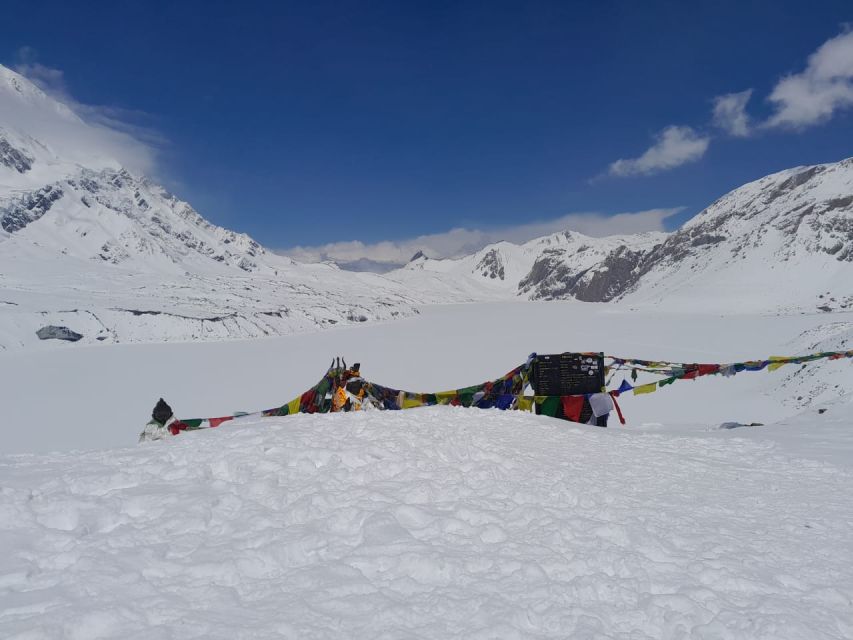
The forest continues as you walk through the Modi Khola valley. You pass the Himalayan Hotel and Hinku Cave before climbing steadily to Deurali at 3,230 meters.
This is when altitude becomes a real consideration. You may notice that climbs take longer and that a pace which felt easy near Pokhara now feels demanding. Walk slowly, drink regularly, and tell your guide about headaches, nausea, unusual tiredness, or any other concern.
Deurali is not the highest point of the trip, but it is a key overnight before the sanctuary. The valley narrows and the mountain setting becomes more serious. If cloud rolls in, views may disappear, yet the changing weather is also a reminder that you are heading into a high alpine zone.
Day seven: Machhapuchhre Base Camp to Annapurna Base Camp
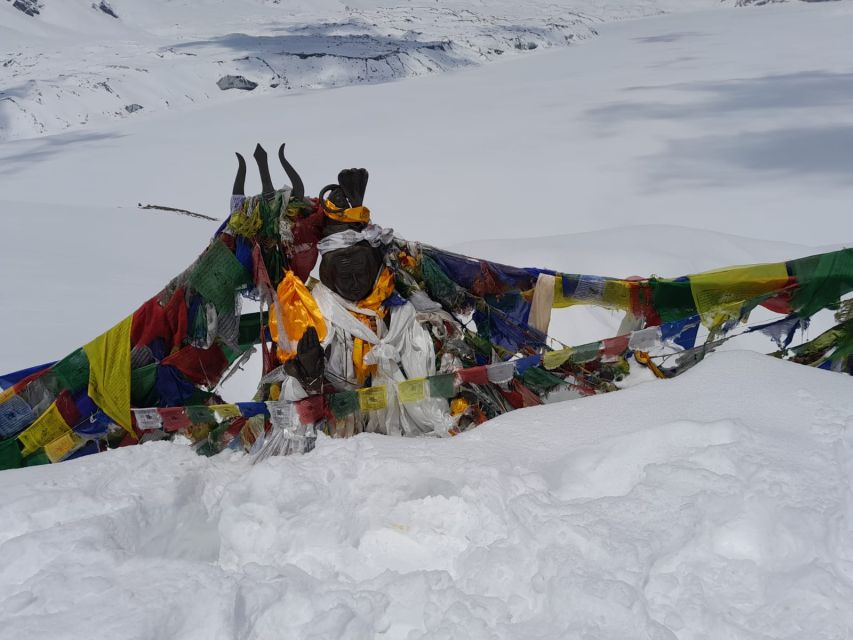
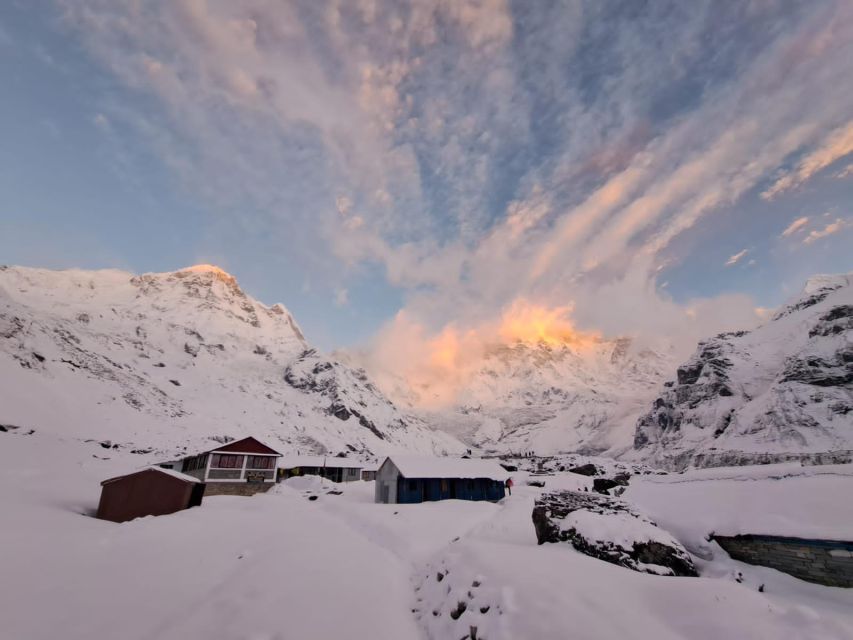
This is the main event. From Deurali, you follow the narrow valley toward the Annapurna Sanctuary. The route passes Machhapuchhre Base Camp at 3,700 meters before continuing to Annapurna Base Camp at 4,130 meters.
The arrival is powerful because the mountains seem to surround you. Annapurna I rises to 8,091 meters, while Machhapuchhre reaches 6,993 meters and Hiunchuli 6,441 meters. Depending on visibility, you may also see Annapurna II, III, and IV, Dhaulagiri, Nilgiri, and other major peaks.
The final climb can feel slow. Do not let the short distance fool you, since altitude makes every uphill section harder. The sensible goal is not speed. It is arriving safely, enjoying the sanctuary, and giving yourself time to take in the scale of the peaks.
You sleep at Annapurna Base Camp, which is a major reason to choose this itinerary over a shorter route that turns around at Machhapuchhre Base Camp. Night temperatures can be cold, and facilities are basic. Still, waking inside the mountain bowl is the emotional high point of the trek.
Day eight: Sunrise and the long descent to Bamboo
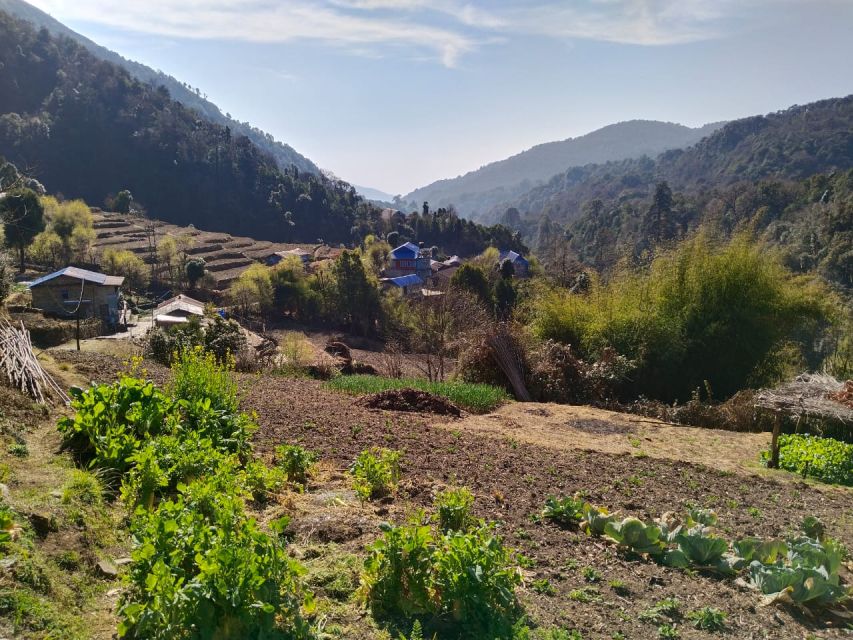
An early start gives you another chance to see sunlight reach the peaks. After breakfast, you retrace the route through Deurali and continue to Bamboo.
The descent is easier on your lungs but can be tough on knees and thighs. Trekking poles, if you use them, would be useful here, though the supplied information only requires comfortable shoes. Take care on wet stone and forest steps.
This is one of the less glamorous days, but it is necessary. You are giving up altitude quickly and returning to a warmer, lower forest zone. Keep your pace steady rather than rushing simply because the trail points downhill.
Day nine: Chhomrong and the hot springs at Jhinu Danda
You continue descending through the forest, reach Chhomrong for lunch, and then go farther down to Jhinu Danda at 1,780 meters.
The hot springs are the reward. After several days of climbing and descending, soaking your muscles in natural warm water can feel exactly right. Bring what you need for the visit, while remembering that accommodation and facilities along the route remain simple.
Jhinu Danda also gives the trek a pleasant change of mood. You are no longer focused only on reaching the next high point. The mountains remain part of the setting, but the lower elevation and warm water help your body shift toward recovery.
One useful point from the route is that you should not assume you need to leave Jhinu Danda by jeep. Walking the full route keeps the trip active through the final section and lets you finish the journey under your own power.
Day ten: Nayapul and the return to Pokhara
The final walk takes you from Jhinu Danda to Nayapul. A private car then returns you to Pokhara.
After nine days on foot, the last transfer may feel almost luxurious. It also makes the ending simple. There is no separate transport planning for you to solve after the trek.
The route closes a full circle: Pokhara’s roads, village paths, forest trails, high mountain views, and the sanctuary all fit into one trip. You get variety without adding extra hotel changes or domestic flights.
Weather, altitude, and the right season
Spring, from March to May, and autumn, from September to November, generally offer the best conditions for this route. Clearer skies improve your chances of seeing the high peaks, especially at Poon Hill and Annapurna Base Camp.
Still, no season guarantees clear views. A September trek had several rainy days and only one sunny day, while cloud repeatedly hid the mountains. The guide’s role becomes especially useful in such conditions, since a patient leader can help you keep going without pretending that the weather is perfect.
The trek can run throughout the year, but mountain weather changes quickly. Bring layers, rain protection, and a willingness to adjust your expectations. The views are a major reason to come, yet the villages, forests, river crossings, and daily rhythm still make the route worthwhile when clouds cover the peaks.
You should also have travel insurance that covers trekking and emergency rescue. Rescue is not included in the price, and the activity specifically places that responsibility on your insurance.
Who should choose this trek?
I would recommend it to a reasonably fit walker who wants a private experience, a measured pace, and a full route rather than a quick visit to one viewpoint. It suits people who enjoy simple guesthouses, changing scenery, and a clear daily structure.
It is also a good choice for slower hikers. The guide can adjust the walking speed, and the itinerary allows more time than a compressed high-altitude schedule. One trek was extended by three days when altitude sickness became a concern, showing why you should treat the schedule as a framework rather than a race.
This is not suitable for pregnant women or wheelchair users. You should also think carefully if you dislike steep steps, basic accommodation, rain, or cold nights. The Ulleri climb and the route above Deurali require real effort.
English, Nepali, and Hindi are available for guiding. The private format means you can ask questions and discuss your condition directly with the guide. English ability among support staff may vary, so do not expect every person on the team to communicate at the same level.
What to pack and what to budget
Bring your passport or ID, a passport-sized photo, comfortable walking shoes, and proof of travel insurance. Pack for both warm lower valleys and cold high elevations, though the supplied information does not specify a formal equipment list.
Food and drinks are available for purchase but not included. You should also set money aside for optional services at higher elevations. Charging, Wi-Fi, heaters, and hot showers may together require about $30 to $40 per day, depending on what you use.
Plastic bottles are not allowed. Plan your water arrangements with your guide and follow the route’s environmental rules. Pets are also not permitted.
The cancellation policy is traveler-friendly: you can cancel up to 24 hours before the activity for a full refund, and you can reserve now while paying later. Pickup is available within the Lakeside area of Pokhara.
Should you book it?
Book this trek if you want the full Annapurna story in one well-paced route: Poon Hill sunrise, Gurung villages, forest trails, the Annapurna Sanctuary, and a hot spring finish. At $310, the included transfers, permits, guide, guesthouses, and private structure make the price attractive, provided you budget separately for meals, drinks, insurance, and mountain comforts.
Think twice if you need dependable clear skies, upscale lodging, or a short and easy walk. The weather may hide the views, the Ulleri steps are serious, and Annapurna Base Camp sits at 4,130 meters.
For a fit walker who values patient guiding and time to enjoy the route, this is a strong choice. Ask about the assigned guide when booking, prepare for changing weather, and treat the schedule as a flexible plan rather than a promise that every day will go exactly to the clock.
FAQ
How long does the trek last?
The trek lasts 10 days, beginning in Pokhara and ending with a return drive from Nayapul to Pokhara.
What is the highest point reached?
Annapurna Base Camp is the highest point listed, at 4,130 meters.
Does the trek include Poon Hill?
Yes. You hike to Poon Hill at 3,210 meters for sunrise on the morning of day three.
Is transportation from Pokhara included?
Yes. Pickup and drop-off within the Lakeside area are included, along with private transport from Pokhara to Nayapul and back from Nayapul to Pokhara.
Is food included in the price?
No. Food and drinks are available for purchase but are not included.
Is accommodation included?
Yes. Accommodation in guesthouses is included throughout the trek.
What languages can the guide speak?
Guiding is available in Nepali, English, and Hindi.
Is travel insurance included?
No. You must arrange your own travel insurance. Emergency rescue is also not included and should be covered by suitable insurance.
Can I cancel the booking?
Yes. You can cancel up to 24 hours in advance for a full refund. You can also reserve the activity and pay later.
Latest treks added in Nepal
- Private Manaslu Circuit Trek at Himalayas★ 5.0 · 3 reviews
- Ghorepani Poonhill Trek★ 5.0 · 5 reviews
- Ghorepani Poon Hill Trek★ 5.0 · 16 reviews
- Upper Mustang Trekking★ 5.0 · 2 reviews
- Upper Mustang Trekking★ 3.0 · 2 reviews
- Amazing 1 Day Trekking Experience in Kathmandu Nepal★ 5.0 · 24 reviews
- Upper Mustang Trek★ 5.0 · 5 reviews
- Upper Mustang Trekking★ 5.0 · 4 reviews
Annapurna Base Camp Treks, compared.




Trekking in Annapurna/Langtang/Everest/Upper Mustang regions
Read our review →


Kathmandu to Annapurna Base Camp (ABC) 5-Day Trek
Read our review →Browse the lists this tour appears in