
REVIEW · INDIA
7-Day Kuari Pass Trek
Kuari Pass gives you a close look at the Garhwal Himalaya without reducing the experience to a quick viewpoint stop. You walk from village paths and suspension bridges into rhododendron forest, open pasture, and high meadows, with Nanda Devi and Dronagiri appearing as the route gains height. I like the mix of mountain scenery and everyday Himalayan life. I also like that the trip uses camps, ponies, and porters rather than keeping you on a road-based sightseeing schedule.
The main caution is the physical demand. The route reaches 4,265 meters, includes steep zigzags, false summits, narrow ridges, and a loose-moraine descent where trekking poles are needed. You also spend several nights in tents, so this suits someone seeking a real mountain trek, not a soft adventure with a few scenic walks.
Key details of the Kuari Pass Trek
- The route crosses the 4,265-meter Kuari Pass, with broad views toward Nanda Devi, Hathi Ghodi, Dronagiri, and Chaukhamba.
- Village life is part of the route, especially around Ghat, Ramni, Ghunni, Jhinjhi, and Pana.
- The hardest terrain includes steep switchbacks and loose moraine near Sartoli and the approach to Dhakwani.
- Gorson Meadow provides a gentler final stretch, followed by a jeep ride from Auli to Joshimath.
- The private trip includes practical trekking equipment, meals, transport, tents, sleeping bags, poles, and head torches.
- The experience has a small review record but strong praise, especially for hospitality, food, safety, and personal connection with the Mapping The Himalayas team.
Why Kuari Pass feels different from a standard Himalayan trek
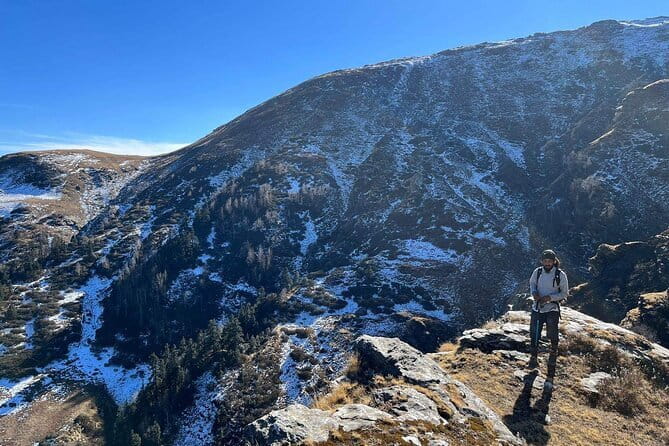
Kuari Pass is not simply a climb to one high point. The route traces the outer edge of the Nanda Devi Sanctuary area and links several distinct mountain settings. You start among roads, markets, and river confluences. Then the route narrows into village paths, forest trails, pastureland, high camps, and open ridges.
That variety is the trip’s strongest feature. One day brings a village jeep and ponies. Another takes you over a suspension bridge across the Birahi Ganga. Later, the trees thin out and the mountains fill the horizon. You get a sense of how altitude changes the land, rather than seeing the Himalaya from one fixed camp.
The route also connects with some of northern India’s major rivers. The approach passes the confluences at Devprayag, Rudraprayag, Karnprayag, and Nandprayag. On the final drive back to Rishikesh, you visit Rudraprayag again, where the Mandakini and Alaknanda meet.
This is a private trip, so only your own group participates. That matters on a trek with steep sections and changing conditions. You can walk at the group’s pace, ask questions directly, and spend more time at viewpoints without adjusting to a large crowd.
More week-long treks in India
- 7 Days Dharamsala – Dalai Lama home Trek
★ 4.5 · 8 reviews - Best Kilimanjaro Adventure 7 days Machame route Trekking
★ 5.0 · 42 reviews - Kilimanjaro 7 Day Private Trekking Experience
★ 5.0 · 40 reviews
Day 1: The river confluences on the way to Ghat
The first day is mostly a road journey to Ghat after a quick breakfast. It is not a dramatic walking day, but it gives you useful context for the region. The route passes Devprayag, Rudraprayag, Karnprayag, and Nandprayag, places known for the meeting of major Himalayan rivers.
These confluences are not just names on a map. They help you understand the mountain geography. Rivers cut the valleys, roads follow them, and villages sit wherever the slopes allow. The trip later takes you away from this road network, so this opening drive shows the scale of the country you are entering.
Ghat is a sizable village with schools, government offices, and a market serving nearby settlements. It is a practical overnight stop rather than a sightseeing center. I would treat the day as a transition into the trek and use it to check your equipment, sleep well, and prepare for several nights in tents.
Day 2: From Selu Bagar to Vinayak Pass and Jhinjhi
The walking begins at Selu Bagar, where a few small shops serve the village. You then use a typical local jeep to meet the ponies and porters who accompany the group. This is a useful arrangement because the trek becomes more remote from here, and pack animals carry supplies that would otherwise add weight to your daypack.
The trail climbs toward a ridge with views over Ramni and Ghunni. Beyond the ridge, an open meadow gives you a first strong look at Nanda Ghunti and Chaukhamba. This is a good example of the route’s rhythm: a village start, a steady climb, then a sudden opening where the mountains become much larger than they seemed from the road.
Rhododendron forest follows, along with pasture grasslands and huts used by nomadic herders. At Vinayak Pass, a small Ganesha temple marked by prayer flags gives the route a clear high point. You can look toward the Himalaya and Kuari Pass from here before descending through Sem Kharak to Jhinjhi.
Jhinjhi adds a human side to the day. The route passes through colorful settlements and gives you a closer look at how people live in these valleys. The descent is not a minor stroll, so you should pace yourself early. The full day combines altitude gain, forest walking, open ground, and a village finish.
Day 3: Jhinjhi, the Birahi Ganga, and Pana
Day three begins with the daily life of Jhinjhi around you. The path descends through the village to the valley floor, where you cross a high suspension bridge over the Birahi Ganga.
A suspension bridge is one of those simple mountain features that changes the feel of a trek. You leave the settlement behind, cross above the river, and arrive on the true right side of the valley. The route then climbs sharply in zigzags. False summits make the climb feel longer, so do not spend your energy trying to race upward.
From the ridge, you get views back toward nearby settlements and out toward Himalayan peaks. The trail then becomes more gradual and passes through another stretch of rhododendron forest. It continues past Kaliagad to Pana, followed by a final climb of less than a kilometer to the campsite above the village.
This is one of the more demanding days because the route combines a descent, a bridge crossing, and a sustained uphill section. The reward is a clear change in setting. You move from the valley floor to a higher camp surrounded by forest and mountain views.
More Trekking Tours in India
- Half day trekking (munnar valley Trekking & Tours )
★ 5.0 · 310 reviews - Nag Tibba 2 Days Trek (Pantwari to Pantwari)
★ 5.0 · 274 reviews - Bhrigu Lake and Alpine Meadow Trek
★ 5.0 · 121 reviews - Har Ki dun Trek by Himalaya Shelter
★ 5.0 · 102 reviews
Day 4: Sartoli pasture and the difficult approach to Dhakwani
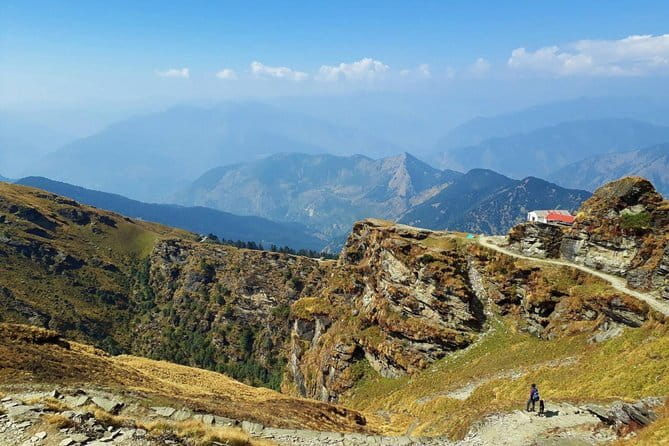
Above the campsite, the trail enters rhododendron forest. A couple of false summits lead you to the ridge, after which the route continues more gently through the trees toward Sartoli.
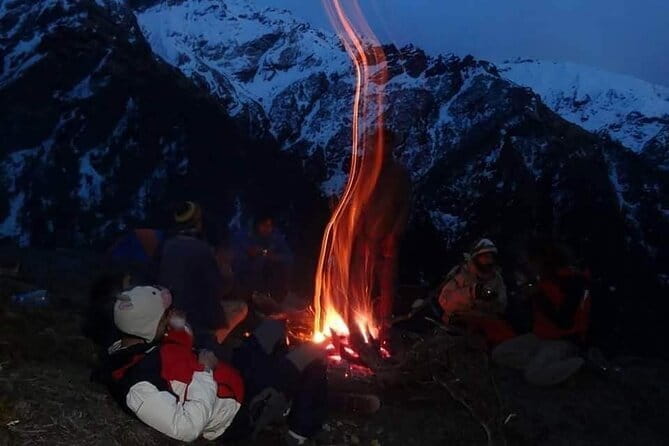
Sartoli is both a camping place and pasture for sheep and cattle. It also gives you one of the first strong views of Kuari Pass itself. The pass dominates the horizon, which makes the route ahead feel real, not abstract. You can see the goal, but the terrain between you and it still requires care.
The trail from Sartoli descends gradually for a couple of kilometers. The final part drops steeply toward a side stream over loose moraine. This is a key safety point. Use the provided trekking poles, shorten your steps, and do not hurry. Loose stones can shift underfoot, especially when you are tired.
After crossing the stream, the route climbs steeply again through a series of switchbacks to the ridge. The day finishes at or near Dhakwani, the high camp used for the pass crossing. This up-and-down profile may be harder than a steady climb because your legs work through repeated changes of direction and surface.
For me, this is the day when the trip stops feeling like a village trek and becomes a serious high-mountain route. The scenery grows wider, but the trail demands more attention.
Day 5: The Kuari Pass crossing at 4,265 meters
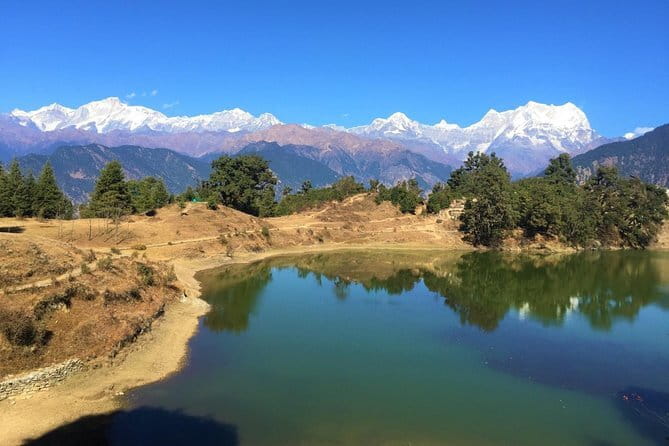
An early start is important on the pass day. From Dhakwani, the path climbs through forest until it reaches the tree line. Above the trees, the route traverses the left side of the valley below the pass, then climbs through repeated switchbacks.
The effort pays off at Kuari Pass, at about 4,265 meters. This is the trip’s main viewpoint, with broad Himalayan views waiting above the final climb. Nanda Devi, Hathi Ghodi, Dronagiri, and other high peaks form the visual reward. Take time here for photographs, but remember that altitude and cold can affect you quickly. Keep your layers close and avoid treating the pass as a place to linger without limits.
The route then climbs slightly to a hump, where Dronagiri Peak comes into view. After that, it descends to a trail junction leading toward Tapovan and Tali. You continue toward Tali, reaching a ridge with a temple and mountain views.
The pass crossing is the emotional center of the trek, but it is also the point where preparation matters most. You need a reasonable fitness level, patience on uphill sections, and the ability to walk carefully when the air is thin. The provider states that a moderate level of physical fitness is required, but the altitude and terrain mean you should take that description seriously.
Day 6: Gorson Meadow and the road to Joshimath
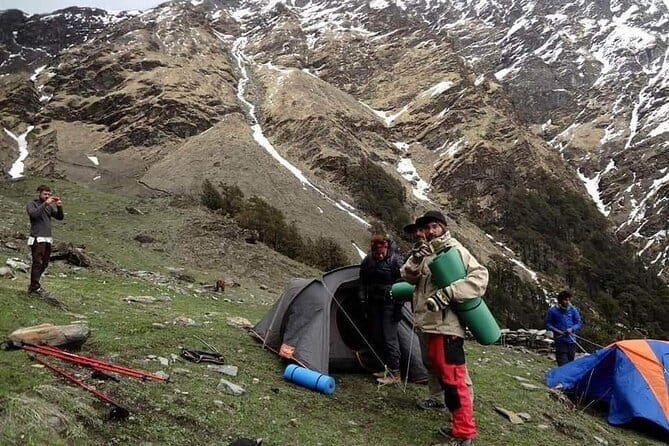
Day six is described as a more relaxed morning after the pass. The trail from Tali climbs gradually across a mountain ridge. It is narrow in places, so you still need to watch your footing, even though the route is not presented as the hardest day.
The path reaches Gorson Meadow, where the mountains open in every direction. Nanda Devi is the dominant peak among the surrounding summits. Walking across the meadow is likely to feel like a welcome change after forests, switchbacks, and loose ground.
You eventually see the concrete structures of Auli in the distance. A jeep takes you the 13 kilometers to Joshimath, a market town that supplies nearby villages. This short road transfer marks the end of the trekking section.
You also say goodbye to the ponies and porters here. That moment matters because they are not a background detail. They help make a multi-day camping route possible, carrying equipment and supplies through terrain that vehicles cannot reach.
Day 7: Returning to Rishikesh through Rudraprayag
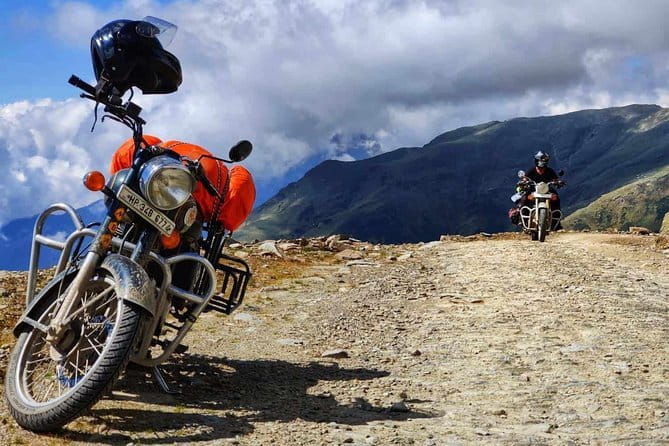
The final day starts with an early drive to Rishikesh. The road passes through Rudraprayag, where the Mandakini meets the Alaknanda. Lunch is provided en route, and arrival in Rishikesh is expected by evening.
After several days of walking, the drive may feel long. Still, it gives you one last look at the river valleys that framed the trip. You return from a high, quiet route to a major town with a clear sense of how the villages, roads, rivers, and mountain trails connect.
What the $1,188.21 price covers
At $1,188.21 per person, this is not a cheap day hike. The price makes more sense when you look at what is included: private transportation, permits and taxes, trekking tents, sleeping bags, trekking poles, head torches, breakfast for seven days, lunch for seven days, and dinner for six days.
You are also supported by ponies and porters during the trekking section. That support has real value. It means you can carry less and focus more on walking, photography, and the changing scenery.
The private format is another part of the cost. You are not placed into a large mixed group, and only your own party participates. That can be worthwhile if you want a more personal pace or are booking with family or friends.
Insurance is not included. You need to arrange your own cover before departure, with attention to trekking at high altitude and possible weather disruption. The experience requires good weather, and if conditions force cancellation, you are offered another date or a full refund.
Food, equipment, and comfort on the trail
The package includes the main camping equipment listed for the trek: tents, sleeping bags, trekking poles, and head torches. Those items reduce the amount of specialist gear you must bring, though you still need suitable clothing, footwear, and personal essentials.
Meals are also included throughout the trip, with seven breakfasts, seven lunches, and six dinners. The food is part of the practical value of the package, since arranging meals becomes difficult once you leave the larger villages.
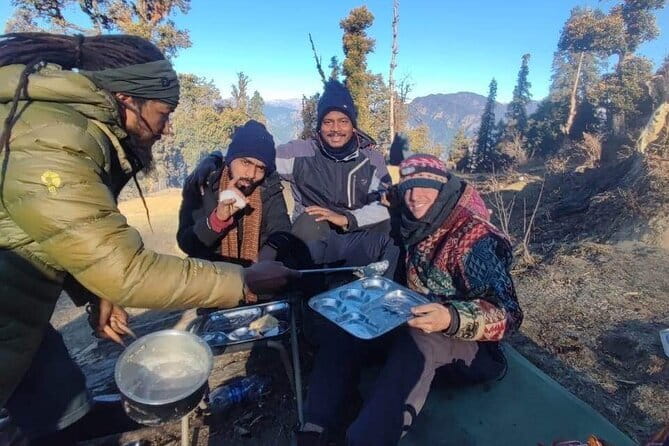
The strongest praise connected with the experience focuses on hospitality, delicious food, safety, and the kindness of the team. One particularly warm account describes good conversation and a human connection with the Mapping The Himalayas staff. That matters on a seven-day trek, where the way a team handles meals, camp routines, and tired walkers affects the whole experience.
No individual guide names are provided, so I would ask for the names of your trekking staff and the exact equipment list before paying. That is not a reason to avoid the trip. It is simply sensible preparation for a high-altitude route.
Who should book this trek
You should consider this trek if you want:
- Several days of genuine walking rather than short scenic stops
- High Himalayan views without staying on a road throughout
- Village contact and forest trails alongside major mountain panoramas
- A private group rather than a shared departure
- Camping support, porters, ponies, meals, and transport arranged together
- A demanding route that includes a high pass and steep terrain
You should think twice if you want a relaxed holiday, dislike sleeping in tents, or have limited experience with sustained uphill walking. The route includes narrow ridges, high altitude, loose moraine, and repeated climbs. A moderate fitness level is required, but you should still prepare seriously.
The trip may suit an experienced hiker who wants a less crowded route, especially since the route currently offers villages, forests, and meadows without the feel of a mass-market mountain circuit. The available feedback is very positive, but there are only three reviews, so you should not treat that small sample as proof that every departure will be identical.
Practical booking advice
The experience offers pickup and a mobile ticket. It operates from March 26, 2023, through June 18, 2026, with stated operating hours from 9:00 AM to 10:00 PM, Monday through Friday.
Confirmation is provided at booking. Service animals are allowed, and the start area is near public transportation. These details are useful, but the mountain conditions matter more than the city-side arrangements.
You can cancel for a full refund up to three full days before the start time. Cancellations or changes made inside that window are not accepted or refunded. Since weather can cancel the trek, keep flexibility in your schedule if possible.
Should you book the Kuari Pass Trek?
I would book this if your priority is a real, supported Himalayan trek with strong mountain views and a good mix of villages, forests, rivers, and open meadows. The itinerary has enough variety to keep seven days interesting, and the private format, camping equipment, meals, porters, and transport add useful value to the price.
I would not book it as a casual sightseeing add-on. The 4,265-meter pass, steep switchbacks, narrow ridge, and loose-moraine section require preparation. If you accept that effort, Kuari Pass offers the kind of route where the journey matters as much as the viewpoint at the top.
FAQ
How long is the Kuari Pass Trek?
The trek lasts approximately seven days, from the journey to Ghat through the walking route to Auli and the final drive to Rishikesh.
What is the highest point of the trek?
Kuari Pass reaches approximately 4,265 meters above sea level.
Is transportation included?
Yes. Private transportation is included, along with the village jeep transfer, the jeep ride from Auli to Joshimath, and the return drive to Rishikesh.
Are meals included?
Yes. The package includes breakfast for seven days, lunch for seven days, and dinner for six days.
Is trekking equipment provided?
Yes. Tents, sleeping bags, trekking poles, and head torches are included.
Is insurance included?
No. Insurance is not included in the tour price, so you need to arrange it separately.
Latest treks added in India
- Jogini Waterfall Trek from Manali★ 5.0 · 2 reviews
- Prashar Lake Trek★ 5.0 · 7 reviews
- Kasol + Kheerganga Trek 3D/2N, all inclusive with BanBanjara★ 3.5 · 3 reviews
- 8 Days Markha Valley Trek: Shared Tour with Meals Included★ 5.0 · 3 reviews
- Ladakh Sham Valley Trek★ 5.0 · 7 reviews
- Ladakh One Day Trek- Gyamtsa to Phyang Village★ 5.0 · 4 reviews
- 1 Day Activity Adventure Trekking Kerala★ 5.0 · 5 reviews
- Kolukkumalai Trekking with Night stay in Tent★ 5.0 · 2 reviews
7-Day Experiences, compared.
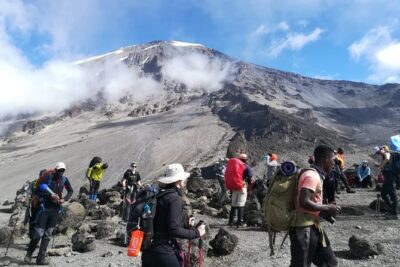
Best Kilimanjaro Adventure 7 days Machame route Trekking
Read our review →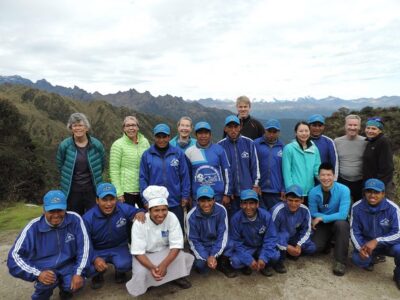
7-Day: Inca Trail Trek to Machu Picchu Group Tour
Read our review →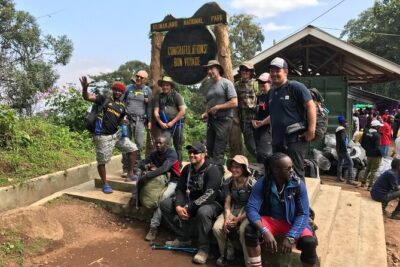
Kilimanjaro 7 Day Private Trekking Experience
Read our review →
Kilimanjaro Trekking 7Days 6Night Lemosho Route
Read our review →
7-Day Murchison Falls, Chimps & Gorilla Trekking
Read our review →Browse the lists this tour appears in