
REVIEW · CUSCO
Salkantay Trek To Machu Picchu 5 Days And 4 Nights
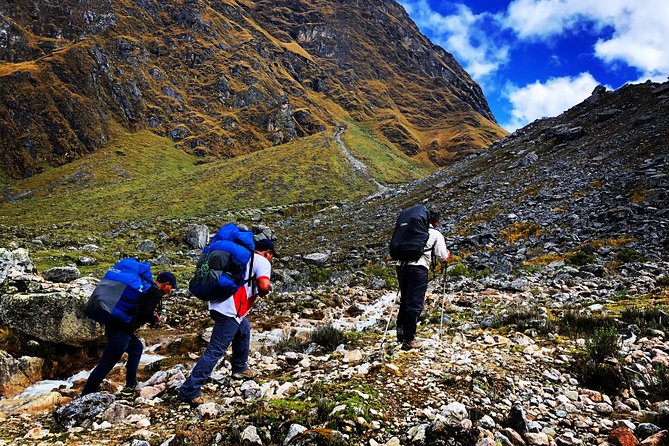
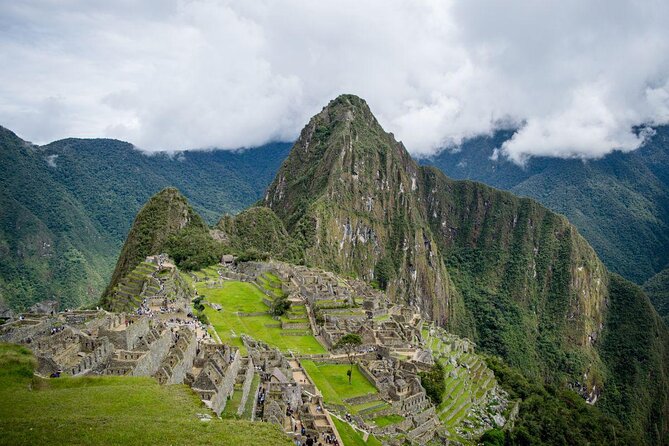
The big draw here is variety. In five days, you go from glacial mountain scenery and a 15,252-foot pass to warm rainforest, a coffee farm, Llactapata ruins, and Machu Picchu. You get the famous citadel at the end, but the trail itself is the main event.
I like the small group limit of 16, which gives your guides room to watch the pace and help with altitude. I also like the practical support: cooks, horses, tents, mattresses, pillows, a medical kit, oxygen, and an emergency horse are all part of the setup. The catch is simple: the first two days are hard, and the high altitude is no joke.
Key points to know before you book
- 15,252 feet at Salkantay Pass: Day two is the toughest stretch, with a steep climb followed by a long descent.
- Humantay Lake and Machu Picchu: You get two of Peru’s headline sights, plus several quieter trail sections between them.
- Good camp support: A chef, assistant chef, wranglers, horses, dining tent, toilet tent, hot washing water, and daily drinking water are provided.
- A real cultural and food angle: The route includes an offering at Salkantay Pass, Inca explanations, and a coffee plantation visit.
- $690 covers a lot: Meals, four nights, camping gear, a horse for 8 kilograms of belongings, trains, and private transport are included.
- Budget for extras: You still need a sleeping bag, hiking poles if wanted, Machu Picchu bus tickets, tips, and lunch on day five.
Why this Salkantay route works
The Salkantay Trek is a strong choice if you want Machu Picchu wrapped inside a proper mountain journey. This is not simply a long walk followed by a sightseeing day. The route changes character every day, which keeps the trip interesting even when your legs are tired.
You begin high among the Andes, where the air is thin and the views are broad. By day three, the trail follows the Santa Teresa River through rainforest. By day four, coffee plants and warmer air replace the stark mountain slopes. That shift in climate is one of the trip’s best features.
The support package also matters. You are not carrying the kitchen, chairs, food, tents, and cooking supplies on your back. Horses carry the group equipment, and each person can send up to 8 kilograms of personal belongings in a duffle bag. You still carry a daypack, but the load is much more manageable.
The cost is $690 per person. For five days, that is fair value, especially since it includes a bilingual guide, four breakfasts, four lunches, four dinners, camping equipment, one hotel night in Aguas Calientes, the expedition train, and private transport onward to Cusco. The price does not cover every last item, so set aside money for the sleeping bag, bus tickets to Machu Picchu, day-five lunch, and crew tips.
More Inca Trail Treks in Cusco
- Salkantay Trek Challenge – 3 Days / 2 Nights
★ 5.0 · 101 reviews - Choquequirao Trek 4 days and 3 nights
★ 5.0 · 81 reviews - Machu Picchu: 5-Day Salkantay Trek with Panoramic Train
★ 5.0 · 79 reviews
Day one: Humantay Lake at 12,467 feet
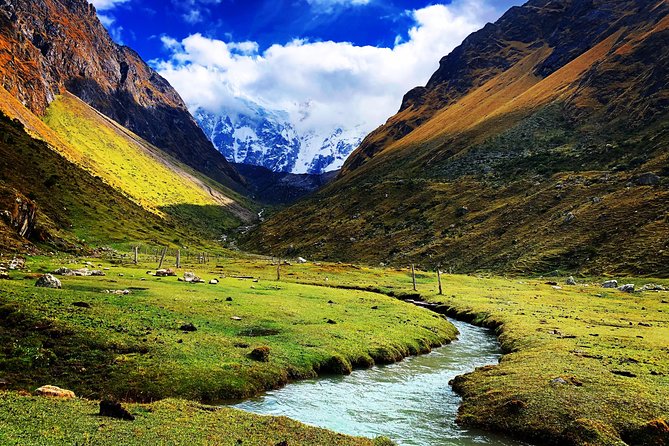
Your morning starts early, with pickup at about 4:30 a.m. The drive to Mollepata takes roughly three hours, followed by breakfast at a local house. You then continue for about an hour and 45 minutes to Soraypampa, the trailhead at 12,467 feet.
That long drive is tiring, but it gets you directly into the high country. Along the way, you begin seeing the Salkantay and Humantay mountains, so the scenery starts before the hiking does.
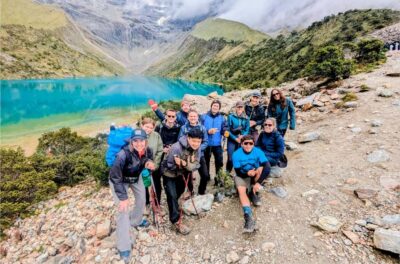
At Soraypampa, the support crew takes over the heavy logistics. Your equipment is packed and loaded onto horses while you begin the two-hour outing to Humantay Lake. The lake is the day’s visual prize, surrounded by steep mountain slopes and a cold, high-altitude setting.
The walk to the lake is short compared with later days, but altitude makes it feel harder. Take a slow pace. If you rush here, you may pay for it on day two.
After visiting Humantay Lake, you return to the trailhead and continue the day’s hike. The supplied schedule gives day one about six hours of walking in total. Exact camp details are not fully specified, so your guide’s briefing is the place to confirm the evening plan.
Day two: Reaching the Salkantay Pass
This is the day that decides if you enjoy the trek. After breakfast, you climb for about an hour to Salkantay Pass, the highest point at 15,252 feet. Even fit hikers can feel slow here because of the altitude.
At the pass, the guide leads an offering to Salkantay and explains why the place matters in Andean and Inca culture. This gives the climb a purpose beyond reaching the top. Pause, breathe, and take in the mountain setting before the long descent.
The next section drops for about two hours to Huayrac at 12,464 feet, where lunch is served. After lunch, you continue downhill for around four hours to Colpapampa, at 10,170 feet.
The total walking time is about eight hours. That is a serious day, and the steep descents can be tough on knees and ankles. Trekking poles are not included, but they are recommended and can be rented. I would treat them as useful equipment, not an optional luxury.
One encouraging point is that the route generally gets easier after the pass. You still walk for hours, but the lower altitude and gentler trail on day three provide some welcome relief.
Day three: Rainforest, waterfalls, and coffee at Lucmabamba
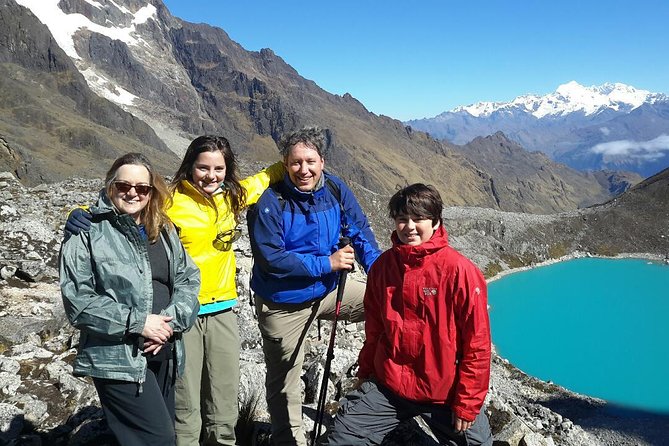
Day three changes the mood completely. You leave Colpapampa after breakfast and walk for about six hours along gentle up-and-down sections beside the Santa Teresa River.
This is the most relaxed hiking day, though six hours is still a full morning and afternoon on foot. The route passes through rainforest, with a waterfall described as the finest along the trek. The change from high, open mountain country to thick, warmer vegetation gives the journey a satisfying sense of progress.
You reach Lucmabamba around noon and have lunch at camp. In the afternoon, you visit the coffee plantation beside the campsite. This is one of the trip’s more personal touches. Instead of simply passing through rural Peru, you get time to learn about a crop grown in the area.
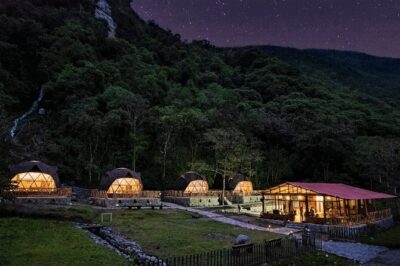
The camp setup is designed to make an outdoor night easier. Two people share a four-person tent, with a mattress and pillow provided. There is also a dining tent with tables and chairs, a kitchen tent, a portable toilet tent, and hot water for washing.
Do not expect hotel comfort. This is still camping, and the altitude, weather, and trail dust can make you grateful for simple things. The cooks are a major part of the comfort level. The food is described as multi-course, and several comments single out the chef team for excellent meals and attention to dietary needs. Specific menus are not provided, so tell the operator about restrictions before you leave.
Another trail to compare in Cusco:
- From Cusco: 7 Lakes Ausangate Trek with Breakfast and Lunch
★ 4.8 · 360 reviews - Cusco: Full-Day Rainbow Mountain & Red Valley Trekking Tour
★ 4.5 · 121 reviews - From Cusco: Rainbow Mountain Trek
★ 4.5 · 98 reviews - Ancascocha Trek To Machu Picchu 4 Days And 3 Nights
★ 5.0 · 77 reviews
Day four: Llactapata and your first view of Machu Picchu
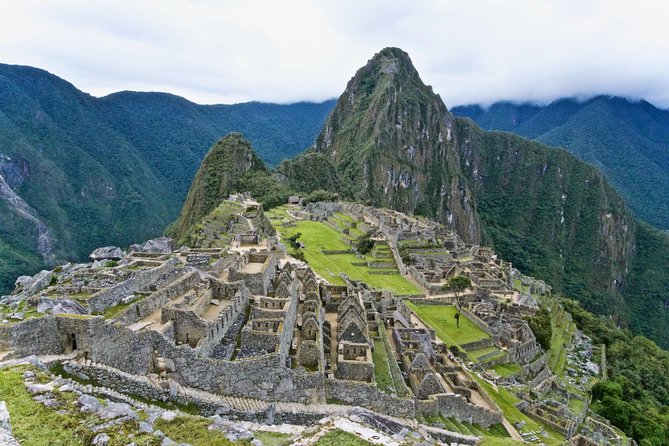
You start early again, with breakfast before a moderate climb through the rainforest. The uphill section lasts about three and a half hours and ends at Llactapata, an Inca ruin at 8,856 feet.
Llactapata is valuable because it gives you a different way to approach Machu Picchu. Rather than appearing suddenly on the final morning, the citadel first comes into view from a distance. The guide provides a thorough tour of the ruins, and this is a good point to ask questions about the wider Inca network and the site’s position across the mountains.
From Llactapata, you descend for about two and a half hours to Hydro, where lunch is served. The trail is easier on the lungs than day two, but the downhill sections still call for care.
At 3 p.m., you board the train to Aguas Calientes. The train replaces several hours of walking and gives you a proper change of pace. In Aguas Calientes, you check into a hotel, share a double room, and eat dinner at a restaurant.
This night is a useful reset before Machu Picchu. You are no longer sleeping in a tent, and you can organize your passport, camera, water, and daypack for the final morning.
Day five: Machu Picchu and the journey back to Cusco
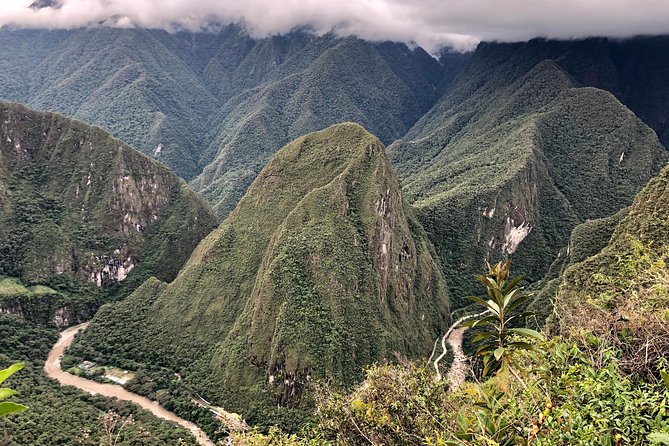
After breakfast at the hotel, you take a bus to Machu Picchu. The package includes a two-hour guided walk through the site, which is enough to give you a structured introduction while leaving some time to look around on your own.
Huayna Picchu is optional and costs extra. If you have arranged that climb, the listed start time is 10 a.m. If not, you have some free time at Machu Picchu before returning to Aguas Calientes.
Pay attention to the bus detail when budgeting. The round-trip bus ticket to Machu Picchu is not included, despite the bus ride being part of the morning plan. You also pay for your own lunch in Aguas Calientes.
After lunch, you board the expedition train toward either Ollantaytambo or Poroy. From there, private transport takes you back to Cusco. The final day is listed as about three hours, but the actual door-to-door return can feel longer once the train and van connections are counted.
What the support team provides
This trip is well suited to hikers who want a supported route rather than a fully independent trek. The guide speaks English and Spanish, and a pre-departure briefing takes place at your hotel one or two days before departure.
That briefing is important. Use it to confirm pickup time, camp arrangements, your duffle bag, train details, and what you need to carry yourself.
The included support covers:
- Bilingual guide
- Pickup and transport to Soraypampa
- Tents, mattresses, and pillows
- Kitchen and dining tents
- Portable toilet tent
- Chef and assistant chef
- Horses and wranglers for group equipment
- Horse transport for 8 kilograms of personal belongings
- Emergency horse
- Medical kit and emergency oxygen
- Hot washing water
- Boiled and cold water for bottles each morning
- Hotel in Aguas Calientes
- Expedition train and private transport to Cusco
The group limit is 16 people. That is small enough for direct contact with the guide, though group pace will still vary. The guide assignments can change, but Christian, Eddie, Ericsson, Hipo, and other guides are named in the tour material. Christian is especially praised for explaining plants, wildlife, Peruvian culture, and trail history while keeping an eye on individual needs.
Fitness, altitude, and what to pack
You need moderate physical fitness. The important phrase here is not just five days, but the combination of altitude, long walking days, steep climbs, and steep descents.
The first two days are the hardest. Salkantay Pass reaches 15,252 feet, and the route begins before your body has fully settled into the pace. Acclimatize in Cusco before the trek, walk slowly, and take the guide’s advice seriously.
Bring your original passport. If you obtained a new passport after booking, bring both the old and new documents.
Your clothing list should include trekking boots, warm layers, several shirts, socks, gloves, warm underwear, light long pants, a rain jacket, and a sun hat. You should also pack sunscreen of at least SPF 35, sunglasses, insect repellent, a headlamp, toiletries, toilet paper, wet wipes, a small towel, and spare camera batteries.
A sleeping bag is not included, though it can be rented. Hiking poles are also excluded and can be rented. The operator recommends a down or synthetic sleeping bag, but you should confirm rental terms before departure.
Who should book this trek
I would choose this route if you want more scenery and physical challenge than a short rail-and-ruins visit. It suits hikers who like the idea of carrying only a daypack while a support crew handles camp and meals.
It also works well for people who want a broad sample of Peru in one trip: high mountain lakes, Andean ritual, rainforest, coffee production, Inca ruins, a train ride, and Machu Picchu.
I would think twice if you dislike early starts, shared tents, long descents, or uncertain mountain weather. The comfort level is good for a camping trek, but this is not a gentle walking holiday.
The tour offers free cancellation when you cancel at least 24 hours before the local start time. Inside that window, the payment is not refunded, so check your plans carefully before the deadline.
Should you book the Salkantay Trek?
Yes, if you want Machu Picchu to feel like the end of a journey rather than an isolated attraction. At $690, the package gives you strong value through its food, staff, camping gear, horse support, hotel night, train, and return transport.
Book it with realistic expectations. The first two days demand patience, and you need to budget for a sleeping bag, poles, bus tickets, lunch, and tips. If you can handle the altitude and enjoy a challenging route, this five-day trip gives you a memorable mix of high mountains, rainforest, local coffee, and Inca sites without forcing you to manage every piece of logistics yourself.
FAQ
How long is the Salkantay Trek to Machu Picchu?
The trek lasts five days and four nights.
What time does pickup begin?
The listed start time is 4:30 a.m.
Is hotel pickup included?
Yes. Pickup from your hotel and transportation to Soraypampa are included on day one.
What is the highest point of the trek?
The highest point is Salkantay Pass at 15,252 feet.
How difficult is the trek?
You should have a moderate level of physical fitness. The first two days are the most demanding because of the altitude, uphill walking, and long descents.
Is a sleeping bag included?
No. A sleeping bag is not included, but one can be rented from the operator.
Can I send luggage with the horses?
Yes. A horse carries up to 8 kilograms of your personal belongings, and a duffle bag is provided.
Are meals included?
Breakfast is included five times, lunch four times, and dinner four times. Lunch on day five in Aguas Calientes is not included.
Is the bus to Machu Picchu included?
No. The round-trip bus ticket to Machu Picchu is not included.
Is Huayna Picchu included?
No. The Huayna Picchu climb is optional and costs extra.
More five-day treks in Cusco
- Ausangate Trek 5 Days
★ 5.0 · 74 reviews - Classic Choquequirao Trek – 5 Days / 4 Nights
★ 5.0 · 52 reviews - Ultimate Lares Trek & Inca Trail 5 days
★ 5.0 · 47 reviews - 5-Day: Salkantay Trek to Machupicchu and Humantay Lake
★ 5.0 · 42 reviews
Latest treks added in Cusco
- Small Group: 4-Day Inca Trail Trek to Machu Picchu★ 5.0 · 33 reviews
- Salkantay Trek: 5 Days to Machu Picchu★ 5.0 · 33 reviews
- 5 Day – Salkantay trek to Machu Picchu – Group Service★ 4.5 · 27 reviews
- Humantay Lake Full-Day Adventure: Scenic Trek and Stunning Views★ 4.5 · 39 reviews
- Inca Trail Trek to Machu Picchu – 2 Days (Small Group or Private)★ 5.0 · 31 reviews
- Salkantay 5-Day Trek To Machu Picchu★ 5.0 · 39 reviews
- 6 day Rainbow Mountain x Ausangate Trek – FlashpackerConnect★ 5.0 · 30 reviews
- Ausangate and Rainbow Mountain Trek – 3 Days / 2 Nights★ 5.0 · 35 reviews
Machu Picchu & Inca Trail Treks, compared.
Machu Picchu: 5-Day Salkantay Trek with Panoramic Train
Read our review →
Ancascocha Trek To Machu Picchu 4 Days And 3 Nights
Read our review →
4 Day Inca Trail Trek to Machu Picchu Multi day tour
Read our review →
Salkantay Trek 4 Days to Machu Picchu by Glamping Sky Lodge Dome
Read our review →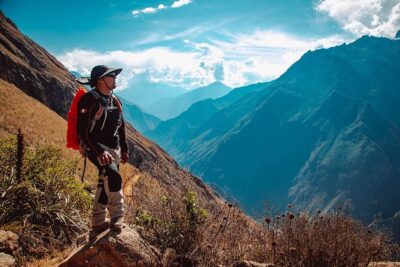
Browse the lists this tour appears in