
REVIEW · SAPA
Sapa: Muong Hoa Mountain Views and Villages Trek with Lunch
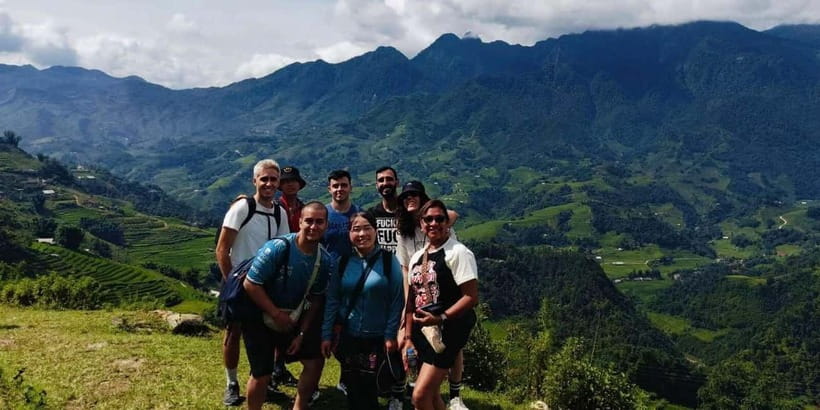
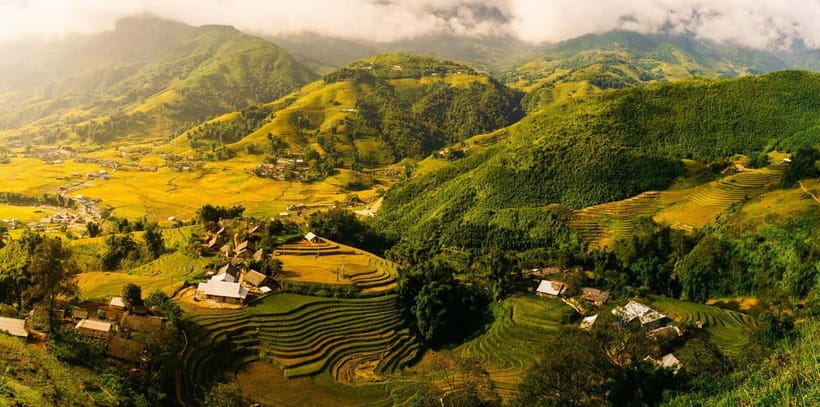
Sa Seng Mountain gives you the best reason to book this outing: after a steep one-kilometer climb, you look across Fansipan, Sapa town, and the Muong Hoa rice terraces from above. The view connects the town, valleys, river, and high peaks in one sweep.
I like the small-group size of up to 10 and the meal at a local family restaurant, which feels more personal than a standard tour stop. I also like the route through Hang Da and Hau Thao, where your guide can explain Black Hmong farming, homes, and marriage traditions. The catch is simple: this is a hard trek, not a gentle village stroll, and pickup reliability deserves extra attention.
Key points to know
- Sa Seng summit views: A steep one-hour climb leads to wide views of Fansipan, Sapa, and the Muong Hoa valley.
- Two Black Hmong villages: Hang Da and Hau Thao offer a close look at daily work, homes, animals, and rice farming.
- Family-style lunch: Your midday meal is served at a small restaurant run by a local family.
- Guides can shape the day: Châu A Su and Su have been praised for friendly, informative guiding.
- Small group, low price: At $20, the tour offers transport, lunch, a guide, and a massage voucher for up to nine hours.
- Demanding terrain: Steep inclines, uneven paths, and heights make proper shoes and water essential.
The climb to Sa Seng Mountain
The morning starts at 9:00 at Massage Lits, 01 Hoang Van Thu, in Sapa. A van and driver take you toward the trailhead, where the walking begins with about one kilometer uphill on a small mountain path.
That opening climb is the test of the day. The route takes about an hour and includes steep sections, so you should begin with water in your pack and shoes that grip well. If you are used to flat city walks, the first climb may feel tougher than the low price suggests.
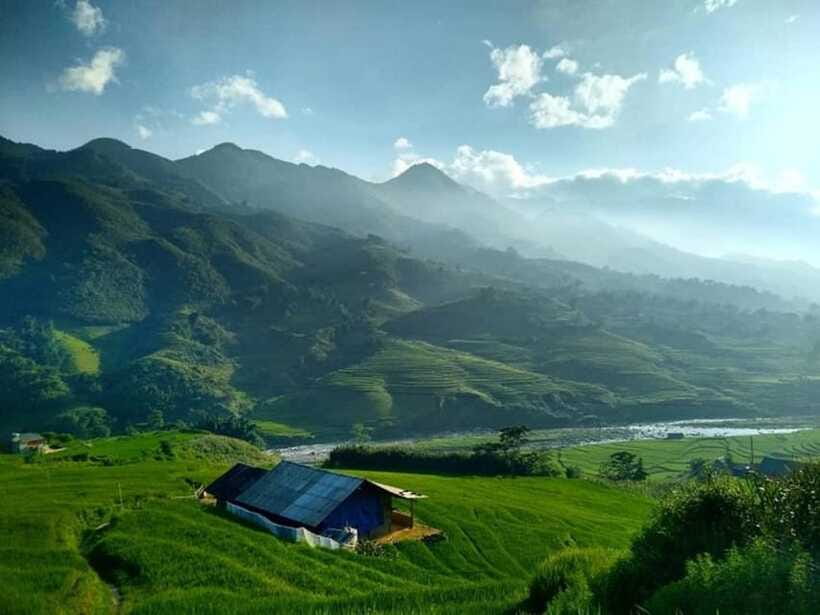
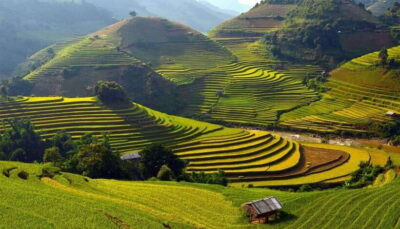
The reward comes at the top of Sa Seng Mountain. From here, you can see Fansipan, at 3,143 meters the highest mountain in Indochina, along with Sapa town below. You also get a high view into Muong Hoa valley, known for its large rice terraces, and the broad river valley that cuts through the area.
I like this start because it gives you a clear sense of Sapa’s geography. Instead of seeing isolated terraces from a narrow path, you can look down and understand how the mountain slopes, farms, villages, river, and town fit together.
Bring a camera, but do not let photography turn the climb into a race. The exact views depend on weather, and mist can cover Fansipan or soften the terraces. Even on a cloudy day, the climb still gives you a useful high point, but clear conditions make the summit stop far more impressive.
More Rice Terrace Treks in Sapa
- Sa Pa: Muong Hoa Valley Trek and Local Ethnic Villages
★ 4.6 · 864 reviews - Explore Sapa by TrekkingAdventures, Mountain,Rice fields
★ 4.9 · 229 reviews - Sa Pa: 6-Hours Muong Hoa Valley Trek with Local Ethnic guide
★ 4.5 · 178 reviews
Downhill through Hang Da village
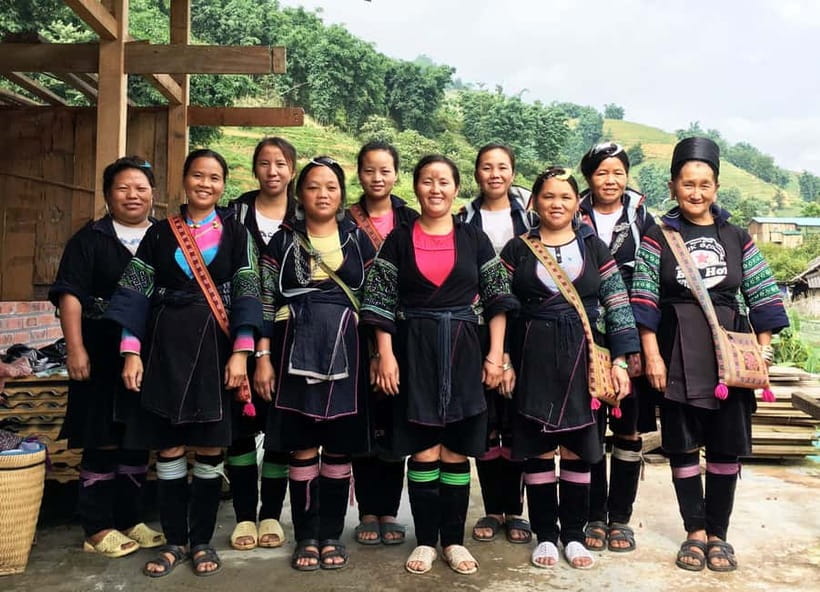
After time at the summit, the route heads down the mountainside toward Hang Da, a village of the Black Hmong ethnic minority. The downhill section may feel easier on your lungs, but it can put more pressure on your knees, especially on wet or uneven ground.
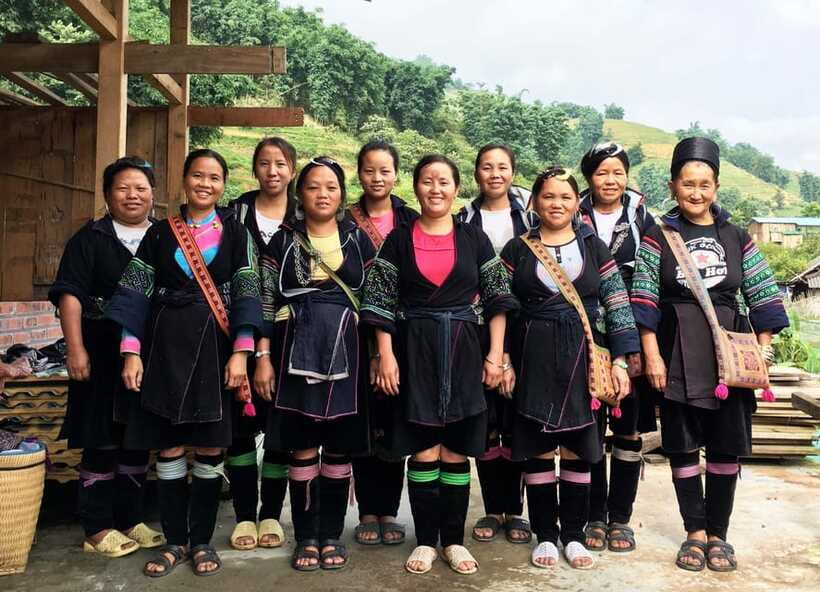
Hang Da is valuable because the tour does not treat the village as a quick photo stop only. Your guide can help explain how local families live and work, and you may see animals such as buffalo, cows, and pigs. These animals are not decorative farmyard details. They are important to local households, so noticing them adds context to the village scene.
Your guide also gives you a chance to ask questions about Black Hmong customs. The tour specifically includes an explanation of unique Hmong marriage traditions, a detail that gives the visit more depth than simply walking past houses and fields.
You should still be respectful with cameras and people. The supplied information does not promise formal visits inside homes or arranged cultural demonstrations, so expect an outdoor village walk and explanations from the guide rather than a staged performance.
Lunch at a local family restaurant
Lunch comes at a small restaurant run by a local family. It is included in the $20 price, along with transportation and guiding, so this meal adds real value to the day.
The exact menu is not specified, and you should not book this expecting a named dish or a restaurant with a broad selection. Think of it as a practical local meal during a long walk. You may find the setting more modest than a town restaurant, but that is part of the appeal.
A proper pause matters here. By lunchtime, you will already have climbed Sa Seng and walked downhill to Hang Da. Use the break to drink water, rest your legs, and check your shoes before the afternoon section.
The food has been one of the most praised parts of the experience. Amelie from Austria specifically enjoyed the meal and described the day as highly satisfying. That fits the tour well: the lunch is not an extra add-on, but a useful part of a full mountain day.
Hau Thao and the working rice fields
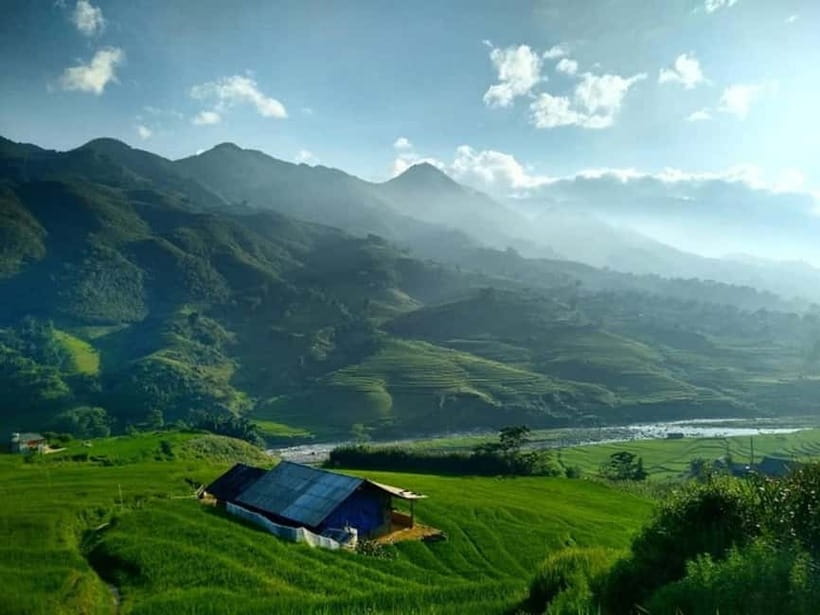
After lunch, you continue on a small road toward Hau Thao, another Black Hmong village. This section is less about reaching a single viewpoint and more about seeing ordinary rural life.
At the right time of year, you may see people planting or harvesting rice. Timing matters because farm work changes with the season. The tour can show you the fields, but it cannot promise that planting or harvesting will be taking place on your particular date.
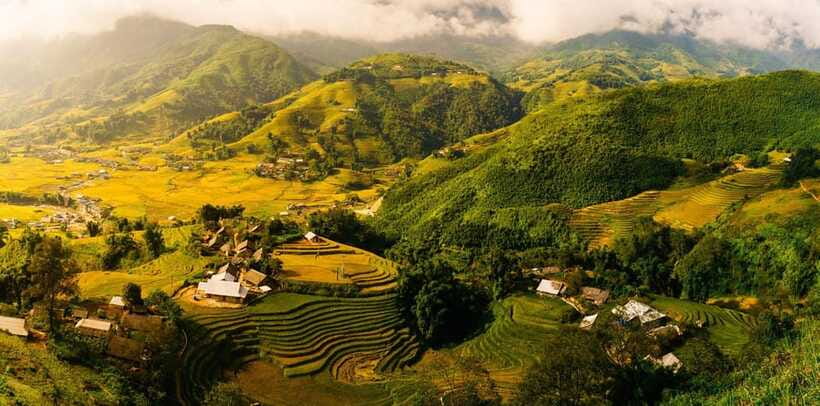
Hau Thao is also where the guide can explain rice-field work and traditional house-building methods. These details help you read what you are seeing. A terrace is not just a scenic pattern on a slope. It reflects years of work, careful water management, and practical building choices suited to mountain conditions.
The route through Hau Thao is one of the strongest parts of the day for anyone who wants more than mountain photographs. You get scenery, but you also get a look at how the local economy and homes relate to the hills.
Guide quality matters especially here. Châu A Su and Su have received strong praise for being friendly and for explaining the local surroundings, nature, and wildlife well. If your guide is as engaged as these two were, the walk becomes a conversation rather than a march from one stop to the next.
More Rice Terrace Treks in Vietnam
- Sapa Muong Hoa Valley & Ta Van Eco Village Scenic Tour (No Trek)
★ 5.0 · 144 reviews - Daily Tour: Sapa Trekking in Muong Hoa valley, Bamboo forest
★ 5.0 · 121 reviews - 1-Day Sapa Long Trek – Rice Field Terrace, Ethnic Culture
★ 4.9 · 62 reviews - 3-Day Trek in Amazing Muong Hoa Valley & ethnic Homestay
★ 5.0 · 49 reviews
The final walk to Giang Ta Chai
At about 15:30, you walk toward Giang Ta Chai village, where the transport waits on the main road. The van then returns you to Sapa and the original meeting point at Hoang Van Thu.
This final stretch is worth noting when you judge the nine-hour duration. The van does not collect you at every village entrance. You finish with another walk before reaching the vehicle, so you should save some energy for the last section.
The route gives you a full day on foot, but it is not nine hours of continuous trekking. It combines van transport, uphill and downhill walking, village visits, a meal, guided sightseeing, and photo stops. That balance makes the day manageable for fit walkers, though the steep opening climb remains the main challenge.
How much value do you get for $20?
At $20 per person, this is a strong-value outing if you want a full day in the mountains without arranging transport, lunch, and a guide separately. The price includes round-trip van transport, a driver, an English-speaking guide, lunch at a local family restaurant, and a 20 percent massage discount at Massage Lits after the tour.
The massage voucher is a pleasant extra, but I would treat it as a bonus rather than a reason to book. The real value comes from the route and the services bundled into the price.
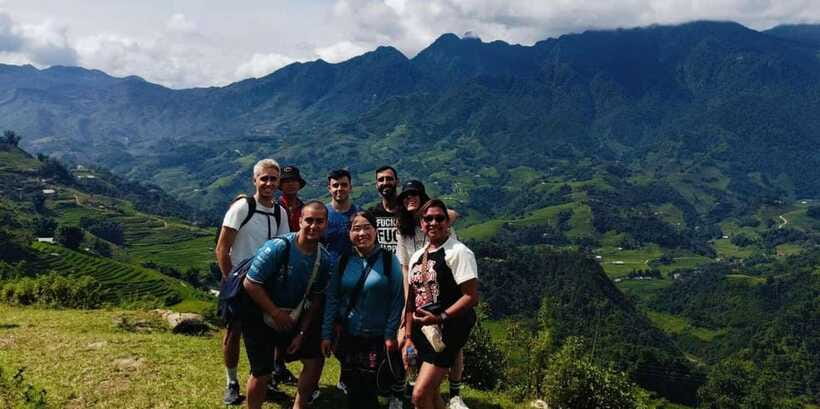
The small-group limit of 10 matters. A compact group makes it easier to hear the guide, ask questions, and keep a steady pace. Some departures may be much smaller. One booking had only two people, which allowed plenty of conversation with guide Su. A small group can also make the village sections feel less intrusive.
There is one important value warning: a cheap tour is not useful if you spend the morning waiting for a van. Two low ratings report that no one arrived at the meeting point. Most of the available ratings are positive, and the overall score is 4.3 from 28 ratings, but I would still confirm the pickup point and time before departure. Arrive early, keep the operator’s contact details handy, and do not schedule an important same-day flight or train immediately after the tour.
Who should book this trek?
I would choose this tour if you want mountain views and village life in the same day. It suits active visitors who can handle a steep uphill walk, a long downhill section, and several hours of uneven walking.
It is a good fit if you prefer a small group and a local guide over a large sightseeing bus. The English guide can explain Black Hmong customs, farming, house construction, and marriage traditions, giving the route more meaning.
You should think twice if you have back problems, limited mobility, vertigo, or a strong fear of heights. Pregnant women are also advised not to join. The steep climb and mountain paths are not suitable for those conditions.
Wear comfortable trekking shoes, and bring water, snacks, sunscreen, a hat, and a camera. Trekking gear is recommended. Smoking is not allowed during the activity.
What the ratings suggest about the experience
The strongest praise focuses on the scenery, the amount of walking, the food, and the guides. Carlos singled out the beautiful views and guide Châu A Su. A visitor from Ireland had a particularly personal day with guide Su when only two people joined, making it easier to talk about local nature and wildlife.
Several high ratings describe the rice fields and mountain peaks as the best part. That matches the route: Sa Seng gives you the big view, while Hang Da and Hau Thao bring you close to the farms and homes below.
The negative side is not about the walking itself. It concerns pickup problems. Two people reported that the tour did not arrive at the meeting point, creating a serious loss of time. That issue is too important to ignore, especially if you have only one day in Sapa.
I would book with a little practical caution. Confirm that the meeting point is Massage Lits at 01 Hoang Van Thu, arrive before 9:00, and make sure you have enough time built into your Sapa schedule.
Should you book the Sa Seng trek?
Book this tour if you want a low-cost, active day with high mountain views, Black Hmong villages, a local lunch, and an English-speaking guide. The route offers more substance than a quick viewpoint visit, and the $20 price covers the main costs you would otherwise need to arrange yourself.
Skip it if you want an easy walk, dislike steep paths, or need dependable timing for an onward connection. The pickup reports mean I would not pair it with a tight travel schedule.
For fit walkers who can accept a demanding climb and a modest village lunch, this is a practical way to see the Sapa area beyond town. The combination of Sa Seng’s broad views, Hau Thao’s working fields, and the chance to talk with guides such as Su or Châu A Su gives the day its real appeal.
FAQ
Where does the tour start?
The meeting point is Massage Lits at 01 Hoang Van Thu in Sapa.
What time does the tour begin?
Pickup is scheduled for 9:00.
How long does the tour last?
The activity lasts about nine hours and ends after transport returns to Hoang Van Thu.
What villages does the tour visit?
The route includes Hang Da and Hau Thao, both villages of the Black Hmong ethnic minority. The final walk goes toward Giang Ta Chai, where the transport waits.
Is lunch included?
Yes. Lunch is provided at a small restaurant run by a local family.
Is the trek difficult?
Yes. The tour includes a steep one-kilometer uphill trail and about an hour of hard trekking to reach Sa Seng Mountain. Comfortable shoes and suitable trekking gear are recommended.
Who should not join this activity?
The tour is not suitable for pregnant women, people with back problems, people with mobility impairments, people afraid of heights, or people with vertigo.
More Rice Terrace Treks in Sa Pa
- Muong Hoa Valley Trek & Homestay Experience – 4D3N
★ 5.0 · 42 reviews - Sapa: Muong Hoa Valley View & Villages Trek with Local Guide
★ 5.0 · 25 reviews - From Sapa: Muong Hoa Valley View & Village Trek 1-Day
★ 5.0 · 21 reviews - SAPA: 1-DAY TREKKING TOUR WITH LOCALS, LUNCH & RICE FIELDS
★ 4.7 · 18 reviews
Latest treks added in Sa Pa
- Soob Sapa Trekking Tour★ 4.3 · 3 reviews
- Sapa: Y Linh Ho – Lao Chai, and Ta Van Trekking Day Tour★ 5.0 · 25 reviews
- Sapa Trekking Private Tour With Ethnic Female Tour Guide★ 4.9 · 24 reviews
- Sapa Trekking – Waterfalls And H’mong Villages★ 5.0 · 2 reviews
- Sapa: Trekking Through Terraced Rice Fields & Valley 1 Day★ 4.8 · 4 reviews
- Sapa: Ta Phin Village Trek with Lunch and Bathing Experience★ 4.7 · 13 reviews
- Sapa Trekking Guide Francophone 2 days – 1 night★ 5.0 · 2 reviews
- Sapa small groupe activities: 1 Day trek – Meet the locals★ 4.7 · 3 reviews
Rice Terrace Treks, compared.
Muong Hoa Valley Trek and Local Ethnic Villages
Read our review →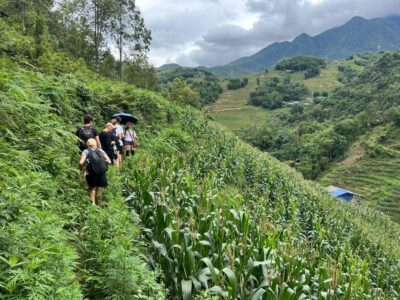
Explore Sapa by TrekkingAdventures, Mountain,Rice fields
Read our review →
Selogriyo Temple and Trekking Java Rice Terraces, hidden waterfall -Nature Java
Read our review →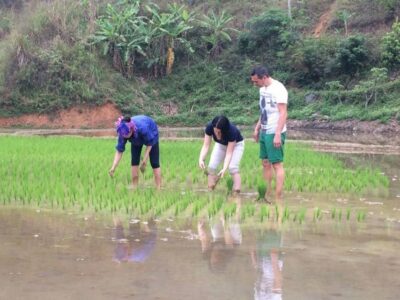
6-Hours Muong Hoa Valley Trek with Local Ethnic guide
Read our review →
Sapa Muong Hoa Valley & Ta Van Eco Village Scenic Tour (No Trek)
Read our review →
Daily Tour: Sapa Trekking in Muong Hoa valley, Bamboo forest
Read our review →
Rice Terrace, Holy Water Temple & Waterfalls Trek Tour
Read our review →Browse the lists this tour appears in