
REVIEW · HANOI
Sapa Trek Tour with Sleeper Bus/Night Train – Overnight at Hotel
Sapa’s best moments come on foot, where rice terraces, mountain paths, and village life replace Hanoi’s traffic and noise. This three-day plan gives you Cat Cat, Lao Chai, and Ta Van, with a local English-speaking guide to explain what you are seeing.
I like the small maximum group of 15, which should make the walking pace and village visits easier to manage. I also like the choice of bus, sleeper bus, or night train, plus the option to continue from Sapa to Ha Giang instead of returning to Hanoi.
The main caution is the schedule. The detailed plan shows a return to Hanoi on Day 2, while Bac Ha appears on Day 3 and the inclusions mention hotel nights in Sapa and Bac Ha. Confirm which version you are booking before paying.
Key points to know before booking
- Cat Cat starts the Sapa visit: See a Black Hmong village, waterfall, stream, terraces, and a French-era hydroelectric plant.
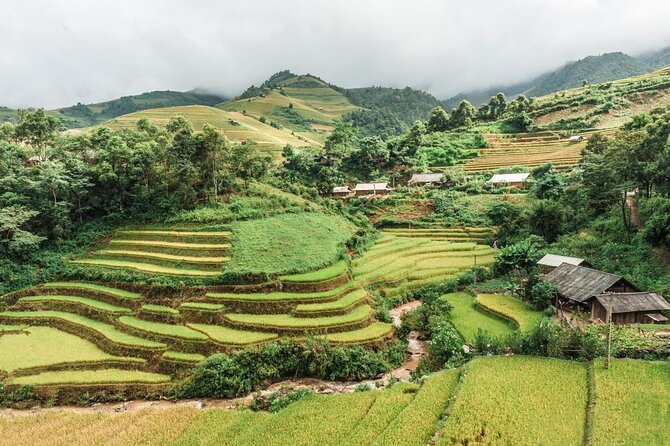
- Lao Chai and Ta Van provide the strongest trekking: The route follows rice terraces and the Muong Hoa Stream through Black Hmong and Zay communities.
- The group is capped at 15: That is a useful size for a guided walk on village paths.
- Transport choices change the experience: Options include an air-conditioned bus, sleeper bus, and overnight train, depending on the package selected.
- Bac Ha is a separate-feeling addition: Sunday Market, Pho village, and Hoang A Tuong’s Castle require careful confirmation because the main schedule returns to Hanoi before this day.
- The $66 price can be good value: Meals, accommodation, transfers, guides, and entrance fees are listed as included, but optional transport and add-ons cost extra.
From Hanoi to Sapa by morning highway bus
Your trip begins at 6:30 a.m. from 160 Tran Quang Khai in Hanoi’s Hoan Kiem area. The ride to Sapa takes about six hours, with two or three breaks along the highway.
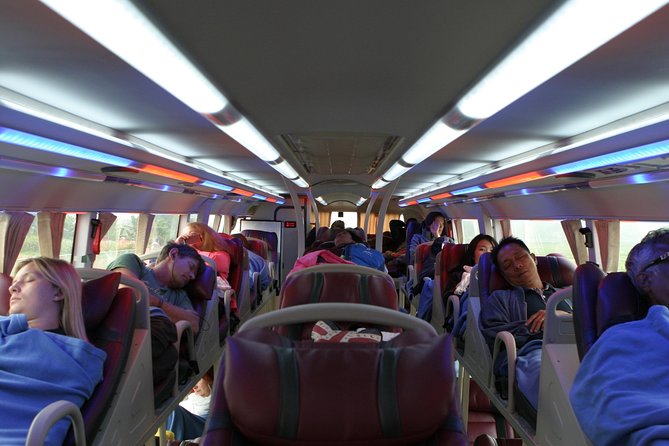
That early departure is not glamorous, but it is practical. You reach Sapa around 1 p.m. rather than losing most of the day to transport. The listed vehicle may be an air-conditioned bus or a sleeper bus, depending on the option you choose. An overnight train is also offered under some packages, so read the transport description closely at booking.
The bus arrives at the center of the trip: Sapa town. This matters because you can reach the hotel, restaurants, shops, and meeting points without a long extra transfer. After arrival, the guide takes you to the hotel for lunch and helps you prepare a light bag for the first walk.
You should keep your main luggage organized and carry only what you need for trekking. The tour specifically asks you to bring sport shoes and comfortable clothes. That advice is worth taking seriously, since the program includes several hours of walking on village routes and around terraces.
More train journeys in Hanoi
- Sapa: 3-Day, 3-Night Trek and Hotel with Overnight Train
★ 4.2 · 64 reviews - Sa Pa Trekking 2 Days 3 Nights Homestay by Night Train
★ 4.5 · 11 reviews - Trekking Sapa – Bac Ha Market: Sleep on Train & Homestay
★ 4.5 · 7 reviews
Cat Cat Village and the first afternoon on foot

After lunch, you set out for Cat Cat with a local Hmong guide. The walk lasts about four hours, including time in the village and at nearby sights.
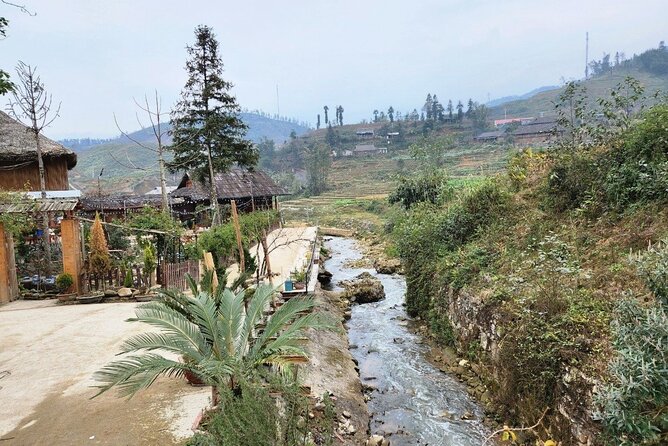
Cat Cat is home to Black Hmong people. The visit includes a waterfall, the Muong Hoa Stream, terrace fields, a school for local children, and a hydroelectric plant built during the French period. These details give the afternoon more range than a simple viewpoint stop. You see both the natural setting and parts of the village’s working life.
The route is described as a short trek, but four hours is still a real walking outing. The paths may feel easy for active visitors and more demanding for anyone unused to uneven ground. Good shoes matter more here than stylish clothes, and you will want water and a small day bag.
Dinner begins around 6:30 or 7 p.m. Afterward, you have free time to explore central Sapa on your own. That open evening is useful. The guided portion gives you structure, while the free time lets you choose your own pace instead of being shepherded from one stop to another.
The hotel is in central Sapa, according to the tour details. That location makes the evening simple, though the exact hotel name and room standard are not specified. If a private room, bed arrangement, or hotel category matters to you, ask before booking.
Lao Chai and the Muong Hoa route
The second day begins with breakfast at the hotel. The main trek leads through rice terraces and along the Muong Hoa Stream toward Lao Chai, a Black Hmong village surrounded by the Hoang Lien Son Mountains.
This is likely the strongest walking section of the program. Cat Cat gives you a close look at one village, while Lao Chai and the route toward Ta Van open up the broader countryside. The terraces are the visual reason many people come to Sapa, but the value of walking through them is that you see how villages connect to the land rather than simply photographing it from a road.
The listed time for Lao Chai is about four hours. The guide can help explain village life and the communities you pass, but no guide name is supplied in the booking details. The description does specify a local English-speaking guide with substantial experience, and one published account praised the guide’s English, friendliness, and local connection.
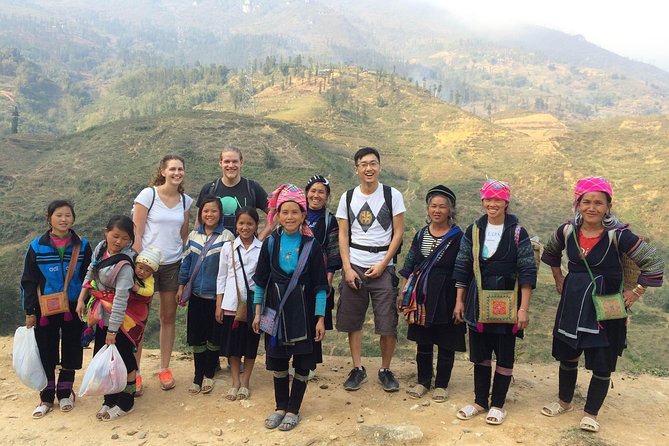
That local presence matters. Sapa’s scenery is easy to admire, but the cultural side is harder to understand without context. A guide can explain the difference between Black Hmong and Zay communities, point out village features, and help you move through rural areas respectfully.
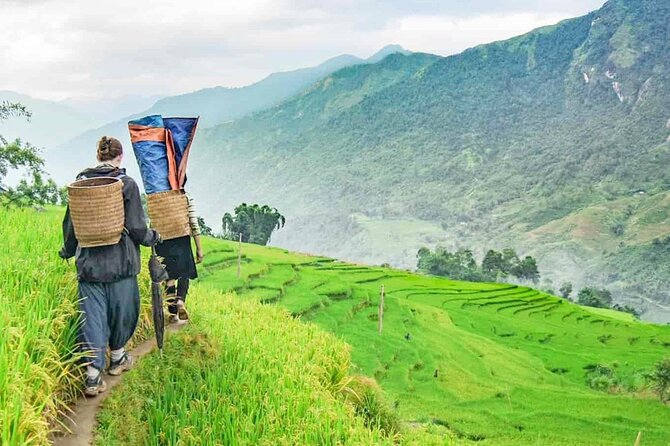
The pace is not presented as a hard mountain expedition. Still, you should expect a physical day. The tour is aimed at active people who enjoy remote walking, and the clothing advice is simple for a reason: wear shoes that can handle a long route and clothes you can move in.
Ta Van and the Zay village setting
From Lao Chai, the walk continues to Ta Van, home to Zay people. The village sits on flatter ground and is known for wooden houses and views across terrace fields.
Ta Van is a useful contrast with Lao Chai. Instead of seeing only one ethnic community, you get a closer look at two distinct village settings within the same Sapa region. The visit lasts about an hour, so do not expect a long formal program. The appeal is the walk itself, the houses, the fields, and the chance to observe daily life at a slower pace.
After the village visit, the schedule calls for lunch at the hotel. The bus leaves Sapa for Hanoi at about 1:30 p.m. and reaches the original Hanoi meeting point around 8:30 p.m., allowing about five and a half to six hours on the road.
This makes Day 2 quite full. You trek in the morning, eat lunch, and then spend the afternoon and evening on the return bus. You gain the convenience of covering Sapa in a compact period, but you give up a relaxed final evening in the mountains.
More evening departures in Hanoi
- Hanoi – Sapa 2 Days 1 Night Overnight At Homestay
★ 5.0 · 899 reviews - Sapa 3 Days 2 Nights Trekking Tour (1 Night In Ta Van Village, 1 Night In Hotel)
★ 5.0 · 699 reviews - Hanoi – Sapa 3 Day 2 Night Trekking With Hotel & Homestay
★ 5.0 · 389 reviews - Hanoi – Sapa 2 Days 1 Night Overnight At Local Homestay
★ 5.0 · 233 reviews
The Fansipan option and what it changes

The tour offers Fansipan Peak by cable car for an extra fee, paid directly during the trip. This is an optional add-on, not part of the stated $66 price.
Because the main Day 2 plan already includes the Lao Chai and Ta Van trek, adding Fansipan may change the schedule. The supplied details do not explain exactly how the cable-car visit fits into the walking route, how long it takes, or what the extra charge is.
If reaching Fansipan is a priority, ask the operator for a revised timetable before departure. If your main goal is village walking, the included route may be the better use of your time and energy.
Bac Ha Sunday Market, Pho village, and the Hmong castle
Bac Ha is presented as a major optional or extended part of the experience. Its market takes place only on Sunday morning, so timing is crucial.
The market brings together several ethnic communities, including Red Hmong, Zay, Red Dao, and Tay people. The description focuses on the old-style exchange of goods, with animals, household items, souvenirs, and produce changing hands. That makes Bac Ha quite different from a standard tourist market. You see a regional meeting place where buying and selling remains central to the visit.
The market visit lasts about three hours. Afterward, you can walk along the peaceful road through Pho village, located close to Bac Ha Market. This adds a quieter village walk after the crowded market atmosphere.
The final stop is Hoang A Tuong’s Castle, listed at about 30 minutes. It was the former home of a Hmong ruler and his family. The stop is short, but it gives the Bac Ha section a historical focus alongside the market and village scenes.
Here is the important planning issue: the detailed schedule places Bac Ha on Day 3, but the Sapa plan sends you back to Hanoi on Day 2. The inclusions also refer to hotel accommodation in central Sapa and Bac Ha, plus private car and guide service for Bac Ha if that option is selected.
That suggests the operator sells more than one arrangement, rather than one single fixed route. You may be choosing a Sapa-only version, a Bac Ha extension, or a plan with different transport. Confirm the exact number of nights, departure city after Bac Ha, and hotel locations before booking.
Bus, sleeper bus, or night train

Transport is one of the tour’s biggest choices. The standard information refers to transfers between Hanoi and Sapa by air-conditioned bus or sleeper bus, while an overnight train is also listed for selected options.
A daytime bus gets you to Sapa quickly enough for an afternoon visit. A sleeper bus may give you a different seating arrangement, but the exact vehicle depends on the package. A night train can save daytime hours, yet the listing does not specify the train company, cabin type, or station transfer details.
For the return, the stated bus leaves Sapa at 1:30 p.m. and reaches Hanoi around 8:30 p.m. That timing is clear for the main Sapa itinerary. If you choose the Ha Giang option instead, two departures are listed from Sapa: an 18-seat limousine at 2:30 p.m. from May Hotel, or a 40-seat sleeper bus at 7:30 p.m. from its meeting point.
Both Ha Giang transfers take about six hours and require an extra payment. This is a useful route for people building a longer northern Vietnam trip. You can continue from Sapa toward Ha Giang instead of returning to Hanoi, but you need to arrange and pay for that option in advance.
What the $66 price covers
At $66 per person, the package can offer solid value if you want transport and meals bundled together. The listed inclusions cover hotel accommodation, Hanoi to Sapa transfers, entrance tickets, local English-speaking guides, and meals.
The meal allowance is substantial on paper: three lunches, two breakfasts, and two dinners are listed. The exact meal locations and menus are not given, so do not assume every meal is a large restaurant feast. Drinks are not included, and personal spending remains your responsibility.
The price also depends on the option you select. An overnight train, a particular bus type, Fansipan cable car, Bac Ha private touring, and the direct Ha Giang connection may not all be part of the base rate. Holiday periods add a surcharge of 700,000 Vietnamese dong per person for April 30, May 1, September 1 through 3, December 31, and January 1.
The small group limit helps the value. A maximum of 15 people is more manageable than a large coach group, especially on village paths. You receive a guide without paying the cost of a fully private Sapa tour.
Who should book this Sapa trip
I would recommend this experience to you if you want a compact introduction to northern Vietnam and are comfortable with long transport days and several hours of walking. It suits active visitors who want terraces and villages rather than a resort-style stay.
It also works well for people who prefer a guide for rural routes. The local guide, included meals, and central hotel reduce the amount of planning you need to do yourself.
You may want a different plan if you want a slow Sapa visit, a fixed hotel standard, or a clearly defined three-night route. The mix of optional transport and the Bac Ha schedule requires careful confirmation. The tour is practical, but it is not perfectly simple on paper.
Most people can participate, according to the supplied details, and public transportation is nearby. That does not remove the need for reasonable walking fitness. Ask about the route if you have mobility concerns, since the program includes village trekking rather than only paved streets.
The cancellation terms are fairly strict close to departure. Cancel at least six full days before the start for a full refund. Cancellation two to six days ahead receives a 50 percent refund, while cancellation less than two full days ahead is nonrefundable. Changes follow similar cutoffs.
Should you book it?
Book this tour if you want Sapa’s key village walks in a short package, value included meals and transfers, and like having options for Fansipan, Bac Ha, or Ha Giang. The Cat Cat, Lao Chai, and Ta Van route gives you a good mix of scenery and village life, while the group cap keeps the outing reasonably personal.
Before booking, send one clear question to Go Asia Travel: ask for the exact transport, hotel nights, meal count, and route for your chosen option. Pay special attention to Bac Ha, since it appears as a Day 3 visit even though the main schedule returns to Hanoi on Day 2.
If those details match your plans, $66 can be a sensible deal for an active Sapa sampler. If you want a leisurely stay or dislike schedule uncertainty, choose a simpler Sapa package with a fixed hotel and transport plan.
FAQ
Where does the tour begin in Hanoi?
The group meets at 160 Tran Quang Khai, Ly Thai To, Hoan Kiem, Hanoi. Departure is scheduled for 6:30 a.m.
How long does the bus ride from Hanoi to Sapa take?
The journey to Sapa takes about six hours and includes two or three rest stops.
What villages are included in the Sapa trekking?
The route includes Cat Cat, Lao Chai, and Ta Van. Cat Cat is associated with Black Hmong people, while Ta Van is home to Zay people.
Is Fansipan included in the price?
No. Fansipan Peak by cable car is an optional extra, with payment made directly during the tour.
Does the tour include Bac Ha Market?
Bac Ha Market appears in the Day 3 plan and is available with a private tour option. The market takes place only on Sunday morning. Confirm the exact route and hotel arrangement before booking because the main Sapa schedule returns to Hanoi on Day 2.
Can I continue from Sapa to Ha Giang?
Yes. Optional buses leave Sapa for Ha Giang at about 2:30 p.m. and 7:30 p.m. The ride takes around six hours, and an extra fee applies.
What should I bring for the trek?
Bring sport shoes and comfortable clothes. Drinks, travel insurance, tips, VAT, and personal expenses are not included.
Latest treks added in Hanoi
- From Hanoi : Sapa Moutain Trek – Halong bay Heritage★ 4.5 · 25 reviews
- Trekking In Ha Giang 5 Days★ 5.0 · 4 reviews
- Trekking around Ha Giang 5 days 4 nights★ 3.0 · 2 reviews
- 8-Days Hanoi, Sapa Trekking And Halong Bay Cruise★ 5.0 · 8 reviews
- 2-Day Trekking in Sa Pa from Ha Noi by sleeping bus★ 5.0 · 4 reviews
- Hanoi: 3D2N Mu Cang Chai Visit All Attractions, Trek, Ethnic Life★ 5.0 · 3 reviews
- Mai Chau – Pu Luong trekking 3 days 2 nights★ 4.5 · 7 reviews
- Sapa trekking 2days by bus from Hanoi ( over night in homestay)★ 5.0 · 21 reviews
Train Experiences, compared.
Tour with the Mountain Train, Trek to Mystic Forest and Castle
Read our review →
Machu Picchu: 5-Day Salkantay Trek with Panoramic Train
Read our review →
3-Day, 3-Night Trek and Hotel with Overnight Train
Read our review →
4-Day Lares Trek to Machu Picchu with Panoramic Train
Read our review →
4-Day Salkantay Trek to Machu Picchu, Panoramic Train
Read our review →
Sa Pa Trekking 2 Days 3 Nights Homestay by Night Train
Read our review →
Explore Sa Pa with Overnight Train & Sleeper Bus & Trekking
Read our review →Browse the lists this tour appears in