

REVIEW · HANOI
Sapa: 3-Day, 3-Night Trek and Hotel with Overnight Train
Sapa’s best moments come on foot, far from the town center. This trip takes you through Muong Hoa Valley, past rice terraces and mountain villages inhabited by Hmong, Zay, and Red Zao communities, then gives you a night in a Ta Van homestay rather than another hotel.
I like the practical mix of a soft hotel night and a homestay, plus the way the overnight train saves a daytime travel haul. The local guides, including Chu, Mai, Su Su, and Ai on different departures, add useful context and make time for photos and village stops. The catch is the 9-kilometer trekking, which can be muddy and demanding, while sellers may follow you and press local goods on you.
Key points to know before you book
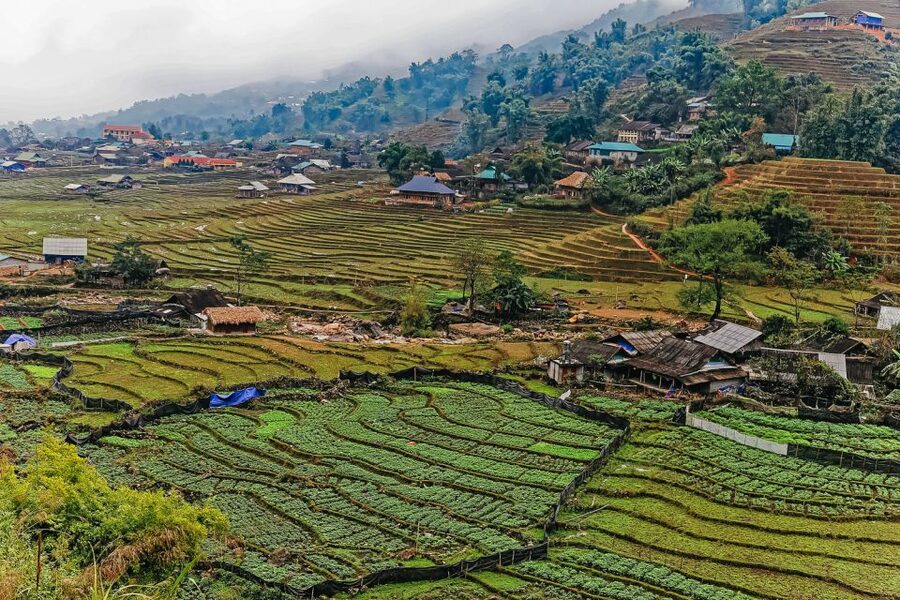
- The trip starts with a 10 PM overnight train: You travel from Hanoi to Lao Cai in a shared four-bed, air-conditioned cabin, then transfer to Sapa early the next morning.
- The strongest walking comes on Day 2: The route from Y Linh Ho through Lao Chai and into Ta Van follows valley paths, rice terraces, and village roads.
- Ta Van offers the most personal night: You stay at a homestay with the Zay community, sharing a meal and a simpler setting than the Sapa hotel.
- You sleep in two different styles: Expect one night in a three-star hotel in Sapa and one night in a Ta Van homestay.
- The tour includes all listed meals: Drinks and personal spending are extra, so keep Vietnamese dong handy.
- The main tradeoff is comfort versus access: The overnight train and group transfers keep the price at $212 per person, but trains can be noisy and the trip has early starts.
Why this Sapa trip works well for a short visit
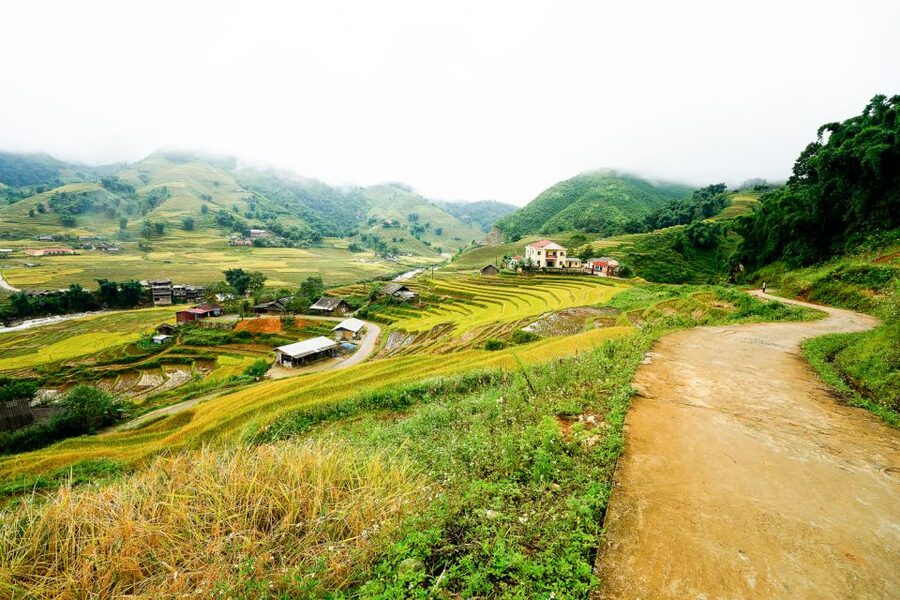
At $212 per person, this is a useful package for anyone who wants Sapa without arranging each transfer, guide, hotel, and meal separately. It covers the train from Hanoi to Lao Cai, the minibus to Sapa, three nights of accommodation, meals listed in the schedule, trekking, and the return limousine to Hanoi.
The value is strongest if you are starting and ending in Hanoi’s Old Quarter. You avoid losing a full day to transport, and the overnight train gets you north while you sleep. It is not luxury travel, but the soft berths, air conditioning, and four-bed cabin make the train a practical part of the experience.
The schedule is tight. You leave Hanoi at night, reach Lao Cai the next morning, and begin walking soon after breakfast. The return to Hanoi comes on Day 3, with arrival expected around 8 to 9 PM. I would choose this trip if you have limited time. If you want slow mornings, long village stays, or extra time in Sapa, add another night.
More train journeys in Hanoi
- Sa Pa Trekking 2 Days 3 Nights Homestay by Night Train
★ 4.5 · 11 reviews - Sapa Trekking Tour by Night Train from Hanoi 3 Nights – 2 days
★ 5.0 · 7 reviews - Trekking Sapa – Bac Ha Market: Sleep on Train & Homestay
★ 4.5 · 7 reviews
Hanoi to Lao Cai by overnight train
You either meet the local staff at Hanoi Railway Station by about 9 PM or arrange pickup from a hotel in the Old Quarter. The train boards around 10 PM. At the station, go to the second floor and gate 2A if you are meeting the staff yourself.
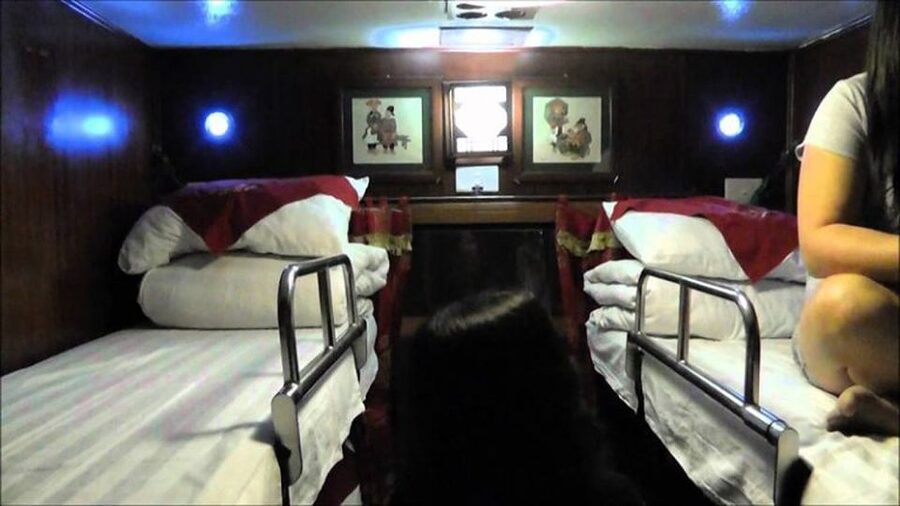
The shared cabin has four berths, air conditioning, and soft beds. That is far more useful than a daytime bus when you are trying to fit Sapa into a short Vietnam itinerary. Still, keep your expectations realistic. The train can be noisy and bumpy, and the shared toilet may be awkward to use. You may not get a choice of upper or lower berth, so pack light enough to manage a top bunk.
Put your phone, water, medicine, scarf, and a warm layer beside you before settling in. You do not want to climb down in the dark every time you need something. The train is part of the trip, not just a transfer, and for many people it becomes one of the more memorable pieces.
Day 1: Sin Chai and your first look at Sapa

You reach Lao Cai in the morning and transfer by shared minibus to Sapa at about 6 AM. The guide takes you to the Sapa hotel, where you leave your luggage and have breakfast.
The room is normally available from 2 PM. If you want to shower and sleep as soon as you arrive, ask about early check-in when booking. It may cost extra, and it is worth considering after the overnight train.
The first walk heads southwest from Sapa center to Sin Chai, a Black Hmong village a little over 2 kilometers from town. Sin Chai is presented as a simpler, more rural community, and it gives you an early look at highland life without immediately committing to the longer valley trek.
This shorter route matters because your body has just spent the night on a train. You get a taste of village walking, local homes, and mountain scenery without using all your energy on the first morning. Wear proper trekking shoes anyway. The route can be wet, and ordinary city trainers are a poor choice.
After the walk, you return to the hotel for lunch and free time. You can rest, explore Sapa, or simply take a hot shower before dinner at 6 PM. The evening is open for browsing shops or trying roasted corn and baked eggs beside a charcoal fire.
That free time is a useful part of the schedule. Sapa is not only a trailhead. The town can feel busy and commercial, but it is also where you can buy snacks, withdraw cash if the banking system cooperates, and prepare for the longer walk.
Day 2: Y Linh Ho, Lao Chai, and Ta Van
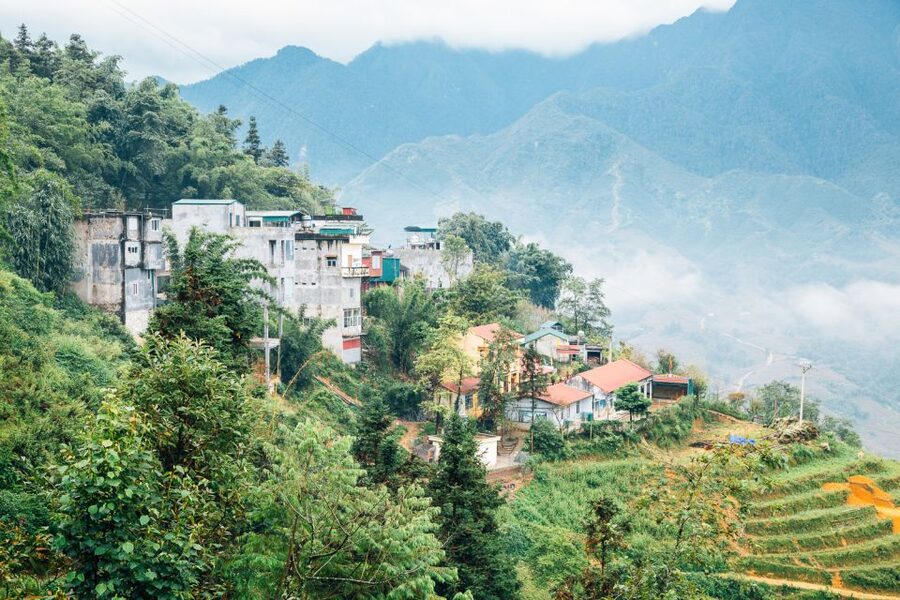
Day 2 is the heart of the trip. After breakfast, you walk along the side of Muong Hoa Valley toward Y Linh Ho, a village associated with the Black Hmong. The route continues down to Lao Chai, another Hmong village, before lunch.
This is the day when the scenery opens up. You walk among rice terraces and see how village life fits around steep hillsides and narrow paths. If you visit in May, planting season can offer a close look at rice farming, and you may be invited to try part of the work. The exact conditions depend on the weather and the farming calendar.
The route is not a gentle town stroll. The full trek is about 9 kilometers, and rain can make it much harder. Mud, uneven ground, and slippery sections are possible, so bring trekking shoes, insect repellent, sunscreen, and a small daypack. The tour is not suited to people with mobility impairments, wheelchair users, or children and older people who may struggle with a demanding walk.
After lunch, you continue through the terraces to Ta Van, home to the Zay minority community. The village is the main overnight stop and the best chance to experience a more direct form of local hospitality.
Do not expect a private hotel room with resort comforts. The homestay is a working local accommodation, and conditions are simpler. It is described as clean and pleasant, but you should be ready for a basic setting and shared aspects of village life. That trade is the point: you spend the night where the walking route ends instead of returning to Sapa each evening.
Food is included, and the meals are one of the highlights of the trip. Drinks are not included, so carry Vietnamese dong for water, tea, or other purchases. US dollars, euros, and Australian dollars are accepted in Sapa, but local currency is the safer choice in villages and at small stops.
More evening departures in Hanoi
- Hanoi – Sapa 2 Days 1 Night Overnight At Homestay
★ 5.0 · 899 reviews - Sapa 3 Days 2 Nights Trekking Tour (1 Night In Ta Van Village, 1 Night In Hotel)
★ 5.0 · 699 reviews - Hanoi – Sapa 3 Day 2 Night Trekking With Hotel & Homestay
★ 5.0 · 389 reviews - Hanoi – Sapa 2 Days 1 Night Overnight At Local Homestay
★ 5.0 · 233 reviews
Day 3: Red Zao villages, waterfall, and bamboo paths
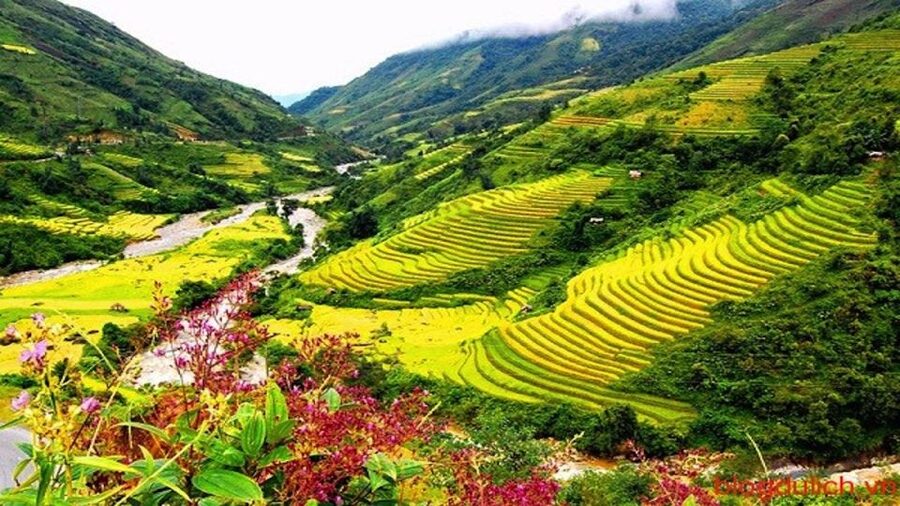
After breakfast in Ta Van, the walk continues toward Giang Ta Chai and Su Pan. These villages connect you with Red Zao and Hmong communities and show a different side of the valley than the earlier route.
A waterfall and a rattan bridge add variety to the morning. You also pass through bamboo forest, where the setting becomes quieter and more enclosed than the open rice terraces. These are the kinds of details that make the walking worthwhile. The tour is not simply a transfer between famous viewpoints. You spend hours moving through village paths and changing scenery.
Eventually, you reach the main road and take a car back to Sapa. Around 2 PM, you collect your things and prepare for the ride south. The return limousine is a more comfortable finish than another long public transfer, and the driver is expected to take you back toward Hanoi, with arrival around 8 to 9 PM.
Confirm the exact drop-off arrangement before departure. The package lists Old Quarter pickup and drop-off, but the meeting-point wording says the activity ends back at the meeting point, and one practical account described confusion about a late-night transfer. Do not leave this detail vague if your Hanoi hotel is outside the Old Quarter.
The ethnic communities you meet along the route
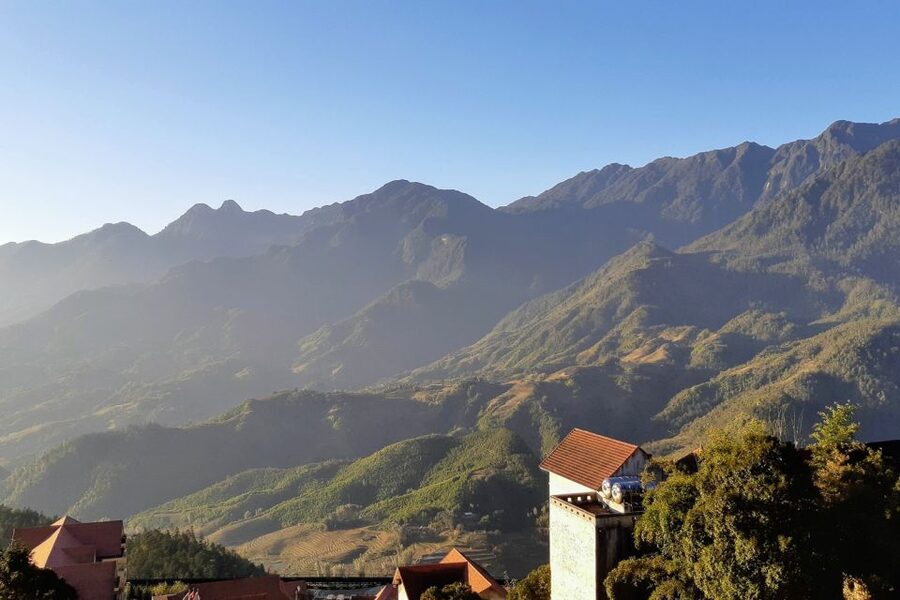
The value of the trip is not only the mountain scenery. You move through communities identified with the Black Hmong, Zay, and Red Zao peoples, each with its own clothing, craft traditions, and village life.
A stop at a local handicraft center gives women a place to exchange skills. It also shows how tourism connects with local income. You can buy handmade goods, but do not feel obliged to purchase something simply because a seller walks beside you.
Sapa has a well-known problem with persistent selling. Local women and children may approach you, follow sections of the walk, or return at lunch and stopping points with scarves, bags, jewelry, and other goods. The tour asks you to ignore them and stay with the guide. In practice, a calm and polite refusal usually works better than an argument.
You may also find that conversation is possible even when you buy nothing. The situation can be uncomfortable, but it helps to remember that these sales are part of how some local families earn money. Set your budget before the walk, keep small notes available, and avoid making promises you do not intend to keep.
Guides, group size, and the feel of the walk
The tour includes an English-speaking local guide, and private groups are available. Shared departures can be small, which is helpful on narrow paths and makes it easier to stop for photos without holding up a large crowd.
Guides named in recent departures include Chu, Mai, Su Su, and Ai. Their role is more than pointing out the next village. They can explain ethnic groups, farming, clothing, local crafts, and daily routines. A local guide also helps you handle changing paths, village etiquette, and the practical problem of sellers along the route.
If you travel alone, clarify the group arrangement and single supplement before paying. A solo visitor may pay extra for two nights of private accommodation, and the guide or meeting point may change between days. That is not a reason to avoid the tour, but it is a reason to ask clear questions in advance.
What to pack for Sapa’s changing weather

Sapa can be cold from September through March, and fog is common in December, January, February, and March. Weather can change quickly at altitude, so warm clothing matters even if Hanoi feels hot when you leave.
Bring:
- Trekking shoes with a firm sole
- A warm jacket, scarf, and hat or cap
- Sunglasses and sunscreen
- Insect repellent
- Personal medicine
- Cash in Vietnamese dong
- A small bag for the trekking days
Pack a light bag for the walk and leave unnecessary luggage at the Sapa hotel if the operator allows it. Wet weather can make clothes and shoes unpleasant, so a spare shirt and dry socks are sensible. Alcohol and drugs are not allowed, and pets cannot join the activity.
Who should book this three-day itinerary?
I would recommend it to first-time visitors who want a planned route and do not want to arrange Hanoi, Lao Cai, Sapa, village walks, meals, and accommodation on their own. It also suits people who value local contact more than polished facilities.
The trip is a good fit for active adults who can manage a 9-kilometer walk over uneven ground. It is less suitable if you need step-free access, dislike shared accommodation, or want a relaxed holiday with little physical effort.
Families with young children should think carefully, as the long walk is not recommended for children. Solo visitors can join, but they should ask about the supplement and daily meeting arrangements. Private groups are worth considering if you want more control over walking pace and stops.
Cancellation is free up to 24 hours in advance, and you can reserve now and pay later. Those policies help if your Vietnam plans are still moving, but they do not change the need to check room arrangements, berth preferences, and Hanoi drop-off details.
Should you book the Sapa trek?
Book this experience if you want a compact, active introduction to Sapa with transport and accommodation arranged. The strongest parts are the Muong Hoa Valley walks, the Ta Van homestay, the local guides, and the simple overnight train that saves daytime travel.
Skip it if you want luxury, predictable weather, or complete control over your sleep and walking pace. The train may be noisy, the homestay is basic, the selling can be tiring, and wet conditions can turn the trek into hard work.
For most reasonably fit visitors with only three days, $212 is a fair price for the amount covered. Go prepared, carry warm clothes and cash, confirm the return transfer, and treat the walking as the main event rather than a series of quick photo stops.
FAQ
How long does the Sapa trek and train trip last?
The experience lasts about 3 to 3.5 days, including the overnight train from Hanoi to Lao Cai.
What time does the overnight train leave Hanoi?
You meet the staff at Hanoi Railway Station by about 9 PM, and the train departs at approximately 10 PM.
What type of train accommodation is included?
You receive one night in a shared, four-bed, air-conditioned cabin with soft berths.
Is hotel pickup in Hanoi included?
Pickup and drop-off are included for hotels in Hanoi’s Old Quarter. If your hotel is outside the Old Quarter, select the relevant meeting-point option or confirm arrangements before booking.
Where do I stay in Sapa?
You spend one night in a three-star hotel in Sapa center and one night at a homestay in Ta Van Village.
Which villages are included in the trek?
The route includes Sin Chai, Y Linh Ho, Lao Chai, Ta Van, Giang Ta Chai, and Su Pan, with communities connected to the Hmong, Zay, and Red Zao peoples.
Are meals included?
Breakfast, lunch, and dinner listed for the three days are included. Drinks and meals not listed in the schedule cost extra.
Is the trek suitable for children or older people?
The 9-kilometer trek is not recommended for older people or children. It is also not suitable for people with mobility impairments or wheelchair users.
What should I wear for Sapa?
Bring comfortable trekking shoes and warm clothing, including a scarf and hat or cap. Sapa can be cold from September through March, and fog is possible from December through March.
Can I cancel the booking?
You can cancel up to 24 hours in advance for a full refund. Reserve-now, pay-later booking is also available.
More three-day treks in Hanoi
- 3-Day Trekking Adventure of Sapa from Hanoi – Stay Ta Van Village
★ 5.0 · 611 reviews - From Hanoi: Trek and Stay: 3-Day Sapa Highlands Adventure
★ 4.6 · 152 reviews - Sapa 3 Days 2 Nights Trekking Tour From Hanoi (2 Nights in Hotel)
★ 5.0 · 112 reviews - From Hanoi: 3 Days Luxury Sapa Trek & Fansipan Peak with Dcar
★ 5.0 · 43 reviews
Latest treks added in Hanoi
- From Hanoi : Sapa Moutain Trek – Halong bay Heritage★ 4.5 · 25 reviews
- Trekking In Ha Giang 5 Days★ 5.0 · 4 reviews
- Trekking around Ha Giang 5 days 4 nights★ 3.0 · 2 reviews
- 8-Days Hanoi, Sapa Trekking And Halong Bay Cruise★ 5.0 · 8 reviews
- 2-Day Trekking in Sa Pa from Ha Noi by sleeping bus★ 5.0 · 4 reviews
- Hanoi: 3D2N Mu Cang Chai Visit All Attractions, Trek, Ethnic Life★ 5.0 · 3 reviews
- Mai Chau – Pu Luong trekking 3 days 2 nights★ 4.5 · 7 reviews
- Sapa trekking 2days by bus from Hanoi ( over night in homestay)★ 5.0 · 21 reviews
Train Experiences, compared.

Tour with the Mountain Train, Trek to Mystic Forest and Castle
Read our review →
Machu Picchu: 5-Day Salkantay Trek with Panoramic Train
Read our review →
4-Day Lares Trek to Machu Picchu with Panoramic Train
Read our review →
4-Day Salkantay Trek to Machu Picchu, Panoramic Train
Read our review →
Sa Pa Trekking 2 Days 3 Nights Homestay by Night Train
Read our review →
Explore Sa Pa with Overnight Train & Sleeper Bus & Trekking
Read our review →
2 days 3 Nights Sapa Trekking Tour by Night Train from Hanoi
Read our review →Browse the lists this tour appears in