
REVIEW · KATHMANDU
Poon Hill Trek
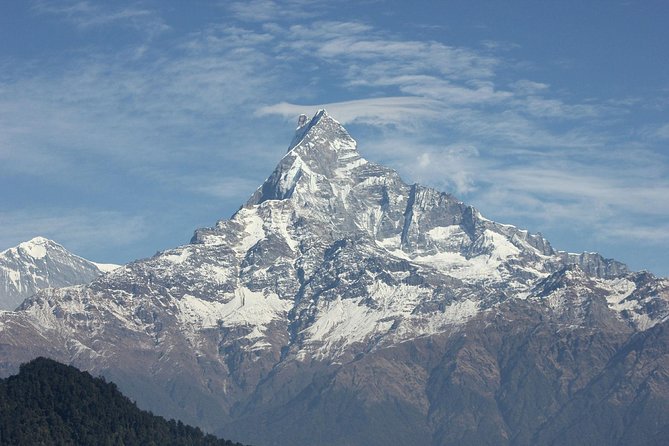
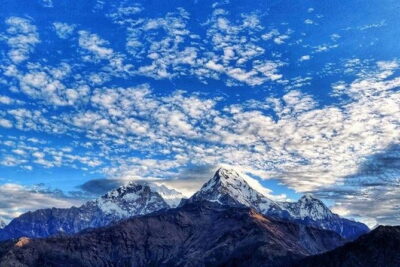
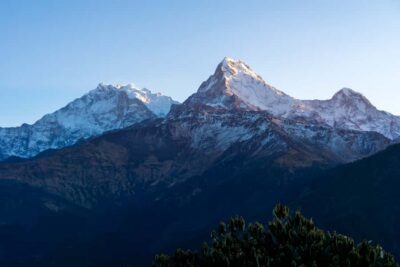
Poon Hill earns its fame with a simple reward: climb before breakfast and watch sunlight reach the Annapurna range from 3,210 meters. The route passes rhododendron forests, waterfalls, and stone villages, with Machhapuchhare, the distinctive Fish Tail Peak, often shaping the view.
I like the smart mix of mountain walking and culture. You get Kathmandu’s Hindu and Buddhist landmarks, a slower start in Pokhara, and village stays with Gurung and Magar communities. I also like that porters, permits, staff costs, and most meals are included. The catch is the long stair climbs, especially to Ulleri, plus the pre-dawn climb to Poon Hill.
Key points
- Sunrise at 3,210 meters: Reach Poon Hill early for broad views of the Annapurna and Dhaulagiri ranges.
- A moderate Himalayan route: The trek is approachable for people with reasonable fitness, but steep stone steps still demand preparation.
- Village-based walking: Stay in guesthouses near Ghorepani, Tadapani, and Ghandruk rather than rushing from one major viewpoint to another.
- Strong guide and porter support: One porter is assigned for every two guests, while a licensed English-speaking guide leads the trek.
- A useful Nepal introduction: Kathmandu sightseeing, Pokhara, mountain walking, and a farewell dinner fit into one 10-day plan.
- Good package value: At $1,172.27 per person, the price covers transport, hotels, teahouses, permits, staff, and many meals, but not drinks, insurance, or city lunches and dinners.
Why Poon Hill works as a first Himalayan trek
Poon Hill is a good choice if you want mountain scenery without committing to a high-altitude expedition. The highest point on this route is 3,210 meters, and the walking days are broken up with village stops and forest sections.
That does not make it effortless. The climb from Tikhedhunga toward Ulleri is steep, and the early morning ascent from Ghorepani to Poon Hill can feel demanding in the cold and dark. You need a moderate fitness level, comfortable walking shoes, and the patience to keep a steady pace.
The reward is variety. One day you may walk beside a river and through subtropical vegetation. The next, you are among oak, pine, and rhododendron trees with icy water running down the slopes. By the time you reach the higher villages, the mountains feel much closer.
The route also gives you a look at daily life in the Annapurna region. Gurung and Magar communities live along the trail, and Ghandruk offers time to see village streets, local museums, and the Annapurna Conservation Area office. This is not only a mountain viewpoint trip. The people and settlements are a central part of the experience.
More Poon Hill Treks in Kathmandu
- 4 Days Poon Hill Trek
★ 5.0 · 94 reviews - Ghorepani(Poonhill Trek)
★ 5.0 · 81 reviews - 4-day Poon Hill Trek
★ 5.0 · 74 reviews
What the $1,172.27 price covers
The price makes more sense once you separate the trek from an ordinary hotel tour. You receive three nights in a three-star hotel in Kathmandu and two nights in Pokhara, with breakfast included. During the trek, you stay four nights in guesthouses, usually in twin rooms and occasionally in dormitory-style accommodation.
The package also includes a licensed English-speaking guide, porters, staff wages, staff insurance, equipment, medicine, and food for the trekking team. One porter carries luggage for every two guests. That is a practical benefit: you can walk with a daypack instead of hauling your main bag up hundreds of stone steps.
Transport is arranged too. You have airport transfers, the tourist bus between Kathmandu and Pokhara, and a private vehicle between Pokhara and Nayapul. Annapurna Conservation Area permits and TIMS permits are included, as are Kathmandu Valley monument fees.
Meals covered by the package include nine breakfasts, six lunches, and six dinners. Lunch and dinner in Kathmandu and Pokhara are extra, as are alcoholic drinks, hot and cold drinks, personal gear, tips, international airfare, travel insurance, and the Nepal entry visa.
I consider the package fairly priced for someone who wants a managed trek. Independent planning may cost less, but you would need to arrange permits, lodging, transport, porters, and guides yourself. The main extra cost to plan for is tipping, since it is expected for the trekking staff and driver.
Kathmandu gives the trip useful context
Your first day begins with airport pickup in Kathmandu. An Ace the Himalaya representative meets you outside Tribhuvan International Airport and takes you to the hotel by private tourist vehicle.
The timing of your arrival matters. If you arrive after 4 pm, the guide may hold your trip briefing that evening. Earlier arrivals usually attend a meeting at the company office. Bring your passport and the required trip documents to this meeting, since it is your chance to ask practical questions and meet the trek leader.
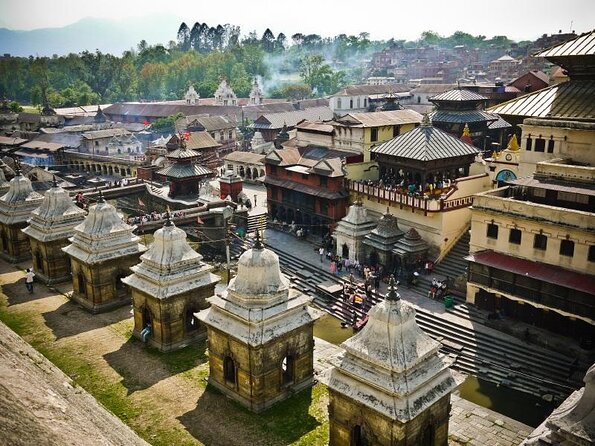
The following day covers three major sights in the Kathmandu Valley. At Pashupatinath Temple, you view one of the world’s important Hindu temples from the eastern side of the Bagmati River. Non-Hindus cannot enter the main temple, but the outside view and activity around the site still make the stop worthwhile.
Boudhanath Stupa offers a different mood. Buddhist pilgrims walk clockwise around the stupa and spin prayer wheels beneath the Buddha’s watchful eyes. The 45-minute visit is short, but it gives you a clear introduction to Tibetan Buddhist practice in Kathmandu.
Bhaktapur Durbar Square receives an hour. Its attractions include the five-story Nyatapola Temple, Batsala Temple, Bhairavnath Temple, Dattatraya Temple, Pujari Muth, and the Palace of 55 Windows. The stop is a highlight for architecture and old-city atmosphere, though one hour is not enough for an unhurried exploration.
The long road from Kathmandu to Pokhara
On day three, staff collect you from your hotel at 6:30 am and escort you to the tourist bus station. The bus leaves around 7:30 am for Pokhara, and the listed duration is about 18 hours, so expect this to be a full transport day.
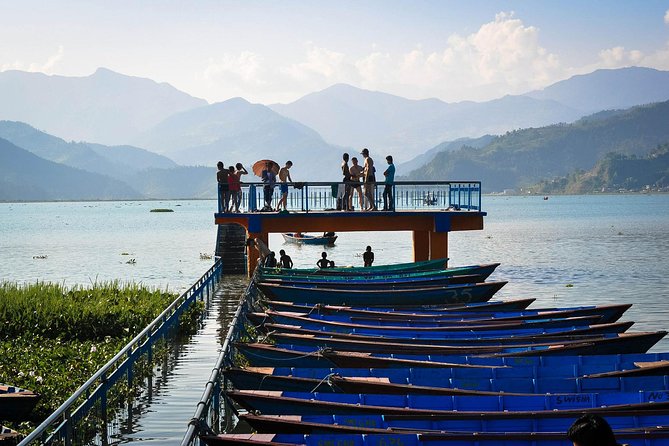
Pokhara is a welcome change of pace. It sits beside Phewa Lake and is smaller and less hectic than Kathmandu. On clear days, the city offers views toward Annapurna, Machhapuchhare, Dhaulagiri, Lamjung Himal, and Manaslu.
You spend two nights in Pokhara as part of the package. The city is both a staging point and a recovery stop. After the trek, you have time to walk along the lakeside before returning to Kathmandu.
The bus journey is one area where expectations matter. This is not a quick flight or a short private transfer. If you value comfort and speed, the road transfer may test your patience. It does, however, connect the two major parts of the trip without another domestic flight.
Another trail to compare in Kathmandu:
- Everest Base Camp Trek – 14 Days
★ 5.0 · 1,499 reviews - Everest Base Camp Trek
★ 5.0 · 842 reviews - Everest Base Camp Trekking
★ 5.0 · 485 reviews - Annapurna Circuit Trek with Tilicho Lake
★ 5.0 · 368 reviews
From Nayapul to Tikhedhunga
The trekking section begins after a roughly one-hour private drive from Pokhara to Nayapul. From there, you walk beside the Modi Khola for about 15 minutes before reaching Birethanti, a sizeable village with shops and teahouses.
The trail follows the north bank of the Bhurungdi Khola and climbs steadily toward Hille at 1,495 meters. A short climb brings you to Tikhedhunga at 1,570 meters.
This first walking day is intentionally gentle. It lets you adjust to the rhythm of walking, eating, resting, and sleeping in mountain guesthouses. You still gain altitude, but the stage is short enough to serve as an introduction rather than a test.
Do not mistake the word easy for flat. Mountain trails rise and fall, and surfaces can be uneven. Still, compared with the following day, this is the calm opening you want.
Ulleri’s stone steps and the forests above it
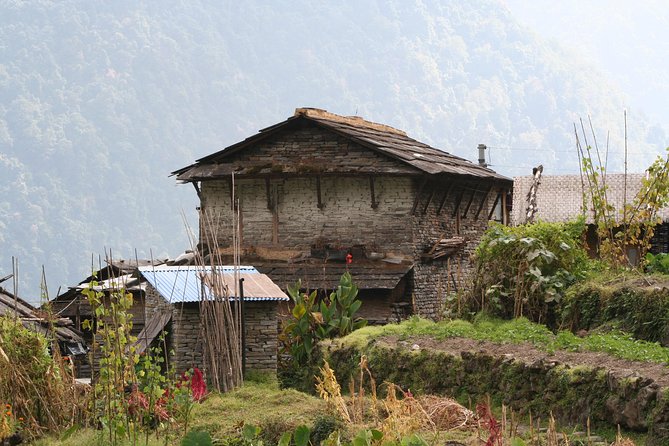
Day five brings the route’s most obvious physical challenge. From Tikhedhunga, you climb steeply toward Ulleri, a large Magar village at 2,070 meters.
The steps can make this section feel harder than the distance suggests. Walk slowly, keep your water close, and avoid treating the climb as a race. A guide such as Sushanta, Janardan, Shyam, or Ramesh Karki may be assigned to your group, depending on the departure and staff schedule. The operation has also used porters including Babu, Posan, Limbhu, and Indra.
Above Ulleri, the trail becomes more gradual as it passes through oak and rhododendron forest. Banthanti sits at 2,250 meters, followed by Nangethanti at 2,460 meters. After about an hour more, you reach Ghorepani at 2,840 meters.
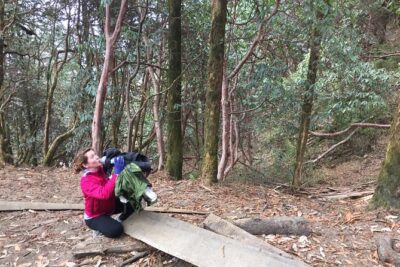
The forest is one of the route’s best features. In spring, rhododendrons can add color to the woods, while birds and running water keep the walk lively. The mountain views appear in pieces rather than all at once, which makes the open viewpoints feel more rewarding.
Ghorepani is an overnight stop and the base for the pre-dawn climb. Keep your headlamp, warm layers, and water ready before bed. You will not want to search through your bag when the departure time arrives.
Sunrise from Poon Hill
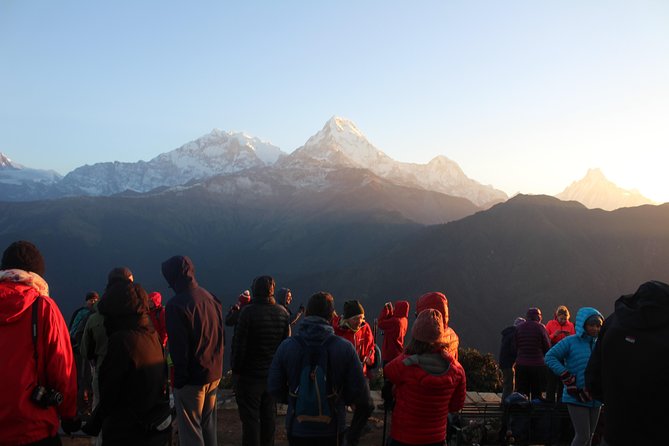
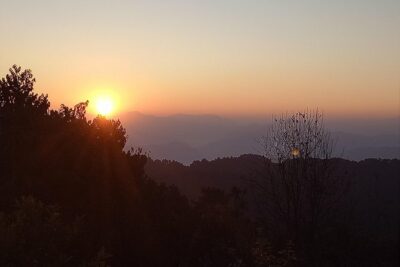
The early start on day six is the central event of the trek. You walk for about an hour from Ghorepani to Poon Hill, reaching the viewpoint at 3,210 meters.
The aim is sunrise over the high Himalayas. From the viewpoint, the route offers broad views without the forest blocking the horizon. Plan to spend about an hour there before returning to Ghorepani for a hot breakfast.
The conditions can be cold, and the climb begins before daylight. This is the moment to wear every useful warm layer rather than relying on exercise to keep you comfortable. Cloud can also affect the view, which is why the tour allows weather-related changes or a refund if poor weather cancels the experience.
After breakfast, you continue along ridges and through pine and rhododendron forests toward Deurali at 2,960 meters. The trail then descends to Banthanti before turning toward Tadapani.
This makes for a full day. The sunrise walk is short on paper, but it comes before another substantial section of trail. If you prefer a slower schedule, note that some past departures have been adjusted by guides, combining days when the group wanted a tighter itinerary or allowing more rest when needed.
Ghandruk and the Gurung connection
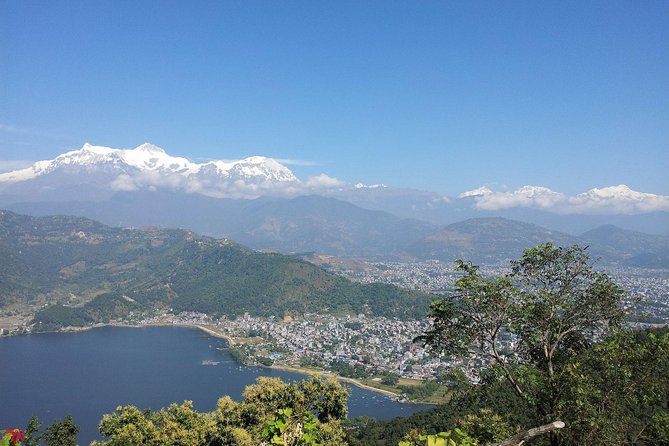
From Tadapani, the trail descends through forest to Ghandruk, a Gurung village. The Gurung people have their own language, dress, customs, and way of life, and the village is also associated with many Gurkha soldiers.
Ghandruk is a strong cultural stop because you are not simply passing through for a meal. The itinerary gives you an afternoon to visit the Annapurna Conservation Area office and museums, then walk around the village.
The descent is easier on your lungs than the climb to Ghorepani, but downhill steps can be hard on knees. Trekking poles may help, though personal equipment is not included in the price, so bring or rent what you need.
Ghandruk also offers some of the route’s best mountain views. The village is within reach of Pokhara, which explains its popularity, but its setting still feels connected to the walking route rather than separated from it.
Returning to Pokhara and Kathmandu
The final trekking day takes you back to Nayapul, followed by a short drive to Pokhara. You have a relaxing afternoon to stroll near Phewa Lake.
This pause is well placed. After several days of stairs and forest trails, an easy lakeside walk gives your legs a break. Lunch and dinner in Pokhara are not included, so you can choose your own meal and budget for it.
The next morning, you drive back to Kathmandu. The return journey is another long transfer, and the plan leaves the evening for a farewell dinner in a traditional Nepalese restaurant with cultural performances.
The last day is simple. An airport representative takes you from your hotel to Tribhuvan International Airport for your departure.
How the guide and porter system helps
A good guide matters on a trek like this. You are not dealing with technical climbing, but you do need help with pace, route decisions, lodging, weather, and the practical details of mountain walking.
The strongest guide names associated with this trip include Sushanta, Janardan, Shyam, Ramesh Karki, Ishwar, Raj, Baburam, and Pasang. Specific staff assignments can change, but the company’s setup gives you a licensed English-speaking guide and a porter for every two guests.
The porter arrangement is especially useful on the Ulleri and Ghorepani sections. You carry what you need during the day while your main luggage moves ahead. Pack with respect for the people carrying it, keep the bag light, and ask about the weight limit at the briefing.
Past trips have also been adapted when groups wanted a faster four-day or five-day trek. That flexibility can be valuable, but do not assume a compressed schedule will suit you. The standard 10-day plan includes Kathmandu, Pokhara, and extra recovery time, which is better for a first visit or a relaxed pace.
Who should book this trek
I would choose this trip if you want a guided introduction to Nepal that combines city sights with a manageable mountain route. It suits people with moderate fitness who can handle repeated climbs, early mornings, and basic guesthouse lodging.
It is also a good fit if you prefer a package with logistics handled. Airport transfers, tourist buses, private road transfers, hotels, teahouses, permits, guides, porters, and many meals are included.
I would hesitate if you want luxury lodging throughout, private rooms every night, or a short and easy holiday. Guesthouse accommodation is practical rather than polished, and some nights may involve dormitory-style rooms. The Ulleri climb and sunrise start also require real effort.
The maximum group size is 15 people. That is large enough for shared company but small enough for a guide to manage the group on the trail.
Should you book the Poon Hill Trek?
Book it if sunrise mountain views, village life, and a well-supported first Himalayan trek appeal to you. The best parts are the contrast between Kathmandu’s temples, Pokhara’s lake, and the forested trail to Ghorepani, followed by the clear purpose of the Poon Hill climb.
Before paying, make sure you are comfortable with the long Kathmandu to Pokhara bus journey, steep stone steps, simple guesthouses, and an early morning at altitude. Buy travel insurance that covers emergency rescue and evacuation, and budget separately for tips, drinks, city meals, personal gear, and the Nepal visa.
You can cancel for a full refund up to 24 hours before the local start time. If bad weather cancels the experience, you are offered another date or a full refund. For many people, the package offers a sensible balance of support, scenery, and cost without turning the trek into a major expedition.
FAQ
How long is the Poon Hill Trek?
The full experience lasts approximately 10 days, including Kathmandu sightseeing, transport to and from Pokhara, the trek, and airport transfers.
Where does the trekking section begin?
The trek begins at Nayapul, reached by private vehicle from Pokhara. The first walking section leads through Birethanti, Hille, and Tikhedhunga.
How high is Poon Hill?
Poon Hill is at an elevation of 3,210 meters.
Is the trek suitable for beginners?
The activity requires a moderate level of physical fitness. It is described as an easy trek in spectacular mountain scenery, but the steep climb to Ulleri, repeated trail climbs, and early morning ascent to Poon Hill still require preparation.
What accommodation is included?
You receive twin-share rooms in three-star hotels in Kathmandu and Pokhara, with breakfast. During the trek, accommodation is in guesthouses, mostly twin-share and occasionally dormitory-style.
Are meals included?
The package includes nine breakfasts, six lunches, and six dinners. Lunch and dinner in Kathmandu and Pokhara are not included, and alcoholic, hot, and cold drinks are extra.
What happens if bad weather cancels the trek?
If poor weather causes the experience to be canceled, you are offered a different date or a full refund. You can also cancel up to 24 hours before the local start time for a full refund.
Latest treks added in Kathmandu
- Private Manaslu Circuit Trek at Himalayas★ 5.0 · 3 reviews
- Ghorepani Poonhill Trek★ 5.0 · 5 reviews
- Ghorepani Poon Hill Trek★ 5.0 · 16 reviews
- Upper Mustang Trekking★ 3.0 · 2 reviews
- Amazing 1 Day Trekking Experience in Kathmandu Nepal★ 5.0 · 24 reviews
- Upper Mustang Trekking★ 5.0 · 2 reviews
- Upper Mustang Trek★ 5.0 · 5 reviews
- Upper Mustang Trekking★ 5.0 · 4 reviews
Poon Hill Treks, compared.
4-Day Ghorepani, Poonhill & Ghandruk Mountain Trek
Read our review →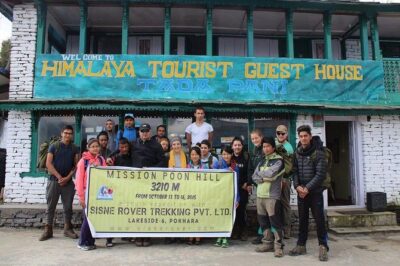
Browse the lists this tour appears in