
REVIEW · KATHMANDU
Ghorepani – Poon Hill yoga Trek – 10 Days
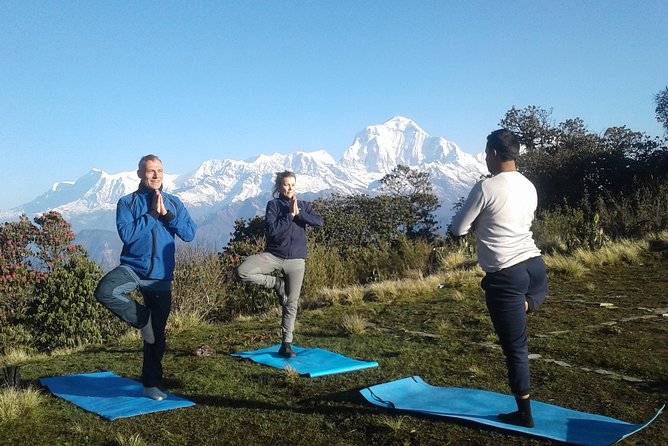
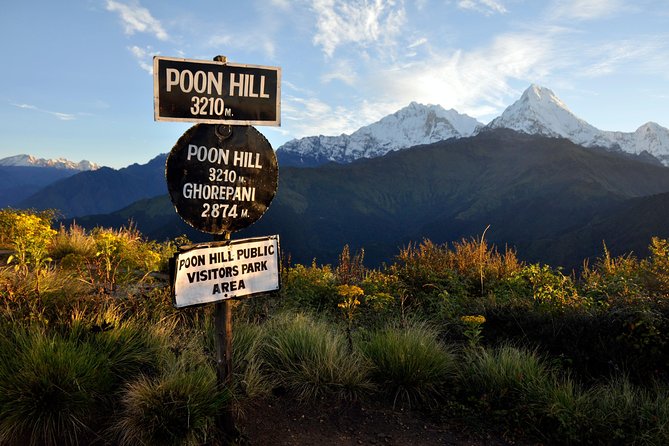
Poon Hill gives this trip its big moment: an early climb to 3,180 meters for sunrise over Dhaulagiri, Annapurna, Nilgiri, Machhapuchhre, and a long line of snowy peaks. The unusual part is the pairing of that demanding mountain walk with yoga and meditation, guided by an English-speaking yoga teacher who also leads the trek.
I like the useful rhythm here: morning movement and mountain walking are balanced with quiet time, while the route includes Gurung villages, rhododendron forests, Pokhara, and a Nepali cultural dinner. I also like that permits, porters, tea-house lodging, airport transfers, and yoga mats are included.
The main caution is the pace. This is not a retreat with a little sightseeing attached. Several trekking days last about six hours, and the route climbs from low foothills to 3,180 meters before descending again. You should be comfortable with sustained uphill walking.
Key points to know before booking
- Poon Hill sunrise: Reach 3,180 meters early for wide views of the Annapurna and Dhaulagiri ranges.
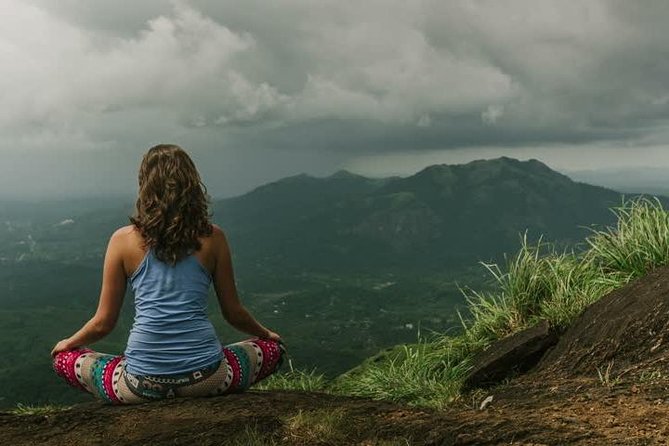
- Yoga with the trek: An English-speaking yoga expert guides the route and provides mats for use during the trip.
- A compact Annapurna circuit: Walk through Tikhedhunga, Ghorepani, Tadapani, Ghandruk, and Nayapul.
- Pokhara included twice: You have time for lakeside sightseeing, Davis Falls, a cave, and the World Peace Pagoda.
- Small group size: The maximum is 15 people, which should make trail logistics easier than on a large departure.
- Good package coverage: Airport transfers, permits, porter and guide costs, tea-house stays, breakfasts, lunches, dinners, and Kathmandu to Pokhara transport are included.
Why this yoga trek works
This 10-day trip is aimed at people who want more than a standard Nepal walking holiday. You get the physical challenge of a Himalayan trek, but the yoga focus gives the days a deliberate pause. The idea is simple and appealing: walk hard, stretch, breathe, and give yourself time to settle into the mountain setting.
The route is also a sensible introduction to the Annapurna region. You do not need to commit to a much longer high-altitude trek, yet you still reach a proper viewpoint and pass through villages, forests, waterfalls, and mountain settlements.
The included yoga mats are loaned to you and returned after the trek. The schedule does not spell out the exact time or length of every yoga class, so I would ask the operator how many sessions are planned and whether they happen each morning, evening, or both. The experience is clearly built around yoga, but the walking remains the main physical demand.
More Poon Hill Treks in Kathmandu
- 4 Days Poon Hill Trek
★ 5.0 · 94 reviews - Ghorepani(Poonhill Trek)
★ 5.0 · 81 reviews - 4-day Poon Hill Trek
★ 5.0 · 74 reviews
Day 1: Kathmandu and a gentle start in Thamel
Your trip begins with pickup at Tribhuvan Airport in Kathmandu. You check into a three-star hotel in Thamel, with the listed options being Thamel Eco Resort or Skyline Hotel, then have time to look around the city’s main tourist district.
This first day is short, which is helpful after an international flight. Thamel is a practical place to begin because it is the center of Kathmandu’s tourist services, shops, restaurants, and trekking preparation. You can use the free time to check your walking gear, buy small personal items, and adjust to Nepal before leaving for the hills.
Accommodation includes breakfast. Food in Kathmandu is not included beyond the stated hotel breakfast, and drinks are extra throughout the trip. Keep that in mind when comparing the $1,000 price with the final amount you will spend.
Day 2: The long road from Kathmandu to Pokhara
The drive to Pokhara takes about seven hours by tourist bus. It is a full travel day, but the route gives you views of green hills, valleys, and occasional mountain scenery.
Pokhara sits at about 914 meters and is one of Nepal’s most pleasant bases for mountain trips. Phewa Lake, the Annapurna and Dhaulagiri ranges, caves, temples, and other sights give the city a different feel from Kathmandu. You spend the night in Pokhara, and two standard nights there are included in the package.
The bus ride is practical rather than luxurious. If you dislike long road journeys, this may be one of the less comfortable parts of the trip. On the other hand, using the tourist bus keeps the price down and avoids arranging your own connection between the two cities.
Day 3: Nayapul to Tikhedhunga
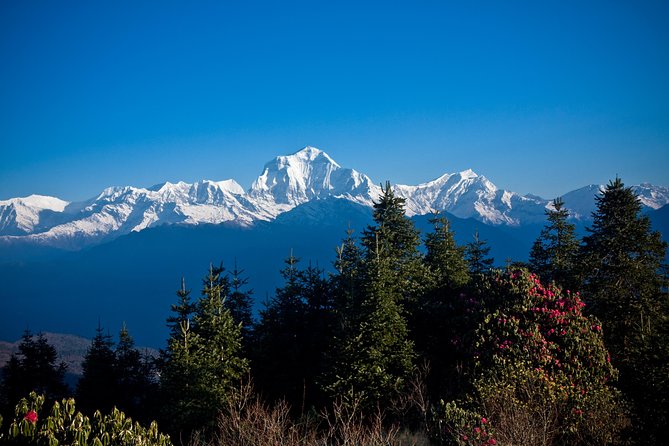
You drive from Pokhara to Nayapul, at about 1,050 meters, and begin walking from there. The trail passes through Birethanti, around 1,065 meters, before continuing to Tikhedhunga at approximately 1,577 meters.
The day takes about four and a half hours on foot, with roughly six hours allowed for the full transfer and trek. It is a good introduction to the route because the altitude gain is moderate and you have time to settle into the walking rhythm.
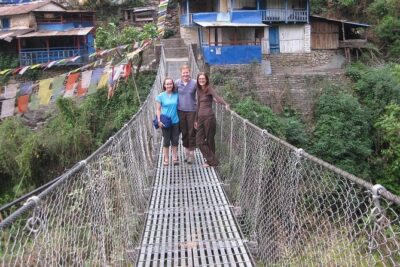
Tikhedhunga is your first tea-house stop. The lodging is basic, and that is part of the point. During the trek, you stay in lodges or tea houses rather than city hotels. Expect a functional place to sleep, shared facilities in some locations, and a setting built around trekkers rather than luxury.
Another trail to compare in Kathmandu:
- Everest Base Camp Trek – 14 Days
★ 5.0 · 1,499 reviews - Everest Base Camp Trek
★ 5.0 · 842 reviews - Everest Base Camp Trekking
★ 5.0 · 485 reviews - Annapurna Circuit Trek with Tilicho Lake
★ 5.0 · 368 reviews
Day 4: The climb to Ghorepani
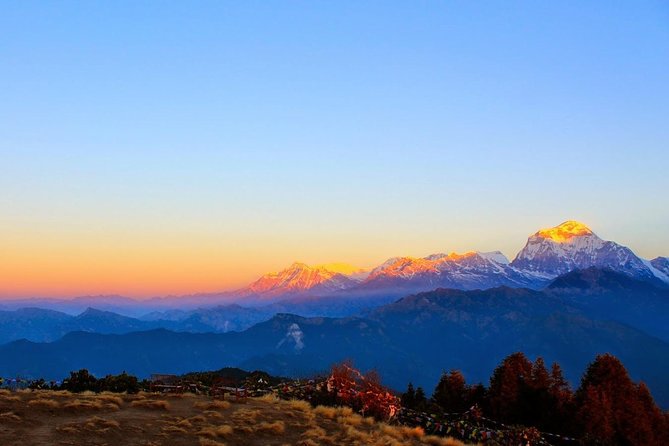
From Tikhedhunga, you climb toward Ghorepani at 2,675 meters. The day lasts about six hours and includes the route through Ulleri, at roughly 2,070 meters, and Banthanti.
This is one of the more demanding sections because the trail gains height steadily. The itinerary describes the route as passing through Magar villages, with views toward Machhapuchhre, Hiunchuli, and Annapurna South. You also begin to feel the change from foothill walking to a higher mountain route.
Take this day slowly. The next morning starts before sunrise, so conserving energy matters more than racing to the lodge. Ghorepani is not simply a place to sleep before Poon Hill. It is the launch point for the trip’s main viewpoint.
Day 5: Poon Hill sunrise, then the forest trail to Tadapani
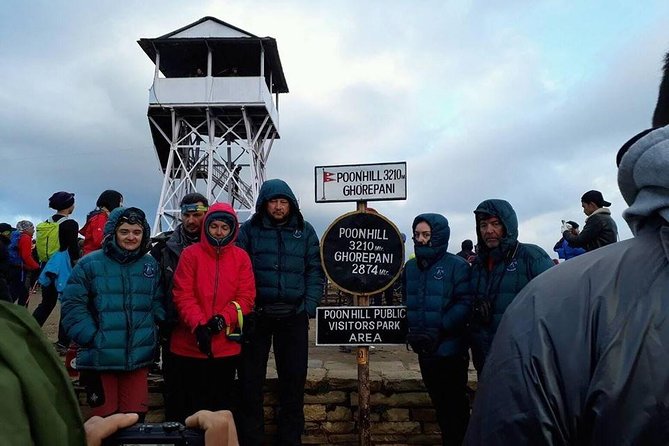
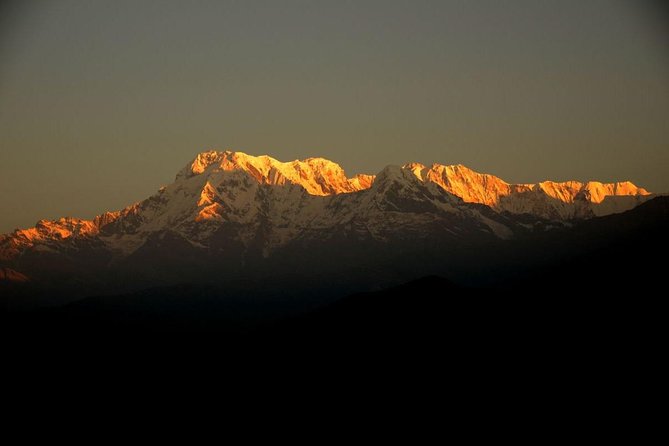
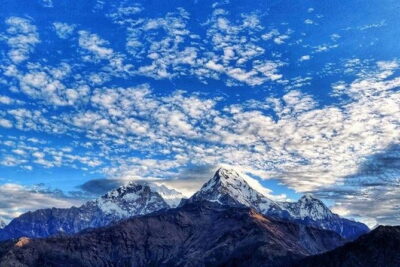
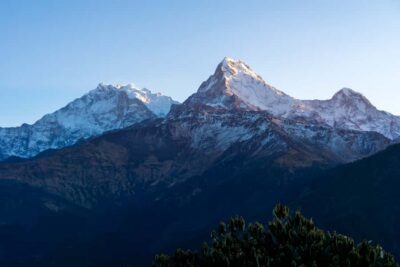
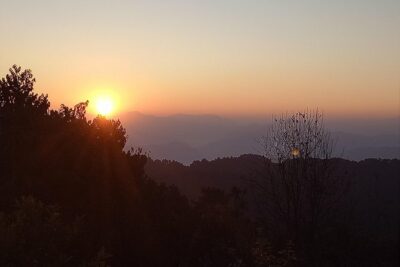
This is the highlight. You leave early for Poon Hill, reaching about 3,180 meters in time for sunrise. From the viewpoint, the planned panorama includes Dhaulagiri, Tukuche Peak, Nilgiri, Varaha Shikhar, Annapurna I, Annapurna South, Annapurna III, Machhapuchhre, Annapurna IV, Annapurna II, Lamjung Himal, and other snow-covered summits.
The quality of the sunrise depends on cloud and weather, of course, but the viewpoint is well chosen. You get a broad mountain scene rather than a single peak, and the early start gives the yoga theme a natural setting for quiet breathing and reflection.
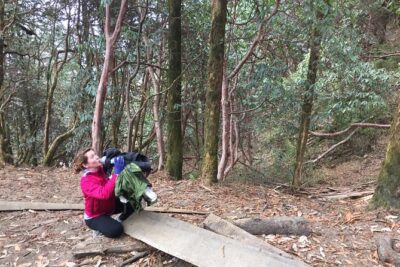
After breakfast back at Ghorepani, you continue to Tadapani, around 2,650 to 2,675 meters. The route passes through forests of rhododendron, bamboo, and oak. You might see waterfalls, birds, wildlife, rocks, and green valleys along the way.
The full day takes about six hours. It is worth noting that Poon Hill is not the end of the day’s effort. You still have a substantial walk afterward, so do not treat the sunrise climb as a short optional outing.
Day 6: Forest walking and Gurung culture in Ghandruk
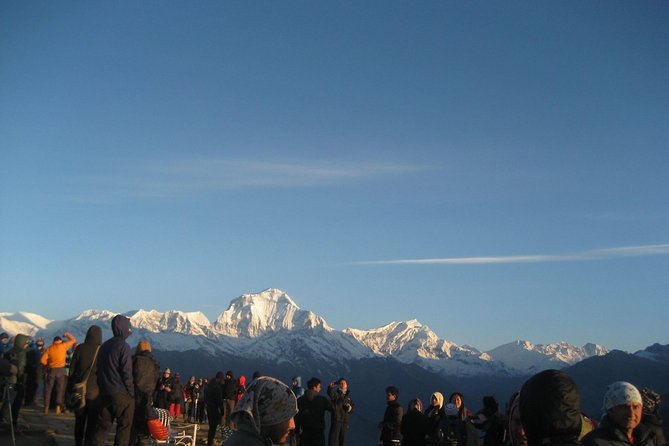
The trail from Tadapani to Ghandruk descends to about 1,950 meters and is described as the easiest trekking day. The path runs through rhododendron and oak forest, with birdsong and occasional views opening toward Annapurna South, Hiunchuli, Gangapurna, Annapurna III, and Machhapuchhre.
Ghandruk is a large Gurung village and one of the most interesting cultural stops on the route. You can visit the handicraft center and Gurung museum, and the village setting gives you a closer look at local life than a quick mountain viewpoint would.
A traditional Gurung cultural program can be arranged on request. That detail matters: it is not necessarily an automatic part of every departure, so ask if you want the performance included. The overnight stay in Ghandruk also gives the village more value than a short photo stop.
The listed description calls Ghandruk a World Heritage Site. You should confirm the exact heritage designation with the operator if that status is important to your plans.
Day 7: Down to Nayapul and back to Pokhara
You continue from Ghandruk toward Nayapul, with the route described as descending through Pothana and Dhampus before the drive back to Pokhara. The day takes around six hours.
After several days on foot, this transition is welcome. You finish the mountain section, return to a city hotel, and regain access to the comforts of Pokhara. The road and trail combination can make the day feel longer than the distance suggests, but it is a practical way to close the trekking portion.
The package includes the services of a guide and porter, including their food, accommodation, transport, insurance, and salaries. That is important value in Nepal, where porter support can make the route much more manageable. You should still pack lightly and keep your day bag comfortable.
Day 8: Pokhara sights or a slower day
After breakfast, you have sightseeing options in Pokhara. The listed visits include Davis Falls, a cave, and the World Peace Pagoda. You can also rest.
I like having this flexible day after the trek. Davis Falls and the cave provide a change from mountain walking, while the World Peace Pagoda offers another broad view across the Pokhara area. If your legs are tired, taking the rest option is sensible rather than trying to turn every available hour into a tour.
The choice also makes this trip suitable for people with mixed interests. One person may want more sightseeing, while another may prefer a quiet breakfast and a slow afternoon. Food in Pokhara is not included, so you choose and pay for your own meals there.
Day 9: Return to Kathmandu
You take the tourist bus back to Kathmandu, with about seven hours on the road. It is another long transport day, but it keeps the trip organized and avoids the need for a separate booking.
Back in Kathmandu, the package includes a farewell dinner at a typical Nepali restaurant with a cultural dance show. This is a pleasant way to finish the active part of the journey, and it gives you a final chance to try Nepali food in a planned setting.
Since alcoholic and non-alcoholic drinks are not included, budget separately for beverages. Chocolate and other sweet snacks are also your own responsibility, which matters on long walking days if you like to carry quick energy.
Day 10: Shopping, airport transfer, and departure
The final morning is free after breakfast. You can rest or make a last shopping trip in Kathmandu before a private vehicle takes you to the airport.
Airport pickup and drop-off are included, which removes one of the more awkward parts of arriving and leaving a busy city. The stated meeting point is Tribhuvan Airport, and the listed start time is 7:15 a.m., so check the exact pickup instructions before arrival.
What the $1,000 price covers
At $1,000 per person, the trip offers solid coverage for a 10-day Nepal program. Included items are:
- Airport pickup and drop-off by private car, van, or bus
- Kathmandu hotel with breakfast
- Two nights of standard accommodation in Pokhara
- Tea-house accommodation during the trek
- Kathmandu to Pokhara and return transport by tourist bus
- Trekking permits, conservation entry permits, and TIMS registration
- English-speaking yoga guide and tourist guide service
- Porter costs, including food, lodging, transport, insurance, and salary
- Yoga mat use
- Five lunches, eight breakfasts, and five dinners
- Government taxes, value-added tax, official expenses, and service charges
- Farewell dinner with a Nepali cultural dance show
The price is less attractive if you expect every meal to be covered. Food in Kathmandu and Pokhara is excluded, as are alcoholic and non-alcoholic drinks. Personal snacks, sweets, travel insurance, and any optional purchases are also extra.
I see the strongest value in the permits, guide and porter costs, airport transfers, tea-house lodging, and the two city stays. You are paying for a coordinated route rather than only a walking guide.
Who should book this trip?
I would recommend it to you if you want a moderate-length Himalayan trek with a clear wellness theme. It suits people who already practice yoga, people curious about yoga, and anyone who likes the idea of using stretching and meditation to balance long walking days.
It also works well for first-time visitors to Nepal who want Kathmandu and Pokhara included. The small maximum group of 15 should help keep the trip manageable, while the English-speaking guide handles the route and the practical details.
I would be more cautious if you want a silent retreat, luxury hotels, or a completely flexible schedule. The trek has fixed walking days, early starts, basic tea-house lodging, and long bus rides. You also need travel insurance, and the organizer does not provide it.
Booking is easy to protect because free cancellation is available until 24 hours before the experience starts. After that point, changes and refunds are not accepted under the stated policy.
Final verdict: a strong mix of mountain effort and quiet practice
I like this trip because it gives you a real Himalayan walk without requiring a much longer expedition. The Poon Hill sunrise, the rhododendron forests, Ghandruk’s Gurung culture, and Pokhara’s lakeside setting provide plenty of variety.
The yoga element is the reason to choose this over a standard Ghorepani trek. Just confirm the daily class schedule before paying, and be honest about your fitness. If you can handle six-hour walking days and basic mountain lodging, this is a well-priced way to combine Annapurna views, Nepali culture, and yoga practice in one compact journey.
FAQ
How long is the Ghorepani Poon Hill yoga trek?
The experience lasts approximately 10 days, including time in Kathmandu and Pokhara, the trek, transport between cities, and airport transfers.
What is the highest point on the route?
The highest listed point is Poon Hill at about 3,180 meters. Ghorepani is around 2,675 meters, and Tadapani is around 2,650 to 2,675 meters.
Is yoga included in the trip?
Yes. An English-speaking yoga expert and tourist guide accompanies the trek, and yoga mats are provided for use and returned after the trip. The exact class schedule is not specified.
What accommodation is provided?
You stay in a three-star hotel in Kathmandu, standard accommodation in Pokhara, and lodges or tea houses during the trek. The Kathmandu hotel is listed as Thamel Eco Resort or Skyline Hotel.
Are meals included?
Eight breakfasts, five lunches, and five dinners are included. Food in Kathmandu and Pokhara is not included, and alcoholic and non-alcoholic drinks are extra.
How large is the group?
The maximum group size is 15 people. Pickup is available at Tribhuvan Airport in Kathmandu, and airport drop-off is included at the end of the trip.
Latest treks added in Kathmandu
- Ghorepani Poonhill Trek★ 5.0 · 5 reviews
- Ghorepani Poon Hill Trek★ 5.0 · 16 reviews
- Private Manaslu Circuit Trek at Himalayas★ 5.0 · 3 reviews
- Upper Mustang Trekking★ 3.0 · 2 reviews
- Amazing 1 Day Trekking Experience in Kathmandu Nepal★ 5.0 · 24 reviews
- Upper Mustang Trekking★ 5.0 · 2 reviews
- Upper Mustang Trek★ 5.0 · 5 reviews
- Upper Mustang Trekking★ 5.0 · 4 reviews
Poon Hill Treks, compared.
4-Day Ghorepani, Poonhill & Ghandruk Mountain Trek
Read our review →
Browse the lists this tour appears in