
REVIEW · KATHMANDU
Ghorepani Poon Hill Trek
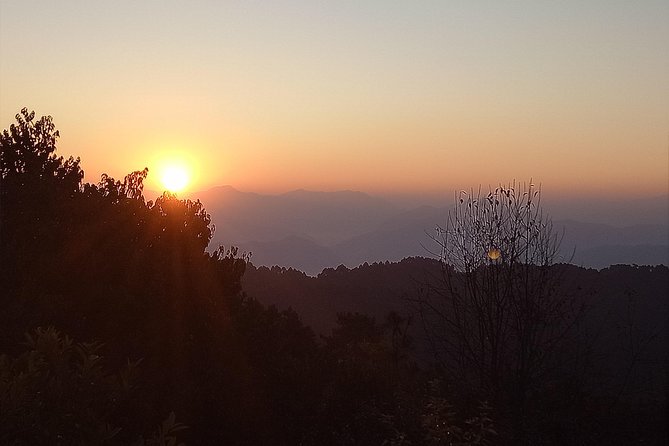
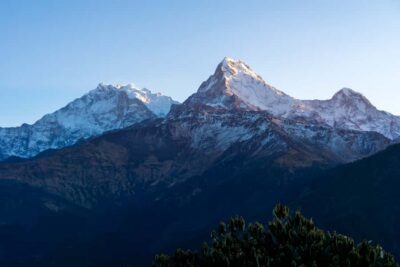
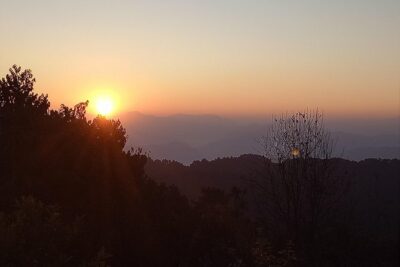
Poon Hill gives you one of Nepal’s best mountain mornings without asking you to spend three weeks on a trail. You rise early for the viewpoint at 3,180 meters, where the Annapurna range and Machhapuchhre can catch the first light. I like the mix of mountain walking and village life, and I like that the plan includes time in both Kathmandu and Pokhara. The catch is simple: the trail has plenty of stone steps, and the six-hour days can leave your legs complaining.
The small-group limit of 14 is another strong point. Guides such as Jitu, Ravi, Sanjay, and Ramesh have led departures, and the guiding team is set up to handle weather changes, route decisions, and porter support. You should still arrive with a fair level of fitness, because moderate in Nepal often means steep, not merely long.
Key points
- Sunrise at Poon Hill: Leave early for a wide mountain view over the Annapurna and Dhaulagiri regions.
- A compact Himalayan trek: Reach high mountain country in five main walking days rather than committing to a long expedition.
- Village-to-village walking: Pass through Magar and Gurung communities, farmland, stone stairways, and rhododendron forest.
- Small-group support: The group size is capped at 14, with one porter assigned for every two people.
- Useful city time: Three nights in Kathmandu and two nights in Pokhara add culture, rest, and easier transport planning.
- A mostly bundled price: The $700 rate covers lodging, meals during the trek, transfers, staff, permits and taxes, but not every meal or personal cost in the cities.
Why Poon Hill works for a first Himalayan trek
Poon Hill is a smart introduction to Nepal because the reward arrives quickly. You do not need to walk deep into the high Himalaya to find dramatic peaks. The route climbs from the Pokhara area through forest and mountain villages, then reaches a famous sunrise lookout before dropping toward Ghandruk.
I like that the trek is not just a mountain-view exercise. The trail passes farmland, stone steps, forest, and working villages. The Magar settlement of Ghorepani and the Gurung village of Ghandruk give the walk a human setting, rather than making it feel like a race from one viewpoint to the next.
The 10-day schedule also takes pressure off. Kathmandu sightseeing comes at the start, and Pokhara gives you two nights around the walking portion. You can see some of Nepal’s cultural landmarks, adjust to the pace of the country, and have a little breathing room before returning home.
Still, do not mistake short for effortless. The route reaches 3,180 meters at Poon Hill, and days five and six each involve around six hours of walking. The stone stairs can be tiring, especially on the climb to Ghorepani and the early morning ascent to the viewpoint.
More Poon Hill Treks in Kathmandu
- 4 Days Poon Hill Trek
★ 5.0 · 94 reviews - Ghorepani(Poonhill Trek)
★ 5.0 · 81 reviews - 4-day Poon Hill Trek
★ 5.0 · 74 reviews
Day 1 and Day 2: Kathmandu before the trail
Your trip begins with an airport pickup at Tribhuvan International Airport and a transfer to your hotel. The stated meeting time is 6:15 am, so check your arrival details carefully and confirm how the first morning transfer will work if your flight lands later.
You receive three nights in Kathmandu, with breakfast included. The first day is mainly for arrival and settling in. The second brings a full-day sightseeing tour of Kathmandu Valley and its historic UNESCO World Heritage sites.
This city time matters. Kathmandu can be noisy, crowded, and full of traffic, but its temples, courtyards, and old religious sites provide a useful introduction to Nepal before you reach the mountains. Entrance fees and personal expenses during sightseeing are not included, so keep some local currency available.
Lunch and dinner in Kathmandu are also excluded. That gives you freedom to choose where and what to eat, but it means the $700 price is not a complete food budget for the city portion.
Day 3: The six-hour road to Pokhara
The journey from Kathmandu to Pokhara takes about six hours by tourist bus. It is an important part of the trip, and also one of the less glamorous parts. You are trading a domestic flight for ground transport, which keeps the package simpler but uses most of a day.
Pokhara is the relaxed counterpoint to Kathmandu. The plan includes two hotel nights with breakfast, giving you time to rest before the trek and recover afterward. Lunch and dinner here are your responsibility.
The road transfer can also be useful for seeing more of Nepal beyond the major cities. Just keep your expectations practical. This is transport, not a sightseeing excursion with a tightly managed set of stops.
Day 4: Nayapul to Tikhedunga, the gentle opening
On day four, you drive from Pokhara to Nayapul at about 1,050 meters, then walk to Tikhedunga at roughly 1,577 meters. The trek takes around four hours.
This first walking day lets you get used to the rhythm of carrying a day pack, walking with a guide, and staying in mountain lodges. You pass through the lower hills and farmland as the route begins to climb.
The shorter day is welcome, but the trail is not flat. You should use it to settle your footwear, water routine, and walking pace. If your shoes rub or your pack feels awkward, fix the problem here rather than waiting for the higher stages.
Another trail to compare in Kathmandu:
- Everest Base Camp Trek – 14 Days
★ 5.0 · 1,499 reviews - Everest Base Camp Trek
★ 5.0 · 842 reviews - Everest Base Camp Trekking
★ 5.0 · 485 reviews - Annapurna Circuit Trek with Tilicho Lake
★ 5.0 · 368 reviews
Day 5: Climbing to Ghorepani
The walk from Tikhedunga to Ghorepani takes about six hours and reaches approximately 2,675 meters. This is one of the harder days because the route gains height and includes long sections of stone steps.
Ghorepani is more than a place to sleep. It is a traditional Magar village and a key stop on the Poon Hill route. The surrounding rhododendron forest is one of the walk’s signature features, especially when the trees are in bloom.
You stay in a tea house or lodge, with accommodation and meals covered during the trek. Expect practical mountain lodging rather than hotel comfort. The supplied sleeping bag and down jacket are available if needed and are returned after the trip.
At this point, a steady pace matters more than speed. Tell your guide if you need short pauses. The team is there to manage the walk, and several past departures have singled out guides for keeping people safe in cloud and rain.
Day 6: Poon Hill sunrise and the route to Tadapani
This is the headline day. You hike to Poon Hill at 3,180 meters for sunrise, then continue to Tadapani at about 2,675 meters. The full walking time is around six hours.
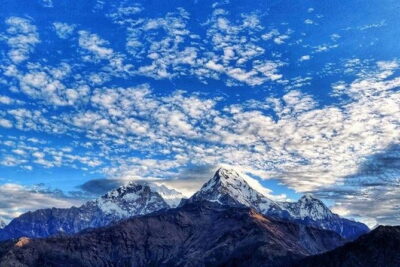
The early start is worth taking seriously. Mountain mornings can be cold, so use the down jacket if needed and keep a headlamp or other light close at hand if you bring one. The view depends on weather, and cloud can hide the peaks, but the lookout is designed for broad views of the Annapurna Himalaya and nearby ranges.
After sunrise, the route continues through forest toward Tadapani. This day combines the highest point of the trek with a second substantial walking stretch, so it can feel demanding even though the trail later loses height.
You may see Machhapuchhre, often called Fishtail, along with Annapurna peaks when conditions are clear. The mountain view is the obvious prize, but the forest walking gives the day variety and keeps it from becoming only a viewpoint visit.
Day 7: Tadapani to Ghandruk
The walk from Tadapani to Ghandruk takes about three hours, making this a gentler day after the long Poon Hill section. Ghandruk sits at around 1,950 meters and is known here as a typical Gurung village.
The shorter schedule gives you time to look around instead of simply arriving, eating, and sleeping. Ghandruk is one of the places where the cultural side of the trek becomes easier to notice. The village setting, mountain paths, and local buildings provide a different feel from the forest stops.
This is also a good day to ask your guide about the communities and the route. One of the strongest parts of a guided trek is having someone who can explain what you are seeing instead of leaving you to guess.
Day 8: Walking out to Nayapul and back to Pokhara
You walk from Ghandruk to Nayapul and then drive to Pokhara. The total time is listed at about four hours, combining the final trail section and the road transfer.
This return route can feel bittersweet. Your legs are likely tired, but you are leaving the quieter mountain villages for the comfort and services of Pokhara. The second hotel night in Pokhara gives you a useful buffer rather than forcing an immediate long road journey back to Kathmandu.
Pokhara is also a good place to keep plans light. The package does not include your lunch or dinner here, so you can choose a meal that suits you after the trek. The key point is that you have time to recover before the next bus ride.
Day 9 and Day 10: Returning to Kathmandu and flying home
Day nine is another six-hour tourist-bus journey from Pokhara to Kathmandu. It repeats the long road transfer from day three, but it also keeps the entire route connected by ground transport.
The final night and airport transfer arrangements depend on how the schedule is set up, so confirm the timing with the operator. Day ten includes a transfer to the international airport for your departure.
Airport transfers by private vehicle are included, while the tourist bus is used for the Kathmandu to Pokhara and Pokhara to Kathmandu sections. This division is practical: private vehicles handle the airport logistics, and the bus keeps the longer intercity transport within the package.
What the $700 price really covers
At $700 per person, the package offers solid value if you would otherwise need to arrange several separate services. It includes three Kathmandu hotel nights with breakfast, two Pokhara hotel nights with breakfast, tea house accommodation during the trek, meals on the trekking days, airport transfers, tourist-bus transport, a guide, porters, taxes, and service charges.
Staff costs are also covered, including guide and porter salary, food, drinks, accommodation, transport, and insurance. One porter is assigned for every two people, which means you normally carry only your day pack, though you should confirm baggage limits directly before departure.
The price also includes a sleeping bag, down jacket, and trekking map when needed. These items are returned after the trek, so you do not need to buy every piece of cold-weather gear for one short route.
Budget separately for Nepal’s entry visa, international airfare, tips, personal spending, Kathmandu sightseeing entrance fees, and alcoholic or non-alcoholic drinks. Lunch and dinner in Kathmandu and Pokhara are also excluded. Travel insurance is compulsory, and it should cover trekking plus emergency helicopter evacuation. The company can arrange that helicopter service, but your insurance company pays the bill.
Guides, porters, and group size
A group limit of 14 is small enough for personal attention without making the trip feel like a private departure. The guide can help set a realistic pace, manage weather changes, and coordinate the tea house routine.
Different departures have included guides named Jitu, Ravi, Sanjay, and Ramesh. English communication has been praised for some of these guides, and the strongest practical benefit is not a speech about the mountains. It is having someone who notices when the weather worsens, checks how you are doing, and keeps the day moving safely.
Porters are part of the support system, but pack thoughtfully and respect the weight they carry. Keep medicines, documents, a warm layer, water, and valuables in your own day pack. Tips are not included, so plan for a separate gratuity if you feel the team has served you well.
Who should book this trek
I would recommend this trip to an active first-time trekker who wants strong mountain scenery, village walking, and a guided plan without taking on a long, high-altitude expedition. It also suits people who want Kathmandu and Pokhara included rather than arranging separate city stays.
The route is described as suitable for all ages, but that should not be read as suitable for every fitness level. You need moderate physical fitness and comfort with several hours of walking, uphill steps, changing weather, and basic lodge accommodation.
It is less suitable if you want private transport throughout, hotel-level comfort on the trail, or a relaxed schedule with little climbing. The Poon Hill sunrise is not a sleep-in morning, and the two six-hour trail days require effort.
Practical details before you reserve
Confirmation is sent within 48 hours, subject to availability. Pickup is offered, and the starting point is Tribhuvan International Airport in Kathmandu.
The tour is near public transportation, but the main walking route is not a casual city outing. Bring sensible walking shoes, warm layers, rain protection, and a day pack. A trekking map, sleeping bag, and down jacket can be supplied if necessary.
The cancellation rule is strict close to departure. You can receive a full refund if you cancel at least three full days before the local start time. Cancellations or changes inside that window are not accepted and are not refunded.
Should you book the Ghorepani Poon Hill Trek?
Book it if you want a well-supported introduction to Nepal’s mountains and value having transport, hotels, meals, guides, and porters arranged in one package. The sunrise at Poon Hill, the rhododendron forest, and the time in Ghorepani and Ghandruk give you more than a quick mountain photo stop.
Think twice if you dislike long bus rides, early starts, stone steps, or simple tea houses. For the right person, the $700 price is attractive because it combines a compact trek with Kathmandu and Pokhara. Just budget for city meals, entry fees, drinks, tips, insurance, and the visa, then arrive ready to walk steadily rather than race.
FAQ
How long is the Ghorepani Poon Hill Trek?
The complete experience lasts approximately 10 days, including Kathmandu, Pokhara, transport, trekking, and airport transfers.
What is the maximum group size?
The group can include up to 14 people.
What fitness level is required?
You should have a moderate level of physical fitness. The trek includes several walking days, with about six hours on the routes to Ghorepani and Tadapani.
How high does the trek go?
The highest point listed is Poon Hill at 3,180 meters.
Is accommodation included?
Yes. The package includes three hotel nights in Kathmandu with breakfast, two hotel nights in Pokhara with breakfast, and lodge or tea house accommodation during the trek.
Are meals included?
Breakfast, lunch, and dinner are included during the trekking portion. Lunch and dinner in Kathmandu and Pokhara are not included. Drinks and desserts are also excluded.
Is transport included?
Yes. Airport transfers by private vehicle and tourist-bus transport between Kathmandu and Pokhara are included.
Is travel insurance required?
Yes. Travel insurance is compulsory. It should cover trekking and emergency helicopter evacuation, while any helicopter cost is paid by the insurance company.
Can I cancel for a full refund?
Yes, if you cancel at least three full days before the experience start time. Cancellations or changes made less than three full days before the start are not accepted and are not refunded.
Latest treks added in Kathmandu
- Private Manaslu Circuit Trek at Himalayas★ 5.0 · 3 reviews
- Ghorepani Poonhill Trek★ 5.0 · 5 reviews
- Ghorepani Poon Hill Trek★ 5.0 · 16 reviews
- Upper Mustang Trekking★ 3.0 · 2 reviews
- Amazing 1 Day Trekking Experience in Kathmandu Nepal★ 5.0 · 24 reviews
- Upper Mustang Trekking★ 5.0 · 2 reviews
- Upper Mustang Trekking★ 5.0 · 4 reviews
- Upper Mustang Trek★ 5.0 · 5 reviews
Poon Hill Treks, compared.
4-Day Ghorepani, Poonhill & Ghandruk Mountain Trek
Read our review →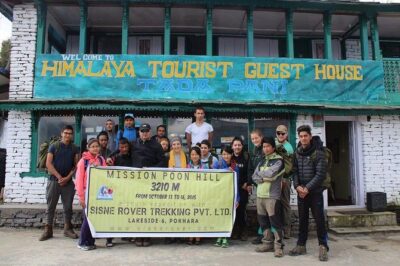
Browse the lists this tour appears in