
REVIEW · MARRAKECH
From Marrakech: Private Tour to Oasis and Trekking in the Desert of Erg Chigaga
The best part of this trip is that it takes you beyond the easy-to-reach desert camps near Merzouga and into the far more remote Erg Chigaga dunes. You cross the High Atlas, pass through the Draa Valley, then leave the pavement for a long jeep ride across the Sahara. I especially like the two-night desert stay, which gives you time for a proper camel trek, sunset, sunrise, music, and quiet. I also like the private format, since you can talk with your guide about adjusting stops along the way.
The main drawback is the amount of time spent in the vehicle. The route from Marrakech to Erg Chigaga is long, and the return through Foum Zguid, Tazenakht, and the Tizi-n-Tichka pass makes the fourth day especially full. At $614.14 per person, this is a serious spend, but it covers private transport, three nights of lodging, most meals, guiding, and a much more remote desert setting than a quick overnight excursion.
What makes this desert journey different
- Two nights among the Erg Chigaga dunes: You do not simply arrive for dinner and leave at sunrise. The extra night gives you a full day for camel trekking and time to enjoy the camp.
- A true off-road approach: From M’Hamid, the route continues for about 50 kilometers across desert tracks, including a stop at the Iriki oasis.
- The Draa Valley as part of the trip: You spend the first night in an Agdz riad surrounded by date palms, rather than treating the valley as a quick roadside stop.
- A private guide and vehicle: Your group travels alone, with door-to-door transport and the chance to discuss the pace and stops with the driver-guide.
- A useful mix of Morocco: The route combines a UNESCO-listed ksar, film history, Berber villages, date groves, salt flats, desert dunes, and High Atlas mountain roads.
- Desert comfort without losing the setting: The camp is described as comfortable, with good food, tea, evening music, and familiar hospitality, but you are still sleeping far from town lights.
Leaving Marrakech for the High Atlas
The trip begins at 8:30 a.m. with pickup from Menara Airport in Marrakech. The private format matters here. You are not waiting for a large coach to fill up, and the long drive can be handled at a pace that suits your group.
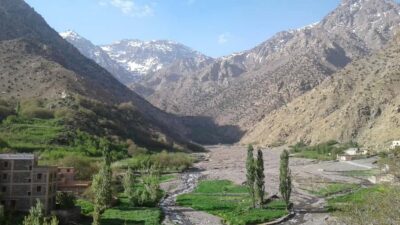
The first major crossing is the Tizi-n-Tichka pass, which reaches 2,260 meters. The road passes through the High Atlas, with views of oak woods, walnut groves, Berber villages, and open mountain pastures. Goats and sheep are part of the scene, and the route offers a sharp change from Marrakech’s city streets.
This first day is not a short transfer. It is a full day on the road, so pack water, snacks, sun protection, and something warm for the mountain section. The mountain scenery is a major part of the trip, but you should not book this route expecting a relaxed schedule with long stops at every viewpoint.
More Trekking Tours in Marrakech
- Marrakesh: 2-Day Mt. Toubkal Trek with 1-Night Stay & Meals
★ 4.7 · 795 reviews - Marrakech: 2-Day Atlas Mountains Trek with Village Stay
★ 4.8 · 717 reviews - From Marrakech: 3-Day Mount Toubkal Climbing Trek
★ 4.7 · 597 reviews
Ait Benhaddou, where film and history meet
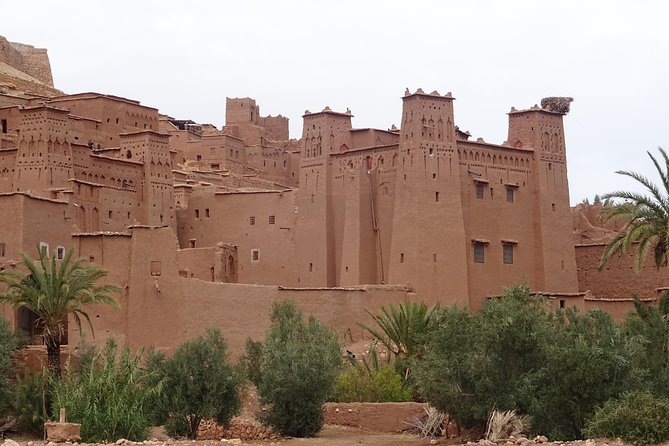
Ait Benhaddou is the first headline stop. This fortified village, or ksar, is protected as a UNESCO World Heritage Site and has appeared in films including Lawrence of Arabia, Jesus of Nazareth, and The Gladiator.
You have about an hour here, with lunch included at this point in the day. That is enough to walk through the earthen buildings and get a feel for the setting, though it is not an extended archaeological visit. The film connection adds interest, but the village is worth seeing even if you have no interest in cinema. Its position along old caravan routes helps explain why this kind of fortified settlement mattered.
The approach involves walking through an old village environment, so comfortable shoes are sensible. You should also expect the stop to feel popular compared with the later desert sections. Ait Benhaddou is an essential sight, but Erg Chigaga is where the trip becomes much quieter.
Ouarzazate and the road into the Draa Valley
The route continues to Ouarzazate, where you may visit Kasbah Taourirt and the film studios if you choose. The listed stop is brief, about 15 minutes, so think of this as a chance to see a little of the city rather than a full museum visit.
Ouarzazate has long been tied to Morocco’s film industry, and the surviving sets and studios help explain why filmmakers use this part of the country. If you are keen on film locations, ask your guide how much time is available before committing to a visit. The day already covers a great deal of ground.
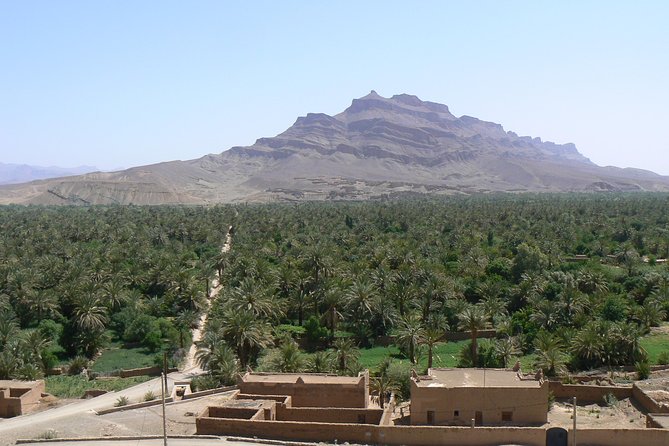
The next major area is Agdz and the Draa Valley. This is one of the most appealing parts of the itinerary because it slows the trip down after the mountain and road crossings. The valley is lined with millions of date palms, and the main harvest takes place from September through December. Roadside stalls and local shops sell the dates, which make a good edible souvenir.
You have the chance to walk in the oasis before settling into a Moroccan riad for the night. Tea, dinner, and breakfast are included. This overnight stop is valuable because it gives you a taste of southern Moroccan life before the desert camp, instead of turning the whole first day into a race toward the dunes.
From Zagora to M’Hamid and the desert tracks
Day two carries you farther south through Zagora and Tamegroute. Tamegroute is known for its pottery, so this section offers a useful change of focus from scenery. The area was once linked to caravan routes reaching Timbuktu, and M’Hamid still feels like a desert outpost at the end of the paved route.
M’Hamid is where the journey changes character. From here, the vehicle leaves the ordinary road and heads toward Erg Chigaga. The route covers roughly 50 kilometers of desert track, with a stop at the Iriki oasis for tea.
The off-road ride is part of the appeal, but it is also a practical consideration. You will spend time in a jeep on uneven ground, and the ride may feel tiring if you are not comfortable with rough tracks. This is not a polished road transfer. It is the route that allows you to reach a much less developed part of the Sahara.
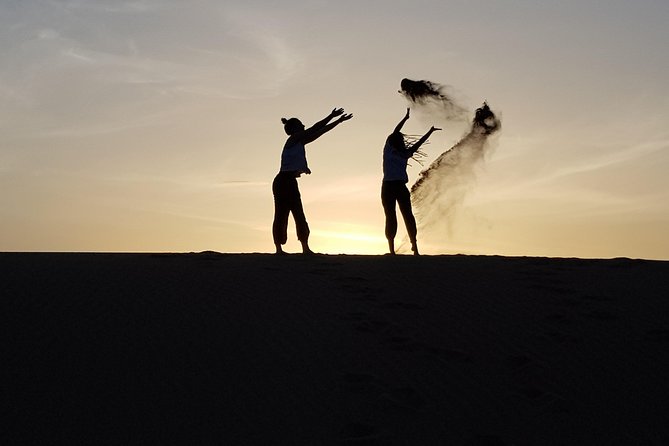
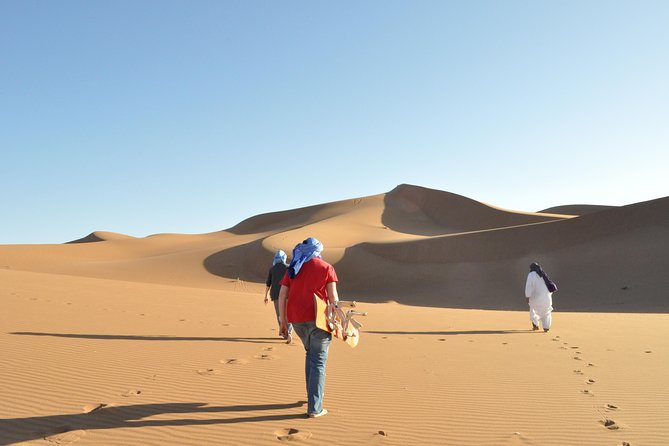
The payoff is the setting around Erg Chigaga. The dunes are large, open, and remote, with far fewer signs of town life than you see near Morocco’s more accessible desert destinations. After reaching camp, the evening includes dinner and tea, with Berber music and time to watch the changing light over the sand.
Another trail to compare in Marrakech:
- From Marrakesh: 2-Day Mount Toubkal Trek
★ 4.7 · 591 reviews - From Marrakech: Atlas Mountains Summit Trek
★ 4.9 · 228 reviews - Summiting and Hiking the Atlas Mountains Day Trek from Marrakech
★ 5.0 · 131 reviews - Toubkal Trekking 2 Days
★ 5.0 · 98 reviews
Two nights at the Erg Chigaga camp
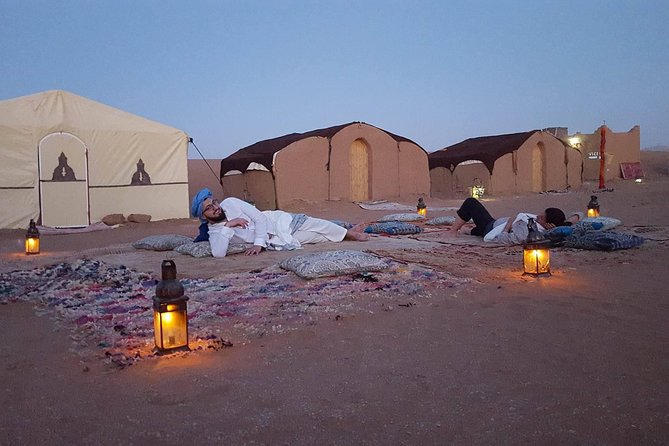
The two-night stay is one of the strongest features of the trip. Many desert tours offer one night, which can make the experience feel like a tightly timed stage show: arrive, ride a camel, eat dinner, sleep, and leave. Here, you have a full day between arrival and departure.
The camp is described as comfortable and well located in the dunes. The information does not give a detailed list of facilities, so you should confirm any particular room or bathroom expectations before booking. Still, the combination of tents, cooked meals, tea, music, and staff support gives you more comfort than a basic outdoor camp.
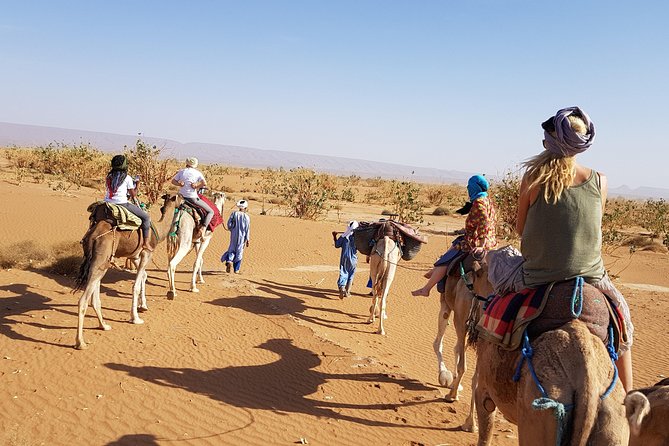
The desert is at its best early and late in the day. Set your alarm for sunrise, when the low light turns the dunes gold. After breakfast, the camel trek begins. The tour uses dromedaries, and the route takes you through the dunes for several hours.
Camel riding is not physically demanding in the same way as a long hike, but it can be uncomfortable for some people. The movement is slow and rolling, and a few hours on a dromedary may leave your legs or back feeling tired. You can ask your guide about the pace and how much walking is involved.
The trek reaches a stand of tamarind trees, where the guides prepare a traditional nomadic lunch of kebabs and fresh bread. This detail gives the day more substance than a short camel photo stop. You are out in the dunes for much of the day, with food cooked along the route and shade provided by the trees.
After lunch, the route returns through the dunes to camp. The afternoon is open for rest, quiet time, and sunset. Dinner and tea follow, with the chance for more music. At night, the lack of city light can make the stars the main event. Bring a small flashlight and keep your phone charged if you want to take photographs, though the best desert moments often improve when you stop trying to record them.
The long return through Iriki and Foum Zguid
Day four begins after breakfast with another jeep journey. You follow the old Paris-Dakar rally track toward the dried-up salt lake of Iriki, pass beneath a fossil mountain, and leave the desert near Foum Zguid.
The stop in Foum Zguid is brief, with time for a fresh orange juice. It is a small break after the off-road section, not a major sightseeing visit. From there, the road reaches Tazenakht, where lunch is included.
Tazenakht is known for woven rugs, so this is the point where you may have the chance to look at Moroccan textiles. Shopping is not required, but the stop can be worthwhile if you are interested in rugs and want to see work from a region known for high-quality weaving. Take your time and ask questions about materials, patterns, and pricing before buying. A rug is not a souvenir to purchase in a hurry.
The final leg returns over the High Atlas by way of the Tizi-n-Tichka pass, reaching Marrakech in the early evening. This makes for a very long day. The route is scenic, but you will likely be ready for a shower and a quiet dinner once you arrive.
Meals, lodging, and what the price covers
The $614.14 per-person price includes three breakfasts, three dinners, and one lunch. Lodging covers one night in a Draa Valley riad and two nights in the desert camp. Private transfers and guiding are also part of the package.
That is a reasonable value if you are traveling with people who want a private vehicle and a remote desert stay. A comparable trip arranged through separate hotels, transport, meals, and desert services could quickly become complicated. The price also reflects the distance involved and the fact that your group is not sharing the main vehicle with strangers.
The value is weaker if you only want a quick taste of the Sahara. In that case, four days may feel too long, and a shorter desert trip may suit you better. You are paying not just for time in the dunes but for the long approach through the High Atlas, Ait Benhaddou, the Draa Valley, and the return across southern Morocco.
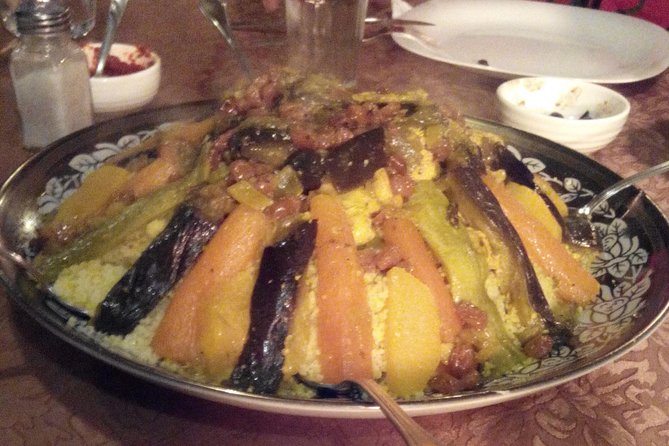
Food is a strong part of the experience. The desert team prepares meals at camp and cooks the nomadic lunch near the tamarind trees. Past visitors have also singled out the food at the Agdz riad and the camp, with some describing it as better than expected. Menus are not specified, so tell the operator about dietary needs before departure.
The private guide can shape the experience
Sahara Feeling’s team includes guides and drivers such as Ali, Mustafa, and Brahim, while Helena has handled trip questions and correspondence. The strongest reports focus on careful driving, friendly service, good restaurant choices, and the ability to adjust the program.
That flexibility is especially useful on a route this long. You may want more time at Ait Benhaddou, less time shopping, or a slower walk in the oasis. A private tour gives you a better chance of discussing those choices than a fixed group departure.
The quality of the trip depends heavily on the person behind the wheel. You should confirm the guide’s name, language, vehicle, and the day’s expected driving time before setting off. The tour is private, and most people can participate, but children must be accompanied by an adult. A child rate applies only when the child shares with two paying adults.
Pickup is offered, with the listed starting point at Menara Airport at 8:30 a.m. Service animals are allowed, and the activity is near public transportation. Free cancellation is available up to 24 hours before the start time. Changes or cancellations inside that window are not accepted for a refund.
Who should book this four-day route?
I would choose this trip if you want the desert to be the heart of your southern Morocco visit, not a quick add-on. It fits you best if you enjoy long road journeys, changing scenery, private guiding, and a camp that offers comfort without putting you in a town.
You should also be comfortable with early starts, long drives, rough desert tracks, camel riding, and a demanding final day. The route covers a lot of ground in four days, so it rewards curiosity and flexibility more than a need for a slow, settled holiday.
This is a particularly good choice for couples, families with older children, or a group of friends who want their own vehicle. The two-night camp stay gives you time to enjoy the dunes properly, while the riad in Agdz adds a welcome cultural stop between Marrakech and the Sahara.
Should you book the Erg Chigaga tour?
Book it if you want a remote Sahara experience with private transport, a real day of camel trekking, and enough time in camp to see both sunrise and sunset. The mix of Ait Benhaddou, the Draa Valley, old caravan routes, salt flats, and the High Atlas gives you far more than a simple desert overnight.
Skip it if you dislike long drives or want a leisurely itinerary. The price is substantial, and the fourth day is especially tiring. But if you accept the road time, this is a well-rounded way to reach Erg Chigaga with meals, guiding, and lodging arranged in one package.
FAQ
Where does the tour start?
The listed meeting point is Menara Airport in Marrakech, Morocco, with a start time of 8:30 a.m. Pickup is offered.
How long does the experience last?
The tour lasts approximately four days.
Is this a private tour?
Yes. Only your group participates in the private tour or activity.
Where do you sleep during the tour?
You spend one night in a Moroccan riad in Agdz in the Draa Valley and two nights in a Berber tent at the Erg Chigaga desert camp.
What meals are included?
The package includes three breakfasts, three dinners, and one lunch.
Is camel riding part of the itinerary?
Yes. On day three, you ride dromedaries through the Erg Chigaga dunes for several hours, with lunch prepared near tamarind trees.
Does the tour visit Ait Benhaddou?
Yes. The route includes about an hour at Ait Benhaddou, the UNESCO-protected village associated with films including Lawrence of Arabia, Jesus of Nazareth, and The Gladiator.
Can I cancel for a refund?
You can cancel at least 24 hours before the experience starts for a full refund. Cancellations or changes made less than 24 hours before the start time are not refunded or accepted.
Latest treks added in Marrakech
- 5 Days Desert Trekking from Marrakech★ 5.0 · 16 reviews
- 3 days Toubkal Trek from Marrakech★ 5.0 · 4 reviews
- Elite Experience Atlas Mountains Day Trekking★ 5.0 · 7 reviews
- 3 Days Berber Villages Trek – Authentic Atlas Mountain Experience★ 5.0 · 4 reviews
- Morocco Desert Trek 4 Days: 2 days on foot in Morocco★ 5.0 · 2 reviews
- Atlas Mauntains and 3 Valleys Trek★ 5.0 · 6 reviews
- Atlas Mountains Valley Trek – 3 Days★ 5.0 · 29 reviews
- 5-day Jebel M’goun trek★ 5.0 · 2 reviews
Marrakech Trekking Tours, compared.
2-Day Mt. Toubkal Trek with 1-Night Stay & Meals
Read our review →
Summiting and Hiking the Atlas Mountains Day Trek from Marrakech
Read our review →
Browse the lists this tour appears in