
REVIEW · INDIA
Ancient Lava Stream Trek through dense Tropical forest.
The most interesting part of this Havelock Island trek is that it connects living plantation culture with the island’s volcanic past. You walk from coastal forest into areca nut fields, then farther into thick tropical forest toward a freshwater stream while learning how lava, weather, plants, and wildlife shaped the island.
I like the close look at areca nut harvesting, and I like the guide’s detailed explanations of plants, trees, and geology. The main drawback is clear: this is a strenuous trek, with slippery sections, rope-assisted climbing, and rappelling. It is not a good fit if you have back, knee, or cardiovascular problems.
Key points to know before you book
- Ancient lava evidence: The route uses rocks and forest features to explain how the Andaman Islands formed.
- Three distinct settings: You move through coastal forest, areca nut plantation, and dense tropical forest.
- A real physical challenge: Slippery ground, rope work, and rappelling require balance and steady movement.
- Strong nature focus: Expect close attention to endemic plants, trees, wildlife signs, and freshwater ecology.
- Small group size: The maximum is 15 people, giving the guide room to explain what you are seeing.
- Good value at $33.56: Fees and taxes are included, though transport in an air-conditioned vehicle is not.
From Govind Nagar into Havelock’s coastal forest
The trek begins at 1:00 pm from the Govind Nagar meeting point on Havelock Island. It ends back at the same place, so you do not need to arrange a separate pickup at the finish. Since the activity lasts about two and a half hours, the afternoon timing gives you a focused outing without taking up a full day.
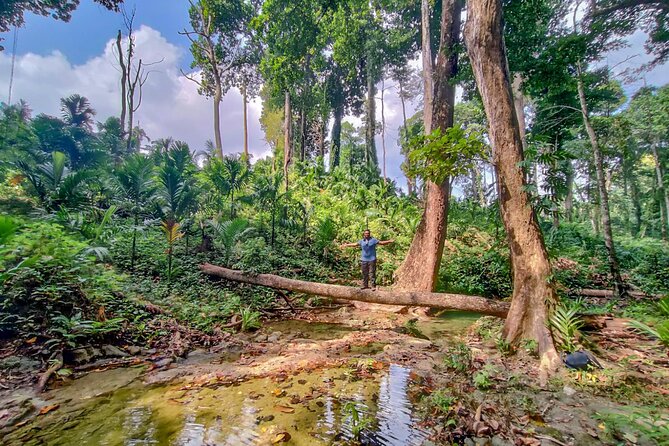
The first section passes through coastal forest. This is not simply a walk between points on a map. The forest introduces the central idea of the experience: Havelock is both a living ecosystem and the result of powerful geological forces.
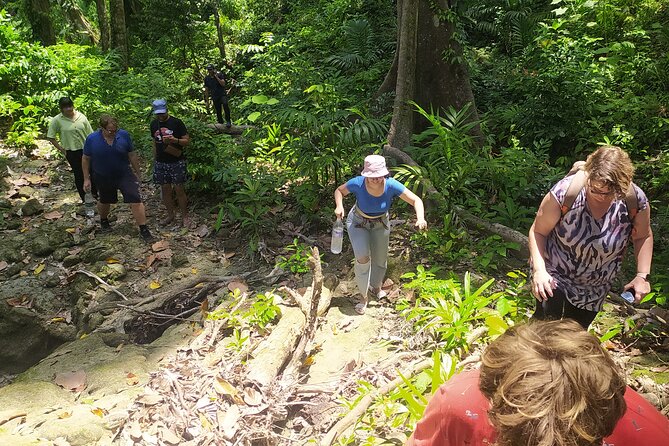
Your guide explains the plants and trees along the way, with attention to flora adapted to the island’s weather and conditions. That makes the walk more useful than a standard jungle stroll. You are encouraged to notice how the forest grows, how different species share the same space, and how island conditions shape what survives.
I would treat this opening section as a slow observation period. Keep your eyes open for unusual plants and signs of wildlife, but do not expect a wildlife-spotting safari. The focus is on the forest as a whole, including endemic plant life and evidence of past natural change.
More Trekking Tours in India
- Half day trekking (munnar valley Trekking & Tours )
★ 5.0 · 310 reviews - Nag Tibba 2 Days Trek (Pantwari to Pantwari)
★ 5.0 · 274 reviews - Bhrigu Lake and Alpine Meadow Trek
★ 5.0 · 121 reviews
Areca nut plantations and island life
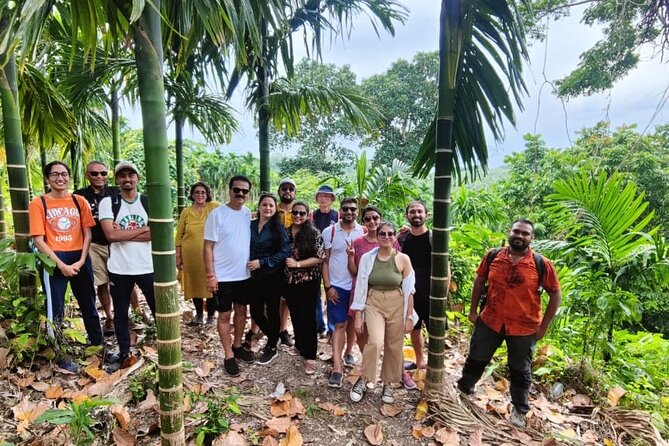
The route then reaches an areca nut plantation. Areca palms are an important part of rural life in many parts of India, and here you get a glimpse of the work connected with planting and harvesting beetle nut, also called areca nut.
This section gives the walk a human side. Instead of seeing Havelock only as a tropical getaway, you see how local people use the land and how plantation work fits into the island’s daily economy. The experience is not presented as a formal farm visit, so the amount of harvesting activity you see can vary. Still, the plantation adds useful context to the forest route.
I especially like this transition because it prevents the trek from becoming a string of scenery stops. You begin in coastal woodland, pass through cultivated land, and then return to thicker forest. That changing sequence helps you understand how natural and working environments meet on Havelock.
The plantation also makes the route less polished and more grounded. You are not being led through a purpose-built attraction with every surface made easy. The appeal comes from seeing ordinary land use alongside wild growth. For some people, that will feel authentic. For others, it may seem less tidy than a maintained park trail.
Into dense tropical forest
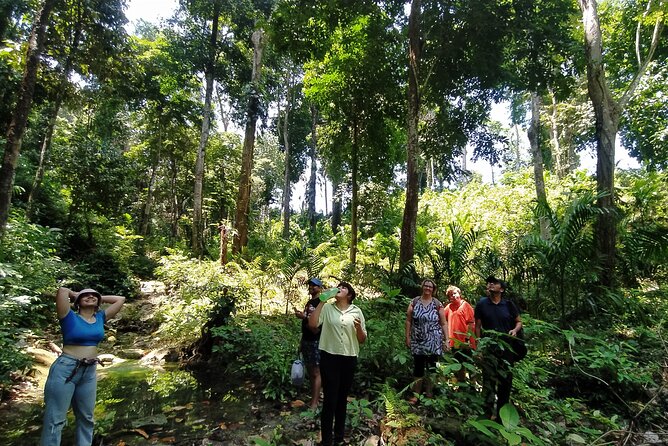
Beyond the plantation, the route becomes more enclosed and forested. The tropical growth is dense, and the guide continues to connect what you see with the island’s geology and wildlife.
This is where the trek’s educational side matters most. A guide can point out plants and trees that would otherwise blend into the background. You also learn to read the forest for clues about its past, including the effects of lava and the long development of island ecosystems.
The geology is a major reason to choose this activity. Havelock Island is not only about beaches and clear water. The route offers evidence of how the Andaman Islands formed, using the ground beneath your feet as part of the lesson. You may not get a full geology lecture, but you should expect explanations that connect rock, soil, water, and plant life.
The experience also looks at the history of wildlife on the islands. That does not mean a guaranteed sighting of rare animals. It means the guide helps you understand the kind of wildlife and plant life that developed in an island setting, where isolation and weather play a major role.
If you enjoy nature interpretation, this is likely the strongest part of the route. If you mainly want a fast hike with scenic viewpoints, the frequent explanations may slow your pace more than you prefer.
Rope work, slippery ground, and rappelling
The physical challenge increases as the trail continues. Some sections use ropes to help you climb, and the route can become slippery. Rappelling is also part of the experience.
You should read that description literally. This is not a gentle nature walk on a flat boardwalk. You need a moderate level of physical fitness, sure footing, and the ability to manage uneven ground. The combination of mud, slopes, ropes, and wet surfaces can make a short trek feel demanding.
The two-and-a-half-hour duration may sound modest, but the effort depends on trail conditions and your pace. A short route with climbing can be harder than a longer walk on a smooth path. Wear clothing and footwear suited to wet, rough ground, though the provided information does not specify a required shoe type.
You should also be comfortable using your hands for support and moving carefully rather than quickly. The rope sections are there to assist with the terrain, not to turn the activity into a full technical climbing course. Still, anyone with back, knee, cardiovascular, or general weakness concerns should choose a different outing.
The physical side is also part of the attraction. You are not simply being driven to a viewpoint and handed a story. You work your way through the forest, and the changing ground helps you feel the island’s natural character. Just know that the effort is central to the experience, not a minor footnote.
Another trail to compare in India:
- Har Ki dun Trek by Himalaya Shelter
★ 5.0 · 102 reviews - Wild Elephant Anakulam & Waterfalls Tour(munnar valley Trekking)
★ 5.0 · 98 reviews - Friendship Peak Trek
★ 5.0 · 94 reviews - Half Day Hiking in Munnar Trekking Tour
★ 5.0 · 89 reviews
Reaching the freshwater stream
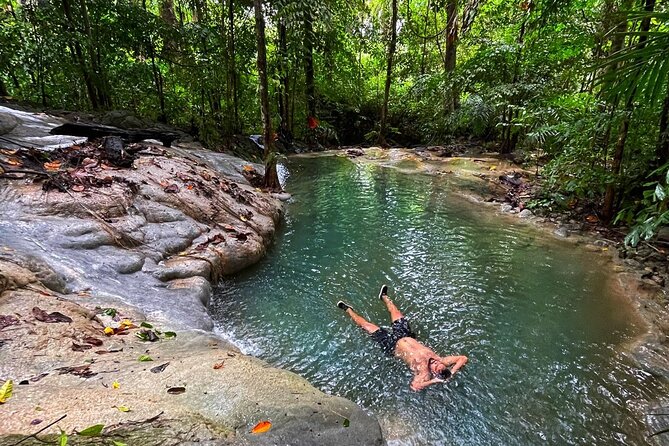
The trek leads to a freshwater stream in the forest. This is the route’s natural destination and a useful place to understand how water shapes an island ecosystem.
The stream gives the guide another way to explain the relationship between rain, rock, soil, and plant growth. It also marks a clear change from the coastal forest and plantation sections. The route begins near the coast, passes through managed land, and finishes in a wetter forest setting.
The information provided does not promise swimming, bathing, a waterfall, or a long rest at the stream. You should book this for the walk and the interpretation, not for a guaranteed water activity. The stream is best understood as part of the geological and ecological story.
Depending on conditions, the approach may be among the slipperiest parts of the trek. Take your time and follow the guide’s instructions. Good weather is required for the activity, and poor weather can lead to a rescheduled date or a full refund.
What the guide adds to the walk
The guide is the key to getting value from this experience. Without interpretation, you would still have a forest hike, but you could miss the connections between the plants, plantation, rocks, stream, and island formation.
The guide explains plants, trees, and Andaman geology in detail. That level of explanation was the most strongly praised aspect of the experience, and it is worth keeping in mind when deciding if this suits you. This is a naturalist-style outing, not just an escorted trek.
You should ask questions as you go. The route covers several subjects, including endemic flora, island weather, areca nut cultivation, geological formation, and wildlife history. A curious participant will get more from the same two and a half hours than someone who wants to walk in silence.
The group limit of 15 is helpful. It is small enough for the guide to address the group without the walk feeling like a large procession. It also matters on rope sections, where a smaller group can make movement more manageable. The pace may still vary depending on fitness and ground conditions.
Is $33.56 a fair price?
At $33.56 per person, the price is reasonable if you want a guided, educational trek rather than a simple walk in the woods. Fees and taxes are included, so the posted cost covers the basic activity price without those additions.
The value comes from three things: the guide’s explanations, access to a route that combines plantation and forest, and the opportunity to understand Havelock’s geology and ecology while moving through it. A self-guided walk would cost less, but it would not provide the same structure or interpretation.
Transport is not included in an air-conditioned vehicle. The meeting and finishing point is in Govind Nagar, so you need to consider how you will reach that location. Since the activity begins and ends there, the transport question is mainly about getting to the start and returning to your accommodation afterward.
The price is less attractive if you are looking for a relaxed sightseeing trip. You are paying for a physically active outing with some technical-feeling terrain. It is better value for someone who wants to learn and work a little than for someone hoping to spend the afternoon taking easy photographs.
Who should book this Havelock trek?
I would recommend it to people who enjoy guided nature walks, tropical ecology, geology, and a moderate physical challenge. It also suits anyone who wants to see a less resort-focused side of Havelock Island, including the connection between forest and areca nut farming.
It is a good choice for an active couple, a small group of friends, or a solo participant who likes asking questions. The group limit of 15 keeps the outing from becoming too crowded, while the subject matter gives you plenty to discuss along the way.
I would not choose it for children or adults who are not comfortable on slippery ground, unless the operator has confirmed that their ability matches the conditions. The provided guidance specifically warns against joining with back, knee, cardiovascular, or weakness concerns.
You should also think about your expectations. This is not mainly a photo stop, beach outing, or wildlife guarantee. It is a guided forest trek where the best moments come from understanding what you are seeing.
Booking, weather, and cancellation details
Confirmation is provided when you book, and the experience uses a mobile ticket. It is commonly booked about six days ahead, so reserving several days before your preferred date is sensible, especially if your Havelock schedule is tight.
Free cancellation is available if you cancel at least 24 hours before the 1:00 pm start time. Cancellations or changes made less than 24 hours before the start are not refunded or accepted.
The activity depends on good weather. If poor weather causes cancellation, you are offered another date or a full refund. That policy is useful here because slippery forest terrain becomes a serious safety issue when conditions are poor.
Final verdict: a strong choice for active nature fans
Book this trek if you want Havelock Island explained through its plants, plantation life, rocks, water, and wildlife. The detailed guidance on botany and geology gives the outing a purpose beyond exercise, and the route covers several distinct environments in about two and a half hours.
Skip it if you need an easy walk, have physical limitations, or want guaranteed animal sightings or a water activity. The slippery sections, rope-assisted climbing, and rappelling are real considerations.
For an active person who values local context and does not mind getting into demanding terrain, $33.56 is a fair price. You leave with a better sense of how Havelock works, not just how it looks.
FAQ
Where does the trek begin?
It begins at the Govind Nagar meeting point in Havelock Island, Andaman and Nicobar Islands, India.
What time does the activity start?
The scheduled start time is 1:00 pm.
How long does the trek last?
The activity lasts approximately two hours and 30 minutes.
Where does the trek finish?
It ends back at the original meeting point in Govind Nagar.
What types of places does the route include?
The route passes through coastal forest, an areca nut plantation, dense tropical forest, and a freshwater stream.
Is the trek physically demanding?
Yes. It requires a moderate fitness level and includes slippery sections, rope-assisted climbing, and rappelling.
Is this activity suitable for people with knee or back problems?
No. It is specifically not recommended for people with back, knee, cardiovascular, or weakness concerns.
What is included in the price?
All fees and taxes are included.
Is transport in an air-conditioned vehicle included?
No. An air-conditioned vehicle is not included.
What happens if bad weather cancels the trek?
You can choose a different date or receive a full refund if poor weather causes the activity to be canceled.
Latest treks added in India
- Jogini Waterfall Trek from Manali★ 5.0 · 2 reviews
- Prashar Lake Trek★ 5.0 · 7 reviews
- Kasol + Kheerganga Trek 3D/2N, all inclusive with BanBanjara★ 3.5 · 3 reviews
- 8 Days Markha Valley Trek: Shared Tour with Meals Included★ 5.0 · 3 reviews
- Ladakh Sham Valley Trek★ 5.0 · 7 reviews
- Ladakh One Day Trek- Gyamtsa to Phyang Village★ 5.0 · 4 reviews
- 1 Day Activity Adventure Trekking Kerala★ 5.0 · 5 reviews
- Kolukkumalai Trekking with Night stay in Tent★ 5.0 · 2 reviews
India Trekking Tours, compared.
Wild Elephant Anakulam & Waterfalls Tour(munnar valley Trekking)
Read our review →
Browse the lists this tour appears in