
REVIEW · MARRAKECH
Toubkal Trekking 2 Days
Mount Toubkal is not a casual day out. This two-day route takes you from Imlil at 1,740 meters to the 4,167-meter summit, with the hardest work packed into a very long second day. You walk through Berber villages, sleep in a mountain refuge, and reach North Africa’s highest point without technical climbing.
I like the practical setup: transport from Marrakech and a local guide keep the logistics simple, and the refuge means you do not need a tent or sleeping kit. I also like the steady support from guides such as Mohamed, Ibrahim, and Rashid, who are praised for patient pacing and safety advice. The drawback is clear: day two can mean 10 to 12 hours on foot, and altitude or bad weather can change the experience quickly.
Key points to know before booking
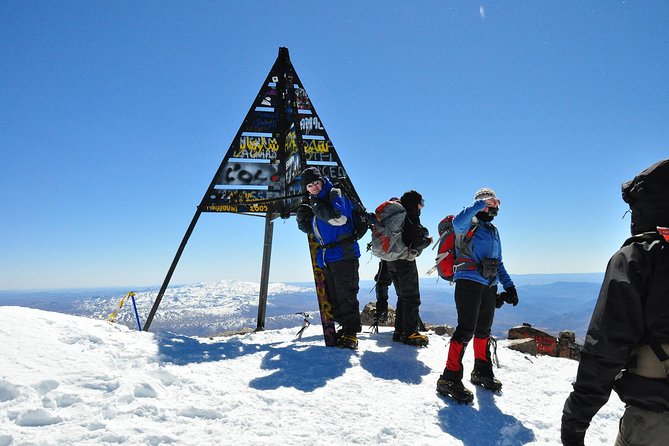
- The summit is 4,167 meters high: You need solid fitness, patience, and a willingness to walk on steep, rocky ground.
- Day two is the test: Expect roughly 10 to 12 hours of walking, plus about 90 minutes by vehicle back toward Marrakech.
- You sleep at 3,207 meters: The local refuge removes the need for camping equipment, but it is still a basic mountain overnight.
- Local guides stay with you: Mohamed, Ibrahim, and Rashid are named in the feedback, with particular praise for calm pacing and reassurance.
- The route begins in Imlil: Pickup from Marrakech is offered, but confirm the exact collection point and departure time before setting out.
- Weather matters: The activity requires good conditions, and a cancellation for poor weather comes with a new date or full refund.
Why Toubkal is worth the effort
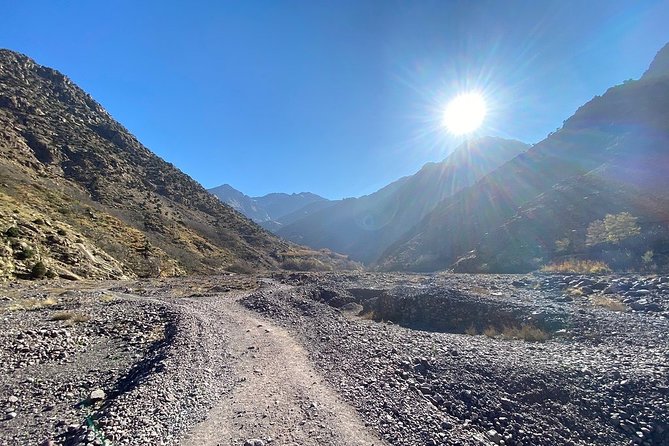
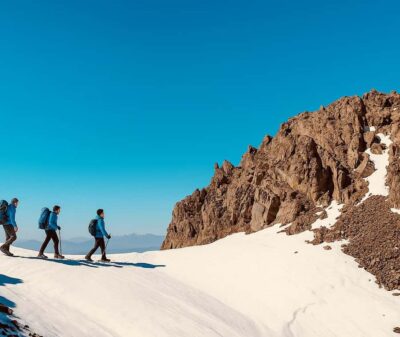
Toubkal gives you a proper mountain day without requiring mountaineering experience. That does not make it easy. You follow steep paths, cross streams, and work through rocky sections, but the route is presented as a trek rather than a technical climb.
The reward is the change in scenery as you leave Marrakech behind. The drive takes you into the High Atlas and toward Imlil, where the trail begins in the Aït Mizane Valley. From there, the route passes through Aremd, continues to the sanctuary of Sidi Chamarouch, and climbs toward the refuge.
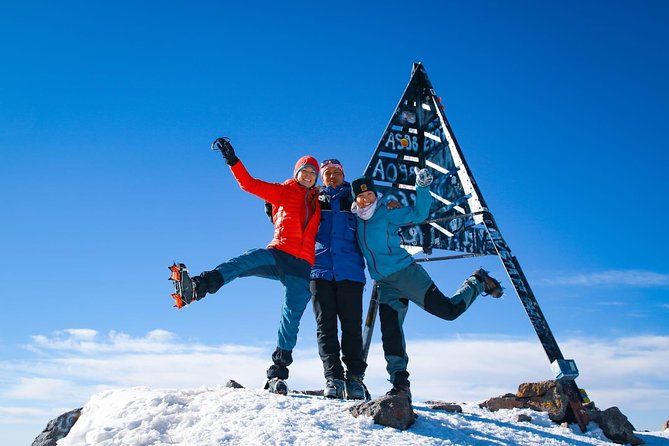
At the top, you can look across the plain of Marrakesh and the High Atlas to the north. To the south, the view reaches toward the Anti-Atlas and the Sahara. Those distant views are a major reason to accept the hard schedule, especially if you want a mountain experience that feels closely tied to local villages and guiding traditions rather than a simple summit photo.
I also like the scale of the trip. Two days is short enough to fit into a Marrakech visit, but long enough to give you a real sense of the mountain. You are not simply driven to a viewpoint and returned to the city. You walk into the range, spend the night high above Imlil, then make the summit attempt before descending.
More Atlas Mountains Treks in Marrakech
- Marrakesh: 2-Day Mt. Toubkal Trek with 1-Night Stay & Meals
★ 4.7 · 795 reviews - Marrakech: 2-Day Atlas Mountains Trek with Village Stay
★ 4.8 · 717 reviews - From Marrakech: 3-Day Mount Toubkal Climbing Trek
★ 4.7 · 597 reviews
From Marrakech to Imlil at 1,740 meters
The trip starts with transport toward Imlil in an air-conditioned vehicle. Pickup is offered from Marrakech, although the stated meeting point is Imlil, so you should confirm the exact arrangement with Morocco Tours With Locals before booking around a tight schedule.
The drive matters because it removes a large piece of trip planning. You do not need to arrange a separate taxi to the trailhead, and the return vehicle brings you back after the descent. The vehicle is one of the few inclusions clearly listed, so ask in advance what else is covered, particularly meals and the refuge stay.
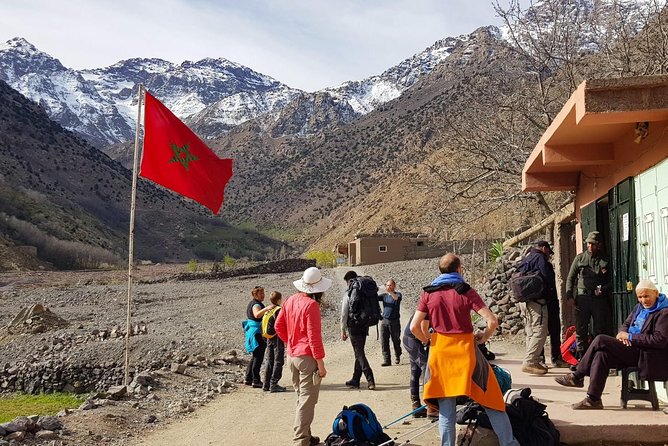
Imlil is the practical gateway to the trek. At 1,740 meters, it gives you a lower starting point before the climb begins in earnest. Once you meet the local team, you set off through the Aït Mizane Valley toward Aremd.
The first section lets you find your rhythm. You are already gaining height, but the day is much shorter than the summit day. Expect about four to five hours of walking. That sounds manageable, and it is the more forgiving half of the trip, but you should not treat it as a warm-up that costs you nothing. Save your legs. The next morning will ask far more from you.
Aït Mizane Valley, Aremd, and Sidi Chamarouch
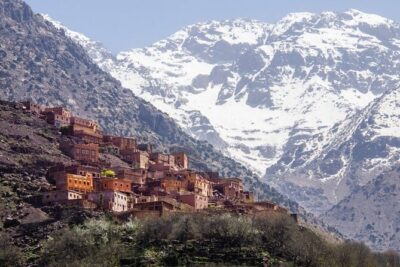
The route through Aït Mizane Valley gives the trek its human side. You pass through Aremd before continuing toward Sidi Chamarouch, a sanctuary along the trail. A nearby waterfall adds a natural stop before the path becomes steeper.
This part of the route is valuable because it connects the summit with the communities below. You are not dropped into a bare mountain corridor with no sense of place. You see how the trail moves through the valley and villages before turning into a harder mountain route.
The path becomes steep as you climb toward the refuge. That is where a guide earns his keep. Feedback about Mohamed, Ibrahim, and Rashid repeatedly points to calm support, good communication, and advice to slow down when needed. One guide is also praised for adjusting the pace to help avoid altitude problems. That is exactly the kind of guidance you want here. Speed is not the goal. Reaching the refuge with enough energy for tomorrow matters more.
You may stop for coffee or orange juice along the way, according to the experience details provided by past participants. Treat these breaks as useful pauses, not excuses to rush afterward. A steady pace is safer and more comfortable than trying to match the fastest person in the group.
Night at the Toubkal Refuge, 3,207 meters
The first day ends at the Toubkal Refuge, at about 3,207 meters. You spend the night here rather than camping, which keeps the equipment list shorter and makes a two-day ascent possible for people without backpacking gear.
Still, do not picture a hotel. A refuge is a basic mountain stop. The details supplied do not specify room arrangements, bedding, or meal inclusions, so ask before departure. Reviews refer positively to the food and organization, but the formal inclusion list names only the air-conditioned vehicle. That difference is worth clarifying when you book.
Sleeping high has a purpose beyond convenience. It places you close to the summit route, allowing an early start for the climb. It also means your body has less time to adjust to the altitude. You might feel fine, or you might notice the height through a headache, tiredness, or a slower pace. Tell your guide if you feel unwell. Guides can help manage pace, but they cannot remove the effects of altitude.
Bring warm layers even if Marrakech is hot. The city and the mountain have very different conditions, and the summit morning can feel severe. The supplied information does not give a seasonal equipment list, so ask the provider what footwear and extra clothing are needed for your dates. The route includes streams and rocks, and conditions can change with weather.
More two-day treks in Marrakech
- From Marrakesh: 2-Day Mount Toubkal Trek
★ 4.7 · 591 reviews - Toubkal trek – 2 days
★ 5.0 · 90 reviews - Marrakech: 2-Day Atlas Villages Trekking Tour
★ 4.5 · 76 reviews - Marrakech: 2-Day Atlas Mountains Trek with Village Stay
★ 4.5 · 60 reviews
Summit morning at 4,167 meters
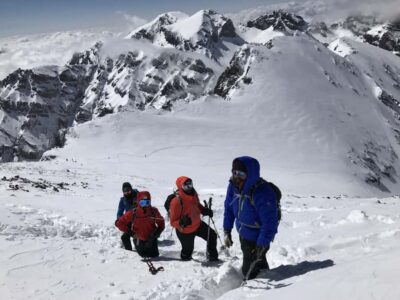
Day two begins early. You leave the refuge and climb toward Jbel Toubkal, North Africa’s highest point. The route crosses streams and moves through rocky ground before reaching the upper plateau.
This is the section where fitness becomes more important than enthusiasm. The total walking time is listed at around 10 to 12 hours, covering the summit, the return to the refuge, and the descent to Imlil. You also have about 90 minutes in the vehicle afterward. It is a full day, not a leisurely summit stroll.
The air gets thinner as you climb, and progress may feel slow. The best approach is to walk at the guide’s pace, take short breaks, drink carefully, and keep your attention on the next section rather than the entire climb. Mohamed is specifically praised for reminding the group to slow down, while Ibrahim is described as experienced in demanding weather. These are useful qualities on a route where a rushed start can make the final hours much harder.
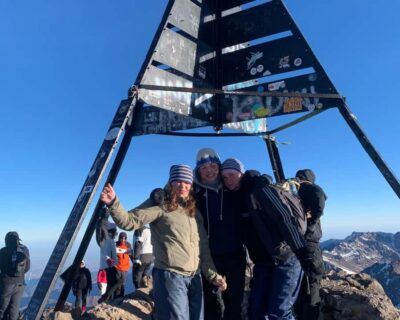
At the plateau, you get a proper pause and a chance to take in the surrounding country. From the summit area, the views include the Marrakesh plain, the High Atlas, the Anti-Atlas, and the Sahara to the south. The summit itself is the obvious goal, but the wider view is what gives the climb its sense of scale.
There is a practical warning about water. Clear mountain water may look inviting, but direct advice from the guiding team is not to drink it. Follow that instruction and bring or obtain safe drinking water through the arrangements confirmed before departure.
The descent is not an afterthought
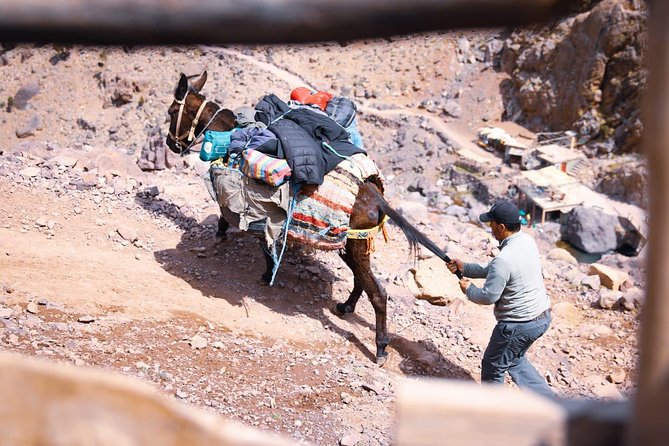
After reaching the summit, you return to the refuge and then continue down to Imlil. Descending may feel easier because you are losing altitude, but it still takes time and puts pressure on tired legs.
Rocky paths can be awkward on the way down, especially after a long ascent. Keep your pace controlled and use care on steep sections. The guide remains with you throughout the route, which gives you someone to follow when energy and concentration start to fade.
The descent is also when the short length of the tour becomes most obvious. A longer itinerary could spread the effort over more days, but this format gets you back to Marrakech quickly. That is useful if your schedule is tight, yet it leaves little room for a slow summit morning or a weather delay.
Once you reach Imlil, you return by vehicle toward Marrakech. The listed plan allows about 90 minutes for the drive, though actual timing can depend on the road and the day’s conditions. Do not book a fixed evening commitment in Marrakech unless you have plenty of spare time.
What the $210.53 price gives you
At $210.53 per person, this is not just a guided walk. You are paying for a two-day mountain plan, local guiding, trail support, an overnight refuge arrangement, and transport to and from the trekking area. The value is strongest if you are starting in Marrakech and want one provider to handle the connection to Imlil.
The price is easier to judge if you compare it with what you would need to arrange separately: transport, a local guide, route planning, the refuge, and support during the summit day. The listed inclusions are limited, however. The formal details specify an air-conditioned vehicle, while tips are excluded. Confirm whether food, accommodation, and any equipment are included in your exact booking.
Tipping is not included, so budget for it if the guide and support team take good care of you. The people involved may include more than the person walking beside you, with feedback also praising the cook and the wider team. Ask the provider about the recommended tipping practice rather than guessing.
This is a private activity, meaning only your own group participates. That is a plus if you want a more personal pace and direct contact with the guide. At the same time, some of the supplied comments refer to groups sharing the experience, so confirm how your booking will be organized if group size matters to you.
How demanding is the trek?
The experience is described as suitable for people with moderate physical fitness and no mountaineering background. I would treat that as a minimum, not a promise that the route will feel easy.
You need to be comfortable walking for four to five hours on the first day, then up to 12 hours on the second. You also need to handle steep paths, streams, rocks, and high altitude. If you already enjoy long mountain walks, the challenge may feel manageable. If most of your exercise is at sea level or on flat city streets, this is a serious step up.
Altitude sickness is possible. The information available describes it as moderate in most cases, but that should not encourage complacency. Tell the guide about symptoms, follow pace advice, and understand that reaching the summit is not more important than staying safe.
The route does not require mountaineering experience, but it does require good judgment. You must be willing to turn back or change plans if your condition or the weather makes the summit unsafe.
The guide makes the biggest difference
The strongest praise is directed at the guiding team. Mohamed is described as an excellent communicator who answers questions and keeps the trip organized. Ibrahim is praised for experience in difficult weather and for making people feel safe. Rashid is described as calm and patient, with close attention to the group.
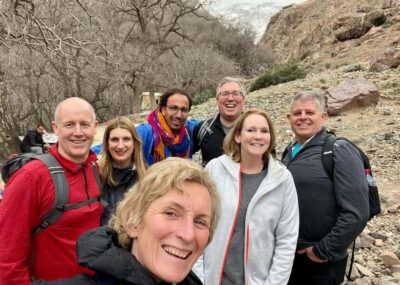
Those qualities matter more here than a polished speech or a large amount of sightseeing commentary. You need a guide who watches the pace, notices when someone is struggling, and gives clear advice on a long and exposed route. The feedback also points to good food, encouragement, and a friendly team atmosphere.
Names can change depending on availability, so do not assume a specific person is guaranteed unless the provider confirms it. The important question is who will guide your group and how the provider handles substitutions. One comment describes a guide change from the person originally expected, so clear communication before the trek is sensible.
Who should book this two-day climb?
You should consider this experience if you want a demanding mountain challenge that fits into a short Marrakech visit. It suits people with moderate fitness who are comfortable committing to a long second day and a basic refuge overnight.
It also works well if you prefer local support rather than planning a summit attempt alone. The guide stays with you, the vehicle connection is arranged, and the route has a clear structure from Imlil to the refuge, summit, and back.
You may want a longer trek instead if you prefer gradual acclimatization, shorter walking days, or more time in the villages. You should also think carefully before booking if you dislike basic accommodation, struggle with long descents, or need a fixed return time in Marrakech.
The activity is available with group discounts, mobile ticketing, and free cancellation up to 24 hours before the start time. Changes made inside that 24-hour window are not accepted, and poor weather may lead to a new date or a full refund. The stated start time is 12:00 am, which is unusual alongside an Imlil meeting point, so confirm the real departure time before you rely on the schedule.
Should you book the Toubkal Trekking 2 Days?
Book it if you want the shortest practical route to Mount Toubkal’s summit and you are ready for a very long day two. The strongest reasons are the local guiding, the refuge overnight, the organized transport, and the chance to connect a major summit with villages and valley paths.
Do not book it simply because the price looks reasonable or because no technical climbing is required. You still need stamina, sensible expectations, safe water, suitable clothing, and flexibility for weather.
For a fit hiker with limited time in Morocco, this is a useful and focused way to reach 4,167 meters. Confirm the guide, inclusions, pickup point, refuge arrangements, and actual start time first. If those details suit you, the trip offers a demanding but memorable taste of the High Atlas.
FAQ
Is Mount Toubkal trekking suitable without mountaineering experience?
Yes. The trek is described as not requiring mountaineering experience, but you should have a moderate fitness level and be ready for steep, rocky paths and a very long second day.
How long does the trek take?
The experience lasts about two days. The first day involves roughly four to five hours of walking. The second day takes around 10 to 12 hours of walking, followed by about 90 minutes by vehicle.
Where does the trek begin?
The stated meeting point is Imlil, Morocco, at about 1,740 meters. Pickup from Marrakech is offered, so confirm the exact collection arrangement with the provider.
Where do you sleep?
You spend the night at the Toubkal Refuge, at approximately 3,207 meters. Camping equipment is not required for this itinerary.
What is included in the price?
An air-conditioned vehicle is listed as included. Tips for staff are not included. Confirm whether food, refuge accommodation, and any other services are covered in your specific booking.
Who guides the trek?
The experience uses local guides. Mohamed, Ibrahim, and Rashid are names associated with the guiding team, but the exact guide should be confirmed with the provider before departure.
What happens if the weather is poor?
The experience requires good weather. If it is canceled because of poor conditions, you will be offered another date or a full refund. You can also cancel for a full refund if you do so at least 24 hours before the start time.
Latest treks added in Marrakech
- 5 Days Desert Trekking from Marrakech★ 5.0 · 16 reviews
- 3 days Toubkal Trek from Marrakech★ 5.0 · 4 reviews
- Elite Experience Atlas Mountains Day Trekking★ 5.0 · 7 reviews
- 3 Days Berber Villages Trek – Authentic Atlas Mountain Experience★ 5.0 · 4 reviews
- Morocco Desert Trek 4 Days: 2 days on foot in Morocco★ 5.0 · 2 reviews
- Atlas Mauntains and 3 Valleys Trek★ 5.0 · 6 reviews
- Atlas Mountains Valley Trek – 3 Days★ 5.0 · 29 reviews
- 5-day Jebel M’goun trek★ 5.0 · 2 reviews
Atlas Mountains Treks, compared.
Mt Toubkal Ascent Express Trek 2 Days 1 Nights
Read our review →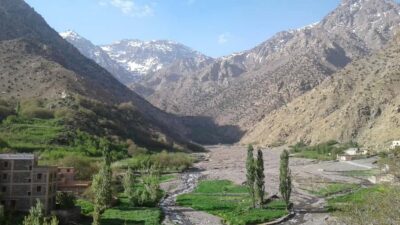
2-Day Mt. Toubkal Trek with 1-Night Stay & Meals
Read our review →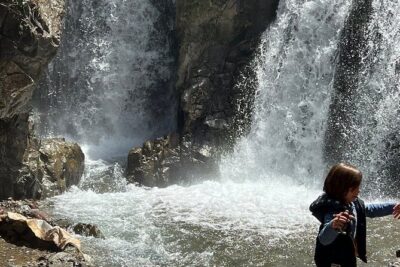
Summiting and Hiking the Atlas Mountains Day Trek from Marrakech
Read our review →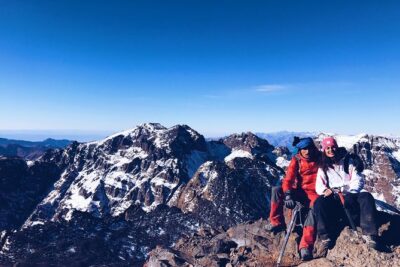
Browse the lists this tour appears in