
REVIEW · MARRAKECH
2 days Mount Toubkal Trek from Marrakech
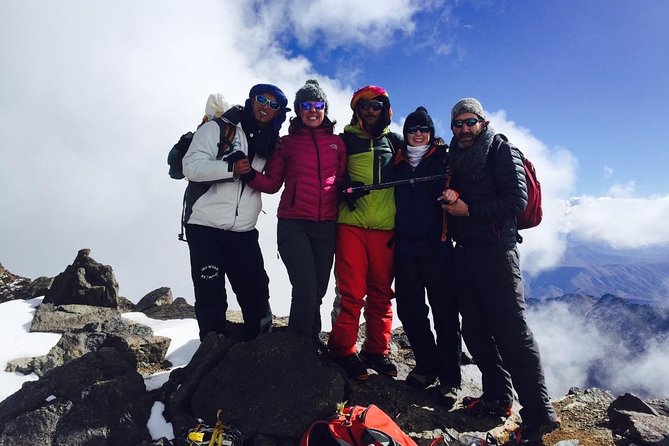
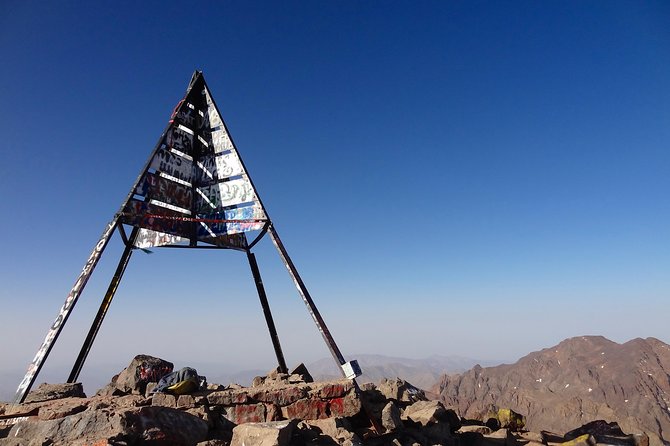
Mount Toubkal rises to 4,167 meters, the highest point in North Africa, and this two-day trip gives you a direct route to its summit without technical climbing. You walk from Imlil to the Toubkal Refuge, sleep in a shared mountain lodge, then set out before dawn for sunrise above the Atlas Mountains.
I like the private guide and mule support, which let you walk at your own pace without carrying every item uphill. I also like the practical setup: transport from Marrakech, refuge lodging, meals, tea, coffee, and the return journey are arranged for you. The main drawback is the rushed schedule. You gain a lot of height in two days, and the trek demands good stamina, especially on summit morning.
Key points to know before booking
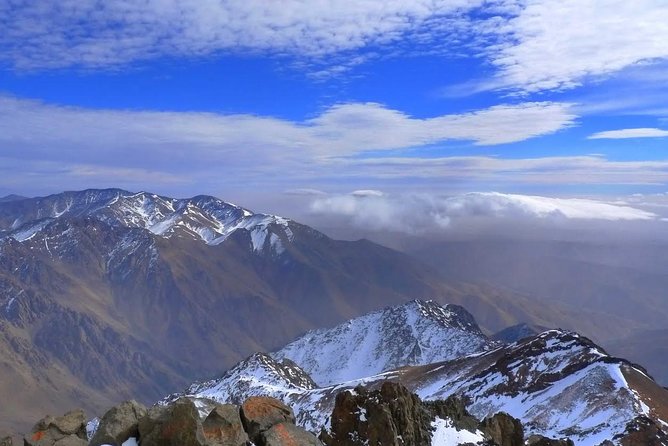
- The summit sits at 4,167 meters, with broad views toward Marrakech, the Atlas Mountains, and the beginning of the Sahara.
- The first day takes five to six hours of uphill walking from Imlil to the Toubkal Refuge.
- Summit morning begins before sunrise, with some departures starting around 4am so you can reach the top as the light arrives.
- Mules carry packs, but bottled water, sleeping bags, crampons, and ice axes are not included.
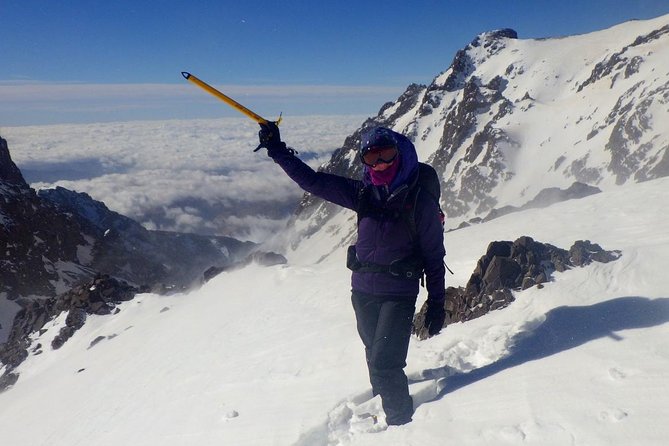
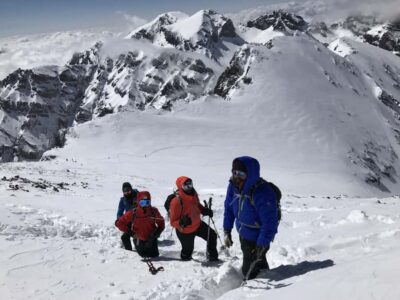
- Winter conditions can change the character of the trek, requiring crampons and ice axes from November through April.
- The tour is private but requires at least two people to book, making it a good fit for couples, friends, or small family groups.
Why Mount Toubkal makes a strong two-day challenge
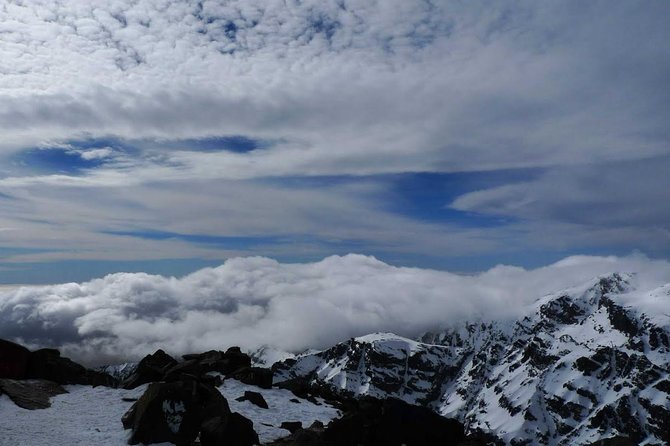
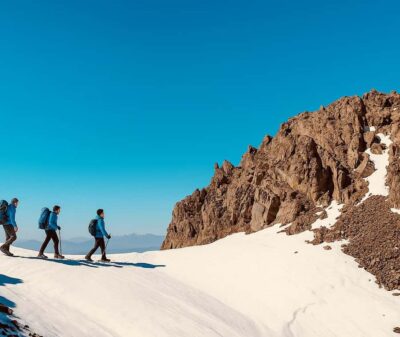
Mount Toubkal is not a technical climbing trip. You do not need ropes or advanced mountaineering skills, but you do need a solid level of fitness and comfort with long, steep walks. The route includes narrow tracks, loose mountain ground, easy scrambling, and, in snowy months, sections where crampons and an ice axe may be needed.
That distinction matters. The climb is accessible to a fit walker, but it is not an easy sightseeing outing from Marrakech. You gain altitude quickly, sleep at a high mountain refuge, and then climb to the summit after a short night. I would treat it as an endurance trek with a non-technical summit, not as a casual hike.
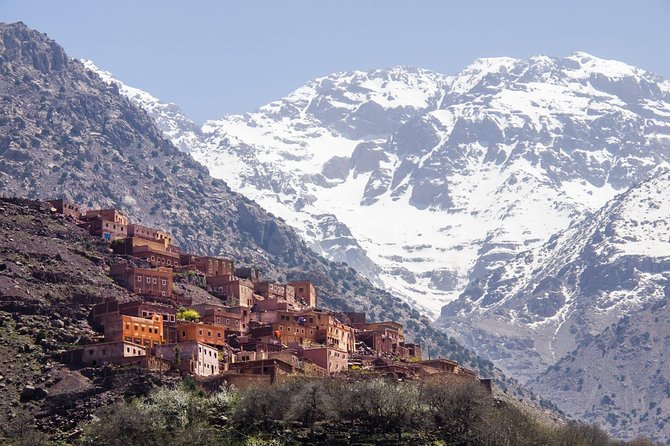
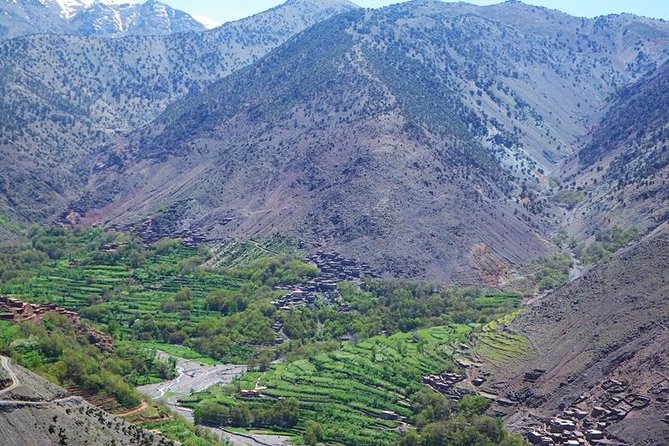
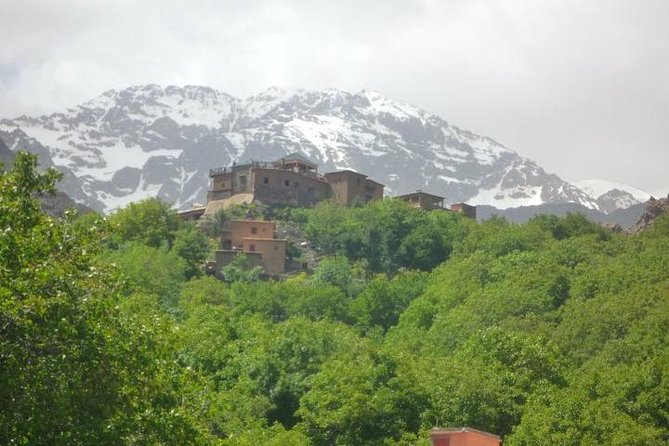
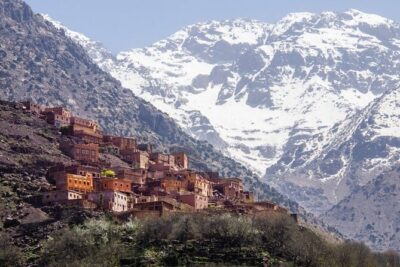
The scenery gives the effort a clear reward. From the route above Imlil, you look across the Valley of Imlil, Berber villages, sharp Atlas ridges, and the shrine of Sidi Chamharouch. Near the summit, the views widen toward Ifni Lake and the mountains south of Marrakech. On a clear day, the height gives you a striking sense of how quickly the busy city gives way to open mountain country.
More Atlas Mountains Treks in Marrakech
- Marrakesh: 2-Day Mt. Toubkal Trek with 1-Night Stay & Meals
★ 4.7 · 795 reviews - Marrakech: 2-Day Atlas Mountains Trek with Village Stay
★ 4.8 · 717 reviews - From Marrakech: 3-Day Mount Toubkal Climbing Trek
★ 4.7 · 597 reviews
Leaving Marrakech for Imlil
The tour begins with pickup from your Marrakech hotel, with an advertised start time of 8:30am. After an early breakfast, you take a private vehicle for the roughly two-hour drive to Imlil.
This transfer is more useful than it may sound. You do not need to work out a taxi connection, find the right trailhead, or arrange a return from a mountain village. At Imlil, you meet your guide and the muleteer team, sort the packs, and begin walking.
Imlil is the practical gateway for the trek. It is the point where roads give way to mountain paths, and it also marks the start of the Berber villages and valleys that give this trip its local character. The mule support is one of the strongest parts of the arrangement. You can carry a lighter daypack while the team transports larger bags toward the refuge.
Pack carefully even with mules doing the heavy work. Take only what you need for one night, warm layers, rain protection, personal medication, water capacity, and a headlamp for the pre-dawn start. One useful tip is to leave unnecessary luggage in the valley if your transport or accommodation arrangement allows it. A lighter pack makes the steep walking noticeably easier.
The five to six hour climb to Toubkal Refuge
The first day is a steady ascent lasting about five to six hours. The path becomes steep and narrow in places, and the route passes through remote mountain country before reaching the refuge below the summit.
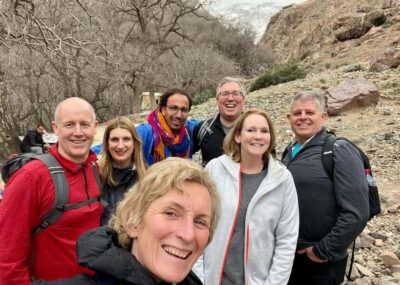
You should expect a slow, regular pace rather than a fast march. The private format helps here. A guide can adjust the rhythm to your group, stop when needed, and offer one-on-one help rather than keeping you to a large group schedule. Guides named in the feedback include Omar, Mustafa, Mustapha, Mohammed, Ibrahim Amzil, Idris, Aziz, and Sijad. The strongest praise centers on guides who offered encouragement, handled equipment, and explained local culture as they walked.
The route is also a chance to see more than bare rock. The Valley of Imlil, green valleys, Berber villages, and the Sidi Chamharouch shrine add human detail to the climb. You are not simply walking up a numbered peak. You are moving through a settled mountain region where homes, paths, mule trains, and religious sites remain part of everyday life.
At the refuge, conditions are basic. Les Mouflons, the named accommodation, is a mountain lodging house rather than a private hotel. You sleep in shared bunk-style quarters with other people, and comfort depends on how busy and cold the refuge is. One useful point from the experience is that hot showers may be available, but you should not count on hotel-style facilities or quiet rooms.
Meals, tea, and coffee are included according to the tour arrangements. The Berber food and hospitality are often described as a welcome part of the trip, especially after the long climb. Still, bring snacks you know you will eat, since the day is physically demanding and the meal timing may not match your normal routine.
Summit morning before sunrise
The second day begins early, after breakfast at the refuge. The goal is to reach the summit as the sun rises, so you will be walking in darkness or low light for part of the ascent. One account describes a start around 4am under moonlight, which gives you a good sense of the timing to expect.
This is the hardest part of the tour. The route to the summit is broad in its final section, and there is a gradual approach near the top, but the altitude and accumulated fatigue make the climb demanding. You may find yourself taking short, regular pauses rather than trying to maintain the pace you used on the first day.
The guide matters most here. Guides such as Omar and Mohammed are praised for helping with crampons, keeping people safe, offering motivation, and changing plans when someone was struggling. That support is valuable, but it does not remove the need for fitness. You should be prepared to walk for hours uphill before enjoying the summit.
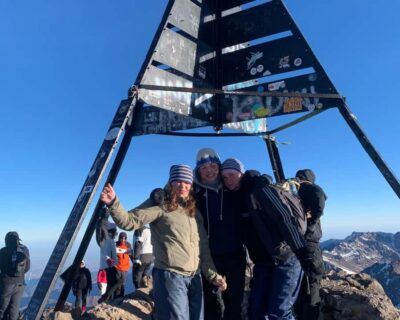
The summit reward is simple and powerful: open views across the High Atlas, down toward Marrakech to the north, and toward the start of the Sahara to the south. You also look across high cliffs toward Ifni Lake. Sunrise adds drama, but clear weather is just as important. The tour operates in all weather, yet poor conditions can lead to a cancellation or a different date.
Do not expect the summit to feel like a polished viewing platform. This is a mountain top reached by walking, with cold, wind, uneven ground, and limited shelter. Bring gloves, warm layers, and something to eat. Bottled water is not included, so carry enough from the start and ask the operator ahead of time about water arrangements.
More two-day treks in Marrakech
- From Marrakesh: 2-Day Mount Toubkal Trek
★ 4.7 · 591 reviews - Toubkal Trekking 2 Days
★ 5.0 · 98 reviews - Toubkal trek – 2 days
★ 5.0 · 90 reviews - Marrakech: 2-Day Atlas Villages Trekking Tour
★ 4.5 · 76 reviews
Descending to Imlil and returning to Marrakech
After reaching the top, you descend to the refuge area and continue back toward Imlil. Descending is easier on the lungs, but it can be hard on knees and legs after the summit climb. Trekking poles would be useful, though they are not listed as included, so arrange your own if you prefer to use them.
The return route gives you another look at the valley from a different angle. You will meet your vehicle in Imlil for the trip back to Marrakech. One guide arranged an earlier vehicle pickup for a tired participant, showing the value of having a private team that can adjust the final section when needed. That kind of flexibility is helpful, but you should not assume every change is guaranteed.
The two-day schedule is efficient, though it leaves little room for a relaxed mountain stay. If your goal is simply to summit Toubkal from Marrakech, it works well. If you want more time in the villages, slower walking, or a gentler adjustment to altitude, a longer trek would be more comfortable, but that option is not part of this experience.
What the $157.02 price really covers
At $157.02 per person, the price is strong for a private two-day setup if you value convenience. It includes hotel pickup and drop-off, private transport, a local and professional guide, refuge accommodation, meals listed in the itinerary, tea, coffee, and the muleteer team.
The important value is not just the summit itself. You are paying to avoid arranging a vehicle to Imlil, finding a guide, booking a refuge bed, locating mule support, and organizing your return. For a first visit to the Atlas Mountains, that can remove a fair amount of stress.
There are extra costs and equipment gaps to plan for. Bottled water is excluded, as are sleeping bags, crampons, and ice axes if conditions require them. From November to April, you may need winter equipment depending on recent snowfall. Ask clearly before departure who supplies it and what rental costs apply.
Communication before the trek appears to be the weakest part of the arrangement. Some people had trouble getting answers through Viator or WhatsApp and only received key information shortly before departure. I would contact the provider early and ask for pickup details, equipment advice, the guide’s name, weather plans, food arrangements, and the exact sleeping setup.
Who should book this trek
This trip suits you if you are a keen walker with moderate or better fitness, want a private guide, and have only two days available from Marrakech. It is especially practical for two friends or a couple who want support without joining a large group.
You should be comfortable with:
- Five to six hours of uphill walking on the first day
- A pre-dawn summit start
- Shared refuge accommodation
- Cold and changing mountain weather
- Easy scrambling and steep, narrow paths
- Possible snow travel with crampons and an ice axe
It is not recommended for children aged nine and under. The minimum booking is two people, and the private format means only your group participates.
I would also think carefully about altitude. The climb is non-technical, but the summit is high and the schedule is quick. If you already enjoy long mountain walks, the plan is reasonable. If your usual exercise is limited to city sightseeing, you may find the second morning much harder than expected.
Food, equipment, and practical preparation
Tell the operator about dietary needs when booking. A vegetarian option is available, but it must be requested in advance. Meals, tea, and coffee are included according to the stated arrangements, while bottled water is not.
For clothing, use layers rather than one heavy coat. You need a warm layer for the summit, a waterproof outer layer, comfortable walking trousers, sturdy footwear, gloves, and a hat. The exact equipment needs change with the season, especially from November to April.
A headlamp is important for the early start, though it is not listed among the included items. Carry a small personal bag with water, snacks, sun protection, and any medication. Let the muleteer team handle larger luggage, but keep essentials with you.
The tour runs in all weather, so dress for conditions rather than for Marrakech temperatures. The city may be warm while the summit is cold and windy. Ask about snow and equipment before you leave Marrakech, not after reaching Imlil.
Communication and cancellation details
Confirmation is provided at booking, but I would still contact the local provider well before the departure date. The inconsistent pre-trip communication makes it wise to confirm the pickup point, start time, guide, clothing needs, and winter equipment directly.
You can cancel for a full refund up to 24 hours before the local start time. Cancellations or changes within 24 hours are not refunded. If poor weather or an insufficient number of bookings causes the operator to cancel, you are offered another date or experience, or a full refund.
My call: a rewarding summit at a brisk pace
I would book this trek if I had two days, a reasonable fitness base, and wanted the planning handled for me. The private guiding, mule support, transport, refuge stay, and strong personal care from guides such as Omar, Mustafa, and Mohammed give the trip real value.
I would not book it without first confirming equipment and pickup details. The climb is serious enough that poor communication can become a real nuisance, especially in winter. Go in prepared for a demanding mountain night rather than a comfortable hotel break, and you have a good chance of getting the sunrise, views, and sense of achievement that make Toubkal worth the effort.
FAQ
How high is Mount Toubkal?
Mount Toubkal is 4,167 meters high and is the highest peak in North Africa.
How long does the trek take?
The experience lasts about two days. The first day includes a five to six hour trek from Imlil to the Toubkal Refuge. The second day includes the summit climb, descent, and return to Marrakech.
Is the climb technically difficult?
The ascent is described as non-technical and does not require climbing. You should still expect easy scrambling, steep paths, and possible snow slopes.
Is hotel pickup included?
Yes. Hotel pickup and drop-off from Marrakech are included, with the listed start time at 8:30am.
Is transport to Imlil included?
Yes. Private round-trip transport between Marrakech and Imlil is included.
Where do you sleep?
You spend the night at Les Mouflons, the Toubkal Refuge. Accommodation is shared refuge lodging rather than a private hotel room.
Are meals included?
Meals are included according to the itinerary, along with tea and coffee. Vegetarian food is available if requested when booking.
Do I need crampons and an ice axe?
You may need them if there is snow. From November to April, crampons and ice axes may be required depending on snowfall, and they are not included in the listed price.
Are sleeping bags and bottled water included?
No. Bottled water and sleeping bags are not included.
Can children join the trek?
The experience is not recommended for children aged nine and under. Participants should have a moderate level of physical fitness.
Can I cancel for a full refund?
Yes. You can cancel at least 24 hours before the local start time for a full refund. Cancellations within 24 hours are not refunded.
Latest treks added in Marrakech
- Elite Experience Atlas Mountains Day Trekking★ 5.0 · 7 reviews
- 5 Days Desert Trekking from Marrakech★ 5.0 · 16 reviews
- 3 days Toubkal Trek from Marrakech★ 5.0 · 4 reviews
- 3 Days Berber Villages Trek – Authentic Atlas Mountain Experience★ 5.0 · 4 reviews
- Morocco Desert Trek 4 Days: 2 days on foot in Morocco★ 5.0 · 2 reviews
- Atlas Mauntains and 3 Valleys Trek★ 5.0 · 6 reviews
- Atlas Mountains Valley Trek – 3 Days★ 5.0 · 29 reviews
- 5-day Jebel M’goun trek★ 5.0 · 2 reviews
Atlas Mountains Treks, compared.
Mt Toubkal Ascent Express Trek 2 Days 1 Nights
Read our review →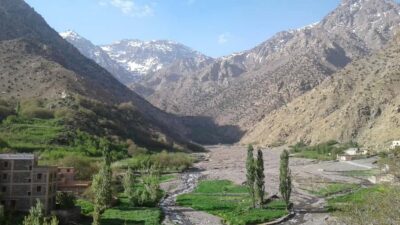
2-Day Mt. Toubkal Trek with 1-Night Stay & Meals
Read our review →
Summiting and Hiking the Atlas Mountains Day Trek from Marrakech
Read our review →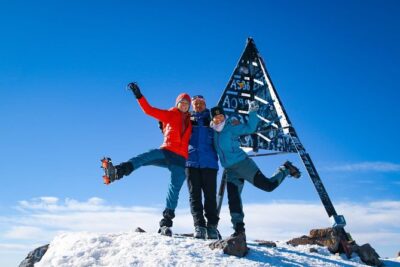
Browse the lists this tour appears in