
REVIEW · KATHMANDU
Poon Hill Trek
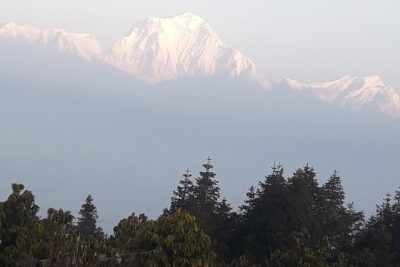
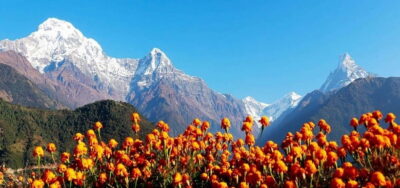
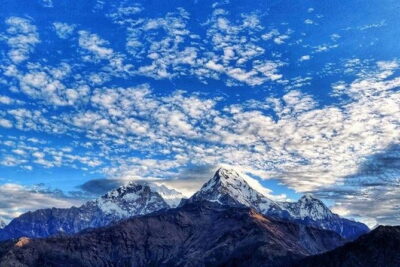
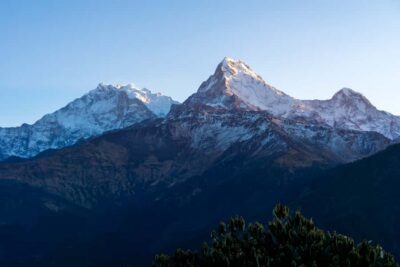
Poon Hill earns its reputation the old-fashioned way: you climb before dawn, reach the viewpoint, and watch the first light spread across Dhaulagiri and Annapurna, both above 8,000 meters. The reward is a huge Himalayan panorama, with forests, villages, and the Kali Gandaki Gorge below.
I like the mix of mountain scenery and village life. You walk through Gurung and Pun communities, rhododendron and magnolia forests, and steep stone stairways rather than simply driving to a viewpoint. I also like that private transport, meals, permits, accommodation, a guide, and porters are bundled into the $450 price.
The main caution is that the published plan needs clarification. It calls itself a seven-day trip but also describes a four-day hike, and Day 3 and Day 4 both refer to the Ulleri climb. Ask the operator for the exact walking schedule, daily distances, and overnight stops before you pay.
Key points to know before you book
- Sunrise at Poon Hill: Set out early for broad views of Dhaulagiri, Annapurna I, and Manaslu, with the Kali Gandaki Gorge below.
- A real stair workout: The Ulleri section includes a long, steep climb, so this is short by Himalayan standards, not effortless.
- Village and forest scenery: The route passes through Gurung and Pun communities, meadows, countryside, magnolia, and rhododendron forest.
- Good family potential: The operator describes it as suitable for most people, and arrangements have been made for children as young as 3.5 and 4 years old.
- Useful inclusions: Full-board trekking meals, teahouse accommodation, permits, private road transport, a guide, one porter for every two people, and a duffle bag if needed.
- A strong service record: The most praised staff include Shree Ram, Sheeram, Ashish, Abishek, Bimal, Nabaraj, and several porters, with repeated praise for care and flexible planning.
Why Poon Hill works as a first Nepal trek
Poon Hill is a smart choice if you want a taste of Himalayan trekking without committing to a long, high-altitude expedition. The trail gives you big mountain views, but the trip also includes road transfers, guesthouse nights, and a route that returns you to Pokhara rather than pushing far into the mountains.
The best part is the variety. One hour you may be walking among village homes and farm fields. The next, you are under rhododendron trees or climbing stone steps through the forest. At Poon Hill, the view opens wide enough to make the effort feel worthwhile.
The route also gives you a more human view of Nepal. Gurung and Pun communities live along the trail, and the villages are part of the experience rather than just scenery outside a vehicle window. You will see how the trek links small settlements, lodges, mountain paths, and roadheads.
Still, do not confuse short with easy. The Ulleri climb is steep, and the route between Ghorepani and Tadapani is described as notably hilly, with repeated ups and downs. If you have a basic level of fitness and can manage several hours of walking, the trip should be approachable. If stairs are a problem, ask for a slower plan or a route adjustment.
More Poon Hill Treks in Kathmandu
- 4 Days Poon Hill Trek
★ 5.0 · 94 reviews - Ghorepani(Poonhill Trek)
★ 5.0 · 81 reviews - 4-day Poon Hill Trek
★ 5.0 · 74 reviews
Day 1: Airport pickup and a useful Kathmandu briefing
Your trip begins at Tribhuvan International Airport in Kathmandu at the stated start time of 7:15 am. A private vehicle transfers you to your hotel, followed by a trekking briefing.
That briefing matters. Use it to ask about the exact route, the weather, the walking hours, porter arrangements, meals, and the Day 3 and Day 4 overlap in the published schedule. You should also confirm what you need to carry yourself, since personal trekking clothing and equipment are not included.
The operator supplies a duffle bag if you need one. That is practical, especially if your main luggage stays in Kathmandu or Pokhara, but ask how much you may place in it and what you should keep in your daypack.
Day 2: The long road from Kathmandu to Pokhara
The drive to Pokhara takes about eight to nine hours, with the itinerary allowing roughly ten hours. This is not a quick transfer. It is a full day on the road, so you should treat it as part of the journey rather than wasted time.
The reward is the changing view outside the window. The route offers mountain scenery and countryside, and Pokhara itself provides an early look at the Himalayan range. Private transportation gives your group more control than a public bus, although the road day will still feel long.
The package includes tourist bus transport to Pokhara, while the general inclusions also mention private transportation. Ask which section uses a private vehicle and which uses a tourist bus. That distinction can affect comfort, departure time, and how much flexibility you have for stops.
Lunch and dinner in Kathmandu and Pokhara are not included. Budget separately for those meals, drinks, and any personal purchases in the cities.
Day 3: Hile, Ulleri, and the first serious climb
The listed plan says you drive three to four hours to Hile, have lunch, and begin walking. It also labels the stop Ulleri, so confirm whether Hile is the roadhead and Ulleri is the village reached on foot, or whether the vehicle goes farther.
Once walking begins, expect stairs and a clear physical challenge. The trail passes meadows, jungle, countryside, local villages, and mountain viewpoints. This is a good introduction to the character of the trek because the scenery keeps changing, but you will not want to rush the first climb.
The trail can be especially attractive during rhododendron flowering season. Magnolia and rhododendron trees line sections of the route, and the forest is one of the reasons this trek feels more varied than a simple mountain viewpoint walk. Nepal grey langurs may also appear in the treetops, although wildlife sightings are never guaranteed.
This is a day when a guide earns his keep. A licensed English-speaking guide can help set a sensible pace, point out villages and mountain features, and keep the group moving together. The operator supplies one porter for every two people, which lets you carry a smaller personal pack while still keeping essentials close.
Another trail to compare in Kathmandu:
- Everest Base Camp Trek – 14 Days
★ 5.0 · 1,499 reviews - Everest Base Camp Trek
★ 5.0 · 842 reviews - Everest Base Camp Trekking
★ 5.0 · 485 reviews - Annapurna Circuit Trek with Tilicho Lake
★ 5.0 · 368 reviews
Day 4: The Ulleri Stairs and forest walking
The fourth day description again focuses on steep climbing and the Ulleri Stairs. That duplication is the biggest planning issue in the supplied schedule. It may describe the same climb in more detail, or it may represent a separate walking day. Get this settled before booking.
If it is a separate day, the value is clear: you avoid cramming the entire climb into one exhausting push. If it is simply a fuller description of Day 3, then the trek may have fewer walking days than the seven-day title suggests.
Either way, the stairs are central to the experience. You will gain height through forest rather than on a smooth road or cable car. The effort is physical, but the surroundings soften it. Flowering trees, forest shade, and occasional views give you reasons to pause.
For families, pacing matters more than speed. The operator has arranged family treks with children aged 3.5, 4, and 8, but that does not mean the trail is easy for every child. Ask about porter support, walking times, and whether a private family schedule can include extra breaks.
Day 5: Sunrise at Poon Hill, then the long way to Tadapani
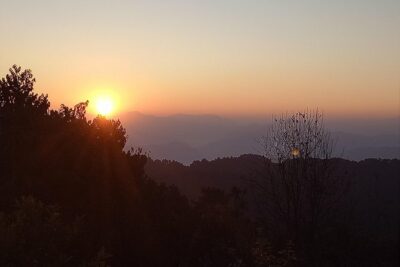
The early start to Poon Hill is the emotional center of the trek. You walk up before sunrise so you can reach the viewpoint in time for the mountains to catch the first warm light.
The panorama includes Dhaulagiri I, Annapurna I, and Manaslu, as well as a view toward the Kali Gandaki Gorge, described here as around 6,000 meters deep. The trans-Himalayan ranges form the visual divide toward Nepal and Tibet. Conditions matter, so clouds can affect the show, but the timing gives you the best chance at clear morning views.
After returning to the lodge for a late breakfast, you continue toward Tadapani. This section is not just a downhill stroll. The route has plenty of up-and-down walking, which can be tiring after the pre-dawn start and the climb to Poon Hill.
The forest is the consolation prize and, for many people, a highlight in its own right. Dense flowering trees surround the path, making this day a good blend of mountain views and close-up woodland scenery. Wear shoes with reliable grip and keep a warm layer handy for the early viewpoint.
Day 6: Down to Ghandruk and back to Pokhara
The route descends to Ghandruk, a well-known village on the Annapurna trails, and then continues by road to Pokhara. The itinerary calls this the end of the trek.
This day changes the rhythm. After several walking sections, you move from trail to road and from mountain lodge life back toward the city. Ghandruk is an important cultural stop because it keeps the village element of the trek in view rather than reducing the experience to peaks and photographs.
The drive can also be tiring. Ask how long the transfer from Ghandruk to Pokhara is expected to take, since the itinerary does not give a duration. Your Pokhara accommodation and meals are not fully covered in the same way as trekking days, so confirm what is included in your package.
Day 7: Return to Kathmandu
The final day is a drive back to Kathmandu. The stated plan uses tourist bus transport for the guest and guide, while the inclusions also refer to all land transportation listed in the itinerary.
This is another long road day, so do not plan an important international connection immediately afterward unless the operator confirms the timing and you leave a generous margin. Road conditions and delays are not explained in the package, so build in flexibility.
What the $450 price really covers
At $450 per person, the value depends on how much of the package you would otherwise need to arrange yourself. The price includes:
- Airport transfer in Kathmandu
- Tourist bus transport to Pokhara and back toward Kathmandu
- Other land transport listed in the plan
- Full-board breakfast, lunch, and dinner during trekking days
- Guesthouse accommodation while trekking
- An English-speaking licensed guide
- One porter for every two people
- Annapurna Conservation Area Project permits
- Guide and porter salaries
- Guide and porter insurance
- A first-aid box
- Seasonal fruit when available
- A duffle bag if needed
That is a useful bundle. The guide, porters, permits, meals, and road transfers can add up quickly when purchased separately. The biggest value is convenience: you do not have to negotiate every lodge, meal, permit, and vehicle during the trek.
The exclusions are just as important. You pay for the Nepal entry visa, Kathmandu and Pokhara lunches and dinners, battery charging, laundry, phone calls, hot showers, drinks, bar bills, personal equipment, donations, monument fees, travel insurance, and crew tips.
Travel insurance is mandatory in the package information. Do not treat the guide and porter insurance as a substitute for your own policy. Their coverage is for the staff, while your personal emergency costs remain your responsibility.
Tips are not compulsory, but they are highly expected. Keep cash available for that purpose and ask the operator what is customary for your group size and guide team.
Guides, porters, and the human side of the trip
The strongest part of this arrangement is the attention built into the staffing. The plan provides one guide for every group and one porter for each two people, rather than leaving you to manage the trail alone.
Several staff names appear in the experience history, including Shree Ram, also written as Sheeram, Nabaraj, Ashuk, Ashish, Abishek, Bimal, and Pratap. You cannot assume a particular person will lead your trek, so ask who is available for your dates.
The most useful quality to look for is flexibility. Staff have adjusted plans for weather, illness, family needs, and unexpected lodge situations. One guide helped when a group encountered illness at about 2,800 meters, while another supported a family with a very young child. That kind of practical care matters more than polished speeches when you are tired or plans change.
Ask before departure how the guide handles bad weather, missed walking sections, and a slower family pace. The provider offers a private trip, so your group should not be tied to strangers, but the exact flexibility still needs to be confirmed.
Best seasons, fitness, and packing advice
The supplied information does not give a season calendar, but it specifically notes the flowering season for magnolia and rhododendron. If flowers matter to you, ask when the operator expects the forests to be at their best.
Pack for changing conditions. You need personal trekking clothing and equipment, and the package does not include these. A daypack, walking shoes, warm layers, rain protection, personal medication, sun protection, and a headlamp are sensible choices, though the provider should confirm its current equipment advice.
Your daypack should hold water, snacks, a warm layer, rain gear, and anything you need before the porter reaches the next lodge. Keep your passport, money, phone, and medication with you.
The pre-dawn Poon Hill walk is the coldest-feeling part for many people, so do not pack only for warm afternoons. The exact lodge facilities are not listed, and hot showers and battery charging cost extra.
Cancellation and weather rules
You can cancel for a full refund up to 24 hours before the local start time. Cancellations within 24 hours are not refunded, and changes inside that period are not accepted.
The experience requires suitable weather. If poor weather causes cancellation, you are offered another date or a full refund. The same applies if the minimum number of participants is not reached.
Because this is a private activity, only your group participates. That is useful for families, first-time trekkers, and anyone who prefers a personal pace.
Who should book this Poon Hill Trek?
I would recommend it to someone who wants a compact Nepal trek with major mountain scenery, village contact, and a guided structure. It also suits families who want private planning and porter support, though parents should discuss the steep stairs and the youngest child’s walking ability in advance.
It is less suitable if you want a fully specified itinerary with exact walking hours, distances, elevations, and confirmed lodges before paying. The published schedule has enough overlap between Days 3 and 4 that you should ask for a corrected version.
At $450, the package looks strong for the transport, meals, staff, permits, and lodging included. Book it if you value having the moving parts handled for you and can accept basic teahouse conditions. Before booking, confirm the actual four-day or seven-day structure, transport type, overnight villages, guide assignment, and what happens if weather blocks Poon Hill.
FAQ
How long is the Poon Hill Trek?
The experience is sold as approximately seven days, including Kathmandu, Pokhara, road transfers, trekking, and the return to Kathmandu. The walking portion is also described as a four-day hike, so confirm the exact trekking schedule before booking.
Where does the tour begin?
The stated starting point is Tribhuvan International Airport in Kathmandu, Nepal. Airport pickup is included, with a listed start time of 7:15 am.
What are the main mountain views?
The route features views of Dhaulagiri, Annapurna, and Manaslu. The information also specifically identifies Dhaulagiri at 8,167 meters and Annapurna at 8,091 meters.
Is accommodation included?
Yes. Guesthouse accommodation is included during the trekking days. The information does not specify particular lodges or room types.
Are meals included?
Breakfast, lunch, and dinner are included during the trekking days. Lunch and dinner in Kathmandu and Pokhara are not included.
Is transportation included?
Yes. Airport transfers, the transfer to Pokhara, the return transfer toward Kathmandu, and other land transportation listed in the plan are included. The package mentions both private transportation and tourist bus transfers, so confirm which sections use each type.
Does the tour provide a guide and porter?
Yes. The trek includes a licensed English-speaking guide and one porter for every two people. A duffle bag is available if needed.
Are permits included?
Yes. The Annapurna Conservation Area Project permit is included.
What happens if bad weather cancels the trek?
If poor weather causes cancellation, you are offered a different date or a full refund. You can also cancel for a full refund up to 24 hours before the experience start time.
Latest treks added in Kathmandu
- Private Manaslu Circuit Trek at Himalayas★ 5.0 · 3 reviews
- Ghorepani Poonhill Trek★ 5.0 · 5 reviews
- Ghorepani Poon Hill Trek★ 5.0 · 16 reviews
- Upper Mustang Trekking★ 3.0 · 2 reviews
- Amazing 1 Day Trekking Experience in Kathmandu Nepal★ 5.0 · 24 reviews
- Upper Mustang Trekking★ 5.0 · 2 reviews
- Upper Mustang Trek★ 5.0 · 5 reviews
- Upper Mustang Trekking★ 5.0 · 4 reviews
Poon Hill Treks, compared.
4-Day Ghorepani, Poonhill & Ghandruk Mountain Trek
Read our review →
Browse the lists this tour appears in