
REVIEW · KATHMANDU
Poon Hill – Ghandruk Trek from Kathmandu
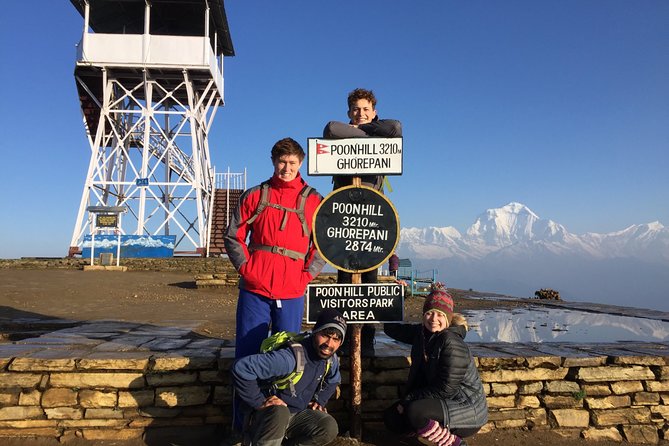
Poon Hill gives you one of Nepal’s best short-trek payoffs: an early climb to 3,210 meters for sunrise over the Annapurna range, followed by a route through Ghorepani, Tadapani, and the Gurung village of Ghandruk. You also get the long bus ride from Kathmandu to Pokhara, so this is a full Nepal experience rather than a quick mountain add-on.
I like the practical package. Your guide, porter, permits, lodging, and main transfers are arranged, which removes much of the planning work. I also like the route itself: rhododendron forests, mountain villages, and a sunrise walk give you more than a single viewpoint.
The catch is the pace. Several days involve five to six hours of trekking, and the early Poon Hill start comes after a demanding walk to Ghorepani. Meals and personal expenses are not covered, and the ride from Kathmandu to Pokhara can take about seven hours.
Key points to know before booking
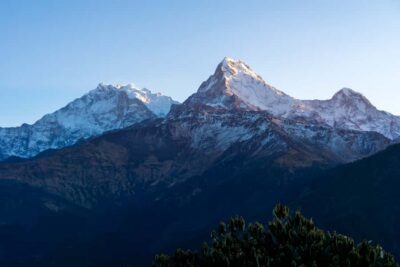
- Poon Hill sunrise reaches 3,210 meters: The highest point is a short early-morning climb above Ghorepani, with views toward Mount Annapurna.
- The route finishes in Ghandruk: You’ll visit one of the area’s best-known mountain villages before walking down to Kimche.
- Five days includes transport days: The first day is mostly a bus ride from Kathmandu to Pokhara, and the final day combines trekking, a shared Jeep, and a car transfer.
- Porter service covers up to 15 kilograms: One porter carries your luggage within that stated limit.
- Meals are extra: The package includes lodging and transport, but not food, drinks, or personal spending.
- A moderate fitness level is needed: Expect walking days of roughly three to six hours, with several sustained uphill and downhill sections.
The real shape of this five-day Nepal trip
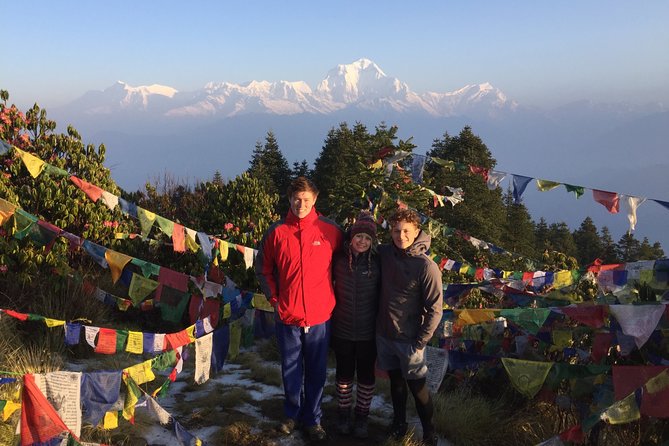
This is a short Himalayan trek built around a classic route. You start in Kathmandu, spend the night in Pokhara, then travel by road to the trailhead near Naya Pul. From there, the route climbs toward Ulleri and Ghorepani before reaching Poon Hill at sunrise.
The route then turns toward Tadapani and Ghandruk. That progression matters. You are not simply walking up to a lookout and returning the same way. You get changing mountain views, forest sections, small settlements, and a final village visit before returning to Pokhara.
At $350 per person, the value comes from the amount of coordination packed into five days. The price includes the Kathmandu to Pokhara bus, Pokhara lodging, lodge accommodation during the trek, a guide, a porter, trekking permits, a TIMS card, private road transfers to and from the trekking area, and the shared Jeep from Kimche to Naya Pul.
That is a useful bundle for someone who does not want to arrange every transfer and permit alone. Still, do not treat $350 as an all-inclusive holiday price. You pay for meals, drinks, personal purchases, and any emergency rescue costs separately. Gratitude for the crew is also not included, though it is listed as optional.
More Poon Hill Treks in Kathmandu
- 4 Days Poon Hill Trek
★ 5.0 · 94 reviews - Ghorepani(Poonhill Trek)
★ 5.0 · 81 reviews - 4-day Poon Hill Trek
★ 5.0 · 74 reviews
Day 1: Kathmandu to Pokhara by bus
The trip begins with an early pickup in Thamel, Kathmandu’s main visitor district. You then take a bus to Pokhara, with the drive listed at about seven hours.
That road journey is not a small transfer. It takes up most of the first day, so you should think of Day 1 as a travel day with a change of setting, not a sightseeing day. The reward is arriving in Pokhara, where you transfer to a hotel near the Lakeside area.
The Lakeside location is useful because it gives you a practical base before the trek. The transfer from the bus arrival point to the hotel takes about 10 minutes. The package does not list sightseeing in Pokhara, so you should not expect a guided city tour or extra activities on this schedule.
I would keep your first evening simple. You will have an early pickup behind you and a trekking start the next day. Use the time to organize your bag, confirm what the porter will carry, and prepare for a longer walking day.
Day 2: Naya Pul to Ulleri, five hours on foot
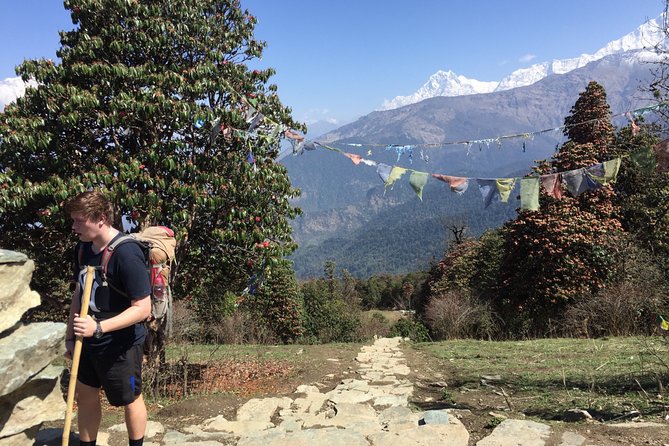
From Pokhara, you drive to Naya Pul, a journey listed at about one hour and 10 minutes. This is the start of the walking portion.
The trek to Ulleri takes about five hours. The itinerary does not give a detailed elevation profile, so you should prepare for a real uphill day rather than a gentle village stroll. Ulleri is the first major overnight stop on the trail, and reaching it gives you a clear sense that the road portion of the trip is over.
This is where the guide and porter arrangement begins to matter. You can walk with a lighter daypack while the porter carries your main luggage, up to 15 kilograms per porter. Keep essentials, water, a warm layer, and anything needed during the day with you.
The package lists a private car to and from the trekking starting and ending point, while the final Kimche to Naya Pul section uses a shared Jeep. That distinction is worth noting. The early transfer to the trailhead is arranged privately, but not every road segment is private.
Your guide is also a key part of this first walking day. The crew is described as well trained, supportive, and friendly, which is especially useful when you are settling into the pace and trail routine. No guide name is provided, so you should confirm the guide’s details before departure if that matters to you.
Day 3: Ghorepani through rhododendron forest
The next day takes about six hours and leads to Ghorepani. The route passes through rhododendron forests with mountain views.
This is one of the most scenic parts of the trek. The forest gives the day variety, while the open sections provide chances to look toward the surrounding peaks. The exact visibility will depend on weather, but the route is designed around mountain scenery rather than only village walking.
Ghorepani is important because it is the base for the Poon Hill sunrise start. That also makes Day 3 a demanding setup day. You will likely finish after several hours of walking, then need to rest for an early morning climb.
Plan your evening around the next morning. Set out your clothes and keep your camera or phone ready. The Poon Hill walk is listed for three hours, including the climb and return to Ghorepani, so the viewpoint is not reached by simply stepping outside your lodge.
Lodge accommodation is included during the trek. The information does not promise private rooms, room upgrades, heating, or attached bathrooms, so you should expect a basic mountain lodge arrangement rather than hotel comfort. The same applies to meals: they are not included in the price.
Another trail to compare in Kathmandu:
- Everest Base Camp Trek – 14 Days
★ 5.0 · 1,499 reviews - Everest Base Camp Trek
★ 5.0 · 842 reviews - Everest Base Camp Trekking
★ 5.0 · 485 reviews - Annapurna Circuit Trek with Tilicho Lake
★ 5.0 · 368 reviews
Day 4: Poon Hill sunrise, then Tadapani
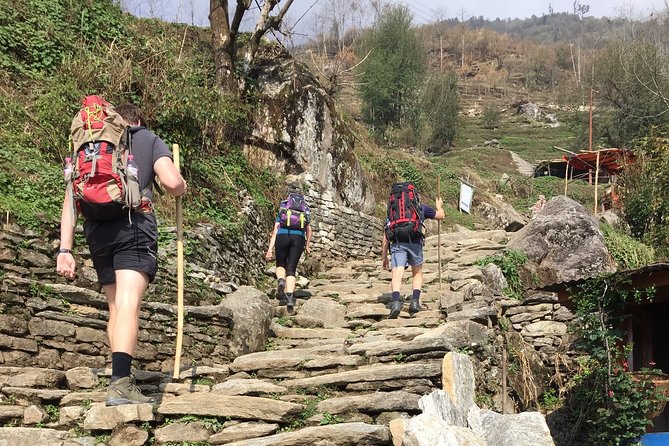
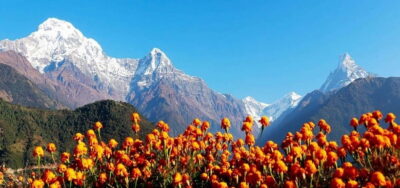
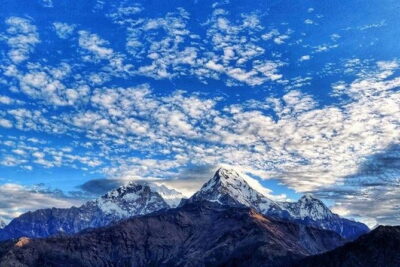
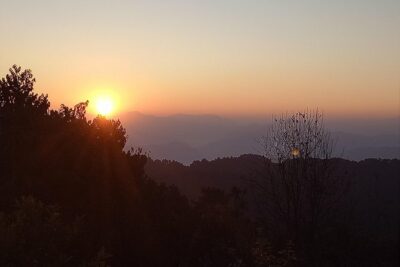
The early hike to Poon Hill is the centerpiece of the route. You climb before sunrise, spend time at the top, and look toward the Annapurna range as daylight arrives.
The top reaches 3,210 meters. That is high enough for cold conditions and a slower pace, even though this is not a high-altitude expedition. Bring a warm layer for the viewpoint and keep in mind that the climb happens before breakfast or at least before a normal morning routine.
The listed three hours covers the Poon Hill outing and return to Ghorepani. An admission ticket for Poon Hill is not included, so budget separately for that stated cost. Other trekking permits and the TIMS card are included.
After returning to Ghorepani, you continue to Tadapani. This section takes about six hours, making Day 4 the longest walking day in the schedule. That is the main physical test of the trip: an early uphill walk, a return to the lodge area, and then another long trek.
Tadapani gives the day a different character from Poon Hill. Instead of ending after the sunrise viewpoint, you continue deeper along the route. The reward is a sense of progress, but the drawback is simple: you may be tired by the time you arrive.
I would not choose this trip if you want a slow, leisurely walking holiday. The schedule is compact, and Day 4 leaves little room for a long breakfast or an easy afternoon.
Day 5: Tadapani to Ghandruk and back to Pokhara
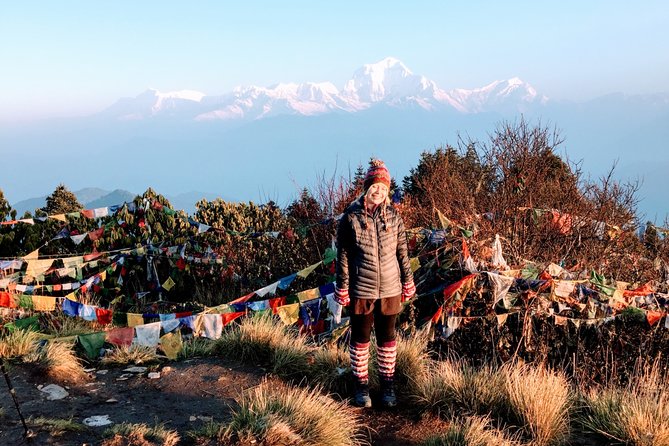
The final walking day takes you from Tadapani to Ghandruk, with a visit to the village before continuing to Kimche. The trek is listed at about five hours.
Ghandruk is a strong finish because it adds a cultural and village element to the mountain views. You are not only passing through forest and viewpoints. You have time to visit the village and then continue toward the road at Kimche.
From Kimche, you take a shared Jeep to Naya Pul. That ride takes about two hours. A shared vehicle may be less predictable than a private transfer, but it is part of the stated arrangement and keeps the trip moving without requiring you to organize the connection yourself.
At Naya Pul, a car takes you back to Pokhara Lakeside in about one hour and 10 minutes. You are then transferred to your hotel, and the trip ends.
This is another full day. Five hours of trekking, two hours in a shared Jeep, and more than an hour by car add up. Do not plan an important evening flight or a tight onward connection unless you have plenty of spare time.
What the $350 price really covers
The strongest value is logistical. You get the main transportation between Kathmandu, Pokhara, Naya Pul, Kimche, and the trekking area, plus accommodation in Pokhara and lodges along the route.
You also get an English-speaking trekking guide, a porter, the trekking permit, and a TIMS card. For a first trek in Nepal, those inclusions can save time and reduce uncertainty.
The porter allowance is specific: one porter can carry up to 15 kilograms of your luggage. You should pack within that limit rather than assume your entire suitcase will be carried. You will still need a small personal pack for the day.
The package does not include:
- Breakfast, lunch, dinner, snacks, or drinks
- Personal expenses
- Emergency rescue costs
- The Poon Hill admission ticket
- Optional gratitude for the crew
This list is important when comparing prices. A cheaper-looking trek may not include the same permits, transfers, or porter service. At the same time, $350 is not your final spending figure because food and personal costs remain yours.
Fitness, timing, and comfort
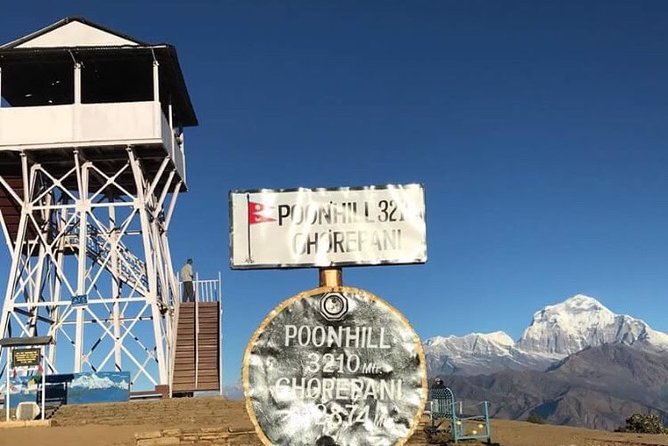
The operator asks for a moderate physical fitness level, and that description fits the schedule. You should be comfortable walking for five or six hours on multiple days, including uphill and downhill sections.
The highest point is 3,210 meters at Poon Hill. The itinerary does not provide acclimatization details beyond the route itself, so you should pay attention to how you feel and tell your guide if you are struggling.
The early Poon Hill start is the biggest timing issue. You will walk before sunrise, then return to Ghorepani and continue to Tadapani for another six hours. That makes Day 4 more tiring than the three-hour Poon Hill figure alone suggests.
Comfort is basic during the trekking portion. Lodge accommodation is included, but no room standard is specified. Meals are also your responsibility. You should be ready for simple arrangements and carry enough personal items for changing conditions.
The experience is private for your group, which can make the pace and communication easier than a large group tour. Group discounts are offered, though the specific discount is not stated. Pickup is available, and confirmation is received at booking.
The best reasons to choose this route
I would choose this trek for the balance between a famous mountain viewpoint and a manageable five-day format. You get the recognizable Poon Hill sunrise without committing to a much longer Himalayan route.
The route also has good variety. You move from Kathmandu to Pokhara, then from roads to footpaths, forests, viewpoints, and villages. The finish in Ghandruk keeps the trip from feeling like a single-purpose climb.
The guide and crew support are another reason to consider it. Good support matters on a route with long walking days, an early summit morning, and several transport changes. The strongest praise attached to the experience focuses on a well-trained guide, a helpful crew, spectacular views, and a memorable sense of adventure.
I also like that permits and the TIMS card are included. Those are easy details to overlook when planning independently, yet they are part of the basic structure of a properly organized trek.
The drawbacks you should weigh
The itinerary is tight. You have little spare time for bad weather, a slower walking pace, or a rest day. The seven-hour bus ride from Kathmandu to Pokhara can also feel long before the trek even begins.
Meals are not included, so the advertised price does not cover everything you will spend. You also need to budget for the Poon Hill ticket and any emergency rescue cost.
The private tour format may suit your group, but it may not provide the social atmosphere of a large shared trek. If you want to meet many other hikers along the way, a group departure could be a better fit.
Finally, no guide names are supplied. That is not a problem by itself, but if you care about the exact guide leading your trek, ask the provider before booking.
Should you book the Poon Hill and Ghandruk trek?
Book it if you want a compact Nepal trek with the main practical pieces already arranged. The route offers a strong mix of sunrise views, mountain walking, rhododendron forest, Tadapani, and a visit to Ghandruk. It is especially suitable for a private group with moderate fitness that wants a guide and porter without planning every road connection.
Think twice if you want relaxed days, included meals, high-comfort lodging, or a flexible schedule. The combination of long transport, five to six-hour walking days, and the early Poon Hill climb demands energy.
For the right person, $350 is a fair starting price because it includes transport, lodging, permits, a guide, and porter service. Just add money for food, personal expenses, the Poon Hill ticket, and a sensible emergency reserve. The cancellation terms are generous: you can receive a full refund if you cancel at least 24 hours before the start time. Changes or cancellations inside that window are not accepted for a refund.
FAQ
How long does the Poon Hill and Ghandruk trek take?
The experience lasts approximately five days. The first day covers travel from Kathmandu to Pokhara, and the remaining days include the trek, transfers, and the return to Pokhara.
What is the highest point on the route?
Poon Hill is the highest point, at 3,210 meters.
Is transportation from Kathmandu to Pokhara included?
Yes. The package includes the bus from Kathmandu to Pokhara. It also includes the listed transfers during the trek, a private car to and from the trekking start and finish points, and a shared Jeep from Kimche to Naya Pul.
Are meals included in the price?
No. All meals and personal expenses are excluded, so you need to pay for food and drinks during the trip.
Does the tour include a guide and porter?
Yes. An English-speaking trekking guide is included, along with porter service. One porter can carry up to 15 kilograms of luggage.
What fitness level do I need?
You should have a moderate level of physical fitness. The walking days range from about three to six hours, and the itinerary includes an early hike to Poon Hill followed by a longer trek to Tadapani.
Latest treks added in Kathmandu
- Ghorepani Poonhill Trek★ 5.0 · 5 reviews
- Ghorepani Poon Hill Trek★ 5.0 · 16 reviews
- Private Manaslu Circuit Trek at Himalayas★ 5.0 · 3 reviews
- Upper Mustang Trekking★ 3.0 · 2 reviews
- Amazing 1 Day Trekking Experience in Kathmandu Nepal★ 5.0 · 24 reviews
- Upper Mustang Trekking★ 5.0 · 2 reviews
- Upper Mustang Trek★ 5.0 · 5 reviews
- Upper Mustang Trekking★ 5.0 · 4 reviews
Poon Hill Treks, compared.
4-Day Ghorepani, Poonhill & Ghandruk Mountain Trek
Read our review →
Browse the lists this tour appears in