
REVIEW · CUSCO
Ausangate and Rainbow Mountain Trek – 3 Days / 2 Nights
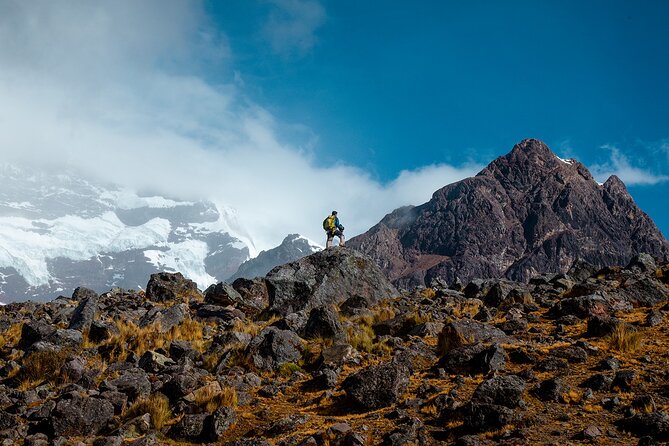
Ausangate gives you the bigger mountain experience behind the famous Rainbow Mountain photo. Over three days, you cross high passes, camp beside glacial lakes, and walk beneath Nevado Ausangate before reaching Vinicunca early, ahead of the main crowds. The final viewpoint is famous, but the quieter days around the mountain are the real reward.
I like the small maximum group of 12, which gives the guide room to adjust the pace and add a viewpoint when conditions allow. I also like the practical setup: meals, tents, sleeping gear, poles, rain ponchos, oxygen, and transport are all arranged for you.
The catch is simple: this is a hard high-altitude trek, not a relaxed sightseeing trip. You should arrive in Cusco at least two days early to adjust, and you need good fitness for long uphill sections above 4,800 meters.
Key points before you book
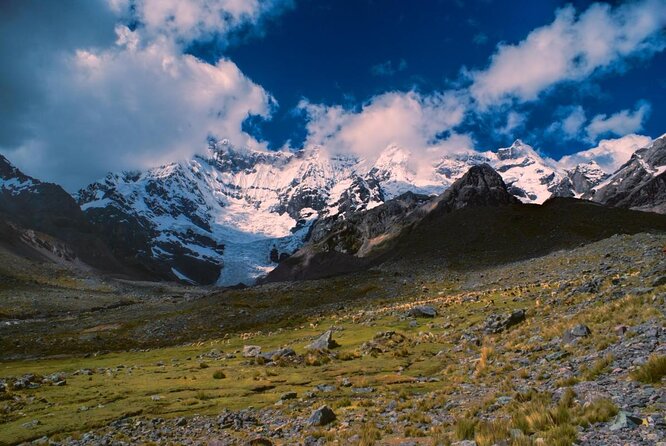
- High-altitude passes: You cross Arapa Pass, Puca Pass, and Warmisaya Pass, with some sections above 4,800 meters.
- Two nights in remote camps: Hatun Pucacocha and Surinecocha are practical mountain camps, not hotel substitutes.
- Rainbow Mountain at a smart hour: An early start on Day 3 aims to reach Vinicunca before the busiest period.
- Strong food and camp support: A mountain chef, horseman, and guide handle meals, camp work, and luggage transport.
- Useful safety equipment: Oxygen, a first aid kit, hiking poles, and rain ponchos are included.
- A demanding price that covers a lot: At $535 per person, the cost includes private transfers, entry fees, three lunches, three breakfasts, two dinners, and camping equipment.
What the $535 price really covers
At $535 per person, this trek is not cheap by Cusco day-trip standards. It is a different product altogether. You are paying for three days in a remote mountain area, private transport, a guide, entry fees, camping equipment, food, support staff, and the movement of up to 7 kilograms of your luggage.
That matters because carrying a full pack at this altitude would make the trek much harder. Your main bag is transported on the trail, while you walk with the things you need for the day. Horse assistance is also available as an optional extra if you need more help on the trail.
The camping setup includes a sleeping tent, air mattress, sleeping bag, dining room, tables, and chairs. The food has been a major strength of this operation. Meals are prepared in difficult conditions, yet past departures have included hearty, home-style cooking that made the cold evenings easier. Vegetarian and vegan meals are available if you request them when booking.
You also receive water and snacks, though you should still pay attention to your personal hydration needs. Three lunches, three breakfasts, and two dinners are included. Dinner is served at camp, where you can warm up, eat, and get ready for another early start.
More three-day treks in Cusco
- Salkantay Trek Challenge – 3 Days / 2 Nights
★ 5.0 · 101 reviews - Sapa 3 Days 2 Nights Trekking Tour (1 Night In Ta Van Village, 1 Night In Hotel)
★ 5.0 · 699 reviews - 3-Day Trekking Adventure of Sapa from Hanoi – Stay Ta Van Village
★ 5.0 · 611 reviews
Day 1: Upis, Ausangate, and Hatun Pucacocha
Pickup begins around 5:00 am. That is brutally early, but it saves time and gets you to Upis for the start of the walk. The drive from Cusco takes you away from the city and toward the high country around Nevado Ausangate.
The first hiking stretch lasts about three hours before lunch. This is your introduction to the scale of the trek. Ausangate dominates the scenery, and the route gives you time to settle into the rhythm of walking at altitude. Do not expect a gentle warm-up at sea level. Even the first section can feel demanding if you have not adjusted properly.
After lunch, you get a short rest before climbing toward Arapa Pass. This is where the trip becomes more serious. Uphill walking at high altitude forces you to slow down, shorten your steps, and manage your breathing. Your guide should help set a steady pace, but you still need to speak up if you feel unwell.
From Arapa Pass, the route descends to Hatun Pucacocha camp. The descent is welcome after the climb, though tired legs and uneven ground can still make it slow going. At camp, hot drinks and dinner provide a much-needed reset.
You sleep at the foot of Ausangate, with the mountain close by rather than as a distant backdrop. The total day takes about nine hours, including breaks and the lunch stop. That makes Day 1 the longest day by overall time, even though the following days include tough climbs.
Day 2: Puca Pass, glacial lagoons, and Warmisaya
Day 2 starts with hot coca tea and breakfast. Coca tea is a familiar high-altitude comfort in the Andes, but it is not a substitute for acclimatization or medical care. The real work begins with the climb toward Puca Pass.
This section is a good test of your legs and lungs. The reward is a wide view over the high mountain country, with a chance of seeing a condor in flight. Wildlife sightings are never guaranteed, but the possibility adds something to the climb.
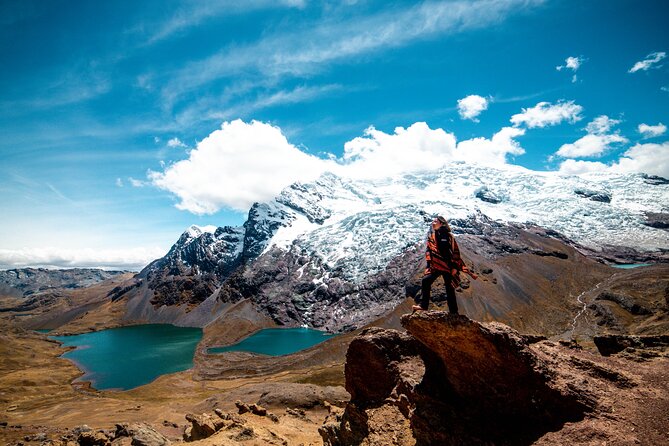
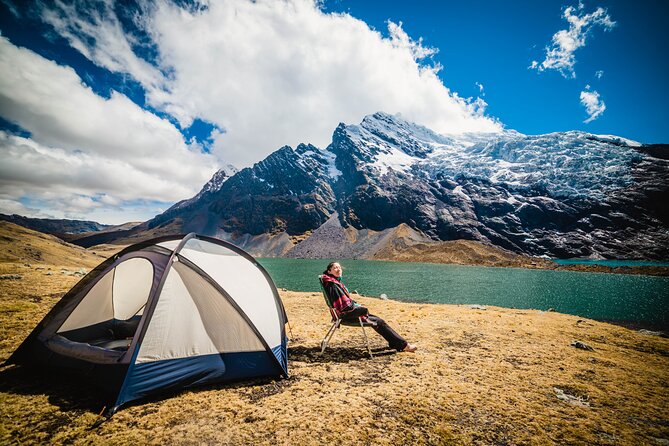
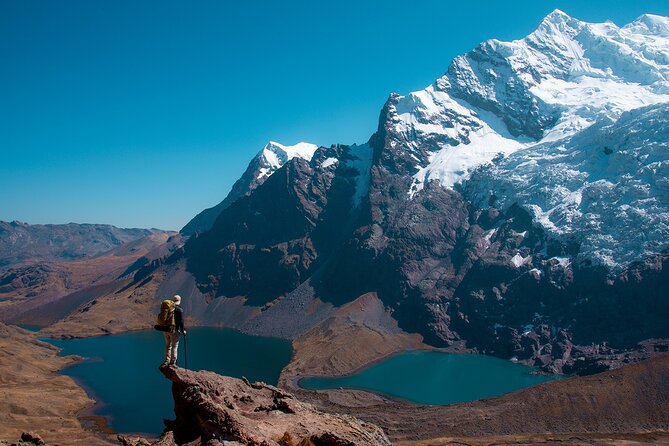
The route then brings you past glacial lagoons before lunch at Anantapata. These lakes are one of the best reasons to choose the full Ausangate route instead of treating Rainbow Mountain as a quick out-and-back excursion. Their colors and setting change with the light and weather, and the quiet makes the stop feel far removed from Cusco.
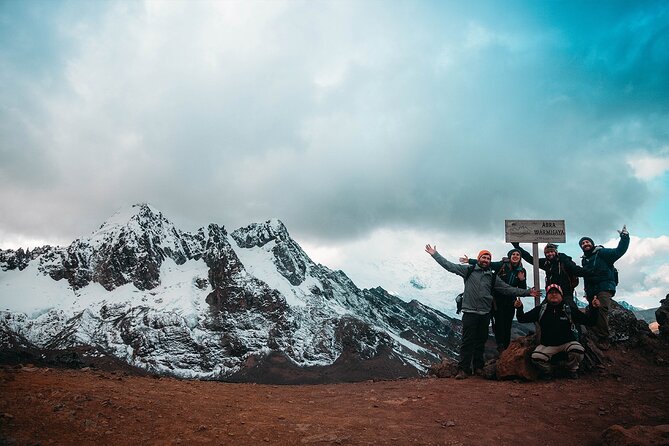
After lunch, you climb again, this time toward Warmisaya Pass. From the top, you get a 360-degree view, including the first sight of Rainbow Mountain and the surrounding peaks. This is an important moment because Vinicunca appears as part of a much larger mountain region. The colored ridge is not an isolated oddity. It belongs to a broad, stark world of snow, rock, ice, and high grassland.
The day ends with a descent to Surinecocha camp. At about seven hours, it is shorter than Day 1, but the two major climbs can make it feel just as demanding. Dinner and rest come at the right time. You will want warm layers, dry socks, and an organized sleeping system ready before the temperature drops.
Day 3: Reaching Vinicunca before the crowds
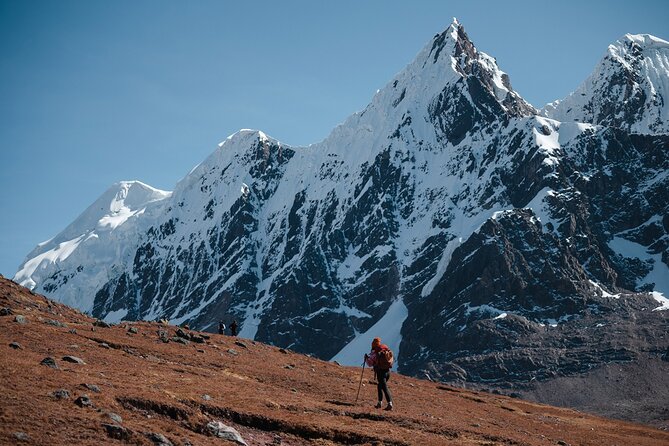
The final morning starts early again. The aim is to reach Rainbow Mountain before the main flow of visitors arrives. That early departure is one of the smarter parts of the plan. Vinicunca is a popular destination, and arriving early gives you more space to take in the view and hear about the site from your guide.
The first part of the walk offers initial views of Vinicunca. Then you continue to the mountain itself, where you have time to take photos and learn about its importance. The colored slopes are striking, but the altitude and exposure can make the viewpoint feel demanding rather than effortless.
You then walk down to private transport and stop for lunch before returning to Cusco. The walking time on Day 3 is listed at about three hours, making it the shortest hiking day. Still, you should not treat it as an easy finish. Fatigue from the first two days, combined with high altitude, can affect your balance and pace.
Drop-off at your accommodation is included. That small detail matters after a three-day trek. You do not have to find a taxi, carry your bag across town, or work out the final connection while tired.
More Trekking Tours in Cusco
- From Cusco: 7 Lakes Ausangate Trek with Breakfast and Lunch
★ 4.8 · 360 reviews - Cusco: Full-Day Rainbow Mountain & Red Valley Trekking Tour
★ 4.5 · 121 reviews - From Cusco: Rainbow Mountain Trek
★ 4.5 · 98 reviews - Choquequirao Trek 4 days and 3 nights
★ 5.0 · 81 reviews
Sleeping in the high Andes
The camping arrangement is more comfortable than a bare-bones tent setup. You receive a sleeping bag, air mattress, tent, and access to a dining tent with tables and chairs. Some departures have also provided extra liners, blankets, and hot water bottles when the cold became severe.
Even with good gear, nights at this altitude can be cold. Pack thermal layers, a hat, dry socks, and gloves. Keep your night clothes dry and separate from the clothes you hike in. A damp shirt that feels tolerable during the day can become miserable once the sun disappears.
The staff also works hard behind the scenes. The guide, cook, and horseman must set up and dismantle camp, prepare food, and complete the route themselves. Names associated with past departures include Nestor, Marco, Juan Carlos, Heber, Jesús, Avelino, Pabel, Darwin, Elisban, Franklin, and Fredy Apaza. Your exact team will depend on the departure, but the guide’s pacing and care can make a large difference on a demanding route.
Some guides have adapted the route for small groups, adding extra viewpoints when the group was moving well. That flexibility is useful, but it should never come at the expense of safety. Weather and altitude remain in charge.
Altitude is the main issue, not distance
The hardest part of this trek is the height. The route includes passes above 4,800 meters, where even fit hikers can feel short of breath, weak, or headachy. Your time in Cusco before the trek is important. Arrive at least two days ahead, keep your first days calm, and do not assume that regular gym fitness solves the altitude problem.
The tour includes oxygen and a first aid kit, which is reassuring. One past departure required oxygen on the first night, and the guide monitored the situation closely. That does not mean oxygen makes altitude sickness safe to ignore. Tell your guide promptly if you feel seriously unwell.
Children must be at least 12 years old and accompanied by a responsible adult. The activity requires a strong fitness level, and you should be comfortable with long uphill walks, uneven paths, cold nights, and changing weather.
Rain, snow, and sun can all appear during the same trek. The included rain poncho is useful, but pack waterproof protection for your personal items too. Weather can affect the schedule, and the operator may cancel for poor conditions, offering another date or a full refund.
How the small group changes the experience
The maximum group size is 12. That is large enough to provide company but small enough for the guide to keep an eye on individual hikers. It also makes camp movement easier and can allow some adjustment to the pace.
A small group does not guarantee a private trek. You may still walk with other hikers, and the group will need to move together for safety and logistics. Still, it is a better setup than a large procession, especially on a route where the quiet is part of the appeal.
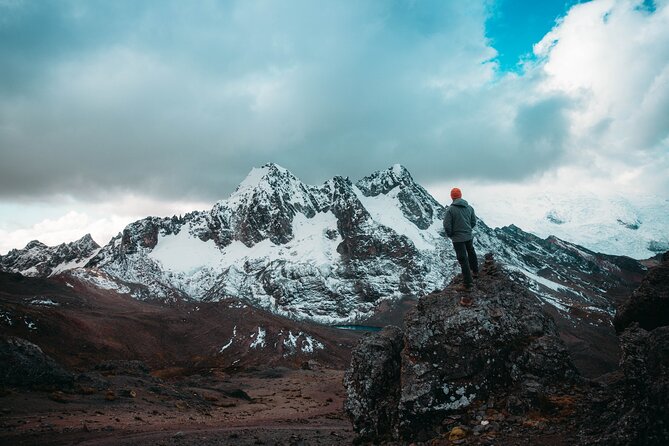
The trail around Ausangate is much more peaceful than the final Rainbow Mountain viewpoint. That contrast is worth understanding before you book. Days 1 and 2 are about high passes, lakes, and remote mountain scenery. Day 3 brings you to the famous site and its larger visitor presence.
Transport, luggage, and what to pack
Private transport handles the ride from Cusco to Upis and the return to your accommodation. Hotel pickup and drop-off are included, which removes much of the usual transport hassle.
Luggage transport covers up to 7 kilograms on the trail. Confirm how your remaining belongings will be handled before departure, since the supplied details only specify the trail allowance. Keep your passport, personal medication, water, camera, rain gear, warm layer, and valuables with you.
You should also bring:
- Warm layers for camp and sleeping
- Waterproof protection for clothing and electronics
- Comfortable hiking shoes or boots
- Sun protection
- Personal toiletries and medication
- A small daypack
- A valid passport
Passport name, number, expiry date, and country are required for every participant at booking. Make sure the passport you use is current and ready for travel.
Who should book this trek?
I would choose this trek if you want more than a quick Rainbow Mountain photo stop. It suits hikers who value remote scenery, high passes, camping, and a strong support team. It is also a good fit if you prefer having transport, meals, equipment, and a guide arranged in one package.
I would not choose it if you dislike cold nights, early starts, long climbs, or uncertain mountain weather. You also should not book it as your first activity after flying into Cusco. Give yourself at least two days to adjust.
The trek can work for first-time multi-day hikers if you are fit, prepared, and honest about your limits. Experienced hikers may appreciate the scenery and the chance to adjust the pace, but they should not underestimate the altitude.
Small booking details that matter
The tour requires a minimum number of participants. If that minimum is not reached, the operator offers another date, a different experience, or a full refund. If you cancel or request a change for another reason, the booking is non-refundable and cannot be amended.
Confirmation is sent within 48 hours, subject to availability. Service animals are allowed. Travel insurance is recommended, and gratuities are optional.
Machu Picchu spaces can sell out quickly, but Machu Picchu is not part of this three-day trek. If you plan to combine the trip with Machu Picchu, arrange that separate visit at least three months ahead.
Should you book the Ausangate and Rainbow Mountain Trek?
Book it if your priority is the full high-Andes experience rather than the easiest route to Rainbow Mountain. The strongest value comes from the combination of private transfers, support staff, camping equipment, meals, luggage transport, and a small group. The quiet glacial lakes and high passes give you far more than a single famous viewpoint.
Skip it if you are not ready for altitude or if you want comfortable accommodation each night. For a fit hiker who prepares properly, this is a demanding but well-supported way to see Ausangate and Vinicunca in one trip.
FAQ
How long is the Ausangate and Rainbow Mountain Trek?
The trek lasts approximately three days and two nights, with camping at Hatun Pucacocha and Surinecocha.
What time does pickup begin?
Pickup begins at approximately 5:00 am.
How much does the trek cost?
The listed price is $535 per person.
How difficult is the trek?
It is a challenging high-altitude trek that requires a strong fitness level. The route includes steep climbs and passes above 4,800 meters.
How early should I arrive in Cusco?
You should arrive at least two days before the trek to adjust to the altitude.
Is Rainbow Mountain included?
Yes. Entry fees for both Ausangate and Rainbow Mountain are included, and Day 3 visits Vinicunca.
What meals are included?
The package includes three breakfasts, three lunches, and two dinners. Vegetarian and vegan options are available if requested when booking.
Is camping equipment included?
Yes. The equipment includes a sleeping tent, air mattress, sleeping bag, dining room, tables, and chairs.
How much luggage can be transported during the trek?
Luggage transport is included for up to 7 kilograms on the trail.
Are hiking poles and safety equipment provided?
Yes. Hiking poles, a rain poncho, a first aid kit, and an oxygen supply are included. Travel insurance is recommended but not included.
Latest treks added in Cusco
- Small Group: 4-Day Inca Trail Trek to Machu Picchu★ 5.0 · 33 reviews
- Salkantay Trek: 5 Days to Machu Picchu★ 5.0 · 33 reviews
- 5 Day – Salkantay trek to Machu Picchu – Group Service★ 4.5 · 27 reviews
- Humantay Lake Full-Day Adventure: Scenic Trek and Stunning Views★ 4.5 · 39 reviews
- Inca Trail Trek to Machu Picchu – 2 Days (Small Group or Private)★ 5.0 · 31 reviews
- Salkantay 5-Day Trek To Machu Picchu★ 5.0 · 39 reviews
- 6 day Rainbow Mountain x Ausangate Trek – FlashpackerConnect★ 5.0 · 30 reviews
- 4-Day Salkantay Trek to Machu Picchu★ 4.5 · 36 reviews
Cusco Trekking Tours, compared.
7 Lakes Ausangate Trek with Breakfast and Lunch
Read our review →
Full-Day Rainbow Mountain & Red Valley Trekking Tour
Read our review →
Machu Picchu: 5-Day Salkantay Trek with Panoramic Train
Read our review →
Ancascocha Trek To Machu Picchu 4 Days And 3 Nights
Read our review →
Browse the lists this tour appears in