
REVIEW · CUSCO
4-Day Lares Trek to Machu Picchu
The best thing about this 4-day Lares Trek is that Machu Picchu comes at the end of a real mountain journey, not as a quick stop reached by train. You hike through quiet valleys, pass small Quechua communities, cross a 4,400-meter pass, and sleep under the Andean sky before reaching the Inca citadel.
I like the local contact in Cuncani and the useful all-in-one setup, with a cook, mules, camping gear, meals, train tickets, and a hotel in Aguas Calientes. The main catch is altitude: this is a serious trek, with an early 5:00 a.m. start and long uphill sections. You need strong fitness and time in Cusco to adjust.
Key points to know before booking
- A quieter route to Machu Picchu: The Lares trail sees fewer people than Peru’s best-known trekking routes.
- A 4,400-meter high point: The trek reaches nearly 14,000 feet, so altitude preparation matters.
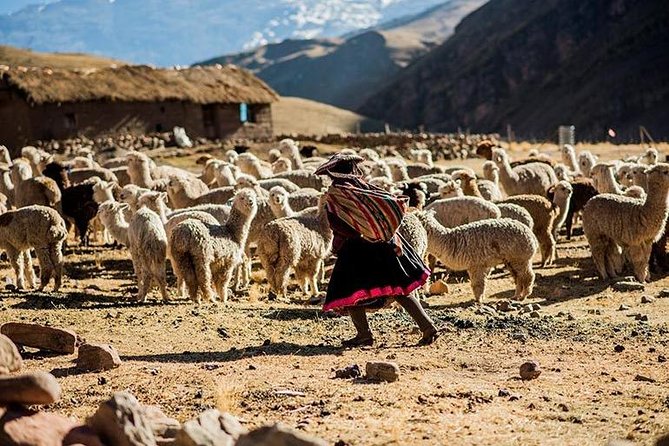
- Real village contact: You visit a local Andean family in Cuncani and see quinoa, tarwi, and alpaca textile work.
- Ollantaytambo included: You visit the ancient Inca settlement and its farming terraces before taking the train.
- A comfortable finish: After camping, you spend the third night in a hotel in Aguas Calientes.
- Small-group format: The maximum group size is 15, with an assistant guide for groups of nine or more.
Why choose the Lares route instead of the classic trail
The Lares Trek suits you if you want mountain scenery and local contact without spending four days on Peru’s most crowded trekking corridor. The route passes through small Quechua villages rather than relying only on archaeological sites, so the experience feels tied to present-day Andean life as well as the Inca past.
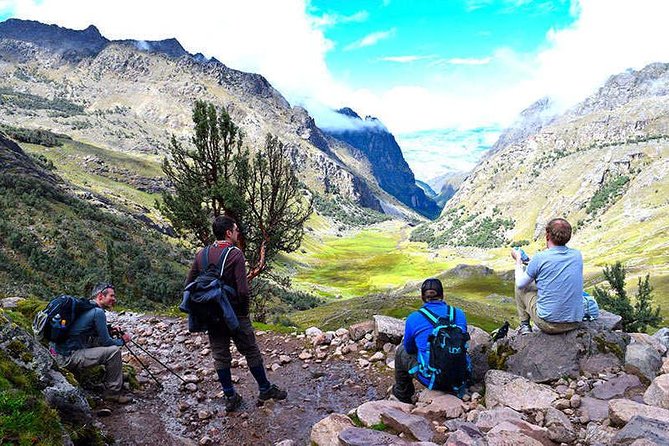
You will see snow-covered peaks, streams, native forest, alpine lakes, grazing areas, and high valleys. The scenery changes fast. One hour you may be walking beside a stream, and later you may be looking across a broad, spare valley from a high pass.
The route is not easy. The first day gains about 1,150 meters over 14 kilometers, and the second day begins with another two-hour climb to the trek’s highest pass. At Cusco’s elevation of 3,399 meters, you are already starting high. I would not book this as your first activity after flying into Peru.
The tour price is $656.42 per person. That is a substantial sum, but it covers much more than a guide and a walk. You receive hotel pickup, transport to the trailhead, a bilingual professional guide, a chef, mules carrying camping equipment and up to 7 kilograms of your personal items, meals, tents, mattresses, water after the first four hours, the train and bus connections, Machu Picchu transport, and a hotel in Aguas Calientes.
You still need to pay for a sleeping bag rental if required, breakfast on Day 1, lunch on Day 4, tips, travel insurance, and any extra ticket for Huayna Picchu or Machu Picchu Mountain. Viewed as a four-day package with a support crew and major transport costs included, the price offers solid value, especially if you prefer not to organize each piece yourself.
More Inca Trail Treks in Cusco
- Salkantay Trek Challenge – 3 Days / 2 Nights
★ 5.0 · 101 reviews - Choquequirao Trek 4 days and 3 nights
★ 5.0 · 81 reviews - Machu Picchu: 5-Day Salkantay Trek with Panoramic Train
★ 5.0 · 79 reviews
Day 1: Pumahuanca and the first long climb
Your day begins with pickup from your Cusco hotel at about 5:00 a.m. That early departure is practical, since you need time to travel through the Sacred Valley and reach Pumahuanca, the starting point at about 2,950 meters.
The drive itself gives you an introduction to the region. You pass traditional Andean villages and see snow-covered peaks before beginning the hike. This is not just a transfer to a trailhead. The Sacred Valley frames the trek with its farming communities, steep slopes, and high mountain views.
The first hike covers about 14 kilometers and climbs roughly 1,150 meters. The route follows a scenic valley with native forest and streams, and you visit the Inca site of Pumahuanca along the way. Your guide explains the site, local plants, and birdlife, adding useful context to what could otherwise be a demanding uphill walk.
The difficulty comes early. You may be tempted to push hard at the start, but a steady pace is wiser. The high elevation makes every climb feel longer, and the first day is the main test of your legs before the route becomes easier.
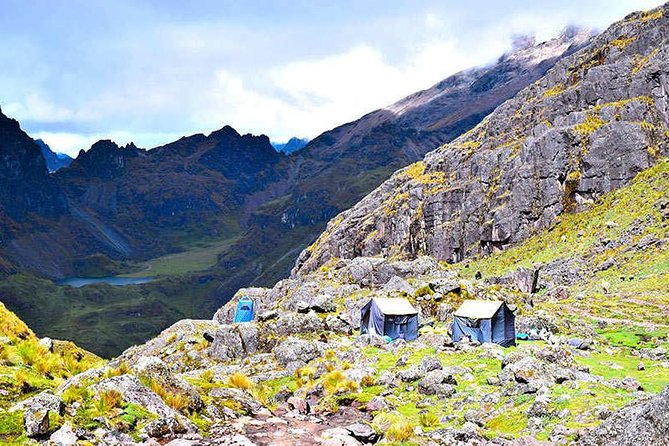
You camp at Puyoc, a high-altitude site. The package includes four-person tents shared by two trekkers, an inflatable Thermarest mattress, a dining tent with tables and chairs, and a chef. Mules carry the cooking and camping equipment, along with up to 7 kilograms of your personal gear, which lets you hike with a lighter daypack.
Water is supplied after the first four hours of the trek. Bring enough for the early part of the day, since that first stretch is specifically excluded from the water service.
Day 2: Yanacocha and the 4,400-meter pass
The second day is the scenic high point of the route, both in views and elevation. You hike about 13 kilometers toward Cuncani at 3,900 meters, with much of the distance descending after the main climb.
Do not mistake the downhill profile for an easy morning. The day starts with a two-hour climb to the highest pass, reaching nearly 4,400 meters. At that height, cold, wind, and thin air can slow you down. A warm jacket, hat, gloves, waterproof layer, and careful pacing are essential.
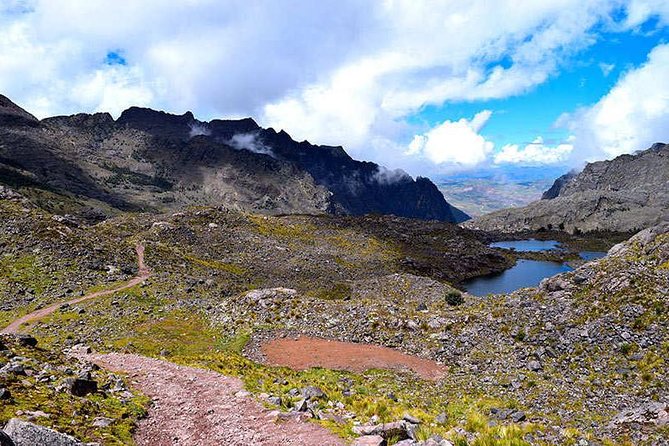
From the pass, you see wide views of snow-covered peaks and remote valleys. The route then drops toward mountain lakes, including Yanacocha, known as Black Water Lake. Its dark surface reflects the sky and gives the setting a quiet, almost solemn feel.
This is also where the route’s cultural setting shifts. You move from the wooded valley of the first day into a more open, high-altitude area, with remote communities and broad slopes. You are not simply checking off a viewpoint. The changing environment helps you understand how people live at different elevations in the Andes.
The descent toward Cuncani is easier on your breathing but can be hard on your knees. Trekking poles would be useful, although they are not specifically included. The tour supplies afternoon snacks, but you should still carry personal favorites if you know you need frequent energy.
Cuncani sits at about 3,900 meters, so the night remains high and cold. The strong point of this day is the combination of the pass, lakes, and remote villages. The drawback is that you spend another night at serious altitude, which makes acclimatization before the trip especially important.
Day 3: Cuncani, an Andean family, and Lares
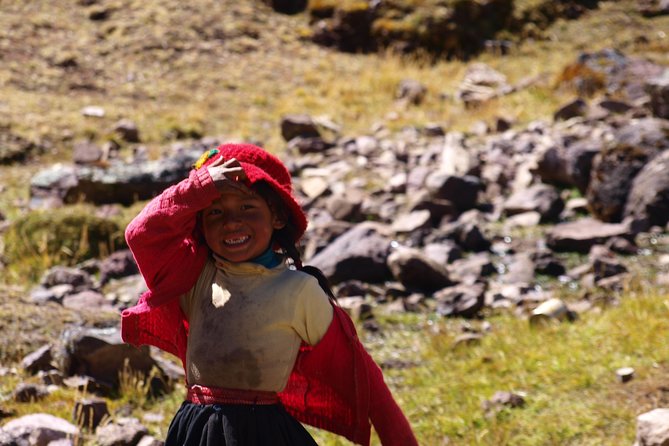
Day 3 shifts from big views to human contact. After an early start, you visit a local Andean family in Cuncani. This is one of the most distinctive parts of the trip because you get a closer look at daily life in a mountain community rather than simply walking past houses from the trail.
The visit may include conversation about local traditions, small gifts, and a chance to see or purchase handwoven alpaca textiles. You can also try a few Quechua phrases. Keep gifts modest and respectful, and ask before taking photographs.
After leaving Cuncani, you hike about 6 kilometers downhill toward the Lares hot springs. The route passes quinoa and tarwi fields, giving you a close look at crops grown in the high Andes. The walk is shorter than the previous two days, with about three hours of hiking listed for the day.
Lares sits at about 3,150 meters, lower than Cuncani and much lower than the highest pass. The hot springs are a welcome reward after two demanding days. The tour description also highlights time to soak in natural hot springs, so bring swimwear and a small towel if those are not provided.
This day includes the tour’s hotel night in Aguas Calientes, though the sequence requires careful attention when you book and receive your final schedule. The listed route describes the Lares hot springs before the journey onward to the train and Aguas Calientes. Your operator should confirm the exact transfer timing and hotel details in your voucher.
The move from camping to a comfortable hotel matters. You get a proper bed before Machu Picchu, and you do not need to wake up in a tent on the morning of your visit to the citadel.
Another trail to compare in Cusco:
- From Cusco: 7 Lakes Ausangate Trek with Breakfast and Lunch
★ 4.8 · 360 reviews - Cusco: Full-Day Rainbow Mountain & Red Valley Trekking Tour
★ 4.5 · 121 reviews - From Cusco: Rainbow Mountain Trek
★ 4.5 · 98 reviews - Ancascocha Trek To Machu Picchu 4 Days And 3 Nights
★ 5.0 · 77 reviews
Ollantaytambo and the train to Aguas Calientes
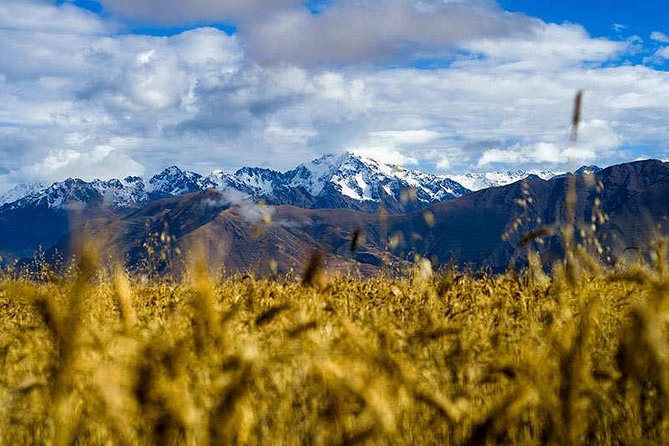
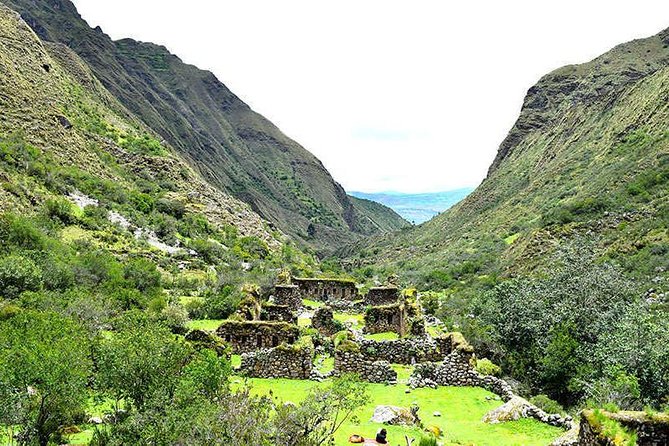
The trip includes a visit to Ollantaytambo, one of the most impressive Inca sites in the Sacred Valley. Its agricultural terraces show how the Incas used steep mountain slopes for farming, while the settlement itself helps connect the rural trek with the larger Inca world.
Ollantaytambo is more than a quick photo stop. The terraces reveal practical engineering, not just ceremonial design. Your guide can help you see how farming, water control, defense, and religion were linked in Inca planning.
From the Sacred Valley, you take a scenic train to Aguas Calientes. The train is a major change of pace after several days on foot. Aguas Calientes is the gateway town below Machu Picchu, and the included hotel gives you a chance to rest before the early visit.
The package includes return transportation by train and bus to Cusco, as well as the round-trip bus between Aguas Calientes and Machu Picchu. That saves you from sorting out separate tickets and connections, a real advantage after a tiring trek.
Day 4: A guided morning at Machu Picchu
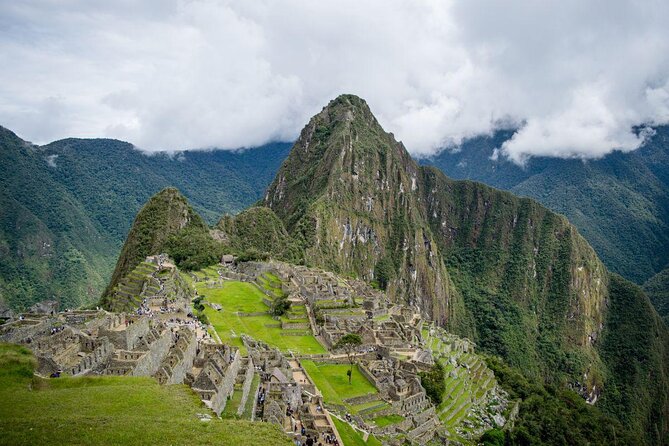
The final morning starts with breakfast and an early bus up to Machu Picchu at 2,430 meters. The early timing is important. It gets you into the sanctuary before the day is at its busiest, though you should still expect crowds at one of Peru’s most famous sites.
Your guide leads a detailed visit through the citadel. The focus includes temples, ceremonial spaces, terraces, and storage structures. This guided portion helps you understand the site’s layout and purpose instead of wandering among stone walls without context.
You also receive time to explore on your own after the guided visit. I value that balance. A guide can point out features you might miss, but solo time lets you pause, take photographs, and enjoy the view at your own pace.
Huayna Picchu and Machu Picchu Mountain are not included. If you want one of those climbs, you must secure the extra ticket ahead of time. Huayna Picchu reaches about 2,720 meters, while Machu Picchu Mountain reaches about 3,082 meters. Do not assume you can add either one at the entrance.
After the visit, you return to Aguas Calientes, then continue by train and bus toward Cusco. Lunch on Day 4 is not included, so budget for that meal. The final day is shorter on foot, but the transport schedule can make it a long travel day.
Guides, support, and group size
The tour provides a professional bilingual guide and an assistant guide for groups of nine or more. The maximum group size is 15, which is large enough to share costs but small enough for the guide to keep an eye on the group.
Guide Edgar has received particular praise for encouraging a hiker who struggled at high altitude and helping that person reach the top. That points to an important part of this trip: your guide is not only explaining ruins and plants, but also helping manage a demanding mountain route.
A chef prepares three breakfasts, three lunches, and three dinners. Three afternoon snacks are also included. Vegetarian food is available at no extra cost if you request it when booking.
Tell the operator about dietary needs as soon as possible. If you have a food allergy, write it on your trek voucher and remind both the guide and cook on the trail. The operator does not accept bookings from clients with life-threatening allergies, so this tour is not suitable if you need that level of allergy management.
What to pack for the altitude
Bring your original passport. You will also need your ISIC card if you are a student claiming a discount. Your clothing should cover wet, cold, and sunny conditions.
Pack walking boots, a waterproof jacket or rain poncho, warm layers, a hat, gloves, T-shirts, and comfortable trousers. Sunscreen of factor 35 or higher, insect repellent, toiletries, hand sanitizer, personal medication, and a torch with spare batteries are also listed as essentials.
A sleeping bag is not included, though you can hire one from the operator. The tour supplies an oxygen bottle and first-aid kit, but those items are backup equipment, not a substitute for pacing yourself and preparing for altitude.
You must bring your own water for the first four hours of the trek. The operator carries water after that point. Since weather can change quickly in the mountains, keep waterproof and warm clothing accessible rather than buried in your main bag.
Who should book this trek
I would choose this tour if you want a quieter route, meaningful contact with mountain communities, and a supported trek that finishes at Machu Picchu. It also suits you if you value having the chef, tents, transport, hotel, train, and buses arranged in one package.
I would not choose it if you want a relaxed sightseeing trip or dislike early starts, cold nights, steep climbs, and basic camping. The minimum age is six, but the stated fitness requirement is strong, so age alone does not determine suitability.
Give yourself time to adjust to Cusco’s 3,399-meter elevation before the trek. The route rises higher, with its top pass near 4,400 meters. If you have concerns about altitude or fitness, get medical advice before booking.
The booking is non-refundable and cannot be changed for any reason. Travel insurance is strongly recommended, especially because the trek includes strenuous hiking and a fixed transport schedule.
Should you book the Lares Trek?
Book it if your ideal Machu Picchu trip includes quiet trails, high mountain scenery, Quechua villages, a local family visit, and a real sense of earning the final citadel. The route gives you more than a standard day trip and includes enough support to make a demanding trek manageable.
Skip it if you want guaranteed flexibility, a soft adventure, or a simple train ride from the Sacred Valley. The $656.42 price is fair for the number of services included, but the value depends on using them: you must be ready for high altitude, camping, long climbs, and an early schedule.
For a fit hiker who prepares properly, this is a strong way to reach Machu Picchu by a quieter and more personal route.
FAQ
How long is the Lares Trek to Machu Picchu?
The experience lasts approximately four days and includes trekking, village visits, transport through the Sacred Valley, a train ride to Aguas Calientes, and a guided visit to Machu Picchu.
What time does the tour start?
Pickup begins at approximately 5:00 a.m. on the first day.
How high does the trek go?
The highest pass reaches nearly 4,400 meters, or about 14,000 feet.
Is the tour suitable for children?
The minimum age is six. However, participants should have a strong physical fitness level because the route includes high altitude and long uphill sections.
Are meals included?
Breakfast, lunch, and dinner are included for three days, along with three afternoon snacks. Breakfast on Day 1 and lunch on Day 4 are not included.
Is a sleeping bag included?
No. A sleeping bag can be hired from the operator.
Can I request vegetarian meals?
Yes. Vegetarian meals are available at no extra cost, but you must request them when booking.
Are Huayna Picchu and Machu Picchu Mountain included?
No. Entrance to either mountain requires an additional ticket arranged in advance.
More four-day treks in Cusco
- 4 Day Inca Trail Trek to Machu Picchu Multi day tour
★ 5.0 · 70 reviews - Salkantay Trek 4 Days to Machu Picchu by Glamping Sky Lodge Dome
★ 5.0 · 68 reviews - Salkantay Trek to Machu Picchu in 4 days
★ 4.5 · 50 reviews - 4-Day Lares Trek to Machu Picchu from Cusco
★ 5.0 · 47 reviews
Latest treks added in Cusco
- Small Group: 4-Day Inca Trail Trek to Machu Picchu★ 5.0 · 33 reviews
- Salkantay Trek: 5 Days to Machu Picchu★ 5.0 · 33 reviews
- 5 Day – Salkantay trek to Machu Picchu – Group Service★ 4.5 · 27 reviews
- Humantay Lake Full-Day Adventure: Scenic Trek and Stunning Views★ 4.5 · 39 reviews
- Inca Trail Trek to Machu Picchu – 2 Days (Small Group or Private)★ 5.0 · 31 reviews
- Salkantay 5-Day Trek To Machu Picchu★ 5.0 · 39 reviews
- 6 day Rainbow Mountain x Ausangate Trek – FlashpackerConnect★ 5.0 · 30 reviews
- Ausangate and Rainbow Mountain Trek – 3 Days / 2 Nights★ 5.0 · 35 reviews
Machu Picchu & Inca Trail Treks, compared.
Machu Picchu: 5-Day Salkantay Trek with Panoramic Train
Read our review →
Ancascocha Trek To Machu Picchu 4 Days And 3 Nights
Read our review →
4 Day Inca Trail Trek to Machu Picchu Multi day tour
Read our review →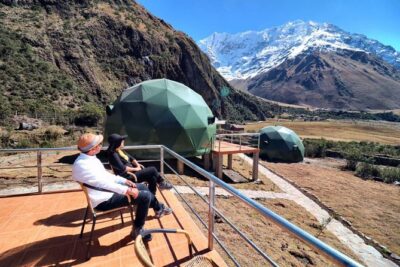
Salkantay Trek 4 Days to Machu Picchu by Glamping Sky Lodge Dome
Read our review →
Browse the lists this tour appears in