
REVIEW · MOROCCO
3-day trek – In the shade of palm trees
The best part of this trek is its change of scenery. You begin beneath M’Hamid’s date palms, walk toward the dunes of Bertham, sleep near open desert plains, and return across a stone-covered hamada. This is not a quick camel ride with a photo stop. It is a three-day route built around walking, camp life, local food, and time with a desert team.
I like the human side of it, especially the family-style guiding associated with Hassan, Bakkar, Ibrahim, Mohammed, and Bachir. I also like the simple rhythm: palm shade at midday, a fire at night, and wells that still serve as meeting places. The main catch is physical. You need moderate fitness, and a sleeping bag is not included.
Key points at a glance
- Three days and two nights from M’Hamid: You return to the same meeting point after a full circuit through several types of Sahara terrain.
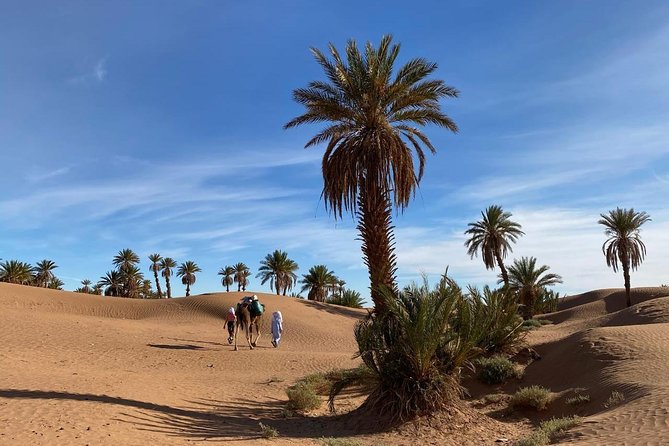
- Palm grove lunch on day one: The opening walk begins in the shade of date palms before heading toward Marabout Sidi Naji.
- Camp near the Bertham dunes: Day two brings open sand, signs of former nomad life, and a night near plains where herds are still kept.
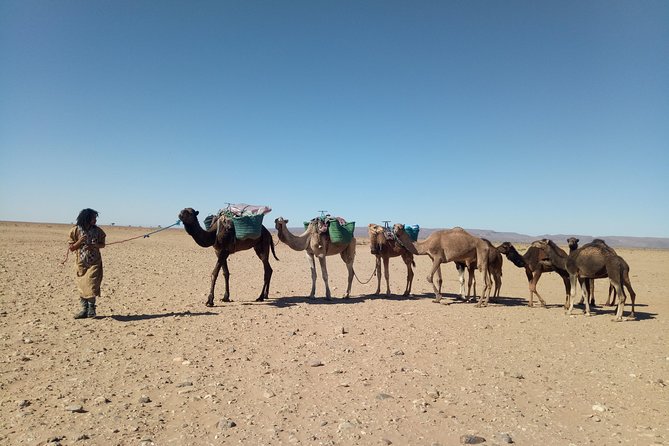
- A working desert team: Camel drivers, guides, and cooks travel with you, carrying eating and sleeping equipment.
- Meals are included: The price covers three lunches, two breakfasts, and two dinners, along with all listed fees and taxes.
- The return crosses hamada: Expect stone desert rather than sand, with wells, fossils, and other possible finds along the way.
Why this trek feels different from a short Sahara outing
Many desert excursions are built around a sunset, a camel ride, and one night in camp. This trip gives you more time to notice how the desert changes. You start in the cultivated palm grove around M’Hamid, reach sand dunes, pass areas used by nomadic herders, and return through hard, stony ground.
That variety gives the route a clear story. The palm grove shows how people make life possible at the edge of the Sahara. The dunes show the desert most people picture. The hamada reminds you that much of the Sahara is not sand at all.
I also appreciate that the route is tied to local life rather than only to scenery. The guides introduce you to pastors and their herds, and the wells remain useful social places, not just points on a map. You are not simply being driven into an empty wilderness for a camp photo. You are following paths connected to water, family history, and seasonal movement.
The experience is private, so only your group takes part. That matters here. A small private group can keep a slower pace, ask questions, and spend more time around the fire without being folded into a large convoy.
More three-day treks in Morocco
- From Marrakech: 3-Day Mount Toubkal Climbing Trek
★ 4.7 · 597 reviews - 3 Day Trek in the Atlas Mountains and Berber Villages from Marrakech
★ 4.5 · 85 reviews - Marrakech: 3-Day High Atlas Mountains and Three Valleys Trek
★ 4.8 · 63 reviews
Day one: M’Hamid, palms, and Marabout Sidi Naji
The trek starts at 8:00 am in M’Hamid. The caravan leaves town with camel drivers, guides, and cooks from L’oiseau du désert. The supplied details name the wider guiding team as the Desert Bird team, while individual experiences refer to guides including Hassan and Bakkar, plus Ibrahim, Mohammed, and Bachir. Your exact crew may differ, so treat those names as helpful context rather than a guaranteed roster.
The first section crosses the palm grove. This is a smart opening to the trip because it eases you into the heat and the pace. Date palms offer shade, and the group stops for a meal beneath them. That lunch is more than a practical break. It gives you a look at the fragile cultivated zone around M’Hamid before the route moves into drier country.
You should expect the day to feel more like a walking expedition than a sightseeing tour. Camels support the caravan and carry equipment, but the supplied information describes a trek rather than a camel-only ride. Comfortable walking shoes, sun protection, and water are important choices, even though the organized team handles the eating and sleeping gear.
The route continues to Marabout Sidi Naji, a sanctuary linked with the ancestor of the Nouaji tribe. This gives the first day a strong local connection. The stop is not simply a scenic camp area. It is tied to the identity of the tribe and to the people who have lived in this part of the desert.
The first bivouac is set up there. You spend the evening around a fire beneath the stars, with dinner included. The mood is likely to be simple and social: food, conversation, music may be part of the atmosphere, and the guides’ warmth becomes as important as the scenery. Several experiences connected with this team highlight friendly discussion, music, and a family feel.
There is a practical limit to keep in mind. Desert nights can be cold even after a hot day, and you must bring your own sleeping bag. The tour supplies sleeping equipment, but the sleeping bag is specifically excluded. Ask the operator what bedding is supplied if you are unsure what the camp setup includes.
Day two: Bertham dunes and the plains of ostriches
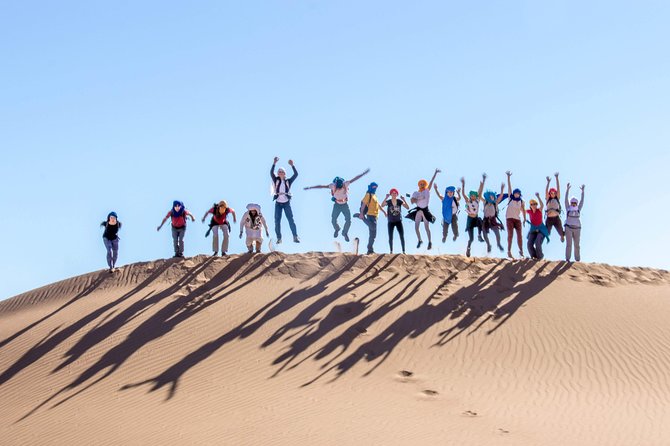
After breakfast, the route heads toward the dunes of Bertham. This is the day most closely tied to classic Sahara scenery. You get sand, changing dune forms, and wider views than in the palm grove.
The value of spending a full day in this zone is time. You are not rushing in for a quick photograph before returning to town. You can notice how the dunes change with the light and how the caravan moves through open country. The pace also lets you speak with the guides about the area and the traces of people who once lived there.
The route passes signs of nomadic life and former herds. The details do not promise a staged encounter or a formal village visit, so you should not expect a set cultural performance. Instead, the interest comes from reading the desert with local help: signs of movement, old activity, and the places where herds have been kept.
The second camp is set not far from the plains of ostriches. The name gives the area a distinctive character, but the supplied information does not promise an ostrich sighting. Think of it as a desert zone known for its connection to those birds and to nomadic herding.
Nomads still keep flocks in this wider area. That is one of the trip’s strongest points. The desert is presented as a lived-in place, not an empty backdrop. You may meet pastors and see herds, but exact encounters depend on timing and local conditions. The route gives you a chance to understand that people continue to use the land.
Breakfast and dinner are included on this day, as is lunch. Food is a repeated strength of the experience. The cooking team travels with the caravan, and the supplied experiences emphasize generous local meals prepared during the route. Still, menus are not specified, so anyone with allergies or dietary needs should confirm arrangements before booking.
You spend the second night at camp. Two nights in the desert make a big difference. After the first evening’s excitement, the second night can feel quieter and more settled. You already know the daily rhythm, and the open sky becomes less of a spectacle and more a part of the setting.
Day three: returning through the stone desert
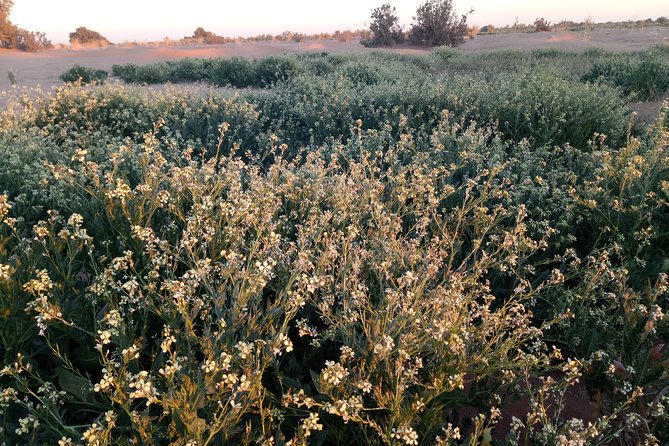
The return to M’Hamid crosses the hamada, a hard stone desert. This is an important change from the dunes of Bertham. If you picture the Sahara as one endless sea of sand, this section corrects that idea.
The hamada can be less immediately dramatic than tall dunes, but it has its own appeal. The route may turn up fossils or other small desert finds. The wording promises the possibility of discovering such objects, not a formal fossil-hunting session, so keep expectations sensible and do not remove anything unless your guide says it is appropriate.
The route stops at wells, which are described as real meeting places in the desert. This may be the most meaningful stop of the final day. A well is practical first, but it also brings people, animals, and routes together. It helps explain how movement across this dry region has worked for generations.
The return ends back at the M’Hamid meeting point. The listed end point is the same place where the activity begins. Private transportation is not included, so you need to arrange your own way to M’Hamid unless a separate pickup arrangement has been confirmed. Pickup is offered in the general tour information, but the meeting details still identify Mhamid as the start point. Clarify this before paying, especially if you are staying outside town.
More Trekking Tours in Morocco
- Mt Toubkal Ascent Express Trek 2 Days 1 Nights
★ 4.7 · 962 reviews - Marrakesh: 2-Day Mt. Toubkal Trek with 1-Night Stay & Meals
★ 4.7 · 795 reviews - Marrakech: 2-Day Atlas Mountains Trek with Village Stay
★ 4.8 · 717 reviews - From Marrakesh: 2-Day Mount Toubkal Trek
★ 4.7 · 591 reviews
What the $424.09 price covers
At $424.09 per person, this is not the cheapest way to see desert scenery. It is also not a simple one-night camp package. The price covers three days of guiding and support, two nights of camping, camel caravan equipment, and meals throughout the route.
Included food consists of:
- Three lunches
- Two breakfasts
- Two dinners
All fees and taxes are included as well. The eating and sleeping equipment is supplied, though your sleeping bag is not. Private transportation is excluded, which is the main extra cost to watch for.
I see the value in the duration and the support team. A three-day route needs more planning than a short excursion, and the guides, camel drivers, and cooks make it possible to travel with less personal equipment. You are paying for time, local support, food, and a route that moves beyond the most accessible dunes.
The price makes more sense if you want a private, slower experience and care about the human side of the desert. If your only goal is to ride a camel once and sleep in the sand, a shorter outing may suit you better. If you want palm groves, dunes, hamada, wells, and camp life in one trip, the longer format earns its cost.
The walking, sleeping, and heat factor
The tour asks for moderate physical fitness. That is the clearest warning in the practical details. You should be ready for three days in a hot, dry setting, with walking over both sand and stones. The information does not give daily distances, walking hours, bathroom arrangements, or exact camp facilities, so ask those questions before booking if comfort or mobility is a concern.
Bring a sleeping bag. This is not optional if you want to sleep comfortably, since it is specifically left out of the package. Sun protection, a hat, suitable shoes, and clothes that work for both hot days and cooler nights are sensible choices, though only the sleeping bag is explicitly identified as an omission.
The trip is not described as wheelchair accessible, and the physical requirement suggests it may not suit anyone who struggles with uneven ground or extended walking. Public transportation is nearby at the meeting area, but the tour itself does not include private transfers.
The start time is 8:00 am. Allow enough time to reach M’Hamid before departure. Confirmation is normally sent at booking, but bookings made within two days of travel may take up to 48 hours and remain subject to availability.
The people behind the caravan
The guides are central to the experience. The route includes practical support, but the real appeal is the contact with the team. Descriptions connected with the trip point to warm, smiling hosts, good conversation, music, and a family atmosphere.
Hassan is described as passionate about his region and eager to share it. Bakkar is also named in connection with the guiding team. Other accounts mention Ibrahim, Mohammed, and Bachir. Since the supplied material does not guarantee a fixed crew, you should see these names as examples of the people who may be involved rather than a promise that all five will lead your departure.
The care shown toward the camels is another positive detail. The guiding team is associated with respect for the animals and for the desert environment. That matters to me because a camel trek should not treat animals as props. You can ask how long the animals walk, how loads are managed, and what the daily routine is if animal welfare is important to you.
The private format also helps the social side. You can spend time with your own group and the guides instead of being one person in a large line. For couples, families, or friends, that may be worth more than a small price difference.
Who should book this three-day route
I would choose this trip if you want a slower Sahara experience with several kinds of scenery and a clear connection to local life. It suits people who enjoy walking, simple camps, shared meals, open skies, and conversations with guides.
It is also a good choice for a first longer desert trip. The route has a beginning and end in M’Hamid, while the support team handles much of the camp work. You get a taste of nomadic travel without having to organize every meal or carry all the equipment yourself.
Couples may like the quiet camp evenings, and small private groups can shape the pace around their own interests. The supplied experiences include romantic nights under the stars, but the route is not only for couples. Families and friends can also benefit from the private setup if everyone is comfortable with the walking and sleeping conditions.
I would hesitate if you want hotel-style comfort, fixed facilities, or a precise activity schedule. The route is remote, the sleeping bag is your responsibility, and daily distances are not stated. It is also not the right fit if you want a brief desert photo stop with little walking.
Should you book it?
Book this trek if you want to see more than dunes. The palm grove, Marabout Sidi Naji, Bertham, the plains of ostriches, hamada, and desert wells give the three days a satisfying range. Add the local cooking team, camel support, private group format, and evenings by the fire, and the $424.09 price can be fair value for the right person.
Before booking, confirm the exact pickup arrangement, expected walking time, camp bedding, food needs, and which guides will lead your departure. Also plan around the cancellation rules: six full days’ notice is needed for a full refund, two to six days allows 50 percent back, and cancellations less than two days before departure are not refunded.
If you are ready for basic camp life and moderate walking, I would choose this over a rushed one-night desert visit. If you need comfort, short walks, or private transport included, choose a different format.
FAQ
Where does the trek start?
The trek starts in Mhamid, Morocco, with the caravan leaving at 8:00 am.
Where does the trek end?
The activity ends back at the meeting point in Mhamid.
How long is the trek?
The experience lasts approximately three days and includes two nights in the desert.
Is this a private tour?
Yes. Only your group participates in the activity.
Are meals included?
Yes. The price includes three lunches, two breakfasts, and two dinners.
Is a sleeping bag provided?
No. A sleeping bag is not included, although eating and sleeping equipment is provided.
Is private transportation included?
No. Private transportation is not included. Pickup is offered, but you should confirm the exact arrangement before booking.
What level of fitness is needed?
A moderate level of physical fitness is required. The route includes walking through a palm grove, dunes, and the stony hamada.
Latest treks added in Morocco
- 5 Days Desert Trekking from Marrakech★ 5.0 · 16 reviews
- 3 days Toubkal Trek from Marrakech★ 5.0 · 4 reviews
- Elite Experience Atlas Mountains Day Trekking★ 5.0 · 7 reviews
- 3 Days Berber Villages Trek – Authentic Atlas Mountain Experience★ 5.0 · 4 reviews
- Morocco Desert Trek 4 Days: 2 days on foot in Morocco★ 5.0 · 2 reviews
- Atlas Mauntains and 3 Valleys Trek★ 5.0 · 6 reviews
- Atlas Mountains Valley Trek – 3 Days★ 5.0 · 29 reviews
- 5-day Jebel M’goun trek★ 5.0 · 2 reviews
Morocco Trekking Tours, compared.
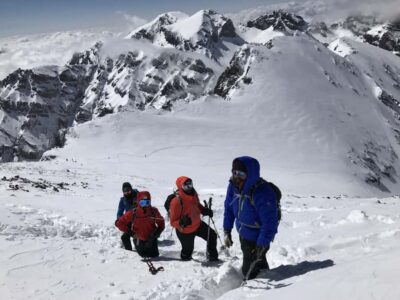
Mt Toubkal Ascent Express Trek 2 Days 1 Nights
Read our review →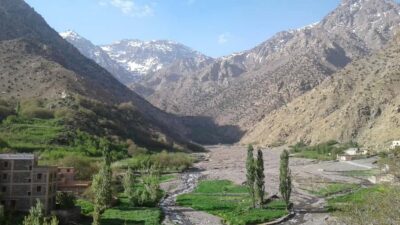
2-Day Mt. Toubkal Trek with 1-Night Stay & Meals
Read our review →
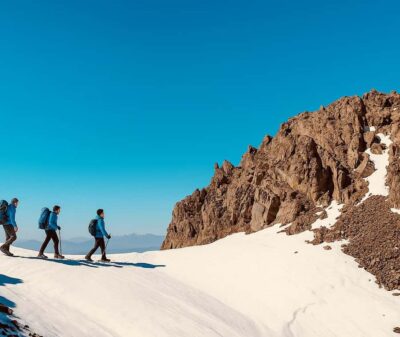
Summiting and Hiking the Atlas Mountains Day Trek from Marrakech
Read our review →Browse the lists this tour appears in