
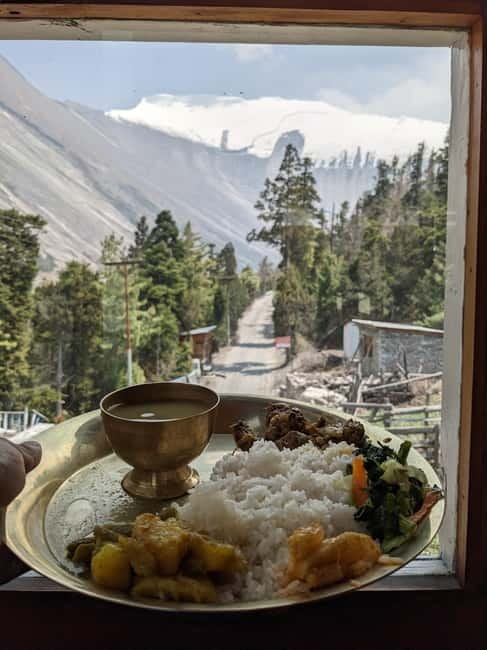
REVIEW · NEPAL
Kathmandu: 10-Day Annapurna Circuit Trek via Thorong La Pass
Crossing Thorong La Pass at 5,416 meters is the big prize here, but the best part is the gradual approach. You start among green valleys and forests, then move through Tibetan-style villages, dry high country, and the broad Mustang Valley. I like that the route gives you a full acclimatization day in Manang, and I like the strong local guiding, especially the care reported from guides Ganesh, Prakash, Chakra, and Ghanshyam.
The catch is simple: this is a serious high-altitude trek, not a long weekend with mountain views. Ten days leaves little spare time, and the package does not include trekking gear, insurance, bottled or boiled water, showers, or personal expenses. You need sound fitness, proper equipment, and insurance covering helicopter evacuation to 5,400 meters.
Key points at a glance
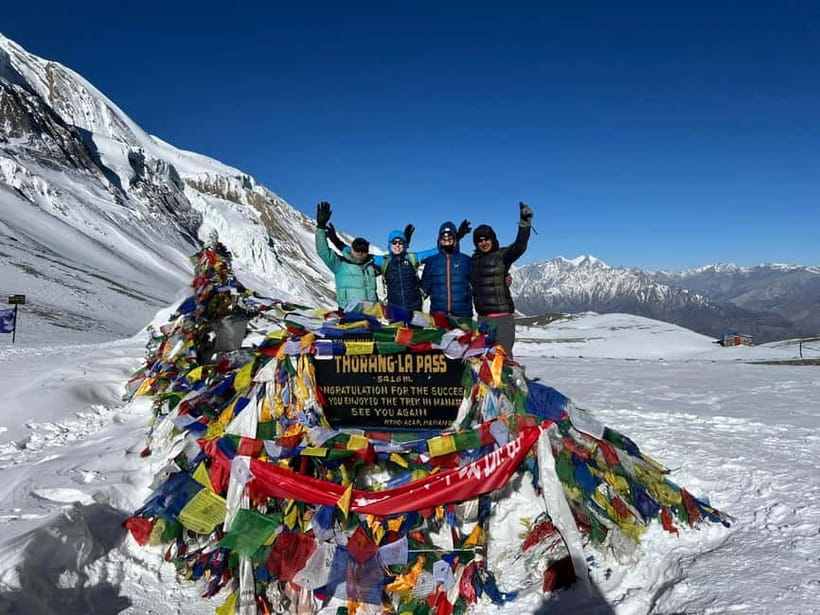
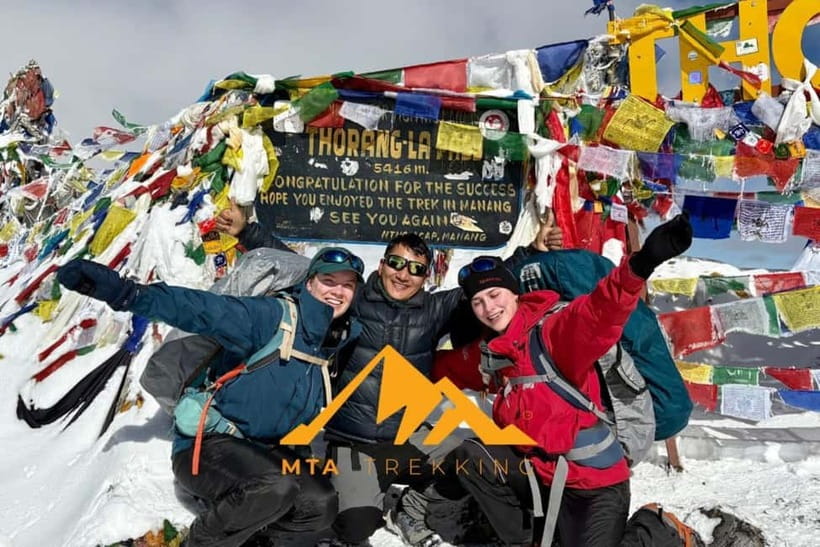
- Thorong La at 5,416 meters: The hardest and most memorable day takes you over one of the world’s highest trekking passes.
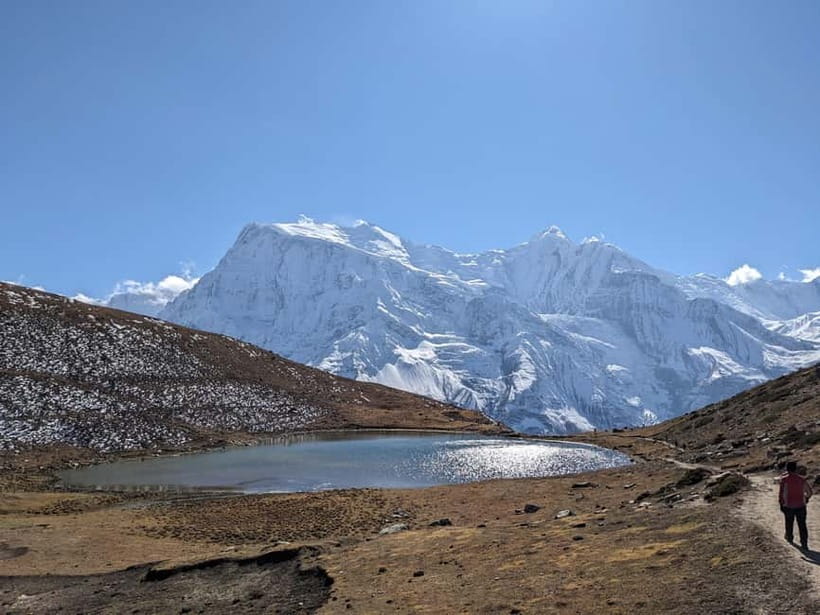
- A smart acclimatization stop in Manang: You spend a full day there, with optional walks to a stupa, icefall viewpoints, or Gangapurna Glacier Lake.
- A quick change of scenery: Forests near Chame give way to high, dry country around Manang, then Mustang views after the pass.
- Local support matters: Guides such as Ganesh, Prakash, Chakra, and Ghanshyam have been praised for pacing, meals, hydration, and altitude care.
- A private group at $447: The price includes transport, permits, lodging, meals, a guide, and a night in Pokhara, but not gear or insurance.
- A demanding final pass day: Thorong Phedi to Muktinath takes about seven to eight hours, with an early start and a long descent.
Why Thorong La makes this a serious trek
The Annapurna Circuit is famous because it changes character as you walk. Here, the route begins with rivers, forests, and lower Himalayan villages. By the time you reach Manang, the air is thinner and the scenery is more open. After Thorong La, you descend toward Muktinath and Mustang, where the dry hills feel almost Tibetan.
Thorong La is reached from Thorong Phedi, at roughly 4,450 meters. The pass itself rises to 5,416 meters, or 17,769 feet. At that height, even a modest uphill stretch can feel heavy. Your guide’s job is not just to lead the way. It is to keep the pace slow, watch for altitude problems, make sure you eat and drink, and help decide when rest is needed.
The strongest praise attached to this trip concerns guide care. Ganesh was described as careful with acclimatization, fresh meals, and hydration. Prakash was praised for choosing scenic routes and explaining local life. Chakra was valued for knowing the trails and advising rest and suitable food at high altitude. Ghanshyam was credited with adjusting the walking plan and helping trekkers reach the pass without wasting energy.
Those details matter more than a polished itinerary. At 5,000 meters, a patient guide can make a hard day manageable. Still, no guide can remove the risks. Acute Mountain Sickness is possible, and the company specifically requires you to take high-altitude safety seriously.
More Annapurna Treks in Pokhara
- Trekking in Annapurna/Langtang/Everest/Upper Mustang regions
★ 5.0 · 161 reviews - Kathmandu/Pokhara: 5-Day Annapurna Base Camp (ABC) Trek
★ 4.9 · 72 reviews - Annapurna Panorama trek
★ 5.0 · 71 reviews
Kathmandu to Dharapani: a long road into the mountains
Your first day is mostly transport. You take a public bus from Kathmandu to Besisahar, a journey of about seven to eight hours, then continue to Dharapani by shared jeep.
This is not a glamorous transfer. Roads in mountain areas can be tiring, and the day is long before you even start walking. The payoff is practical: you reach the trailhead without adding extra trekking days. The drive also gives you an early look at Nepal’s countryside, with forests, hills, and changing views along the route.
Dharapani sits at about 1,850 meters, a useful starting height for gradual adjustment. You stay in a teahouse, the basic accommodation used throughout the trek. Expect a functional place to sleep rather than hotel comforts. The package includes lodging and meals, but not showers, charging, drinks, or bottled water.
Dharapani to Chame: forests, temples, and Annapurna II
The walk from Dharapani to Chame takes about six hours and reaches roughly 2,670 meters. It begins with grassy ground and views toward Annapurna II, then passes through Bagarchhap, a Bhote village with a Buddhist temple.
The route continues through oak and pine forest toward Timang, at the foot of Lamjung Himal. This is one of the more varied early days, with village life, trees, mountain views, and a gradual gain in height. Chame is the district headquarters of Manang and your overnight stop.
I like this day because it eases you into the rhythm of walking. You are gaining altitude, but not yet facing the cold, thin air of the pass country. Keep your pace steady. Trying to race early in the trek is a poor bargain, since the difficult days are still ahead.
Chame to Upper Pisang: the first high mountain drama
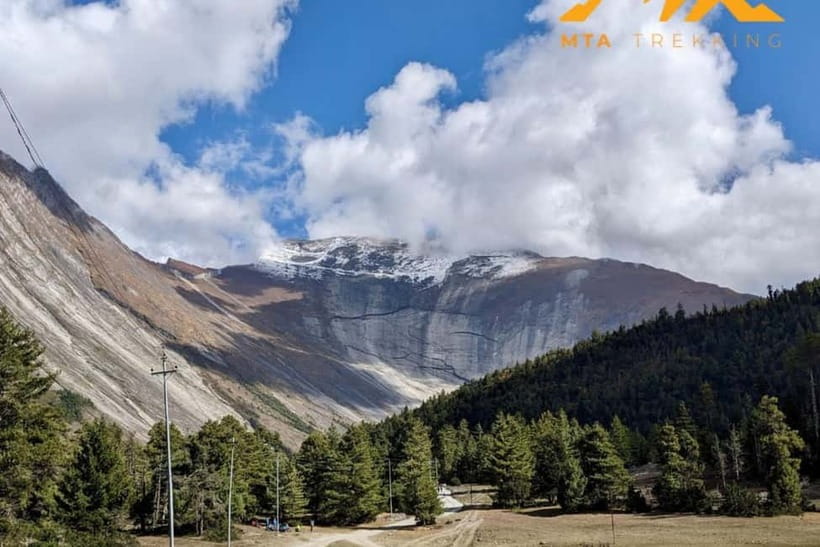
The Chame to Upper Pisang stage takes five to six hours and reaches about 3,200 meters. You pass an apple orchard and climb into Bhratang Valley, then descend toward Pisang or continue to Upper Pisang.
This is where the scenery begins to feel distinctly high Himalayan. Lamjung Himal comes into view, and the route shifts from wooded valleys toward more open mountain terrain. Upper Pisang is especially useful as a base because the next day gives you a choice of route character, with the higher village offering broad views toward the Manang Valley.
The climb is not extreme on paper, but altitude changes how you experience it. Walk slowly, use layers, and do not treat a clear morning as proof that the weather will remain easy. Your packing list should include warm clothing, waterproof storage, sunglasses, sunscreen, long trousers, and proper hiking shoes.
Another trail to compare in Pokhara:
- Poon hill Trek 3 days
★ 5.0 · 176 reviews - Pokhara: 4-Day Ghorepani, Poonhill & Ghandruk Mountain Trek
★ 5.0 · 132 reviews - Ghorepani – Poon Hill Trek 3N-4D
★ 5.0 · 125 reviews - From Pokhara: 3-Day Ghorepani Poon Hill Trek with Guide
★ 4.9 · 68 reviews
Upper Pisang to Manang: the scenic approach to acclimatization
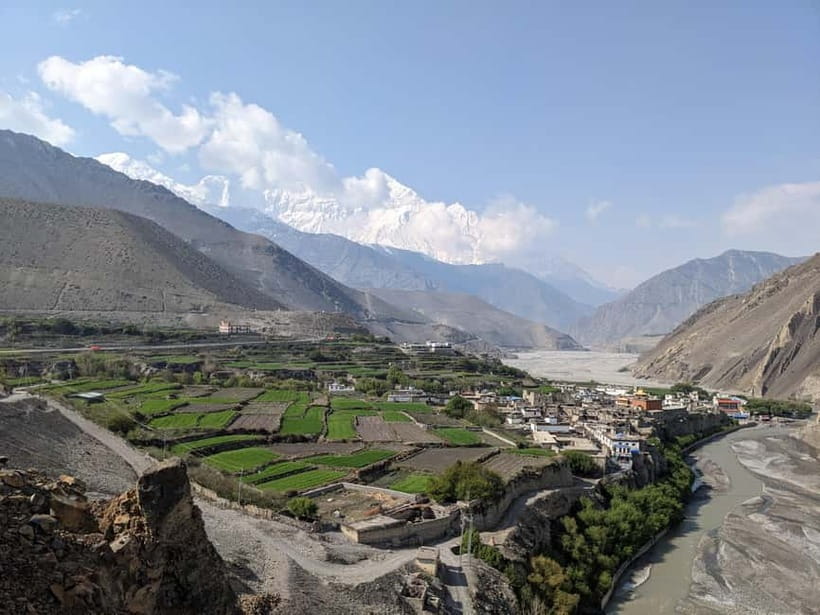
The route from Upper Pisang to Manang takes five to six hours and reaches about 3,540 meters. It is one of the trip’s scenic high points, with views toward Tilicho Peak, Annapurna III, and Annapurna IV.
You cross the Marsyangdi River on a wooden bridge and pass through Mungji and Braga before reaching Manang. Braga is known for its traditional village setting and Buddhist character, while Manang gives you a proper pause before the high pass section.
This is a day to enjoy rather than rush. The walking time is moderate, but you are now high enough for altitude to affect sleep, appetite, breathing, and energy. Tell your guide if you feel unwell. Hiding symptoms to protect your schedule is dangerous and can turn a manageable problem into an emergency.
Manang acclimatization: the day that protects the rest of the trek
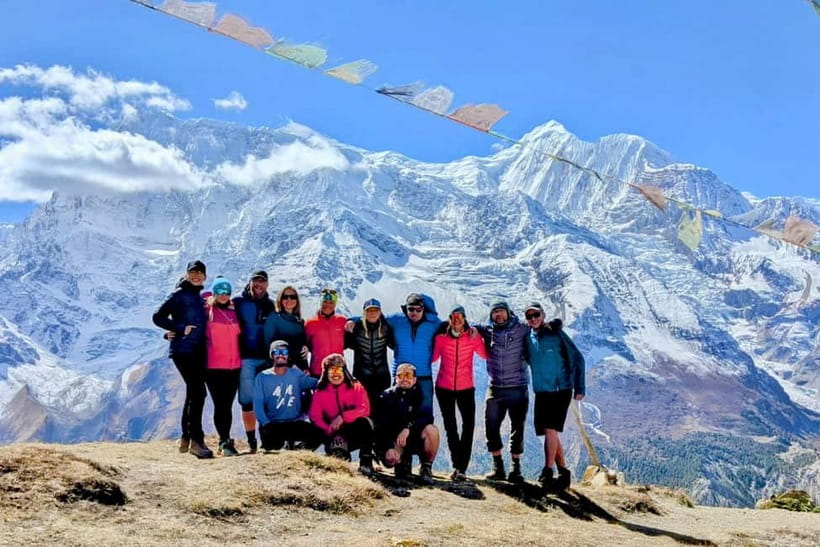
The fifth day is set aside for acclimatization, with an advertised maximum walking height of about 4,050 meters. You can explore Manang village and hike to a stupa. Optional outings include crossing a river to see an icefall or walking toward Gangapurna Glacier Lake.
This is not a wasted day. It is the reason the itinerary can move from Manang toward Thorong La with a better chance of success. A good acclimatization day includes some uphill walking but also plenty of rest. You should not turn it into a full-speed sightseeing contest.
The village gives you a chance to see more of local life before the route becomes quieter and more exposed. Take advantage of this stop to check your clothing, refill water, manage batteries, and ask your guide about the next two days. Battery charging is not included, and neither are water treatment supplies, so plan for those costs.
Manang to Yak Kharka: short distance, thin air
The walk to Yak Kharka takes about four hours and reaches around 4,050 meters. The distance is short, but this may be the first day when breathing feels noticeably harder.
The right approach is slow and boring. That is a compliment. Keep conversations easy, take regular pauses, and let your guide set the rhythm. The mountain views are wide here, but the real task is conserving energy for Thorong La.
The package includes breakfast, lunch, and dinner during the trek. At this height, simple food and enough fluid are more useful than heavy meals or alcohol. Several guide accounts stress avoiding alcohol and unsuitable food at altitude. Soft drinks and hard drinks are not included, and alcohol and drugs are not allowed.
Yak Kharka to Thorong Phedi: the final setup
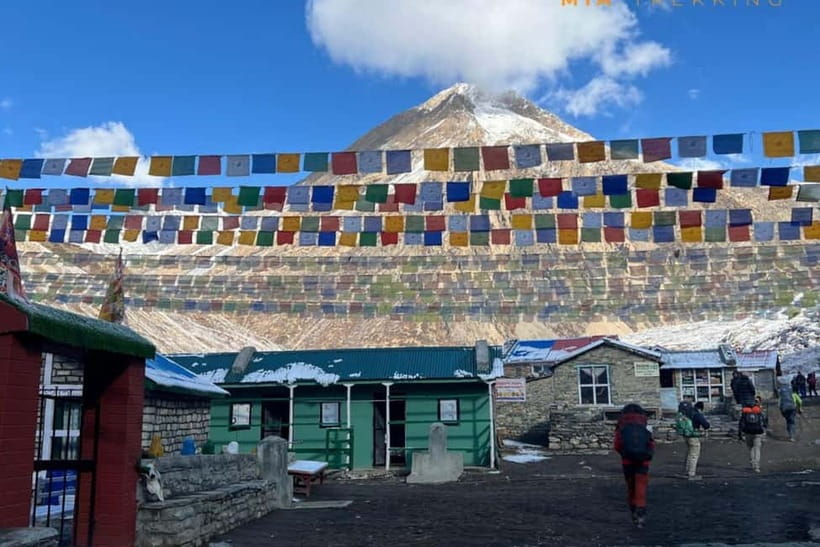
The route to Thorong Phedi takes four to five hours and reaches about 4,450 meters. You climb gradually to a hilltop, descend toward the Marsyangdi headwaters, cross a hidden wooden bridge, and then climb the trail on the river’s right bank.
This is a preparation day, not the main event. It can feel frustrating to stop after a relatively short distance, but reaching Thorong Phedi with energy left is exactly the point. The pass crossing will be longer and much harder.
Thorong Phedi is a basic high-altitude stop. Do not expect comfort or much privacy. Pack your warm layer where you can reach it, protect electronics from moisture, and keep your passport or identification accessible. The company recommends bringing a waterproof bag, warm clothing, spare clothes, and trekking gear.
Thorong La to Muktinath: the hardest and best day
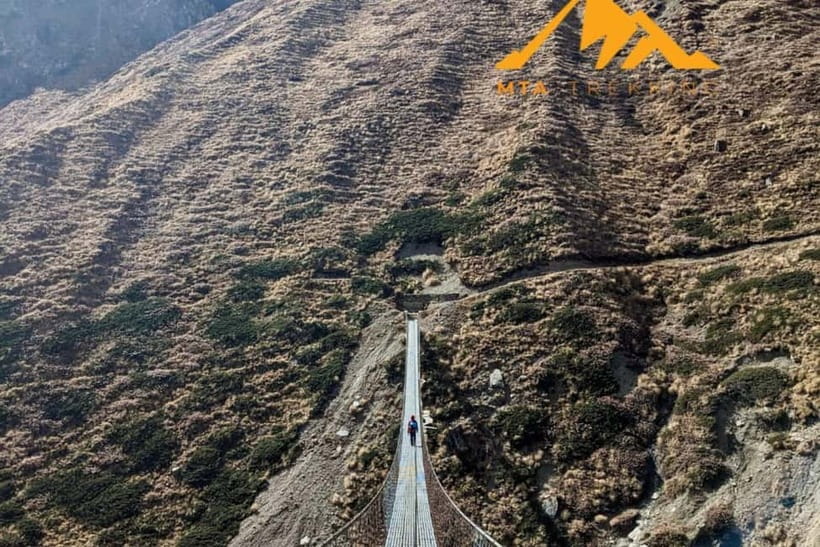
The crossing from Thorong Phedi to Muktinath takes roughly seven to eight hours. You climb to Thorong La at 5,416 meters, then descend toward Muktinath and the Mustang Valley.
This day usually begins early. The ascent is slow, and the air may feel painfully thin. The pass itself is the achievement, but do not assume the day is finished once you reach the top. The descent is long and can be hard on tired legs.
The reward is a major change in scenery. You leave the Marsyangdi side and look toward Dhaulagiri and Mustang, with dry, open hills replacing the greener valleys below. It is one of the clearest examples of why the Annapurna Circuit is so popular: within a single route, you get forests, Buddhist villages, high mountain passes, and dry Himalayan country.
Your guide should monitor you closely here. If you develop severe headache, confusion, vomiting, unusual weakness, or serious breathing trouble, report it immediately. The package includes emergency rescue assistance in an emergency, but you still need your own travel and rescue insurance. Make sure the policy covers helicopter evacuation to at least 5,400 meters.
Muktinath to Jomsom through Kagbeni
The ninth day takes you from Muktinath to Jomsom via Kagbeni, with about seven to eight hours of walking. Kagbeni is a particularly appealing stop because it has a traditional village feel and sits on the route toward Mustang.
After the intensity of the pass, this day gives you time to absorb the change in architecture, terrain, and local culture. The route remains long, though, so do not treat it as an easy stroll. Your legs will have already worked hard.
The cultural side of this trek is one of its strengths. You meet local people, stay in family-run teahouses and lodges, and hear about village life, religion, and mountain geography from a local guide. Guides have also helped bridge language gaps, with Prakash even using some Polish phrases with Polish clients.
Jomsom to Pokhara: a public-bus finish
The final day is an eight-hour public-bus journey from Jomsom to Pokhara. It is a practical ending rather than a grand finale.
Public transport keeps the price down, but it also means less control over timing and comfort. Once you reach Pokhara, the package includes one night at Hotel Orchid and a farewell dinner. That overnight stay is welcome after the pass and the long road transfer.
The package also covers pickup and drop-off in the Kathmandu Thamel area and Pokhara Lakeside area. If you are staying outside those zones, confirm the arrangement before booking rather than assuming all hotels are covered.
What the $447 price really covers
At $447 per person, this is a low-cost way to arrange a demanding trek, especially since the price includes several major expenses:
- Kathmandu to Besisahar by public bus
- Besisahar to Dharapani by shared jeep
- Transport from Jomsom to Pokhara
- Trekking permits and the TIMS card
- A government-registered local guide
- Teahouse and lodge accommodation
- All breakfast, lunch, and dinner during the trek
- One night at Hotel Orchid in Pokhara
- A farewell dinner
- Emergency rescue assistance in an emergency
The private-group format is another advantage. You are not placed in a large mixed group, so the guide can adjust the pace and rest stops more easily. The exact value depends on what equipment you already own. You still pay for trekking gear, drinks, water, showers, charging, laundry, phone calls, bar bills, extra porters, international flights, and a Nepal visa.
Insurance is not a minor extra. It is one of the most important costs of the trip. Buy a policy with medical care and helicopter evacuation at high altitude before you leave.
Who should book this trek
This suits you if you want a serious mountain challenge, prefer local teahouse travel to luxury lodging, and are comfortable with long road transfers and basic services. It is especially useful if you want a private group and a guide who can make day-to-day decisions around altitude and energy.
It is not suitable for children under 15, people with altitude sickness, people over 70, people with respiratory conditions, or pregnant women. That does not mean every healthy adult will find it easy. You need to prepare for cold, thin air, long walking days, and limited personal comfort.
Bring warm clothing, hiking shoes, long pants, sunglasses, sunscreen, a waterproof bag, spare clothes, and suitable trekking equipment. Do not count on buying every essential item along the way.
Should you book it?
Book this trek if Thorong La is your main goal and you value practical support more than polished comfort. The route gives you a rare mix of forests, Tibetan-style villages, high peaks, glacier views, and Mustang scenery, while the included meals, permits, guide, and transport make $447 a strong price.
Skip it if you want a relaxed holiday, dislike basic lodging, or cannot commit to proper altitude insurance and preparation. The pass is not a sightseeing stop you simply tick off. It is a demanding mountain crossing, and the success of the trip depends on pacing, weather, health, and good judgment.
FAQ
How high is Thorong La Pass?
Thorong La Pass reaches 5,416 meters, or 17,769 feet, above sea level.
How long is the trek?
The experience lasts 10 days, including transport from Kathmandu and the final public-bus journey from Jomsom to Pokhara.
Is transportation included?
Yes. The package includes pickup and drop-off in the Kathmandu Thamel area and Pokhara Lakeside area, public transport from Kathmandu to Besisahar, a shared jeep from Besisahar to Dharapani, and public transport from Jomsom to Pokhara.
Are meals included?
Breakfast, lunch, and dinner are included during the trek. Soft drinks, hard drinks, bottled or boiled water, and personal food purchases are not included.
Where do you sleep during the trek?
You stay in teahouses and lodges during the trek. One night at Hotel Orchid in Pokhara is also included after the trek.
Is a guide included?
Yes. An experienced, government-registered local guide is included. Guiding is available in English or Hindi.
Is trekking gear included?
No. You need to arrange your own trekking gear, warm clothing, hiking shoes, and other personal equipment.
Is insurance included?
No. You must arrange your own travel and rescue insurance. The operator recommends coverage for medical treatment and helicopter evacuation up to 5,400 meters.
Who should not take this trek?
It is not suitable for children under 15, people with altitude sickness, people over 70, people with respiratory issues, or pregnant women.
Latest treks added in Pokhara
- Pokhara: Majestic Mardi Base Camp Guided Trek with HotSpring★ 5.0 · 6 reviews
- Pokhara: 9-Day Annapurna Base Camp Trek with Poon Hill★ 5.0 · 6 reviews
- Pokhara: 5-Day Ghorepani and Poon Hill Private Trek★ 5.0 · 4 reviews
- Pokhara: 5-Day Trek to Annapurna Base Camp and Hot Springs★ 5.0 · 4 reviews
- Pokhara: 7-Day Annapurna Base Camp Trek & Hot Spring★ 4.0 · 3 reviews
- Pokhara:4-Day Ghorepani Poon Hill Guided Trek via Ghandruk★ 5.0 · 3 reviews
- Pokhara: 4-Day Poon Hill and Ghandruk Guided Trek★ 5.0 · 14 reviews
- Pokhara: 4-Day Beautiful Ghorepani Poon Hill & Ghandruk Trek★ 4.8 · 21 reviews
Annapurna Base Camp Treks, compared.
Trekking in Annapurna/Langtang/Everest/Upper Mustang regions
Read our review →
Kathmandu to Annapurna Base Camp (ABC) 5-Day Trek
Read our review →Browse the lists this tour appears in