
REVIEW · ITALY
Etna North: Guided trekking to Summit volcano craters
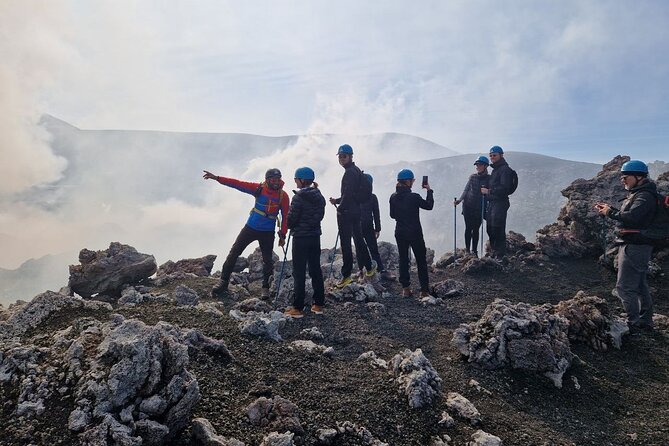
Mount Etna is not a gentle hill with a pretty view at the top. This five-hour north-side trek takes you through ash, lava fields, gas vents, and the strange colors created by sulfur and other minerals. A 4×4 carries you from Piano Provenzana to 2,825 meters, leaving you with the serious part: about two hours of uphill walking toward the main crater rim at 3,320 meters.
I like two things especially: the volcanic detail is much more interesting than a simple cable-car ride, and the guides make safety part of the experience rather than an afterthought. Antonio and Massimo have earned particular praise for clear explanations and calm group care. The supplied boots, helmet, and walking sticks also remove some of the usual gear worries.
The main catch is practical and important: the advertised price is $78.10, but the required 4×4 ride costs another €60 per person in cash. Weather, gas emissions, and volcanic activity can also change the route, and this is a real high-altitude hike, not a casual stroll.
Key points to know before climbing Etna
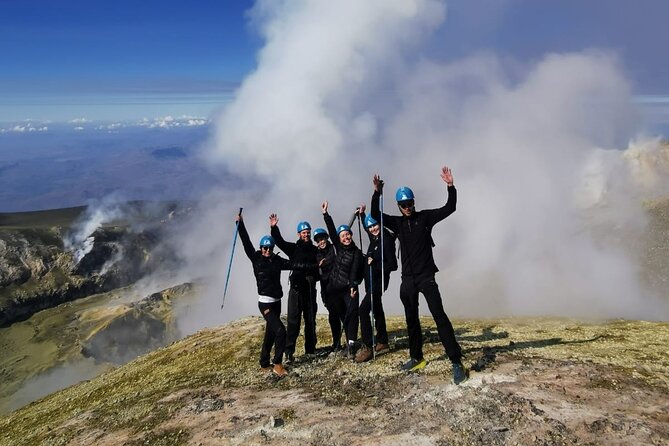
- Reach 3,320 meters: The route heads toward the main crater rim and gives you views of the Central, Northeast, and Southeast craters when conditions allow.
- Ride first, hike second: A special 4×4 climbs from Piano Provenzana at 1,800 meters to Piano delle Concazze at 2,825 meters.
- Volcanic features are the main event: Expect ash, slag, lava fields, volcanic bombs, gas emissions, and sulfur-colored ground.
- Gear is supplied: Hiking boots, helmet, walking sticks, insurance, and a volcanological or Alpine guide are included.
- Plan for changing conditions: High gas emissions, snow, poor weather, or legal restrictions can force a shorter or altered route.
- Budget the full cost: Add €60 in cash for the 4×4 ticket to the listed $78.10 tour price.
From Piano Provenzana to Etna’s high slopes
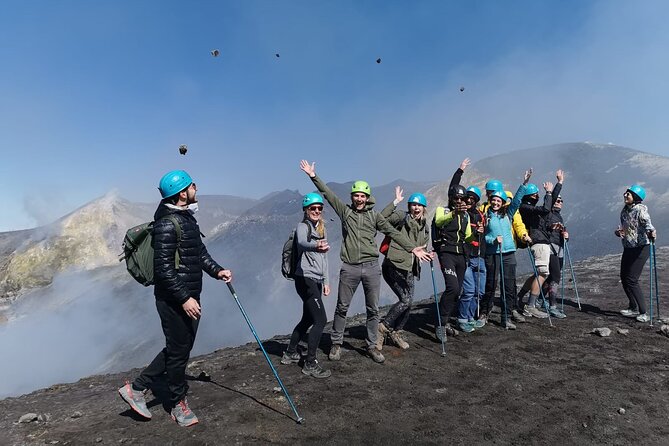
Your morning begins at 8:00 at Piano Provenzana, on Etna’s north side near Linguaglossa. At about 1,800 meters, this is more than a parking point. It is the place where the road-based part of the outing gives way to a high volcanic route.
The 4×4 ride takes about 40 minutes and climbs to Piano delle Concazze at 2,825 meters. I like this arrangement because it saves your legs for the upper section, where the ground and altitude make every step count. It also lets you see how quickly Etna changes as you rise from the forested lower slopes toward bare ash, lava, and open volcanic terrain.
There is one thing to settle before you arrive: the 4×4 ticket is not included in the advertised tour price. You pay €60 per person in cash on site. That makes the real cost notably higher than $78.10, so include the extra fee when comparing this outing with other Etna options.
The 4×4 ride is also part of the safety plan. The north side is described as the route currently allowing an ascent in safe conditions, but Etna is an active volcano. Access rules and safe routes can change quickly. A successful outing depends on the guide team following those limits, not on reaching a particular point at any cost.
More Volcano Treks in Italy
- Mount Etna: Trek to 3000m with cable car and 4×4
★ 4.6 · 3,823 reviews - Mount Etna: Summit Crater Trek with Cable Car
★ 4.8 · 1,875 reviews - Etna: summit craters trekking with volcano guide 3350mt
★ 4.7 · 1,712 reviews
The two-hour climb toward 3,320 meters
At Piano delle Concazze, the walking begins. The uphill section takes about two hours toward the main crater rim at approximately 3,320 meters. At this height, the challenge is not just distance. Thin air, loose ash, steep ground, snow, wind, and volcanic fumes can all affect how the climb feels.
You should have a moderate level of fitness and be comfortable walking uphill for an extended period. The supplied walking sticks are useful on loose volcanic material, while the boots offer more support than ordinary trainers. The company also provides a helmet, which is a sensible precaution around volcanic terrain.
The group size can reach 20 people. That keeps the cost down, but it means you are taking a group trek rather than a private walk. Breaks and pace are managed by the guide, and you may need to adjust to the group rather than setting your own schedule.
This point matters in difficult weather. One outing took place after a change caused by snowy conditions. The standard boots were not enough for one party member, and the guide decided that the person could not continue. The experience was disappointing for that group, but it also shows why the guide has final responsibility for turning people back. Snow and altitude can change a manageable ash hike into a much harder climb.
If you need frequent stops, a slower pace, or close personal attention, ask about a private guide before booking. This group outing may suit you well if you can keep a steady pace and accept that safety decisions belong to the guide.
Central, Northeast, and Southeast craters
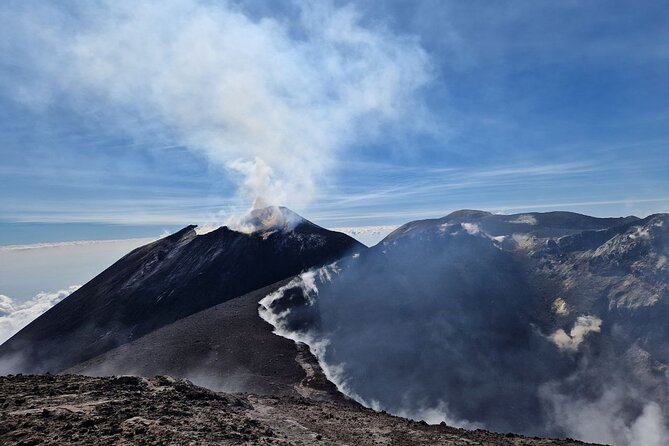
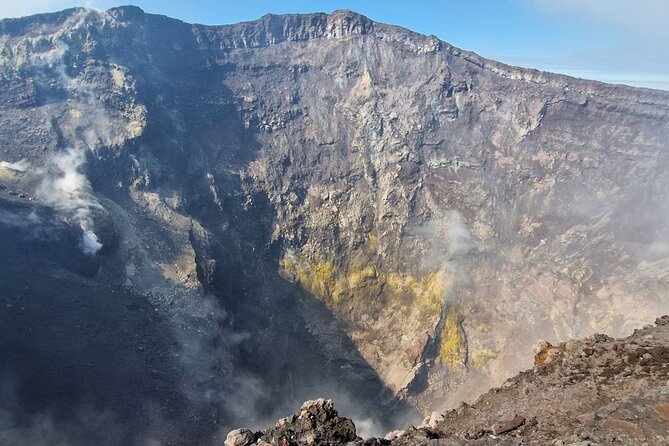
The reward for the climb is not a single viewpoint. The route takes you along the edge of the Central Crater and toward views of the dramatic Northeast Crater. The famous Southeast Crater, responsible for some of Etna’s most recent and impressive eruptions, may sit nearby in your view.
The exact route is not guaranteed. High gas emissions have prevented access to the summit craters on some dates, while legal restrictions have also limited the north and summit section. In those cases, the guides have used an alternative route rather than ignoring safety rules.
That flexibility is valuable on Etna. You are visiting an active volcano, not a fixed museum path. A guide who changes the plan because of gas, weather, snow, or official restrictions is doing the job properly, even if the final route differs from the one you imagined.
When conditions allow the upper route, the crater area offers a close look at Etna’s power. You may see steam and gas escaping from the ground, volcanic bombs scattered across the ash, and bright mineral colors formed as sulfur and other elements rise and settle near vents. These details give the walk a purpose beyond reaching a high point.
The guides also use breaks to explain Etna’s formation, past eruptions, crater shapes, rock types, and volcanic activity. Massimo, also called Max, has been praised for stopping at key points and explaining mineral compositions, lava fields, and rock formations. Antonio has also been singled out for combining humor with careful attention to the group.
Why the volcanic ground is worth your time
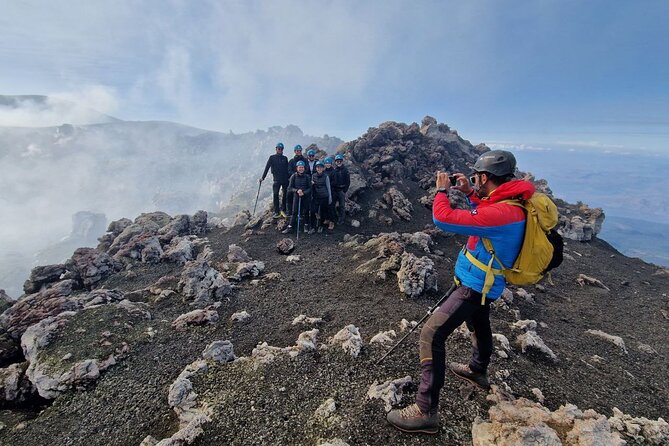
Etna’s upper slopes can look stark at first glance, but the ground rewards close attention. Fine ash shifts under your boots. Dark slag and lava break up the route. Gas vents mark places where the volcano is still releasing heat, and sulfur can stain the ground in bright, unusual shades.
I like this part of the outing because it gives you something to observe at walking speed. From a bus, you get a view of Etna. On foot, you notice how the surface changes under your boots and how the guide connects each feature to the volcano’s activity.
You may also encounter volcanic bombs, the rough rocks thrown out during eruptions. The guide can explain how these differ from ordinary stones and why certain lava forms appear where they do. The supplied helmet is especially reassuring in an environment where loose material and unstable surfaces are part of the setting.
Do not expect a polished trail. The upper route includes fine ash and slag, particularly on the descent. Your feet may slide, and walking sticks become more useful as the ground gives way. This is one reason proper boots matter, even though the company’s standard equipment may not be enough for unusual snow conditions.
More Volcano Treks in Sicily
- Etna excursion 3000 meters with 4×4 cable car and Trekking
★ 4.5 · 504 reviews - Etna – Trekking to the summit craters (only guide service) experienced hikers
★ 5.0 · 286 reviews - Etna Morning or Sunset – Trek & Lava Tunnel with Gear
★ 5.0 · 133 reviews - Etna trekking tour
★ 5.0 · 115 reviews
The descent and views toward Sicily
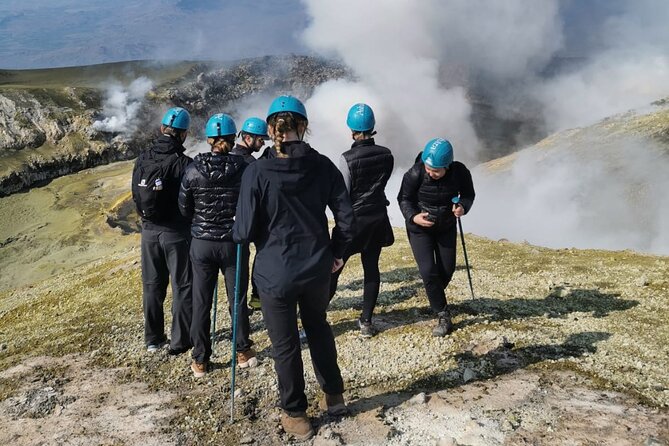
After time near the upper craters, you return over the volcanic slope to Piano delle Concazze. The descent takes about two hours and is not simply a quick walk back. Loose ash can make downhill travel tiring, especially after the climb.
The reward is a broad view toward the Sicilian coast. Weather determines how much you see, but the route is described as panoramic throughout the descent. It is a good time to pause, take photographs, and listen to the guide without the pressure of the steeper uphill section.
At 2,825 meters, you board the 4×4 again for the return to Piano Provenzana. The full experience lasts about five hours, though timing can shift. One group lost an hour waiting for a late-arriving party, which shortened its time on the mountain. That is a useful reminder to keep the rest of your day flexible.
Guides, safety, and group pace
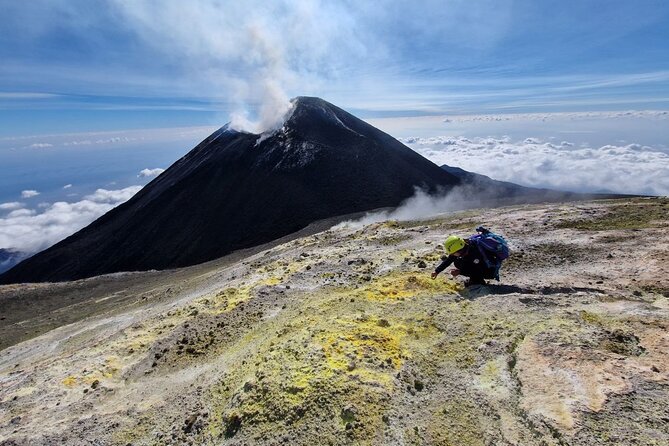
The strongest part of this experience is the guide team. Antonio has been praised for clear English, humor, and checking on both physical and mental comfort. Massimo has received similar praise for his volcanic explanations and for helping people stay safe across a mixed group. Giuseppe has also led upper-crater walks, including outings where the route had to change because of gas emissions.
The guide names do not guarantee who will lead your particular departure, but they show the kind of role the company expects from its staff. You are not simply following someone up a slope. The guide watches conditions, explains the terrain, and decides when a person or the whole group should stop or turn back.
A group of up to 20 can include people with different levels of fitness and mountain experience. The team may combine groups or reorganize them when conditions require it. One guide also took responsibility for people from another group when their leader had to return with a participant affected by altitude sickness.
That is reassuring, but it also means you should not treat this as an independent hike with a guaranteed summit. The guide’s decision is final. Safety rules, gas levels, snow, weather, and volcanic activity matter more than the wording of the route.
People with asthma or heart problems are advised not to take this activity. Everyone else should be honest about fitness and tell the guide if altitude or exertion is causing trouble.
What the $78.10 price really buys
At $78.10 per person, the listed price looks reasonable for a five-hour guided activity with specialist equipment. You receive boots, helmet, walking sticks, insurance, and a volcanological or Alpine guide. The explanations and safety oversight add real value, especially if you have never walked on volcanic ground.
But the required €60 4×4 ticket changes the calculation. Since you pay that amount in cash on site, the total cost is closer to a mid-priced full-day activity than a basic half-day walk. Compare the complete amount, not just the online price.
For me, the value is strongest if you want the upper slopes and crater geology rather than a quick photo stop. A shorter outing may cost less, but it may not include the same altitude, guided interpretation, or supplied equipment. The price is less attractive if volcanic restrictions reduce the route and you expected a guaranteed summit experience.
The free cancellation policy helps with planning. You can cancel at least 24 hours before the local start time for a full refund. If poor weather cancels the outing, you are offered another date or a full refund. The same applies if the minimum number of participants is not reached. Changes or cancellations inside 24 hours are not accepted.
Who should book this Etna hike?
I would choose this experience if you want to walk across Etna’s upper volcanic terrain, hear the geology explained in English, and accept that nature and official rules control the final route. It suits people with moderate fitness who can handle a sustained climb and loose ash.
It is also a good fit if you prefer a guided outing to arranging boots, sticks, transport, and crater access on your own. The gear package simplifies the morning, and the 4×4 transfer saves energy for the high section.
I would hesitate if you have asthma or heart problems, dislike group pacing, or need a private schedule. I would also think carefully if you are visiting in snowy conditions and expect standard hiking boots to handle everything. Ask about the current route and conditions before setting out.
Should you book the north-side crater trek?
Yes, if your priority is a close look at Etna’s active volcanic features rather than a guaranteed viewpoint. The combination of 4×4 access, high-altitude walking, crater rims, sulfur colors, gas vents, and strong guide support makes this one of the more substantial ways to experience the volcano.
Book with realistic expectations. Budget the extra €60 cash, arrive ready for a demanding uphill walk, and accept that high gas emissions or volcanic rules can replace the summit route. If those conditions suit you, Ashàra Etna & Stromboli Guides offers a serious, well-equipped outing with guides such as Antonio and Massimo who bring useful explanations and careful group supervision to the mountain.
FAQ
Where does the Etna north trek begin?
It begins at Piano Provenzana, Etna North, on Via Provenzana in Linguaglossa, Sicily.
What time does the activity start?
The stated start time is 8:00 am.
How long does the experience last?
The activity lasts approximately five hours, including the 4×4 transfers, uphill walk, crater visit, descent, and return.
How high does the route go?
The 4×4 takes you from about 1,800 meters to Piano delle Concazze at 2,825 meters. From there, the hike heads toward the main crater rim at about 3,320 meters.
Is the 4×4 ride included in the price?
No. The 4×4 ticket costs €60 per person and must be paid in cash on site.
What equipment is provided?
The activity includes hiking boots, a helmet, walking sticks, insurance, and a volcanological or Alpine guide.
What happens if weather or volcanic conditions stop the planned route?
The route may change because of poor weather, high gas emissions, volcanic activity, or legal restrictions. If poor weather cancels the whole activity, you are offered another date or a full refund.
Latest treks added in Italy
- Trekking on the roof of Tuscany★ 5.0 · 6 reviews
- Otranto Trekking Adventure: The Path of the Hermit and the Bay of the Turks★ 3.5 · 8 reviews
- Lecce: Hike to Otranto with town visit – Half Day Trekking +Taxi★ 5.0 · 2 reviews
- Wild Walk – Discovering the hidden paths★ 5.0 · 31 reviews
- Wine Hiking Sip & Trek★ 5.0 · 3 reviews
- Dolomites Trekking Experience★ 4.5 · 3 reviews
- Trekking an Island of Palmaria★ 4.5 · 6 reviews
- Trekking in the morning on Mount Etna★ 5.0 · 2 reviews
Volcano Treks, compared.
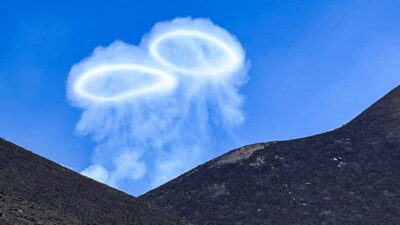
Mount Etna: Trek to 3000m with cable car and 4×4
Read our review →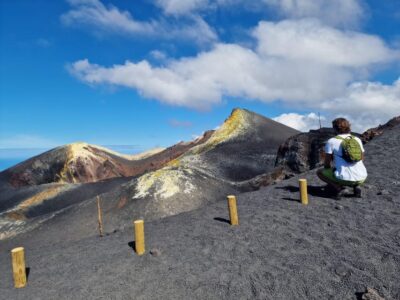
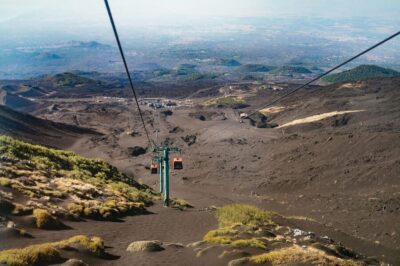
Etna: summit craters trekking with volcano guide 3350mt
Read our review →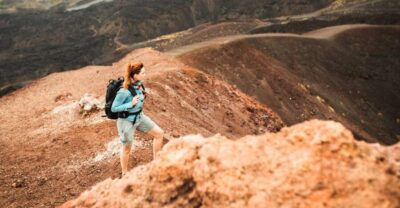
Mount Etna Trekking Tour Beyond the Tourist Trails
Read our review →
Mount Etna: Guided Trek 3,000 Meters to the Summit
Read our review →
Etna Sunset Tour: Volcano trek, Cave & tasting from Catania
Read our review →
Browse the lists this tour appears in