
REVIEW · INDONESIA
Banyuwangi: Ijen Crater Bluefire and Sunrise Guided Trek
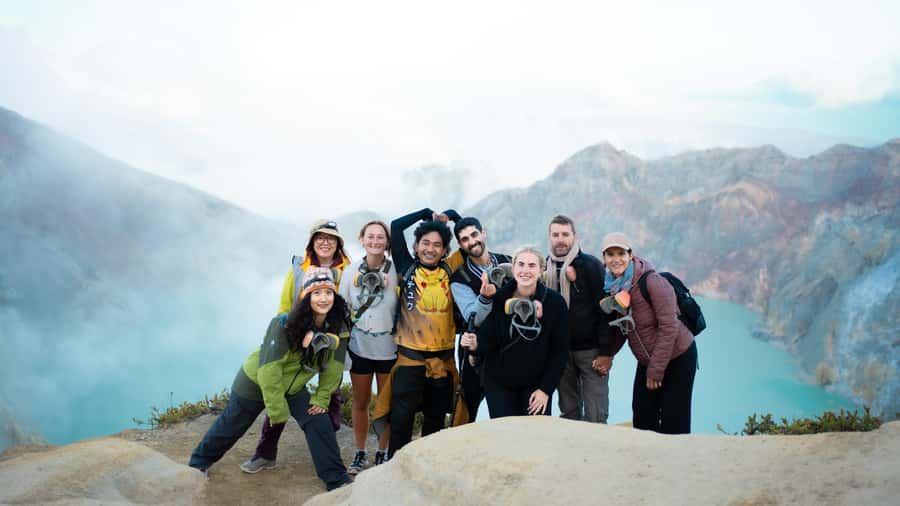
The rare blue fire of Kawah Ijen is the main event here. In the dark, sulfur burns with an eerie blue glow, then daylight brings the crater lake, sulfur miners, and broad views from the rim. I like the useful package: transport, entrance, insurance, guide, gas mask, headlamp, first aid, oxygen, and water are included. I also like the guides’ practical care, especially Suleiman and Sulliman, who keep spirits up on a hard climb.
The catch is simple: this is a strenuous night trek, not a gentle sightseeing outing. You may need to climb down toward the crater for the best blue-fire view, and the sulfur gas can be dangerous. If you have breathing problems, are pregnant, or dislike steep paths and heights, choose another way to see Java.
Key points to know before you book
- Blue fire comes before sunrise: You trek in darkness to see sulfur flames glowing blue, then return to the rim for daylight views.
- The hike is physically demanding: The path is steep and tiring, and the descent toward the crater can feel exposed.
- Guides make a real difference: Suleiman, Sulliman, Soufian, and other local guides are praised for humor, safety checks, directions, and photo help.
- The package is strong value at $25: Transport, admission, safety equipment, insurance, water, first aid, and portable oxygen are included.
- You need a health certificate: Bring a medical statement, passport or copy, camera, and snacks. Jewelry is not allowed.
- This is a shared group tour: Walking speeds vary, so the group can stretch out on crowded sections of the trail.
Why Ijen’s blue fire is worth a midnight start
Kawah Ijen is best understood as a night-and-dawn outing. You leave Banyuwangi while most people are asleep, climb under the stars, and aim to reach the crater before the sky turns light. The blue fire is produced by burning sulfur gases, and the effect is unusual enough to draw people from far beyond East Java.
The darkness matters. In daylight, the crater is impressive, but the blue flames are much harder to see. Against a black sky, the sulfur glow has a strange, almost electric quality. It is not a large campfire or a broad wall of flame. You may see concentrated blue tongues close to the ground, often through shifting gas.
The sight is also tied to real work. Traditional sulfur miners carry loads from the crater area, and you can watch their difficult routine from the path and rim. This is not a staged performance. The work is tough, and the sulfur smell and rough terrain make that clear.
More Volcano Treks in Indonesia
- 2D1N Senaru Crater Rim Trekking
★ 5.0 · 178 reviews - Mount Rinjani 2-Day Trek to Senaru Crater Rim
★ 4.8 · 89 reviews - Mt Rinjani Trekking 2 Days 1 Night (Senaru Crater Rim)
★ 5.0 · 85 reviews
From Banyuwangi to the trailhead after midnight
Your pickup is from your hotel in Banyuwangi Regency. Wait in the lobby, since the package includes round-trip transport to Kawah Ijen and back. The total activity lasts about nine hours, with roughly six hours devoted to the Ijen visit, guided walk, crater views, and return hike.
Exact departure time depends on availability, but the outing is built around a midnight start. That timing lets you reach the crater for blue fire and stay for sunrise. If you are coming over from Bali or arriving in Banyuwangi late, confirm your pickup carefully. The operator has accommodated delayed arrivals in the past, but a night excursion leaves little spare time.
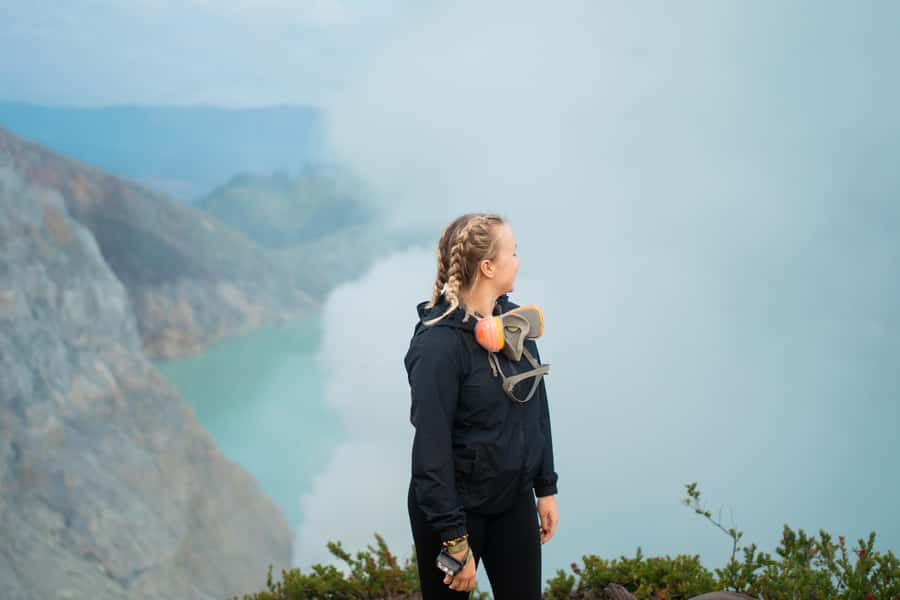
At the trailhead, your guide gives a safety briefing and provides a headlamp and gas mask. You also have access to first aid and a portable oxygen tank, plus mineral water during the trip. These are not decorative extras. The gas mask is important near sulfur fumes, and a headlamp is essential on a dark, uneven trail.
The transport and entrance fee make the price especially appealing. At $25 per person, you are not paying only for a guide. You are also covering the ride from Banyuwangi, entry to the site, crater insurance, safety equipment, and water. Personal spending and the required medical certificate are not included.
The uphill trek through darkness
The climb begins in cool night air, with stars overhead when the sky is clear. The darkness hides much of the surrounding scenery, but it also keeps the focus on the path and the strange anticipation of reaching the crater.
Prepare for a serious uphill walk. The climb is described as strenuous, and the return route will not feel effortless simply because it is downhill. Pace yourself early. A guide may move quickly because the blue fire can disappear from view as dawn approaches, but you still need to tell the guide if you are struggling.
The group format affects the rhythm. This is a combined tour, so people may walk at different speeds. On crowded sections, the group can split up, and the guide may move between members. One group had to wait while the guide located others, and some people chose to continue down without the guide. That does not cancel out the good organization, but it is a useful warning: stay within sight of your group and agree on a meeting point if you stop.
Guides such as Suleiman and Sulliman receive particularly strong praise for keeping the mood light while still checking on people. Suleiman has also helped participants with the difficult descent and spoken with members in several languages, including English, French, and German. The listed tour languages are English and Malay.
Reaching the crater for blue fire
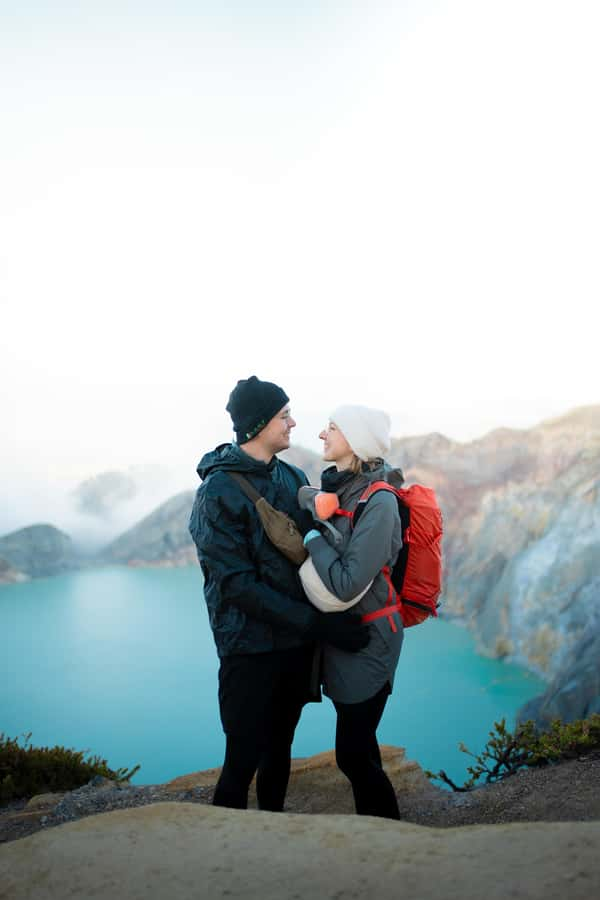
The most demanding part may come after you reach the crater rim. Seeing the blue fire can involve going down toward the crater, and that section is more difficult than the main climb. The route can feel steep, crowded, and exposed, especially if you are uneasy with heights.
Your gas mask matters most here. Sulfur gas can shift with the wind, and conditions can change without warning. The operator states clearly that toxic gases may harm participants at any time. Follow the guide’s instructions, keep the mask ready, and do not treat the blue fire as a reason to ignore safety.
This is also where a local guide earns the fee. The strongest guide reports describe help with footing, directions, photo spots, and timing. A good guide can move the group through the difficult section without losing sight of safety. You should still remain responsible for your own limits. No photograph is worth forcing yourself farther down than feels safe.
The blue fire is not guaranteed in the sense of a controlled show. It is a natural phenomenon affected by gas, visibility, and access conditions. The visit is still worthwhile if the flames are hard to see, since the crater and sunrise are the second half of the outing. Just set your expectations correctly.
Another trail to compare in Indonesia:
- Bali: Mount Batur Sunrise Trek With Guide and Breakfast
★ 4.8 · 3,461 reviews - Mount Batur Sunrise Trekking Private All Inclusive
★ 5.0 · 906 reviews - Mount Batur Sunrise Trekking Private Tour with Breakfast and Hotel Transfer
★ 5.0 · 885 reviews - Private Mount Batur Sunrise Trekking Tour
★ 5.0 · 634 reviews
Sunrise above the turquoise crater lake
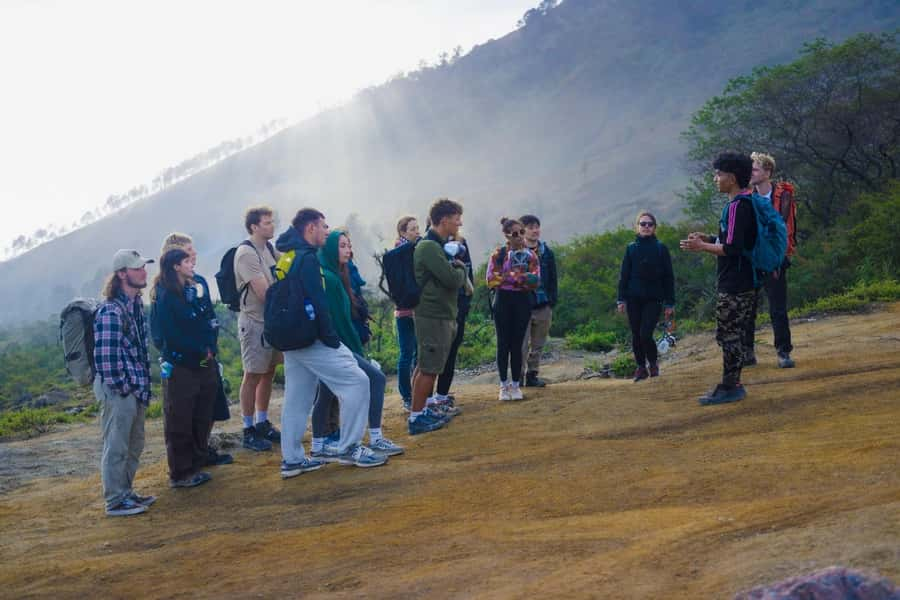
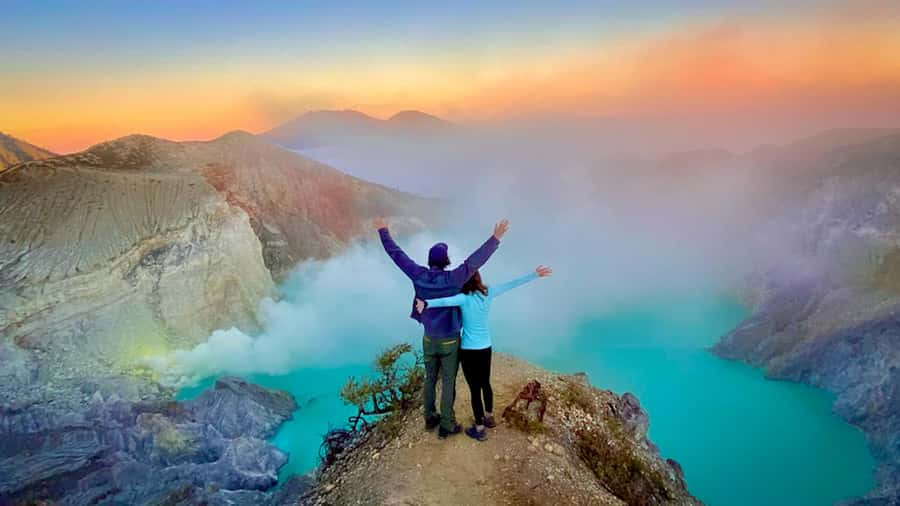
After the blue-fire attempt, you return to the rim or another high point to wait for sunrise. This pause changes the mood completely. The cold darkness gives way to color, and the first light reveals the crater lake’s turquoise water below.
Sunrise is one of the strongest reasons to take the full outing instead of making a shorter daytime visit. From above, you can take in the lake, crater walls, surrounding hills, and the route you have just climbed. The morning light makes the scenery easier to understand and gives you time to recover before the descent.
Bring a camera, but protect it from sulfur air and keep it secure on the uneven path. You should also pack snacks. Mineral water is provided, and local vendors sell snacks and drinks when you return to the starting point, but food options are not part of the included package.
The sunrise stop is not a luxury break. You have already walked hard, and the wait gives you a chance to rest, take photographs, and let the group gather. Your guide may also explain what you are seeing and point out the miners below.
Seeing sulfur miners at work
The miners are part of the meaning of this place, not just a background detail. You can watch them work around the crater, carrying sulfur through difficult conditions. Their presence gives the visit a human scale that the blue fire and giant lake alone cannot provide.
Keep a respectful distance and listen to your guide. The route is busy, the ground is uneven, and people carrying heavy loads need room. This is one moment when slowing down and looking carefully matters more than taking another quick photograph.
The combination of natural force and hard labor makes Ijen feel different from a standard viewpoint stop. You see the sulfur as a scientific phenomenon, a hazard in the air, and a material that people still carry by hand. That contrast is memorable, but it can also be sobering.
The downhill route and return to Banyuwangi
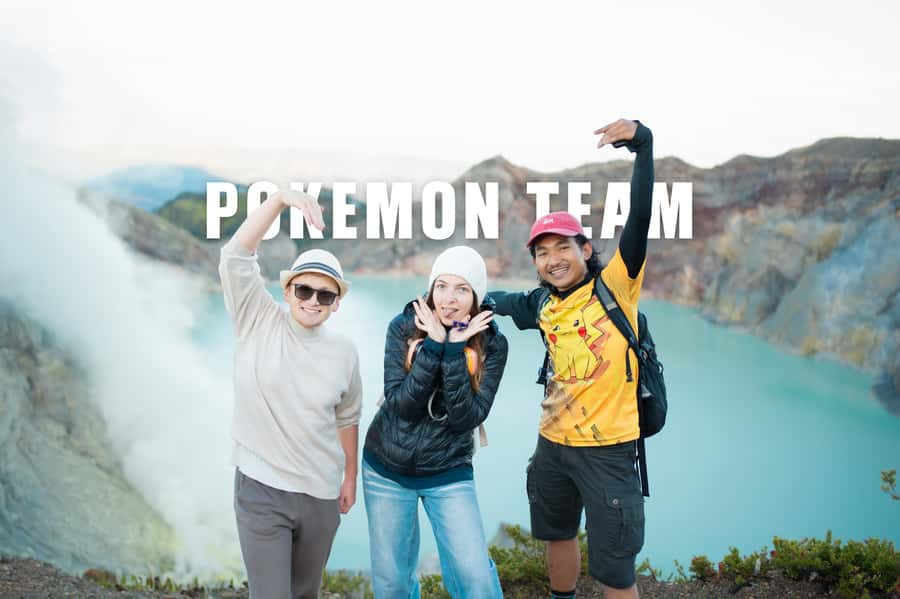
The descent offers wider views than the night climb. You can finally see the surrounding scenery, and the path becomes easier to follow in daylight. It is still tiring, especially after the crater section, so use steady steps rather than rushing.
Stay attentive to the group. The shared format and different walking speeds can create gaps. If you stop for photos or rest, let your guide know. The guides are praised for checking on participants, but no guide can watch every person at every moment when a group spreads along a busy trail.
Back at the starting point, you can rest and refresh. Local vendors may sell snacks and drinks, and this is a good place to return the headlamp and gas mask directly to the guide or driver. Keep track of both items, since one participant accidentally took equipment back to the hotel and had to arrange its return the next day.
The vehicle then takes you back to your Banyuwangi hotel. After a night without normal sleep and several hours of walking, plan a quiet rest period afterward. Do not schedule a demanding activity immediately after this one.
Safety, fitness, and who should skip it
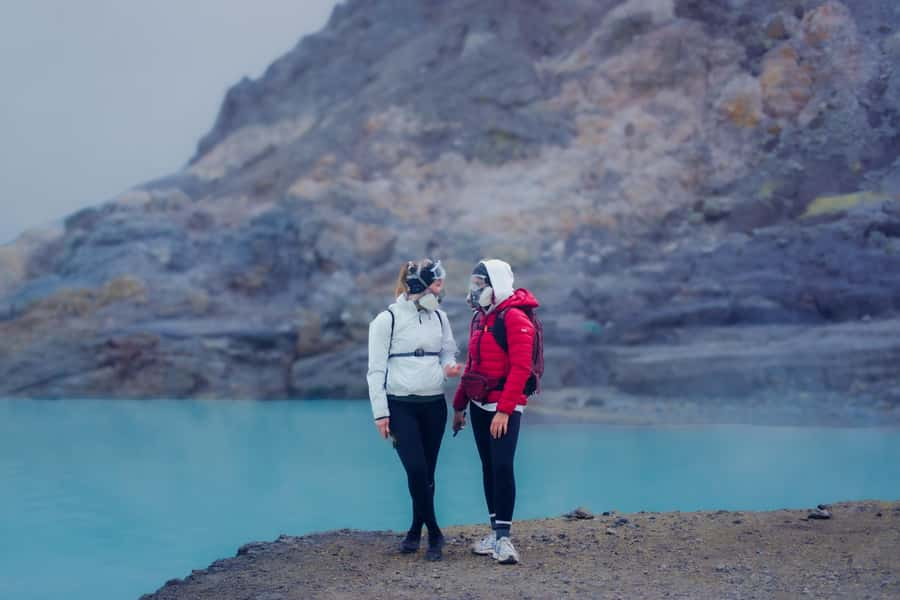
You need a valid health certificate or medical statement. A passport or copy is also requested, along with a camera and snacks. Jewelry is not allowed, so leave rings, necklaces, and other pieces at your hotel.
The tour is not suitable for children under 12, pregnant women, or people with respiratory issues. That restriction makes sense because the trek is strenuous and sulfur gases can be harmful. The mountain reopened on September 8, 2024, after closure linked to earthquake tremors and toxic gas, so conditions remain a serious part of the decision.
You should also think about height and footing. One useful warning from the experience is that people afraid of heights may not enjoy climbing down toward the crater. The main path and crater access are not presented as an easy walk.
Wear practical clothing and shoes suitable for hiking. The supplied information does not specify a clothing list, so I would focus on comfort, secure footwear, and layers for a cool night. Keep your hands free when possible, since you may need them for balance.
Is $25 a fair price for this Ijen tour?
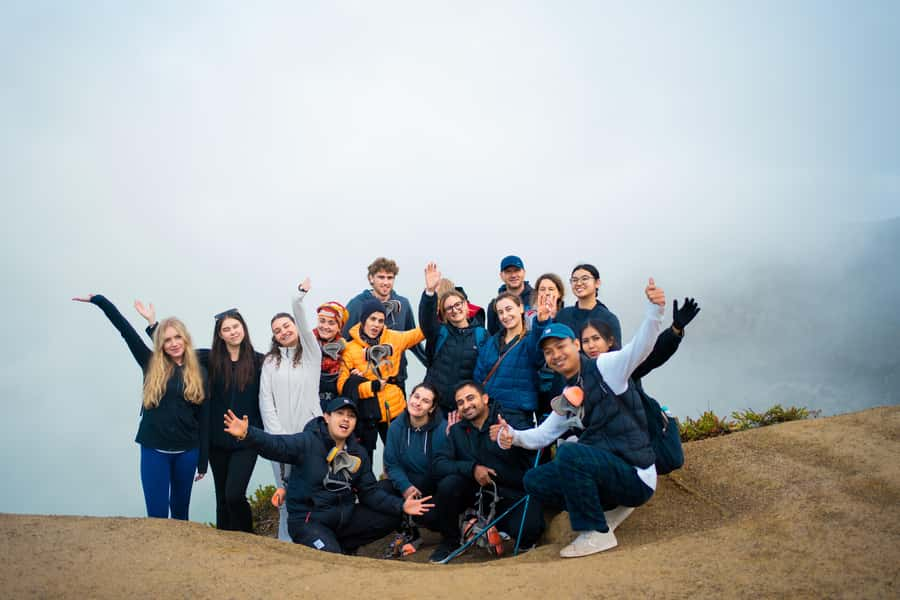
Yes, if you want the blue fire and prefer not to arrange every part yourself. For $25, the package includes the major costs: Banyuwangi transport, Kawah Ijen entry, crater insurance, local guide, headlamp, gas mask, first aid, portable oxygen, and mineral water.
The lower price comes with the normal limits of a shared group. You do not get a private pace or a private vehicle. If someone walks slowly, the group may wait. If someone rushes toward the crater, the guide may need to divide attention. The tour works best when you accept a group rhythm and stay cooperative.
The guide quality adds real value. Suleiman, Sulliman, and Soufian are singled out for humor, energy, clear English, safety reminders, and help with photographs. The strongest practical benefit is having someone who knows when to push toward the blue fire and when to keep the group together.
Free cancellation up to 24 hours before departure and reserve-now, pay-later booking also reduce the risk of committing too early. Check the date carefully, since Ijen is closed every Friday in the first week of the month.
Should you book it?
Book this tour if you want a demanding but memorable night in Java, especially if the blue fire is high on your list and you are staying in Banyuwangi. The package offers strong value, useful safety equipment, and guides who appear to care about both timing and morale.
Skip it if you need a relaxed outing, have respiratory problems, are pregnant, are under 12, or know that steep paths and heights will make the crater section miserable. Also skip it if you want a private, perfectly paced trek.
For a fit adult who accepts the risks, the best case is powerful: blue sulfur flames before dawn, a turquoise lake in early light, and a close look at the miners who work in one of Indonesia’s harshest natural settings. Just bring the right expectations, follow the gas and safety advice, and keep your walking group in view.
FAQ
How long does the Ijen Crater tour last?
The activity lasts about nine hours. The Ijen portion, including the guided visit, hiking, scenic stops, and sunrise, is listed as about six hours.
Where does pickup take place?
Pickup is included from your hotel in Banyuwangi Regency. You should wait in the hotel lobby.
What languages does the guide speak?
Live guides are available in English and Malay. Some guides may also speak other languages, but English and Malay are the listed options.
Is transportation included?
Yes. Round-trip transportation between Banyuwangi and Kawah Ijen is included.
Is the entrance ticket included?
Yes. The Kawah Ijen entrance ticket and crater insurance are included.
What safety equipment is provided?
You receive a gas mask and headlamp. The package also includes first aid, a portable oxygen tank, and mineral water.
Is a medical certificate required?
Yes. You need a valid health certificate or medical statement. The cost of obtaining it is not included.
Who should not join this trek?
The activity is not suitable for children under 12, pregnant women, or people with respiratory issues. It may also be a poor choice for anyone uncomfortable with strenuous hiking, heights, or the steep route toward the crater.
More early starts in Indonesia
- Mt Batur Sunrise Trekking Tour
★ 5.0 · 305 reviews - Mount Batur Sunrise Trekking
★ 5.0 · 225 reviews - Bali: Mount Batur Sunrise Trek and White Water Rafting
★ 4.8 · 193 reviews - Mount Agung Sunrise Trekking Tour
★ 5.0 · 156 reviews
More Sunrise Treks in Indonesia
- Mount Batur Sunrise Trekking (Private Tour and Breakfast at Restaurant)
★ 5.0 · 598 reviews - Private Tour Mount Batur Sunrise Trekking and Natural Hot Spring
★ 5.0 · 431 reviews - Private Tour : Mount Batur Sunrise Trekking With Private Guide
★ 5.0 · 422 reviews - Bali: Mount Batur Guided Sunrise Trek with Breakfast
★ 4.6 · 321 reviews
Latest treks added in Indonesia
- Day Tour – Tumpak Sewu Waterfall and Goa Tetes Trekking via Malang★ 5.0 · 4 reviews
- 2Day – Semeru Trekking Adventure via Malang with Local Guide★ 4.5 · 2 reviews
- Trekking Rinjani 1 Day Trek Senaru Crater Rim★ 5.0 · 3 reviews
- Rinjani Trekking 2D/1N Senaru Crater Rim★ 5.0 · 2 reviews
- Rinjani Trekking 1 day Trek To the rim via senaru 2,642m★ 5.0 · 16 reviews
- Rinjani Trekking 2D1N Senaru Crater rim★ 4.5 · 9 reviews
- Popular Rinjani Trekking Tour Service To Summit For 2 Days Via Sembalun Trail★ 5.0 · 8 reviews
- Trekking Mt. Rinjani 2D1N Via Sembalun – Crater Rim – Summit★ 5.0 · 21 reviews
Volcano Treks, compared.
Mount Etna: Trek to 3000m with cable car and 4×4
Read our review →
Etna: summit craters trekking with volcano guide 3350mt
Read our review →
Mount Etna Trekking Tour Beyond the Tourist Trails
Read our review →
Mount Etna: Guided Trek 3,000 Meters to the Summit
Read our review →
Etna Sunset Tour: Volcano trek, Cave & tasting from Catania
Read our review →
Browse the lists this tour appears in