
REVIEW · INDONESIA
2D1N Senaru Crater Rim Trekking
Mount Rinjani’s Senaru route gives you a big volcanic adventure without the punishing summit push. In one long day, you climb from 601 meters to the 2,641-meter crater rim, then sleep beside views of Segara Anak Lake, the Rinjani summit, the Gili Islands, and Bali’s Mount Agung. The sunset from camp is the prize.
I like the private format, since your guide can set a pace that suits your group. I also like the practical camping set-up: porters carry the heavy gear, and you get a mattress, pillow, sleeping bag, meals, water, and a toilet tent. The catch is simple: this is still a hard climb, with more than 2,000 meters of ascent on the first day.
Key points to know before booking
- 2,641-meter destination: You reach Senaru Crater Rim, not Mount Rinjani’s 3,726-meter summit.
- A serious first day: The climb begins in forest, then gets steeper across open grassland.
- Private pacing: Your group hikes with its own guide rather than joining a large shared party.
- Good camp support: Porters carry cooking and camping equipment, while meals and 3 liters of water per person per day are provided.
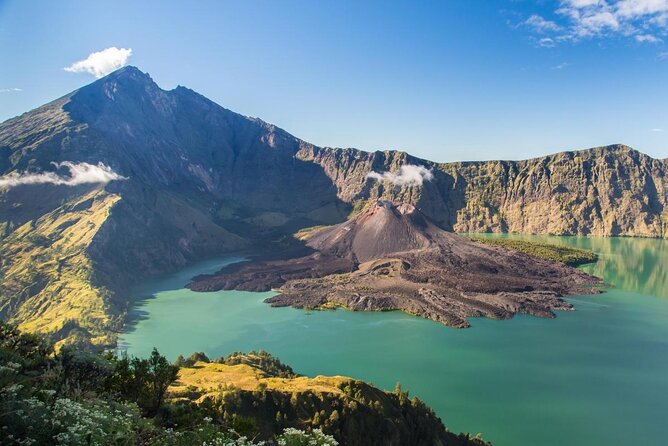
- Sunset and sunrise views: Look toward the Gili Islands, Mount Agung, Segara Anak Lake, and Rinjani’s volcanic cone.
- Extra costs matter: The national park fee is IDR 250,000 per person per day, and transport, accommodation before the trek, and personal hiking gear are not included.
Why the Senaru crater rim is the sensible Rinjani choice
Mount Rinjani is one of Lombok’s defining sights, but reaching the summit requires a tougher, longer route. This two-day trip stops at the Senaru Crater Rim, making it the more manageable choice if you want the mountain experience without committing to the full summit trek.
That does not make it easy. The route climbs about 2,040 meters from the Senaru trailhead to camp. You complete most of that gain on day one, so your legs and lungs get a proper test. I would call the required fitness level moderate only with a generous interpretation of the word. You do not need to be a technical climber, but you should be comfortable with a long uphill day and a long descent the next morning.
The reward comes from the setting. At camp, you can see the volcanic interior of Rinjani, including Segara Anak Lake and the Gunung Baru volcanic cone. Look in the other direction and Mount Agung rises on Bali, with the Gili Islands scattered toward the coast. The view gives you several major Indonesian sights at once, which is why the rim feels like more than just a stopping point.
More Volcano Treks in Indonesia
- Trekking Mt. Rinjani 2 Days 1 Night Senaru Crater Rim
★ 5.0 · 55 reviews - Trekking Rinjani Volcano To Crater Rim Senaru 2D-1N Private – Syam Trekker
★ 5.0 · 45 reviews - Hiking Rinjani Volcano To Crater rim Senaru 2 Days, Group – Syam Trekker
★ 5.0 · 29 reviews
Day one, from Senaru forest to 2,641 meters
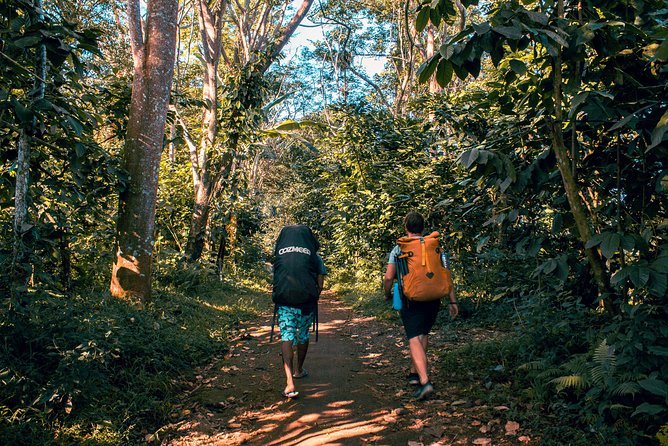
You meet at the Lombok Volcano Trekking office on Jl. Pariwisata in Senaru at 7am. The trek begins at the Rinjani Trek Centre, at about 601 meters above sea level. Registration and the early start are practical rather than glamorous, but leaving on time matters because the first day contains the hardest climb.
The opening section passes through dense tropical forest. This gives you shade and a gentler introduction than the exposed upper trail, though the steady uphill work begins right away. You will stop at Pos 1 and Pos 2 for rests. These breaks are useful for water, food, and checking your pace before the trail becomes more demanding.
Lunch is scheduled at Pos 3, around 2,000 meters. By this point, you have already gained a great deal of height. The scenery begins to open as the forest gives way to grassland, and the character of the walk changes with it.
Above Pos 3, the trail becomes steeper. This is where the tour’s easy option needs to be put in perspective. It avoids the summit route, but the upper climb still asks for patience and regular rests. Your private guide can adjust the pace to your group, which is especially useful if one person climbs more slowly than the others.
The guides named in the feedback include Mario, Anton, Lim, Benji, and Rudy or Rudi. You should not assume you will receive a particular guide, but the operator uses English-speaking guides and professional porters. A good guide is valuable here for more than directions. You need someone who notices when the group is pushing too hard, explains the route, and keeps morale steady on the steeper sections.
Camp on the rim, with Bali in the distance
The destination for day one is Senaru Crater Rim at about 2,641 meters. Your porters carry the cooking equipment and camping supplies, then help set up the camp. The package includes a tent, mattress, pillow, sleeping bag, toilet tent, and toilet paper.
That gear makes a real difference. You are not carrying a full tent and kitchen up the mountain, and a proper mattress is far more welcome after the long climb than a thin ground sheet. The sleeping arrangement is still basic camping, but it is not a bare-bones night outdoors. Several people specifically praised the warm sleeping bags, thick mattresses, cozy tents, and clean camp set-up.
The exact tent position can affect your experience. A spot close to the rim gives you a direct view of the volcano and Rinjani’s summit from camp, but conditions and available space can vary. Do not expect a private hotel room with a volcano view, yet the chance to wake beside this enormous crater is the reason to camp rather than return to Senaru.
The food is another strong part of the package. The porters cook meals and provide snacks, and the included water allowance is 3 liters of mineral water per person per day. Vegetarian meals have been accommodated, but you should give the operator your dietary needs before the trek rather than leaving it to chance.
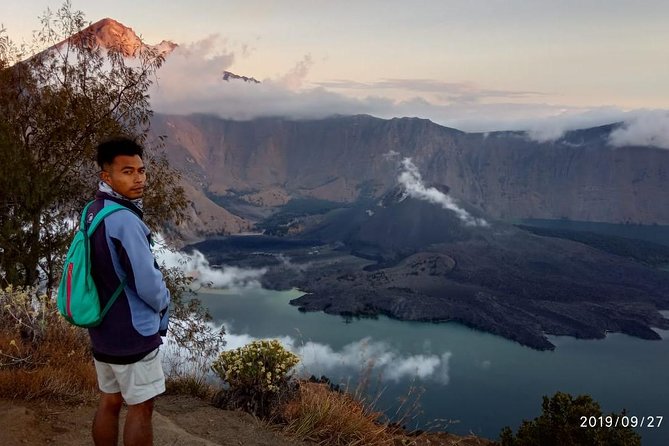
Sunset is the evening highlight. From the rim, you may see the light fade over the Gili Islands and Mount Agung on Bali. You also have views toward Segara Anak Lake and the volcanic cone inside Rinjani. Clouds and rain can block part of the show, as they did for some outings, so treat the sunset as a wonderful possibility rather than a promise.
Day two, sunrise and the long walk down
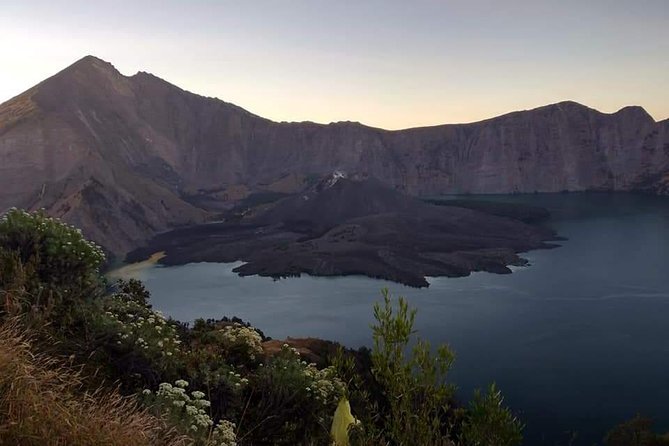
The second morning begins with sunrise from camp, followed by breakfast. This is a quieter part of the trip and a good reason not to rush away from the rim. The first morning light can reveal the lake, crater, summit, and distant Bali in a different way from the evening view.
After breakfast, you descend along the same general route toward Senaru. The downward direction sounds easier, but a long descent can be rough on knees and ankles. Loose or uneven ground also requires care, especially when fatigue sets in. Snacks are provided along the way, and lunch is planned at Pos 2.
The group generally reaches Senaru around 1pm. That timing makes the trek a compact two-day trip, but you should avoid planning an important afternoon connection too tightly. The tour ends back at the meeting point, and transport before and after the trek is not included. You need to arrange your own pick-up, drop-off, or onward journey.
A luggage storage option is available at the Lombok Volcano Trekking office. That is useful because you can leave larger bags behind and carry only what belongs on the mountain. Confirm the storage arrangement when you arrive, especially if you are moving between hotels.
More Volcano Treks in Lombok
- Trekking Mt. Rinjani 2D1N Via Sembalun – Crater Rim – Summit
★ 5.0 · 21 reviews - Mount Rinjani 3D2N Private Trek – Summit, Crater Rim & Hot Spring
★ 5.0 · 13 reviews - Rinjani Trekking 2D1N Senaru Crater rim
★ 4.5 · 9 reviews - Trekking Rinjani 1 Day Trek Senaru Crater Rim
★ 5.0 · 3 reviews
What the private format really gives you
The private booking is not a luxury upgrade. Its main value is control. Your group can stop when needed, walk at a sensible pace, and spend more or less time at viewpoints without waiting for strangers.
That matters on a climb with such a large first-day ascent. A fast group can make a slower person feel pressured, while a very slow group can frustrate stronger walkers. A private guide does not remove the physical work, but it gives your party a better chance of finding a workable rhythm.
The guide and porters also shape the atmosphere. The strongest praise for this trip concerns the staff’s care, encouragement, good humor, and cooking. Guides such as Anton, Lim, Benji, Mario, and Rudy are singled out for kindness, information, patience, and support. Porters are praised for carrying the equipment, preparing generous meals, and managing the camp quickly.
You should remember that porter work is physically demanding. A tip is not included in the advertised price, and a fair tip is worth budgeting for if the crew takes good care of you. It is a small way to recognize the work that makes your climb possible.
The $156 price, and the costs outside it
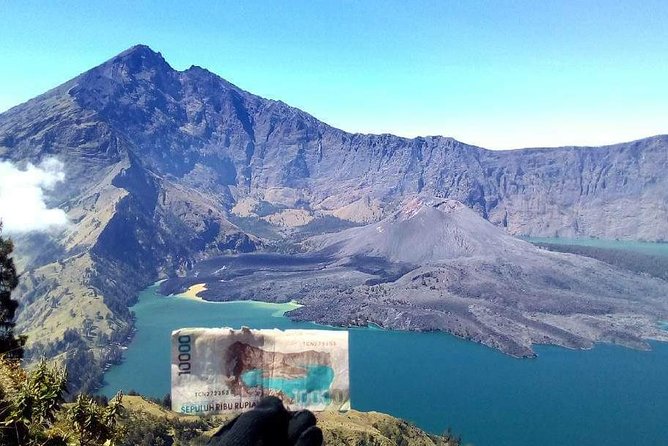
At $156 per person, the tour offers solid value if you want a guided overnight mountain trip and would otherwise need to arrange camping equipment, cooking, food, water, and support separately. The inclusion of porters, a private guide, camping gear, meals, and water removes many practical problems.
But the headline price is not the full cost. The Rinjani national park fee is IDR 250,000 per person per day. Since this is a two-day trek, that amounts to IDR 500,000 per person if charged for both days. The provided information lists that fee separately, so confirm how the operator collects it and whether it has already been paid before you start.
You also pay separately for:
- Transport to Senaru and onward transport after the trek
- Accommodation before the trek
- Trekking shoes
- Rain jacket
- Long pants
- Gloves
- Headlamp or hand torch
This list is important. The company provides camping equipment, but not every item you need to wear or carry. You should arrive with suitable footwear, clothing for wet weather, warm layers, and a light source. The mountain can be cold at night, and weather can change quickly enough to make a rain jacket more than a comfort item.
The experience is non-refundable and cannot be changed after booking. That strict rule makes travel insurance and a careful weather check sensible, although the supplied information does not state a specific weather cancellation procedure.
Who should book this trek
I would choose this trip if you want dramatic Rinjani scenery but do not want the full summit route. It suits active couples, friends, solo climbers who prefer a private arrangement, and families with older children who already handle long walks well. One family completed the route with children aged 10 and 12, but the outing still required determination and produced plenty of muscle soreness.
I would not choose it for a casual sightseeing day. The climb is physically demanding, and the return descent is long. If your recent exercise has been limited to short walks, you may find the first day much harder than the word moderate suggests.
It is also a good fit if you value support more than independence. The porters carry the heavy camping and cooking gear, and the guide manages the route and pace. If you want to carry all your own equipment or walk alone without support, this is not that kind of trip.
Weather is another factor. Rain can reduce the views and make the trail less pleasant, but it does not erase the value of the camp or the sense of reaching the rim. Bring the right clothing and accept that Mount Rinjani controls the schedule more than any brochure does.
Practical details for a smoother climb
Start training with uphill walks before arriving. You do not need technical climbing skills based on the supplied details, but you do need stamina for a major ascent followed by a substantial descent. Break in your trekking shoes before the trip.
Pack light, since the porters carry the shared gear but not necessarily every personal item. Keep your rain jacket, warm layer, gloves, water, and snacks easy to reach. The operator supplies 3 liters of water per day, but you should still carry a bottle or day pack that makes drinking convenient.
Wear long pants for the trail, and bring a headlamp or hand torch even though the stated itinerary centers on daytime hiking. The equipment list specifically tells you to provide your own light, so do not assume the camping kit includes one.
The meeting point is the Lombok Volcano Trekking office in Senaru, and the activity starts at 7am. Plan to be there early enough to register without rushing. Since the activity finishes at the same meeting point, arrange transport around that location rather than assuming a hotel transfer.
Should you book the Senaru crater rim trek?
Book it if your priority is a major Rinjani experience in two days, with a private guide, strong camp support, and the chance to watch sunset over Bali and the Gili Islands. The price is reasonable once you account for the guide, porters, meals, water, tent, mattress, sleeping bag, and cooking gear.
Skip it if you want an easy nature walk, dislike basic camping, or are not prepared for more than 2,000 meters of ascent on day one. This is not the summit, but it is still a serious mountain trek.
For the right person, the Senaru route offers an excellent balance: hard enough to feel earned, short enough to fit into a Lombok itinerary, and packed with views that begin in the forest and finish beside one of Indonesia’s great volcanoes.
FAQ
How high does the trek go?
The route reaches Senaru Crater Rim at about 2,641 meters above sea level. It does not go to Mount Rinjani’s summit.
How long is the experience?
The trek lasts two days and one night. Day one runs from the Senaru trailhead to the crater rim, and day two returns to Senaru, usually arriving around 1pm.
What is included in the tour?
The package includes an English-speaking guide, porters, meals, drinking water, a tent, toilet tent, toilet paper, sleeping bags, mattresses, and pillows. Porters carry the cooking and camping equipment.
Is the national park fee included?
No. The Rinjani national park fee is listed separately at IDR 250,000 per person per day.
Are transport and personal hiking equipment included?
No. Transport before and after the trek, accommodation before the trek, trekking shoes, a rain jacket, long pants, gloves, and a headlamp or hand torch are not included.
Where does the trek start and finish?
You meet at the Lombok Volcano Trekking office on Jl. Pariwisata in Senaru at 7am. The activity ends back at that meeting point.
More two-day treks in Lombok
- Rinjani trekking 2D 1N RIM
★ 5.0 · 94 reviews - Mount Rinjani Second Summit Trekking ( 2Days-1Night )
★ 5.0 · 49 reviews - Trekking Rinjani Mountain Summit 2 Days 1 Night – Em Adventure
★ 5.0 · 42 reviews - Mount Rinjani: 2D/1N Trekking To Sembalun Or Senaru Views
★ 4.8 · 24 reviews
Latest treks added in Lombok
- Rinjani Trekking 2D/1N Senaru Crater Rim★ 5.0 · 2 reviews
- Trekking Rinjani 1 Day Trek Senaru Crater Rim★ 5.0 · 3 reviews
- Rinjani Trekking 1 day Trek To the rim via senaru 2,642m★ 5.0 · 16 reviews
- Rinjani Trekking 2D1N Senaru Crater rim★ 4.5 · 9 reviews
- Popular Rinjani Trekking Tour Service To Summit For 2 Days Via Sembalun Trail★ 5.0 · 8 reviews
- Mount Rinjani 3D2N Private Trek – Summit, Crater Rim & Hot Spring★ 5.0 · 13 reviews
- Trekking Mt. Rinjani 2D1N Via Sembalun – Crater Rim – Summit★ 5.0 · 21 reviews
- Pergasingan Hill 1.700masl (2D/1N Easy Trekk)★ 5.0 · 2 reviews
Volcano Treks, compared.
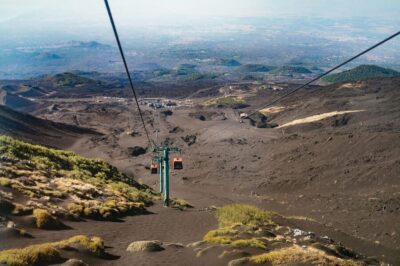
Mount Etna: Trek to 3000m with cable car and 4×4
Read our review →
Etna: summit craters trekking with volcano guide 3350mt
Read our review →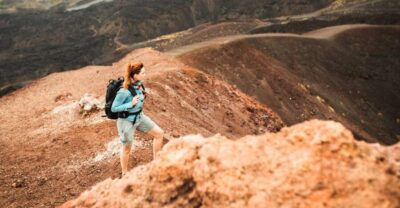
Mount Etna Trekking Tour Beyond the Tourist Trails
Read our review →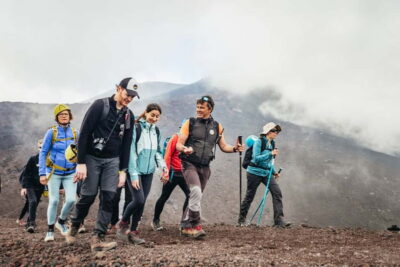
Mount Etna: Guided Trek 3,000 Meters to the Summit
Read our review →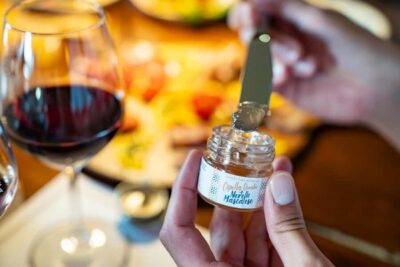
Etna Sunset Tour: Volcano trek, Cave & tasting from Catania
Read our review →
Browse the lists this tour appears in