
REVIEW · ITALY
Etna South: High Altitude Winter Trek with an Alpine Guide
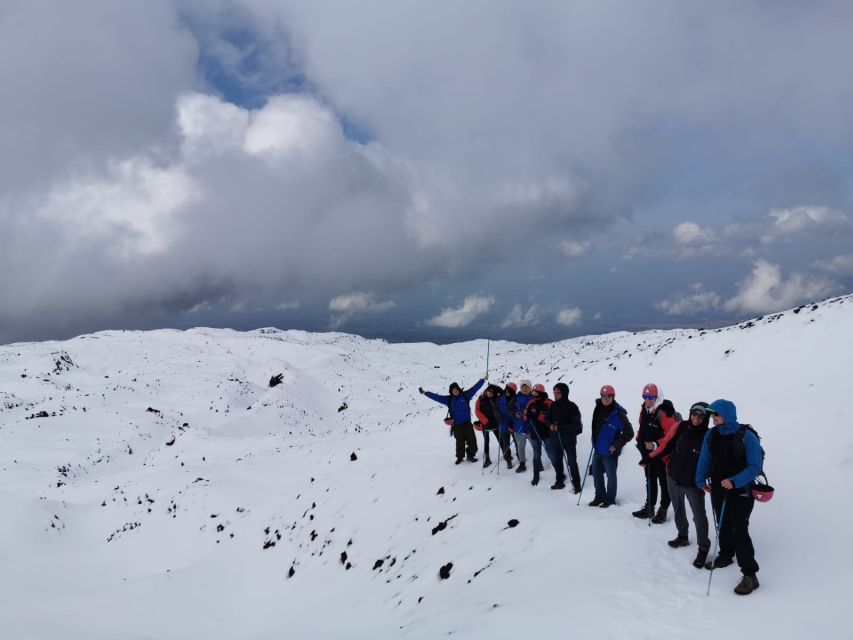
At roughly 3,000 meters, Mount Etna becomes a world of snow, black lava, ice, and sharp mountain air. You ride the cable car from Rifugio Sapienza, then walk across the upper slopes with a licensed alpine and volcanological guide, stopping at old craters and viewpoints below the active summit.
I like the mix of real volcanic ground and winter hiking, rather than a simple ride to a viewpoint. I also like that guides such as Massimo, Antonio, and Fabio explain eruptions and geology while keeping the group together. The main catch is clear: this is for experienced hikers in good health, and weather, ice, or volcanic activity can change the route or cancel the outing.
Key points to know before you book
- Snow trek to about 3,000 meters: You leave the cable car at 2,500 meters and climb through snow and uneven volcanic ground.
- Cable car costs extra: The tour price is $106 per person, plus €50 for the cable car, paid in cash on site.
- Small groups and specialist guides: Alpine and volcanological guides lead the walk in English, French, or Italian.
- Volcanic sights along the way: The route can include the 2001 eruption cone, Valle del Bove, Barbagallo craters, and a lava channel if conditions allow.
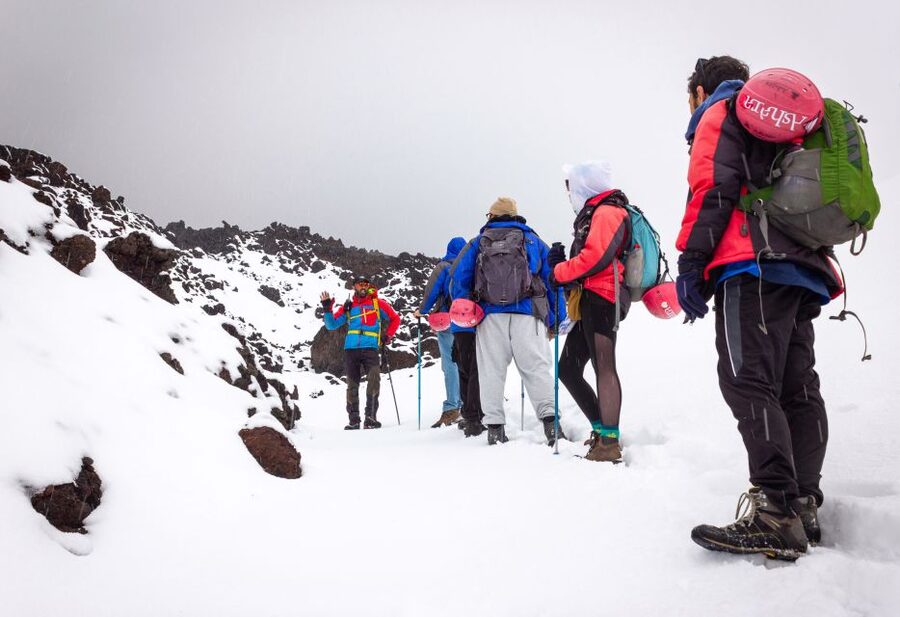
- Equipment is provided: Hiking boots, helmet, walking sticks, crampons, and other needed snow gear are included.
- Conditions matter: Etna is an active volcano. Ice, snow, weather, or volcanic activity can force the guide to change or stop the excursion.
Why a winter trek on Mount Etna feels different
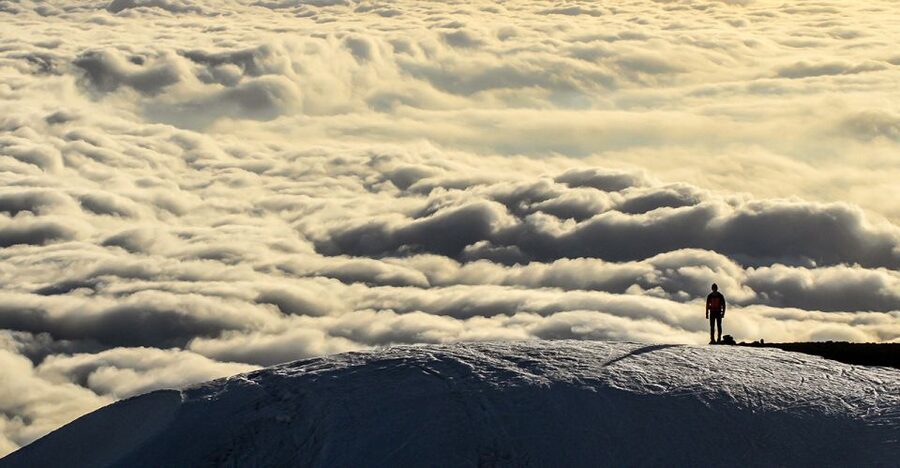
Mount Etna is not just a high viewpoint with a famous name. In winter, the upper slopes can turn into a stark mix of white snow and dark volcanic rock. The contrast is striking, and the cold season gives you a much stronger sense of Etna as a mountain rather than simply a sightseeing stop in Sicily.
The walk reaches about 3,000 meters, although the exact height and route depend on conditions. You do not climb directly onto the summit crater. Instead, you approach the upper crater area from a safe distance and explore the southern crater zone around the 2001 cone and Barbagallo craters.
That distinction matters. If you expect to stand at the very rim of Etna’s active summit, this is not that experience. If you want a guided walk through high volcanic terrain with views of the summit crater, old eruption sites, and Sicily below, it is a more realistic fit.
The combination of an alpine guide and a volcanological guide is useful here. You need someone who understands snow, ice, and high-altitude walking, but you also want someone who can explain why the ground looks the way it does. Guides such as Massimo, Antonio, and Fabio have been singled out for clear explanations about Etna’s eruptions and geology.
More Volcano Treks in Italy
- Mount Etna: Trek to 3000m with cable car and 4×4
★ 4.6 · 3,823 reviews - Mount Etna: Summit Crater Trek with Cable Car
★ 4.8 · 1,875 reviews - Etna: summit craters trekking with volcano guide 3350mt
★ 4.7 · 1,712 reviews
Starting at Rifugio Sapienza
You meet at the Ashàra Etna & Stromboli Guides information point at Piazzale Rifugio Sapienza, close to the Terrazza dell’Etna restaurant. This is Etna South, the main starting area for the cable car and upper-mountain excursions.
Allow time to find the Ashàra point and get ready before the walk begins. The tour does not include hotel pickup or drop-off, so you must arrange your own transport to Rifugio Sapienza. Food and drinks are also your responsibility.
This is the moment to tell the guide about any medical issue. The altitude, cold, uneven footing, and steady uphill walking can make the outing demanding even for people who are generally active. The operator specifically limits the trip to experienced hikers in good health.
You should arrive with warm clothing, long pants, gloves, a hat, scarf, windbreaker, extra socks, and food and water. Do not arrive in shorts, open-toed shoes, sleeveless shirts, or with a large bag. Pets are not allowed.
The 20-minute cable-car ride to 2,500 meters
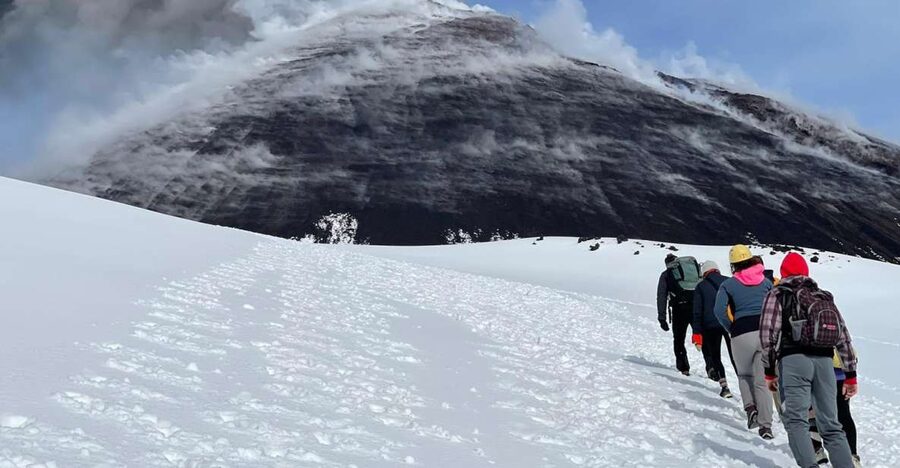
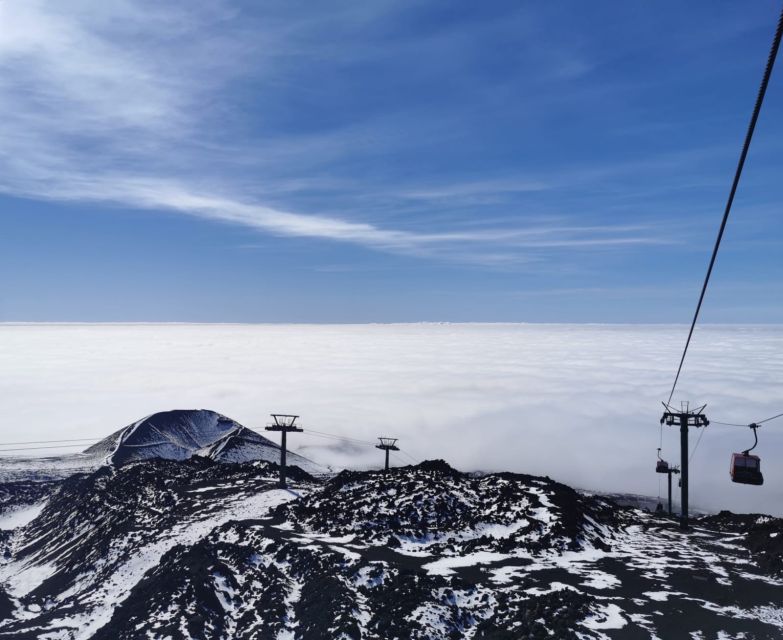
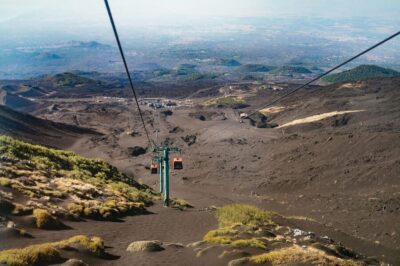
The first major step is the cable car from Rifugio Sapienza to roughly 2,500 meters. The ride takes about 20 minutes and quickly changes the setting from the lower slopes to Etna’s high volcanic zone.
The cable car ticket is not included. Budget an additional €50 per person and bring cash, since this fee is paid on the spot. That extra cost is easy to miss when comparing the advertised tour price, so the practical total is closer to $106 plus the cable car charge.
Once you arrive at the upper station, the actual trek begins. The cable car saves your legs for the more interesting section, but it does not remove the physical challenge. From here, you face snow, ice, loose volcanic sand, and an uphill route that can feel harder at altitude.
The supplied equipment is a real help. Hiking boots, helmet, walking sticks, crampons, and necessary snow gear are included. You still need suitable clothing, since good footwear cannot keep you warm if your hands, head, or body are exposed to wind.
Walking above the clouds and below the summit crater
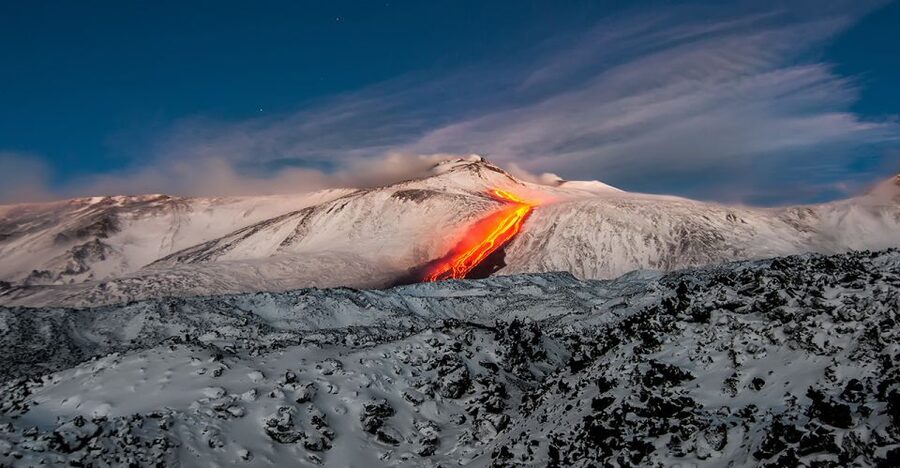
The first walking sections lead toward viewpoints around the upper southern crater area. On a clear day, you may see broad stretches of Sicily from high above, with Etna’s dark cones and pale snow filling the foreground.
Visibility is not guaranteed. One day may offer blue skies and long views, while another may bring cloud, wind, or poor visibility. That uncertainty is part of hiking an active mountain, but it also means you should not book this solely for a guaranteed panorama.
The walking itself is not described as technical climbing, but it is not a casual stroll. Uneven sandy ground can be tiring, and snow or ice adds another layer of difficulty. Crampons and walking poles help with grip, while the guide sets the pace and schedules breaks as needed.
You should expect the terrain to feel more challenging than the distance suggests. Cold air, altitude, and a sloping surface can slow you down. The best approach is to walk steadily, follow the guide’s instructions, and avoid treating the outing like a race.
Another trail to compare in Italy:
- Catania: Mount Etna Trekking Tour Beyond the Tourist Trails
★ 4.9 · 1,596 reviews - Mount Etna: Guided Trek 3,000 Meters to the Summit
★ 4.8 · 1,407 reviews - Stromboli: Sunset Trekking at Sciara del Fuoco
★ 4.6 · 1,372 reviews - Etna Sunset Tour: Volcano trek, Cave & tasting from Catania
★ 4.8 · 1,290 reviews
The 2001 eruption cone and volcanic stories
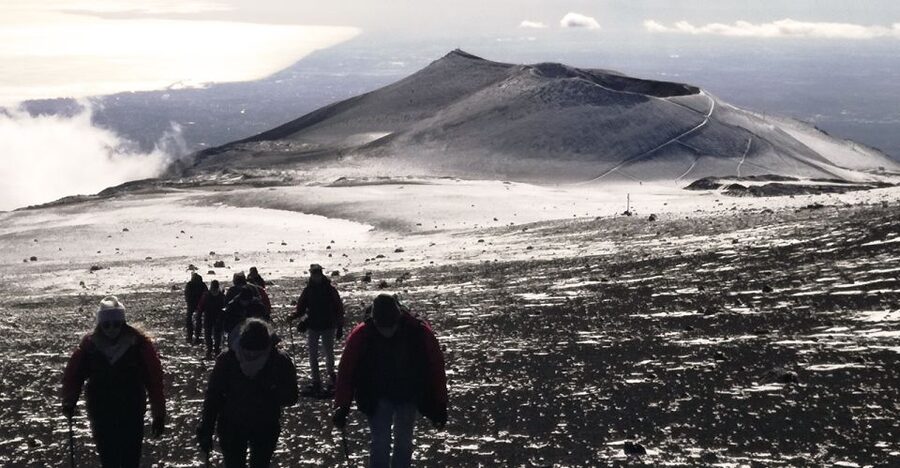
One of the most interesting stops is the cone formed during Etna’s 2001 eruption. Rather than seeing only a large, distant volcano, you get to walk among the physical remains of a specific eruption.
This is where a good guide adds real value. Massimo has explained eruption history, geology, and local volcanic details during the walk, while Antonio has answered questions in English and helped make the geology accessible. You are not simply looking at a black mound. You are learning how lava and ash shaped the ground beneath your boots.
The exact route can change, so you should not assume every group reaches every feature. The guide has authority to alter or stop the trip if ice, weather, volcanic activity, or any other safety concern makes the planned route unsuitable.
Valle del Bove from the high southern slopes
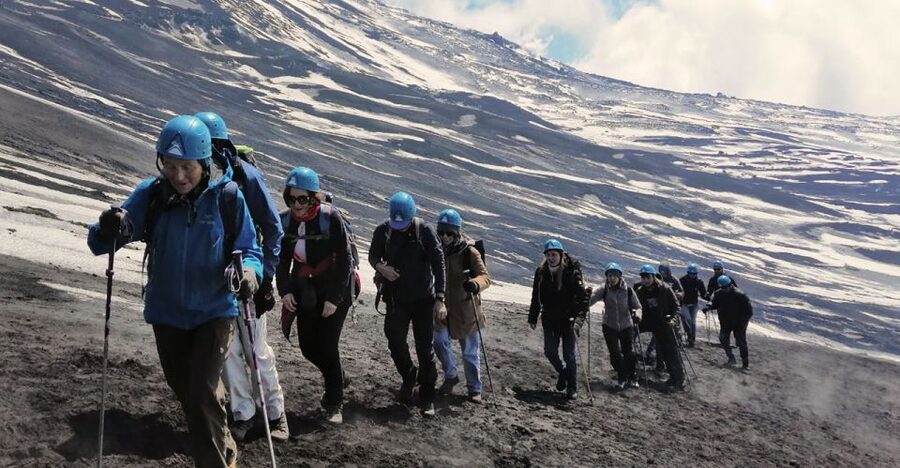
The route also includes a guided stop around Valle del Bove, known in English as the Valley of the Ox. From the upper slopes, the valley opens out as a large volcanic depression with striking views across Etna’s rough sides.
This part gives the hike a sense of scale. The small craters near your feet are one thing, but looking toward a vast volcanic valley helps you understand how much land Etna has shaped over time. The scheduled guided section here takes about 40 minutes, including scenic views along the way.
Snow can make the colors especially strong. White ground, black lava, and the broad gray and brown volcanic slopes create a setting unlike the green hills and coastal towns elsewhere in Sicily. The cold also keeps the experience feeling wild and exposed.
Do not expect a warm, leisurely viewpoint stop. You may be standing in wind and snow while listening to the guide. Bring gloves that allow you to grip poles, and keep your scarf and hat easy to reach.
Barbagallo craters and the high point of the walk
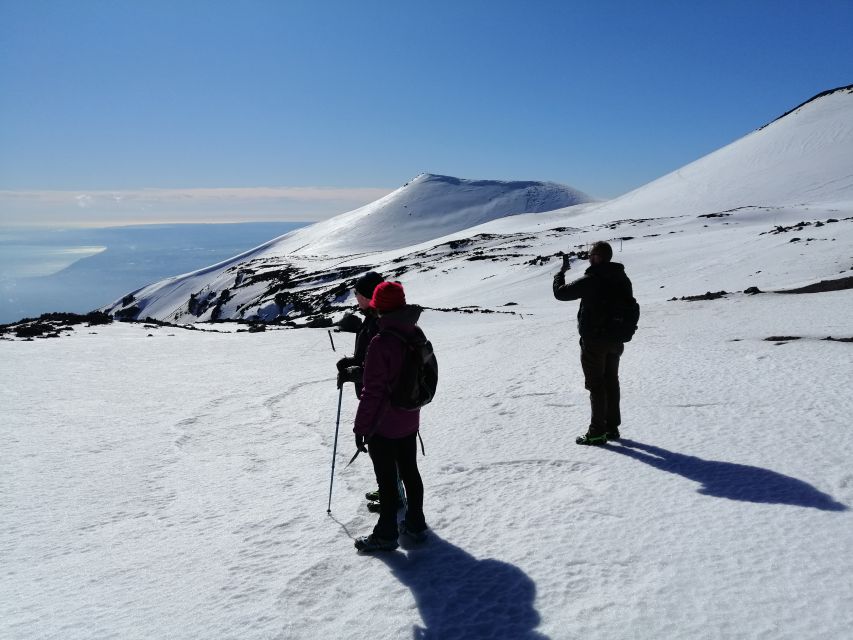
The Barbagallo craters provide another close look at Etna’s volcanic structure. This section includes walking and hiking for about an hour, making it one of the more substantial parts of the outing.
Here you can expect more time on uneven ground, with the route moving through the southern crater area. The craters are not polished attractions with paved paths. Snow may cover parts of the surface, while loose black volcanic material can make each step less secure.
For many people, this is the strongest part of the experience. You are surrounded by eruption cones and high volcanic ground, but you remain on a guided route below the most dangerous summit area. The result is a close encounter with Etna without pretending that an active volcano is an ordinary hiking trail.
The hike can reach about 3,000 meters, and some conditions may allow an approach toward the active zone at roughly 3,050 meters. That is not guaranteed. The published plan is best understood as a high-altitude crater walk, not a fixed summit climb.
Seeing the active summit from a safe distance
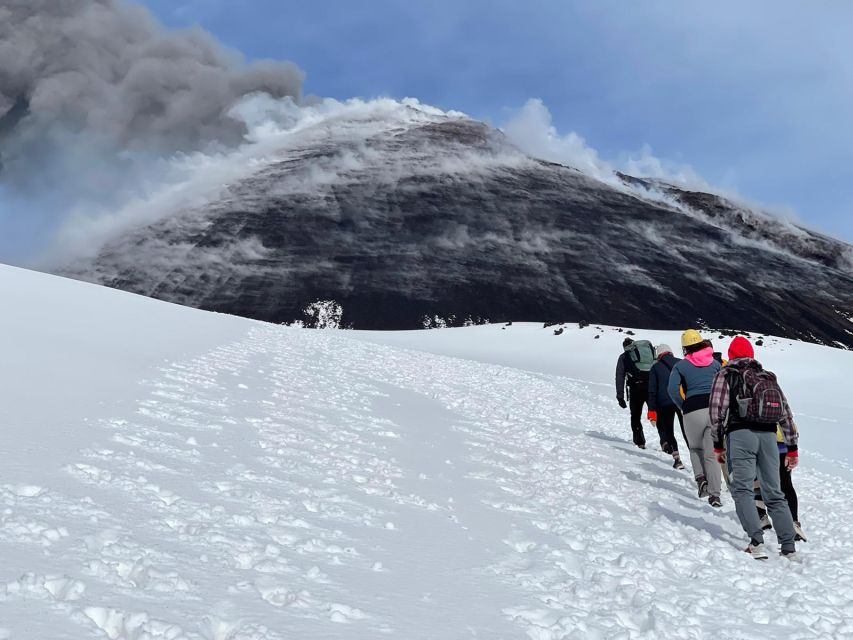
The guide will bring you to a safe viewing position for Etna’s summit crater before the return. This is an important safety boundary. Volcanic activity can change quickly, and the summit area is not a place for independent wandering.
One recent winter outing reached the active zone while lava was still emerging in February. That kind of sight can be extraordinary, but it also shows why the route cannot be promised in the same form every day. The guide must respond to current conditions rather than follow a rigid script.
You may hear volcanic sounds, see steam, or notice the smell of sulfur, but these details are not guaranteed by the tour description. What is guaranteed is a guided visit to the upper crater area when conditions permit, with the summit viewed from a safe distance.
This is one reason I would choose a specialist guide over attempting the area alone. You gain context, but just as important, you have someone making decisions about ice, visibility, volcanic risk, and group safety.
The possible lava channel visit
If snow and route conditions allow, the group may visit a lava channel before returning to the cable car’s upper station. This is an optional part of the route, not a promise.
A lava channel gives you another way to see how molten rock moved across Etna during an eruption. It also adds variety to the walk, since you are no longer looking only at cones and broad views.
Because the guide may omit this section, do not judge the tour by whether you reach the channel. The priority is a safe return through changing high-altitude conditions. On an active volcano, flexibility is sensible, not a sign that the tour is poorly organized.
Returning by cable car after five hours
After the crater and volcanic features, you trek back toward the upper cable car station. The full outing lasts about five hours, including the ride up, guided stops, walking time, and return cable car journey.
The return may feel easier because it is downhill in places, but loose sand and icy sections can still demand attention. Keep using the poles and crampons as directed. Fatigue can make a simple slip more likely near the end.
The final cable car ride takes about 20 minutes back to Rifugio Sapienza. You return to the Ashàra information point, where the excursion ends. There is no included meal, so plan to carry food and drinks for the route and arrange anything else you want after returning.
What the $106 price really covers
At $106 per person, the tour offers more than a basic Etna walk. The price includes a licensed alpine or volcanological guide, hiking boots, helmet, walking sticks, and snow equipment. For visitors who do not own crampons or suitable mountain boots, that equipment can make the difference between joining safely and skipping the winter trip.
The €50 cable car ticket is a significant extra. Add it to the advertised price before comparing this experience with other Etna excursions. You also pay for your own transport to Etna South, food, and drinks.
The value is strongest if you want a small-group, high-altitude winter outing with specialist guidance. It is less appealing if you mainly want a quick scenic ride, an easy walk, or a guaranteed visit to the summit. The five-hour duration gives you time to explore, but it also means a serious commitment to cold and physical exertion.
Free cancellation up to 24 hours ahead and the option to reserve now and pay later make the booking less rigid. Still, weather and volcanic conditions can affect the schedule even after you book.
Who should book this Etna winter trek
I would choose this tour if you already enjoy hiking and want to see Etna’s snow-covered upper slopes from close range. It suits adults and older children aged 10 or above who are comfortable with cold, uneven ground, and a sustained uphill walk.
It is especially useful for people who want both mountain support and volcanic interpretation. You get equipment, route guidance, and explanations about eruptions in one outing. The language options are English, French, and Italian.
I would not book it for a relaxed family day, a first-ever hike, or a person who dislikes exposed high-altitude conditions. It is not suitable for pregnant women, wheelchair users, people with mobility or back problems, or those with heart, respiratory, blood pressure, or epilepsy concerns. The activity also excludes people with vertigo and people without hiking experience.
Should you book it?
Book this trek if your main goal is to walk through Etna’s winter crater zone, not simply look at the volcano from below. The combination of snow, black lava, the 2001 cone, Valle del Bove, Barbagallo craters, and a safe view toward the active summit gives you a strong sense of Etna’s power.
Before paying, be ready for the extra €50 cable car fee, cash payment, cold weather, and a route that may change. If you accept those limits and are fit for a demanding mountain walk, this is a well-focused way to experience Etna’s wilder southern slopes with proper equipment and a trained guide.
FAQ
How long does the Mount Etna winter trek last?
The activity lasts about five hours, including the cable car rides, guided stops, hiking, and return to the Ashàra information point.
How high does the hike go?
The trek climbs from the cable car station at about 2,500 meters to around 3,000 meters. The exact height and route depend on snow, ice, weather, and volcanic conditions.
Is the cable car included in the price?
No. The cable car costs €50 per person and must be paid in cash on site.
What equipment is provided?
The tour includes hiking boots, a helmet, walking sticks, and the necessary snow equipment, including gear for icy conditions.
What should I bring?
Bring warm clothing, a windbreaker, gloves, extra socks, a scarf, a hat, long pants, food, drinks, and cash. Wear weather-appropriate clothing and do not bring open-toed shoes.
Can beginners join the hike?
No. The activity is intended for experienced hikers in good health. You should tell the guide about any medical issues before the hike begins.
Can the route be changed or canceled?
Yes. Volcanic activity, ice, weather, or other safety concerns can require the guide to change or stop the excursion. The operator also allows free cancellation up to 24 hours before the activity for a full refund.
More winter activities in Italy
- Kiruna: Snowshoe Trek with Aurora Hunt and Warm Beverage
★ 4.5 · 20 reviews - Polar Night Snowshoe Trek
★ 5.0 · 12 reviews - Triund Trek & Snow Line Trek
★ 4.5 · 9 reviews - Kiruna: Snowshoe Trek with Warm Beverage and Sandwich
★ 4.5 · 6 reviews
Latest treks added in Italy
- Trekking on the roof of Tuscany★ 5.0 · 6 reviews
- Otranto Trekking Adventure: The Path of the Hermit and the Bay of the Turks★ 3.5 · 8 reviews
- Lecce: Hike to Otranto with town visit – Half Day Trekking +Taxi★ 5.0 · 2 reviews
- Wild Walk – Discovering the hidden paths★ 5.0 · 31 reviews
- Wine Hiking Sip & Trek★ 5.0 · 3 reviews
- Dolomites Trekking Experience★ 4.5 · 3 reviews
- Trekking an Island of Palmaria★ 4.5 · 6 reviews
- Trekking in the morning on Mount Etna★ 5.0 · 2 reviews
Volcano Treks, compared.
Mount Etna: Trek to 3000m with cable car and 4×4
Read our review →
Etna: summit craters trekking with volcano guide 3350mt
Read our review →
Mount Etna Trekking Tour Beyond the Tourist Trails
Read our review →
Mount Etna: Guided Trek 3,000 Meters to the Summit
Read our review →
Etna Sunset Tour: Volcano trek, Cave & tasting from Catania
Read our review →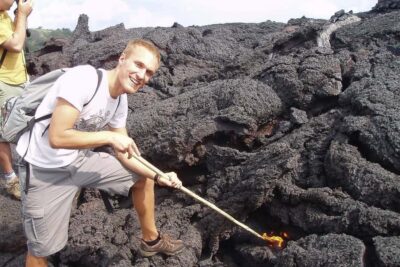
Browse the lists this tour appears in