
REVIEW · NEPAL
Annapurna Panorama trek
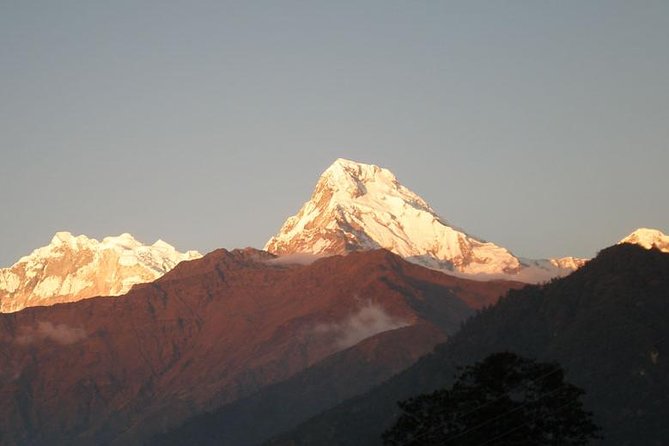
The best part of this 11-day Annapurna Panorama trek is the balance. You get six proper days on foot, with sunrise at Poon Hill, rhododendron forests, stone stairways, mountain villages, and long views of the Annapurna range. Kathmandu and Pokhara add culture and breathing room, so the trip does not feel like one long march.
I like the private format, since your guide can set a sensible pace rather than pushing you along with a large group. I also like the practical inclusions: permits, meals, snacks, porter support, sleeping bags, poles, and down jackets are handled for you. The main caution is the physical effort. Stone steps, steep climbs, and uneven trails make this a moderate trek, not a gentle sightseeing holiday.
Key points to know before you book
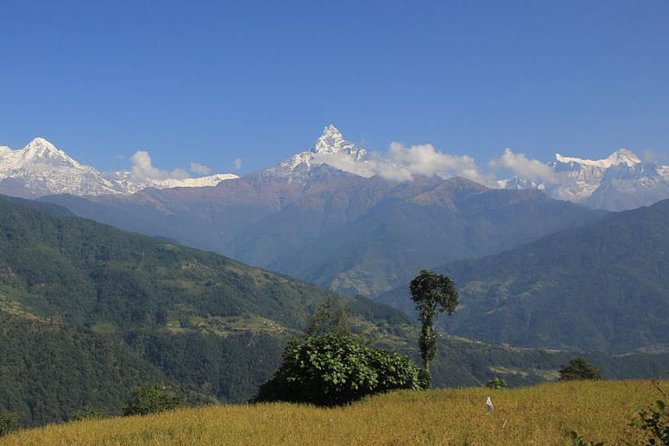
- Poon Hill sunrise reaches 3,210 meters, with the finest early morning mountain views on the route.
- Six trekking days are paired with sightseeing in Kathmandu and Pokhara.
- Private guiding and one porter for every two trekkers keep the walking personal and manageable.
- Meals, snacks, permits, and mountain lodging are included, which simplifies planning.
- Ulleri is the first serious test, with a steep climb on stone staircases.
- Mountain accommodation is comfortable but basic, with private rooms and shared toilets.
Why this trek works so well for a first Himalayan trip
This route gives you a taste of Nepal without committing to a high-altitude expedition. You walk through villages and forests, sleep in mountain lodges, and reach a famous viewpoint, but you avoid the longer and harder schedule of the Annapurna Circuit or Annapurna Base Camp trek.
The route is also sensibly paced. Kathmandu comes first, followed by a drive to Pokhara, then the trek itself. After the final walk to Phedi, you return to Pokhara before driving back to Kathmandu. That structure matters because you have time to adjust to Nepal, recover after the trail, and enjoy two very different cities.
The price is $1,045 per person. That is not simply the cost of six days of walking. It also covers three nights in a boutique Kathmandu hotel, private road transfers, a city tour, permits, a government-registered English-speaking guide, porters, all trekking food, mountain accommodation, snacks, and equipment loans. For someone who wants one organized price rather than a pile of separate arrangements, the package offers solid value.
You still need to budget for Kathmandu entrance fees, meals in Kathmandu and Pokhara, hot showers, Wi-Fi, charging devices, bottled drinks, insurance, evacuation cover, personal spending, and tips. Those extras can add up, so I would not treat $1,045 as your complete Nepal budget.
More Annapurna Treks in Pokhara
- Trekking in Annapurna/Langtang/Everest/Upper Mustang regions
★ 5.0 · 161 reviews - Kathmandu/Pokhara: 5-Day Annapurna Base Camp (ABC) Trek
★ 4.9 · 72 reviews - Annapurna Base Camp Trek -8 days
★ 5.0 · 56 reviews
Kathmandu begins with temples and Thamel
Your first day starts at Kathmandu airport, where a company representative meets you outside the terminal hall. After settling in, you can walk through Thamel, the city’s colorful tourist quarter. This is a useful first outing because you can get a feel for Nepal, buy small missing items, and adjust to the traffic, sounds, and pace.
The second day is devoted to Kathmandu Valley sights. The program includes Pashupatinath Temple, Boudhanath Stupa, Patan Durbar Square, Krishna Temple, Kumbheshwar Temple, the Golden Temple, Swayambhunath Stupa, and Kathmandu Durbar Square.
That is a full cultural day. The advantage is obvious: you see several major sites before heading into the mountains. The drawback is that the schedule may feel packed, especially if you prefer slow wandering. City entrance fees are not included, so keep cash available for those visits.
The Kathmandu hotel is included for three nights, which gives you an arrival night, a sightseeing night, and a final night after returning from Pokhara. Lunch and dinner in Kathmandu are your responsibility, so you have room to choose your own restaurants and control that part of the budget.
The long road from Kathmandu to Pokhara
Day three is a five to six-hour drive along the Trishuli River to Pokhara. The exact time depends on traffic and the time of day, so keep your plans loose. Nepal’s roads can make a listed driving time feel optimistic.
Pokhara sits at about 910 meters, much lower than the trekking villages ahead. You stay near Fewa Lake in the Lakeside area, a convenient base for an evening walk and a calm break from Kathmandu.
Pokhara is more than a transport stop. It is the gateway to the Annapurna foothills, and its lakeside setting gives you a pleasant contrast to the capital. The plan allows only one night before the trek, so enjoy the waterfront, but do not count on a long sightseeing day.
Nayapul to Ulleri: the first hard climb
On day four, a private vehicle takes you from Pokhara to Nayapul, the trailhead, in about an hour and a half. From there, you walk through Birethanti and Sudame, following the valley before reaching Tikhedhunga.
The trail then turns sharply upward. A steep climb on stone staircases takes you to Ulleri at about 1,950 meters. The walking day lasts five to six hours, depending on pace and trail conditions.
This is the day that tells you what the trek will demand. The distance is not extreme, but the stairs can work your legs. Use the walking poles if you need them, keep your pace steady, and do not treat the first morning as a race.
Ulleri is a mountain settlement rather than a polished resort. Your room is private, but the toilet is shared. That arrangement is typical of the route and worth accepting before you book. You are paying for access to the mountains, not hotel-style facilities at every stop.
Another trail to compare in Pokhara:
- Poon hill Trek 3 days
★ 5.0 · 176 reviews - Pokhara: 4-Day Ghorepani, Poonhill & Ghandruk Mountain Trek
★ 5.0 · 132 reviews - Ghorepani – Poon Hill Trek 3N-4D
★ 5.0 · 125 reviews - From Pokhara: 3-Day Ghorepani Poon Hill Trek with Guide
★ 4.9 · 68 reviews
Ghorepani through rhododendron and oak forest
Day five continues upward from Ulleri toward Ghorepani, at roughly 2,850 meters. The route passes through rhododendron and oak forest, with repeated steps and changing views as you gain height.
You stay at Upper Ghorepani, also called Deurali. The walk takes five to six hours and covers about 11 kilometers. At this elevation, you may notice the thinner air, even though the route remains moderate rather than extreme.
Ghorepani is important because it positions you for the early morning walk to Poon Hill. The night can be cool, particularly outside the warmer trekking seasons, which is where the included sleeping bag and available down jacket become useful.
The forest is one of the route’s pleasures. In spring, rhododendrons can add color to the trail, while oak and pine sections give the walk a shaded, enclosed feel. You do not simply march from one village to the next. The vegetation changes as the path climbs.
Poon Hill sunrise and the walk to Tadapani
Day six is the centerpiece. You hike up to Poon Hill at 3,210 meters for the morning mountain views, then return to Ghorepani before continuing to Tadapani.
An early start is required for the best sunrise conditions, though the exact departure time is not provided. Ask your guide the evening before. The climb to the viewpoint is short compared with a full trekking day, but it comes after several days of stairs and at a higher altitude.
Poon Hill is popular for good reason. It offers a broad view of the Annapurna Himalaya without requiring a long expedition. The route then continues through pine and rhododendron forest to Tadapani, at about 2,520 meters. The whole day takes six to seven hours.
This is also one of the more demanding days. You climb for the viewpoint, descend back to Ghorepani, and then walk onward. Pack your camera, water, and warm layer where you can reach them easily, rather than burying them in your duffel.
Tadapani to Ghandruk, a gentler village day
Day seven is shorter, at three to four hours. The trail drops through forest to Ghandruk, a well-known mountain village at about 1,950 meters.
The shorter schedule is welcome after Poon Hill. You have time to explore the village and surrounding area rather than arriving just before dinner. The route is mainly downhill, so your lungs get a break, but your knees still have work to do.
Ghandruk is one of the places where the cultural side of this trek becomes clearer. The program does not promise a formal village tour or a set of performances, so keep expectations practical. You will have time to walk around, see the settlement, and experience a mountain community in the course of an ordinary trekking day.
Ghandruk to Pothana, stairs and a muddy descent
Day eight covers five to six hours from Ghandruk to Pothana. The trail descends on stone stairs toward the Modi Khola, then climbs to Landrung and continues through Tolkha toward Deurali.
The final descent into Pothana passes through forest on a red mud trail. In the monsoon, this section can be slippery. That note is important: sturdy shoes and trekking poles are not decorative extras here, especially in wet weather.
Pothana sits at about 1,910 meters, so the route is gradually bringing you lower. The day includes both downhill and uphill walking, a pattern that can be more tiring than a route that simply descends.
The mountain lodges provide private rooms with shared toilets. Meals, snacks, tea, coffee, and bottled water are included during the trek. Boiled water, hot showers, Wi-Fi, device charging, and bottled drinks are not included, so carry a small amount of cash and manage your expectations about comfort.
The final walk to Phedi and back to Pokhara
On day nine, you walk along the ridge toward Dhampus, with views of the Annapurna range, then descend to Phedi. The trek lasts three to four hours, followed by a drive of about 40 minutes to Pokhara.
This is a pleasing finish because it does not squeeze one last long day out of you. You get a final ridge walk, a mountain view, and then a proper return to town.
Back in Pokhara, you can enjoy the Lakeside area and recover from the trail. Lunch and dinner are not included in Pokhara, which gives you flexibility. It also means you should plan for those meals rather than assuming the trekking package covers them.
A final drive and farewell dinner in Kathmandu
Day ten is another five to six-hour drive from Pokhara to Kathmandu. As with the first road transfer, traffic can change the timing. Avoid booking a tight evening flight or an important appointment on this day.
The plan includes a farewell dinner in Kathmandu. Day eleven is reserved for transfer to the international airport and your onward flight. That final buffer is helpful. You are not expected to leave the trail and fly internationally on the same day.
Guides, porters, and the value of private support
The trek includes an English-speaking, government-registered guide and local porters, with one porter assigned for every two trekkers. That is a practical ratio. You carry a daypack while the porter handles the heavier luggage, making the long stair sections more manageable.
The guide also handles route finding, permits, accommodation arrangements, meals, and day-to-day decisions. You are not left to guess which trail junction to take or how to organize the next lodge.
Mountain Mart’s guides frequently praised in related Annapurna and Poon Hill trips include Ram Bhandari, Yukumar Magar, Nabin, and Dolakh as a responsive company contact. The supplied details do not guarantee that one of those people will lead your departure, so ask for the assigned guide’s name before you go.
Past experiences also highlight practical care: guides helping with footwear problems, checking safety, arranging food, and explaining local culture and plants. That is the sort of support that matters more than a polished speech when you are tired or dealing with a small problem on the trail.
What to pack and what to clarify
You can borrow a down-filled sleeping bag, walking poles, and a duffel bag. A down jacket is also available if needed. Even so, bring comfortable broken-in hiking shoes, warm layers, rain protection, personal medicine, sun protection, and a daypack.
The package lists bottled water, snacks, cookies, energy bars, and seasonal fresh fruit during the trek. It does not include boiled water, hot showers, Wi-Fi, electronic charging, or bottled drinks beyond the stated water provision. Ask how much drinking water is supplied each day and bring a reusable bottle.
A moderate fitness level is required. You should be comfortable walking five to seven hours, climbing many stairs, and handling uneven ground. The route is private, so your pace can be discussed, but a private guide cannot remove the climbs.
Who should book the Annapurna Panorama trek?
I would recommend this trek to you if you want a first Himalayan experience with strong scenery, village walking, and a clear support system. It suits couples, friends, and families with active older children, provided everyone can meet the moderate fitness requirement and children are accompanied by an adult.
It is also a good choice if you want Nepal’s cultural highlights before and after the mountains. The Kathmandu day is full, the Pokhara stay is brief, and the trail provides the main outdoor experience.
I would hesitate if you want luxury lodges, private bathrooms, reliable internet, or a relaxed walking schedule every day. I would also think twice if steep stairs and a pre-dawn viewpoint hike sound unpleasant. The route is approachable, but it is still a real trek.
Should you book it?
Book it if you want Poon Hill’s big views without giving up Kathmandu and Pokhara, and if you value having permits, porters, meals, and transfers arranged in one package. The private format and included equipment make the $1,045 price easier to justify.
Before paying, confirm the assigned guide, the hotel names, the exact airport and city transfer plans, and what bottled water means in practice. Also buy travel insurance with evacuation cover, since that is specifically excluded. Cancellation is generous only when handled early: cancel at least six full days before the start for a full refund, two to six days ahead for a 50 percent refund, and less than two days ahead for no refund.
FAQ
How long is the Annapurna Panorama trek?
The full experience lasts approximately 11 days. It includes sightseeing and transfers in Kathmandu and Pokhara, plus six days of trekking.
Where does the tour start?
The listed starting point is Pokhara, in Nepal’s Gandaki Zone, with an 8:00 am start time.
Is the trek private?
Yes. Only your group participates, so the guide can work with your group’s pace and needs.
What level of fitness is required?
You need a moderate level of physical fitness. The route includes steep stone staircases, uneven trails, five to seven-hour walking days, and a climb to Poon Hill at 3,210 meters.
Are permits included?
Yes. The Annapurna Conservation permit and TIMS paperwork are included.
Are meals included?
Breakfast, lunch, dinner, snacks, bottled water, coffee, and tea are included during the trek. Lunch and dinner in Kathmandu and Pokhara are not included.
Is trekking equipment provided?
You can borrow a down-filled sleeping bag, walking poles, and a duffel bag. Down jackets are also available if needed.
What is the cancellation policy?
You receive a full refund if you cancel at least six full days before the start time. Cancellation two to six full days ahead receives a 50 percent refund. Less than two full days ahead is nonrefundable.
Latest treks added in Pokhara
- Pokhara: Majestic Mardi Base Camp Guided Trek with HotSpring★ 5.0 · 6 reviews
- Pokhara: 9-Day Annapurna Base Camp Trek with Poon Hill★ 5.0 · 6 reviews
- Pokhara: 5-Day Ghorepani and Poon Hill Private Trek★ 5.0 · 4 reviews
- Pokhara: 5-Day Trek to Annapurna Base Camp and Hot Springs★ 5.0 · 4 reviews
- Pokhara: 7-Day Annapurna Base Camp Trek & Hot Spring★ 4.0 · 3 reviews
- Pokhara:4-Day Ghorepani Poon Hill Guided Trek via Ghandruk★ 5.0 · 3 reviews
- Pokhara: 4-Day Poon Hill and Ghandruk Guided Trek★ 5.0 · 14 reviews
- Pokhara: 4-Day Beautiful Ghorepani Poon Hill & Ghandruk Trek★ 4.8 · 21 reviews
Annapurna Base Camp Treks, compared.




Trekking in Annapurna/Langtang/Everest/Upper Mustang regions
Read our review →


Kathmandu to Annapurna Base Camp (ABC) 5-Day Trek
Read our review →Browse the lists this tour appears in