

REVIEW · HANOI
Trekking around Ha Giang 5 days 4 nights
Ha Giang is Vietnam at its most dramatic: terraced fields, limestone peaks, and twisting mountain roads that make the journey part of the reward. This five-day route links Tay, Dao, Man, H’mong, Lo Lo, and Giay communities with the famous Dong Van and Ma Pi Leng passes.
I especially like the long village walk on day two and the chance to sleep in a local Tay house. I also like that transport, meals, sightseeing tickets, and travel permits are included, so the price covers most of the hard-to-arrange pieces.
The main caution is the guide. One guest praised Mr. Long as a very good driver and Eddie as a terrific guide, while another described poor English, wrong turns, and weak local knowledge during the first two days. Ask about your assigned guide before you go.
Key points to know before booking
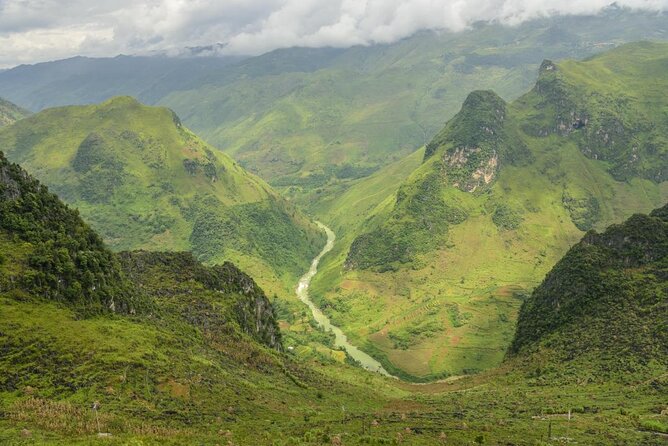
- Six to eight hours of trekking on day two: This is a real walking trip, not a sightseeing tour with short strolls.
- Dong Van and Ma Pi Leng: You reach two of northern Vietnam’s most famous mountain routes, with long climbs, canyons, and wide views.
- A night in a Tay homestay: Your first night is in a local home rather than a standard hotel.
- Private travel for your own group: Only your party takes part, with private transfers and an English-speaking guide.
- Most meals and permits included: Four breakfasts, four dinners, five lunches, entrance tickets, and travel permits are covered.
- $902 per person: The price is easier to justify if you value private transport, a guide, accommodation, and a carefully arranged route.
Why Ha Giang rewards five days
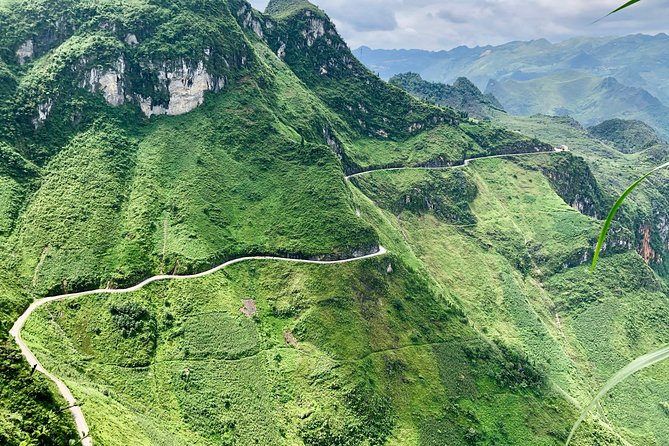
Ha Giang takes time. From Hanoi, the road runs through Tuyen Quang, tea plantations, mountain country, and ethnic villages before you even reach the province. A quick overnight trip can show you a famous pass, but it cannot give you much time on foot among the villages and fields.
This route gives you two different ways to see the region. You spend several hours walking through rice terraces and palm forests, then return to the vehicle for long mountain drives between Ha Giang, Dong Van, Meo Vac, and Hanoi. That mix matters because some of the best scenery appears beside the road, while other parts are reached only on foot.
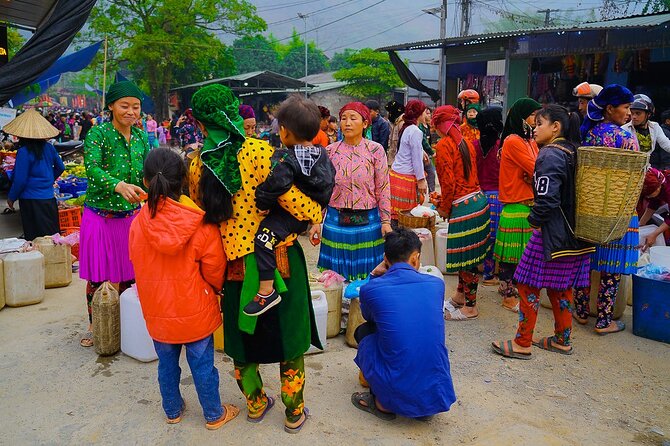
I also like the cultural range. The route brings you into contact with Tay, Dao, Man, H’mong, Lo Lo, and Giay communities. You should approach these encounters with courtesy and patience. The point is not to collect photographs of ethnic clothing, but to notice how villages, fields, roads, and daily work fit together.
More five-day treks in Hanoi
- Trekking In Ha Giang 5 Days
★ 5.0 · 4 reviews - Annapurna base camp trek 5 Days
★ 5.0 · 252 reviews - Kathmandu to Annapurna Base Camp (ABC) 5-Day Trek
★ 5.0 · 102 reviews
Day one: Hanoi to Ha Giang and a Tay homestay
Pickup is around 8am from your Hanoi hotel. The first day is mainly a transfer, with about four hours listed for the journey and a lunch stop at a local restaurant in Tuyen Quang.
The drive passes tea plantations, mountains, and ethnic minority villages. You will not be walking through the high country yet, but this gradual change from Hanoi to northern Vietnam helps you understand the scale of the trip. By late afternoon, you reach Ha Giang. If time allows, you can explore town and meet local people before dinner.
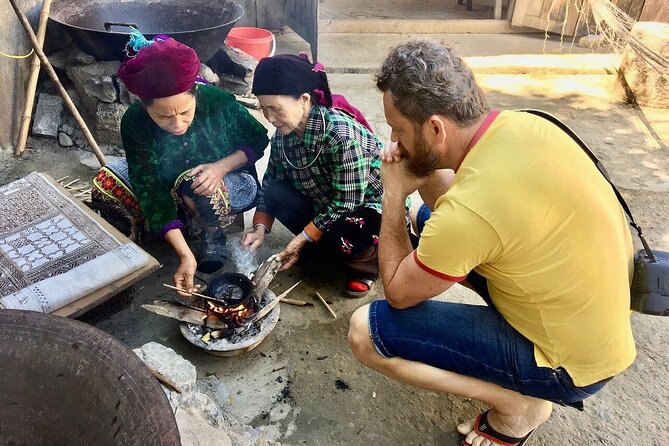
Your overnight stay is in a local Tay house. That is a useful contrast with the hotel nights later in the trip. A homestay can be simpler than a hotel, and you should be comfortable with a less polished setting. In return, you sleep in a place tied more closely to local life.
The day includes a five to seven kilometer walk, although the schedule gives the transfer itself the larger share of the day. I would keep your first evening easy. You have a long road ahead, and the next morning brings the hardest walking of the tour.
Day two: six to eight hours through villages and fields
This is the day that makes the trip a trekking tour rather than a standard mountain circuit. You leave the homestay in the morning and walk for roughly six to eight hours toward Lung Vai, continuing to the remote village of Khuoi My.
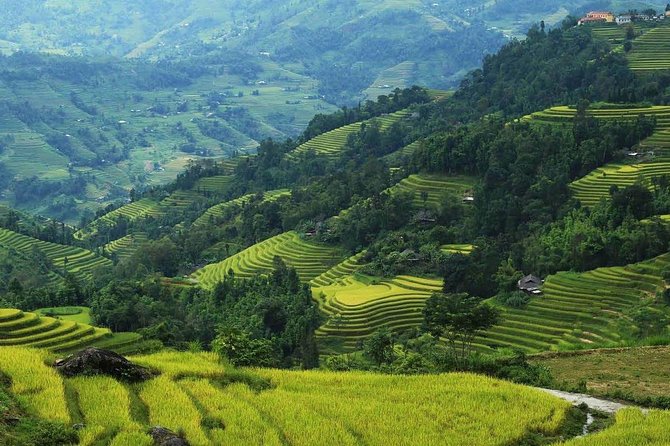
The scenery changes as you go. Expect terraced rice paddies, high mountains, and palm-tree forests. Farmers work in the fields, and, if timing permits, you may have the chance to help with some of that work. The schedule also describes brief encounters with Man and Dao people along the way.
Lunch is a picnic outdoors. That sounds simple, but it is one of the stronger parts of the plan. You do not lose the middle of the day to a restaurant stop, and you get to eat in the same setting that makes the walk worthwhile.
The distance and duration deserve serious attention. A six to eight hour mountain walk can feel far harder than the same time on a flat path. The information says most people can participate, but it also makes clear that this is not an effortless outing. If you dislike long walks, steep ground, or changing weather, ask detailed questions before paying.
The remote setting is the attraction, but it also creates a practical limitation. Exact trail conditions, walking pace, and daily timing may depend on local conditions. Your guide’s route knowledge and English matter most here, which is why I would confirm the guide before departure.
Day three: Tam Son, the H’mong Palace, and Dong Van
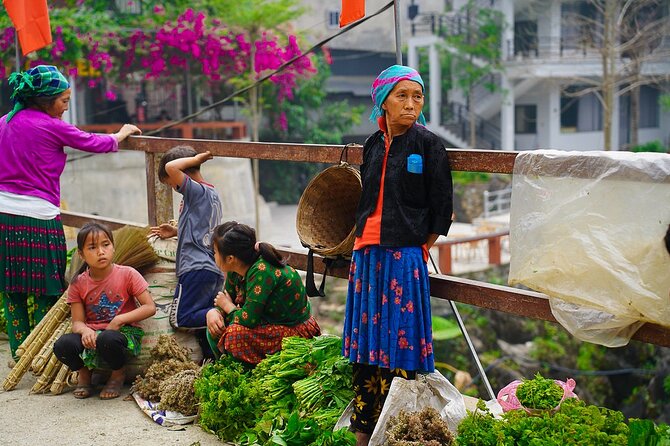
Day three begins with a permit stop at the immigration office before the road continues toward Dong Van. Those permits are included, which saves you an administrative chore and keeps the group moving.
The drive passes a series of long mountain passes. You stop for lunch in Tam Son, described as a small mountain village, before visiting the King of the H’mong Palace.
The palace was built in the early 1900s by Vuong Chin Duc, a local chief who allied with French forces against the Viet Minh. Its design draws on Qing-era Chinese architecture, with stone blocks, wood, and terracotta roof tiles. This is not just another old building on a sightseeing checklist. It gives you a concrete way to understand the political power and outside influence that shaped this frontier area.
Later, you have lunch in Dong Van and set out for a trek of about three and a half hours. The route reaches the highest mountain in Dong Van and offers broad views across the karst country. You also visit H’mong, Lo Lo, and Giay villages.
The schedule lists an eight to ten kilometer trek for the day, with about four hours for the first portion and three hours for the Dong Van walk. The timing may feel compressed once driving, meals, the permit stop, and the palace visit are added together. Still, the day offers a good balance of history, scenery, and walking.
You return to Dong Van for dinner and a hotel night. After a homestay and a long walk, the hotel should feel like a welcome change, even if the accommodation is not the central reason to book this trip.
More Trekking Tours in Hanoi
- From Hanoi: 2-Day Sapa Trekking Trip with Homestay & Meals
★ 4.8 · 704 reviews - Sapa 3 Days 2 Nights Trekking Tour (1 Night In Ta Van Village, 1 Night In Hotel)
★ 5.0 · 699 reviews - 3-Day Trekking Adventure of Sapa from Hanoi – Stay Ta Van Village
★ 5.0 · 611 reviews - 2-Day Sa Pa Ethnic Homestay Tour & Trek with Limousine Bus
★ 4.8 · 440 reviews
Day four: Dong Van Old Quarter and Ma Pi Leng Pass
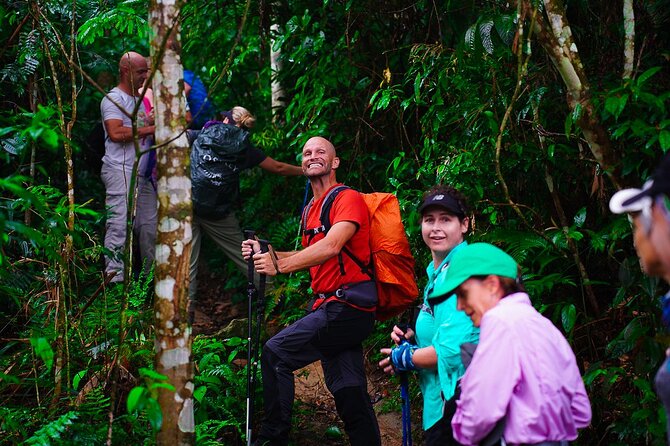
Day four is the visual centerpiece. After breakfast, you have time to explore Dong Van Old Quarter before walking toward Pu Lo fortress. The fortress dates from 1890 and was evacuated in 1945. From its position, you can look across the surrounding mountains.
The route then heads toward Ma Pi Leng Pass through limestone peaks, stone forests, and canyons before descending toward Meo Vac. The schedule describes a climb of 15 kilometers to the top of the pass, while also listing the day’s trek as eight to ten kilometers. Treat the exact distance as an estimate and ask your guide how much walking is planned for your departure date.
Ma Pi Leng is not a gentle park path. It is a high mountain route with exposed scenery, repeated climbs, and a long descent. You should bring sturdy shoes, water, sun protection, and a light layer for changing conditions. These items are not listed as inclusions, so plan to provide them yourself.
The day ends with a drive back to Ha Giang for dinner and another hotel night. That return adds road time, but it avoids another change of accommodation and positions you for the final journey to Hanoi.
For me, this is the day that best explains the tour’s price. You are not simply driven to a viewpoint. You combine a historic old quarter, a fortress, a demanding walk, and one of northern Vietnam’s best-known mountain passes.
Day five: the quiet route back to Hanoi
The final day takes a less-used road toward Hanoi. The route follows rivers as they wind from pass to pass through the hills of central northern Vietnam. The area receives fewer foreign visitors, so you may find local people especially curious about your presence.
The walk is short, about one to two kilometers, which is sensible after the previous days. You still get time to stop, speak with local people, and notice a part of the region that is not built around a major attraction.
Before reaching Hanoi, you visit Duong Lam Ancient Village. Its centuries-old houses offer a final look at older village architecture before the trip returns to the capital. Lunch is at a local restaurant along the way, followed by hotel drop-off in Hanoi.
This is a long final travel day, even though the walking is light. If you have an evening flight from Hanoi, do not schedule it too tightly. The tour does not provide a guaranteed arrival time, and mountain roads can make the return journey feel longer than expected.
What the $902 price really covers
At $902 per person, this is not a budget bus ride. It is a private five-day package with private transport, accommodation, an English-speaking guide, permits, sightseeing tickets, four breakfasts, four dinners, and five lunches.
The value depends on how you normally travel. If you would otherwise arrange a driver, several hotel nights, a homestay, a guide, permits, meals, and a complicated route through Ha Giang, the package has a sensible structure. You are paying for coordination as well as transport.
The price is less attractive if you want maximum independence, basic public transport, or the cheapest possible homestays. You also pay separately for drinks, souvenirs, personal costs, tips, travel insurance, and international flights.
I would ask for the accommodation details before booking. The plan includes hotels and homestays, but it does not give hotel names or room standards. That may be fine for you if location and local contact matter more than amenities. It is worth clarifying if you require a particular room setup.
Food, transport, and the guide question
Meals are included, but beverages are not. Tell the operator about dietary needs when booking. A vegetarian option is available if requested in advance.
Transport is private, which is valuable in Ha Giang. You avoid managing several public connections while carrying luggage between mountain towns. The drawback is that much of the trip is spent on winding roads. If you get carsick, bring whatever helps you and sit where you are most comfortable.
Guide quality needs direct attention. One account praised Mr. Long’s driving and Eddie’s guiding, while another described serious problems with English, cultural explanations, directions, and restaurant choice during the first two days. Those are not minor details on a route where the guide controls both the walking plan and much of your understanding of local life.
I would ask these questions before confirming:
- Who is assigned as the guide?
- How strong is the guide’s spoken English?
- How is the six to eight hour walking day handled?
- What happens if weather or trail conditions change?
- Can the guide explain the ethnic communities and historic sites?
The tour is private, so only your group participates. That gives you more control over walking speed and questions than a large group trip, but it also makes the assigned guide especially important.
Who should book this Ha Giang route?
I would recommend it to you if you want a structured introduction to northern Vietnam and are comfortable with long walks, winding drives, simple local accommodation, and a full schedule. It suits people who want both scenery and contact with village life, not just a quick photo stop at Ma Pi Leng.
It also works well if you value having transport and permits arranged in advance. The route reaches remote places that are harder to organize on your own, and the combination of private travel and guided walks reduces the number of decisions you must make on the road.
I would hesitate if you want luxury hotels, short walking days, or a relaxed pace. The trek on day two is substantial, and day four combines walking with a long return drive. I would also hesitate until the guide is confirmed if cultural explanation and English communication are central to your trip.
The cancellation terms are fairly strict close to departure. You can receive a full refund if you cancel at least six full days before the start time, a 50 percent refund if you cancel two to six full days ahead, and no refund for cancellations less than two full days before departure. The cut-off uses local time.
My verdict on the five-day trek
I like this route because it gives Ha Giang room to unfold. You get the Tay homestay, a serious village trek, the H’mong Palace, Dong Van, Ma Pi Leng, and a quieter return through Duong Lam. The best parts are not just the famous passes, but the time spent walking between fields and communities.
The weak point is not the scenery. It is the uncertainty around guiding. Confirm the guide’s name, English, route experience, and approach to the walking days before booking. If those answers are clear, the $902 package can be a practical way to see a difficult region without arranging every road, bed, meal, and permit yourself.
FAQ
How long is the Ha Giang trekking tour?
The tour lasts five days and four nights, beginning with pickup in Hanoi at around 8am on day one.
Is this a private tour?
Yes. Only your group participates, and private transfers and transportation are included.
How much walking is involved?
Day one includes a five to seven kilometer walk. Day two involves about six to eight hours of trekking. Day three lists an eight to ten kilometer trek, day four also lists an eight to ten kilometer trek, and day five includes a one to two kilometer walk.
Are meals included?
Yes. The tour includes four breakfasts, four dinners, and five lunches. Drinks and personal purchases are not included.
Is accommodation included?
Yes. Accommodation is provided in hotels and homestays as described in the program. The first night is in a local Tay house.
Is an English-speaking guide included?
Yes. An English-speaking guide is included. You should confirm the assigned guide before departure because the quality of English and local explanations can affect the experience.
Are travel permits and sightseeing tickets included?
Yes. The package includes travel permits and sightseeing tickets, including the included admission listed for Ma Pi Leng Pass and Duong Lam Ancient Village.
Latest treks added in Hanoi
- From Hanoi : Sapa Moutain Trek – Halong bay Heritage★ 4.5 · 25 reviews
- Trekking In Ha Giang 5 Days★ 5.0 · 4 reviews
- 8-Days Hanoi, Sapa Trekking And Halong Bay Cruise★ 5.0 · 8 reviews
- 2-Day Trekking in Sa Pa from Ha Noi by sleeping bus★ 5.0 · 4 reviews
- Hanoi: 3D2N Mu Cang Chai Visit All Attractions, Trek, Ethnic Life★ 5.0 · 3 reviews
- Mai Chau – Pu Luong trekking 3 days 2 nights★ 4.5 · 7 reviews
- 2-Day SAPA Trekking – Villages-Homestay-Ethnic-Local Food-Market★ 5.0 · 2 reviews
- Sapa trekking – Unique Route – 2D1N★ 5.0 · 3 reviews
5-Day Experiences, compared.

Kathmandu to Annapurna Base Camp (ABC) 5-Day Trek
Read our review →
Machu Picchu: 5-Day Salkantay Trek with Panoramic Train
Read our review →

Kathmandu/Pokhara: 5-Day Annapurna Base Camp (ABC) Trek
Read our review →

5-Day Pearl of Africa Chimps and Gorilla Trekking Safari
Read our review →Browse the lists this tour appears in