
REVIEW · NEPAL
Pokhara: 9-Day Annapurna Base Camp Trek with Poon Hill
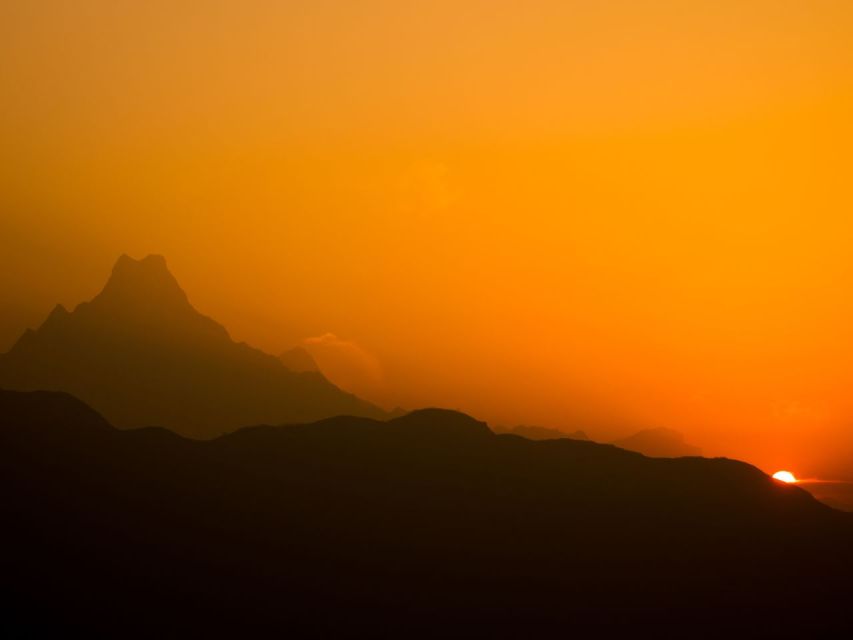
The finest moment comes before breakfast: you climb from Ghorepani to Poon Hill at 3,210 meters and watch the sunrise turn Annapurna South, Hiunchuli, and Machhapuchhre orange and red. This trek then carries you into the Annapurna Sanctuary, where snowy peaks rise around Annapurna Base Camp.
I like the route’s variety. You get village life, rhododendron forests, river valleys, a proper high mountain finish, and a hot spring at the end. I also like that the price of $487 includes permits, accommodation, transport during the trek, government taxes, and staff costs. The main caution is the physical work: the Ulleri climb has more than 3,000 steps, and the trail reaches 4,130 meters.
Key points before you book
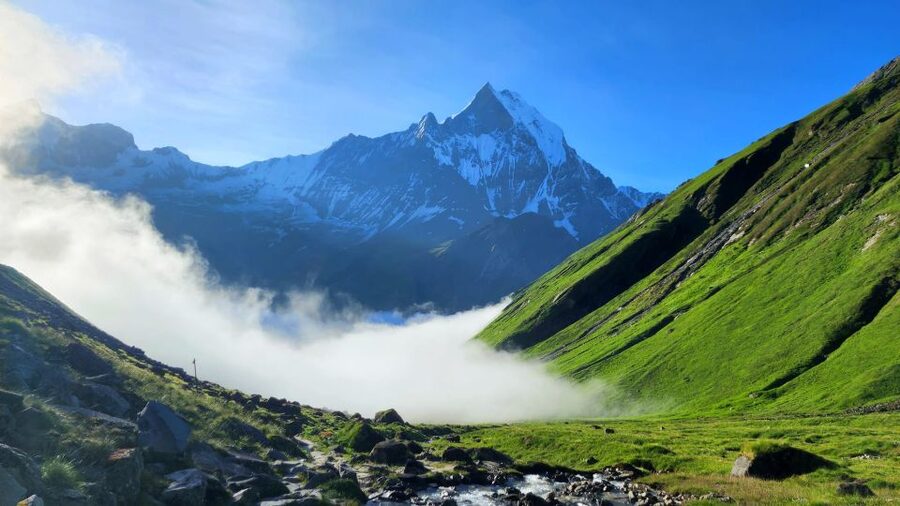
- Poon Hill sunrise comes early but pays off: The short pre-dawn climb leads to broad Himalayan views and some of the trek’s best photographs.
- The Ulleri staircase is the first serious test: Day two is only about six hours, but the long stone ascent can feel tougher than the distance suggests.
- Annapurna Base Camp is the high point: At 4,130 meters, you finish inside a great bowl of snow-covered peaks and glaciers.
- Tea-house travel keeps the trek grounded: You sleep in local lodges and stop in villages such as Tikhedhunga, Ghorepani, Tadapani, Sinuwa, and Bamboo.
- Jhinu Dada gives your legs a reward: Natural hot springs offer a welcome rest after the long descent from base camp.
- The guiding gets strong marks: Lalit and Pratiksha are among the guides connected with this experience, with careful attention to safety, lodges, meals, and permits.
What the $487 price really covers
At $487 per person, this is a fairly useful package for a nine-day private trek. The important inclusions are not flashy. They are the details that can cause trouble if left to you: trekking permits, paperwork, government taxes, accommodation, transport during the trek, and staff expenses.
Meals are included only with the Full Package, so check exactly which package you are choosing before paying. If meals are not included, you will need to budget separately for food in the tea houses.
You also pay for many normal trekking extras. Soft drinks, alcoholic drinks, phone calls, laundry, bar bills, battery charging, hot showers, bottled or boiled water, porters, and personal equipment are excluded. Trekking poles, sleeping bags, and crampons are also not supplied.
That makes the headline price attractive, but not all-inclusive. I would ask for a clear meal plan and decide in advance if you need a porter. Carrying your own bag is possible, and one account describes doing so, but the steep stairs and long descent are easier when your load is light.
A private group is a real advantage here. You are not tied to a large party moving at someone else’s pace. Your guide can help with timing and lodge choices, though the route still has fixed distances and high points that cannot be rushed.
More Annapurna Treks in Pokhara
- Trekking in Annapurna/Langtang/Everest/Upper Mustang regions
★ 5.0 · 161 reviews - Kathmandu/Pokhara: 5-Day Annapurna Base Camp (ABC) Trek
★ 4.9 · 72 reviews - Annapurna Panorama trek
★ 5.0 · 71 reviews
Day 1: Pokhara to Tikhedhunga by road and trail
The first day begins with pickup in Pokhara and a roughly two-hour cab ride to Nayapul. The driver is scheduled to meet you at your hotel lobby, holding a sign with your last name, so be ready about ten minutes early.
From Nayapul, you walk for around three hours toward Tikhedhunga at 1,570 meters. This opening section introduces the character of the trek without throwing you straight into the hardest climb. You follow the Modi Khola River, pass villages, and walk through rhododendron country.
Tikhedhunga is a good first night because the day is manageable and the elevation remains moderate. You stay in a tea house, where the simple setting is part of the experience. Do not expect resort comforts. You are here for a bed, a meal, and a chance to rest before the first major ascent.
The day is listed in slightly different ways in the schedule, with four hours of guided hiking after reaching Nayapul. Allowing extra time is sensible, since trail conditions and stops can affect the pace.
Day 2: The 3,000-step climb to Ghorepani
The route from Tikhedhunga to Ghorepani, at 2,840 meters, takes about six hours. The defining feature is the staircase to Ulleri, with more than 3,000 stone steps.
This is the day when you learn how your legs handle Nepal’s trails. The distance may not sound extreme, but repeated steps are tiring, especially while carrying a full pack. Take the climb slowly, drink often, and let your guide set a pace you can sustain.
Rhododendron forests surround much of the route. In bloom, they add strong color to the walk. Even outside flowering season, the forest gives shade and breaks up the steady ascent.
Ghorepani is one of the better-known stops on this route, and its position makes it the launching point for Poon Hill. You spend the night in a tea house, with an early start ahead. The village is welcoming, but the schedule means this is not the night for a late dinner and a long card game.
Day 3: Poon Hill sunrise, then Tadapani or Chuile
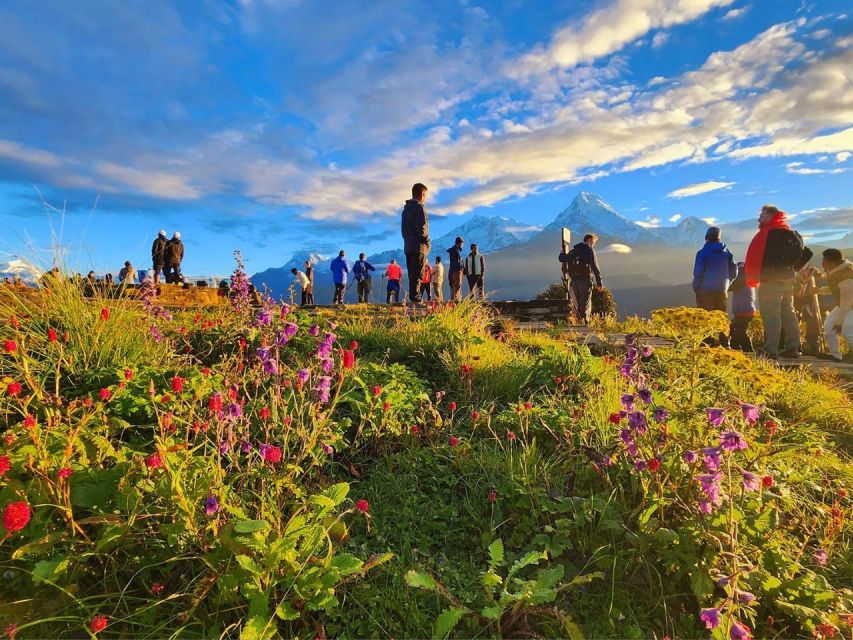
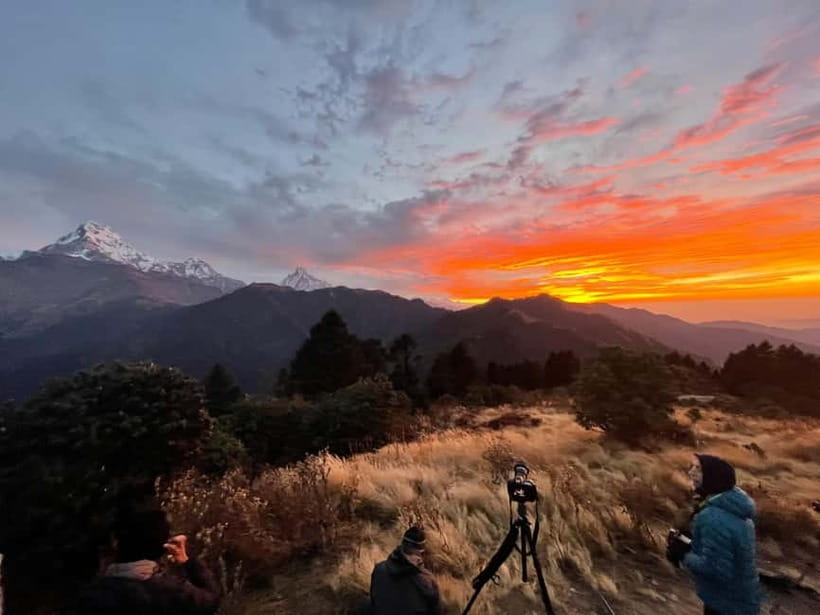
The day starts before sunrise with the climb to Poon Hill. At 3,210 meters, the viewpoint gives you one of the strongest payoffs on the whole route. As the light changes, the snowy peaks can shift from gray to pink, orange, and bright white.
The views include Annapurna South, Hiunchuli, and Machhapuchhre, also called Fishtail. The timing matters more than comfort here. It may be cold and dark when you leave, so keep warm clothing close rather than buried in your bag.
After sunrise, you return for food and continue through forest toward Tadapani or Chuile. The walking time is about six hours for the full day, though the schedule also lists roughly five hours for the Tadapani section.
Tadapani, in the Ghandruk area, is a forested mountain stop with a peaceful feel. Chuile sits lower, around 2,400 meters, which can make the night easier on your body after the early start. Your exact overnight stop may depend on the route plan, lodge availability, and your group’s pace.
This is one of the most varied days: darkness and sunrise, a famous viewpoint, then a long walk beneath trees. It is also a demanding day because the early start is followed by several hours of trail.
More Poon Hill Treks in Pokhara
- Poon hill Trek 3 days
★ 5.0 · 176 reviews - Pokhara: 4-Day Ghorepani, Poonhill & Ghandruk Mountain Trek
★ 5.0 · 132 reviews - Ghorepani – Poon Hill Trek 3N-4D
★ 5.0 · 125 reviews - From Pokhara: 3-Day Ghorepani Poon Hill Trek with Guide
★ 4.9 · 68 reviews
Day 4: Chuile to Sinuwa through river country
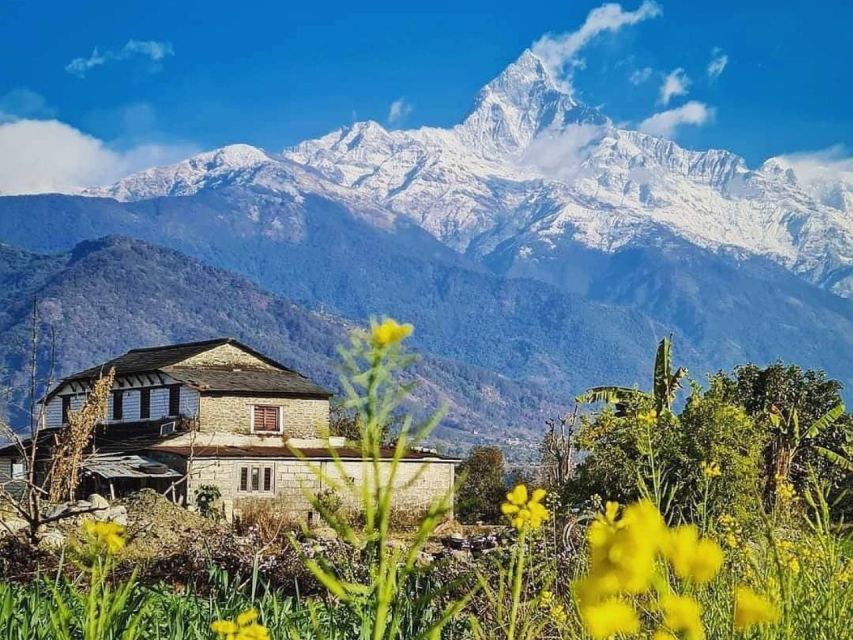
From Chuile, the route continues toward Sinuwa at about 2,170 meters. The walking time is listed at around five hours.
You cross the meeting area of the Kumrung and Modi Rivers, an appealing change after the forest trails above. The path moves through quieter rural scenery, with villages and cultivated slopes appearing between wooded sections.
Sinuwa marks the route into the Annapurna Sanctuary. You are now heading toward the high mountain core rather than simply crossing from one village to another. The elevation is not yet extreme, but the coming days will require more care.
Sinuwa is also a useful rest point because the schedule does not demand an enormous distance. Use the evening to check your clothing, refill water, charge devices if possible, and tell your guide if you have a headache, poor sleep, or unusual tiredness.
Day 5: Sinuwa to Deurali at 3,200 meters
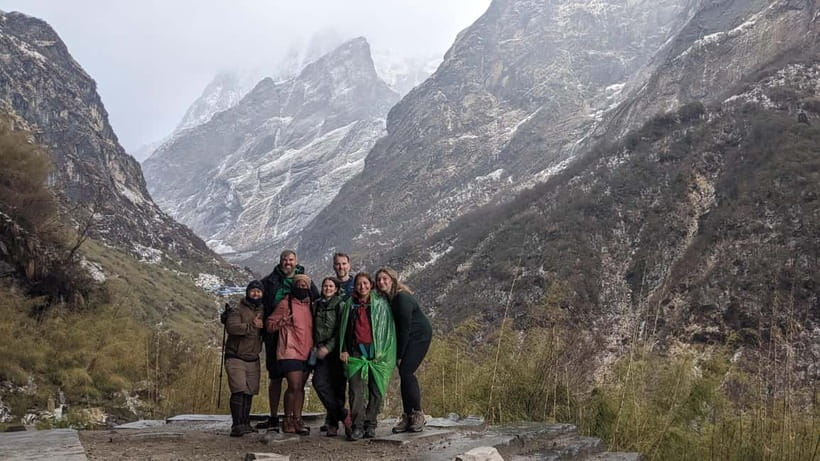
The walk from Sinuwa to Deurali takes about six hours. The forest remains a major part of the route, but the mountains begin to feel closer and more serious.
You hike with Annapurna and Machhapuchhre in view when conditions allow. The trail rises toward Deurali at 3,200 meters, so the effects of altitude can begin to show even if you are fit.
This is a day for steady movement, not speed. Keep your pace conversational. A guide such as Lalit can help you judge when to pause and when a headache is something to watch closely. The support matters because altitude problems do not always arrive dramatically.
Deurali is a practical overnight stop before the final approach to base camp. Accommodation is simple, and the higher you go, the more basic facilities can become. You are trading comfort for access to the mountains.
Day 6: Deurali to Annapurna Base Camp at 4,130 meters
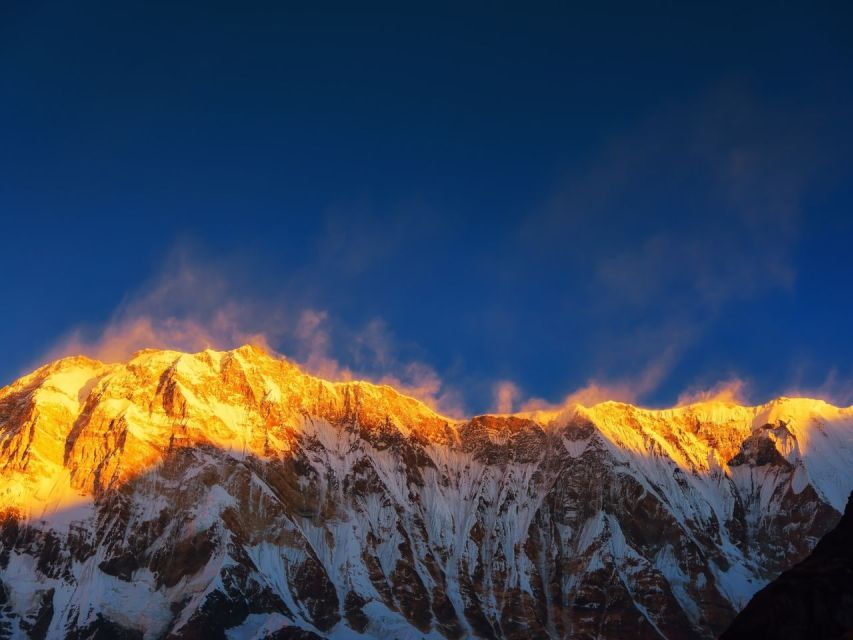
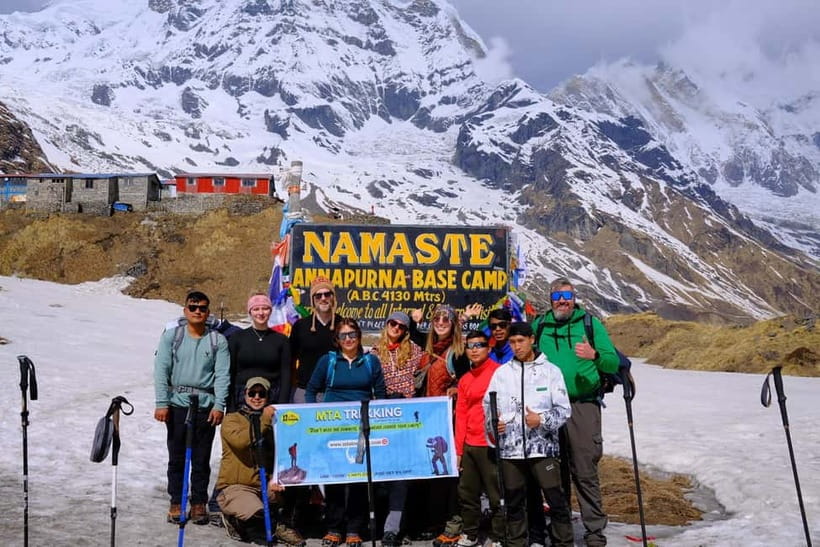
This is the summit day of the itinerary, though Annapurna Base Camp is not a climbing summit. From Deurali, you walk for about six hours to reach the camp at 4,130 meters.
The route brings you into a large mountain amphitheater, with snow-covered peaks and glaciers around you. Annapurna South, Hiunchuli, and Machhapuchhre help give the area its powerful sense of enclosure. The reward is not just a single viewpoint. It is the feeling of being surrounded by high Himalayan walls.
The final ascent may feel slow. At this elevation, ordinary steps take more effort, and cold weather can make breaks uncomfortable. Follow your guide’s advice, keep drinking, and do not treat a headache or nausea casually.
You spend the night at base camp, which makes the experience more than a quick photo stop. The evening can be quiet and cold, but that is part of the appeal. You have reached the highest point of the trip and can look back on the forests, stairs, and villages that brought you there.
The activity information refers to altitude sickness as a possibility. The stated note incorrectly mentions Mardi Himal Base Camp, but the actual route described here reaches Annapurna Base Camp at 4,130 meters. The sensible advice is the same: take symptoms seriously and follow your guide’s instructions.
Day 7: The long descent to Bamboo
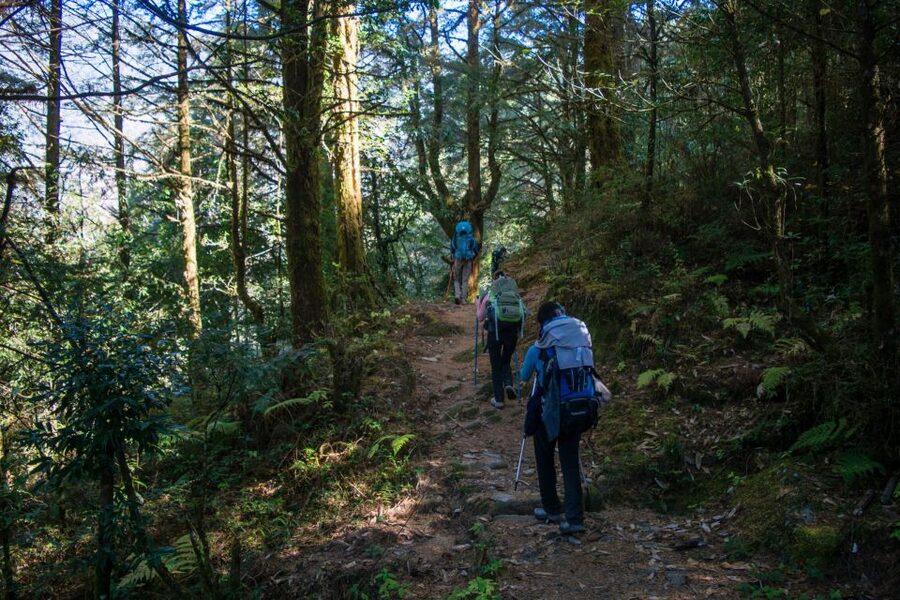
The walk from Annapurna Base Camp to Bamboo takes about six hours. You retrace much of the route, but the experience changes when you are going downhill.
The peaks remain impressive, though your attention may shift to your knees and feet. Descending steep trails can be harder on joints than climbing, particularly after the high camp night. Trekking poles are not included, so bring your own if you normally use them.
Bamboo sits around 2,300 meters and offers a warmer, lower night. The descent also gives you a chance to notice details missed on the way up, including river sounds, forest textures, and small changes in vegetation.
This is not a throwaway day. It is a full hike, and the accumulated fatigue from the previous six days is real. Keep some energy in reserve rather than racing downhill.
Day 8: Bamboo to Jhinu Dada and the hot springs
From Bamboo, you continue for about five hours to Jhinu Dada at 1,600 meters. The lower altitude feels welcome, and the natural hot spring is the day’s clear reward.
The springs are useful after several days of stairs and descents. You can soak your tired muscles and enjoy a slower evening, though you should still keep track of your belongings and follow local instructions around the bathing area.
Jhinu Dada also brings the trek back toward warmer village country. The route is still active and hilly, but the high alpine section is behind you.
The hot spring is one reason this version of the Annapurna Base Camp route works well as a complete nine-day trip. The itinerary does not simply end at the highest point. It gives you a physical reset before the return to Pokhara.
Day 9: Returning to Lakeside Pokhara
The final day combines about two hours of trekking with a comfortable ride back to Lakeside Pokhara. The exact road time can vary, but the schedule allows roughly four hours for the jeep or SUV portion.
This transition is welcome after a week on foot. You finish with time to think over the route, from the Modi Khola near Nayapul to the Poon Hill sunrise, the sanctuary around base camp, and the hot spring at Jhinu Dada.
The trip ends in Pokhara rather than at a remote roadhead, which keeps the return simple. You do not need to arrange a separate transfer from the mountains.
Food, lodging, guides, and practical comfort
Tea-house accommodation is included, but you should keep expectations sensible. Rooms and facilities can be basic, especially at higher elevations. You will have a bed and a place to eat, but hot showers, charging, drinks, and other extras cost more.
Food choices can be broader than the basic setting suggests. One account describes a good selection of menu items at the lodges, while several people found the meal and lodging arrangements satisfactory. Still, prices and availability can change as you gain altitude.
Guide support is one of the strongest parts of this package. Lalit is described as friendly, patient, funny, and attentive to safety and lodge arrangements. Pratiksha is also associated with a particularly positive experience. Your assigned guide may differ, but English and Hindi are the stated guiding languages.
Porter service is not included in the base details. If you carry your own bag, pack carefully and keep it light. If you need help with luggage, arrange and price that service before departure.
Bring comfortable shoes, weather-appropriate clothing, sunscreen, and sunglasses. I would also add warm layers for Poon Hill and base camp, rain protection, personal water treatment if needed, and a small day pack.
The monsoon months from June through August bring heavy rain and changeable conditions. Leeches can appear on lower trails, especially then. Long trousers tucked into gaiters and insect repellent can help. October and mid-November are often more appealing for clear mountain views, but the supplied information does not promise any particular weather.
Who should book this trek?
You should consider it if you want a private, guided Himalayan trek with a strong mix of scenery and local contact. It suits people who can handle six-hour hiking days, repeated stairs, basic tea-house accommodation, and a high point above 4,000 meters.
It is not suitable for pregnant women, people with altitude sickness, or people over 70 according to the stated restrictions. You also need travel and rescue insurance, which is not included.
The route is a good fit if Poon Hill matters as much to you as base camp. It gives you an early sunrise viewpoint, then takes you deeper into the Annapurna region instead of stopping after a short village circuit.
Free cancellation up to 24 hours before departure and the reserve-now, pay-later option make planning less rigid. Still, check the exact starting time, meal package, equipment needs, and porter arrangements before you commit.
Should you book the Annapurna Base Camp and Poon Hill trek?
I would book this trek if you want a well-supported private route and are ready for real physical effort. The combination of Poon Hill, Annapurna Base Camp, rhododendron forests, village stays, and Jhinu Dada’s hot spring gives you more variety than a route focused only on the base camp.
I would pause if you want hotel-level comfort, included drinks and equipment, or short walking days. The $487 price is good for permits, accommodation, transport, staff costs, and guide support, but you must budget for personal extras and possibly a porter.
Ask for the Full Package details, confirm who will guide you, and prepare for the Ulleri stairs and altitude. If those points suit you, this is a strong value route from Pokhara, with enough local contact and mountain time to feel like a real trek rather than a guided photo trip.
FAQ
How long is the Annapurna Base Camp trek with Poon Hill?
The scheduled experience lasts 9 days, beginning in Pokhara and returning to Lakeside Pokhara on the final day.
What is the highest point on the trek?
Annapurna Base Camp is the highest point, at 4,130 meters. Poon Hill reaches 3,210 meters.
Is transportation included?
Yes. Transportation during the trek is included, with pickup in Pokhara and a return by jeep or SUV after the final walking section.
Are meals included in the price?
Meals are included only with the Full Package. Soft drinks, hard drinks, bottled or boiled water, and other personal food and drink costs are not included.
What languages does the guide speak?
The listed guiding languages are English and Hindi. The named guides connected with past departures include Lalit and Pratiksha, but the assigned guide can vary.
What should I bring?
Bring comfortable shoes, weather-appropriate clothing, sunscreen, and sunglasses. Trekking poles, sleeping bags, crampons, and similar equipment are not included.
Latest treks added in Pokhara
- Pokhara: Majestic Mardi Base Camp Guided Trek with HotSpring★ 5.0 · 6 reviews
- Pokhara: 5-Day Ghorepani and Poon Hill Private Trek★ 5.0 · 4 reviews
- Pokhara: 5-Day Trek to Annapurna Base Camp and Hot Springs★ 5.0 · 4 reviews
- Pokhara: 7-Day Annapurna Base Camp Trek & Hot Spring★ 4.0 · 3 reviews
- Pokhara:4-Day Ghorepani Poon Hill Guided Trek via Ghandruk★ 5.0 · 3 reviews
- Pokhara: 4-Day Poon Hill and Ghandruk Guided Trek★ 5.0 · 14 reviews
- Pokhara: 4-Day Ghorepani, Poonhill & Ghandruk Village Trek★ 5.0 · 6 reviews
- Pokhara: 4-Day Beautiful Ghorepani Poon Hill & Ghandruk Trek★ 4.8 · 21 reviews
Annapurna Base Camp Treks, compared.




Trekking in Annapurna/Langtang/Everest/Upper Mustang regions
Read our review →


Kathmandu to Annapurna Base Camp (ABC) 5-Day Trek
Read our review →Browse the lists this tour appears in