
REVIEW · HANOI
Sapa 2D1N Trekking to Giang Ta Chai Village from Hanoi by Bus
Sapa’s best moments come on foot, when the road gives way to rice terraces, mountain trails, and village paths. This two-day trip takes you from Hanoi to Ta Van and Giang Ta Chai, with a 9-kilometer first-day hike, a shorter second walk, and an overnight stay in a local homestay or bungalow. I like the mix of scenery and cultural contact, especially the chance to see weaving, silver work, and traditional tools in communities linked to H’mong, Giay, and Red Dao people.
I also like that transport, meals, a guide, and lodging are bundled into the $88.47 price. The main drawback is the pace: this is not a gentle sightseeing trip. The first trek lasts about three and a half hours, conditions can become difficult in rain, and the lodging is basic. The bus returns you to Hanoi, but you must arrange your own way from the drop-off point to your hotel.
Five things to know before booking
- The first day covers about 9 kilometers: You’ll walk from Y Linh Ho through Lao Chai and onward to Ta Van, with rice terraces and streamside paths along the way.
- The second walk is shorter but still active: The Giang Ta Chai route takes about two hours and includes rice paddies, a bamboo forest, a bridge, and an uphill panorama.
- The overnight stay is simple: Expect a homestay or bungalow rather than hotel-style facilities.
- The tour uses a modern air-conditioned bus: Pickup is offered at Old Quarter hotels, but hotel drop-off is not included.
- The group can have up to 15 people: This keeps the outing fairly small, though the pace still depends on the whole group.
Why this Sapa route works for a short trip
Sapa is a strong choice if you want mountain scenery but have limited time in northern Vietnam. Reaching it from Hanoi by bus takes most of the morning, yet the trip avoids the need to arrange separate transfers, village walks, meals, and overnight lodging.
The reward is a quick change of setting. You leave Hanoi early, pass through Lao Cai, and reach Sapa around lunchtime. By the afternoon, you are no longer looking at the highlands from a vehicle window. You are walking among terraces, streams, and small settlements.
The route also gives you more than a photo stop at Sapa town. You pass through several communities and see different parts of the Muong Hoa Valley. Ta Van is associated with Giay people, while the route also brings you through areas connected with Black H’mong and Red Dao communities.
I would not choose this trip if your main aim is a relaxed weekend with long café breaks. It is built around walking, and the schedule leaves little room for slowing down. I would choose it if you want a practical introduction to the area and prefer a package that handles the main transport and meals for you.
More two-day treks in Hanoi
- Hanoi – Sapa 2 Days 1 Night Overnight At Homestay
★ 5.0 · 899 reviews - From Hanoi: 2-Day Sapa Trekking Trip with Homestay & Meals
★ 4.8 · 704 reviews - 2-Day Sa Pa Ethnic Homestay Tour & Trek with Limousine Bus
★ 4.8 · 440 reviews
The early bus from Hanoi to Sapa

Pickup is scheduled between 6:00 and 6:30 in Hanoi’s Old Quarter. If your hotel is outside the pickup zone, you must go to the designated meeting point at 30 P. Lý Thái Tổ in Hoàn Kiếm.
The bus stops first on the highway to Lao Cai at about 9:30, then makes another stop in Lao Cai around 11:00. You reach Sapa at about 13:30. The timing is useful to understand: this is not a short transfer followed by a full day of sightseeing. Much of the first day is spent getting to the mountains.
The bus is described as modern and air-conditioned. That matters on a trip where you will later spend several hours walking outdoors. Still, delays can happen. One holiday departure started late, but guide Khoi was reported to have kept calm and rearranged the day without major trouble. Holiday periods also bring an extra charge of $20, and the advertised rate does not apply during all national holidays.
Once you arrive in Sapa, the guide takes you to a local restaurant for lunch. The town itself is a useful transition point, with H’mong, Dao, and Tay people often seen in traditional clothing. Do not expect a long town tour here. The focus quickly shifts to the trail.
From Y Linh Ho to Ta Van in nine kilometers
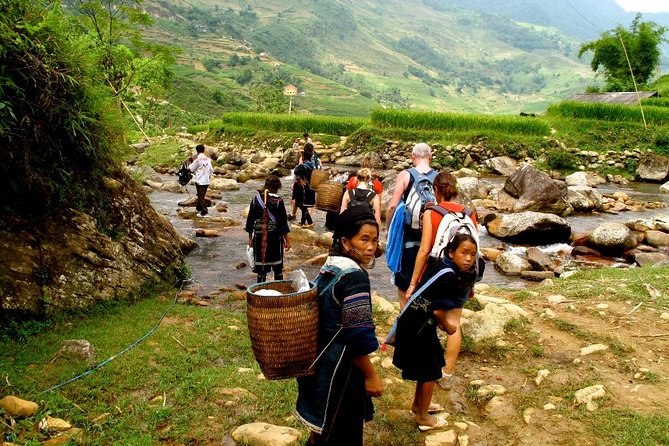
The first walk begins around 14:30. You head through Y Linh Ho, then continue across rice terraces and along Muong Hoa Stream toward Lao Chai, a Black H’mong village.
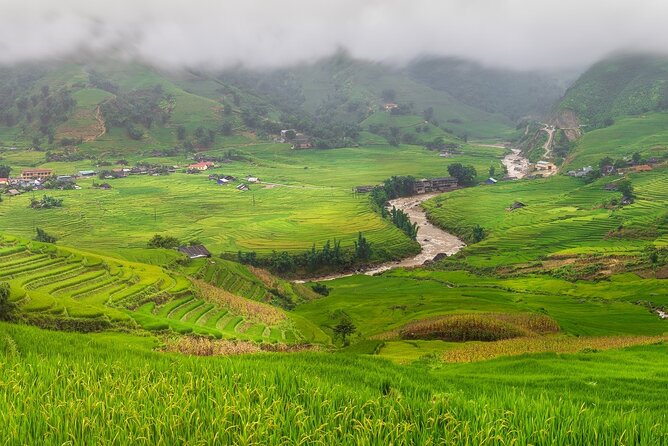
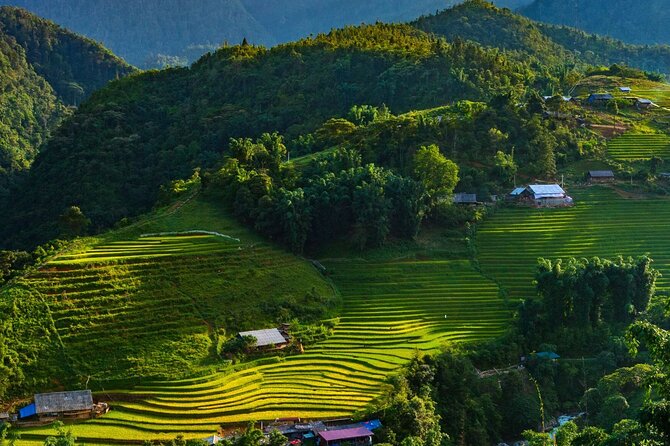
This is the main visual payoff of the trip. The highlands open around you, with Hoang Lien Son Mountain scenery, stepped fields, and long views across the valley. The phrase aerial views in the tour description does not mean you take a flight. It refers to the elevated views you gain from the mountain paths.
The trail is about 9 kilometers and takes roughly three and a half hours. That distance is manageable for people who regularly walk, but it can feel demanding after a morning on a bus. Uneven ground, wet paths, and steep sections may slow you down. Rain is a serious consideration because the route can become more difficult and less safe.
The scenery changes as you walk. Rice terraces are the main feature, but the stream and village sections give the route more variety than a simple out-and-back viewpoint walk. You also have chances to see traditional crafts connected with the area, including weaving, carved silver, and hand-forged agricultural tools.
You reach Ta Van in the late afternoon, where Giay people live. The timing gives the day a clear shape: arrive in the mountains, eat, walk through the valley, and finish near the overnight stay instead of returning to Sapa town.
Dinner and a basic night in Ta Van
Check-in at the homestay is scheduled for about 17:45. Dinner is included, which is useful after a long walk and saves you from finding a meal in an unfamiliar village.
Food quality can vary from one departure to another, and the package includes drinks only if you buy them separately. You should carry Vietnamese dong for personal expenses, drinks, and tips. One useful pattern from the trip feedback is that the first meal may not suit every palate, while the dinner was especially well received. It is wise to approach meals as part of the local setting rather than expect a full restaurant menu.
The lodging is a homestay or bungalow with basic, simple facilities. This point deserves attention before you book. The accommodation is not presented as a hotel, and the room arrangements may be less private or polished than what you use in Hanoi.
A single room costs an extra $15 for a solo participant. If comfort and private facilities are central to your trip, this may not be the right overnight arrangement. If you see the homestay as a practical way to stay close to the villages and trail, it fits the purpose well.
There is also an optional cooking class at 7:00 on the second morning. It costs $7 to $10 per person and must be requested. You may learn to make Vietnamese dishes such as pho and fresh spring rolls. Since the class is not included, confirm it when booking rather than assuming it is part of the schedule.
More Trekking Tours in Hanoi
- Sapa 3 Days 2 Nights Trekking Tour (1 Night In Ta Van Village, 1 Night In Hotel)
★ 5.0 · 699 reviews - 3-Day Trekking Adventure of Sapa from Hanoi – Stay Ta Van Village
★ 5.0 · 611 reviews - Hanoi – Sapa 3 Day 2 Night Trekking With Hotel & Homestay
★ 5.0 · 389 reviews - From Hanoi: 2-Day Sapa Trek Tour – Luxury Limousine Transfer
★ 4.1 · 249 reviews
Giang Ta Chai and the Red Dao trail

Breakfast is prepared by the host family at about 8:00. After that, the second hike begins. This route covers about 4 kilometers and takes around two hours.
You walk toward the rice paddies, then enter a bamboo forest. A stop above Giang Ta Chai provides a broad view of the village, which is home to Red Dao people. This section is shorter than the first day, but it still includes uneven terrain and an uphill viewpoint.
The bamboo forest gives the walk a different feel from the open terraces around Lao Chai and Ta Van. You also reach Giang Ta Chai Bridge before continuing to the main road at about 11:00.
The short distance does not mean the morning is effortless. You have already completed the long first-day route, and rain can affect trail conditions. Good walking shoes are essential. Bring sun cream, sunglasses, insect repellent, and a hat, but also pack warm layers because Sapa weather can change quickly.
After reaching the main road, you return to the bungalow to shower and prepare for lunch. This break is practical and welcome. It also means you are not expected to board the return bus immediately after finishing the trail.
Lunch, the return bus, and the missing hotel drop-off
Pickup for the return journey is scheduled around 13:30. You receive the bus ticket and travel back toward Hanoi. The package includes round-trip Hanoi to Sapa transport, but the final transfer from the bus stop to your hotel is your responsibility.
This small detail affects the real cost and convenience. If you arrive tired after a long bus ride, you will need cash or another way to arrange your own transfer. The end point is again listed at 30 P. Lý Thái Tổ, though you should follow the exact instructions sent after booking.
The full two-day schedule is tightly organized. A late departure, traffic, weather problem, or slow hiking group can affect later times. That said, guide Khoi was specifically praised for staying flexible when a holiday delay disrupted the start of one trip. Guide assignments can vary, so you should not assume Khoi will lead your departure.
The group limit is 15 people. That is smaller than a large coach excursion, but it is not a private tour. The guide must keep different walking speeds together, and the most active members may need to wait at times.
What the $88.47 price really covers
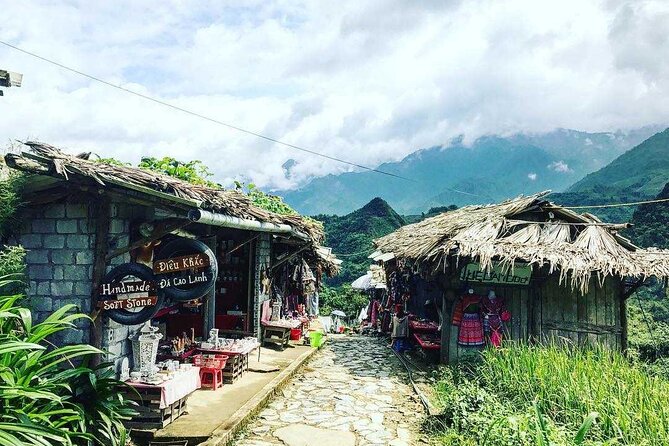
At $88.47 per person, the price is reasonable if you value convenience. It includes the bus from Hanoi to Sapa and back, Old Quarter pickup, a guide who speaks English, breakfast, dinner, two lunches, and overnight accommodation.
Arranging those pieces separately could take time and create uncertainty, especially when you have only two days. The included meals and local stay also make the price easier to justify than a transport-only excursion.
Still, the headline rate is not the final amount for everyone. Allow for:
- Drinks with meals
- Tips and personal expenses
- A $15 single-room supplement
- A $7 to $10 cooking class, if requested
- A $20 national holiday supplement
- Your own transfer from the final bus stop to your Hanoi hotel
One pricing concern deserves a careful note. A booking made through a different local channel was reported to cost roughly $30 to $50 less per person. That does not prove the services are identical, since inclusions and booking support may differ, but it does suggest you should compare the exact package before paying.
The value is strongest for someone who wants one booking to handle the main pieces. If you are comfortable arranging buses, village lodging, and a local guide yourself, you might find a cheaper route. The package earns its keep through simplicity, not luxury.
Who should book this trek?
This outing suits adults with a moderate level of physical fitness who want mountain walking, village contact, and a short overnight stay. It is especially useful for a first visit to Sapa when you want a set plan from Hanoi.
You should be ready for:
- A 9-kilometer trek on day one
- A 4-kilometer trek on day two
- Unpredictable mountain weather
- Basic lodging
- Shared group timing
- A long bus journey in both directions
Children, older people, and anyone with low physical fitness are not permitted to join because of the distance and the added risk during rain. The operator also requires good weather for the activity. If poor conditions force cancellation, you are offered another date or a full refund.
Pack warm clothes, a scarf, and a cap from September through March, when Sapa is normally colder. Even in warmer months, a light layer is sensible. Bring proper trekking shoes rather than casual trainers, and carry some Vietnamese dong for drinks and small purchases.
Food requests should be given when you book. The package does not promise a wide choice of meals, so early notice matters if you have dietary needs.
My take: a good value route with a demanding schedule
I would book this tour if I wanted a direct, organized introduction to Sapa and cared more about scenery and walking than polished accommodation. The route through Y Linh Ho, Lao Chai, Ta Van, and Giang Ta Chai gives you far more than a quick stop in Sapa town.
I would hesitate if you need a comfortable hotel, a private vehicle, a slow pace, or a guaranteed private room. I would also compare prices with a local hotel or agency, since the package may cost more through one booking channel than another.
The strongest reasons to go are the terraced valley views, village-to-village walking, and included transport. The main warnings are equally clear: the trail is long, the weather can turn, and the overnight stay is basic. For fit adults who accept those limits, this is a practical two-day taste of northern Vietnam’s highlands.
FAQ
Where does the tour begin in Hanoi?
Pickup is offered from hotels in Hanoi’s Old Quarter between 6:00 and 6:30. If your hotel is outside that area, you must go to the meeting point at 30 P. Lý Thái Tổ, Hoàn Kiếm.
Is hotel drop-off included at the end?
No. The bus returns to the listed meeting point or bus stop area, and you must arrange your own transfer back to your hotel.
How far do you walk on the first day?
The first trek is about 9 kilometers and takes around three and a half hours. It goes through Y Linh Ho and Lao Chai before reaching Ta Van.
How far is the second-day trek?
The second walk is about 4 kilometers and lasts around two hours. It includes rice paddies, a bamboo forest, a viewpoint over Giang Ta Chai, and the Giang Ta Chai Bridge.
What meals are included?
Breakfast, dinner, and two lunches are included. Drinks are not included. A cooking class is available upon request for an additional $7 to $10 per person.
What type of accommodation is provided?
You stay overnight in a homestay or bungalow. The facilities are basic and simple rather than comparable to a hotel. Solo participants can request a single room for an extra $15.
What should you bring for the trek?
Bring warm clothing, a scarf, a hat or cap, trekking shoes, sunglasses, sun cream, insect repellent, and cash in Vietnamese dong. Sapa weather can be unpredictable.
Can the tour be canceled because of weather?
Yes. The activity requires good weather. If it is canceled because of poor conditions, you are offered a different date or a full refund. You can also cancel up to 24 hours before the start time for a full refund.
Latest treks added in Hanoi
- From Hanoi : Sapa Moutain Trek – Halong bay Heritage★ 4.5 · 25 reviews
- Trekking In Ha Giang 5 Days★ 5.0 · 4 reviews
- Trekking around Ha Giang 5 days 4 nights★ 3.0 · 2 reviews
- 8-Days Hanoi, Sapa Trekking And Halong Bay Cruise★ 5.0 · 8 reviews
- 2-Day Trekking in Sa Pa from Ha Noi by sleeping bus★ 5.0 · 4 reviews
- Hanoi: 3D2N Mu Cang Chai Visit All Attractions, Trek, Ethnic Life★ 5.0 · 3 reviews
- Mai Chau – Pu Luong trekking 3 days 2 nights★ 4.5 · 7 reviews
- Sapa trekking 2days by bus from Hanoi ( over night in homestay)★ 5.0 · 21 reviews
Hanoi Trekking Tours, compared.


Sapa 3 Days 2 Nights Trekking Tour (1 Night In Ta Van Village, 1 Night In Hotel)
Read our review →
3-Day Trekking Adventure of Sapa from Hanoi – Stay Ta Van Village
Read our review →
2-Day Sa Pa Ethnic Homestay Tour & Trek with Limousine Bus
Read our review →
Sapa 3 Day 2 Night Trekking With Hotel & Homestay
Read our review →
2-Day Sapa Trek Tour – Luxury Limousine Transfer
Read our review →
Sapa 2 Days 1 Night Overnight At Local Homestay
Read our review →Browse the lists this tour appears in