
REVIEW · ITALY
Mount Etna: Craters of the 2002 Eruption Trekking Experience
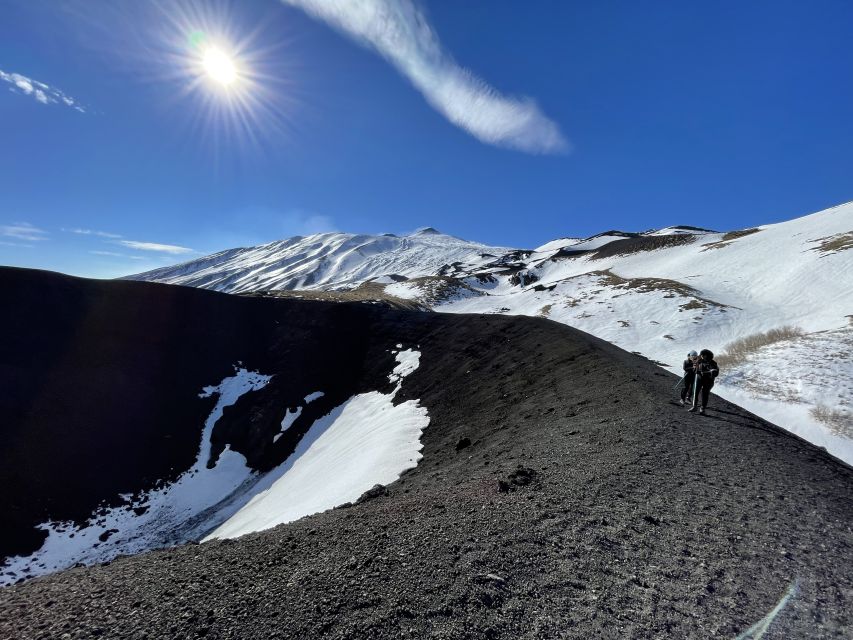
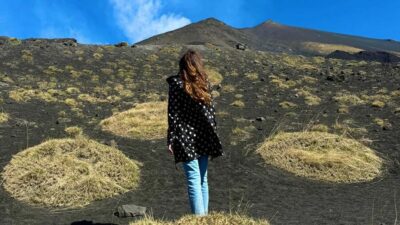
The most striking part of this Etna walk is the 2002 eruption zone, where black lava flows and cinder cones tell a very recent story. You walk past the ruins of Hotel dell Betulle, climb toward the crater area, and peer over the edge before returning through a sandy channel.
I like the small-scale setting away from Etna’s busiest tourist areas, and I like how the guides turn strange volcanic shapes into an understandable lesson. Guides such as Daniele, Davide, Vincenzo, and Niko have been praised for mixing clear science with humor and personal eruption photos.
The catch is fitness. This is called an easier Etna route, but it still involves uphill walking, loose volcanic soil, crater edges, and wind. If you rarely exercise, dislike heights, or need a smooth path, this is not the right outing.
What makes this Etna walk worth your morning
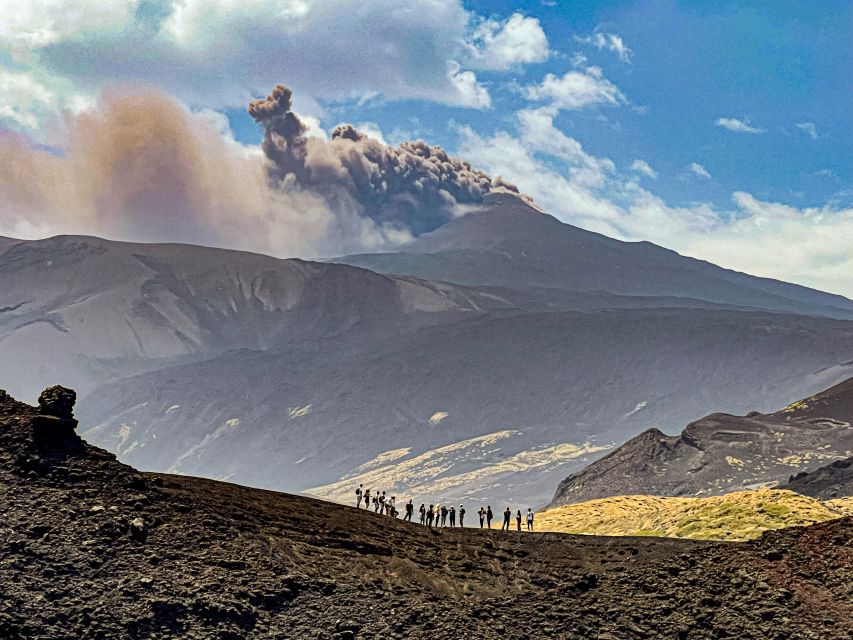
- You walk through the 2002 eruption zone, including the lava flow that buried much of Piano Provenzana.
- The ruined Hotel dell Betulle gives the eruption a human scale, since it is the only visible structure left in that flow.
- Hornitos and cinder cones become part of the lesson, not just unusual shapes in a field of black rock.
- The 2002 Cerniera di fuoco is the main event, with time to study the crater area and nearby volcanic fractures.
- You get broad views toward the Calabrian Coast when weather and visibility cooperate.
- The three-hour length works well for a first Etna walk, though the route still requires moderate fitness and proper footwear.
Starting at Piano Provenzana on Etna’s north side
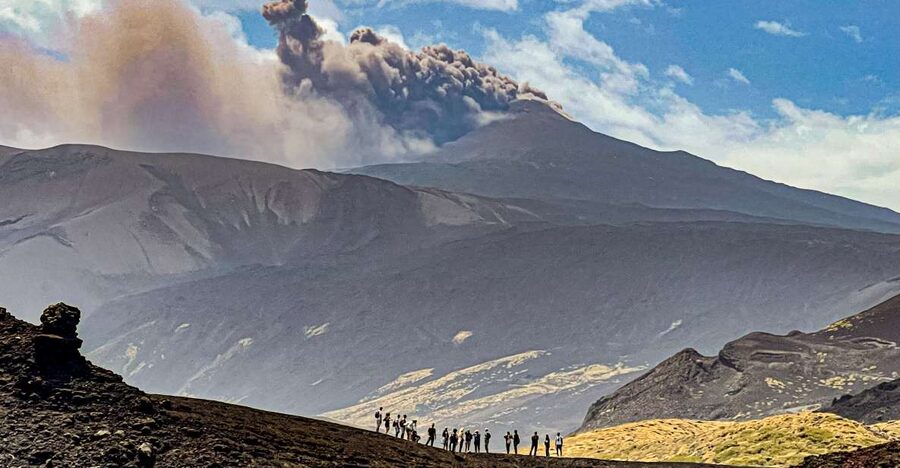
Your meeting point is Chiosco Bar Mareneve di Ferraro Giuseppa, near the chairlift used by skiers in winter. It is the second house among the four buildings in the parking area. Do not confuse it with Chiosco Bar Etna Nord, which is in the lower parking lot.
The excursion begins with a safety briefing from Guide Vulcanologiche Etna Nord. This opening matters because Etna’s ground is not ordinary hiking terrain. Volcanic gravel can shift under your boots, and the route near crater rims calls for care. The guide also has the final say if weather, volcanic activity, or trail conditions change.
The group needs at least four participants for the outing to run. The guide speaks Italian, English, or French, depending on the group and assigned guide. The English-language experience has included guides such as Daniele, Davide, Vincenzo, and Niko, all praised for clear explanations and an easy sense of humor.
Allow time to locate the correct meeting point. Parking charges are listed differently in the practical information, with one note giving €5 on weekdays and €8 on Sundays and public holidays, while another says €3 is paid after the excursion. I would confirm the current charge when you arrive rather than rely on an old figure.
More Volcano Treks in Italy
- Mount Etna: Trek to 3000m with cable car and 4×4
★ 4.6 · 3,823 reviews - Mount Etna: Summit Crater Trek with Cable Car
★ 4.8 · 1,875 reviews - Etna: summit craters trekking with volcano guide 3350mt
★ 4.7 · 1,712 reviews
Walking the road toward the upper craters
The route follows the dirt road from Piano Provenzana toward Etna’s summit craters. You do not reach Etna’s highest active summit on this three-hour outing, but you do gain access to a striking group of flank craters and eruption features on the north side.
The first portion gives you time to find your rhythm. The slope and loose surface make this more demanding than a normal park walk, especially if you are wearing casual trainers. The route is described as suitable for hikers with medium training, and that is the fairest way to think of it.
You can expect stops rather than a nonstop march. The guide pauses to explain how lava moved, how cones formed, and how earlier eruptions shaped the north side. That teaching makes the walk much more useful than simply seeing a field of dark rock and being told it is volcanic.
The route also offers a quieter Etna experience. You are not spending the morning in a large sightseeing queue or rushing from one viewpoint to another. The slower pace gives you time to look at the small details, including changes in volcanic texture and the way plants return around older flows.
Hotel dell Betulle, the eruption’s clearest human trace
One of the most memorable stops is the Hotel dell Betulle, or what remains of it. The 2002 lava flow buried the hotel, leaving the only visible structure from that building as a reminder of how quickly an eruption can change a mountain resort area.
This is a short stop of about ten minutes for photographs, a visit, and an explanation from the guide. The ruins are valuable because they make the eruption easy to picture. Lava is not just a distant geological process here. It reached a building, covered part of a developed area, and threatened communities on Etna’s northern flank.
The stop also helps put the rest of the trek in context. As you continue, the rough lava and broken ground are no longer abstract scenery. You are walking through the products of one of Etna’s most powerful recent eruptions.
Bring your camera, but keep it handy rather than packed away. The stop is brief, and you will want to listen while also taking in the remains.
The 1911 Bottoniera and Etna’s changing forms
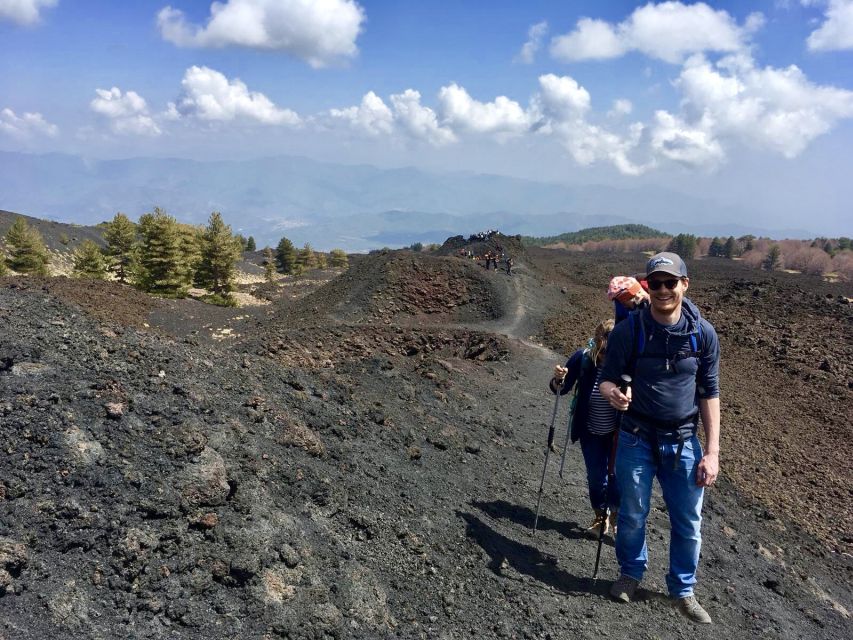
The next major pause is the Bottoniera del 1911, a chain of small volcanic cones formed during the 1911 eruption. You have about 25 minutes here for photographs, walking, free time, and explanation.
This is where a guide earns the admission price. A line of cinder cones can look repetitive at first, but the shape and placement of each cone help show how eruptive vents opened along the mountain. The guide explains what you are seeing instead of leaving you to guess at the difference between a lava mound, a cone, and an eruptive fracture.
You may also see hornitos along the route. The name means little ovens, and these small volcanic structures are among the more curious features of the walk. They show how lava can form raised openings and irregular shapes as gases and molten material move through a flow.
The route includes climbs over cinder cones. These are not technical scrambles, but the footing is uneven. I would use trekking poles if they are offered or bring your own. One experienced visitor specifically advised using the walking poles, and that is sensible advice on loose ash and gravel.
Another trail to compare in Italy:
- Catania: Mount Etna Trekking Tour Beyond the Tourist Trails
★ 4.9 · 1,596 reviews - Mount Etna: Guided Trek 3,000 Meters to the Summit
★ 4.8 · 1,407 reviews - Stromboli: Sunset Trekking at Sciara del Fuoco
★ 4.6 · 1,372 reviews - Etna Sunset Tour: Volcano trek, Cave & tasting from Catania
★ 4.8 · 1,290 reviews
Cerniera di fuoco 2002, the main crater section
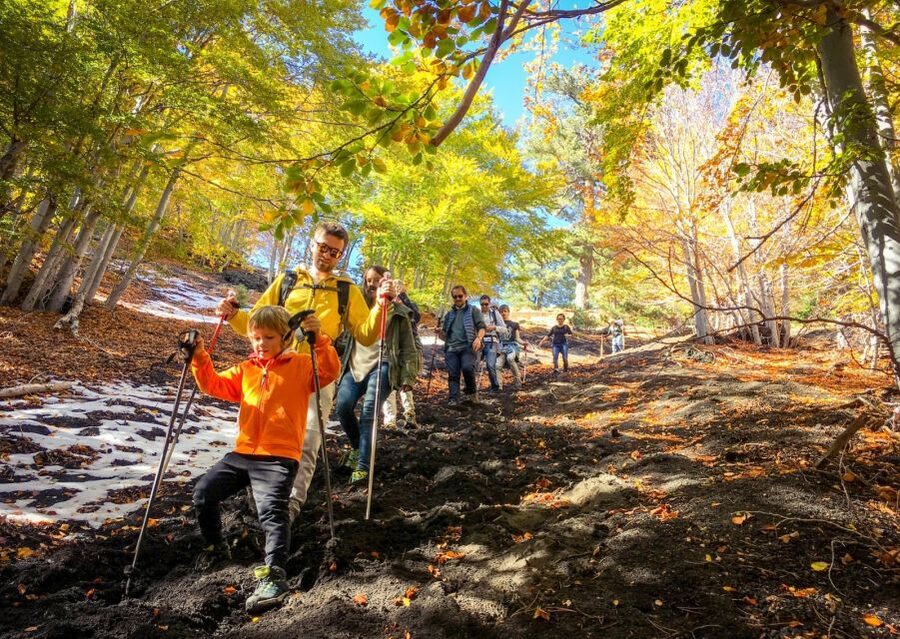
The longest stop is the Cerniera di fuoco 2002, with roughly an hour and a half for walking, views, explanations, and free time. This is the heart of the excursion.
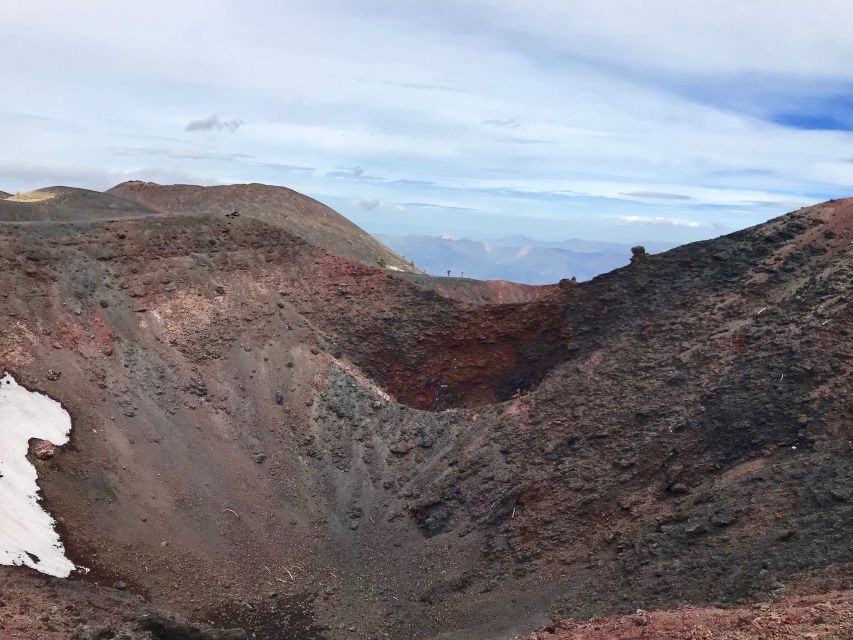
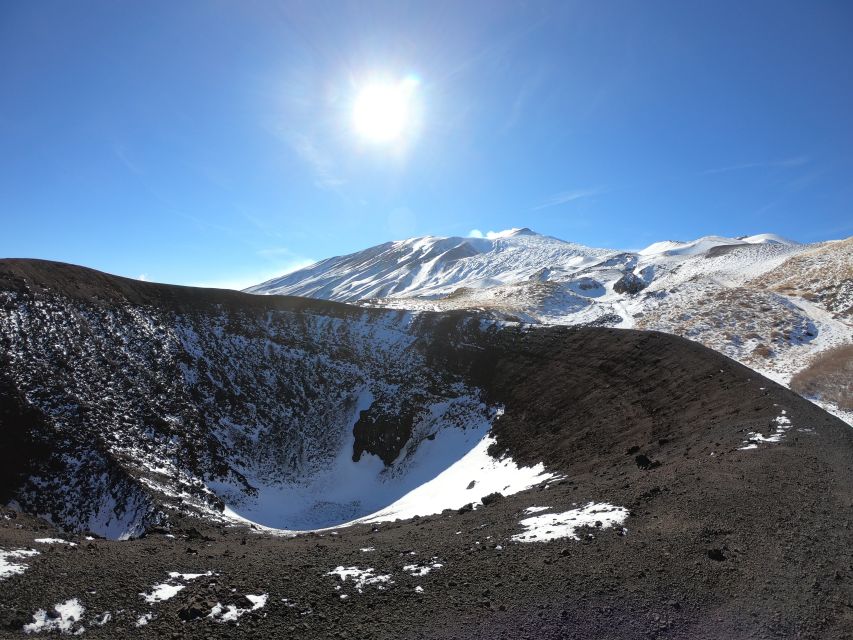
Here you study the crater forms created by the 2002 activity and walk along their edges. The guide points out eruptive fractures and explains how the flank eruption developed. The word flank matters: these craters are not simply a view of Etna’s summit, but evidence of eruptions opening lower down the mountain.
Walking beside a crater rim feels very different from looking at a volcano from a distant terrace. You can see the loose inner slope, the sharp edge, and the changing color and texture of the volcanic material. The route includes a descent into a sandy channel, which provides the return route toward Piano Provenzana.
That section is also the reason to take the warnings seriously. Crater edges can cause dizziness for people sensitive to heights, and the surface may be unstable. People with vertigo, fear of heights, respiratory problems, heart problems, epilepsy, or mobility limitations are specifically advised not to join. The activity is also not suitable for children under six or pregnant women.
The views are a strong reward. In clear conditions, you can look across the eruptive theater and toward the Calabrian Coast. Wind can spoil visibility and make the walk feel colder than expected. A spring or summer date does not guarantee mild conditions at this altitude, so pack a jacket and windbreaker.
What three hours feels like on the trail
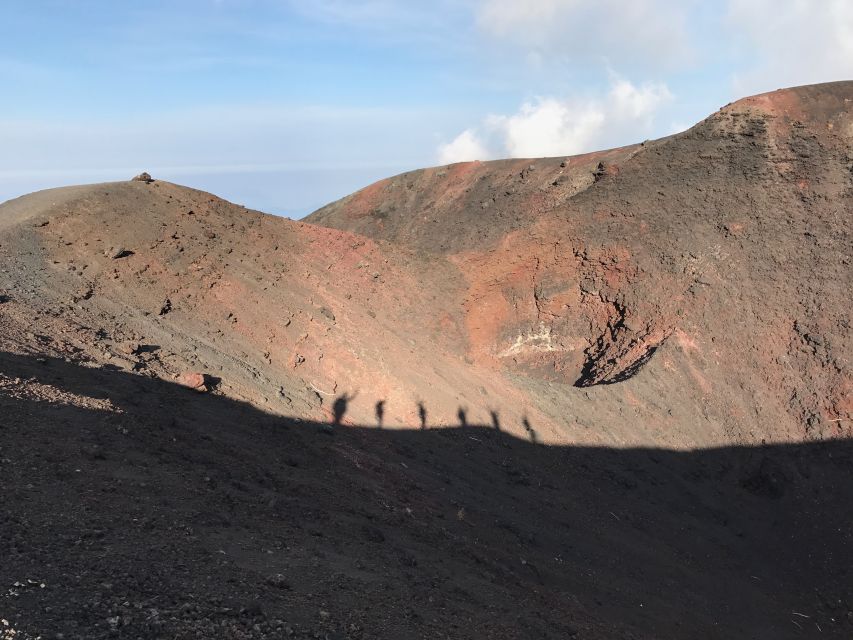
The advertised duration is three hours, but the exact timing depends on the group’s pace. That flexibility is useful for a mixed group, though a slower pace can make the outing run longer than expected.
The walk includes uphill sections, pauses, crater-edge walking, and a sandy descent. It is not a race, and the guides have been praised for waiting for the group and making sure everyone keeps up. Still, an earlier start to your day may be wise if you have another fixed appointment afterward.
One past outing took four hours, so treat three hours as a guide rather than a stopwatch promise. The route can change at the guide’s discretion because of weather, environmental conditions, or volcanic activity.
The experience feels educational rather than athletic for most of the time, but the ground keeps your legs working. One person in their late 60s found it hard going but worthwhile. Another described it as a slow and easy walk with frequent pauses. Both impressions can be true, depending on your fitness, weather, and how comfortable you are on loose volcanic ground.
What to wear and what to rent
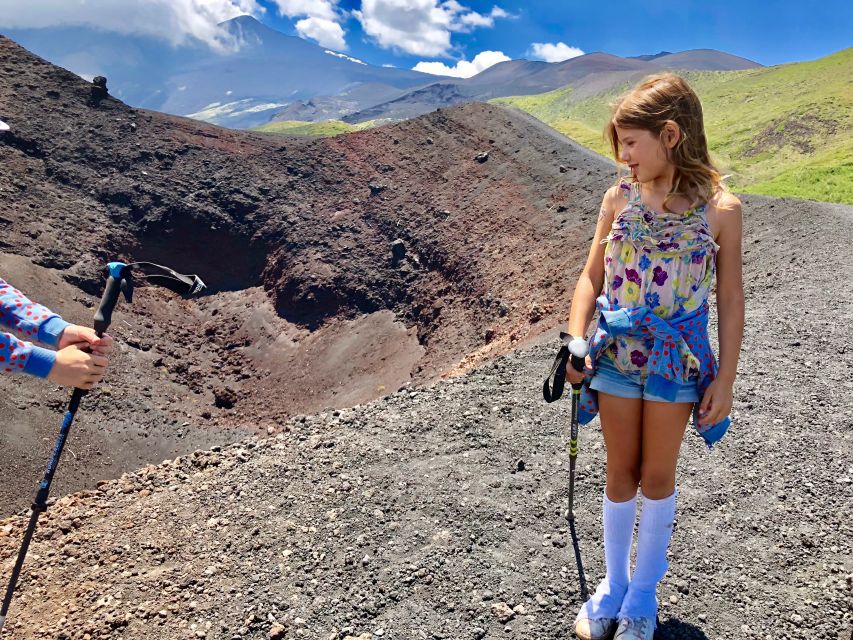
Proper footwear is not optional. Hiking shoes are required for the insurance to apply, and trekking shoes can be rented locally at authorized rental shops for €5 per pair. Sandals, flip-flops, slippers, and high heels are not allowed.
A windbreaker, jacket, sunglasses, sunscreen, water, snacks, and a small daypack belong in your basic kit. Gloves and a hat are especially useful in winter, spring, and autumn, when wind can make the crater area feel sharp and cold.
Snow changes the equipment needs. From December through March, snowshoes are recommended and can be rented on site for €12 per person. The activity does not include gloves, hats, trekking poles, snowshoes, food, drinks, or transport from your accommodation.
One visitor forgot to rent a jacket and was helped with a spare by the guide. I would not count on that kind of luck, but it shows why a windproof outer layer matters. Etna weather can shift quickly, and the open crater area offers little shelter.
The guides make the geology approachable
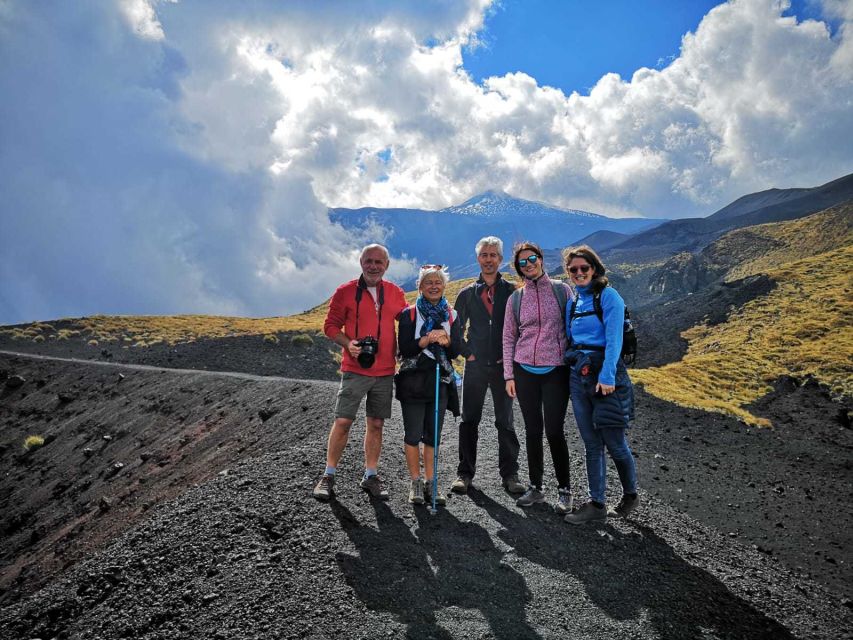
The strongest part of this outing is the guiding. The walk is not built around equipment, luxury transport, or a long list of attractions. Its value comes from having a trained volcano guide explain what happened beneath your feet.
Daniele has been praised for answering questions, using simple sketches in the ash, and keeping a mixed-age group together. Davide has been described as both engaging and well prepared. Vincenzo has led the route in French and combined scientific detail with humor. Niko has been praised for his experience with volcanoes and his deep familiarity with Etna.
You may not get the same guide on every departure, but the format is consistent: explanation at the eruption sites, time for photographs, and a walk that connects the visible features to Etna’s past activity. Some guides have shown personal photos and videos from the eruption, which can make the 2002 event easier to understand.
This is a good fit if you want facts without a lecture hall feel. Guides use jokes, stories, and clear examples, but the subject stays serious when it needs to. You come away understanding more than the basic fact that Etna is an active volcano.
Is $42 a fair price?
At $42 per person, the price is reasonable if you want a guided introduction to Etna’s north side. The fee includes an official volcano guide and accident insurance. It does not include transport, equipment rental, parking, food, or drinks.
The value is strongest for people who would not know how to read the crater forms on their own. You are paying for route selection, safety judgment, and explanations of the 1911 and 2002 eruptions. The group also avoids the feeling of a hurried photo stop at a single viewpoint.
The price is less attractive if you already plan to hike independently and have the right boots, poles, clothing, and volcanic knowledge. In that case, the main benefit is the guide’s interpretation and the added reassurance of organized access.
Budget another €5 for shoes if needed, plus the current parking charge. In snowy months, add €12 for snowshoes. Small extras can push the total above the headline price, but they are practical costs rather than hidden luxury fees.
Who should book this three-hour Etna experience?
I would choose this trek if you have limited time in Sicily, want a shorter route than a full-day mountain hike, or prefer a guided introduction to volcanic terrain. It also suits you if you want to see the north side rather than only the most familiar Etna viewpoints.
It is a good middle ground for an active couple, a small family with older children who meet the age requirement, or anyone who wants a real walk without committing to a long summit day. People in their late 60s have completed it, but fitness still matters.
I would skip it if you do not exercise regularly, have serious breathing or heart problems, dislike unstable ground, or feel uneasy near drop-offs. The route is easier than a major mountain expedition, not effortless sightseeing.
The excursion requires at least four people, and conditions can change the route. Free cancellation is available up to 24 hours before the start, and you can reserve now and pay later, which helps if Etna weather is uncertain.
FAQ
Where does the Mount Etna trek start?
It starts at Chiosco Bar Mareneve di Ferraro Giuseppa, near the winter chairlift and the second house among the four buildings in the parking lot. Do not go to Chiosco Bar Etna Nord in the lower parking area.
How long does the trek last?
The planned duration is three hours. The total time can change according to the group’s pace and conditions on the mountain.
What language does the guide speak?
Guides may lead the outing in English, Italian, or French.
Is transport from my accommodation included?
No. Transport to the starting point is not included.
Can I rent hiking shoes?
Yes. Trekking shoes can be rented from authorized rental shops on site for €5 per pair. Proper footwear is required for insurance coverage.
Are snowshoes needed in winter?
In December, January, February, and March, snowshoes are recommended if there is snow. They can be rented on site for €12 per person.
Who should not join this trek?
The activity is not suitable for children under six, pregnant women, people with back, heart, respiratory, or mobility problems, people with epilepsy, or anyone with vertigo or a strong fear of heights.
Should you book it?
Book this trek if you want to understand Etna rather than simply photograph it. The ruined hotel, 1911 cone chain, hornitos, lava streams, and 2002 crater zone give you a clear story of how the volcano has reshaped its northern side.
The best reason to go is the guide. You get three active hours, solid volcanic interpretation, and broad views toward Calabria for $42, with the main extra costs easy to plan. Just bring real hiking shoes, warm windproof clothing, water, and enough fitness for loose ground and crater edges.
Latest treks added in Italy
- Trekking on the roof of Tuscany★ 5.0 · 6 reviews
- Otranto Trekking Adventure: The Path of the Hermit and the Bay of the Turks★ 3.5 · 8 reviews
- Lecce: Hike to Otranto with town visit – Half Day Trekking +Taxi★ 5.0 · 2 reviews
- Wild Walk – Discovering the hidden paths★ 5.0 · 31 reviews
- Wine Hiking Sip & Trek★ 5.0 · 3 reviews
- Dolomites Trekking Experience★ 4.5 · 3 reviews
- Trekking an Island of Palmaria★ 4.5 · 6 reviews
- Trekking in the morning on Mount Etna★ 5.0 · 2 reviews
Volcano Treks, compared.
Mount Etna: Trek to 3000m with cable car and 4×4
Read our review →
Etna: summit craters trekking with volcano guide 3350mt
Read our review →
Mount Etna Trekking Tour Beyond the Tourist Trails
Read our review →
Mount Etna: Guided Trek 3,000 Meters to the Summit
Read our review →
Etna Sunset Tour: Volcano trek, Cave & tasting from Catania
Read our review →
Browse the lists this tour appears in