
REVIEW · CATANIA
Mount Etna: Guided Trek 3,000 Meters to the Summit
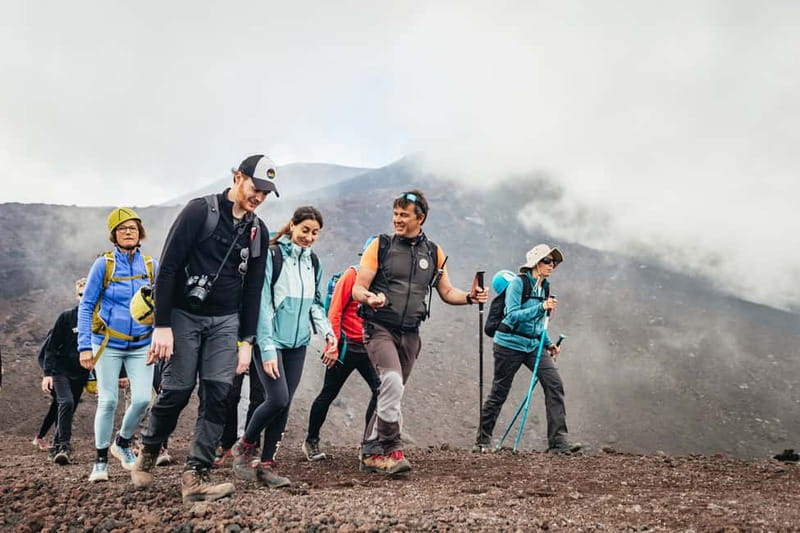
Mount Etna saves its best scenery for the high slopes, where black ash, rough lava, steaming vents, and wide views replace the usual Sicilian postcard scenes. This six-hour trek to about 3,000 meters gives you a close look at the volcano without requiring a technical climb.
I like two things here. First, the guide stays with you through exposed, trail-free sections where a good pace and local judgment matter. Second, you get more than a quick crater photo: the walk includes old and recent lava flows, the 2001 Crater, and explanations of how Etna changes over time. Guides named Luca, Marco, and Manuel have been especially praised for patient pacing and strong volcano knowledge.
The main caution is that this is a real mountain walk, not a sightseeing stop. You’ll cross loose ash and rock, some sections may be exposed, and conditions can change quickly. Also, the supplied tour details conflict about the cable-car cost, so confirm before booking whether the €50 ticket is included or paid locally.
Key points to know before you book
- Reach about 3,000 meters: The trek begins after the cable-car ride to roughly 2,500 meters, then continues uphill across volcanic ash and rock.
- The 2001 Crater still fumes: This recent crater at about 2,700 meters gives you a vivid reminder that Etna is an active volcano, not a dormant museum piece.
- Your guide shapes the day: English and Italian-speaking guides explain Etna’s geology, lava flows, and regional setting while keeping the group together.
- Expect a moderate physical test: You need to walk on loose sand and rock without a normal trail, with some exposed parts.
- Pack for cold, wind, and ash: High trekking shoes, long trousers, gloves, a hat, sunglasses, face protection, and warm layers all make a difference.
- Check the cable-car charge: The information provided lists both a cable-car ticket as included and a €50 ticket payable on site. Ask the operator to clarify the current arrangement.
Why this Mount Etna trek is different
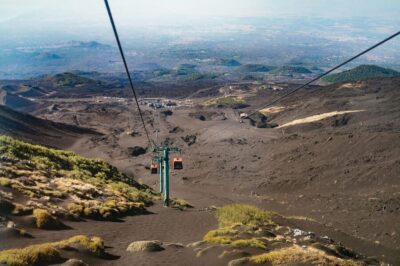
Many Etna outings stop at lower viewpoints or rely heavily on transport. This one is built around the walk. The cable car cuts out the lower climb, but you still spend several hours on foot above the tree line, moving through black volcanic terrain toward the summit craters.
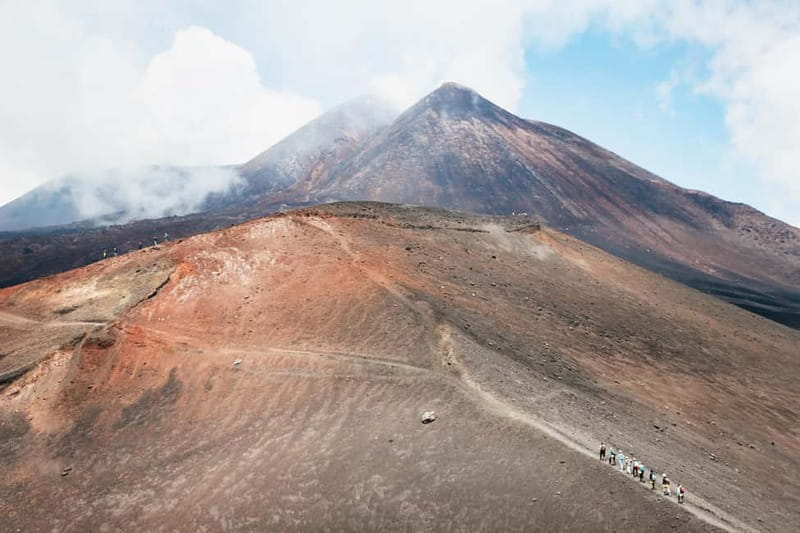
That matters because Etna is best understood under your boots. The color changes from dark gray ash to reddish cinder and solid black lava. You can see where old flows hardened and where newer eruptions changed the routes used on the mountain. Your volcanologist guide adds the meaning that a quick photo stop cannot provide.
The tour does not promise access to an active vent or a guaranteed view of the highest crater. The stated goal is the base of the summit craters at around 3,000 meters. Volcanic risk, wind, weather, and environmental conditions can force the guide to alter or stop the route. That caution is a strength, not a flaw, on an active volcano.
More Volcano Treks in Italy
- Etna Sunset Tour: Volcano trek, Cave & tasting from Catania
★ 4.8 · 1,290 reviews - From Catania: trek on Mount Etna, Lava Cave & tasting Tour
★ 4.8 · 563 reviews - Mount Etna: North Upper Craters Guided Tour by 4×4 with Trek
★ 4.6 · 243 reviews
Starting at La Terrazza Dell’Etna
You meet at La Terrazza Dell’Etna, which is also where the activity ends. There is no hotel pickup or drop-off, so you need to arrange your own way to the meeting point and allow time to get ready before the briefing.
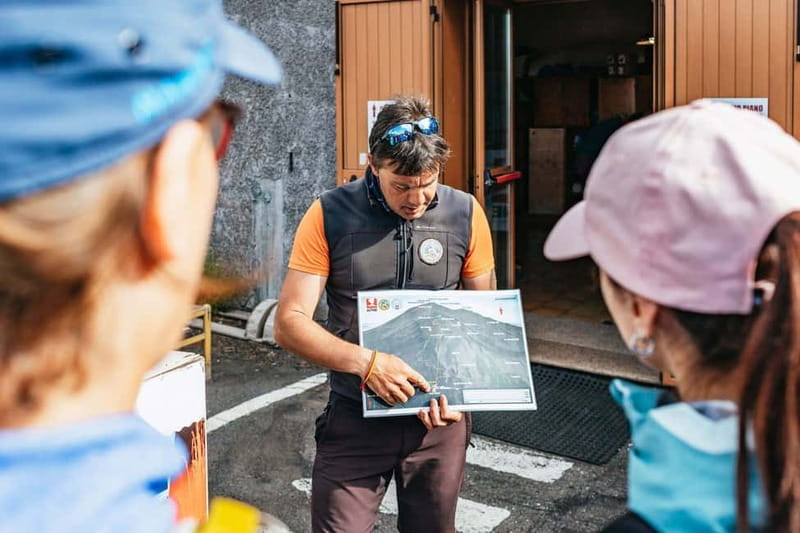
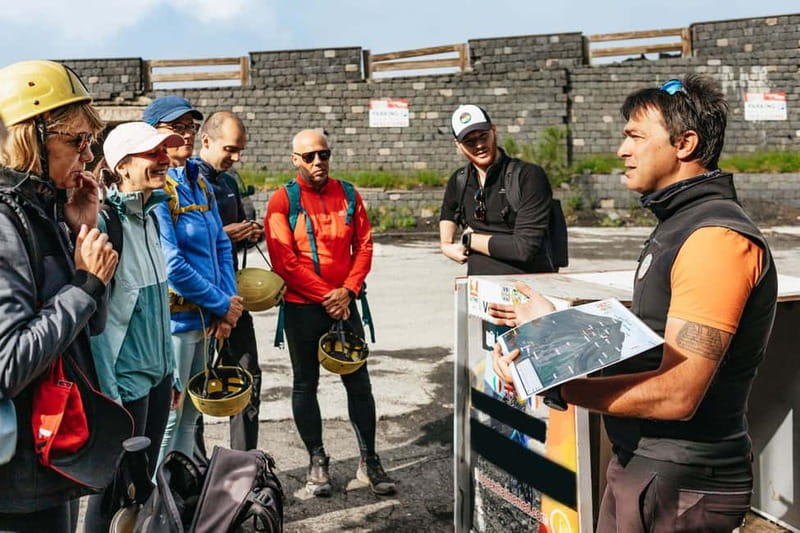
The opening talk is useful. Your guide explains the route, checks the group, and sets expectations for the high-altitude walk. Tell the guide about any medical concern before setting out. The operator specifically excludes people with heart or respiratory problems, vertigo, mobility impairments, and pregnancy, and children under 10 cannot join.
This is also the time to sort out equipment. Helmets and trekking poles are listed as provided, though bringing your own pole is recommended. Some departures have supplied hiking shoes and windproof jackets, but do not count on borrowed gear unless the operator confirms it in advance.
The 20-minute cable-car ride
The ride upward takes about 20 minutes and brings you to roughly 2,500 meters. It is more than a time-saver. The cable car places you quickly into the high volcanic zone, where the air is colder and the ground becomes far less forgiving.
The stated information gives conflicting details about this part. One section says the cable-car ticket is included, while another says the €50 ticket must be paid on site. Some past descriptions also refer to a specialized bus for part of the upper approach. Ask exactly what transport is covered, what you pay locally, and if any upper-mountain vehicle is separate from the cable car.
At this altitude, do not judge the walk by the weather at the coast. Sicily may feel warm below while Etna is cold, windy, or wet. Pack a pullover, anorak, gloves, and a hat even in a warm month.
Walking from 2,500 to 3,000 meters
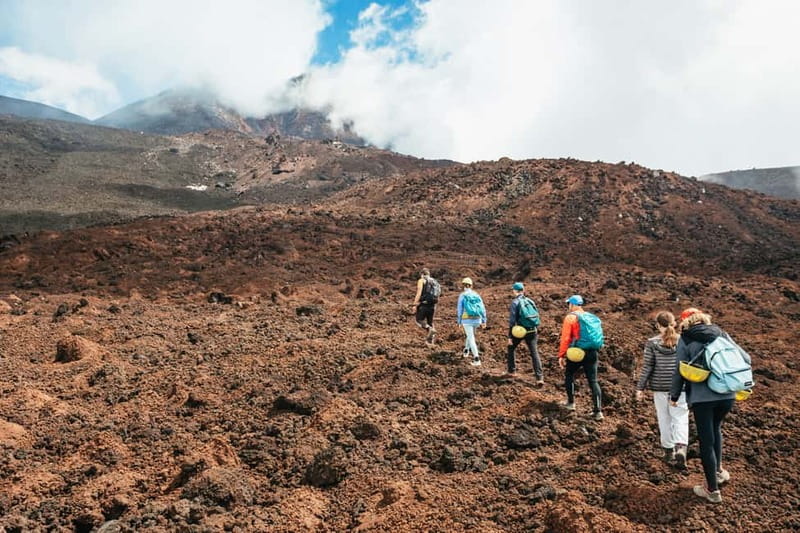
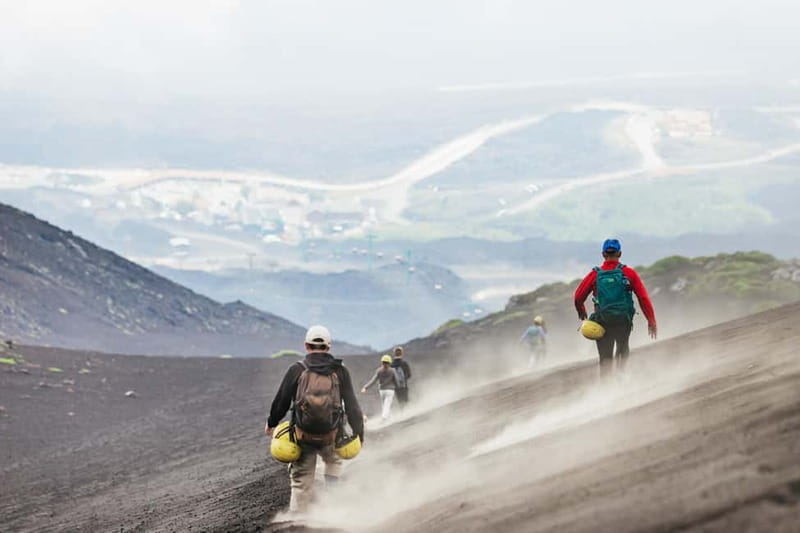
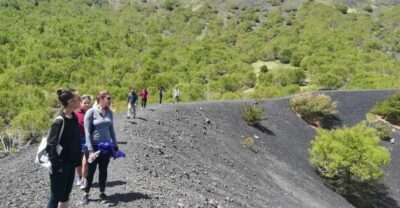
The main hike lasts about two hours on the way up, followed by roughly an hour and a half of walking on the return section. The route crosses ash, loose stones, hard lava, and the sites of old and recent flows. There may be no ordinary path, and some parts can feel like a scramble rather than a tidy hike.
That loose surface is the central physical challenge. Going uphill, ash can slide under your feet and make every step less efficient. Coming down, small rocks can roll into your boots and make balance harder. High trekking shoes with good ankle support and long trousers are practical choices. Pull your trousers over the tops of your boots, and wear high socks to keep grit out.
You need medium fitness and comfort walking on sand and rock. You do not need special climbing skills, but you should be able to walk steadily for several hours and manage a moderate ascent at altitude. The guides are praised for adjusting the pace, and that is important because groups can include people with different levels of fitness.
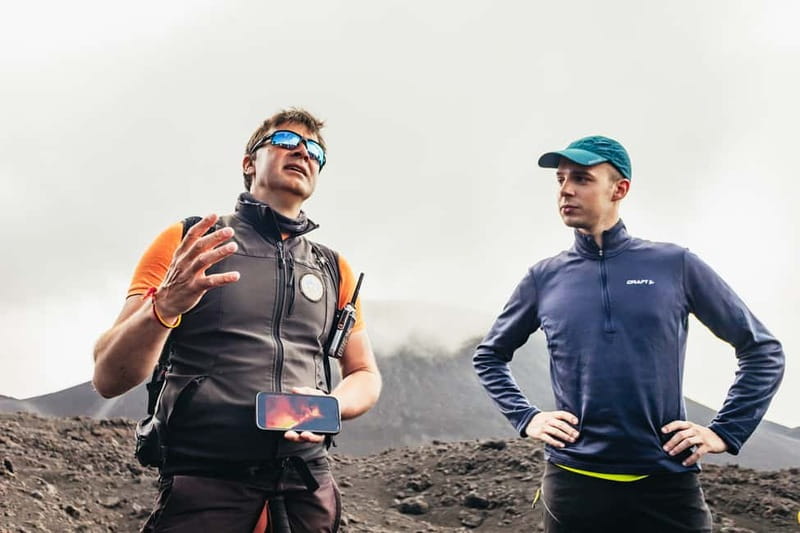
The guide is not just there to lead the way. Luca, in particular, is noted for remembering names, keeping a relaxed mood, and giving detailed explanations without rushing the group. Marco and Manuel are also described as attentive guides who adapt the route and help people through difficult weather. Guide quality can vary by departure, but the guiding role is a major part of this tour’s value.
More Volcano Treks in Catania
- Catania: Mount Etna Sunset Trekking with Wine Tasting
★ 5.0 · 140 reviews - From Catania: Private mt. Etna trekking and pic-nic
★ 5.0 · 37 reviews - Etna trekking and wine tasting
★ 5.0 · 28 reviews - Catania: Etna Morning or Sunset Trek with Lava Tunnel & Gear
★ 5.0 · 27 reviews
Reaching the summit-crater area
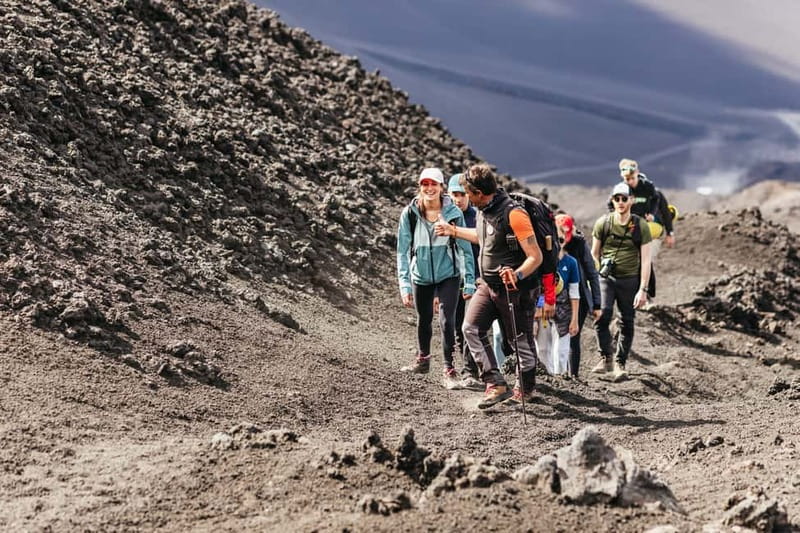
The reward comes as you approach the base of Etna’s summit craters. From about 3,000 meters, the high volcanic terrain opens around you, and, on a clear day, the views stretch across the mountain and surrounding region.
Keep your expectations sensible. You are not guaranteed a clear panorama, a walk around every crater, or access to the highest point. Wind can reach dangerous speeds, cloud can close in, and volcanic activity can change the plan. One departure continued in very strong wind, while another encountered rain, frost, and snow in May. Your guide decides what is safe.
That uncertainty is part of the experience. A route adjusted because of volcanic or weather risk is the correct response. Etna is active, and a fixed promise would be less trustworthy than a flexible plan.
Ash can also make the summit area uncomfortable. Volcanic dust may blow into your eyes, nose, and mouth, so bring sunglasses and a face covering. Contact lenses are forbidden because windblown ash can irritate the eyes. If you wear glasses, sunglasses still help with glare and dust.
The 2001 Crater at 2,700 meters
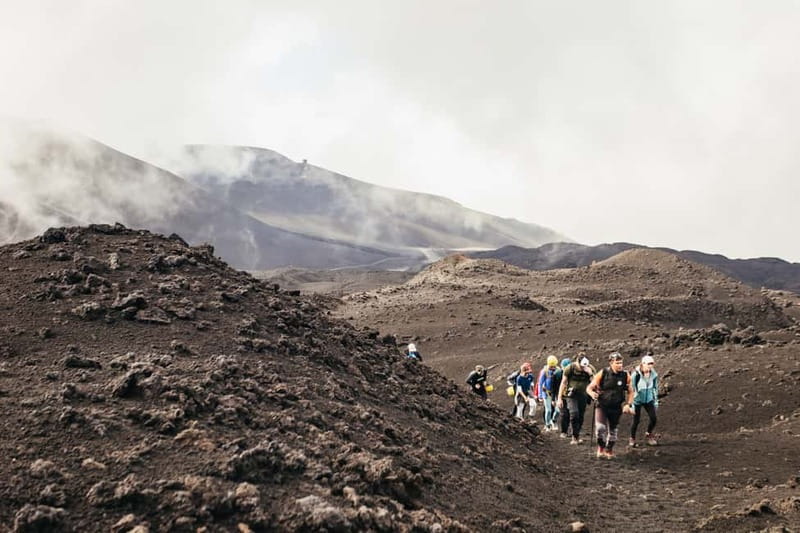
On the descent, the group stops at the 2001 Crater, which still fumes at about 2,700 meters. This is one of the tour’s most interesting stops because it connects the dramatic scenery with a specific recent eruption.
Rather than seeing Etna as one giant cone, you get to notice its many eruption sites and changing surfaces. The 2001 Crater shows how a new opening can reshape the mountain and leave behind a distinct black and red scar. Your guide uses stops like this to explain the volcanic processes and the history of Etna.
The stop also breaks up the descent. After the effort of reaching the upper section, a pause gives you time to take photos, listen, and regain energy before continuing down.
Lunch and the return to the cable car
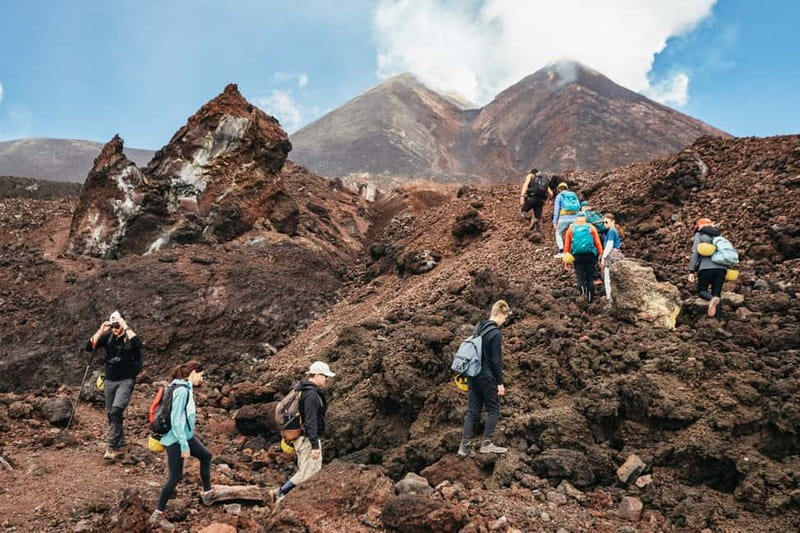
Lunch is not included. Bring a snack and a packed lunch, plus at least 1.5 liters of water. A 10 to 20-liter backpack should hold these supplies, spare clothing, sunscreen, and your extra shirt.
Do not assume you’ll find a convenient café at the high point. The tour details clearly put responsibility for lunch and water on you. Eating something substantial matters because the walk combines altitude, wind, loose footing, and several hours of effort.
The descent to about 2,500 meters takes roughly an hour and a half, including the crater stop and lunch break. Downhill can be harder than uphill on loose ash, so use the trekking poles and take short, controlled steps. Keep your face and eyes protected when the wind lifts dust.
You then return by cable car and finish back at La Terrazza Dell’Etna. The full activity lasts about six hours, though the guide can change the schedule for safety.
What the $113.29 price really covers
At $113.29 per person, this is not the cheapest way to see Etna. But the value depends on what you want from the mountain. You are paying for a guide, helmets, trekking poles, insurance, route management, and a high-altitude walk that would be harder to organize safely on your own.
The price is more convincing if you care about the volcanic setting and the explanation behind it. A guide can point out different lava surfaces, explain why the route changes, and keep a mixed group moving together. The strongest part of the experience is not transport. It is access to a demanding section of Etna with someone who knows how to judge the conditions.
The cable-car charge needs special attention. The information supplied includes both Cable car ticket and Cable car ticket, €50 to be paid on site. Since those statements cannot both be correct, confirm the current total before you commit. Some descriptions also mention paying €50 or €60 for an upper transfer, so ask for a written breakdown if the amount matters to your budget.
The tour offers free cancellation up to 24 hours before departure and a reserve-now, pay-later option. Those policies help because Etna weather can change, but they do not guarantee that the route will reach the advertised altitude on the day.
Who should choose this experience
I would choose this trek if you want an active Etna day, enjoy geology, and are comfortable with uncertain mountain conditions. It suits people with moderate fitness who can walk several hours on loose ground and cope with cold, wind, and altitude.
It is also a good fit if you prefer a smaller-feeling, guide-led experience to simply taking transport up for a viewpoint. The English and Italian commentary, crater stops, and discussion of lava flows give the day more substance.
I would not choose it for a relaxed family outing, a casual scenic ride, or anyone with a condition listed as unsuitable. It is not appropriate for children under 10, pregnant people, anyone with mobility limitations, or people with heart, respiratory, or vertigo concerns.
Pack for Etna, not for the beach
Sicily’s warm lower slopes can fool you. Pack for the summit zone:
- Hiking shoes or trekking boots with ankle support
- High socks and long trousers
- Warm layers, a windproof anorak, gloves, and a hat
- Sunglasses and a face covering for ash
- Sunscreen
- At least 1.5 liters of water
- A snack and packed lunch
- A 10 to 20-liter backpack
- An extra T-shirt
Do not wear contact lenses. Tell the guide about health concerns before the walk, and follow instructions if the route changes.
Should you book the Mount Etna 3,000-meter trek?
Book it if you want to walk through Etna’s active volcanic zone rather than simply admire the volcano from below. The guide support, high-altitude route, 2001 Crater stop, and detailed geological explanations make this a strong choice for an active half-day.
Skip it if you want guaranteed summit access, an easy path, or a fixed timetable. Before paying, confirm the cable-car fee, transport arrangement, meeting details, and equipment available. If you arrive prepared for cold weather, loose ash, and a route that may change for safety, this is one of the more meaningful ways to experience Mount Etna.
FAQ
How high does the Mount Etna trek go?
The advertised maximum altitude is about 3,000 meters, reaching the base of the summit craters. The guide may change the route because of weather, environmental conditions, or volcanic risk.
How long does the activity last?
The experience lasts about six hours. The schedule includes a cable-car ride of about 20 minutes each way, around two hours of hiking uphill, and about one and a half hours of hiking on the return.
Is the cable-car ticket included?
The provided details conflict. One section lists the cable-car ticket as included, while another says the €50 ticket is paid on site. Confirm the current arrangement and total price before booking.
What should I bring?
Bring sunglasses, hiking shoes, sunscreen, warm clothing, an extra T-shirt, long trousers, gloves, a hat, a face covering, a 10 to 20-liter backpack, at least 1.5 liters of water, a snack, and a packed lunch.
Is the hike difficult?
The activity requires medium physical fitness and comfort walking on sand and rock without regular trails. Some sections may be exposed. You should also be ready for wind, cold, loose ash, and changing weather.
Who cannot join the activity?
The trek is not suitable for children under 10, pregnant women, people with mobility impairments, heart problems, vertigo, or respiratory issues. Contact lenses are also forbidden because windblown volcanic ash can irritate the eyes.
Latest treks added in Catania
- Trekking in the morning on Mount Etna★ 5.0 · 2 reviews
- Nature Reserve ,Trekking Eco Tour in Iblei National Park★ 5.0 · 27 reviews
- Sunset Trekking on Mount Etna★ 5.0 · 3 reviews
- Mount Etna Advanced Trekking: Private Full-Day Tour from Catania★ 5.0 · 21 reviews
- Etna trekking and wine tasting★ 5.0 · 28 reviews
- One Day Tour in Catania and Trekking on Etna★ 5.0 · 2 reviews
- From Catania: Private mt. Etna trekking and pic-nic★ 5.0 · 37 reviews
- Piano Provenzana: Guided Mt. Etna Snowshoeing Trek★ 5.0 · 3 reviews
Volcano Treks, compared.
Mount Etna: Trek to 3000m with cable car and 4×4
Read our review →
Etna: summit craters trekking with volcano guide 3350mt
Read our review →
Mount Etna Trekking Tour Beyond the Tourist Trails
Read our review →
Etna Sunset Tour: Volcano trek, Cave & tasting from Catania
Read our review →
Browse the lists this tour appears in